Battling migraines is very annoying to say the least, but i'm still...

George Ferman@Helios_Movement
89 views
Jan 30, 2025
~4 min read
Advertisement
1
Battling migraines is very annoying to say the least, but i'm still amazed by how many are not aware of the following list with potential causes and also tools that could help.
Thread🧵
Thread🧵
2
*Standard disclaimer that nothing in this thread should be used as a substitute for medical advice*
Let's get right into it.
Number 1: Melatonin
People who suffer with chronic migraines often have low melatonin levels.
pubmed.ncbi.nlm.nih.gov/19817880/
pubmed.ncbi.nlm.nih.gov/18594760/
Let's get right into it.
Number 1: Melatonin
People who suffer with chronic migraines often have low melatonin levels.
pubmed.ncbi.nlm.nih.gov/19817880/
pubmed.ncbi.nlm.nih.gov/18594760/
3
Now common things (common, not everything) that can cause one's melatonin levels to drop include:
1. Exposure to artificial blue light (especially after the sunset) from sources such as LED lights, your laptop, PC, TV etc
2. Shift work
3. Sodium fluoride
4. Chronic stress
5. Medications such as NSAIDs, beta-blockers, some SSRIs
6. Stimulants (caffeine, nicotine etc)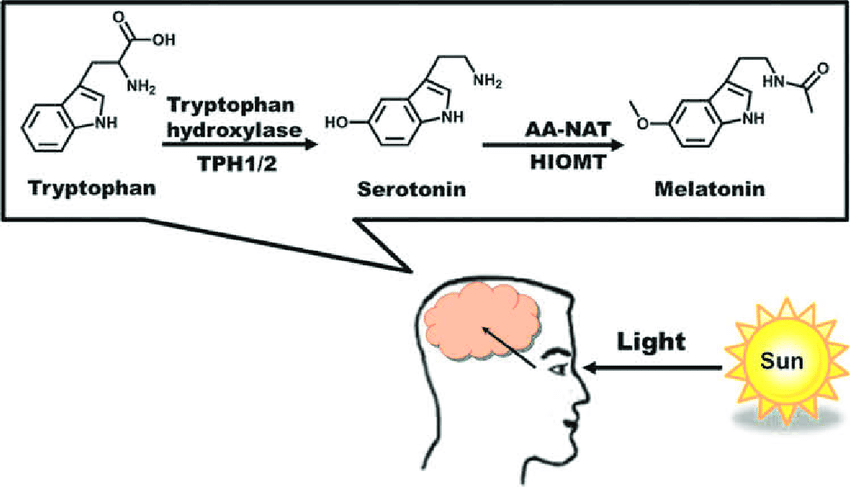
1. Exposure to artificial blue light (especially after the sunset) from sources such as LED lights, your laptop, PC, TV etc
2. Shift work
3. Sodium fluoride
4. Chronic stress
5. Medications such as NSAIDs, beta-blockers, some SSRIs
6. Stimulants (caffeine, nicotine etc)
4
7. Deficiencies in magnesium, zinc, B6, B12, B9, potassium, calcium that directly or indirectly (through methylation or pineal health for example) affect the production of melatonin (magnesium and B6 for example help with the conversion of tryptophan to melatonin)
So for starters, avoid these (get a pair of blue light blockers, get enough of the mentioned nutrients, take a break from stimulants etc).
Side note: During a migraine attack even up to 50% of people have lowered levels of ionized magnesium so do not underestimate the impact that these basic things can have.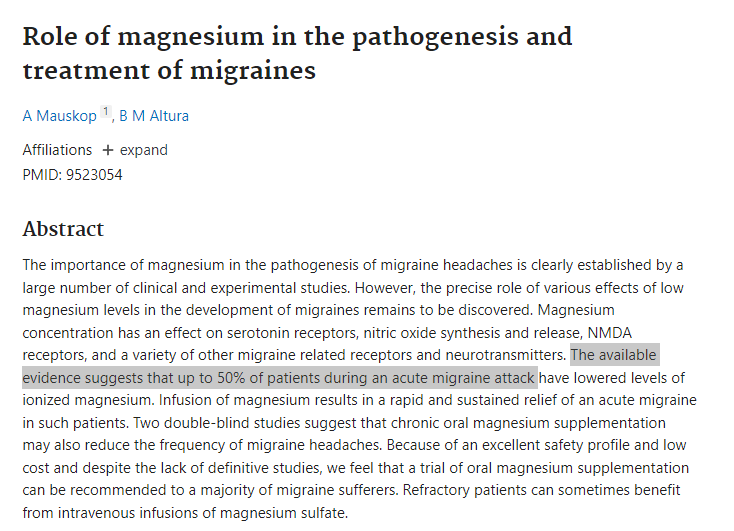
So for starters, avoid these (get a pair of blue light blockers, get enough of the mentioned nutrients, take a break from stimulants etc).
Side note: During a migraine attack even up to 50% of people have lowered levels of ionized magnesium so do not underestimate the impact that these basic things can have.
5
Number 2: Additives found in processed foods such as MSG.
ncbi.nlm.nih.gov/pubmed/7635722
Now of course, the NMDA receptors that are found in the meningeal afferents of the trigeminal nerve are known to be involved in migraines so others things to keep in mind would include:
-Further avoiding the regular consumption of foods that have free-form glutamate such as :
● Monopotassium glutamate
● Wheat gluten
● Maltodextrin
● Modified food starch
● Corn starch and corn syrup
● Barley malt
● Calcium caseinate
● Rice syrup and brown rice syrup
● Xanthan gum
● Pectin
● Carrageenan
● Bouillon
● Citric acid
-In the short run in case you’ve been struggling with an excess, it might be a good idea to also avoid naturally high-glutamate foods such as fermented foods for instance.
-Avoiding the daily usage of stimulants.
-Getting enough magnesium and vitamin B6 (a lack of these two nutrients will lead to a glutamate excess through harming its conversion. The enzyme glutamate decarboxylase that was mentioned prior for example, used B6 as cofactor)
-Consuming enough bioavailable protein. Consuming 1.8 pounds of bioavailable protein per pound of bodyweight which is shown to reduce serum glutamate.
ncbi.nlm.nih.gov/pubmed/7635722
Now of course, the NMDA receptors that are found in the meningeal afferents of the trigeminal nerve are known to be involved in migraines so others things to keep in mind would include:
-Further avoiding the regular consumption of foods that have free-form glutamate such as :
● Monopotassium glutamate
● Wheat gluten
● Maltodextrin
● Modified food starch
● Corn starch and corn syrup
● Barley malt
● Calcium caseinate
● Rice syrup and brown rice syrup
● Xanthan gum
● Pectin
● Carrageenan
● Bouillon
● Citric acid
-In the short run in case you’ve been struggling with an excess, it might be a good idea to also avoid naturally high-glutamate foods such as fermented foods for instance.
-Avoiding the daily usage of stimulants.
-Getting enough magnesium and vitamin B6 (a lack of these two nutrients will lead to a glutamate excess through harming its conversion. The enzyme glutamate decarboxylase that was mentioned prior for example, used B6 as cofactor)
-Consuming enough bioavailable protein. Consuming 1.8 pounds of bioavailable protein per pound of bodyweight which is shown to reduce serum glutamate.
6
Number 3: In the case of chronic migraines, go and test your homocysteine levels, test for MTHFR SNPs and Celiac (you might think that people who had Celiac would know it, but you'd be amazed how often this is not the case (to be fair a flat out gluten sensitivity might also come into play)).
ncbi.nlm.nih.gov/pubmed/19619240
pubmed.ncbi.nlm.nih.gov/32416409/
ncbi.nlm.nih.gov/pubmed/19619240
pubmed.ncbi.nlm.nih.gov/32416409/
7
8
Number 5: If you have never supplemented with NAC or molybdenum, consider a short 1 week experiment.
*CoQ10 might help as well.
jbiomedsci.biomedcentral.com/articles/10.11…
pubmed.ncbi.nlm.nih.gov/32458156/
*CoQ10 might help as well.
jbiomedsci.biomedcentral.com/articles/10.11…
pubmed.ncbi.nlm.nih.gov/32458156/
9
Number 6: Sweat every day and if you have been on a low fiber diet for ages or have never tried a binder, do so.
neurologylive.com/view/heavy-met…
neurologylive.com/view/heavy-met…
10
Number 7: Issues with histamine degradation.
Easy first steps you can take regarding this, is flat out a first generation anti-histamine just to see if it affects your case and then following a low histamine diet, eating beef kidney or using a DAO supplement, L. plantarum DR7 and quercetin.
ncbi.nlm.nih.gov/pubmed/6176358/
Easy first steps you can take regarding this, is flat out a first generation anti-histamine just to see if it affects your case and then following a low histamine diet, eating beef kidney or using a DAO supplement, L. plantarum DR7 and quercetin.
ncbi.nlm.nih.gov/pubmed/6176358/
11
Number 8: Gut dysbiosis
Just like the rest, this topic is too large in order to be properly addressed in an email so hust remember to not eat foods that will harm the gut to begin with, to eat relaxed, to move and to support the gut through key nutrients, sun and so on.
ncbi.nlm.nih.gov/pmc/articles/P…
ncbi.nlm.nih.gov/pmc/articles/P…
Just like the rest, this topic is too large in order to be properly addressed in an email so hust remember to not eat foods that will harm the gut to begin with, to eat relaxed, to move and to support the gut through key nutrients, sun and so on.
ncbi.nlm.nih.gov/pmc/articles/P…
ncbi.nlm.nih.gov/pmc/articles/P…
12
Number 9: If the issue is menstrual migraines, consider supplementing with whole food vitamin E.
pubmed.ncbi.nlm.nih.gov/19114966/
pubmed.ncbi.nlm.nih.gov/19114966/
13
Number 10: Get rid of pointless sources of oxidative stress such as cooking with canola oil.
mdpi.com/2076-3921/9/2/…
mdpi.com/2076-3921/9/2/…
14
15
Number 12: Serotonin?
The main problem is that we do not know if serotonin causes migraines or if migraines cause changes to the serotonin receptors.
It seems that during migraine attacks, ones serotonin levels are low-ish, BUT, at the beginning of an attack, they seem to rise very fast.
Why is this an issue?
Because once the sudden rise leads to fast vasoconstriction and once it's starting to break down a fast vasodilation happens (if you have ever quit nicotine, just imagine 10X the headaches during withdrawals).
pubmed.ncbi.nlm.nih.gov/2433045/
So if you are using SSRIs, 5-HTP or tryptophan supplements, consider that these could be triggering the migraines or making them worse.
The main problem is that we do not know if serotonin causes migraines or if migraines cause changes to the serotonin receptors.
It seems that during migraine attacks, ones serotonin levels are low-ish, BUT, at the beginning of an attack, they seem to rise very fast.
Why is this an issue?
Because once the sudden rise leads to fast vasoconstriction and once it's starting to break down a fast vasodilation happens (if you have ever quit nicotine, just imagine 10X the headaches during withdrawals).
pubmed.ncbi.nlm.nih.gov/2433045/
So if you are using SSRIs, 5-HTP or tryptophan supplements, consider that these could be triggering the migraines or making them worse.
16
Number 13: Move daily.
You might think that this is a no brainer, but most people walk 10 minutes a day.
ncbi.nlm.nih.gov/pmc/articles/P…
You might think that this is a no brainer, but most people walk 10 minutes a day.
ncbi.nlm.nih.gov/pmc/articles/P…
17
Number 14: Trigger point therapy, curcumin and B2.
ncbi.nlm.nih.gov/pubmed/9484373
pubmed.ncbi.nlm.nih.gov/35786344/
ncbi.nlm.nih.gov/pubmed/9484373
pubmed.ncbi.nlm.nih.gov/35786344/
18
That was it.
Pretty short thread compared to the rest but i hope that you found something useful inside of it regardless.
If you did make sure to leave a like/RT.
Pretty short thread compared to the rest but i hope that you found something useful inside of it regardless.
If you did make sure to leave a like/RT.
George Ferman@Helios_Movement
Battling migraines is very annoying to say the least, but i'm still amazed by how many are not aware of the following list with potential causes and also tools that could help.
Thread🧵
Thread🧵
19
If you want to know more about various health topics go here:
fitandball.gumroad.com/l/thesystem23
fitandball.gumroad.com/l/thesystem23