The ADHD brain explained. A guide to understanding: -What it really...

George Ferman@Helios_Movement
4 views
Oct 19, 2026
~50 min read
Advertisement
1
The ADHD brain explained.
A guide to understanding:
-What it really is
-How it develops
-Its neurochemistry
-The key environmental factors that impact these mechanisms
-How to rewire key pathways in order to be able to focus and crave hard tasks
-Alternative tools that can help repair the underlying biology of the disorder
-Why most treatments fail or have serious side effects -What actually moves the needle to get it under control
and more.
Here's what you need to know.
Thread🧵
2
It’s George.
ADHD is a neurodevelopmental disorder with polygenic etiology that’s predominantly genetic (around 74-80%).
Usually, a person inherits a polygenic risk score (PRS), which is the cumulative total of thousands of tiny variations across their DNA.
When these genetic vulnerabilities collide with specific environmental stressors during early brain development, the risk of developing ADHD increases significantly.
Here’s an example: A child inherits multiple gene variants: a specific version of the DAT1 gene which means that their brain clears dopamine too quickly and a variation of SNAP25 which makes cellular communication sluggish.
On their own, these genes only slightly elevate risk.
But let’s also assume that the child is also born prematurely with a very low birth weight.
Now this creates an environment of physical stress that delays the maturation of the prefrontal cortex.
Because of the biological stress of early birth, certain chemical tags are placed on the child’s DNA.
This causes the already vulnerable DAT1 and DRD4 genes to change their expression.
The combined force of weak dopamine pathways (genetics) and an altered prefrontal cortex timeline (environment) leads to the structural brain differences that manifest as ADHD.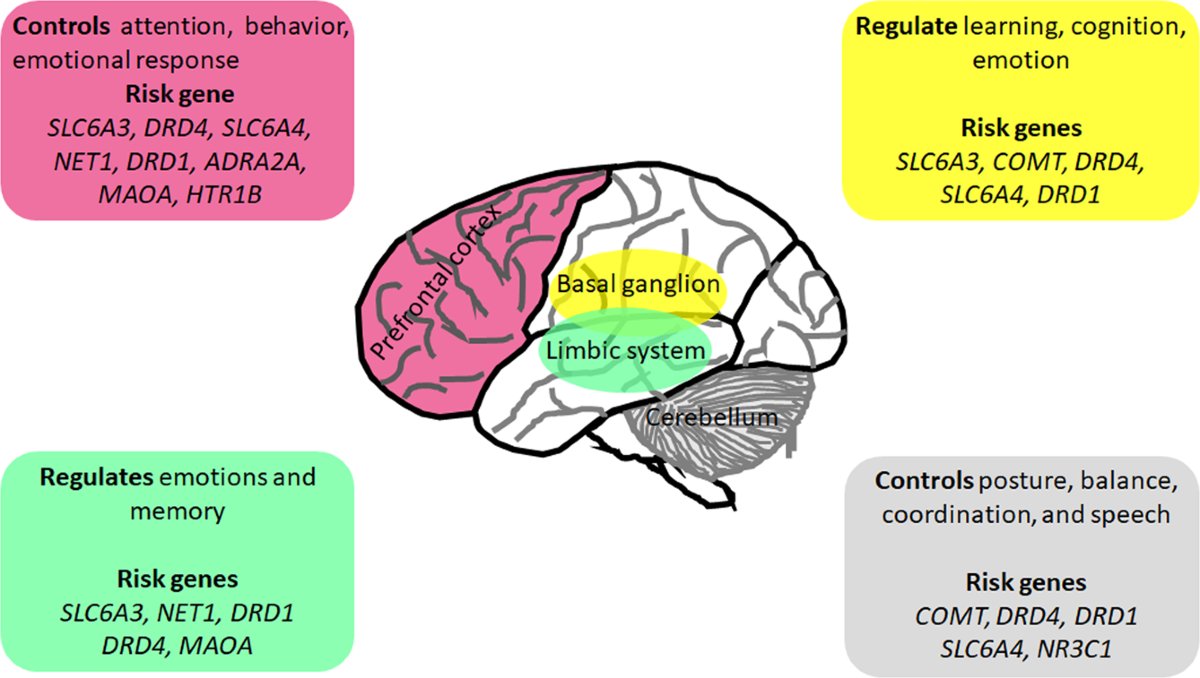
ADHD is a neurodevelopmental disorder with polygenic etiology that’s predominantly genetic (around 74-80%).
Usually, a person inherits a polygenic risk score (PRS), which is the cumulative total of thousands of tiny variations across their DNA.
When these genetic vulnerabilities collide with specific environmental stressors during early brain development, the risk of developing ADHD increases significantly.
Here’s an example: A child inherits multiple gene variants: a specific version of the DAT1 gene which means that their brain clears dopamine too quickly and a variation of SNAP25 which makes cellular communication sluggish.
On their own, these genes only slightly elevate risk.
But let’s also assume that the child is also born prematurely with a very low birth weight.
Now this creates an environment of physical stress that delays the maturation of the prefrontal cortex.
Because of the biological stress of early birth, certain chemical tags are placed on the child’s DNA.
This causes the already vulnerable DAT1 and DRD4 genes to change their expression.
The combined force of weak dopamine pathways (genetics) and an altered prefrontal cortex timeline (environment) leads to the structural brain differences that manifest as ADHD.
3
Here’s another example.
In this case, the person does not have issues with how dopamine is pumped away, but rather how it is produced and how neurons physically shape themselves.
Let’s say for example that he has gene variants in tyrosine hydroxylase (TH) that is responsible for creating the enzyme that builds dopamine in the brain and in the FOXP2 which is involved in synaptic plasticity.
So these variants lead to low baseline dopamine levels and alter how neurons in the basal ganglia branch out and connect.
Now let’s say that as a toddler, the child lives in an older home with undetected lead dust from aging paint and old pipes.
The problem with ingesting even small amounts over time is that lead is a potent neurotoxin that specifically interferes with calcium signaling in the brain, which neurons rely on to pass messages and grow.
So the child’s brain is already struggling to produce enough dopamine (TH gene), is trying to build neural highways with a slightly flawed blueprint (FOXP2 gene) and when lead enters the system, it acts as a massive roadblock.
It disrupts the fragile calcium signaling exactly where the FOXP2 gene was already struggling to build strong synaptic connections.
Simultaneously, the toxic stress of the lead exposure triggers an epigenetic response, essentially “turning down the volume” on the TH gene even further.
At the end the structural networks connecting the basal ganglia to the prefrontal cortex fail to mature properly.
Because these circuits regulate motor inhibition and impulse control, the child develops the classic symptoms of ADHD combined type (more about the types of ADHD in a moment).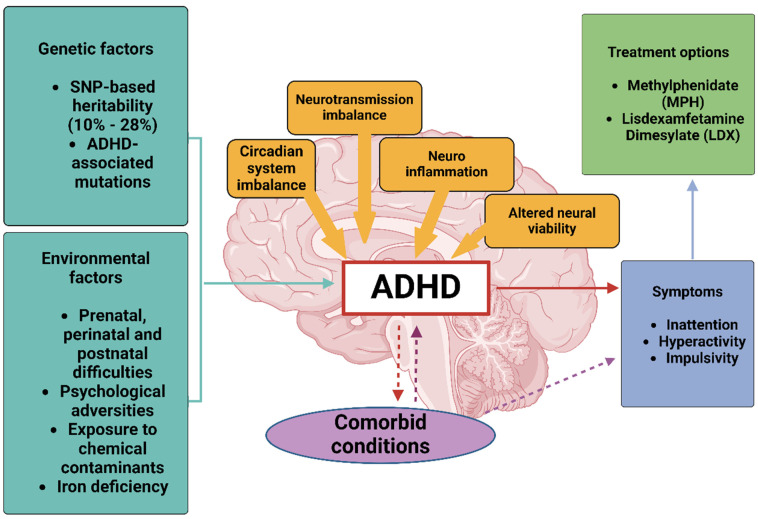
In this case, the person does not have issues with how dopamine is pumped away, but rather how it is produced and how neurons physically shape themselves.
Let’s say for example that he has gene variants in tyrosine hydroxylase (TH) that is responsible for creating the enzyme that builds dopamine in the brain and in the FOXP2 which is involved in synaptic plasticity.
So these variants lead to low baseline dopamine levels and alter how neurons in the basal ganglia branch out and connect.
Now let’s say that as a toddler, the child lives in an older home with undetected lead dust from aging paint and old pipes.
The problem with ingesting even small amounts over time is that lead is a potent neurotoxin that specifically interferes with calcium signaling in the brain, which neurons rely on to pass messages and grow.
So the child’s brain is already struggling to produce enough dopamine (TH gene), is trying to build neural highways with a slightly flawed blueprint (FOXP2 gene) and when lead enters the system, it acts as a massive roadblock.
It disrupts the fragile calcium signaling exactly where the FOXP2 gene was already struggling to build strong synaptic connections.
Simultaneously, the toxic stress of the lead exposure triggers an epigenetic response, essentially “turning down the volume” on the TH gene even further.
At the end the structural networks connecting the basal ganglia to the prefrontal cortex fail to mature properly.
Because these circuits regulate motor inhibition and impulse control, the child develops the classic symptoms of ADHD combined type (more about the types of ADHD in a moment).
4
So environmental factors and epigenetic triggers do not create ADHD out of nothing the way a virus invades a perfectly healthy body to cause an infection for example.
The relationship is entirely different for several biological reasons:
When you catch a virus (like the flu), the virus is a foreign invader.
It brings its own genetic material, attacks your cells, and creates a specific set of symptoms. If you remove the virus from the equation, the infection cannot exist.
The virus causes the disease directly.
ADHD is not an infection; it is a neurodevelopmental variation in how the brain passes messages and structures its networks.
Things like gut issues, mild prenatal stress, or high sugar intake do not carry an “ADHD pathogen.”
Instead, these environmental factors act as biological stressors that exploit a pre-existing genetic vulnerability.
If a child has a low genetic risk score for ADHD, a stressful environment or a bout of gut dysbiosis might make them tired, irritable, or anxious, but it will not rewrite their brain into an ADHD brain.
Their prefrontal cortex has enough robust baseline dopamine to withstand the stress.
However, if a child inherits a high genetic risk (sluggish dopamine pathways), that exact same environmental stressor acts as a tipping point. It triggers the epigenetic switches that push their vulnerable nervous system over the clinical threshold into ADHD.
So most cases of ADHD result from the cumulative effects of many genetic variations (hundreds) and environmental risk factors that affect brain circuits, especially those regulating attention, inhibition, and executive function, during brain development.
The only exceptions are extreme genetic loads and severe biological trauma.
But for the vast majority of people, ADHD requires both genetic vulnerability and epigenetic triggers to fully manifest.
Environmental factors alone cannot build ADHD out of thin air.
Now epigenetic changes are chemical tags rather than permanent gene mutations.
So they are malleable and the right interventions help re-regulate DNA expression and act as “counter switches”.
When you introduce positive environmental inputs, your cells respond by sending chemical messengers into the nucleus of your brain cells.
These messengers can strip away the methyl groups that were silencing healthy genes and alter the histones that DNA wraps around, making it easier for your cells to access and read genes that produce dopamine, reduce inflammation, and build new brain connections.
But more about these later (or you can also go here:
fitandball.gumroad.com/l/brain20/v30)
5
So Attention-Deficit/Hyperactivity Disorder (ADHD) is a neurodevelopmental condition defined by persistent patterns of:
-Inattention
-Hyperactivity
and/or
-Impulsivity
that are more severe than expected for a person’s age and that cause clear impairment in daily life.
So it is not a sign of laziness, low intelligence, poor character, or insufficient effort.
It reflects differences in how the brain develops and regulates attention, activity level, and impulse control.
And it’s not something new either.
To this day, one of the most common dismissals of ADHD is that it is a recent invention created by pharmaceutical companies, overly sensitive parents, or the unnatural demands of contemporary life.
But the evidence makes this claim difficult to sustain.
The phenotype has been recognized for a long time.
More than 2,300 years ago, the Greek philosopher Theophrastus described a character he called Anaisthetos (often translated as “the obtuse man”).
The traits he listed such as difficulty sustaining attention, easy distractibility, and a tendency to be pulled off task by whatever was immediately in front of him, closely match the inattentive symptoms recognized today.
This was not a clinical diagnosis, but it shows that impairing attentional difficulties were already part of the observed human behavioral repertoire in ancient Greece.
In 1775, the German physician Melchior Adam Weikard wrote about Mangel der Aufmerksamkeit (“lack of attention”), describing people who were easily distracted and struggled to maintain focus on any single object or task.
A few decades later, in 1798, Scottish physician Alexander Crichton provided a more detailed account.
He described an “incapacity of attending with a necessary degree of constancy to any one object,” treating the problem as a primary disorder of attention rather than a secondary consequence of something else.
In 1902, George Frederic Still described a group of children with normal intelligence who showed marked problems with attention, poor impulse control, restlessness, and learning difficulties.
So these accounts long predate smartphones, social media algorithms, standardized testing, or the widespread use of stimulant medication.
The core behavioral pattern is not an invention of the 21st century.
“So why do more and more people struggle with ADHD?”
Most likely, in reality, they have “acquired ADHD traits”?
The modern world can cause almost anyone to experience ADHD-like symptoms.
It is structurally designed to overwhelm the human brain’s attention systems.
Every notification, like, or quick reward produces a small dopamine spike.
Because these hits are frequent and effortless, the brain adapts by becoming less responsive to slower, harder-earned rewards.
When you then try to focus on a low-stimulation task (reading, writing, paperwork), the brain feels under-stimulated and the urge to switch becomes strong.
Then, the brain can only hold a limited amount of information in active working memory.
Aggressive multitasking and constant context-switching chemically exhaust the prefrontal cortex.
Then, sleep loss which is quite common tjese days directly impairs prefrontal function and can closely mimic inattention and emotional dysregulation.
So in a neurotypical person, these effects are largely state-dependent.
The underlying wiring is intact, it was simply overloaded.
But people who meet diagnostic criteria for ADHD show the same difficulties even in calm, screen-free, structured environments.
Neuroimaging studies have documented a delay of roughly three years in the maturation of cortical regions involved in attention and self-regulation, particularly the prefrontal cortex for example.
So in a nutshell: the modern environment can induce ADHD-like symptoms in almost anyone and can make life significantly harder for people who already have the neurodevelopmental condition.
But it does not create the underlying biological differences in brain development and catecholamine regulation that define ADHD itself.
6
"George no one with ADHD is reading all this".
So you can not read 6 sentences and somehow have a job?
"Yes".
Great.
Let me explain to you why, if you have ADHD, you suck at reading and remembering things (and how to fix it).
First, the same systems we will talk about explain why you can hyperfocus for hours on a high-interest topic, yet struggle with a single dense page of required reading (such as the article below for example).
This is the same reason why looking at the entire volume of the thing they have to read prevents hyperfocusing a lot of the time.
A person with ADHD who could EASILY read this for example, might not do so when he looks at the volume of this post.
So here's the deal.
If you actually want to read this and can't, the best tip i can give you that is free and does not require you to buy some pill is to save it and read it tomorrow first thing in the morning.
If you want to read it now, you can increase dopamine and norepinephrine availability in the PFC with certain supplements, reduce working-memory load by grabbing a pen and paper (literally stop and grab a pen and a piece of paper) and tweak your environment to increase your interest (you can also load this in some audio tool and listen to it while walking (dopamine stacking)).
Now not being able to focus in not your fault because most likely, you have large working-memory impairments (75–85% of cases have).
So raising working-memory demands disproportionately tanks your reading comprehension you compared to neurotypicals.
In case you don't know what working memory, it is the "mental scratchpad" that holds information while you use it.
So reading requires this constantly.
You hold the meaning of the last few sentences in mind while processing the next ones, keep track of arguments or relationships, and connect new info to what came earlier.
Now on top of that, your sustained attention is weaker, and your brain is more prone to spontaneous mind-wandering.
This is linked to the default mode network (DMN) not being properly suppressed when you try to focus.
Reading a textbook or paper is low-stimulation and externally driven.
I could literally come up with something like how to make a million dollars right now for you specifically and you might not PHYSICALLY be able to read it right now.
This is why if you have ADHD you MUST focus on reading things GRADUALLY.
Ideally for example you'd stop reading this article and read it one more time from the beginning before you more on.
You need to learn your current limits and take a step back by reading less demanding material (the material you just read) in order to give these networks a "break".
Then you can move on.
Now all of these functions such as working memory, sustained attention, and cognitive control are handled by the prefrontal cortex (PFC).
It needs precisely tuned levels of dopamine and norepinephrine to keep relevant information “online,” filter noise, and maintain effort.
In ADHD these signals are often weaker, shorter-lived, or less efficiently delivered.
The relationship is often described as an inverted-U: too little (or too much) catecholamine signaling impairs PFC performance.
This results in weaker ability to hold and manipulate information, poorer filtering of distractions, and reduced motivation for tasks that don’t deliver immediate reward or novelty.
So many of your memory problems start at encoding.
If attention fluctuates and working memory capacity is limited, information is never fully processed or linked to existing knowledge in the first place.
ALSO, if you have ADHD remember that you USUALLY BLOW OUT OF PROPORTION the amount of effort something requires in order to provide a POSITIVE RESULT.
So, get into the habit of reading similar material, shut up, apply the tips and you will experience progress similar than you think.
You can read the article below next (or use the search function in my profile).
On top of all these, learning through videos doesn't work for a lot of people with ADHD.
In neurotypical brains, a process called sensory gating automatically filters out repetitive or irrelevant sensory inputs before they reach conscious awareness.
But individuals with ADHD have sensory gating deficits.
Their brain struggles to suppress irrelevant background stimuli.
If a video for example contains a person speaking while moving their hands, shifting backgrounds, or displaying flashing text, the ADHD brain treats all of those visual data points with high priority.
So on one hand, the high stimulation from a video helps you sit still but the same high stimulation prevents you from retaining the information.
This is why you might eliminate visual input by closing your eyes for example, when trying to learn something important (through a video).
You manually cut off visual distractions, allowing limited cognitive resources to process the incoming audio.
So fix your baseline to be able to sit still and then: audio + pen paper
7
"I'll just ask Grok".
We both know that it sucks for giving real advice but also:
The raw availability of information is rarely the primary bottleneck anymore.
The networks that allow you to apply it are.
This is a classic problem with ADHD where a lot of people with it can know 20x more than their competitor, work way harder and yet somehow still get worse results.
You already know a competitor who is not smarter than you, doesn't have a better business plan, hasn't read more books and doesn't even look like he tries too hard.
Yet somehow outperforms you.
Now the usual reason is very simple and thus quite uncomfortable to admit: they try to improve through scattered tips.
Twitter threads, podcast clips, random articles.
It feels productive because it feeds the urge to collect “the perfect resource.”
But it rarely produces results.
People with ADHD often mistake collecting FACTS with learning.
Facts don't produce results.
Roadmaps do.
Tips force you to constantly re-decide:
-Does this apply to me?
-In what order?
-What do I do if I only have 30 minutes?
-How does this interact with the last three things I read?
-Is this even true?
Initially, they give you just enough dopamine to stick around, but in the long run, they produce zero real results.
None.
Then:
-You underestimate the downsides (financially, emotionally etc) that constant trial and error has
-Tips rarely explain how one action affects another.
-Scattered advice from different sources often contradicts itself or uses different assumptions.
-Constant reorientation between options or sources of advice creates friction.
The underlying mistake is of course treating working memory and prefrontal capacity as infinite.
They’re not.
Every open choice competes for limited resources.
Having some form of roadmap or plan is unusually important for people with ADHD, but the type of plan matters more than the mere existence of one.
ADHD involves reliable weaknesses in the executive functions that plans are meant to support: sequencing steps, holding priorities in working memory, initiating tasks without external pressure, and deciding what to do next when options compete.
When those functions are impaired, an open field of tips and possibilities quickly turns into decision fatigue and stalled progress.
A plan reduces that open field. It pre-answers the questions (“What matters? What’s next? What do I ignore?”) so the limited prefrontal bandwidth can be spent on execution rather than continuous re-orientation.
That said, the plan does not need to be elaborate or rigid.
For ADHD brains, overly detailed or inflexible plans often collapse under real-life variability in energy, interest, and interruptions.
What tends to work better is a lightweight structure:
-A small set of clear priorities or principles (what “done” looks like this week or this quarter).
-Defaults and routines for recurring decisions so those don’t stay open.
-Externalized next actions (visible lists, calendars, or simple systems) rather than relying on memory.
-Enough flexibility that the plan can be adjusted without triggering the feeling that the whole system has failed.
In short, the advantage is not “having a perfect roadmap.”
It is having enough structure that most of the micro-decisions are already closed.
Of course, a common mistake would be to think that you can outwillpower your way out of this.
You can't.
Translating knowledge into results depends on executive functions: the set of processes supported by prefrontal cortex networks that handle planning, task initiation, sequencing, prioritization, working-memory maintenance, inhibitory control, and monitoring.
These functions are necessary to convert a general intention (“improve X”) into ordered, executed steps.
They are also capacity-limited and metabolically costly.
Your lack of results is not due to a shortage of facts.
It is due to a mismatch between the volume and form of information and the limited, effortful systems the brain uses to turn intentions into sustained action.
Working on these systems is what you need to do.
We both know that it sucks for giving real advice but also:
The raw availability of information is rarely the primary bottleneck anymore.
The networks that allow you to apply it are.
This is a classic problem with ADHD where a lot of people with it can know 20x more than their competitor, work way harder and yet somehow still get worse results.
You already know a competitor who is not smarter than you, doesn't have a better business plan, hasn't read more books and doesn't even look like he tries too hard.
Yet somehow outperforms you.
Now the usual reason is very simple and thus quite uncomfortable to admit: they try to improve through scattered tips.
Twitter threads, podcast clips, random articles.
It feels productive because it feeds the urge to collect “the perfect resource.”
But it rarely produces results.
People with ADHD often mistake collecting FACTS with learning.
Facts don't produce results.
Roadmaps do.
Tips force you to constantly re-decide:
-Does this apply to me?
-In what order?
-What do I do if I only have 30 minutes?
-How does this interact with the last three things I read?
-Is this even true?
Initially, they give you just enough dopamine to stick around, but in the long run, they produce zero real results.
None.
Then:
-You underestimate the downsides (financially, emotionally etc) that constant trial and error has
-Tips rarely explain how one action affects another.
-Scattered advice from different sources often contradicts itself or uses different assumptions.
-Constant reorientation between options or sources of advice creates friction.
The underlying mistake is of course treating working memory and prefrontal capacity as infinite.
They’re not.
Every open choice competes for limited resources.
Having some form of roadmap or plan is unusually important for people with ADHD, but the type of plan matters more than the mere existence of one.
ADHD involves reliable weaknesses in the executive functions that plans are meant to support: sequencing steps, holding priorities in working memory, initiating tasks without external pressure, and deciding what to do next when options compete.
When those functions are impaired, an open field of tips and possibilities quickly turns into decision fatigue and stalled progress.
A plan reduces that open field. It pre-answers the questions (“What matters? What’s next? What do I ignore?”) so the limited prefrontal bandwidth can be spent on execution rather than continuous re-orientation.
That said, the plan does not need to be elaborate or rigid.
For ADHD brains, overly detailed or inflexible plans often collapse under real-life variability in energy, interest, and interruptions.
What tends to work better is a lightweight structure:
-A small set of clear priorities or principles (what “done” looks like this week or this quarter).
-Defaults and routines for recurring decisions so those don’t stay open.
-Externalized next actions (visible lists, calendars, or simple systems) rather than relying on memory.
-Enough flexibility that the plan can be adjusted without triggering the feeling that the whole system has failed.
In short, the advantage is not “having a perfect roadmap.”
It is having enough structure that most of the micro-decisions are already closed.
Of course, a common mistake would be to think that you can outwillpower your way out of this.
You can't.
Translating knowledge into results depends on executive functions: the set of processes supported by prefrontal cortex networks that handle planning, task initiation, sequencing, prioritization, working-memory maintenance, inhibitory control, and monitoring.
These functions are necessary to convert a general intention (“improve X”) into ordered, executed steps.
They are also capacity-limited and metabolically costly.
Your lack of results is not due to a shortage of facts.
It is due to a mismatch between the volume and form of information and the limited, effortful systems the brain uses to turn intentions into sustained action.
Working on these systems is what you need to do.
8
"George i can't sit still in order to read this".
I understand.
If you have ADHD, you know that one of the worst symptoms is the inability to sit still.
Your brain's baseline levels of dopamine and norepinephrine for example particularly within the prefrontal cortex and frontostriatal circuits, are cooked.
Movement directly regulates the brainstem’s main arousal center (the locus coeruleus).
So physical movement acts as a manual override to release dopamine and "wake up" the nervous system which is why you shake your leg etc
"Fidget tools" can help you out even if it seems counterintuitive in the beginning (preventing distraction with another distraction).
They serve as a controlled, harmless "secondary task" acting as a shield against more disruptive distractions
If your symptoms are wild, even a treadmill desk might help.
Worth mentioning:
-Gum (mastic)
- Noise-cancelling headphones
-Weighted lap pads (for kids)

I understand.
If you have ADHD, you know that one of the worst symptoms is the inability to sit still.
Your brain's baseline levels of dopamine and norepinephrine for example particularly within the prefrontal cortex and frontostriatal circuits, are cooked.
Movement directly regulates the brainstem’s main arousal center (the locus coeruleus).
So physical movement acts as a manual override to release dopamine and "wake up" the nervous system which is why you shake your leg etc
"Fidget tools" can help you out even if it seems counterintuitive in the beginning (preventing distraction with another distraction).
They serve as a controlled, harmless "secondary task" acting as a shield against more disruptive distractions
If your symptoms are wild, even a treadmill desk might help.
Worth mentioning:
-Gum (mastic)
- Noise-cancelling headphones
-Weighted lap pads (for kids)
9
"I'll just bookmark it for later".
The urge to bookmark stuff not stop is not normal.
Wanting to collect "the perfect resources" and never using them is not normal.
Having a deep internal fear of: "if I don’t save this right now, I will forget it exists forever" is not normal.
Operating from an "out of sight, out of mind" is a classic symptom of profound ADHD(*).
(*)People with ADHD often struggle with working memory/holding temporary information in mind.
When faced with a sea of digital information, the ADHD brain experiences executive fatigue.
Deciding whether a piece of information is useful right now, where it belongs, or if it can be discarded triggers intense indecision and task avoidance.
Saving it for later is a coping mechanism to delay that exhausting decision-making process.
Bookmarking things provides an instant, effortless micro-dose of dopamine.
It satisfies the immediate impulse of the curiosity drive without requiring the heavy cognitive energy needed to actually read and process the information.
Bookmarking stuff is making your ADHD paralysis 10X worse.
You constantly show your brain that nothing has a shred of novelty.
And IF at some point you decide to sit down and go through your bookmarks, you will see that you have 5.000 choices.
So you'll spend two hours going through them, become completely overwhelmed by the decision-making process, and end up.....not doing anything.
The urge to bookmark stuff not stop is not normal.
Wanting to collect "the perfect resources" and never using them is not normal.
Having a deep internal fear of: "if I don’t save this right now, I will forget it exists forever" is not normal.
Operating from an "out of sight, out of mind" is a classic symptom of profound ADHD(*).
(*)People with ADHD often struggle with working memory/holding temporary information in mind.
When faced with a sea of digital information, the ADHD brain experiences executive fatigue.
Deciding whether a piece of information is useful right now, where it belongs, or if it can be discarded triggers intense indecision and task avoidance.
Saving it for later is a coping mechanism to delay that exhausting decision-making process.
Bookmarking things provides an instant, effortless micro-dose of dopamine.
It satisfies the immediate impulse of the curiosity drive without requiring the heavy cognitive energy needed to actually read and process the information.
Bookmarking stuff is making your ADHD paralysis 10X worse.
You constantly show your brain that nothing has a shred of novelty.
And IF at some point you decide to sit down and go through your bookmarks, you will see that you have 5.000 choices.
So you'll spend two hours going through them, become completely overwhelmed by the decision-making process, and end up.....not doing anything.
10
You will of course probably ignore this if you have ADHD becuase you struggle with calculating the "best" option, whether that's for a song, movie, video, book or whatever.
And by "best" we mean the option that will give your dopamine-starved brain the most dopamine.
So your brain freezes during decision making and you end up procrastinating for HOURS.
If you are new here, in a neurotypical brain, dopamine acts as a chemical "go" signal that creates motivation to initiate a task or commit to a choice.
But in ADHD brains, there's a lower baseline of available dopamine and a reduced density of dopamine transporters in the striatum and prefrontal circuits.
So when you try to choose between multiple options, the mundane nature of a standard choice does not cross the threshold to trigger this "go" signal.
Npw to generate the missing neurochemical engagement, the brain enters a state of hyper-fixation/over-researching and endlessly calculating to artificially stimulate dopamine release through the novelty of data gathering.
*Yes, you actually self regulate by having 90 tabs open for no reason.
But again, even though it's tremendously unproductive don't feel guilty about it.
It's not a "lack of willpower".
You have measurably lower blood oxygenation and neural activation in the PFC when executing complex tasks or making decisions for example.
Why is this a problem?
Because this under-activation directly impairs the five specific circuits required to execute a choice.
Also when you try to make a decision, your weakened working memory fails to filter out intrusive or irrelevant thoughts.
It attempts to hold all variables, past mistakes, future consequences, and peripheral details simultaneously.
The cognitive load overflows your "mental RAM," causing a total systemic freeze known as cognitive congestion.
Also (yes, there are more problems), because the connection between the emotional centers of the brain such as the amygdala and the regulatory centers such as the PFC is altered in ADHD, the fear of making a suboptimal choice is interpreted by the brain as an actual threat shifting the brain out of logical evaluation entirely and into a state of anxious avoidance.
11
Now to be diagnosed with ADHD, a person needs to have:
5+ inattention symptoms such as:
-Failing to give close attention to details or making careless mistakes.
-Having difficulty sustaining attention in tasks.
-Not being able to listen when spoken to directly quite often.
-Having difficulty organizing tasks and activities (poor time management, messy work, trouble with deadlines).
-Losing things necessary for tasks or activities (keys, phone, wallet, paperwork).
-Easily distracted by extraneous stimuli (including unrelated thoughts).
-Time blindness, losing hours or missing appointments / Forgetful in daily activities (paying bills, keeping appointments, returning calls).
-Hyperfocus, can obsessively focus on interesting things for hours, but can’t force it on boring tasks.
5+ hyperactivity and impulsivity symptoms such as:
-Fidgeting with or tapping hands/feet, or squirming in the seat.
-Feeling restless or “driven by a motor”.
-Being unable to play or engage in leisure activities quietly.
-Talking excessively.
-Blurting out answers before questions have been completed, or finishing other people’s sentences.
-Having difficulty waiting their turn (lines, conversations etc).
-Restless mind (feels like having 97 tabs open in your brain at all times).
-Emotional regulation struggles (experiencing big feelings, fast).
12
Now if you have ADHD, these should sound very familiar and you should then further look into the diagnostic criteria, especially given the fact that to be diagnosed with ADHD, you also need to:
-Have symptoms that started before age 12.
-Have symptoms present in two or more settings ( home + school/work + social life etc).
-Having symptoms that are not better explained by another mental disorder.
and overall things that a psychiatrist can walk someone through.
Of course, if you have a few of them, that’s being called being a human since all of us have dysfunctional behaviours to a certain extent.
Please also keep in mind that just because 10 people can have ADHD, it does not mean that 10/10 of them will experience it at the same severity.
Some will experience mild, others moderate and others severe.
13
As we said, there’s no one thing that causes ADHD and if you have it, you can NOT, completely get rid of it.
You can only manage it and this is the only route a person with it can take in order to succeed in a certain field.
So ADHD is a measurable, biological difference in major systems such as:
-Executive circuitry (dlPFC, ACC, striatum): chronically under-activated
-Dopamine/norepinephrine tone: 20–40 % lower baseline
-Neuronal excitability: gain-of-function calcium & sodium channels
-Brain energy metabolism: elevated lactate, low phosphocreatine
-Neuroinflammation & oxidative stress: higher cytokines, lower glutathione
-Circadian dysfunction (even a 2–3 hour delayed melatonin release can be noted)All of which are backed by neuroimaging, GWAS, blood/CSF markers and response to targeted interventions.
14
Do you remember for example when everyone swore by fasting for 23 hours a day with black coffee because they were self-medicating their ADHD/ADD ?
These days of course, nicotine has also been added to these dopamine- and norepinephrine-starved brains.
“What do these even mean?”
The ADHD brain naturally struggles to generate the activation energy needed for mundane or non-novel tasks (aka most of modern life), it often requires a sense of crisis or urgency to get moving.
Fasting and caffeine combine to create a physiological “pseudo-crisis.”
The body registers the lack of food and the presence of central nervous system stimulants as an evolutionary cue that it needs to be alert, hunt, or survive.
This triggers that massive, systemic flood of norepinephrine into your bloodstream.
Now adding nicotine to the fasting and coffee protocol creates a highly reinforcing stimulant synergy since unlike caffeine, which primarily blocks fatigue by obstructing adenosine receptors, nicotine acts as a direct agonist.
It binds to nicotinic acetylcholine receptors (nAChRs), which triggers an immediate, sharp release of dopamine in the brain’s reward centers and norepinephrine in the prefrontal cortex which is were you want it to be if you have ADHD/ADD.
So:
-By stimulating D1 receptors, dopamine prevents irrelevant, distracting thoughts or external stimuli from breaking your focus.
-By stimulating norepinephrine/alpha-2A adrenoceptors you strengthen the connections between brain cells, helping you stay alert, locked onto a task.
Of course, this does not last long and you end up basically being a junky needing higher and higher doses just to break even and you’ve of course acquired more health issues.
Combining fasting (which leaves the stomach empty and unprotected), coffee (which is highly acidic and triggers gastric acid production), and nicotine (which acts as a potent vasoconstrictor and gut motility disruptor) is a worst-case scenario for your GI tract.
So while you might finally feel somewhat functional in the beginning, your digestive tract, heart, and blood vessels pay the price of being subjected to a prolonged, low-grade “fight-or-flight” state.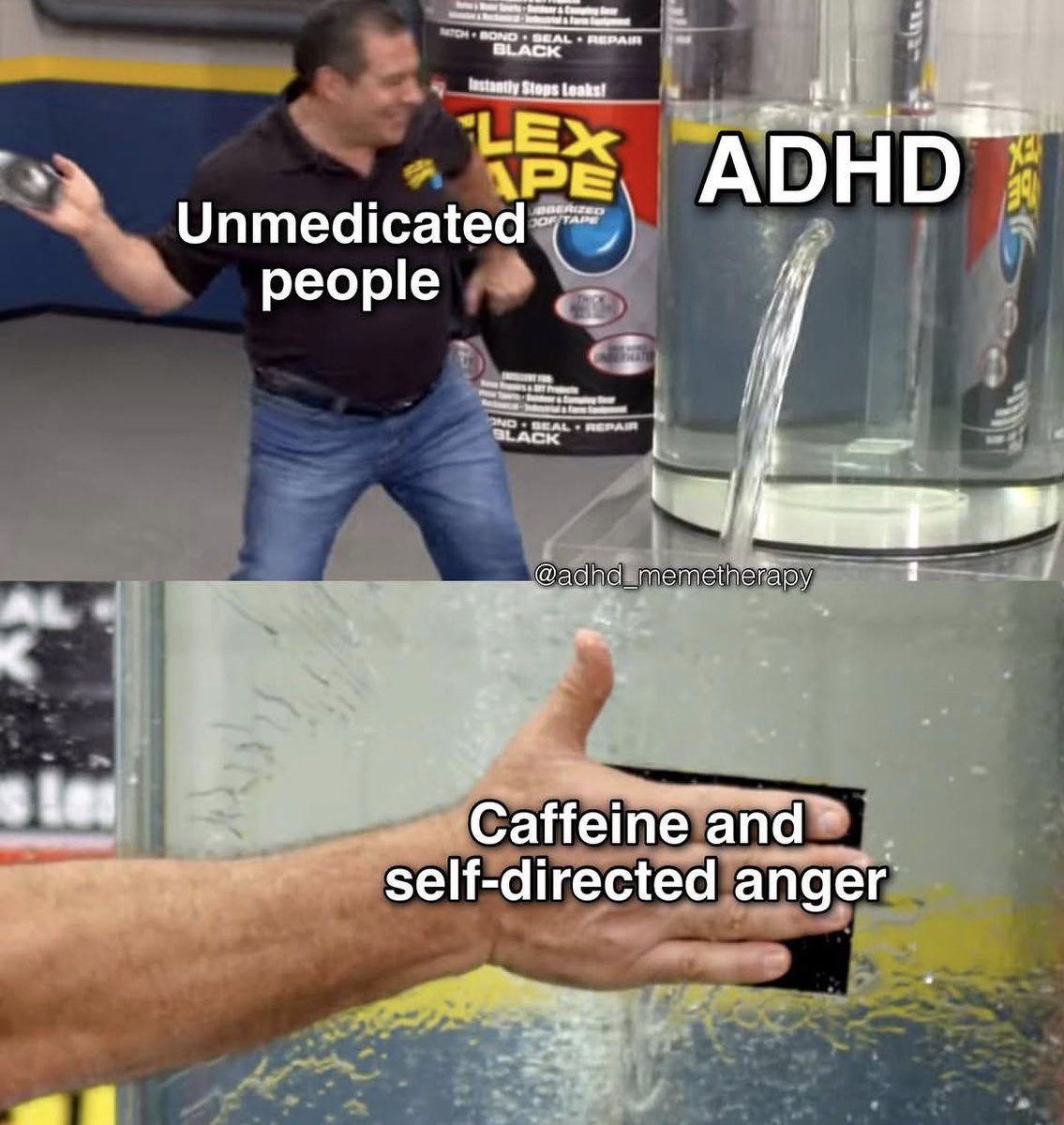

These days of course, nicotine has also been added to these dopamine- and norepinephrine-starved brains.
“What do these even mean?”
The ADHD brain naturally struggles to generate the activation energy needed for mundane or non-novel tasks (aka most of modern life), it often requires a sense of crisis or urgency to get moving.
Fasting and caffeine combine to create a physiological “pseudo-crisis.”
The body registers the lack of food and the presence of central nervous system stimulants as an evolutionary cue that it needs to be alert, hunt, or survive.
This triggers that massive, systemic flood of norepinephrine into your bloodstream.
Now adding nicotine to the fasting and coffee protocol creates a highly reinforcing stimulant synergy since unlike caffeine, which primarily blocks fatigue by obstructing adenosine receptors, nicotine acts as a direct agonist.
It binds to nicotinic acetylcholine receptors (nAChRs), which triggers an immediate, sharp release of dopamine in the brain’s reward centers and norepinephrine in the prefrontal cortex which is were you want it to be if you have ADHD/ADD.
So:
-By stimulating D1 receptors, dopamine prevents irrelevant, distracting thoughts or external stimuli from breaking your focus.
-By stimulating norepinephrine/alpha-2A adrenoceptors you strengthen the connections between brain cells, helping you stay alert, locked onto a task.
Of course, this does not last long and you end up basically being a junky needing higher and higher doses just to break even and you’ve of course acquired more health issues.
Combining fasting (which leaves the stomach empty and unprotected), coffee (which is highly acidic and triggers gastric acid production), and nicotine (which acts as a potent vasoconstrictor and gut motility disruptor) is a worst-case scenario for your GI tract.
So while you might finally feel somewhat functional in the beginning, your digestive tract, heart, and blood vessels pay the price of being subjected to a prolonged, low-grade “fight-or-flight” state.
15
Now let's analyze the part.
Part 1: Dorsolateral prefrontal cortex (dlPFC) + ventrolateral PFC (vlPFC).
This is responsible for:
-Holding things in your working memory
-Planning and sequencing actions
-Inhibiting impulses
Basic examples of its action:
-”Okay, i want to make coffee so: Step 1 water, Step 2 filter…”
-“Don’t check your phone right now, finish the email”.
Now in ADHD there’s a smaller volume, thinner gray matter and it lights up weakly on brain scans.
Part 2: Anterior cingulate cortex (ACC).
This is the brain’s “error detector” and “conflict monitor.”
Normal job:
-Notices when you’re about to make a mistake and yells “STOP!”.
-Helps you switch strategies when the current one isn’t working.
In ADHD:
-Smaller and quieter → you see the mistake coming but still can’t slam the brakes.
-This is why you blurt things out or keep making the same error even though you KNOW better.
It’s also tied to ejection sensitivity because the error signal is there, but the fix-it signal is weak.
Part 3: Striatum (nucleus accumbens + caudate) – the dopamine hub.
This is the “motivation and reward” center.
Normal job:
-Releases dopamine when you do something useful (finish a report → nice little dopamine ping → feels worth it).
In ADHD:
-Fewer D2/D3 dopamine receptors and weaker dopamine release for normal rewards.
-Everyday tasks feel like they give almost zero reward → your brain thinks “this is boring and pointless” even when it’s important.
-To feel normal, the brain craves much stronger dopamine hits → scrolling, gaming, sugar, caffeine, risky behavior, starting 17 new projects.
This is the biological root of “I can’t do it unless it’s last-minute or exciting.”
16
Part 4: Default Mode Network (DMN)
This is the “daydreaming/autopilot” network that’s supposed to turn OFF when you start a task and turn back ON when you rest.
In ADHD:
-It refuses to shut up when you need to focus.
-Your brain keeps wandering to random thoughts, memories, “what-if” scenarios → classic mind-wandering and time blindness.
This is why you can sit down at 2 pm to work and suddenly it’s 5 pm and you’ve done nothing but think about 47 unrelated things.
Part 5: Parietal cortex + cerebellum
Normal job:
-Sense of time, timing of movements, coordination
Helps you estimate how long things take and move smoothly
In ADHD:
-Reduced volume and connectivity → terrible sense of time (“It’ll only take 5 minutes” → 45 minutes later…)
-Motor restlessness (can’t sit still) and clumsy fine-motor stuff (bad handwriting, dropping things)
This is why people with ADHD are often late even when they’re trying really hard not to be.
Part 6: Under-supplying dopamine and norepinephrine.
When it comes to dopamine, it is the “motivation / interest / reward” chemical.
In most people: steady, decent baseline level in the prefrontal cortex and striatum so normal tasks feel at least mildly worth doing.
In ADHD: chronically low tonic (background) dopamine.
Why?
The dopamine transporter (DAT1) works too hard — it sucks dopamine back into the neuron almost as fast as it’s released.
This results in:
-Boring tasks feel literally unrewarding (zero dopamine hit)
-You need urgency, novelty, stakes, or strong interest to trigger a big enough dopamine spike to care
This is why deadlines, crises, or hyperfocus on a video game can make you suddenly productive, those things force a massive dopamine dump that temporarily fixes the deficit.
When it comes to norepinephrine (noradrenaline) it’s the “alertness / focus / wake-up” chemical that comes mainly from a tiny spot at the base of the brain called the locus coeruleus (LC).
In most people: the LC keeps a nice steady drip of norepinephrine so you can stay on task even when it’s mildly boring.
In ADHD: the LC is stuck in “low-idle” mode most of the time.
So:
You’re either half-asleep/bored or in full fight-or-flight, almost nothing in between
Sustained attention feels physically exhausting because your brain isn’t getting the chemical signal that says “stay awake and locked in”.
When it comes to other neurotransmitters such as glutamate and GABA, increasing free glutamate will worsen symptoms but its levels are not very high in most people with ADHD (they can be for some but we can’t incorpote them here).
When it comes to GABA, things are more interesting since its levels are lower than average in the prefrontal cortex.
Now here’s what all these actually feels like day-to-day
You sit down to work → almost zero dopamine + norepinephrine → your brain literally feels no reason to care and has no energy to stay alert.
The weak GABA brakes can’t quiet the Default Mode Network or limbic system → your mind drifts to anything more interesting or emotional.
You either:
Zone out completely (inattentive mode)
Get restless and start fidgeting, scrolling, pacing (hyperactive mode)
Or wait until the last minute when stress hormones (adrenaline) flood the system and temporarily boost norepinephrine/dopamine enough to get moving.
Why stimulant medication works so dramatically for most people with ADHD:
-Methylphenidate (Ritalin, Concerta) → blocks the overactive dopamine transporter (DAT) and norepinephrine transporter (NET) → more of both chemicals stay in the synapse longer.
-Amphetamine (Adderall, Vyvanse) → does the above + actively pushes extra dopamine and norepinephrine out of the neurons.
Result: the prefrontal cortex finally gets enough fuel and the brakes (GABA) get a little indirect help.
*Non-stimulants (atomoxetine, guanfacine, bupropion) work more on norepinephrine or alpha-2 receptors and help some people, especially if stimulants cause too many side effects.
17
Part 7: Ion channel dysregulation.
What these ion-channel genes actually do 101.
Imagine that your neurons are basically tiny batteries that “fire” electrical impulses.
To fire properly, they have to:
-Quickly let positive charge in (sodium and calcium rushing in) → excitation
-Quickly push positive charge back out (potassium rushing out) → calm down and reset
If that process is even slightly off, the whole brain becomes electrically noisy.
The three big players that are broken in the same way in ADHD (and bipolar disorder to be fair, but in the opposite direction) are:
1. CACNA1C – the main L-type calcium channel
Normal job: lets a controlled amount of calcium in so the neuron fires once and stops.
In ADHD risk version: the channel is “leaky” or stays open longer → too much calcium floods in.
Result: neurons get over-excited and keep firing when they’re supposed to shut up.
Fun fact: in bipolar disorder the common risk alleles do the opposite, they reduce calcium entry → neurons are too quiet and sluggish (which contributes to depression/mania cycling).
2. SCN2A and SCN8A – voltage-gated sodium channels.
These are the trigger that starts the action potential (the electrical spike).
ADHD-associated variants are almost all gain-of-function → the sodium channels open too easily or stay open longer.
Result: neurons fire too readily and too often → electrical “static” everywhere.
Same genes cause early-onset epileptic seizures when the mutation is extreme. In ADHD it’s milder, but still makes the brain electrically hyper-excitable.
3. KCN-family potassium channels (KCNB1, KCND2, KCNQ2, etc).
These are the “reset button” — they push potassium out to repolarize the neuron and stop the firing.
ADHD risk alleles reduce potassium flow → the neuron takes longer to calm down after firing.
So once a neuron fires, it keeps ringing like a bell that won’t stop.
Overall, all these are experienced as:
-Scattered, noisy thoughts
-Physical restlessness (the motor cortex is literally over-firing)
-Being easily overstimulated by lights, sounds, crowds
-Brain feels “revved” even when you’re tired
-Hyperactivity and impulsivity (the brake system is weak at the single-cell level)
Part 8: Elevated cortical lactate, reduced phosphocreatine and lower overall ATP in frontal areas.
Why this happens 101.
Two main routes are to be “blamed” for this:
-Pyruvate dehydrogenase (PDH) problems
PDH is the gatekeeper that lets glucose enter the mitochondria to be burned cleanly and efficiently for maximum ATP.
In many people with ADHD, PDH is sluggish (either genetically or because of subtle inflammation/oxidative stress).
Result → the brain can’t fully use the “high-octane” mitochondrial pathway, so it falls back on glycolysis (the quick-and-dirty pathway that produces only 2 ATP instead of ~32 and creates lactate as a byproduct) → The brain literally runs like a phone stuck in low-power mode.
-General mitochondrial inefficiencies
Smaller or fewer mitochondria in ADHD neurons (seen in some biopsy and imaging studies)
More oxidative stress and mitochondrial DNA damage
Polymorphisms in mitochondrial-related genes (PGC-1α pathway, etc.)
What this feels like in real life:
-Rapid cognitive fatigue — you can be “on” for 20–60 minutes and then suddenly hit a wall where thinking feels impossible
-Brain fog that isn’t fixed by caffeine or sugar (because the bottleneck is inside the cells, not blood-glucose delivery)
-Needing frequent breaks, naps, or movement to “reset”
-Tasks that are mentally effortful (planning, paperwork, long meetings) feel physically exhausting in a way other people don’t seem to experience
-Worse symptoms when hungry, sleep-deprived, or stressed (because all of those further strain already-limited energy reserves)
Part 9: Circadian dysfunction.
In people with ADHD, melatonin rise starts 1.5-3 hours later (this delay is measurable in saliva or blood and is almost identical to what you see in diagnosed DSPS (except in ADHD it’s 5–10× more common).
The are also some differences in some clock genes quite often.
The main polymorphisms that show up over and over in ADHD studies are in:
-PER1, PER2, PER3 – these proteins build up during the day and tell the brain “it’s time to sleep.”
-CLOCK (especially the 3111 T/C variant) – alters how strongly the whole circadian loop runs.
18
Do you know for example why a lot of people with ADHD say: "I can not stop doomscrolling first thing in the morning"?
But let's not forget that circadian dysregulation is a key component of ADHD pathophysiology.
In fact individuals with ADHD frequently have mutations or altered expressions of core peripheral clock genes such as BMAL1 and PER2.
BMAL1 binds to CLOCK to activate thousands of downstream "clock-controlled genes" that dictate your physical baseline across a 24-hour window whether that's called when your liver processes glucose or when your muscles take up nutrients.
A disrupted BMAL1 cycle directly destabilizes your baseline dopamine and reward processing because it directly influences gene expression in the ventral striatum (the brain's primary reward and motivation center).
So you will seek out high-stimulation activities simply to feel awake and focused.
Now while BMAL1 acts as the accelerator to power up daily systems, PER2 acts as part of the braking mechanism.
As the day progresses, PER2 proteins steadily accumulate in your cells.
Once they reach peak levels late at night, they physically move into the cell nucleus to bind to and temporarily turn off BMAL1.
PER2 also regulates sensorimotor gating (your ability to filter out redundant or irrelevant environmental stimuli), which explains why people with ADHD frequently experience severe sensory overload.
This also explains (partly) the irritability component in ADHD.
-Morning (BMAL1 deficiency): Irritability from under-arousal.
Your engines won't start.
-Evening (PER2 dysregulation): Irritability from overstimulation.
Your brakes and filters have failed.
Now a Zeitgeber is any external, environmental cue that aligns your internal biological clock to the Earth's 24-hour cycle.
The primary ones are:
-Light
Light is the most powerful zeitgeber in existence.
When photons hit your eyes, they interact with specialized cells called intrinsically photosensitive retinal ganglion cells (ipRGCs).
These cells bypass your visual cortex entirely and travel down the retinohypothalamic tract directly to the master clock in your brain, the suprachiasmatic nucleus (SCN).
Getting bright light (ideally 10,000 lux) early in the morning tells the SCN to trigger the rapid breakdown of accumulated PER2 proteins.
This acts as a biological "reset button," starting your daily 24-hour clock and signaling BMAL1 to begin increasing morning cortisol and dopamine.
-Eating
Eating food acts as a massive metabolic time cue.
When you eat, insulin and other metabolic hormones spike, which directly upregulates BMAL1 and resets clock-gene expressions in your liver, gut, and fat tissue.
So skipping breakfast and having a massive dinner, it's not a great idea if you have ADHD (some people self medicate with fasting + black coffee + nicotine but we've explained why this isn't ideal in previous posts)
-Activity
Highly intense physical activity late at night raises your core body temperature and spikes cortisol, completely overriding the evening drop in temperature required for PER2 to signal bedtime.
-Vitamin D
Vitamin D has a regulatory influence on core circadian clock genes, specifically facilitating the balanced oscillation of BMAL1 and PER2
P.S: Supplements/peptides that might help:
-NMN + TMG
The central molecular clock relies heavily on an enzyme called NAMPT, which fluctuates on a cycle and produces NAD+.
When NAD+ levels are high, they activate the enzyme SIRT1.
SIRT1 deacetylates the clock repressor PER2, which increases its stability and nuclear transport, while simultaneously boosting BMAL1 binding to DNA
-Berberine has been shown to explicitly stimulate the up-regulation and activation of BMAL1.
-Resveratrol plays a restorative role, helping to rescue and normalize flatlined or desynchronized amplitudes of CLOCK, BMAL1, and PER2 when they have been blunted by inflammation or high-fat metabolic stress.
-Melatonin.
Targeted melatonin therapy corrects the attenuated peripheral clock-gene rhythms (BMAL1/PER2) seen in individuals with delayed sleep phases
-VIP
VIP helps individual neurons expressing BMAL1 and PER2 stay in perfect alignment with one another.
Without adequate VIP signaling, peripheral clocks drift apart and desynchronize.
-Epitalon/pinealon
-NAC
When BMAL1 expression is blunted or delayed (as seen in ADHD), the natural morning surge of Nrf2 and glutathione fails to cycle optimally.
NAC delivers the raw building blocks to create glutathione, effectively bypassing a lagging BMAL1 switch
Anyway, for more read this:
fitandball.gumroad.com/l/brain20/v30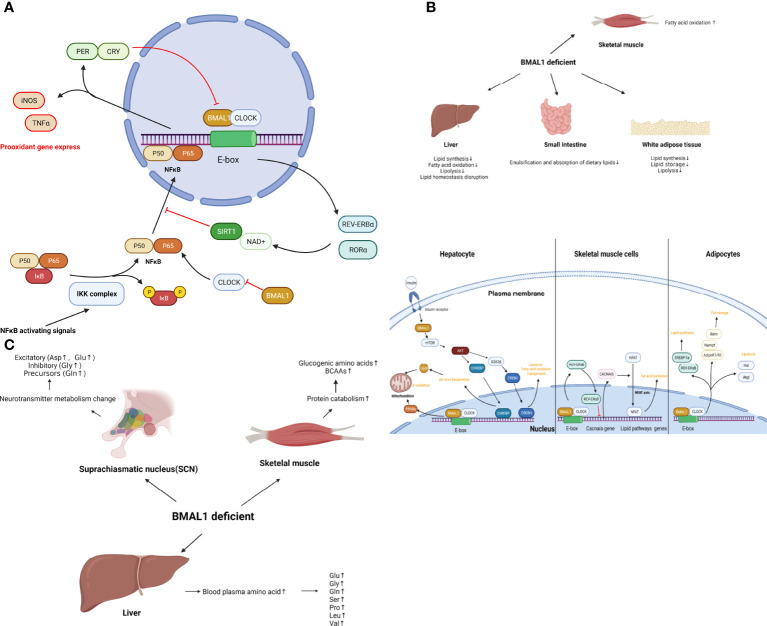

But let's not forget that circadian dysregulation is a key component of ADHD pathophysiology.
In fact individuals with ADHD frequently have mutations or altered expressions of core peripheral clock genes such as BMAL1 and PER2.
BMAL1 binds to CLOCK to activate thousands of downstream "clock-controlled genes" that dictate your physical baseline across a 24-hour window whether that's called when your liver processes glucose or when your muscles take up nutrients.
A disrupted BMAL1 cycle directly destabilizes your baseline dopamine and reward processing because it directly influences gene expression in the ventral striatum (the brain's primary reward and motivation center).
So you will seek out high-stimulation activities simply to feel awake and focused.
Now while BMAL1 acts as the accelerator to power up daily systems, PER2 acts as part of the braking mechanism.
As the day progresses, PER2 proteins steadily accumulate in your cells.
Once they reach peak levels late at night, they physically move into the cell nucleus to bind to and temporarily turn off BMAL1.
PER2 also regulates sensorimotor gating (your ability to filter out redundant or irrelevant environmental stimuli), which explains why people with ADHD frequently experience severe sensory overload.
This also explains (partly) the irritability component in ADHD.
-Morning (BMAL1 deficiency): Irritability from under-arousal.
Your engines won't start.
-Evening (PER2 dysregulation): Irritability from overstimulation.
Your brakes and filters have failed.
Now a Zeitgeber is any external, environmental cue that aligns your internal biological clock to the Earth's 24-hour cycle.
The primary ones are:
-Light
Light is the most powerful zeitgeber in existence.
When photons hit your eyes, they interact with specialized cells called intrinsically photosensitive retinal ganglion cells (ipRGCs).
These cells bypass your visual cortex entirely and travel down the retinohypothalamic tract directly to the master clock in your brain, the suprachiasmatic nucleus (SCN).
Getting bright light (ideally 10,000 lux) early in the morning tells the SCN to trigger the rapid breakdown of accumulated PER2 proteins.
This acts as a biological "reset button," starting your daily 24-hour clock and signaling BMAL1 to begin increasing morning cortisol and dopamine.
-Eating
Eating food acts as a massive metabolic time cue.
When you eat, insulin and other metabolic hormones spike, which directly upregulates BMAL1 and resets clock-gene expressions in your liver, gut, and fat tissue.
So skipping breakfast and having a massive dinner, it's not a great idea if you have ADHD (some people self medicate with fasting + black coffee + nicotine but we've explained why this isn't ideal in previous posts)
-Activity
Highly intense physical activity late at night raises your core body temperature and spikes cortisol, completely overriding the evening drop in temperature required for PER2 to signal bedtime.
-Vitamin D
Vitamin D has a regulatory influence on core circadian clock genes, specifically facilitating the balanced oscillation of BMAL1 and PER2
P.S: Supplements/peptides that might help:
-NMN + TMG
The central molecular clock relies heavily on an enzyme called NAMPT, which fluctuates on a cycle and produces NAD+.
When NAD+ levels are high, they activate the enzyme SIRT1.
SIRT1 deacetylates the clock repressor PER2, which increases its stability and nuclear transport, while simultaneously boosting BMAL1 binding to DNA
-Berberine has been shown to explicitly stimulate the up-regulation and activation of BMAL1.
-Resveratrol plays a restorative role, helping to rescue and normalize flatlined or desynchronized amplitudes of CLOCK, BMAL1, and PER2 when they have been blunted by inflammation or high-fat metabolic stress.
-Melatonin.
Targeted melatonin therapy corrects the attenuated peripheral clock-gene rhythms (BMAL1/PER2) seen in individuals with delayed sleep phases
-VIP
VIP helps individual neurons expressing BMAL1 and PER2 stay in perfect alignment with one another.
Without adequate VIP signaling, peripheral clocks drift apart and desynchronize.
-Epitalon/pinealon
-NAC
When BMAL1 expression is blunted or delayed (as seen in ADHD), the natural morning surge of Nrf2 and glutathione fails to cycle optimally.
NAC delivers the raw building blocks to create glutathione, effectively bypassing a lagging BMAL1 switch
Anyway, for more read this:
fitandball.gumroad.com/l/brain20/v30
19
Part 10: Neuroinflammation & oxidative stress.
Many (not all) people with ADHD have a low-grade, chronic immune activation in the brain, it’s as if the brain’s immune system is stuck in “mild alarm mode.”
This creates extra inflammation and oxidative stress, which slowly damages the very neurons and chemicals that are already struggling in ADHD (especially the dopamine system).
What the studies show:
-Blood and cerebrospinal fluid (CSF) often have higher levels of pro-inflammatory cytokines: IL-6, TNF-α, IL-1β, etc.
-Brain imaging (PET with inflammation markers) sometimes lights up more in ADHD.
-When researchers look at antioxidant defenses, they find lower glutathione (the brain’s main “fire extinguisher” for oxidative stress) and more signs of lipid peroxidation (basically, cell membranes getting burned and rancid).
The leading theories right now of why this happens are:
-Genetic predisposition to stronger immune response (same genes that increase ADHD risk also increase autoimmune and allergic conditions — big overlap with asthma, eczema, rheumatoid arthritis, etc.).
-Early-life triggers (infections, stress, C-section birth, early antibiotics) that shift the immune system into a more “pro-inflammatory” set point.
-Gut–brain axis problems → leaky gut or dysbiosis → inflammatory molecules leak into the blood and cross into the brain.
-The ion-channel and mitochondrial problems we talked about earlier themselves create oxidative stress → vicious cycle.
What the inflammation actually does to an ADHD brain:
Microglia (the brain’s immune cells) become over-active and release cytokines → these directly interfere with dopamine and norepinephrine synthesis and release.
Oxidative stress preferentially damages dopamine neurons (they’re already fragile because they naturally produce more free radicals).
Result → even lower functional dopamine than you’d expect from the genetics alone → worse motivation, focus, and reward problems.
It also makes the blood-brain barrier slightly leakier, so more junk gets in and keeps the cycle going.
Now some other common themes besides these 10 include:
-Lower baseline cortisol
Most people: cortisol peaks sharply in the morning (helps you wake up and focus) and drops low at night.
ADHD average: flatter curve — lower morning peak and sometimes higher evening levels → You wake up feeling flat and unmotivated instead of alert, and you don’t get the natural “wind-down” signal at night (which makes the circadian delay even worse).
This is the opposite of what you see in typical depression or bipolar depression (high cortisol), so standard antidepressants that raise cortisol can sometimes make ADHD worse.
-Iron deficiency, especially low ferritin
Even if you’re not anemic on a regular blood test, ferritin below ~40–50 ng/mL is strongly linked to worse ADHD.
Why?
Iron is a required co-factor for the enzyme that turns tyrosine into dopamine (tyrosine hydroxylase).
Low iron = less dopamine made.
-Zinc and magnesium deficiencies
Zinc: Regulates how much dopamine is released and how strongly it binds to receptors.
Low zinc → over-active dopamine transporter → dopamine disappears too fast (same problem stimulants fix).
ADHD kids and adults are, on average, 20–30% lower in zinc.
Magnesium: Calms NMDA receptors (excitatory glutamate) and supports GABA.
Low magnesium → more neuronal “noise”, worse anxiety and sleep problems.
-Gut dysbiosis
ADHD individuals have measurably different gut microbiomes on average: lower diversity, lower Bifidobacterium and Lactobacillus, higher pro-inflammatory species.
Healthy gut bacteria produce short-chain fatty acids (SCFAs) — especially butyrate — which:
-Strengthen the blood-brain barrier
-Reduce neuroinflammation
-Directly modulate dopamine turnover
When SCFAs are low → leakier gut and brain → more inflammation and oxidative stress.
Overall, most likely, in order to improve your ADHD, you will need to:
-Recognise the patterns that spring from it to gain some mental distance
-Put systems in place that prevent you from messing up
-Address your body
-Reconcile with your mental history (meaning that it’s true for example that some people (fewer than the amount that’s being promoted) developed ADHD simply because a certain part of their upbringing was too painful in order for them to “sit” in it (this is obviously simplified))
and all of these matter almost equally in the long run.
This will probably go something like the following:
Step 1: I have X,Y,Z symptoms.
This is my default setting and i need to accept it if i want to improve it.
Step 2: These symptoms were created because A is happening in my body that i need to mitigate and maybe B was happening in my mind earlier in my life that i need to understand.
Step 3: I am fucking up when these external things are happening.
Is there a system i can put in place in order to prevent that from occurring in the first place?
Step 4: By working more and more on my body, this gives me more freedom (by lowering my symptoms) to work on mind if needed.
Now a list of tools to consider includes:
-Morning bright light 10 000 lux 20–30 min
-L theanine + caffeine
-Ginkgo + caffeine
-PS128 probiotic (Lactobacillus plantarum)
-Citicoline
-Cold exposure (norepinephrine surge + dopamine)
-High-dose magnesium (threonate/glycinate 300–500 mg elemental)
-Creapure (increases brain phosphocreatine → better energy reserve for prefrontal cortex + mild dopamine upregulation)
-Sauna (norepinephrine + dynorphin)
-NAC
-Social media breaks
-Limiting alcohol
-Taurine
-Saffron
-Meditating/praying
-Reading boring but helpful material daily
-Rhodiola rosea (3–6 % rosavins + 1–2 % salidroside, 200–600 mg)
-Oroxylin A
-Supporting mitochondria function overall with CoQ10, L-carnitine, creatine, PQQ, nicotinamide riboside etc
20
"These won't work".
Oh really? Let's pick one of them and see the literature.
At 30mg/day saffron:
-Performs the same as Ritalin in kids with ADHD when it comes to core symptom management.
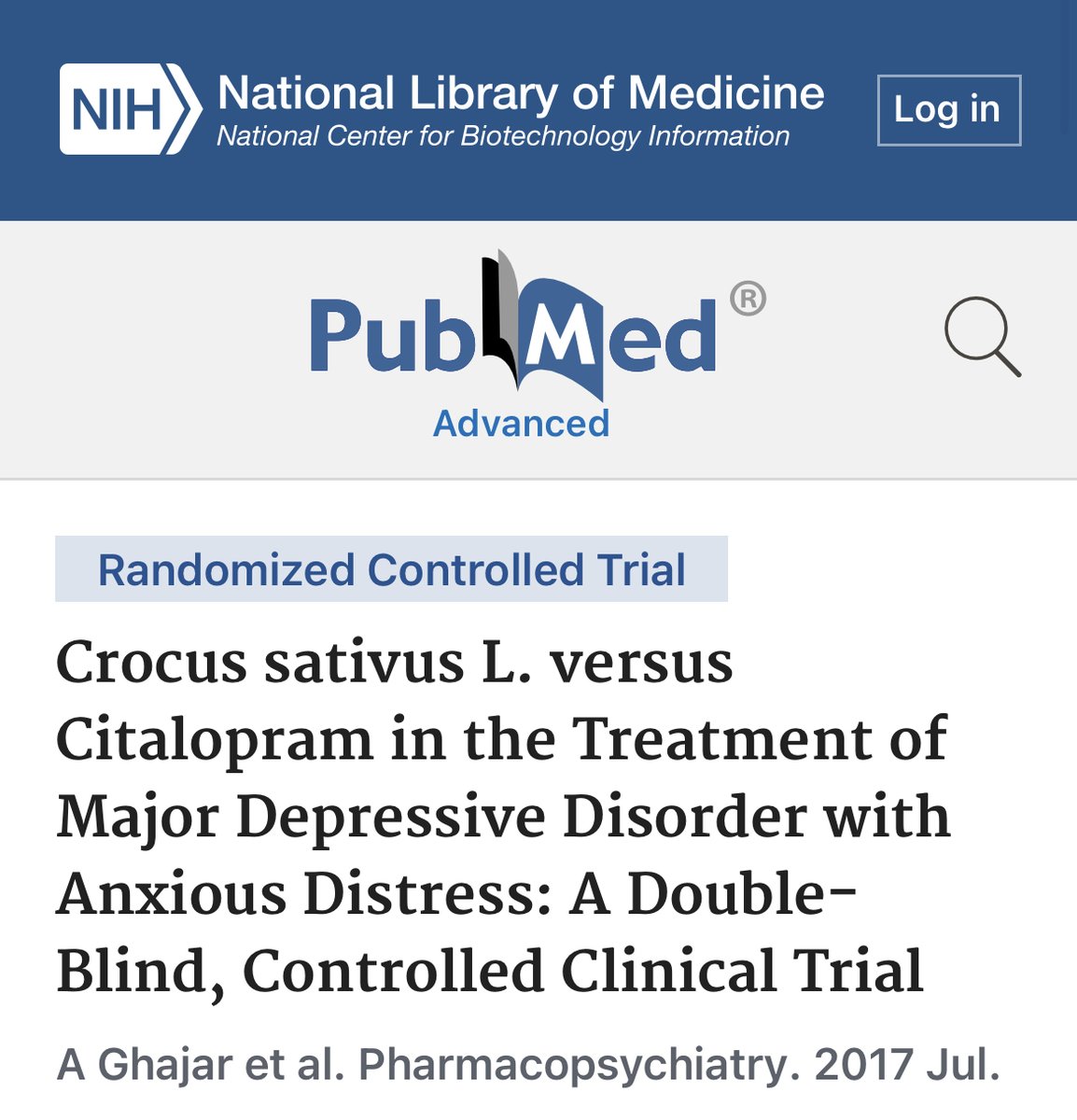
-Performs comparably to Prozac without one-shotting your penis (in fact, it can help reverse SSRI induced sexual dysfunction)
-Resulted in cognitive improvements comparable to donepezil (Alzheimer's) with significantly fewer gastrointestinal side effects.
-Has similar efficacy to citalopram (Celexa) for generalized anxiety symptoms.
-Has no significant statistical difference to fluvoxamine for reducing obsessive-compulsive symptoms.
*Not ideal for people who have issues in the gut lining/mucus (if you want to try it start with 15mg with a meal)
**Not ideal for long term use / for people with elevated liver enzymes
If you want to try higher doses, the list of potential side effects increases (as it happens with all potent tools)
"Why is saffron so powerful?"
Its main bioactive compounds are:
-Crocin
-Crocetin
-Safranal
These act on several pathways rather than hitting a single target giving it a combination of monoamine support + strong antioxidant/anti-inflammatory effects + neurotrophic activity.
-Monoamine modulation (serotonin, dopamine, norepinephrine)
Its active compounds inhibit reuptake of these neurotransmitters (similar to SSRIs/SNRIs) and also inhibit monoamine oxidase enzymes that break them down.
The dual action increases their availability in the synapse.
-Antioxidant and anti-inflammatory actions
Crocin and related compounds are strong antioxidants that reduce reactive oxygen species and can dampen inflammatory signaling.
-It can increase brain-derived neurotrophic factor (BDNF) and related pathways involved in neurogenesis, synaptic plasticity, and neuronal survival (particularly relevant in the hippocampus).
-Safranal shows activity at GABA-A receptors (including the benzodiazepine site)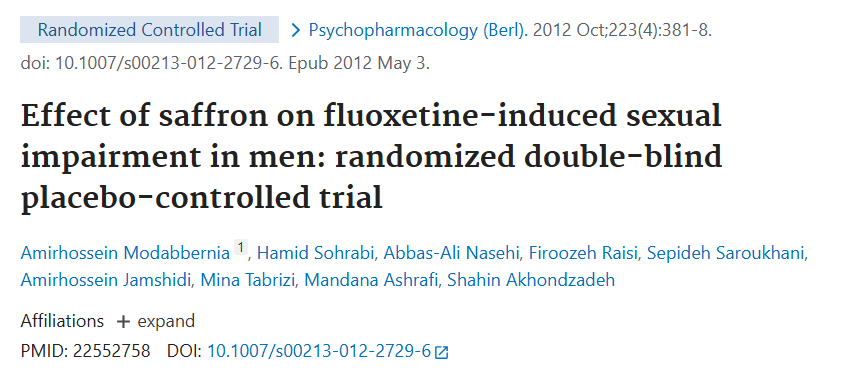


Oh really? Let's pick one of them and see the literature.
At 30mg/day saffron:
-Performs the same as Ritalin in kids with ADHD when it comes to core symptom management.
-Performs comparably to Prozac without one-shotting your penis (in fact, it can help reverse SSRI induced sexual dysfunction)
-Resulted in cognitive improvements comparable to donepezil (Alzheimer's) with significantly fewer gastrointestinal side effects.
-Has similar efficacy to citalopram (Celexa) for generalized anxiety symptoms.
-Has no significant statistical difference to fluvoxamine for reducing obsessive-compulsive symptoms.
*Not ideal for people who have issues in the gut lining/mucus (if you want to try it start with 15mg with a meal)
**Not ideal for long term use / for people with elevated liver enzymes
If you want to try higher doses, the list of potential side effects increases (as it happens with all potent tools)
"Why is saffron so powerful?"
Its main bioactive compounds are:
-Crocin
-Crocetin
-Safranal
These act on several pathways rather than hitting a single target giving it a combination of monoamine support + strong antioxidant/anti-inflammatory effects + neurotrophic activity.
-Monoamine modulation (serotonin, dopamine, norepinephrine)
Its active compounds inhibit reuptake of these neurotransmitters (similar to SSRIs/SNRIs) and also inhibit monoamine oxidase enzymes that break them down.
The dual action increases their availability in the synapse.
-Antioxidant and anti-inflammatory actions
Crocin and related compounds are strong antioxidants that reduce reactive oxygen species and can dampen inflammatory signaling.
-It can increase brain-derived neurotrophic factor (BDNF) and related pathways involved in neurogenesis, synaptic plasticity, and neuronal survival (particularly relevant in the hippocampus).
-Safranal shows activity at GABA-A receptors (including the benzodiazepine site)
21
“Bro these are VITAMIN PILLS”
Once again, let’s see the literature.
ADHD patients might have compromised or slowed B6-dependent enzymes.
The specific B6-dependent enzymes heavily implicated in ADHD include:
1. Dopa decarboxylase that converts L-DOPA into dopamine and 5-HTP into serotonin.
2. Glutamate decarboxylase (GAD) that converts glutamate into GABA.
3. Tryptophan metabolizing enzymes (think the kynurenine pathway)
"But i don't feel anything from B6".
A) Are you using P5P?
B) Do you have enough zinc, B2 and magnesium in your system?
Then zinc helps keep DAT at a healthy baseline, preventing it from vacuuming up dopamine too aggressively.
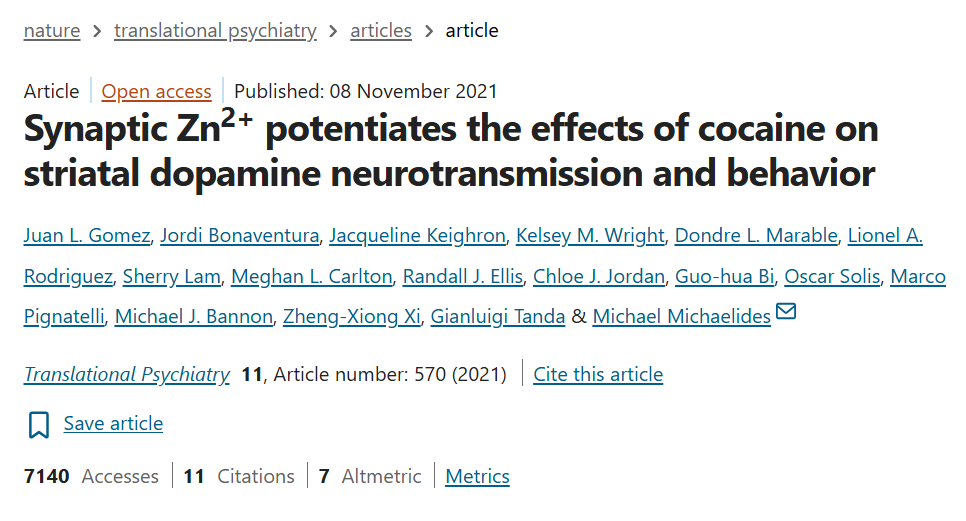
DAT contains four high-affinity extracellular binding sites specifically meant for Zinc.
When Zinc binds to these sites, it physically modulates the transporter's rhythm, altering steady-state currents and optimizing reuptake.
Normally, after dopamine is released into the synaptic cleft, it binds to dopamine receptors on the postsynaptic neuron to exert its effects.
The DAT then clears the dopamine from the synapse and recycles it back into the presynaptic neuron.
So it helps to terminate the action of dopamine by transporting it back into the presynaptic neuron.
So when we inhibit it, we slow down the cleanup of dopamine and leave more of the chemical active in the synapses.
Ritalin for example is a highly effective DAT inhibitor.
Its structural mechanism differs completely from zinc obviously.
While zinc acts as a non-competitive, allosteric clamp that locks the transporter from a side-pocket, methylphenidate operates primarily as an orthosteric blocker.
It targets the S1 central binding site of the dopamine transporter.
This is the exact same internal structural pocket where the dopamine molecule itself lands to be moved across the membrane.
By sitting directly inside the central channel core, it acts like a physical plug and thus dopamine cannot bind to the transporter at all.
Now unlike competitive inhibitors (such as cocaine or Ritalin), which bind directly to the central S1 substrate site halfway across the cell membrane, zinc acts at an entirely independent allosteric site on the outer surface of the transporter.
By anchoring itself to this distinct outer pocket, zinc physically restrains the movement of the transporter.
It acts as a rigid macromolecular bridge that locks the DAT machinery in an "outward-open" conformation.
While the central channel remains open, the transporter is effectively paralyzed, it can no longer undergo the conformational rotation required to pull dopamine out of the synapse and back into the cell.
For someone struggling with ADHD or anhedonia, this highly efficient, non-competitive blocking action provides a unique therapeutic advantage.
Because zinc does not compete for the central keyhole, its ability to stop the cellular "vacuum cleaner" cannot be overridden by fluctuating concentrations of natural dopamine.
It forces a baseline level of dopamine to pool within the synaptic cleft.
This is why DAT inhibitors usually increase the effectiveness of stimulants.
In the context of ADHD, this prolonged synaptic activity helps satisfy under-stimulated reward pathways.
In the case of anhedonia this steady accumulation of active dopamine lowers the activation threshold required to feel pleasure, motivation and goal-directed drive.
Other natural DAT inhibitors that you might be aware of are ginkgo and saffron.
"What about copper?"
At basic doses such as 10-15mg/day, eating just 100 grams of beef liver/week does the trick.
"How do you have all these figured out?"
You should read this:
fitandball.gumroad.com/l/brain20/v30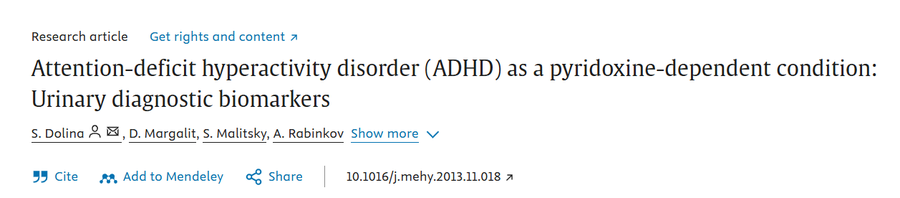
Once again, let’s see the literature.
ADHD patients might have compromised or slowed B6-dependent enzymes.
The specific B6-dependent enzymes heavily implicated in ADHD include:
1. Dopa decarboxylase that converts L-DOPA into dopamine and 5-HTP into serotonin.
2. Glutamate decarboxylase (GAD) that converts glutamate into GABA.
3. Tryptophan metabolizing enzymes (think the kynurenine pathway)
"But i don't feel anything from B6".
A) Are you using P5P?
B) Do you have enough zinc, B2 and magnesium in your system?
Then zinc helps keep DAT at a healthy baseline, preventing it from vacuuming up dopamine too aggressively.
DAT contains four high-affinity extracellular binding sites specifically meant for Zinc.
When Zinc binds to these sites, it physically modulates the transporter's rhythm, altering steady-state currents and optimizing reuptake.
Normally, after dopamine is released into the synaptic cleft, it binds to dopamine receptors on the postsynaptic neuron to exert its effects.
The DAT then clears the dopamine from the synapse and recycles it back into the presynaptic neuron.
So it helps to terminate the action of dopamine by transporting it back into the presynaptic neuron.
So when we inhibit it, we slow down the cleanup of dopamine and leave more of the chemical active in the synapses.
Ritalin for example is a highly effective DAT inhibitor.
Its structural mechanism differs completely from zinc obviously.
While zinc acts as a non-competitive, allosteric clamp that locks the transporter from a side-pocket, methylphenidate operates primarily as an orthosteric blocker.
It targets the S1 central binding site of the dopamine transporter.
This is the exact same internal structural pocket where the dopamine molecule itself lands to be moved across the membrane.
By sitting directly inside the central channel core, it acts like a physical plug and thus dopamine cannot bind to the transporter at all.
Now unlike competitive inhibitors (such as cocaine or Ritalin), which bind directly to the central S1 substrate site halfway across the cell membrane, zinc acts at an entirely independent allosteric site on the outer surface of the transporter.
By anchoring itself to this distinct outer pocket, zinc physically restrains the movement of the transporter.
It acts as a rigid macromolecular bridge that locks the DAT machinery in an "outward-open" conformation.
While the central channel remains open, the transporter is effectively paralyzed, it can no longer undergo the conformational rotation required to pull dopamine out of the synapse and back into the cell.
For someone struggling with ADHD or anhedonia, this highly efficient, non-competitive blocking action provides a unique therapeutic advantage.
Because zinc does not compete for the central keyhole, its ability to stop the cellular "vacuum cleaner" cannot be overridden by fluctuating concentrations of natural dopamine.
It forces a baseline level of dopamine to pool within the synaptic cleft.
This is why DAT inhibitors usually increase the effectiveness of stimulants.
In the context of ADHD, this prolonged synaptic activity helps satisfy under-stimulated reward pathways.
In the case of anhedonia this steady accumulation of active dopamine lowers the activation threshold required to feel pleasure, motivation and goal-directed drive.
Other natural DAT inhibitors that you might be aware of are ginkgo and saffron.
"What about copper?"
At basic doses such as 10-15mg/day, eating just 100 grams of beef liver/week does the trick.
"How do you have all these figured out?"
You should read this:
fitandball.gumroad.com/l/brain20/v30
22
"A reward is a reward dude, changing my lifestyle won't help my ADHD. You are unscientific".
Once again. Nope. Let’s see the damn literature.
Imagine that your brain has two main workers:
1. Dopamine
This is the chemical that makes you feel satisfied and motivated
2. Acetylcholine
This is the chemical that turns on when you focus and try hard
If someone gives you a piece of chocolate for doing nothing, you get a small, normal splash of dopamine.
If you have to walk 5 miles to get that exact same piece of chocolate, your brain turns on Acetylcholine because you are using effort.
When you finally get the chocolate, that Acetylcholine acts like a giant loudspeaker for your dopamine.
By giving you a bigger chemical reward for working hard, your brain literally teaches itself a lesson: "effort is worth it."
This is of vital importance if you have ADHD.
In an ADHD brain, the "loudspeaker" (Acetylcholine) doesn't always turn on properly when things get tough.
Without that loudspeaker, doing hard work feels incredibly draining, and the reward at the end feels small and disappointing.
This is why people with ADHD struggle so much to start difficult tasks, their brains are missing the chemical booster shot that makes effort feel good.
So while for a long time we thought that dopamine levels were entirely dictated by the firing of dopamine cell bodies located deep in the midbrain.
We now know that local interneurons in the nucleus accumbens release a rapid burst of acetylcholine when a task requires high effort.
This acetylcholine binds directly to nicotinic receptors on the nearby dopamine axon terminals.
It acts like a local amplifier, forcing a much larger hit of dopamine to spill out when the reward is achieved compared to when the exact same reward is given for free.
When researchers block this acetylcholine link, the subjects completely lost their drive to perform high-effort tasks, though they still happily ate "free" or low-effort rewards.
Now, to help your brain learn the "effort = worth it" loop, you need a dual strategy:
-Support acetylcholine (the amplifier) to make starting tasks easier
and
-Carefully manage artificial rewards (cheap dopamine) so they do not hijack your motivation system
Once again. Nope. Let’s see the damn literature.
Imagine that your brain has two main workers:
1. Dopamine
This is the chemical that makes you feel satisfied and motivated
2. Acetylcholine
This is the chemical that turns on when you focus and try hard
If someone gives you a piece of chocolate for doing nothing, you get a small, normal splash of dopamine.
If you have to walk 5 miles to get that exact same piece of chocolate, your brain turns on Acetylcholine because you are using effort.
When you finally get the chocolate, that Acetylcholine acts like a giant loudspeaker for your dopamine.
By giving you a bigger chemical reward for working hard, your brain literally teaches itself a lesson: "effort is worth it."
This is of vital importance if you have ADHD.
In an ADHD brain, the "loudspeaker" (Acetylcholine) doesn't always turn on properly when things get tough.
Without that loudspeaker, doing hard work feels incredibly draining, and the reward at the end feels small and disappointing.
This is why people with ADHD struggle so much to start difficult tasks, their brains are missing the chemical booster shot that makes effort feel good.
So while for a long time we thought that dopamine levels were entirely dictated by the firing of dopamine cell bodies located deep in the midbrain.
We now know that local interneurons in the nucleus accumbens release a rapid burst of acetylcholine when a task requires high effort.
This acetylcholine binds directly to nicotinic receptors on the nearby dopamine axon terminals.
It acts like a local amplifier, forcing a much larger hit of dopamine to spill out when the reward is achieved compared to when the exact same reward is given for free.
When researchers block this acetylcholine link, the subjects completely lost their drive to perform high-effort tasks, though they still happily ate "free" or low-effort rewards.
Now, to help your brain learn the "effort = worth it" loop, you need a dual strategy:
-Support acetylcholine (the amplifier) to make starting tasks easier
and
-Carefully manage artificial rewards (cheap dopamine) so they do not hijack your motivation system
23
"Fine but what about the other stuff such as working on "gut health" lmao you unscientific conspiracy theorist".
Well, gut issues and ADHD create a vicious cycle.
In IBS for example, an overgrowth of bacteria like Prevotella copri and Ruminococcaceae, commonly associated with it, has been directly linked to a decreased expression of dopamine transporters (DAT) and D2 receptors (D2R) in the central nervous system.
And if you have ADHD this is the last thing you want.
Transferring gut microbiota from humans with ADHD not only gives mice ADHD but individuals with ADHD also have:
-Nearly 50% higher risk of overall gastrointestinal symptoms
-Are 63% more likely to suffer from IBS
"So there are shared biological root causes of ADHD and gastrointestinal issues?"
Yes, after all a single underlying genetic/physiological mechanism can cause completely different symptoms in different parts of the body.
Let's take dopamine as an example.
Because dopamine regulates both brain functions such as focus, drive etc but also gut motility, a disruption in your body's baseline dopamine system/metabolism/production hits both areas simultaneously.
Let me dumb it down even more (these are oversimplifications):
If dopamine is the "molecular handbrake" and coordinator for your intestines, dopamine "deficiency" as seen in ADHD, directly translates to a faulty, unpredictable brake system in your digestive tract.
In the digestive system, dopamine receptors act as regulators that tell your intestinal muscles when to relax and when to contract to push food through smoothly.
If your body has altered dopamine signaling or lower dopaminergic tone, that "handbrake" doesn't engage or disengage correctly.
Instead of a smooth, rhythmic wave moving food along, your peristalsis becomes erratic.
If the muscles stall completely, you get chronic constipation; if they contract chaotically, you experience the cramping, alternating cycles, and spasms characteristic of IBS.
Then without adequate local dopamine signaling, the intestinal barrier weakens, leading to increased gut permeability and painful issues like acid reflux or generalized indigestion.
fitandball.gumroad.com/l/brain20/v30
Well, gut issues and ADHD create a vicious cycle.
In IBS for example, an overgrowth of bacteria like Prevotella copri and Ruminococcaceae, commonly associated with it, has been directly linked to a decreased expression of dopamine transporters (DAT) and D2 receptors (D2R) in the central nervous system.
And if you have ADHD this is the last thing you want.
Transferring gut microbiota from humans with ADHD not only gives mice ADHD but individuals with ADHD also have:
-Nearly 50% higher risk of overall gastrointestinal symptoms
-Are 63% more likely to suffer from IBS
"So there are shared biological root causes of ADHD and gastrointestinal issues?"
Yes, after all a single underlying genetic/physiological mechanism can cause completely different symptoms in different parts of the body.
Let's take dopamine as an example.
Because dopamine regulates both brain functions such as focus, drive etc but also gut motility, a disruption in your body's baseline dopamine system/metabolism/production hits both areas simultaneously.
Let me dumb it down even more (these are oversimplifications):
If dopamine is the "molecular handbrake" and coordinator for your intestines, dopamine "deficiency" as seen in ADHD, directly translates to a faulty, unpredictable brake system in your digestive tract.
In the digestive system, dopamine receptors act as regulators that tell your intestinal muscles when to relax and when to contract to push food through smoothly.
If your body has altered dopamine signaling or lower dopaminergic tone, that "handbrake" doesn't engage or disengage correctly.
Instead of a smooth, rhythmic wave moving food along, your peristalsis becomes erratic.
If the muscles stall completely, you get chronic constipation; if they contract chaotically, you experience the cramping, alternating cycles, and spasms characteristic of IBS.
Then without adequate local dopamine signaling, the intestinal barrier weakens, leading to increased gut permeability and painful issues like acid reflux or generalized indigestion.
fitandball.gumroad.com/l/brain20/v30
24
"ADHD is just about dopamine".
The traditional formula of "ADHD equals low dopamine" is recognized as incomplete for decades now.
In a neuron, dopamine cannot simply float out on its own.
When an electrical signal reaches the end of a neuron, it triggers an influx of calcium ions.
This calcium surge acts as the physical "trigger" that tells the cell to release dopamine into the synapse.
If calcium handling is disrupted, dopamine release becomes erratic.
Also certain dopamine receptors directly open or close calcium channels, using calcium as a "second messenger" to change how that neuron fires.
So you can talk about dopamine but also glutamate and norepinephrine all day long, but if the electrical signaling systems are not firing properly, you have bigger problems to worry about.
The traditional formula of "ADHD equals low dopamine" is recognized as incomplete for decades now.
In a neuron, dopamine cannot simply float out on its own.
When an electrical signal reaches the end of a neuron, it triggers an influx of calcium ions.
This calcium surge acts as the physical "trigger" that tells the cell to release dopamine into the synapse.
If calcium handling is disrupted, dopamine release becomes erratic.
Also certain dopamine receptors directly open or close calcium channels, using calcium as a "second messenger" to change how that neuron fires.
So you can talk about dopamine but also glutamate and norepinephrine all day long, but if the electrical signaling systems are not firing properly, you have bigger problems to worry about.
25
"Just take stimulants".
And ignore everything else? Not a good idea.
Did you know that even low ferritin can harm your response to stimulants such as modafinil and Adderall?
Your stimulants do not actually create new dopamine out of thin air.
Instead, they act like a pump that forces your brain to release and utilize the dopamine you already have.
Amphetamines for example, reverse the dopamine transporter and promote release from vesicles while also inhibiting reuptake.
Modafinil is more of a reuptake inhibitor (plus other effects when it comes to histame, orexin etc).
So they are not factories that create dopamine out of nothing.
However, to build dopamine in the first place, your brain relies on a specific enzyme called tyrosine hydroxylase.
This enzyme cannot function without iron acting as its structural cofactor.
Here's why.
Tyrosine hydroxylase requires ferrous iron (Fe²⁺) as a cofactor, along with tetrahydrobiopterin (BH4) and oxygen.
The iron is structural to the catalytic mechanism (non-heme iron enzyme that generates a high-valent Fe(IV)=O intermediate).
So low iron availability impairs this step.
On top, iron deficiency also alters the structure of the brain's dopamine D2 receptors and these receptors become less sensitive.
Because the receptors are sluggish, it takes a much higher concentration of a stimulant to force a response.
And this is just ONE marker/nutrient.
Several other nutrients matter for dopamine synthesis and signaling, and a few have at least correlational or adjunctive evidence related to stimulant response.
Iron is one of the better-supported ones, but it is not the only cofactor.
Dopamine synthesis has two main enzymatic steps with specific requirements:
-Tyrosine → L-DOPA via tyrosine hydroxylase (TH)
This needs iron (Fe²⁺) + tetrahydrobiopterin (BH4) + oxygen.
-L-DOPA → dopamine via aromatic L-amino acid decarboxylase (AADC)
This needs vitamin B6 as pyridoxal-5-phosphate (PLP).
So in the first step, BH4 is the other obligatory cofactor for TH (and for tryptophan hydroxylase in serotonin synthesis).
It is made from GTP and regenerated with help from the folate cycle.
So low BH4 or poor recycling can bottleneck the pathway even if tyrosine and iron are sufficient (so it can be related to low B9 or vitamin C).
Then PLP is required for the final conversion of L-DOPA to dopamine so a deficiency can impair that step.
Etc
Also never forget that no amount of caffeine or meds can fix a neuron that physically lacks the energy to fire.
Working to optimize or balance your neurotransmitters is largely ineffective if your cells are not producing enough ATP.
The creation of neurotransmitters from amino acid precursors requires enzymatic steps that are ATP-dependent processes.
So without enough cellular energy, your brain cannot efficiently build these chemical messengers.
Once neurotransmitters are made, they must be actively pumped into storage sacs called vesicles.
This relies on V-ATPase, an enzyme that also requires direct ATP consumption to move neurotransmitters against their concentration gradient.
To send a signal, neurons must fire and then reset their electrical balance.
The sodium-potassium pump resets the neuron's membrane potential after an action potential.
This single process consumes roughly HALF of the total energy used by the entire brain.
Then after a neurotransmitter is released into the synaptic cleft, it needs to be cleared or recycled via reuptake transporters.
These transporters also rely on the ion gradients maintained by ATP-driven pumps.
So without sufficient ATP, your brain cells lack the basic power needed to manufacture, store, release, and clean up neurotransmitters.
To build what feels like "unlimited willpower," you must shift from viewing willpower as a moral choice or a mental muscle and start viewing it as a metabolic resource.
For more you can still get this for 8.5 hours:
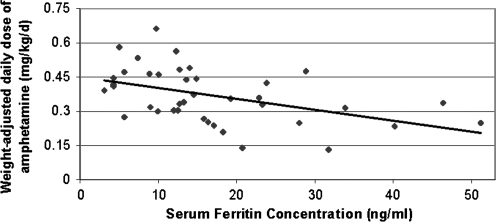
And ignore everything else? Not a good idea.
Did you know that even low ferritin can harm your response to stimulants such as modafinil and Adderall?
Your stimulants do not actually create new dopamine out of thin air.
Instead, they act like a pump that forces your brain to release and utilize the dopamine you already have.
Amphetamines for example, reverse the dopamine transporter and promote release from vesicles while also inhibiting reuptake.
Modafinil is more of a reuptake inhibitor (plus other effects when it comes to histame, orexin etc).
So they are not factories that create dopamine out of nothing.
However, to build dopamine in the first place, your brain relies on a specific enzyme called tyrosine hydroxylase.
This enzyme cannot function without iron acting as its structural cofactor.
Here's why.
Tyrosine hydroxylase requires ferrous iron (Fe²⁺) as a cofactor, along with tetrahydrobiopterin (BH4) and oxygen.
The iron is structural to the catalytic mechanism (non-heme iron enzyme that generates a high-valent Fe(IV)=O intermediate).
So low iron availability impairs this step.
On top, iron deficiency also alters the structure of the brain's dopamine D2 receptors and these receptors become less sensitive.
Because the receptors are sluggish, it takes a much higher concentration of a stimulant to force a response.
And this is just ONE marker/nutrient.
Several other nutrients matter for dopamine synthesis and signaling, and a few have at least correlational or adjunctive evidence related to stimulant response.
Iron is one of the better-supported ones, but it is not the only cofactor.
Dopamine synthesis has two main enzymatic steps with specific requirements:
-Tyrosine → L-DOPA via tyrosine hydroxylase (TH)
This needs iron (Fe²⁺) + tetrahydrobiopterin (BH4) + oxygen.
-L-DOPA → dopamine via aromatic L-amino acid decarboxylase (AADC)
This needs vitamin B6 as pyridoxal-5-phosphate (PLP).
So in the first step, BH4 is the other obligatory cofactor for TH (and for tryptophan hydroxylase in serotonin synthesis).
It is made from GTP and regenerated with help from the folate cycle.
So low BH4 or poor recycling can bottleneck the pathway even if tyrosine and iron are sufficient (so it can be related to low B9 or vitamin C).
Then PLP is required for the final conversion of L-DOPA to dopamine so a deficiency can impair that step.
Etc
Also never forget that no amount of caffeine or meds can fix a neuron that physically lacks the energy to fire.
Working to optimize or balance your neurotransmitters is largely ineffective if your cells are not producing enough ATP.
The creation of neurotransmitters from amino acid precursors requires enzymatic steps that are ATP-dependent processes.
So without enough cellular energy, your brain cannot efficiently build these chemical messengers.
Once neurotransmitters are made, they must be actively pumped into storage sacs called vesicles.
This relies on V-ATPase, an enzyme that also requires direct ATP consumption to move neurotransmitters against their concentration gradient.
To send a signal, neurons must fire and then reset their electrical balance.
The sodium-potassium pump resets the neuron's membrane potential after an action potential.
This single process consumes roughly HALF of the total energy used by the entire brain.
Then after a neurotransmitter is released into the synaptic cleft, it needs to be cleared or recycled via reuptake transporters.
These transporters also rely on the ion gradients maintained by ATP-driven pumps.
So without sufficient ATP, your brain cells lack the basic power needed to manufacture, store, release, and clean up neurotransmitters.
To build what feels like "unlimited willpower," you must shift from viewing willpower as a moral choice or a mental muscle and start viewing it as a metabolic resource.
For more you can still get this for 8.5 hours:
26
Now if you want to learn more, go here:
fitandball.gumroad.com/l/brain20/v30
fitandball.gumroad.com/l/brain20/v30
27
And if you learned something from this thread make sure to leave a like/RT.
George Ferman@Helios_Movement
The ADHD brain explained.
A guide to understanding:
-What it really is
-How it develops
-Its neurochemistry
-The key environmental factors that impact these mechanisms
-How to rewire key pathways in order to be able to focus and crave hard tasks
-Alternative tools that can help repair the underlying biology of the disorder
-Why most treatments fail or have serious side effects -What actually moves the needle to get it under control
and more.
Here's what you need to know.
Thread🧵
A guide to understanding:
-What it really is
-How it develops
-Its neurochemistry
-The key environmental factors that impact these mechanisms
-How to rewire key pathways in order to be able to focus and crave hard tasks
-Alternative tools that can help repair the underlying biology of the disorder
-Why most treatments fail or have serious side effects -What actually moves the needle to get it under control
and more.
Here's what you need to know.
Thread🧵

