Tweestorming a rough chronology of economics since World War II...

Beatrice Cherrier@Undercoverhist
11 views
Oct 18, 2026
~10 min read
Advertisement
1
Tweestorming a rough chronology of economics since World War II
Caveats:
1. It’s not meant at introducing econ ideas but primarily at helping econ undergrads embed ideas & tools seen in micro/macro courses in specific times & places before going deeper in some episodes
Caveats:
1. It’s not meant at introducing econ ideas but primarily at helping econ undergrads embed ideas & tools seen in micro/macro courses in specific times & places before going deeper in some episodes
2
2. it’s historiographically naïve, focused on US, white male mainstream econs b/c it’s what became econ “core” taught everywhere. Leads me to ask, in final lecture, “is econ an objective science?” through pointing to sex, race, geo & status uniformity of contributors to the field
3
3.range of influences covered, from math theorems to shifts in political ideologies, wars & computers is deliberate. My course is built on belief that both histories ignoring contexts/pressures & histories ignoring economists’ genuine quest for scientific knowledge are incomplete
4
1. My timeframe makes interwar, its diversity of core places & practices the ‘prehistory’
In UK, Keynes couches new ways of seeing savings, demand, expectations, employment, deficit in traditional *style * cas2.umkc.edu/economics/peop… (see Keynes talking )
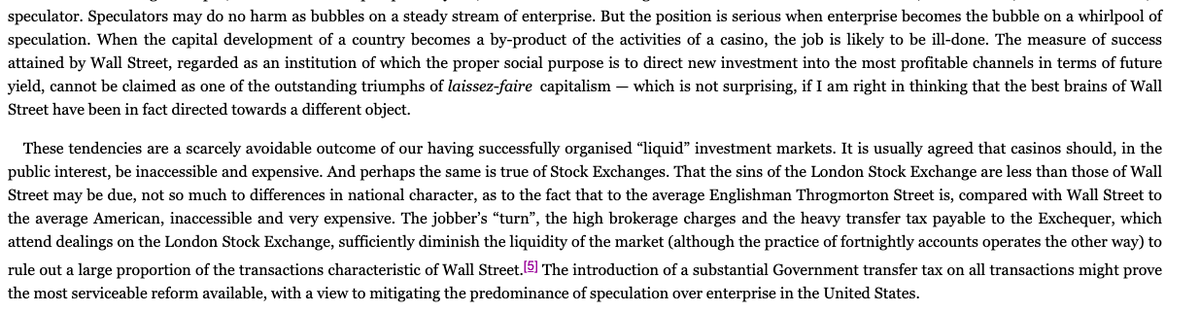

In UK, Keynes couches new ways of seeing savings, demand, expectations, employment, deficit in traditional *style * cas2.umkc.edu/economics/peop… (see Keynes talking )
Econ Films@econfilm
📽 Rare archive footage of John Maynard Keynes! #ThrowbackThursday
Keynes hated the Gold Standard (“a barbarous relic”!), so here he is talking about the positive implications of scrapping it.
What economic policy would you get rid of?
#economics #econtwitter
Keynes hated the Gold Standard (“a barbarous relic”!), so here he is talking about the positive implications of scrapping it.
What economic policy would you get rid of?
#economics #econtwitter
5
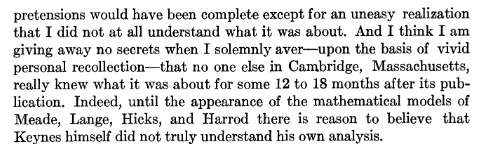
To be fair, not many understood said theory (below is Samuelson reading the General Theory, continuing “it is badly written…not well suited for classroom use…arrogant...genius"). Keynes himself taught a simplified chart version, not only the one proposed by Hicks in 1937...
6
… in famous attempt to compare simplified version of Keynes’s apparatus & “typical” classical theory public.econ.duke.edu/~kdh9/Courses/…
Hicks & others we also busy reframing consumer choice theory as consistency in Paretian setting
Hicks & others we also busy reframing consumer choice theory as consistency in Paretian setting
7
Other UK economists were challenging definition & scope of “political economy”
Against “study of wealth” definition, Lionel Robbins emphasized scarcity, & pushing normative eco (study of ends) outside boundaries of discipline (mises.org/library/essay-… ; aeaweb.org/articles?id=10… )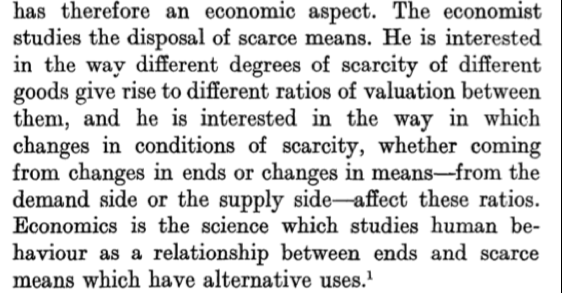
Against “study of wealth” definition, Lionel Robbins emphasized scarcity, & pushing normative eco (study of ends) outside boundaries of discipline (mises.org/library/essay-… ; aeaweb.org/articles?id=10… )
8
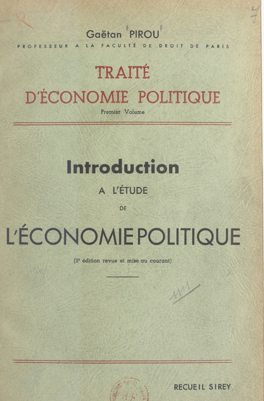
French landscape was very ≠. Roughly 2 traditions coexisted. Econ taught in law school (Piriou) as broad depiction of institutions to train civil servants & “economistes ingenieurs” (Dupuis, Colson, Divisia…), public engineers faced with econ calculus questions

9
The latter group upheld an utopia, that of replacing ideological debates w/ forum to “discuss and examine, in objective & disinterested way, problems faced by the modern world, by using scientific method in which we were trained.” In 1930s, they created X-crise

10
In Netherlands, physics-trained Tinbergen wrote 1st macroeconometric representation of “an economy” (then a new concept). Keynes voices skepticism. Marginal but spreading desire to combine theory, math & stats lead to foundation of Econometric Society papers.ssrn.com/sol3/papers.cf…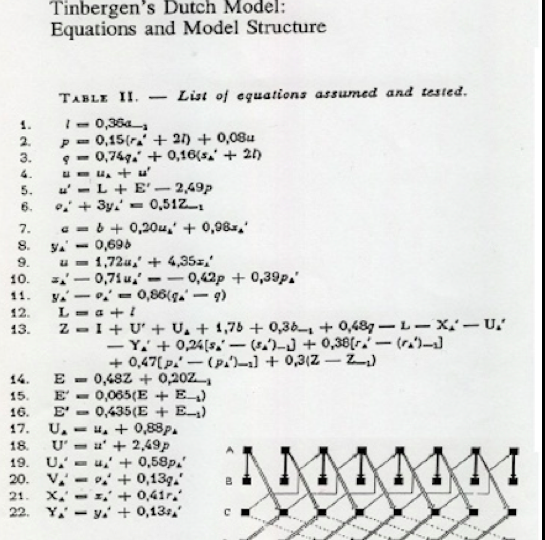
11
Yet founding econometrics on probability was seen as impossible: econ events do not repeat. In 1944, Oslo economist Haavelmo proposed alternative: consider observed econ phenomena as drawn from distribution of possible ones by Nature fitelson.org/woodward/haave…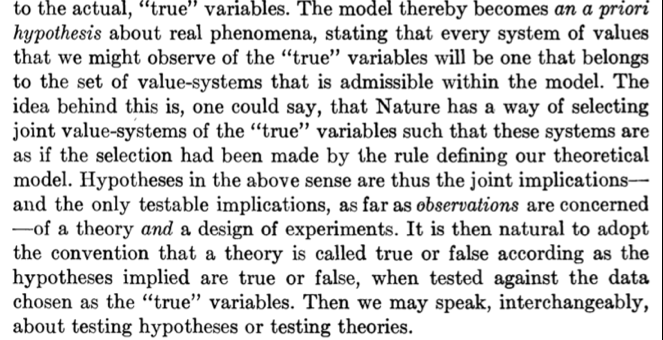
12
US then hosted many ways of doing econ, from marginalism to then powerful & varied brand of institutionalism (Commons, Means, Clark offered detailed depiction of private & public institutions)
At NBER, Mitchell gathered loads of data w/ purpose of measuring business cycles
At NBER, Mitchell gathered loads of data w/ purpose of measuring business cycles
13
2.Second World War was total game changer
1st, b/c of demographic transformation in suppliers of econ: massive emigration of econ, mathematicians, physicists(Von Neumann, Morgenstern, Hayek, Schumpeter, Wald, Marschak& more), some settling down at New School’s University in Exile
1st, b/c of demographic transformation in suppliers of econ: massive emigration of econ, mathematicians, physicists(Von Neumann, Morgenstern, Hayek, Schumpeter, Wald, Marschak& more), some settling down at New School’s University in Exile
14
Emigrés econs brought with them econometrics, general equilibrium, games & public policies based on planning to US, some immediately absorbed & improved in multiple interdisciplinary scientific bodies servicing war effort.
This resulted in: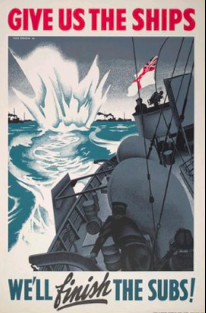
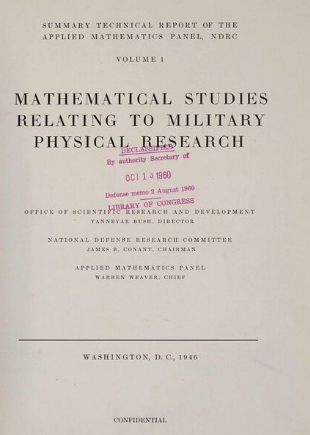
This resulted in:
15
-new ways of representing an “economy” (national accountings, Y=C+I+G identities, Leontief’s input-output tables)
-ways of controlling production & interactions (Operation research, linear programming & simplex, sampling, statistical decision theory, game theory...)
-ways of controlling production & interactions (Operation research, linear programming & simplex, sampling, statistical decision theory, game theory...)
16
-quick institutionalization of economists’ newly recognized social use: Beveridge report & White Paper on Employment Policy in UK, Commissariat General au Plan, INSEE & ENA in France, 1946 Employment Act & Council of Econ Advisors in US (excerpt below)

17
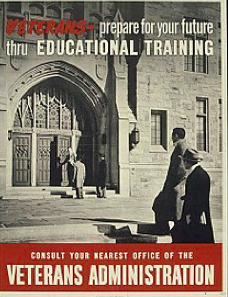
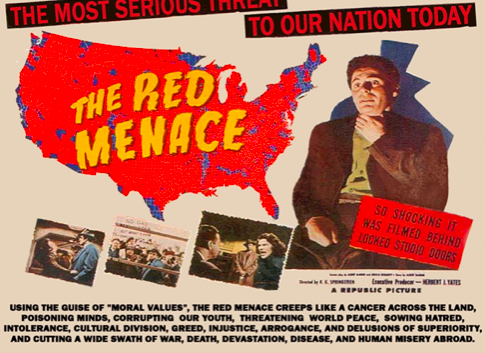
If you add veterans flooding unis, econs enter Cold War in high demand, w/ set of new tools yet to stabilize & skepticism from hard scientists (NSF established without social science division) & politicians (conflation of social sciences, planning & socialism by McCarthyites)
18
3.1950-65:Cold War & Golden Age of Keynesianism
Ideological & science race spurred by Cold War cradled new identity for econ: “science of rational decision”
Building blocks included Von Neumann & Morgenstern’s 1944 Theory of Games, including their expected utility theory...
Ideological & science race spurred by Cold War cradled new identity for econ: “science of rational decision”
Building blocks included Von Neumann & Morgenstern’s 1944 Theory of Games, including their expected utility theory...
19
Nash soon built on advances in deriving fixed-point theorems to propose solution concept for non-cooperative games & RAND researchers began experimenting to study repeated prisoners’ dilemma outcome bradford-delong.com/2018/10/prison…
20
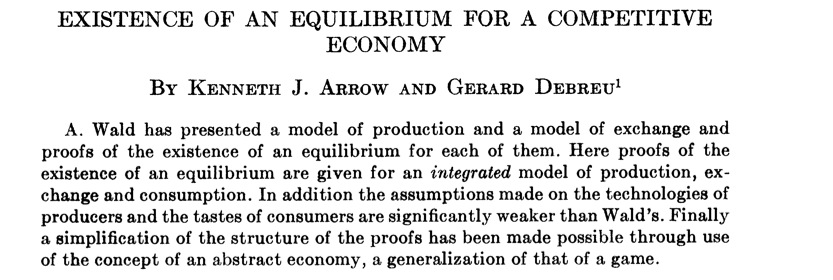
Young Arrow studying benchmark econ organization noticed Nash’s use of Kakutani’s theorem, one that French math Debreu looking for pure axiomatic systems knew from studying topology. In 1954, they offered proof existence of competitive equilibrium in general equilibrium setting
21
At MIT, another synthesis was taking shape, based on Samuelson’s reading of (Hicks’s) Keynes in Foundations, Solow’s modeling of long term & growth, & the duo’s identification of a US Phillips Curve in 1960 (Below is Samuelson 1955 version of Economics)

22
This US brand of Keynesianism was translated into policy as Kennedy brought Heller, Tobin and Gordon to the Council of Econ Advisors, w/ Solow as staff members & Samuelson as shadow advisors. They campaigned for a tax cut & to make public deficits acceptable, convinced Kennedy

23
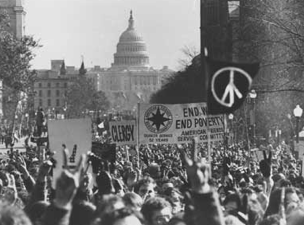
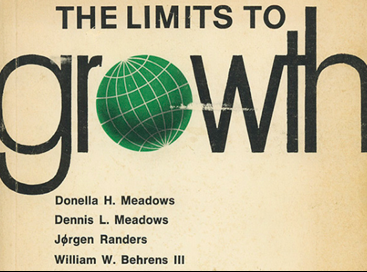
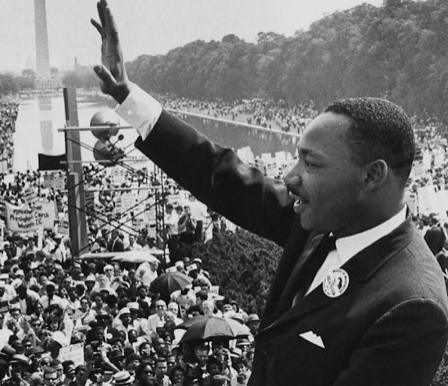
As Johnson implemented tax cut & War on Poverty, western societies entered a state of crisis & so did econ (or at least an age of paradoxes): students, black citizens & women rebelled, cities & the Gold Standard broke, oil prices, unemployment & environmental concerned surged

24
1.1965-1980: Crises
The period was one of paradoxes. For instance, on the one hand, Sonnenschein, Mantel & Debreu showed that the next steps in general equilibrium program, aka equilibrium uniqueness & stability, would be hard (if not impossible) to reach, but on the other….
The period was one of paradoxes. For instance, on the one hand, Sonnenschein, Mantel & Debreu showed that the next steps in general equilibrium program, aka equilibrium uniqueness & stability, would be hard (if not impossible) to reach, but on the other….
25
… from 1970s onward, econ fields in search of recognition had to reorganize their lit around preferably general equilibrium based workhorse models. Some did (Public econ, IO or political econ), some failed or refused (urban, development, ag). Field journos & societies mushroomed


26
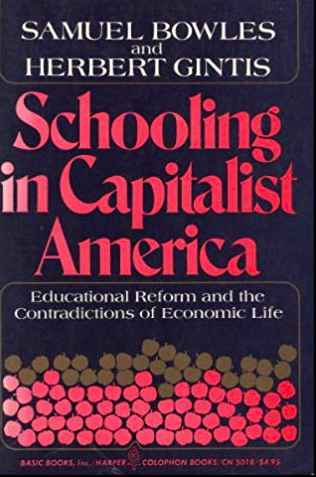
Consolidation of “mainstream” models & methods pushed some econs to self-identify as heterodox. URPE founded in 1968. Radical econs were then powerful voices, advocating interdisciplinary, arguing neoclassical framework cannot explain power, inequality, oppression, structures

27
2nd paradox: one the one hand, rational choice behavior econ models were successfully exported to raising children, choosing constitutions, voting, committing crime, waging a war & more (‘econ imperialism’), by the likes of Becker, Posner, Hischleifer, Buchanan, Olson...

28
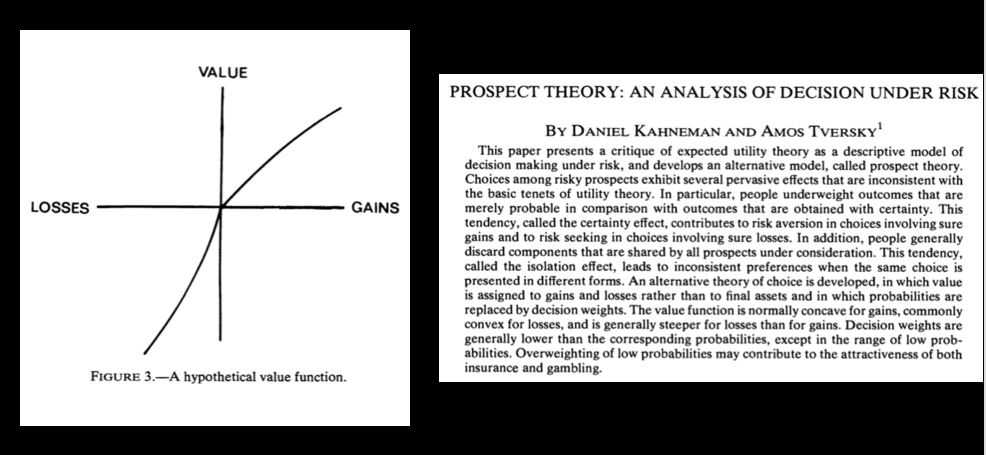
... & intellectual appeal of explaining/predicting large array of social behavior through parsimonious set of assumptions (emphasized by Friedman in 1953 essay) was huge. On the other, rational choice framework increasingly challenged by econ experimenting w/ psychologists
29
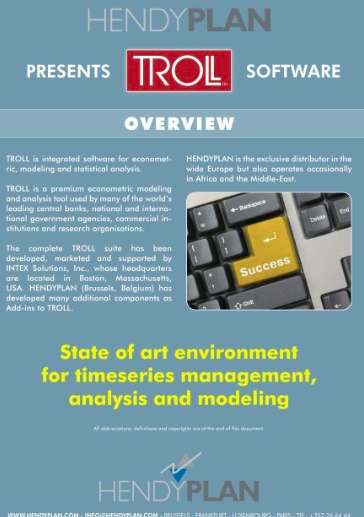
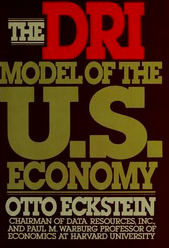
3rd paradox: on the one hand, econs developed software (TROLL, TSP, GIVE DATABANK) & made money from selling forecasts, database & computer time-sharing services (DRI, Chase, Wharton) & governments launched longitudinal surveys such as PSID in 1968…

30
….on the other, econometrics, then almost single way of confronting hypotheses to data, had become, according to Leamer (1981), completely disparaged. Econ failure to ‘randomize’ or to ‘control’ for such & such variable was seen increasingly problematic

31
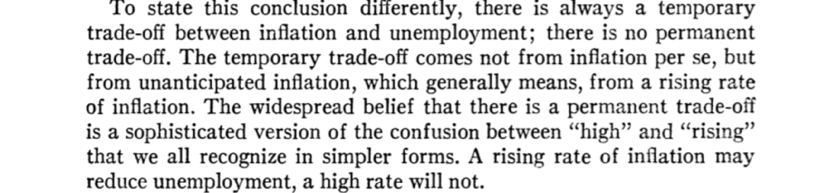
4th paradox: academic macro entered state of permanent war that policy-makers couldn’t adjudicate. Friedman scored big time with his 1967 AEA presidential address introducing natural rate of unemployment, challenging inflation-unemployment tradeoff...
32
… but as his plea to replace interest rates management w/ money supply growth rule was somewhat implemented by Fed chairman Paul Volcker in 1979, his views were challenged by sets of methodological, theoretical and policy more radical criticisms


33
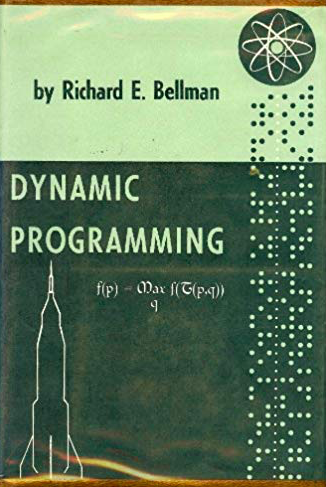
Lucas’ 1972 attempt to demonstrate neutrality of money didn’t stick long, but modeling strategy did: rational expectations, microfoundations & equilibrium dynamics fueled by dissemination of Bellman & Pontryagin’s dynamic optimization maths

34
His wrath was particularly targeted at large-scale Keynesian macroeconomic models which, he argued, didn’t model policy-invariant deep micro relationships therefore failed to predict consequence of policy regime changes. In 78 paper w/ Sargent, he declared Keynesian macro dead

35
Most academic macros acquiesced to modeling strategies, found empirical invariance concerns irrelevant & rejected “inefficiency of discretionary policies” conclusions. Central bank & private firms macros paid little attention, money & financial markets were discussed separately
36
5.1980-2008: reformation
This period was largely devoted to solving paradoxes, yet in suddenly overhauled political setting where Reagan/Thatcher govs placed new demands on them (cost/benefit evaluation of policies, market-like allocations, Washington consensus implementation)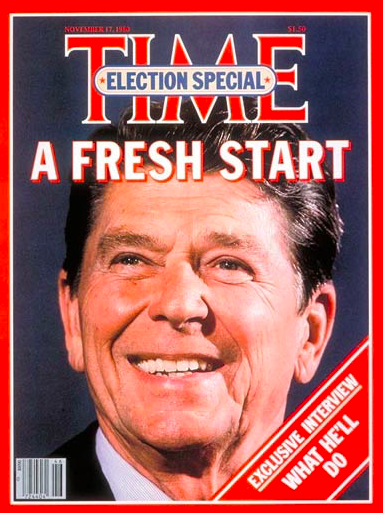
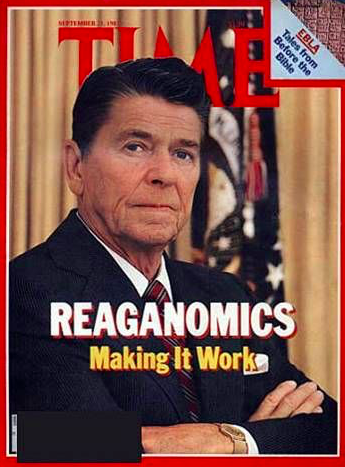
This period was largely devoted to solving paradoxes, yet in suddenly overhauled political setting where Reagan/Thatcher govs placed new demands on them (cost/benefit evaluation of policies, market-like allocations, Washington consensus implementation)
37
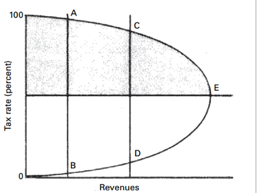
Academic econs navigated blurred boundaries between science & politics, given that most prominent contributors also publicized “free market” ideologies on TV shows (youtube.com/watch?v=R5Gppi…), & competed with “pop econ” supply-siders products like the Laffer curve

38
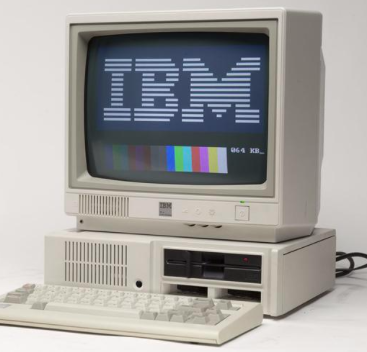
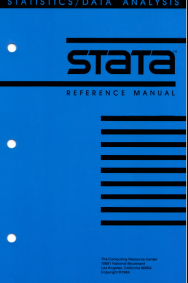
Another big change was introduction of PC by IBM in 1981, followed by development of more software like STATA, then languages like R more recently. Allowed econs to explore several ways to solve econometrics crisis & rebalance theory/metrics relationships
39
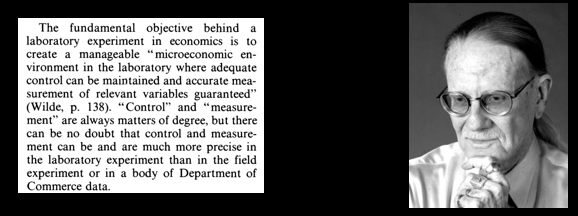
Quest ranged from development of calibration, VARs, S-VARs, Bayesian analysis, monte carlo methods in macro to development of experimental econ by Smith, Plott & others. Took not only new labs, but fight to get experimental settings recognized as legit by editors (Smith here)
40
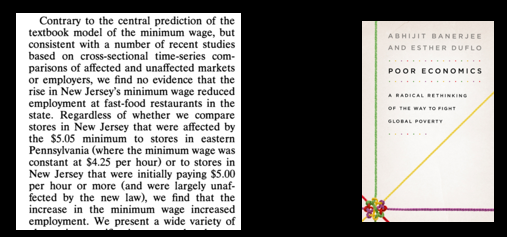
Search for better ‘control’ went beyond lab, into the field, w/ development of randomized control experiments (Banerjee/Duflo/Kremer, JPal, dev econ, etc), & quasi experimental techniques like natural experiment by Card&Krueger(their method was soon accepted, conclusions less so)
41
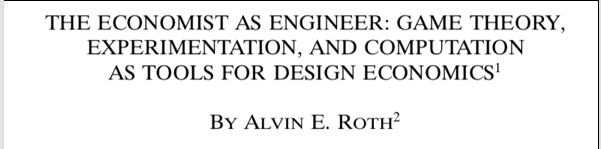
Innovations no less important in theoretical econ: some opted for incremental changes, bringing imperfect info, contracts, & non-convexities in models (Romer, Krugman, etc), non-cooperative game theory finally spread as econ went from studying to engineering allocation mechanism
42
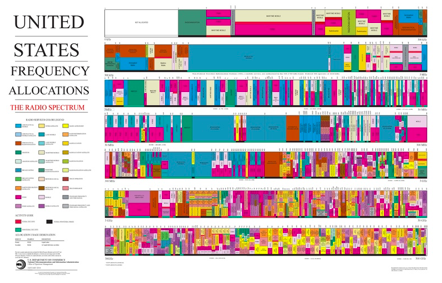
Examples included development of kidney market & auction mechanism to sell electromagnetic spectrum in 1994. Some more radical theories were tamed (like behavioral econ), other matured but got marginalized (Austrian, Post Keynesian, Feminists, marxists, evolutionary, complexity)
43
In 1990s, as long expansion unfolded, macros agreed on set of stylized facts, reached some consensus on workhorse model (intertemporal GE w/ frictions known as DSGE) though not on monetary/fiscal policies & confidently spread those models to central banks
Then 2008 crisis hit
Then 2008 crisis hit
44
You’ve noticed that my history inevitably becomes thinner as I get closer to present. Post-2008, of course, is no history yet, and I can only suggest to students that, as previous post-crises periods, there are a lot of debates around, & that they should follow some:
45
3 paths in macro
1)Lots of research enriching preserved core model : adding financial frictions, better microfooundations (heterogeneity of households/firms, better empirics, departures from rational expectations through piecemal use of behavioral econ), more search & matching
1)Lots of research enriching preserved core model : adding financial frictions, better microfooundations (heterogeneity of households/firms, better empirics, departures from rational expectations through piecemal use of behavioral econ), more search & matching
46
2)More radical departures like agent-based modeling (aka simulations w/ large number of agents w/ decision heuristics & learning rules)
3)Even more radical challenge to writing ‘models’ as best method; recover institutional descriptive methods
3)Even more radical challenge to writing ‘models’ as best method; recover institutional descriptive methods
47
Roughly 3 general types of response to skepticism
1)More stringent empirical standards. Some advocate RCTs as only Gold standard able to adjudicate causality questions. Other try to tame ‘big data’ (meaning that real-time recording of econ behaviors provide more data than...
1)More stringent empirical standards. Some advocate RCTs as only Gold standard able to adjudicate causality questions. Other try to tame ‘big data’ (meaning that real-time recording of econ behaviors provide more data than...
48
can be handled by empirical techniques, as has already happened in the past) through making machine learning consistent with causality identification methods characteristics of econ. These econs also have to debate their def of causality with statisticians (PO vs DAGs debate)
49
2)Other on the contrary argue that econs should reclaim lost role 1) describing/quantifying w/o causal analysis (see debate on measuring wealth inequality) 2) reclaiming normative analysis & discussing/theorizing entire sets of social structures (Piketty or Weyl among others)
50
3)Middle-of-the-road position advocate building library of models for various purposes, not being slave to them, combining them w/ judgment & recognizing systematic biases in mainstream models (Rodrick; follow debates around EFIP manifesto. Others?)
51
Key ≠ with previous post-crises periods is 1) that econ is much more hierarchized a profession, & this shows no sign of relaxing but 2) rise of social media allow them to shortcut hierarchies (see MMT debate). Not sure what overall effect on next generation of models will be
52
Wrap up: this often caricatural chronology is my 6-hours introduction to a course in which students then go read (more subtle & rich) past debates on mathematization; theory and data; realism, generality & tractability; objectivity & ideology beatricecherrier.wordpress.com/2019/04/22/und…
53
My bet is that studying longstanding debates & historical dynamics of the field will help them navigate this transitional era & better articulate their own methodological choices as economists. And if you agree, then your students should get a history course too
/end/
/end/