Not getting quality sleep is ruining your health more than you...

George Ferman@Helios_Movement
131 views
Aug 09, 2024
~7 min read
Advertisement
1
Not getting quality sleep is ruining your health more than you might think.
Here’s what you can to do about it.
Thread🧵

Here’s what you can to do about it.
Thread🧵
2
*Standard disclaimer that nothing in this thread should be used as a substitute for medical advice*
If you’ve been sleep deprived for an extended period of time you are already aware of the serious negative effects that it has on multiple areas of your health.
But in case you aren’t here are some obvious and not obvious health issues that sleep deprivation will lead to down the live:
-Fatigue
-Increased risk for cancer
-Immune system dysfunction
-Hormonal issues such as low testosterone, insulin resistance and hypothyroidism
-Hypertension
-Vascular damage
-Mood swings
-Premature skin aging and other issues such as dark circles
-CVD
-Liver issues
and sleep deprivation will of course exacerbate all existing health issues.
If you’ve been sleep deprived for an extended period of time you are already aware of the serious negative effects that it has on multiple areas of your health.
But in case you aren’t here are some obvious and not obvious health issues that sleep deprivation will lead to down the live:
-Fatigue
-Increased risk for cancer
-Immune system dysfunction
-Hormonal issues such as low testosterone, insulin resistance and hypothyroidism
-Hypertension
-Vascular damage
-Mood swings
-Premature skin aging and other issues such as dark circles
-CVD
-Liver issues
and sleep deprivation will of course exacerbate all existing health issues.
3
So it’s not pretty and here are some studies:
ncbi.nlm.nih.gov/pmc/articles/P…
ncbi.nlm.nih.gov/books/NBK19961/
sciencedirect.com/science/articl…………
sciencedirect.com/science/articl………
mdpi.com/2076-3921/12/3…
pubmed.ncbi.nlm.nih.gov/21075236/
pubmed.ncbi.nlm.nih.gov/8827131/
pnas.org/doi/10.1073/pn…………
pubmed.ncbi.nlm.nih.gov/39061395/
ncbi.nlm.nih.gov/pmc/articles/P…
ncbi.nlm.nih.gov/books/NBK19961/
sciencedirect.com/science/articl…………
sciencedirect.com/science/articl………
mdpi.com/2076-3921/12/3…
pubmed.ncbi.nlm.nih.gov/21075236/
pubmed.ncbi.nlm.nih.gov/8827131/
pnas.org/doi/10.1073/pn…………
pubmed.ncbi.nlm.nih.gov/39061395/
4
So getting quality sleep daily is non negotiable for anyone who wants to optimize his health but lots of people are struggling with insomnia so let’s see some things that you’ve probably heard of and some that you probably haven’t that could help you out.
Now in the case that you think you are sleeping fine ask yourselves the following 2 questions:
1) Can i sleep every night for 8 hours straight with no problem?
2) Do i wake up rejuvenated every morning?
If the answer to any of this is no, then there’s room for improvement and these are good news because it means that you can massively improve your health completely for free.
Now in the case that you think you are sleeping fine ask yourselves the following 2 questions:
1) Can i sleep every night for 8 hours straight with no problem?
2) Do i wake up rejuvenated every morning?
If the answer to any of this is no, then there’s room for improvement and these are good news because it means that you can massively improve your health completely for free.
5
Now sleep is controlled by two processes: circadian and homeostatic.
During waking hours, the sleep drive gradually increases until it reaches a critical threshold.
This drive is referred to as homeostatic.
Circadian rhythm, on the other hand, is a signal generated by the master clock, the suprachiasmatic nucleus (SCN) located in the anterior hypothalamus. Circadian rhythm, derived from the Latin term “circa diem” which literally means “approximately one day” is the body's internal clock.
This clock is set at slightly over 24 hours.
It controls sleep as well as most biological processes, including hormone production, metabolism, core body temperature variations, and cell regeneration among others.
This clock is normally highly synchronized to environmental cues such as the light-dark cycle and eating.
Disturbance of the circadian rhythm and homeostatic drive (circadian misalignment) can lead to various sleep disorders.
During waking hours, the sleep drive gradually increases until it reaches a critical threshold.
This drive is referred to as homeostatic.
Circadian rhythm, on the other hand, is a signal generated by the master clock, the suprachiasmatic nucleus (SCN) located in the anterior hypothalamus. Circadian rhythm, derived from the Latin term “circa diem” which literally means “approximately one day” is the body's internal clock.
This clock is set at slightly over 24 hours.
It controls sleep as well as most biological processes, including hormone production, metabolism, core body temperature variations, and cell regeneration among others.
This clock is normally highly synchronized to environmental cues such as the light-dark cycle and eating.
Disturbance of the circadian rhythm and homeostatic drive (circadian misalignment) can lead to various sleep disorders.
6
So this means that a lot of people today experience sleep problems due to a dysregulated CR.
So here's how you can improve a possible circadian rhythm dysregulation.
Step 1: Avoid the main things that dysregulate our CR when this is possible which mainly are:
-An unhealthy light environment
-Shift work
-Irregular sleep and wake up times
-Stimulants (this includes certain supplements and medications as well)
-Eating way too sporadically in terms of timing and portions (this might sound counterintuitive but circadian rhythms are greatly affected by certain environmental cues and even though the main time cue for our central clock is light, for our peripheral clocks, food intake will ALSO be a time cue).
-Working out too late in the day
-Frequent traveling and changing time zones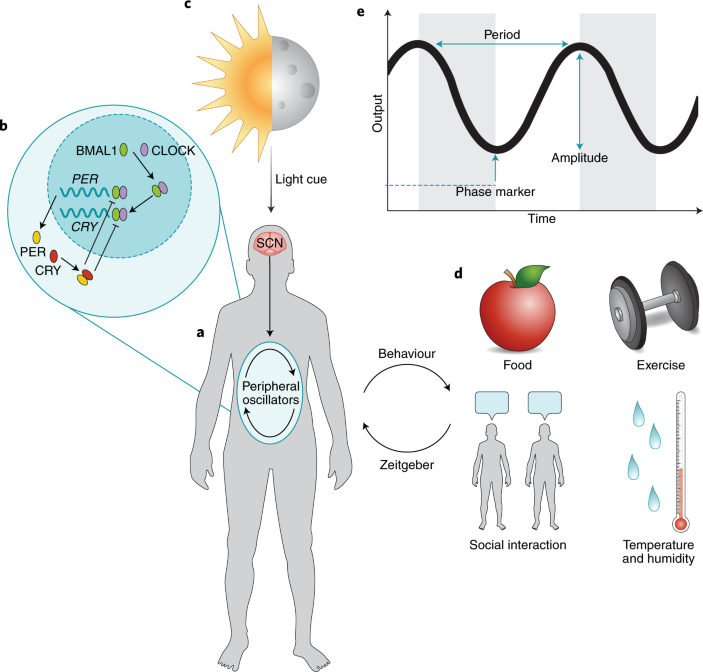
So here's how you can improve a possible circadian rhythm dysregulation.
Step 1: Avoid the main things that dysregulate our CR when this is possible which mainly are:
-An unhealthy light environment
-Shift work
-Irregular sleep and wake up times
-Stimulants (this includes certain supplements and medications as well)
-Eating way too sporadically in terms of timing and portions (this might sound counterintuitive but circadian rhythms are greatly affected by certain environmental cues and even though the main time cue for our central clock is light, for our peripheral clocks, food intake will ALSO be a time cue).
-Working out too late in the day
-Frequent traveling and changing time zones
7
Step 2: Try the following:
-Wake up at roughly the same time every day.
-Expose yourself to natural light first thing in the morning without sunglasses, glasses or contacts if possible.
-Have a healthy breakfast.
-Do not have caffeine or any other stimulant for the first 90 minutes of the day.
-Do not do any form of intense exercise in the first 90 minutes of the day.
You can go for things such as walk obviously*
-Block the artificial blue light within reason throughout the day.
-Eat lunch.
-Do not consume caffeine or nap in the afternoon.
-Destimulate twice daily.
-Do not have huge meals late in the day.
-Roughly have the same bedtime and preferably before 11 p.m
-Try to avoid snacking unless you’re sensing that your blood glucose is too low.
-Do not make significant changes to your meal timing and workout time every day.
-Wake up at roughly the same time every day.
-Expose yourself to natural light first thing in the morning without sunglasses, glasses or contacts if possible.
-Have a healthy breakfast.
-Do not have caffeine or any other stimulant for the first 90 minutes of the day.
-Do not do any form of intense exercise in the first 90 minutes of the day.
You can go for things such as walk obviously*
-Block the artificial blue light within reason throughout the day.
-Eat lunch.
-Do not consume caffeine or nap in the afternoon.
-Destimulate twice daily.
-Do not have huge meals late in the day.
-Roughly have the same bedtime and preferably before 11 p.m
-Try to avoid snacking unless you’re sensing that your blood glucose is too low.
-Do not make significant changes to your meal timing and workout time every day.
8
Another thing that's worth noting, is that B2, magnesium, B1, B9, B6, B12, zinc and vitamin K are all crucial for sleep.
researchgate.net/publication/32…
FAD for example (in mice) controls the circadian rhythm in a light-independent manner.
Not enough B2 -> FAD is negatively affected -> Enhanced CRY degradation.
researchgate.net/publication/32…
FAD for example (in mice) controls the circadian rhythm in a light-independent manner.
Not enough B2 -> FAD is negatively affected -> Enhanced CRY degradation.
9
Another great thing to do is make your room as dark as possible and cool it down a bit.
For millions of years, we lived under the influence of sources of light with a lux of 0.0001-3.4 at night.
But now?
You can live even under 500! This is 50.000 times MORE in some cases.
For millions of years, we lived under the influence of sources of light with a lux of 0.0001-3.4 at night.
But now?
You can live even under 500! This is 50.000 times MORE in some cases.
10
Of course blocking the artificial blue light at night is a good idea overall since it has a lot of downsides.
frontiersin.org/journals/pharm………
frontiersin.org/journals/pharm………
frontiersin.org/journals/pharm………
pubmed.ncbi.nlm.nih.gov/34030374/
pubmed.ncbi.nlm.nih.gov/21155623/
pubmed.ncbi.nlm.nih.gov/7709998/
pubmed.ncbi.nlm.nih.gov/23696577/
pubmed.ncbi.nlm.nih.gov/26227889/
sciencedirect.com/science/articl…………
mdpi.com/2076-3921/12/1…………
sciencedirect.com/science/articl………
frontiersin.org/journals/pharm………
frontiersin.org/journals/pharm………
frontiersin.org/journals/pharm………
pubmed.ncbi.nlm.nih.gov/34030374/
pubmed.ncbi.nlm.nih.gov/21155623/
pubmed.ncbi.nlm.nih.gov/7709998/
pubmed.ncbi.nlm.nih.gov/23696577/
pubmed.ncbi.nlm.nih.gov/26227889/
sciencedirect.com/science/articl…………
mdpi.com/2076-3921/12/1…………
sciencedirect.com/science/articl………
11
Now let's talk about GABA.
GABA is the main inhibitory transmitter especially in the brain but also the spinal cord.
So without healthy levels of GABA, we will experience issues such as insomnia.
What can you do in order to have healthy levels of GABA.
Number 1: Get enough magnesium and vitamin B6 (there are other crucial nutrients that will be mentioned).
*Remember the glutamine - glutamate -GABA cycle.
Number 2: Do not mess up your pancreas.
The beta cells in the pancreas produce GABA so if our pancreas is not at a healthy state this will affect GABA.
Number 3: Avoid chronic stress.
When glucocorticoid hormones are released, GABA has to counteract some of their signaling but if we are in a constant stressful state, GABA simply can’t keep up.
Number 4: Get enough dietary taurine and glycine.
Amino acids partly are building blocks for neurotransmitters so if we do not provide enough of them, we simply can’t have enough of them.
Now it is in fact very true that most people don’t consume nearly enough glycine and taurine from dietary sources.
In order to fix that, go and get a grass fed beef gelatine and some quality seafood such as scallops.
Number 5: Cycle stimulants (nicotine, caffeine etc).
Number 6: Provide enough thiamine (vitamin B1), vitamin C, vitamin D, vitamin A, copper, zinc, magnesium, taurine and vitamin E.
Preferred sources of these vitamins, aminos and minerals are: sunlight, kiwis, hibiscus, berries, quality beef liver, oysters, lamb, magnesium glycinate, red palm oil and EVOO (extra virgin olive oil).
GABA is the main inhibitory transmitter especially in the brain but also the spinal cord.
So without healthy levels of GABA, we will experience issues such as insomnia.
What can you do in order to have healthy levels of GABA.
Number 1: Get enough magnesium and vitamin B6 (there are other crucial nutrients that will be mentioned).
*Remember the glutamine - glutamate -GABA cycle.
Number 2: Do not mess up your pancreas.
The beta cells in the pancreas produce GABA so if our pancreas is not at a healthy state this will affect GABA.
Number 3: Avoid chronic stress.
When glucocorticoid hormones are released, GABA has to counteract some of their signaling but if we are in a constant stressful state, GABA simply can’t keep up.
Number 4: Get enough dietary taurine and glycine.
Amino acids partly are building blocks for neurotransmitters so if we do not provide enough of them, we simply can’t have enough of them.
Now it is in fact very true that most people don’t consume nearly enough glycine and taurine from dietary sources.
In order to fix that, go and get a grass fed beef gelatine and some quality seafood such as scallops.
Number 5: Cycle stimulants (nicotine, caffeine etc).
Number 6: Provide enough thiamine (vitamin B1), vitamin C, vitamin D, vitamin A, copper, zinc, magnesium, taurine and vitamin E.
Preferred sources of these vitamins, aminos and minerals are: sunlight, kiwis, hibiscus, berries, quality beef liver, oysters, lamb, magnesium glycinate, red palm oil and EVOO (extra virgin olive oil).
12
Another good idea if you've been struggling with insomnia would be to support the adrenals through:
-Eating breakfast
-Not doing prolonged fasting very often
-Getting enough zinc, vitamin C and B vitamins (especially B5)
-Cycling stimulants
-Sunlight
-Lowering stress
-Not working out very intensely in a fasted stated very often (weekly)
-Not going low carb for months on end unless your M.D says otherwise
-Eating breakfast
-Not doing prolonged fasting very often
-Getting enough zinc, vitamin C and B vitamins (especially B5)
-Cycling stimulants
-Sunlight
-Lowering stress
-Not working out very intensely in a fasted stated very often (weekly)
-Not going low carb for months on end unless your M.D says otherwise
13
Improving glucose storage/metabolism could also help since it's one very common cause of sleep problems such as waking up in the middle of the night (given that you are not following a keto or carnivore diet).
If you want to improve your glucose metabolism, in a nutshell you want to:
0. Eat under natural light.
1. Focus on gut health and especially address possible pathogen-related issues
2. Stop consuming bad fats such as canola oil
3. Quit alcohol
4. Avoid artificial blue light and get more sunlight
5. Replenish B vitamins and minerals
6. Resistance train 3/week
7. When it comes to carbs you want to get the minimum effective dose.
You don’t want to spike blood glucose too much but just enough.
8. Do not eat huge meals at night since melatonin, upon its release, blocks the pancreatic function.
If you want to improve your glucose metabolism, in a nutshell you want to:
0. Eat under natural light.
1. Focus on gut health and especially address possible pathogen-related issues
2. Stop consuming bad fats such as canola oil
3. Quit alcohol
4. Avoid artificial blue light and get more sunlight
5. Replenish B vitamins and minerals
6. Resistance train 3/week
7. When it comes to carbs you want to get the minimum effective dose.
You don’t want to spike blood glucose too much but just enough.
8. Do not eat huge meals at night since melatonin, upon its release, blocks the pancreatic function.
14
A lot of people who have chronic issues with insomnia also struggle with histamine so this could also help you a lot:
x.com/Helios_Movemen…
x.com/Helios_Movemen…
15
Now other tips would include to:
-Eat foods that are easy to digest for dinner
-Ground your bed if possible (grounding mats (use an outlet tester))
-Black seed oil
pubmed.ncbi.nlm.nih.gov/37139438/
-Pineapple
-Tart cherry juice
-Magnesium taurate
-Epsom salt baths
-Lemon balm
-Valerian
-Chamomile
-Inositol
-Balance the methione:glycine ratio of your diet
-Eat foods that are easy to digest for dinner
-Ground your bed if possible (grounding mats (use an outlet tester))
-Black seed oil
pubmed.ncbi.nlm.nih.gov/37139438/
-Pineapple
-Tart cherry juice
-Magnesium taurate
-Epsom salt baths
-Lemon balm
-Valerian
-Chamomile
-Inositol
-Balance the methione:glycine ratio of your diet
16
I hope that you found this helpful, if you did make sure to leave a like/RT.
George Ferman@Helios_Movement
Not getting quality sleep is ruining your health more than you might think.
Here’s what you can to do about it.
Thread🧵
Here’s what you can to do about it.
Thread🧵
17
For more: fitandball.gumroad.com/l/thesystem23