Toxins are indeed one of the primary drivers behind a lot of...

George Ferman@Helios_Movement
140 views
Jul 08, 2025
~25 min read
Advertisement
1
Toxins are indeed one of the primary drivers behind a lot of people's health issues but most of the detox advice is false.
Here's what you need know presented as a 10-step plan.
Thread🧵

Here's what you need know presented as a 10-step plan.
Thread🧵
2
*Standard disclaimer that nothing in this thread should be used as a substitute for medical advice*
One of the worst (but very common) mistakes someone can do when entering his health journey is to underestimate the impact that toxins have on our health.
While topics such as nutrition are becoming more and more mainstream, topics such as detoxing are still considered almost conspiratorial and for valid reasons a lot of the time to be honest.
But certain toxins such as heavy metals for example have a bigger (and faster) negative impact on our health than dietary toxins and if you’ve struggled with them you know that this is true.
So it is an undeniable reality that we’re exposed to more toxins than we’ve ever been through our food, personal care products, household items, clothing and even the air we breathe, something which is hiding behind a lot of health issues such as:
-Premature gray hair
-Histamine intolerance
-Gut issues
-Fatigue
-Brain fog
-MCAS
-Increased susceptibility to pathogens/gut issues
-Alzheimer’s
-Parkinson’s
-Liver issues
-Respiratory Issues
-Cardiovascular issues
-Reproductive issues
-Kidney issues
-Skin issues
-Hormonal issues
-High blood pressure
-ED
and more.

One of the worst (but very common) mistakes someone can do when entering his health journey is to underestimate the impact that toxins have on our health.
While topics such as nutrition are becoming more and more mainstream, topics such as detoxing are still considered almost conspiratorial and for valid reasons a lot of the time to be honest.
But certain toxins such as heavy metals for example have a bigger (and faster) negative impact on our health than dietary toxins and if you’ve struggled with them you know that this is true.
So it is an undeniable reality that we’re exposed to more toxins than we’ve ever been through our food, personal care products, household items, clothing and even the air we breathe, something which is hiding behind a lot of health issues such as:
-Premature gray hair
-Histamine intolerance
-Gut issues
-Fatigue
-Brain fog
-MCAS
-Increased susceptibility to pathogens/gut issues
-Alzheimer’s
-Parkinson’s
-Liver issues
-Respiratory Issues
-Cardiovascular issues
-Reproductive issues
-Kidney issues
-Skin issues
-Hormonal issues
-High blood pressure
-ED
and more.
3
And of course it is not hard to understand why this is the case.
For example:
1. Certain yeasts and fungi for example are known to "feed" on mercury as a protective measure (they absorb the mercury until it can be released in an organic form) and besides this, mercury antagonizes selenium which is crucial for hypochlorite.
2. Certain heavy metals such as cadmium can displace zinc which is crucial for our immune system, reproductive health, hormonal health and can also reduce PPARs and CYP4A11 and negatively affect our PNS and CNS.
3. Lead can negatively affect the bones since it's very similar to calcium and this is also how it partly negatively affects acetylcholine and the hypothalamus.
4. Other heavy metals have a high affinity for sulfhydryl groups and can inactivate COMT.
5. All heavy metals will increase the formation of ROS and almost all of them induce apoptosis in the neural cells.
6. Mercury can lead to anxiety since it inhibits glutamate re-uptake and lead can also lead to issues such as a anxiety.
7. Aluminum can lead to fatigue since it decreases the concertation of magnesium in various parts of our bodies and even the spinal cord
8. Heavy metals discussed here alter mitochondrial membrane permeability
9. Arsenic is known to harm oxidative phosphorylation, various mitochondrial enzymes, decrease things such as IL-10 while increasing IL-6-8-12 and TNF-a, it inhibits DNA repair by inhibiting PARP-1 and even cause skin issues by decreasing the expression of keratinocytes.
10. Heavy metals (let's take arsenic as an example) also harm our (males') reproductive system by impairing NF-kB and thus negatively affecting spermatogenesis.
11. All of toxins mentioned here will negatively affect the citric acid cycle.
12. Arsenic is well known to initiate the upturn of intracellular calcium and cause changes in synaptic transmission in general.
13. Other toxins such as thallium and the edema they produce in the cerebral hemispheres are known to negatively affect the brain for over 40 years now.
14. Mercury negatively affects the way oxygen is transported due to the effects that it has on hemoglobin.
15. The negative effects that xenobiotics like BPA have on the liver is a common reason for high levels of SHBG .
16. Atrazine is a known endocrine disruptor found in herbicides that turned male frogs into female frogs.
17. Acetamide is known to cause tumors in various animals for over 25 years.

For example:
1. Certain yeasts and fungi for example are known to "feed" on mercury as a protective measure (they absorb the mercury until it can be released in an organic form) and besides this, mercury antagonizes selenium which is crucial for hypochlorite.
2. Certain heavy metals such as cadmium can displace zinc which is crucial for our immune system, reproductive health, hormonal health and can also reduce PPARs and CYP4A11 and negatively affect our PNS and CNS.
3. Lead can negatively affect the bones since it's very similar to calcium and this is also how it partly negatively affects acetylcholine and the hypothalamus.
4. Other heavy metals have a high affinity for sulfhydryl groups and can inactivate COMT.
5. All heavy metals will increase the formation of ROS and almost all of them induce apoptosis in the neural cells.
6. Mercury can lead to anxiety since it inhibits glutamate re-uptake and lead can also lead to issues such as a anxiety.
7. Aluminum can lead to fatigue since it decreases the concertation of magnesium in various parts of our bodies and even the spinal cord
8. Heavy metals discussed here alter mitochondrial membrane permeability
9. Arsenic is known to harm oxidative phosphorylation, various mitochondrial enzymes, decrease things such as IL-10 while increasing IL-6-8-12 and TNF-a, it inhibits DNA repair by inhibiting PARP-1 and even cause skin issues by decreasing the expression of keratinocytes.
10. Heavy metals (let's take arsenic as an example) also harm our (males') reproductive system by impairing NF-kB and thus negatively affecting spermatogenesis.
11. All of toxins mentioned here will negatively affect the citric acid cycle.
12. Arsenic is well known to initiate the upturn of intracellular calcium and cause changes in synaptic transmission in general.
13. Other toxins such as thallium and the edema they produce in the cerebral hemispheres are known to negatively affect the brain for over 40 years now.
14. Mercury negatively affects the way oxygen is transported due to the effects that it has on hemoglobin.
15. The negative effects that xenobiotics like BPA have on the liver is a common reason for high levels of SHBG .
16. Atrazine is a known endocrine disruptor found in herbicides that turned male frogs into female frogs.
17. Acetamide is known to cause tumors in various animals for over 25 years.
4
But what can you actually do?
Here's a list of steps to consider (apply them within reason/recognize the point of diminishing returns and don't be neurotic).
Step 1: Recognize and avoid the most dangerous toxins found in everyday life.
This is the most crucial step yet the one a decent number of people will try to skip.
It doesn't work that way, we can not expect our bodies to properly detox if we keep ingesting toxins every single day.
This is so simple yet so neglected and even people who try detoxes go right back to ingesting 10000 toxins on a daily basis.
It does not work like this.
Even though some toxins like alcohol can get out of your system relatively fast if you are healthy, most of the toxins that are present in modern society take weeks and even years in some cases in order to be eliminated from someone’s body.
Here's a list of steps to consider (apply them within reason/recognize the point of diminishing returns and don't be neurotic).
Step 1: Recognize and avoid the most dangerous toxins found in everyday life.
This is the most crucial step yet the one a decent number of people will try to skip.
It doesn't work that way, we can not expect our bodies to properly detox if we keep ingesting toxins every single day.
This is so simple yet so neglected and even people who try detoxes go right back to ingesting 10000 toxins on a daily basis.
It does not work like this.
Even though some toxins like alcohol can get out of your system relatively fast if you are healthy, most of the toxins that are present in modern society take weeks and even years in some cases in order to be eliminated from someone’s body.
5
Now the main toxins that the average person needs to be aware of are the following:
Number 1: Heavy metals
The main heavy metals that the average person has a good chance of contacting are the following:
-Lead
-Cadmium
-Aluminum
-Mercury
-Arsenic
In order to avoid these (this is about heavy metals) make sure to at least:
-Ditch the vape
-Filter your drinking and showering water
-Avoid ceramic dishes
-Avoid low quality spices
-Avoid tobacco products
-Get rid of your aluminum pots and pans
-Avoid low quality cheeses
-Don’t get mercury amalgams
-Avoid large fish such as tuna
-Avoid low quality grains and especially things such as brown rice
-Avoid toxic cosmetic products
-Use an air filter machine if you live in big cities
Number 1: Heavy metals
The main heavy metals that the average person has a good chance of contacting are the following:
-Lead
-Cadmium
-Aluminum
-Mercury
-Arsenic
In order to avoid these (this is about heavy metals) make sure to at least:
-Ditch the vape
-Filter your drinking and showering water
-Avoid ceramic dishes
-Avoid low quality spices
-Avoid tobacco products
-Get rid of your aluminum pots and pans
-Avoid low quality cheeses
-Don’t get mercury amalgams
-Avoid large fish such as tuna
-Avoid low quality grains and especially things such as brown rice
-Avoid toxic cosmetic products
-Use an air filter machine if you live in big cities
6
Number 2: Mold/mycotoxins.
First and foremost, we are all exposed to various kinds of mold.
Mold overall is not the issues, certain types that release mycotoxins such as:
-Aflatoxins such as aflatoxin B1 that are produced by Aspergillus species.
-Ochratoxins such as ochratoxin A that is produced by Aspergillus and Penicillium sp.
-Trichothecenes that encompass about 100 subtypes of metabolites from Fusarium species.
-Zearalenone that is produced by Fusarium species.
-Fumonisins that are metabolites produced by Fusarium species.
-Ergotamine / Ergot alkaloids that are compounds created by Claviceps species.
are the problem since these can cause anything from cancer, infertility, G.I issues, MCAs, kidney disease all the way to mitochondrial dysfunction (fatigue to put it simply) and eczema once they are:
1. Ingested (most common route of exposure)
2.Inhalated
3. Or contacted with the skin
The most common sources of mycotoxins which are:
-Pork (pigs are often fed grains contaminated with ochratoxin A)
-Nuts such as peanuts
-Coffee
-Grains
-Pollen supplements
-Dried fruit
-Water-damaged building materials
First and foremost, we are all exposed to various kinds of mold.
Mold overall is not the issues, certain types that release mycotoxins such as:
-Aflatoxins such as aflatoxin B1 that are produced by Aspergillus species.
-Ochratoxins such as ochratoxin A that is produced by Aspergillus and Penicillium sp.
-Trichothecenes that encompass about 100 subtypes of metabolites from Fusarium species.
-Zearalenone that is produced by Fusarium species.
-Fumonisins that are metabolites produced by Fusarium species.
-Ergotamine / Ergot alkaloids that are compounds created by Claviceps species.
are the problem since these can cause anything from cancer, infertility, G.I issues, MCAs, kidney disease all the way to mitochondrial dysfunction (fatigue to put it simply) and eczema once they are:
1. Ingested (most common route of exposure)
2.Inhalated
3. Or contacted with the skin
The most common sources of mycotoxins which are:
-Pork (pigs are often fed grains contaminated with ochratoxin A)
-Nuts such as peanuts
-Coffee
-Grains
-Pollen supplements
-Dried fruit
-Water-damaged building materials
7
Number 3: Sodium fluoride.
In the modern day and age we are exposed to tremendous amount of synthetic forms of fluoride from sources such as tap water, toothpaste, mouthwash and even certain table salts and medications.
Why we're exposed to them? For profit.
It's not that complicated.
Let's dumb it down quite a lot and use the following example: Just as the most common oils that people cook with like canola oil, cottonseed oil and so on, are just a way to use waste products in order to replace more expensive ones, the same is true for things such as sodium fluoride that are basically waste products of the phosphate fertilizer industry.
And just as studies where tweaked, altered and taken out of context in order to support canola oil, the same thing is happening with sodium fluoride.
Here are some examples and we will start with the ones that show that it might not be that great for our teeth:
1. "Fluoride exposure alters Ca2+ signaling and mitochondrial function in enamel cells".
2. Didn't do jack for kids.
3. "Fluoride Exposure in Early Life as the Possible Root Cause of Disease In Later Life".
4. "Fluoride-Free Diet Stimulates Pineal Growth in Aged Male Rats"
5. "Fluoride consumption linked to diabetes using mathematical models"
But the question still is, what we can do about this and a quick answer is the following:
-Replace your commercial toothpaste with a fluoride free one (you can also make your own, there are countless recipes)
-Avoid unfiltered tap water and install a RO in your house
-Do not use commercial mouthwash
-Check the label on your medications to see if fluoride is in there.
If it is, ask for a replacement if it's possible
Now regarding other measures there's a lot of weird stuff out there so here's some relatively safe ones. Regarding iodine, it is in fact true that it can help out since in its outer cells they share the same electron configuration, BUT, if you've been consuming table salt with iodine, don't eat any selenium, supplement with things such as ascorbic acid, the last thing you want to do is add more iodine on top of this.
A more "safe" approach would be to just get enough selenium and iodine from dietary sources.
Then, boron can also in fact help but you really don't need much since just like iodine, we recycle a LOT of it.
You can also use tamarind and curcumin.
And last but not least taurine is a neglected tool regarding this topic but very effective for certain organs.
pubmed.ncbi.nlm.nih.gov/19054310/
pubmed.ncbi.nlm.nih.gov/29763350/
pubmed.ncbi.nlm.nih.gov/31713773/
In the modern day and age we are exposed to tremendous amount of synthetic forms of fluoride from sources such as tap water, toothpaste, mouthwash and even certain table salts and medications.
Why we're exposed to them? For profit.
It's not that complicated.
Let's dumb it down quite a lot and use the following example: Just as the most common oils that people cook with like canola oil, cottonseed oil and so on, are just a way to use waste products in order to replace more expensive ones, the same is true for things such as sodium fluoride that are basically waste products of the phosphate fertilizer industry.
And just as studies where tweaked, altered and taken out of context in order to support canola oil, the same thing is happening with sodium fluoride.
Here are some examples and we will start with the ones that show that it might not be that great for our teeth:
1. "Fluoride exposure alters Ca2+ signaling and mitochondrial function in enamel cells".
2. Didn't do jack for kids.
3. "Fluoride Exposure in Early Life as the Possible Root Cause of Disease In Later Life".
4. "Fluoride-Free Diet Stimulates Pineal Growth in Aged Male Rats"
5. "Fluoride consumption linked to diabetes using mathematical models"
But the question still is, what we can do about this and a quick answer is the following:
-Replace your commercial toothpaste with a fluoride free one (you can also make your own, there are countless recipes)
-Avoid unfiltered tap water and install a RO in your house
-Do not use commercial mouthwash
-Check the label on your medications to see if fluoride is in there.
If it is, ask for a replacement if it's possible
Now regarding other measures there's a lot of weird stuff out there so here's some relatively safe ones. Regarding iodine, it is in fact true that it can help out since in its outer cells they share the same electron configuration, BUT, if you've been consuming table salt with iodine, don't eat any selenium, supplement with things such as ascorbic acid, the last thing you want to do is add more iodine on top of this.
A more "safe" approach would be to just get enough selenium and iodine from dietary sources.
Then, boron can also in fact help but you really don't need much since just like iodine, we recycle a LOT of it.
You can also use tamarind and curcumin.
And last but not least taurine is a neglected tool regarding this topic but very effective for certain organs.
pubmed.ncbi.nlm.nih.gov/19054310/
pubmed.ncbi.nlm.nih.gov/29763350/
pubmed.ncbi.nlm.nih.gov/31713773/
8
Number 4: Herbicides and pesticides.
Herbicides and pesticides besides the fact that can be toxic to the degree we can consume them also harm the pathways and organs that are crucial for detoxification through direct damage in the case of the liver (they disrupt CYP enzyme) for example and indirect ones through the depletion us nutrients and enzymes.
N-phosphomethylglycine aka glyphosate, works by inhibiting the enzyme 5-enolpyruvylshikimate-3-phosphate (EPSP) synthase.
This results in disrupting the shikimic acid pathway and reducing the aromatic amino acids.
In general, the shikimic acid pathway is responsible for the production of vitamins and aromatic amino acids such as phenylalanine through EPSP synthase so disrupting it negatively affects eNOS, the pancreas, adrenals, SOD, CAT and GPx enzymes, glutamate, GABA, the metabolism of retinoic acid and inhibiting GGT plus G6PD and can even exacerbate the damage that aluminum causes.
Herbicides and pesticides besides the fact that can be toxic to the degree we can consume them also harm the pathways and organs that are crucial for detoxification through direct damage in the case of the liver (they disrupt CYP enzyme) for example and indirect ones through the depletion us nutrients and enzymes.
N-phosphomethylglycine aka glyphosate, works by inhibiting the enzyme 5-enolpyruvylshikimate-3-phosphate (EPSP) synthase.
This results in disrupting the shikimic acid pathway and reducing the aromatic amino acids.
In general, the shikimic acid pathway is responsible for the production of vitamins and aromatic amino acids such as phenylalanine through EPSP synthase so disrupting it negatively affects eNOS, the pancreas, adrenals, SOD, CAT and GPx enzymes, glutamate, GABA, the metabolism of retinoic acid and inhibiting GGT plus G6PD and can even exacerbate the damage that aluminum causes.
9
Number 5: Xenoestrogens.
Xenoestrogens are estrogen-mimicking compounds that are not produced by your body and are structurally or functionally related to human sex hormone 17β-estradiol and bind the estrogen receptors.
There are estrogen receptors in:
-The thyroid
-The skin
-The lung
-The prostate
-The liver
-The brain
-The uterus
-The breast
-Immune cells such as T-cells and B-cells
-The ovaries
-The pituitary gland
-The bladder
-The lymph nodes
-Skeletal muscles
-Fat cells such as adipocytes
So xenoestrogen exposure, WILL affect all of these.
The main things you want to avoid include:
-Ethanolamine compounds (cocamide DEA, MEA, TEA and others)
-Parabens (e.g. butylparaben)
-Formaldehyde-releasing preservatives (diazolidinyl urea, imidazolidinyl urea, quaternium-15, DMDM hydantoin)
-Sodium laureth sulfate and other –eth compounds (possible 1,4-dioxane and ethylene oxide contamination)
-Benzophenone
-Homosalate
-Octinoxate
-Oxybenzone
-Padimate O
-Para-aminobenzoic acid (PABA)
-Polyacrylamide (possible acrylamide contamination)
-PTFE (possible PFOA contamination)
-Petrolatum (possible PAH contamination)
-UV filters (octinoxate, oxybenzone, homosalate)
-Butylated hydroxytoluene
-Ceteareth-20 (1,4-dioxane contamination)
-DMDM hydantoin (formaldehyde releaser)
-Padimate O (nitrosamine contamination)
-Hydroquinone
-Plastic
-Triclosan
-PFAS/PFCS
-Polyester
Xenoestrogens are estrogen-mimicking compounds that are not produced by your body and are structurally or functionally related to human sex hormone 17β-estradiol and bind the estrogen receptors.
There are estrogen receptors in:
-The thyroid
-The skin
-The lung
-The prostate
-The liver
-The brain
-The uterus
-The breast
-Immune cells such as T-cells and B-cells
-The ovaries
-The pituitary gland
-The bladder
-The lymph nodes
-Skeletal muscles
-Fat cells such as adipocytes
So xenoestrogen exposure, WILL affect all of these.
The main things you want to avoid include:
-Ethanolamine compounds (cocamide DEA, MEA, TEA and others)
-Parabens (e.g. butylparaben)
-Formaldehyde-releasing preservatives (diazolidinyl urea, imidazolidinyl urea, quaternium-15, DMDM hydantoin)
-Sodium laureth sulfate and other –eth compounds (possible 1,4-dioxane and ethylene oxide contamination)
-Benzophenone
-Homosalate
-Octinoxate
-Oxybenzone
-Padimate O
-Para-aminobenzoic acid (PABA)
-Polyacrylamide (possible acrylamide contamination)
-PTFE (possible PFOA contamination)
-Petrolatum (possible PAH contamination)
-UV filters (octinoxate, oxybenzone, homosalate)
-Butylated hydroxytoluene
-Ceteareth-20 (1,4-dioxane contamination)
-DMDM hydantoin (formaldehyde releaser)
-Padimate O (nitrosamine contamination)
-Hydroquinone
-Plastic
-Triclosan
-PFAS/PFCS
-Polyester
10
Number 6: Highly processed foods
The list of dietary toxins that harm our health is endless and avoiding processed foods it's the easiest way in order to not consume the vast majority of them.

The list of dietary toxins that harm our health is endless and avoiding processed foods it's the easiest way in order to not consume the vast majority of them.
11
Step 2: Get enough minerals.
Most people don’t consume enough minerals.
From soil depletion, poor dietary habits, the consumption of alcohol, a high stress environment and the fact that a lot of heavy metals antagonize minerals all the way to compounds such as phytic acid and herbicides, we are mineral depleted.
But minerals, aren’t just important for detoxification, as we’ve stated many many times, minerals are needed for:
● Gut health (HCL, antimicrobial and digestive enzyme production)
● Battling oxidative stress
● Immune function
● Hormone synthesis
● Cellular hydration of cells (controlling fluids inside and outside cells)
● Bone health
● Skin health
● Joint health
● Hair health
● Heart health
● Brain health
● Thousands of enzymatic reactions
● Regulating our nervous system
● Energy production
● Blood cell production
● Oxygen metabolism
● The utilization of vitamins
● Adrenal health
● Blood sugar regulation
● Thyroid health
and a lot more.
Most people don’t consume enough minerals.
From soil depletion, poor dietary habits, the consumption of alcohol, a high stress environment and the fact that a lot of heavy metals antagonize minerals all the way to compounds such as phytic acid and herbicides, we are mineral depleted.
But minerals, aren’t just important for detoxification, as we’ve stated many many times, minerals are needed for:
● Gut health (HCL, antimicrobial and digestive enzyme production)
● Battling oxidative stress
● Immune function
● Hormone synthesis
● Cellular hydration of cells (controlling fluids inside and outside cells)
● Bone health
● Skin health
● Joint health
● Hair health
● Heart health
● Brain health
● Thousands of enzymatic reactions
● Regulating our nervous system
● Energy production
● Blood cell production
● Oxygen metabolism
● The utilization of vitamins
● Adrenal health
● Blood sugar regulation
● Thyroid health
and a lot more.
12
1)Magnesium
Magnesium is the fourth most abundant mineral in the human body and assists more than 300 enzymes (enzymes, not enzymatic reactions, these two are different things) to carry out various chemical reactions in the body such as building proteins, strong bones, oxidative phosphorylation, glycolysis, blood pressure, muscle and nerve functions.
Magnesium also acts as an electrical conductor that contracts muscles and makes the heart beat steadily.
Magnesium also plays a role in the active transport of calcium and potassium ions across cell membranes.
The best sources of magnesium are:
-Mineral water
-Swimming in the clean ocean
-Some magnesium supplements that are not filled with toxic food additives
-Organic beef heart
2) Selenium
Selenium is a trace mineral which is an essential component of various enzymes and proteins, called selenoproteins that help to make DNA and protect against cell damage and infections.
These proteins are also involved in reproduction and the metabolism of thyroid hormones.
Most selenium in the body is stored in muscle tissue, although the thyroid gland holds the highest concentration of selenium due to various selenoproteins that assist with thyroid function.
The best sources of selenium are:
-Shellfish
-Fin fish
-Eggs
-Beef
-Turkey
-Chicken
3)Sulfur + molybdenum
Sulfur is the third most abundant mineral in your body, it is crucial for the health of your skin, hair, nails, tendons, ligaments and helps the production of glutathione.
Dietary sources of sulfur include:
-Free range eggs
-Raw dairy
-Garlic/onion
4) Potassium
Potassium is an essential mineral that is needed by all tissues in the body and an underrated mineral regarding testosterone.
Its main role in the body is to help maintain normal levels of fluid inside our cells.
Potassium is the main electrolyte in the ICF, and it determines the amount of water inside the cells.
Potassium also helps muscles to contract and supports normal blood pressure.
Potassium is the third most abundant mineral in the body.
The best sources of potassium are:
-Avocados
-Winter squash
-Potatoes
-Coconut water
5) Boron
Boron is a trace mineral that:
-Helps our bodies metabolize vitamins and minerals.
-Has a key role in bone health and brain health.
-Lowers excessive estrogen and SHBG.
-Boosts fee and total testosterone levels.
-Can also extend the half life of vitamin D.
-Supports the adrenals.
-Helps the body retain and utilize other minerals such as magnesium and calcium.
-Improves muscle coordination and muscle glycogen.
-Improves sleep.
The best dietary sources of boron are:
-Prunes
-Raisins
-Avocados
6)Zinc
Zinc is a trace mineral necessary for almost 100 enzymes to carry out vital chemical reactions that play a key role in:
-The creation of DNA
-Growth of cells
-Building proteins
-Healing damaged tissue
-Supporting a healthy immune system
-Digestion
Because it helps cells to grow and multiply, adequate zinc is required during times of rapid growth, such as childhood, adolescence and pregnancy.
Zinc is also the primary factor in our ability to recycle vitamin C.
The best sources of zinc are:
-Shellfish
-Beef
7)Copper
Copper is an essential trace (key word: trace) mineral found in higher concentrations in organs such as the liver, kidneys, brain and heart.
The mitochondria depend on copper for energy metabolism and copper plays a key role in functions within the body such as:
-Red blood cell production.
-Iron absorption.
-The regulation of heart rate and blood pressure.
-The development and maintenance of connective tissue.
-The production of SOD and ceruloplasmin.
-Bone health (when a person has enough enough boron and copper in his system (besides calcium and its regulators obviously) there is a significant increase in bone density).
-Hormone production.
-Immune system maintenance and activation.
-Brain development.
-Oxygen metabolism.
-Formation of collagen.
Now we don’t need that much copper and the best dietary sources for replenishing copper in the beginning are:
-High quality shellfish
-Glyphosate free bee pollen
-Quality cacao
8) Iodine
Obviously iodine is crucial for our immune system, bones, brain, prostate, thyroid, gut, it can increase CYP1A1/1B1 (good for testosterone / promotes the metabolism of estrone and estradiol into estriol) and a lot more.
Sources of iodine include:
-Kelp (don't start here since if you don't have enough selenium in your system it will backfire for some)
-Scallops
-Shrimps
-Oysters


Magnesium is the fourth most abundant mineral in the human body and assists more than 300 enzymes (enzymes, not enzymatic reactions, these two are different things) to carry out various chemical reactions in the body such as building proteins, strong bones, oxidative phosphorylation, glycolysis, blood pressure, muscle and nerve functions.
Magnesium also acts as an electrical conductor that contracts muscles and makes the heart beat steadily.
Magnesium also plays a role in the active transport of calcium and potassium ions across cell membranes.
The best sources of magnesium are:
-Mineral water
-Swimming in the clean ocean
-Some magnesium supplements that are not filled with toxic food additives
-Organic beef heart
2) Selenium
Selenium is a trace mineral which is an essential component of various enzymes and proteins, called selenoproteins that help to make DNA and protect against cell damage and infections.
These proteins are also involved in reproduction and the metabolism of thyroid hormones.
Most selenium in the body is stored in muscle tissue, although the thyroid gland holds the highest concentration of selenium due to various selenoproteins that assist with thyroid function.
The best sources of selenium are:
-Shellfish
-Fin fish
-Eggs
-Beef
-Turkey
-Chicken
3)Sulfur + molybdenum
Sulfur is the third most abundant mineral in your body, it is crucial for the health of your skin, hair, nails, tendons, ligaments and helps the production of glutathione.
Dietary sources of sulfur include:
-Free range eggs
-Raw dairy
-Garlic/onion
4) Potassium
Potassium is an essential mineral that is needed by all tissues in the body and an underrated mineral regarding testosterone.
Its main role in the body is to help maintain normal levels of fluid inside our cells.
Potassium is the main electrolyte in the ICF, and it determines the amount of water inside the cells.
Potassium also helps muscles to contract and supports normal blood pressure.
Potassium is the third most abundant mineral in the body.
The best sources of potassium are:
-Avocados
-Winter squash
-Potatoes
-Coconut water
5) Boron
Boron is a trace mineral that:
-Helps our bodies metabolize vitamins and minerals.
-Has a key role in bone health and brain health.
-Lowers excessive estrogen and SHBG.
-Boosts fee and total testosterone levels.
-Can also extend the half life of vitamin D.
-Supports the adrenals.
-Helps the body retain and utilize other minerals such as magnesium and calcium.
-Improves muscle coordination and muscle glycogen.
-Improves sleep.
The best dietary sources of boron are:
-Prunes
-Raisins
-Avocados
6)Zinc
Zinc is a trace mineral necessary for almost 100 enzymes to carry out vital chemical reactions that play a key role in:
-The creation of DNA
-Growth of cells
-Building proteins
-Healing damaged tissue
-Supporting a healthy immune system
-Digestion
Because it helps cells to grow and multiply, adequate zinc is required during times of rapid growth, such as childhood, adolescence and pregnancy.
Zinc is also the primary factor in our ability to recycle vitamin C.
The best sources of zinc are:
-Shellfish
-Beef
7)Copper
Copper is an essential trace (key word: trace) mineral found in higher concentrations in organs such as the liver, kidneys, brain and heart.
The mitochondria depend on copper for energy metabolism and copper plays a key role in functions within the body such as:
-Red blood cell production.
-Iron absorption.
-The regulation of heart rate and blood pressure.
-The development and maintenance of connective tissue.
-The production of SOD and ceruloplasmin.
-Bone health (when a person has enough enough boron and copper in his system (besides calcium and its regulators obviously) there is a significant increase in bone density).
-Hormone production.
-Immune system maintenance and activation.
-Brain development.
-Oxygen metabolism.
-Formation of collagen.
Now we don’t need that much copper and the best dietary sources for replenishing copper in the beginning are:
-High quality shellfish
-Glyphosate free bee pollen
-Quality cacao
8) Iodine
Obviously iodine is crucial for our immune system, bones, brain, prostate, thyroid, gut, it can increase CYP1A1/1B1 (good for testosterone / promotes the metabolism of estrone and estradiol into estriol) and a lot more.
Sources of iodine include:
-Kelp (don't start here since if you don't have enough selenium in your system it will backfire for some)
-Scallops
-Shrimps
-Oysters
13
Step 3: Get in the sun.
90% of mold-exposed patients have low levels of a-MSH for example.
Now POMC is a precursor polypeptide primarily produced in the pituitary gland, the skin and the hypothalamus.
I like to call it a “master precursor” even though it’s incorrect because it gets cleaved into crucial peptides like a-MSH, ACTH, CLIP, Gamma-MSH and beta-endorphin by enzymes like prohormone convertases (PC1/3 and PC2).
Its expression and upregulation is influenced by a variety of physiological, environmental and molecular factors one of them being: UV light exposure (especially UVB (280–320 nm)) that stimulates POMC expression in keratinocytes and melanocytes in the skin (up to 30% increase).
When UVB light penetrates the skin, it causes DNA damage in keratinocytes, activating the tumor suppressor protein p53 and UVA (320–400 nm) activates photoreceptors like neuropsin (OPN5) which further enhances POMC expression.
Now when a key cleavage products of POMC is Alpha-MSH (Melanocyte-Stimulating Hormone)
This one is expressed mainly in the hypothalamic arcuate nucleus and nucleus tractus solitarius of the brainstem and stimulates melanocytes to produce eumelanin, inhibits pro-inflammatory cytokines such as IL-6, TNF-alpha, improves our libido (melanotan I and II Synthetic analogs of α-MSH), regulates our appetite, and supports our immune system and brain.
So, in order to optimize a-msh focus on:
-Morning sunlight exposure (10–30 minutes).
-Managing stress (it can reduce alpha-MSH production by 25% in animal models)
-Minimizing blue light at night.
-Cold exposure (in mice it can increases POMC expression by even 25%).
-Managing stress to prevent ACTH dominance.
-Supporting nutrition with tyrosine, vitamin C, zinc and copper in order to enhance prohormone convertase activity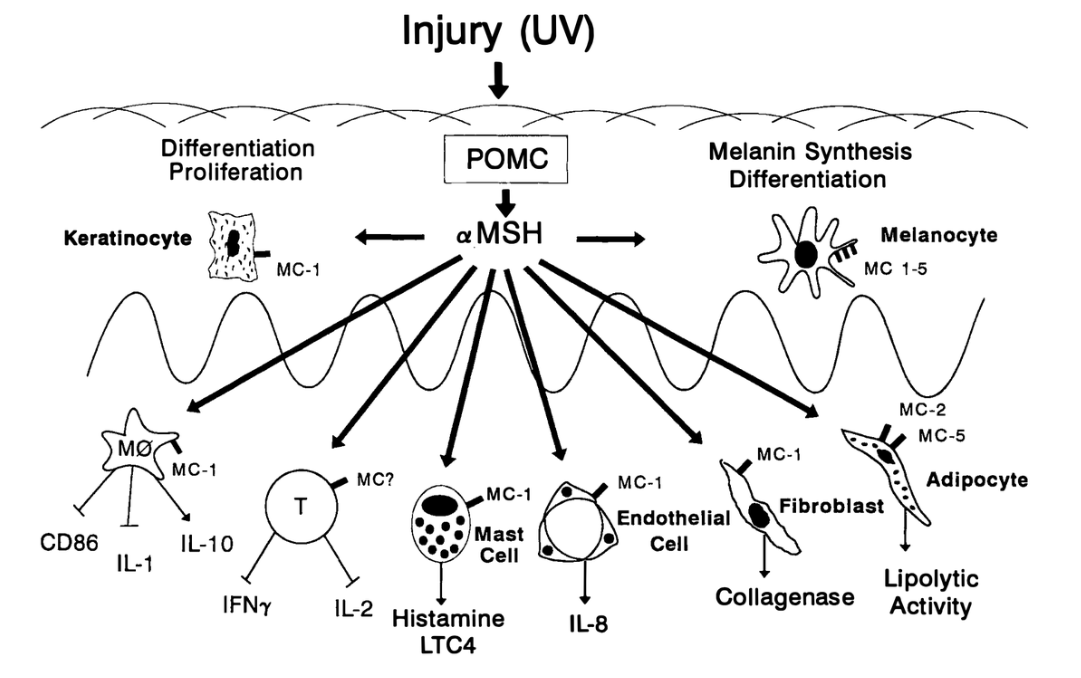
90% of mold-exposed patients have low levels of a-MSH for example.
Now POMC is a precursor polypeptide primarily produced in the pituitary gland, the skin and the hypothalamus.
I like to call it a “master precursor” even though it’s incorrect because it gets cleaved into crucial peptides like a-MSH, ACTH, CLIP, Gamma-MSH and beta-endorphin by enzymes like prohormone convertases (PC1/3 and PC2).
Its expression and upregulation is influenced by a variety of physiological, environmental and molecular factors one of them being: UV light exposure (especially UVB (280–320 nm)) that stimulates POMC expression in keratinocytes and melanocytes in the skin (up to 30% increase).
When UVB light penetrates the skin, it causes DNA damage in keratinocytes, activating the tumor suppressor protein p53 and UVA (320–400 nm) activates photoreceptors like neuropsin (OPN5) which further enhances POMC expression.
Now when a key cleavage products of POMC is Alpha-MSH (Melanocyte-Stimulating Hormone)
This one is expressed mainly in the hypothalamic arcuate nucleus and nucleus tractus solitarius of the brainstem and stimulates melanocytes to produce eumelanin, inhibits pro-inflammatory cytokines such as IL-6, TNF-alpha, improves our libido (melanotan I and II Synthetic analogs of α-MSH), regulates our appetite, and supports our immune system and brain.
So, in order to optimize a-msh focus on:
-Morning sunlight exposure (10–30 minutes).
-Managing stress (it can reduce alpha-MSH production by 25% in animal models)
-Minimizing blue light at night.
-Cold exposure (in mice it can increases POMC expression by even 25%).
-Managing stress to prevent ACTH dominance.
-Supporting nutrition with tyrosine, vitamin C, zinc and copper in order to enhance prohormone convertase activity
14
Step 4: Boost glutathione production.
Glutathione is naturally produced in the cytosol (an intracellular matrix) and helps with many processes varying from detoxification, protecting the mitochondria from oxidative stress, heart health and the immune system all the way to thyroid hormone conversion.
101:
1)Consume sulfur rich foods such as fish, beef, onions and garlic.
2)Consume vitamin C and E rich foods.
Vitamin C maintains the body’s supply of antioxidants, including glutathione and helps reprocess glutathione by converting oxidized glutathione back to its active form.
3)Consume selenium rich foods.
Selenium is a glutathione cofactor, meaning it’s a substance needed for glutathione activity and will lead to increased glutathione peroxidase levels.
4) Get enough glycine, magnesium and B vitamins (especially B2).
5) Cycle NAC
6) Avoid ibubrofen
Glutathione is naturally produced in the cytosol (an intracellular matrix) and helps with many processes varying from detoxification, protecting the mitochondria from oxidative stress, heart health and the immune system all the way to thyroid hormone conversion.
101:
1)Consume sulfur rich foods such as fish, beef, onions and garlic.
2)Consume vitamin C and E rich foods.
Vitamin C maintains the body’s supply of antioxidants, including glutathione and helps reprocess glutathione by converting oxidized glutathione back to its active form.
3)Consume selenium rich foods.
Selenium is a glutathione cofactor, meaning it’s a substance needed for glutathione activity and will lead to increased glutathione peroxidase levels.
4) Get enough glycine, magnesium and B vitamins (especially B2).
5) Cycle NAC
6) Avoid ibubrofen
15
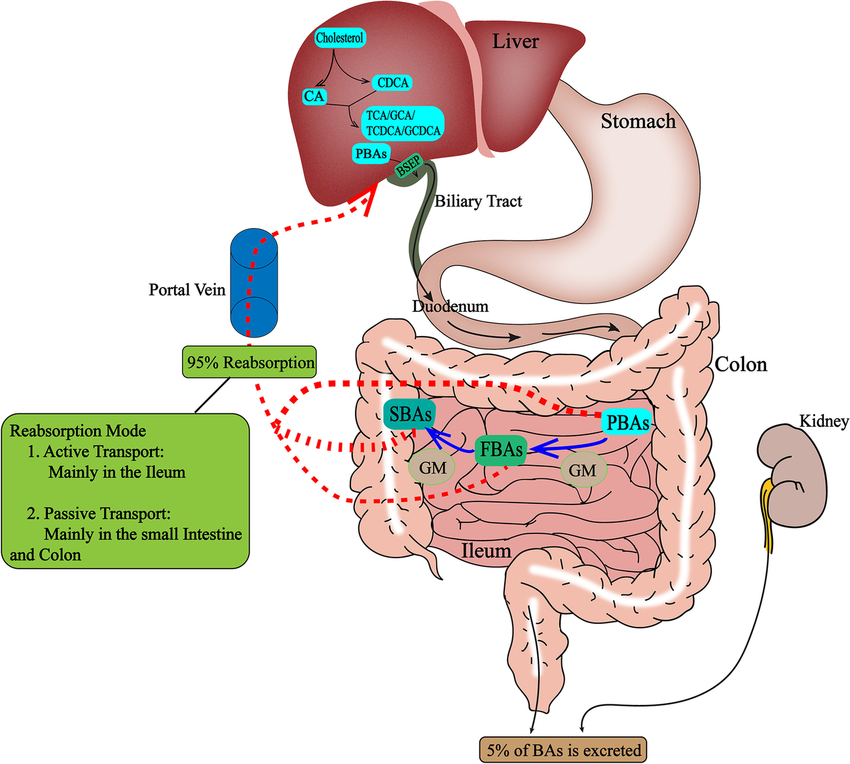
Step 5: Keep supporting the liver by providing the following nutrients and work on bile:
-Bioavailable protein
-Choline
-Glycine
-Vitamin E
-Vitamin K
-Taurine
-B vitamins
-Vitamin C
-Bioavailable protein
-Choline
-Glycine
-Vitamin E
-Vitamin K
-Taurine
-B vitamins
-Vitamin C
George Ferman@Helios_Movement
Harmed bile flow can lead to a wide array of health issues such as:
-Liver damage
-Hormonal issues
-Gut issues like SIBO
-Impaired ability to detox certain xenobiotics (mycotoxins included), hormones, heavy metals etc
-Fat malabsorption and thus issues such as dry skin or even an increased risk of osteoporosis
-Gallstones
and more.
Here are a few important things to keep in mind.
Thread🧵
-Liver damage
-Hormonal issues
-Gut issues like SIBO
-Impaired ability to detox certain xenobiotics (mycotoxins included), hormones, heavy metals etc
-Fat malabsorption and thus issues such as dry skin or even an increased risk of osteoporosis
-Gallstones
and more.
Here are a few important things to keep in mind.
Thread🧵
16
Step 6: Support methylation (primarily for heavy metals such as arsenic).
I always like beginning this conversation with the following:
1. An alkane, consists of hydrogen and carbon atoms (CnH2n+2) that are arranged like a tree.
2. An alkyl group, is an alkane missing one hydrogen.
Why does this matter regarding methylation?
Because:
-Methane, contains 1 carbon atom and 4 hydrogen atoms (CH4).
-A methyl group, is derived from methane and contains 1 carbon atom and 3 hydrogen atoms (CH3).
Now methylation is a form of alkylation where a methyl group is replacing a hydrogen atom.
Or as it is often referred to “the addition of a methyl group” (one carbon metabolism supplies methyl groups).
So it's pretty important and here are some issues that impaired methylation can lead to:
-Histamine intolerance
-Estrogen dominance
-Miscarriages (this is unfortunately very common and i highly suggest all women who want to have kids to go and get a methylation panel done when they can)
-Heart disease
-Arthritis
-Excessive inflammation
-Skin issues such as acne and eczema
-Anxiety
-Depression
-Migraines
-Poor cognitive function
-Autoimmune issues
-Stomach problems
-Blood clots (this is also unfortunately very common)
-Infertility
-Liver issues
-Hypothyroidism
How these happen is not hard to understand if you understand the basics of methylation.
HMNT for example converts histamine into N-methylhistamine and without enough methyl groups this can not properly happen, you can also approach this through COMT, also the production of phosphatidylcholine, carnitine, melatonin and creatine will be negatively affected.
Now how can you know if you have a methylation problem?
First of all, our genetic profile affects methylation.
Certain gene mutations for example can harm the conversion of B9.
This is where MTHFR aka methylenetetrahydrofolate reductase comes into play.
The two most common polymorphisms are the 677T and 1298C but there are over 60.
Note: SNPs stand for Single Nucleotide Polymorphisms.
So if you have MTHFR SNPs you can't convert folate into L-5-Methyltetrahydroofolate to various degrees.
Note: The entire conversion follows: Dietary folate -> (SLC19A1 enzyme) dihydrofolate -> (DHFR enzyme) tetrahydrofolate -> (MTHFD1 enzyme) 5,10 methylene THF -> and then methylfolate with the help of the MTHFR enzyme.
Now let me grab your attention in another way. This could be the reason behind your ED.
What?"
Yeah. Methylfolate is crucial for BH4.
Heck, even vitiligo can be affected by it.
So that's that.
Then we have medications such as metformin, antacids and methotrexate can negatively harm methylation.
Then we have toxic burdens that include anything from alcohol, birth control pills and smoking all the way to heavy metals.
Gut issues such as SIBO that are unable to get resolved no matter what can also be a byproduct of poor methylation.
Poor nutritional habits will obviously harm methylation since things such as B2, B9, B12 and B6 all affect one carbon metabolism.
Then supplementing with NAD precursors such as NAC or even B3 for months on end without paying any attention to B1, B2 or B12 for example, can result in over methylation is some people.
So here are now some practical steps, none of which is medical advice, in case you do NOT have a genetic mutation.
So what's a practical approach:
-Get tested and depending on the issue you have (in case you have one) you will to pay attention to TMG, magnesium, glycine, B2, choline, creatine and then methylfolate.
-Lower the toxic burden that you're exposed to.
-Balance the amino acid profile of your diet by including things such as grass fed beef gelatin, quality organs and so on. If you get too much methionine and not enough glycine or proline for example you WILL mess methylation.
-Get enough B1 and B2 since without them, you won't be able to recycle methionine efficiently EVEN IF you get enough B9 and B12.
-Get your retinol in since without it, glycine won't be able to do its job properly.
-Avoid fats such as canola oil.
But please, don't skip on glycine.
Glycine is in fact a non essential amino acid but in 2025 things change for everyone a bit since:
1. Most people have been exposed to glyphosate for decades and thus have negatively affected the shikimate pathway quite a lot.
2. MTHFR SNPs (glycine can buffer one carbon donors).
3. We are exposed to tremendous amounts of toxins.
pubmed.ncbi.nlm.nih.gov/32064757/
I always like beginning this conversation with the following:
1. An alkane, consists of hydrogen and carbon atoms (CnH2n+2) that are arranged like a tree.
2. An alkyl group, is an alkane missing one hydrogen.
Why does this matter regarding methylation?
Because:
-Methane, contains 1 carbon atom and 4 hydrogen atoms (CH4).
-A methyl group, is derived from methane and contains 1 carbon atom and 3 hydrogen atoms (CH3).
Now methylation is a form of alkylation where a methyl group is replacing a hydrogen atom.
Or as it is often referred to “the addition of a methyl group” (one carbon metabolism supplies methyl groups).
So it's pretty important and here are some issues that impaired methylation can lead to:
-Histamine intolerance
-Estrogen dominance
-Miscarriages (this is unfortunately very common and i highly suggest all women who want to have kids to go and get a methylation panel done when they can)
-Heart disease
-Arthritis
-Excessive inflammation
-Skin issues such as acne and eczema
-Anxiety
-Depression
-Migraines
-Poor cognitive function
-Autoimmune issues
-Stomach problems
-Blood clots (this is also unfortunately very common)
-Infertility
-Liver issues
-Hypothyroidism
How these happen is not hard to understand if you understand the basics of methylation.
HMNT for example converts histamine into N-methylhistamine and without enough methyl groups this can not properly happen, you can also approach this through COMT, also the production of phosphatidylcholine, carnitine, melatonin and creatine will be negatively affected.
Now how can you know if you have a methylation problem?
First of all, our genetic profile affects methylation.
Certain gene mutations for example can harm the conversion of B9.
This is where MTHFR aka methylenetetrahydrofolate reductase comes into play.
The two most common polymorphisms are the 677T and 1298C but there are over 60.
Note: SNPs stand for Single Nucleotide Polymorphisms.
So if you have MTHFR SNPs you can't convert folate into L-5-Methyltetrahydroofolate to various degrees.
Note: The entire conversion follows: Dietary folate -> (SLC19A1 enzyme) dihydrofolate -> (DHFR enzyme) tetrahydrofolate -> (MTHFD1 enzyme) 5,10 methylene THF -> and then methylfolate with the help of the MTHFR enzyme.
Now let me grab your attention in another way. This could be the reason behind your ED.
What?"
Yeah. Methylfolate is crucial for BH4.
Heck, even vitiligo can be affected by it.
So that's that.
Then we have medications such as metformin, antacids and methotrexate can negatively harm methylation.
Then we have toxic burdens that include anything from alcohol, birth control pills and smoking all the way to heavy metals.
Gut issues such as SIBO that are unable to get resolved no matter what can also be a byproduct of poor methylation.
Poor nutritional habits will obviously harm methylation since things such as B2, B9, B12 and B6 all affect one carbon metabolism.
Then supplementing with NAD precursors such as NAC or even B3 for months on end without paying any attention to B1, B2 or B12 for example, can result in over methylation is some people.
So here are now some practical steps, none of which is medical advice, in case you do NOT have a genetic mutation.
So what's a practical approach:
-Get tested and depending on the issue you have (in case you have one) you will to pay attention to TMG, magnesium, glycine, B2, choline, creatine and then methylfolate.
-Lower the toxic burden that you're exposed to.
-Balance the amino acid profile of your diet by including things such as grass fed beef gelatin, quality organs and so on. If you get too much methionine and not enough glycine or proline for example you WILL mess methylation.
-Get enough B1 and B2 since without them, you won't be able to recycle methionine efficiently EVEN IF you get enough B9 and B12.
-Get your retinol in since without it, glycine won't be able to do its job properly.
-Avoid fats such as canola oil.
But please, don't skip on glycine.
Glycine is in fact a non essential amino acid but in 2025 things change for everyone a bit since:
1. Most people have been exposed to glyphosate for decades and thus have negatively affected the shikimate pathway quite a lot.
2. MTHFR SNPs (glycine can buffer one carbon donors).
3. We are exposed to tremendous amounts of toxins.
pubmed.ncbi.nlm.nih.gov/32064757/
17
Step 7: Be aware of nutritional, lifestyle and supplemental tools that can AID detoxification such as:
-Sunlight (without enough vitamin D and melanin forget about detoxing)
-Sweating
-Raw milk
-Garlic
-Onions
-Green apples
-Fiber
-NAC + selenium
-B clay
-Fulvic / humic acids
-Increasing the metabolic rate
-Slowly losing body fat if you are overweight
-Magnesium malate
-Zinc rich foods
-Boron
-Thiamine
-Zeolites
-Retinol rich foods
-Kefir
-Quercetin
-Modified citrus pectin
-Horsetail extract unless your DHT is low*
-Activated charcoal unless you are mineral depleted*
-Niacin + sauna unless you are struggling with methylation or histamine issues, hair loss and fertility*
-Cilantro and turmeric unless your kidneys are a mess*
*Do not obviously throw the kitchen sink at it regarding supps and start with just two (start with NAC and a binder)*
-Sunlight (without enough vitamin D and melanin forget about detoxing)
-Sweating
-Raw milk
-Garlic
-Onions
-Green apples
-Fiber
-NAC + selenium
-B clay
-Fulvic / humic acids
-Increasing the metabolic rate
-Slowly losing body fat if you are overweight
-Magnesium malate
-Zinc rich foods
-Boron
-Thiamine
-Zeolites
-Retinol rich foods
-Kefir
-Quercetin
-Modified citrus pectin
-Horsetail extract unless your DHT is low*
-Activated charcoal unless you are mineral depleted*
-Niacin + sauna unless you are struggling with methylation or histamine issues, hair loss and fertility*
-Cilantro and turmeric unless your kidneys are a mess*
*Do not obviously throw the kitchen sink at it regarding supps and start with just two (start with NAC and a binder)*
18
Step 8: Pay attention to your lymphatic system.
This subsystem of the circulatory system and the immune system, is responsible for filtering out waste products, absorbing fats from the intestines, releasing lymphocytes, gathering the excess fluid from the tissues and bringing it back into the bloodstream in order for us to maintain normal fluid levels.
It’s primarily made out of:
-The spleen
The spleen is a blood-filtering organ that removes microbes and destroys old or damaged red blood cells.
It also makes disease-fighting components of the immune system (including antibodies and lymphocytes).
-The bone marrow
Bone marrow is the spongy tissue found inside your bones.
It produces the red blood cells our bodies need to carry oxygen, the white blood cells we use to fight infection, and the platelets we need to help our blood clot.
-The thymus
The thymus filters and monitors your blood content.
It produces the white blood cells called T-lymphocytes.
-The lymphatic fluid (lymph).
The lymph is a collection of the extra fluid that was mentioned a bit earlier over here.
-The lymph nodes
We have 600 of these (you might be able to feel the ones in your armpits and neck) and they are glands responsible for “cleaning up” damaged cells, storing lymphocytes, regulating the lymph -The MALT (mucosa-associated lymphoid tissue).
This lines up our airways, tonsils but also the appendix and the small intestine in order to protect us from potentially harmful organisms like germs.
-The lymphatic vessels.
Now some people mention separately the lymphatic vessels and capillaries but we’ll view them as a “subcategory”.
-The collecting ducts.
These were just mentioned (the ducts in our upper chest).
-The tonsils.
These are in the back of the throat and help us keep pathogens away.
-The adenoids.
These are behind the nasal cavity and serve the same purpose.
Now, let’s see some tips when it comes to how we can keep our lymphatic system healthy and improve detoxification.
Number 1: Lymphatic massages
By using lymphatic massages, we will help areas such as our skin but then we need to also keep in mind that parts of the fluid at the end of the day will get filtered through the colon and liver.
Number 2: Get enough magnesium.
If we don’t have enough magnesium, we can’t properly regulate the flow of lymph.
Number 3: Avoid the regular usage of vasoconstrictors such as alcohol, nicotine and caffeine.
If the blood vessels constrict, this will prevent the blood from moving into the lymphatic system.
Number 4: You might want to address the health of your mast cells and try a low histamine diet since it can inhibit lymphatic contractions when in excess.
Number 5: Move throughout the day.
Number 6: Prioritize sleep
Sleep is of course crucial for tons of bodily processes and one of the most underrated factors when it comes to detoxification in general.
Number 7: Drink mineral water
No hydration -> No lymphatic system health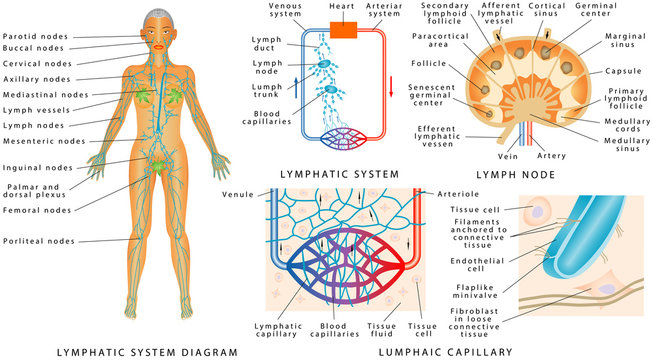
This subsystem of the circulatory system and the immune system, is responsible for filtering out waste products, absorbing fats from the intestines, releasing lymphocytes, gathering the excess fluid from the tissues and bringing it back into the bloodstream in order for us to maintain normal fluid levels.
It’s primarily made out of:
-The spleen
The spleen is a blood-filtering organ that removes microbes and destroys old or damaged red blood cells.
It also makes disease-fighting components of the immune system (including antibodies and lymphocytes).
-The bone marrow
Bone marrow is the spongy tissue found inside your bones.
It produces the red blood cells our bodies need to carry oxygen, the white blood cells we use to fight infection, and the platelets we need to help our blood clot.
-The thymus
The thymus filters and monitors your blood content.
It produces the white blood cells called T-lymphocytes.
-The lymphatic fluid (lymph).
The lymph is a collection of the extra fluid that was mentioned a bit earlier over here.
-The lymph nodes
We have 600 of these (you might be able to feel the ones in your armpits and neck) and they are glands responsible for “cleaning up” damaged cells, storing lymphocytes, regulating the lymph -The MALT (mucosa-associated lymphoid tissue).
This lines up our airways, tonsils but also the appendix and the small intestine in order to protect us from potentially harmful organisms like germs.
-The lymphatic vessels.
Now some people mention separately the lymphatic vessels and capillaries but we’ll view them as a “subcategory”.
-The collecting ducts.
These were just mentioned (the ducts in our upper chest).
-The tonsils.
These are in the back of the throat and help us keep pathogens away.
-The adenoids.
These are behind the nasal cavity and serve the same purpose.
Now, let’s see some tips when it comes to how we can keep our lymphatic system healthy and improve detoxification.
Number 1: Lymphatic massages
By using lymphatic massages, we will help areas such as our skin but then we need to also keep in mind that parts of the fluid at the end of the day will get filtered through the colon and liver.
Number 2: Get enough magnesium.
If we don’t have enough magnesium, we can’t properly regulate the flow of lymph.
Number 3: Avoid the regular usage of vasoconstrictors such as alcohol, nicotine and caffeine.
If the blood vessels constrict, this will prevent the blood from moving into the lymphatic system.
Number 4: You might want to address the health of your mast cells and try a low histamine diet since it can inhibit lymphatic contractions when in excess.
Number 5: Move throughout the day.
Number 6: Prioritize sleep
Sleep is of course crucial for tons of bodily processes and one of the most underrated factors when it comes to detoxification in general.
Number 7: Drink mineral water
No hydration -> No lymphatic system health
19
Step 9: Heal our gut.
George Ferman@Helios_Movement
Most people try to improve their gut health the wrong way.
So if you are struggling with gut issues such as bloating, constipation, IBS,SIBO, SIFO and candida, here's the ultimate plan for improving them.
Master thread🧵
So if you are struggling with gut issues such as bloating, constipation, IBS,SIBO, SIFO and candida, here's the ultimate plan for improving them.
Master thread🧵
20
Step 10: Test for the following polymorphisms if you can afford to.
CYP1A2*1F (rs762551): Associated with increased metabolism of caffeine and theophylline in smokers since itncreases inducibility of CYP1A2 in the presence of inducers.
CYP1A2*1C (rs2069514): Now for this one the overall activity of the enzyme varies widely due to environmental factors and thus making genotyping less predictive unless combined with phenotyping. But this polymorphism decreases enzyme expression and activity and thus reduces the metabolism of substrates.
CYP2C9*2 (rs1799853) and CYP2C9*3 (rs1057910): The implications of this are quite similar since they both reduces enzyme activity even up to 50% and in case you have to use warfarin, you will have to use a low dose.
CYP2C19*2 (rs4244285) and CYP2C19*3 (rs4986893):Here there’s reduced clopidogrel activation and thus increasing cardiovascular risk.
CYP2C19*17 (rs12248560): On the flipside, over here we have increased enzyme expression and activity and thus enhanced clopidogrel activation.
CYP2D6*3 (rs35742686), CYP2D6*4 (rs3892097),
CYP2D6*10 (rs1065852) and CYP2D6*17 (rs28371706): Contribute to very poor metabolizer status so there’s an increased risk of antidepressant, beta blocker and antipsychotic toxicity and tamoxifen failure.
CYP3A4*1B (rs2740574): This one isn’t that well studied, but it slightly increases enzyme expression.
CYP3A4*22 (rs35599367): This one decreases enzyme expression and activity and is associated with reduced statin metabolism.
ALDH2*2 (rs671): This is associated with decreased enzyme activity, leading to accumulation of acetaldehyde after alcohol consumption.
FMO31/2 (rs2266782, rs2266780): Associated with reduced enzyme activity, impairing metabolism of substrates like trimethylamine. Can lead to trimethylaminuria (fish odor syndrome) and altered metabolism of drugs like ranitidine.
CES1*G143E (rs71647871): This one decreases enzyme activity, reducing hydrolysis of drugs like methylphenidate and clopidogrel. It may result in decreased drug efficacy or altered pharmacokinetics.
AOX1*2 (rs55754655) (Aldehyde Oxidase 1): Reduces enzyme activity, affecting metabolism of drugs like methotrexate and azathioprine. Limited clinical data, but may increase drug toxicity in affected individuals.
EPHX12 (rs1051740), EPHX13 (rs2234922): 2 decreases enzyme activity, while 3 increases it. Altered detoxification of epoxide intermediates from environmental toxins or drugs (e.g., carbamazepine) may increase toxicity or carcinogenic risk.
ALDH1A1*2 (rs6151031): Reduces enzyme activity, impairing metabolism of retinaldehyde and certain xenobiotics. Associated with decreased clearance of cyclophosphamide, potentially increasing toxicity in cancer therapy.
AOX1*3 (rs10931910): Decreases enzyme activity, impacting metabolism of drugs like carbazeran and zaleplon. Limited clinical data, but may contribute to interindividual variability in drug response and toxicity.
EPHX2*2 (rs4149244): Reduces enzyme activity, impairing hydrolysis of lipid epoxides. May alter cardiovascular risk by affecting endogenous epoxide metabolism, with potential implications for drug detoxification.
CYP1A2*1F (rs762551): Associated with increased metabolism of caffeine and theophylline in smokers since itncreases inducibility of CYP1A2 in the presence of inducers.
CYP1A2*1C (rs2069514): Now for this one the overall activity of the enzyme varies widely due to environmental factors and thus making genotyping less predictive unless combined with phenotyping. But this polymorphism decreases enzyme expression and activity and thus reduces the metabolism of substrates.
CYP2C9*2 (rs1799853) and CYP2C9*3 (rs1057910): The implications of this are quite similar since they both reduces enzyme activity even up to 50% and in case you have to use warfarin, you will have to use a low dose.
CYP2C19*2 (rs4244285) and CYP2C19*3 (rs4986893):Here there’s reduced clopidogrel activation and thus increasing cardiovascular risk.
CYP2C19*17 (rs12248560): On the flipside, over here we have increased enzyme expression and activity and thus enhanced clopidogrel activation.
CYP2D6*3 (rs35742686), CYP2D6*4 (rs3892097),
CYP2D6*10 (rs1065852) and CYP2D6*17 (rs28371706): Contribute to very poor metabolizer status so there’s an increased risk of antidepressant, beta blocker and antipsychotic toxicity and tamoxifen failure.
CYP3A4*1B (rs2740574): This one isn’t that well studied, but it slightly increases enzyme expression.
CYP3A4*22 (rs35599367): This one decreases enzyme expression and activity and is associated with reduced statin metabolism.
ALDH2*2 (rs671): This is associated with decreased enzyme activity, leading to accumulation of acetaldehyde after alcohol consumption.
FMO31/2 (rs2266782, rs2266780): Associated with reduced enzyme activity, impairing metabolism of substrates like trimethylamine. Can lead to trimethylaminuria (fish odor syndrome) and altered metabolism of drugs like ranitidine.
CES1*G143E (rs71647871): This one decreases enzyme activity, reducing hydrolysis of drugs like methylphenidate and clopidogrel. It may result in decreased drug efficacy or altered pharmacokinetics.
AOX1*2 (rs55754655) (Aldehyde Oxidase 1): Reduces enzyme activity, affecting metabolism of drugs like methotrexate and azathioprine. Limited clinical data, but may increase drug toxicity in affected individuals.
EPHX12 (rs1051740), EPHX13 (rs2234922): 2 decreases enzyme activity, while 3 increases it. Altered detoxification of epoxide intermediates from environmental toxins or drugs (e.g., carbamazepine) may increase toxicity or carcinogenic risk.
ALDH1A1*2 (rs6151031): Reduces enzyme activity, impairing metabolism of retinaldehyde and certain xenobiotics. Associated with decreased clearance of cyclophosphamide, potentially increasing toxicity in cancer therapy.
AOX1*3 (rs10931910): Decreases enzyme activity, impacting metabolism of drugs like carbazeran and zaleplon. Limited clinical data, but may contribute to interindividual variability in drug response and toxicity.
EPHX2*2 (rs4149244): Reduces enzyme activity, impairing hydrolysis of lipid epoxides. May alter cardiovascular risk by affecting endogenous epoxide metabolism, with potential implications for drug detoxification.
21
That was it.
I hope that you found something interesting in this thread.
If you did, make sure to leave a like/RT.
I hope that you found something interesting in this thread.
If you did, make sure to leave a like/RT.
George Ferman@Helios_Movement
Toxins are indeed one of the primary drivers behind a lot of people's health issues but most of the detox advice is false.
Here's what you need know presented as a 10-step plan.
Thread🧵
Here's what you need know presented as a 10-step plan.
Thread🧵
22
If you want to:
-Get access to 700+ pages discussing topics such as hormones, toxins, light, CRs, supplements, mast cells, neurotransmitters, gut health etc
-More than 60 meal plans
-Training plans
-Bonus material
Go here:
fitandball.gumroad.com/l/georgesystem…
-Get access to 700+ pages discussing topics such as hormones, toxins, light, CRs, supplements, mast cells, neurotransmitters, gut health etc
-More than 60 meal plans
-Training plans
-Bonus material
Go here:
fitandball.gumroad.com/l/georgesystem…
