The key to unlocking your metabolism, mood, energy and gut health...

Dalton (Analyze & Optimize)@Outdoctrination
96 views
May 15, 2025
~9 min read
Advertisement
1
The key to unlocking your metabolism, mood, energy and gut health is sitting under your tongue being ignored by your doctor.
This is the ULTIMATE AND COMPLETE GUIDE TO THYROID HEALTH so you can optimize it:
The thyroid pumps out thyroid hormones, one of which (T3) is the primary governor of metabolism, or how much energy you produce, throughout the body.
The most COMMON symptoms of poor thyroid function are:
◇ Always being COLD
◇ Constantly being TIRED (no matter how much you sleep)
◇ Poor mood.
But bad thyroid health can manifest in seemingly infinite ways:
Anxiety & depression can be caused by hypothyroidism.
⬩Low T3, T4 seen in both conditions
⬩Proper thyroid hormone treatment can alleviate these
The brain needs lots of energy - when it lacks it, things go haywire.
Mental & metabolic health are synonymous.
Gut issues are often caused by a lack of thyroid hormone.
Bacterial overgrowth (SIBO) is common in hypothyroidism, as having poor thyroid function:
◇ Lowers enzyme secretion
◇ Worsens motility
◇ Fosters pathogenic bacterial growth (impaired immunity + metabolism)
Hypothyroidism causes low testosterone - thyroid supplementation nearly doubles it.
Hypothyroidism impairs:
• Testosterone production
• Sperm motility, quality
likely due to high prolactin - decreasing steroid output in the testes.
Treatment can resolve these issues.
I could go on about the signs and symptoms, but if you have any health issue that you can't really seem to put your finger on or explain, you should consider the thyroid is a prime cause.
UNDERSTANDING THRYOID HORMONE PRODUCTION:
Thyroid hormone production starts in the brain, which produces thyrotropin releasing hormone (TRH).
TRH goes to the pituitary gland, producing thyroid stimulating hormone (TSH).
TSH then stimulates the thyroid gland to produce T4, and a little bit of T3.
T4 acts to suppress the release of TSH from the pituitary, to keep things balanced.
T4 is an inactive precursor hormone, it needs to be converted into T3 to truly be active.
T3 is produced from T4 in other tissues, mainly the liver.
The problem is: the standard treatment for poor thyroid function is to give people T4,
but if you have problems converting T4 into T3, then this will actually make the problem worse.
Doctors also typically only test for TSH - a low TSH signals high thyroid hormone production.
The issue here is that again this does not tell you if you have enough T3, which is the important part.
TSH can also be suppressed by other things like stress, so it can actually be very misleading.
TESTING FOR THYROID FUNCTION:
In addition to the standard TSH, you can also test for the free and total levels of T3 and T4.
These measures are helpful, but still not necessarily all encompassing.
The hormones do not need to be "free" from their carrier proteins in order to exert their effects.
Thyroid hormones also need to bind to receptors within the cell in order to activate metabolism, and this binding can be inhibited, too.
Blood tests are not capable of measuring these processes.
Another test for thyroid function is reverse T3.
T4 can be converted into either T3, the active thyroid hormone,
OR reverse T3, an inactive thyroid hormone.
Testing for reverse T3 is vital for understanding the full picture.
"Normal" thyroid levels are a HUGE risk.
Having just slightly high TSH (>1.48) is associated with:
• Obesity
• Insulin resistance
• High blood pressure
• High blood sugar
• High lipids
• High uric acid
• Inflammation
• Hypercoagulability
• Metabolic syndrome
SHEESH!
Cholesterol is another marker of thyroid function.
We need thyroid hormones to break down circulating cholesterol and turn into steroid hormones.
People with bad thyroid health often have high cholesterol.
Thyroid therapy reduces cholesterol.
There are limitations to thyroid blood tests, but they can still be helpful when a proper panel is done, in proper context.
AT HOME TESTING FOR THYROID FUNCTION:
Thyroid experts, before we were able to test hormones in the blood, used 3 main assessments:
◇ Morning temperature
◇ Pulse
◇ Achilles test
Morning temperature is taken by placing a thermometer under the arm, waiting 10 minutes, and recording the temperature, first thing in the morning.
If you are under 97.8 F (36.6 C) consistently - good chance you're low on thyroid.
A heart rate under 70 is considered to be a key sign of hypothyroidism too, though of course this can be impacted by aerobic fitness.
Stress can also raise pulse rate, but if you're at rest and not stressed, it can be a helpful measure.
A HUGE problem for thyroid health is STRESS.
When you're stressed, your thyroid function is low, and vice versa.
Free fatty acids, which rise during stress, impede the binding of thyroid hormone to its receptor, rendering it useless.
Stress hormones like cortisol and adrenaline PREVENT T4 from being activated.
Lowering any chronic stress you have is going to be a top priority for optimizing thyroid function.
This is known as the "euthyroid sick syndrome,"
where your thyroid is making plenty of hormones,
but you have LOW T3 and HIGH REVERSE T3.
This is induced by:
◇ Stress
◇ Malnutrition
◇ Low carb intake
◇ Inflammation
◇ Poor antioxidant status
Low carb diets lower thyroid function.
Carbohydrates and insulin help to convert T4 into T3, and away from reverse T3.
This has been routinely documented in the research.
Cutting calories destroys thyroid function.
Reducing calories is known to slow down metabolism,
in part by lowering T3 levels.
You need to eat enough to have healthy thyroid function.
Liver health is vital for thyroid function.
The liver activates the bulk of T4 into T3.
If your liver is fatty or inflamed, you will inactivate more T4 into reverse T3.
Inflammation will ruin your thyroid health.
Various inflammatory mediators are known to suppress the thyroid axis at multiple levels.
One of the keys inflammatory mediators is LPS (endotoxin), which actually comes from your gut.
So, optimizing your gut is also a top priority.
Zinc boosts thyroid function.
Zinc helps convert T4 into the active T3, lowering the inactive reverse T3.
Selenium improves thyroid function.
Selenium is needed to convert T4 into T3, and supplementing during times of stress:
◇ Increases active thyroid hormone (T3)
◇ Decreases inactive reverse T3
Vitamin D also boosts thyroid function.
Vitamin D aids in the expression of Dio2, which converts T4 into T3.
This reduces reverse T3, and increases T3.
Iodine deficiency lowers IQ by 10-15 points, by causing hypothyroidism.
The thyroid hormones literally contain iodine.
Iodine is not something I suggest supplementing, since excess iodine can actually inhibit thyroid function.
Good salt, eggs yolks and seafood is plenty.
Fluoride destroys thyroid function.
Since fluoride & iodine are the same class of element, fluoride will directly block iodine's uptake in the thyroid, lowering thyroid hormone output.
Fluoride also drives oxidative stress + inflammation, which we know lowers thyroid function.
Vitamin A is required for thyroid function.
The nuclear thyroid hormone receptor is needs vitamin A (retinol) to function properly.
Without it, your thyroid won't function at full capacity.
LEPTIN also increases thyroid hormones.
As a marker of long term energy status, leptin increases thyroid hormone synthesis.
Leptin resistance will impair it - driving hunger and low metabolism.
Light increases thyroid function.
Bright light is vital for maintaining the circadian rhythm, which thyroid hormones operate on.
If your circadian rhythm is out of whack, your thyroid will be too.
Near infrared light treats hypothyroidism:
People using near infrared light:
☆ Needed to use less than HALF of their thyroid medication dose
☆ Suppressed their TSH
☆ Reduced their thyroid antibodies by over half
Infrared light helps to lower inflammation and restore energy production.
The sun has plenty of infrared light.
SUPPLEMENTING THYROID HORMONE:
Desiccated thyroid comes from the thyroid glands of pigs or cows, and is the traditional way of supplanting thyroid hormones.
A grain (60 mg) is the unit of measurement for supplementation, containing ~40 mcg T4 + ~10 mcg T3.
A starting dose of a half grain is reasonable, and should be continued for 2-4 weeks before adjusting.
The hormones take around this long to stabilize.
As you use NDT, you should consistently track:
1. Morning temperature
2. Symptoms
Once you get to >97.8°F and symptoms resolve, the correct dose has been found.
The brand matters a lot. Many products seem to be unreliable, or outright useless.
That’s definitely been my experience. I’ve tried numerous products over the last few years.
I'll link below the thyroid product I have been using recently for myself and with clients.
I would take it with food to slow the absorption, or even split into multiple doses with meals.
I prefer at dinner.
While some may require full replacement (4 to 5 grains), others find relief with as little as 15 mg (quarter grain).
Broda Barnes observed that his patients often required about two grains of thyroid to alleviate hypothyroid symptoms, occasionally needing more.
If you experience
• Too fast of a heart rate
• Palpitations,
• Anxiety,
• Overheating
• Fatigue
• Shaky feelings
then you might have taken too much thyroid.
The amount taken should be reduced or discontinued entirely.
Effects of over stimulation should resolve in a few hours.
This type of response can also indicate low cholesterol or an issue with liver function, two systems that the thyroid depends on to do its good.
You may also need more nutrients, as the increased metabolic rate demands more resources.
Eat your liver, egg yolks, and oysters.
Many people who should be candidates for supplementation find that thyroid does nothing for them, no matter how much they take.
In my experience, this always seems to be tied to an issue with the gut.
I would try to address this first.
Or, you just may not need it at all. You may need to address other factors.
Of course, supplementing thyroid is not the ONLY way to improve thyroid function, but it seems like an appropriate strategy when other factors have been addressed.
Natural desiccated thyroid cuts fatigue symptoms by 60%.
People using it for hypothyroidism improved:
► Tiredness by 60%
► Cognitive issues by 64%
► Depression by 67%
► Anxiety by 62%
energy over everything.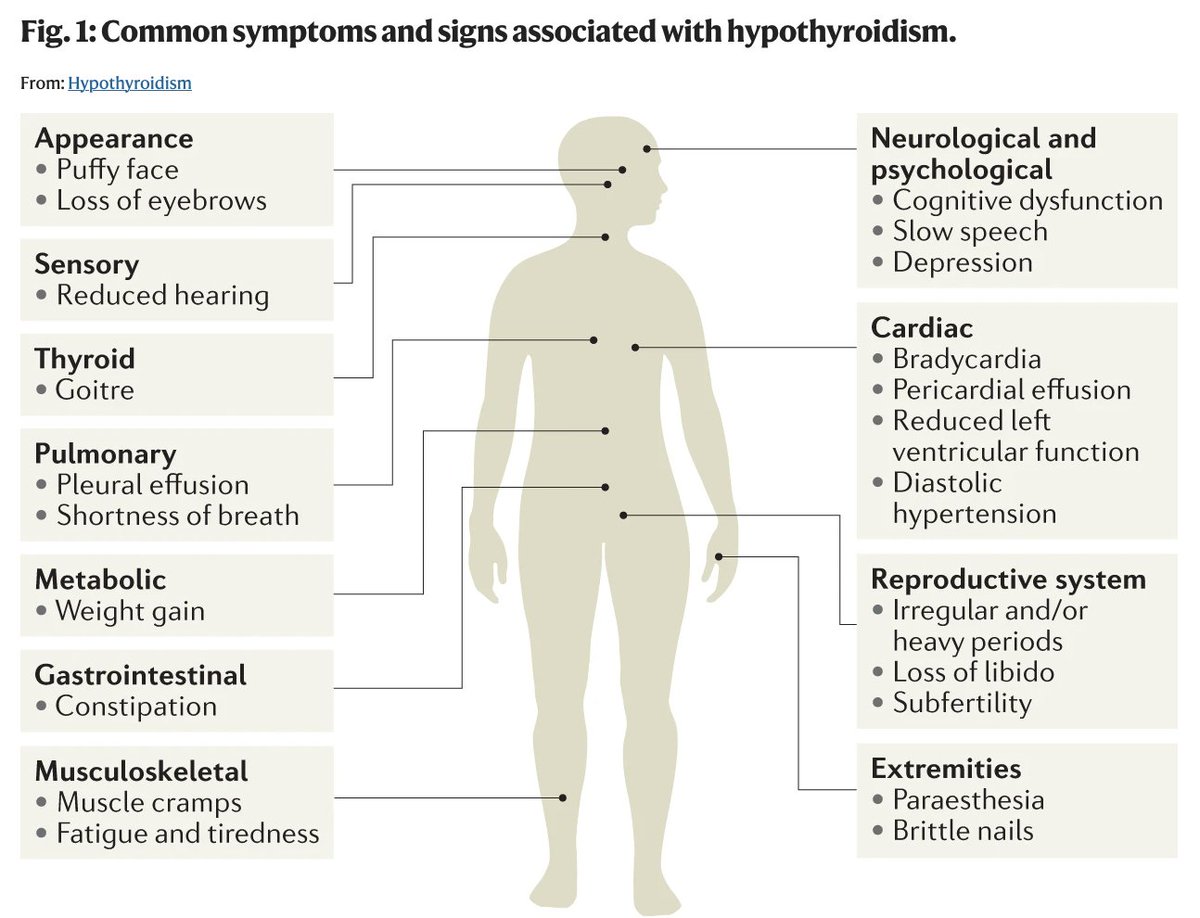
This is the ULTIMATE AND COMPLETE GUIDE TO THYROID HEALTH so you can optimize it:
The thyroid pumps out thyroid hormones, one of which (T3) is the primary governor of metabolism, or how much energy you produce, throughout the body.
The most COMMON symptoms of poor thyroid function are:
◇ Always being COLD
◇ Constantly being TIRED (no matter how much you sleep)
◇ Poor mood.
But bad thyroid health can manifest in seemingly infinite ways:
Anxiety & depression can be caused by hypothyroidism.
⬩Low T3, T4 seen in both conditions
⬩Proper thyroid hormone treatment can alleviate these
The brain needs lots of energy - when it lacks it, things go haywire.
Mental & metabolic health are synonymous.
Gut issues are often caused by a lack of thyroid hormone.
Bacterial overgrowth (SIBO) is common in hypothyroidism, as having poor thyroid function:
◇ Lowers enzyme secretion
◇ Worsens motility
◇ Fosters pathogenic bacterial growth (impaired immunity + metabolism)
Hypothyroidism causes low testosterone - thyroid supplementation nearly doubles it.
Hypothyroidism impairs:
• Testosterone production
• Sperm motility, quality
likely due to high prolactin - decreasing steroid output in the testes.
Treatment can resolve these issues.
I could go on about the signs and symptoms, but if you have any health issue that you can't really seem to put your finger on or explain, you should consider the thyroid is a prime cause.
UNDERSTANDING THRYOID HORMONE PRODUCTION:
Thyroid hormone production starts in the brain, which produces thyrotropin releasing hormone (TRH).
TRH goes to the pituitary gland, producing thyroid stimulating hormone (TSH).
TSH then stimulates the thyroid gland to produce T4, and a little bit of T3.
T4 acts to suppress the release of TSH from the pituitary, to keep things balanced.
T4 is an inactive precursor hormone, it needs to be converted into T3 to truly be active.
T3 is produced from T4 in other tissues, mainly the liver.
The problem is: the standard treatment for poor thyroid function is to give people T4,
but if you have problems converting T4 into T3, then this will actually make the problem worse.
Doctors also typically only test for TSH - a low TSH signals high thyroid hormone production.
The issue here is that again this does not tell you if you have enough T3, which is the important part.
TSH can also be suppressed by other things like stress, so it can actually be very misleading.
TESTING FOR THYROID FUNCTION:
In addition to the standard TSH, you can also test for the free and total levels of T3 and T4.
These measures are helpful, but still not necessarily all encompassing.
The hormones do not need to be "free" from their carrier proteins in order to exert their effects.
Thyroid hormones also need to bind to receptors within the cell in order to activate metabolism, and this binding can be inhibited, too.
Blood tests are not capable of measuring these processes.
Another test for thyroid function is reverse T3.
T4 can be converted into either T3, the active thyroid hormone,
OR reverse T3, an inactive thyroid hormone.
Testing for reverse T3 is vital for understanding the full picture.
"Normal" thyroid levels are a HUGE risk.
Having just slightly high TSH (>1.48) is associated with:
• Obesity
• Insulin resistance
• High blood pressure
• High blood sugar
• High lipids
• High uric acid
• Inflammation
• Hypercoagulability
• Metabolic syndrome
SHEESH!
Cholesterol is another marker of thyroid function.
We need thyroid hormones to break down circulating cholesterol and turn into steroid hormones.
People with bad thyroid health often have high cholesterol.
Thyroid therapy reduces cholesterol.
There are limitations to thyroid blood tests, but they can still be helpful when a proper panel is done, in proper context.
AT HOME TESTING FOR THYROID FUNCTION:
Thyroid experts, before we were able to test hormones in the blood, used 3 main assessments:
◇ Morning temperature
◇ Pulse
◇ Achilles test
Morning temperature is taken by placing a thermometer under the arm, waiting 10 minutes, and recording the temperature, first thing in the morning.
If you are under 97.8 F (36.6 C) consistently - good chance you're low on thyroid.
A heart rate under 70 is considered to be a key sign of hypothyroidism too, though of course this can be impacted by aerobic fitness.
Stress can also raise pulse rate, but if you're at rest and not stressed, it can be a helpful measure.
A HUGE problem for thyroid health is STRESS.
When you're stressed, your thyroid function is low, and vice versa.
Free fatty acids, which rise during stress, impede the binding of thyroid hormone to its receptor, rendering it useless.
Stress hormones like cortisol and adrenaline PREVENT T4 from being activated.
Lowering any chronic stress you have is going to be a top priority for optimizing thyroid function.
This is known as the "euthyroid sick syndrome,"
where your thyroid is making plenty of hormones,
but you have LOW T3 and HIGH REVERSE T3.
This is induced by:
◇ Stress
◇ Malnutrition
◇ Low carb intake
◇ Inflammation
◇ Poor antioxidant status
Low carb diets lower thyroid function.
Carbohydrates and insulin help to convert T4 into T3, and away from reverse T3.
This has been routinely documented in the research.
Cutting calories destroys thyroid function.
Reducing calories is known to slow down metabolism,
in part by lowering T3 levels.
You need to eat enough to have healthy thyroid function.
Liver health is vital for thyroid function.
The liver activates the bulk of T4 into T3.
If your liver is fatty or inflamed, you will inactivate more T4 into reverse T3.
Inflammation will ruin your thyroid health.
Various inflammatory mediators are known to suppress the thyroid axis at multiple levels.
One of the keys inflammatory mediators is LPS (endotoxin), which actually comes from your gut.
So, optimizing your gut is also a top priority.
Zinc boosts thyroid function.
Zinc helps convert T4 into the active T3, lowering the inactive reverse T3.
Selenium improves thyroid function.
Selenium is needed to convert T4 into T3, and supplementing during times of stress:
◇ Increases active thyroid hormone (T3)
◇ Decreases inactive reverse T3
Vitamin D also boosts thyroid function.
Vitamin D aids in the expression of Dio2, which converts T4 into T3.
This reduces reverse T3, and increases T3.
Iodine deficiency lowers IQ by 10-15 points, by causing hypothyroidism.
The thyroid hormones literally contain iodine.
Iodine is not something I suggest supplementing, since excess iodine can actually inhibit thyroid function.
Good salt, eggs yolks and seafood is plenty.
Fluoride destroys thyroid function.
Since fluoride & iodine are the same class of element, fluoride will directly block iodine's uptake in the thyroid, lowering thyroid hormone output.
Fluoride also drives oxidative stress + inflammation, which we know lowers thyroid function.
Vitamin A is required for thyroid function.
The nuclear thyroid hormone receptor is needs vitamin A (retinol) to function properly.
Without it, your thyroid won't function at full capacity.
LEPTIN also increases thyroid hormones.
As a marker of long term energy status, leptin increases thyroid hormone synthesis.
Leptin resistance will impair it - driving hunger and low metabolism.
Light increases thyroid function.
Bright light is vital for maintaining the circadian rhythm, which thyroid hormones operate on.
If your circadian rhythm is out of whack, your thyroid will be too.
Near infrared light treats hypothyroidism:
People using near infrared light:
☆ Needed to use less than HALF of their thyroid medication dose
☆ Suppressed their TSH
☆ Reduced their thyroid antibodies by over half
Infrared light helps to lower inflammation and restore energy production.
The sun has plenty of infrared light.
SUPPLEMENTING THYROID HORMONE:
Desiccated thyroid comes from the thyroid glands of pigs or cows, and is the traditional way of supplanting thyroid hormones.
A grain (60 mg) is the unit of measurement for supplementation, containing ~40 mcg T4 + ~10 mcg T3.
A starting dose of a half grain is reasonable, and should be continued for 2-4 weeks before adjusting.
The hormones take around this long to stabilize.
As you use NDT, you should consistently track:
1. Morning temperature
2. Symptoms
Once you get to >97.8°F and symptoms resolve, the correct dose has been found.
The brand matters a lot. Many products seem to be unreliable, or outright useless.
That’s definitely been my experience. I’ve tried numerous products over the last few years.
I'll link below the thyroid product I have been using recently for myself and with clients.
I would take it with food to slow the absorption, or even split into multiple doses with meals.
I prefer at dinner.
While some may require full replacement (4 to 5 grains), others find relief with as little as 15 mg (quarter grain).
Broda Barnes observed that his patients often required about two grains of thyroid to alleviate hypothyroid symptoms, occasionally needing more.
If you experience
• Too fast of a heart rate
• Palpitations,
• Anxiety,
• Overheating
• Fatigue
• Shaky feelings
then you might have taken too much thyroid.
The amount taken should be reduced or discontinued entirely.
Effects of over stimulation should resolve in a few hours.
This type of response can also indicate low cholesterol or an issue with liver function, two systems that the thyroid depends on to do its good.
You may also need more nutrients, as the increased metabolic rate demands more resources.
Eat your liver, egg yolks, and oysters.
Many people who should be candidates for supplementation find that thyroid does nothing for them, no matter how much they take.
In my experience, this always seems to be tied to an issue with the gut.
I would try to address this first.
Or, you just may not need it at all. You may need to address other factors.
Of course, supplementing thyroid is not the ONLY way to improve thyroid function, but it seems like an appropriate strategy when other factors have been addressed.
Natural desiccated thyroid cuts fatigue symptoms by 60%.
People using it for hypothyroidism improved:
► Tiredness by 60%
► Cognitive issues by 64%
► Depression by 67%
► Anxiety by 62%
energy over everything.
