"Eat less, move more" is one of the greatest scams of all time. If...

Dalton (Analyze & Optimize)@Outdoctrination
142 views
Jul 08, 2026
~10 min read
Advertisement
1
"Eat less, move more" is one of the greatest scams of all time.
If it were that simple, then obesity wouldn't have quadrupled over the last 50 years.
The science behind why "eat less, move more" DOES NOT WORK & is even HARMFUL for so many:
If it were that simple, then obesity wouldn't have quadrupled over the last 50 years.
The science behind why "eat less, move more" DOES NOT WORK & is even HARMFUL for so many:
2
The vast majority of weight loss attempts are failures in the long run.
In people undergoing supervised calorie restricted diets:
➜ After 2 years ~50% of weight is regained
➜ After 5 years >80% is
but why? Is it just because people are lazy and unmotivated?

In people undergoing supervised calorie restricted diets:
➜ After 2 years ~50% of weight is regained
➜ After 5 years >80% is
but why? Is it just because people are lazy and unmotivated?
3
Reducing calories induces long term metabolic slowdown.
This is largely due to:
➜ Reductions in PHYSICAL ACTIVITY
➜ Lower thyroid hormone output
These are major issues.
How can you "move more" while intentionally reducing your body's ability to generate energy?

This is largely due to:
➜ Reductions in PHYSICAL ACTIVITY
➜ Lower thyroid hormone output
These are major issues.
How can you "move more" while intentionally reducing your body's ability to generate energy?
4
Weight loss attempts also lower leptin.
Leptin is a hormone that increases metabolism, & supplementing leptin after weight loss:
➤ Boosts energy expenditure
➤ Increases thyroid hormones T3 and T4
Back to normal levels after weight loss.
Sufficient leptin is what allows the body to naturally regulate body composition,
but normal weight loss advice causes a drop in leptin.
This makes it nearly impossible to keep the weight off in the long run.
Leptin is a hormone that increases metabolism, & supplementing leptin after weight loss:
➤ Boosts energy expenditure
➤ Increases thyroid hormones T3 and T4
Back to normal levels after weight loss.
Sufficient leptin is what allows the body to naturally regulate body composition,
but normal weight loss advice causes a drop in leptin.
This makes it nearly impossible to keep the weight off in the long run.
5
Fat tissue "remembers" being fat after weight loss.
Genes involved in:
➞ Fat metabolism
➞ Fat tissue structure
Stay dysregulated, even after losing the weight.
In other words, the fat remains “primed” in an obesity-like, stiff, inflamed state.
This makes it easier to regain the weight after dieting.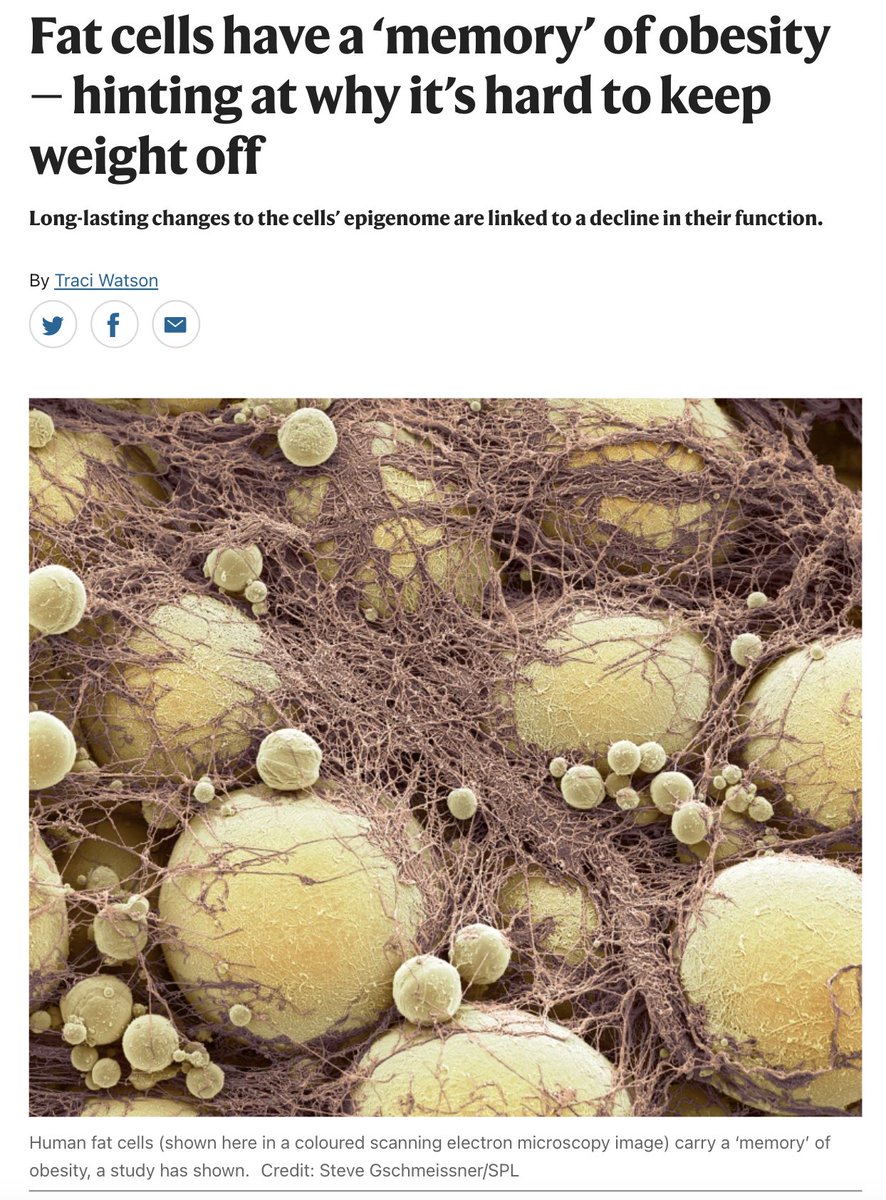
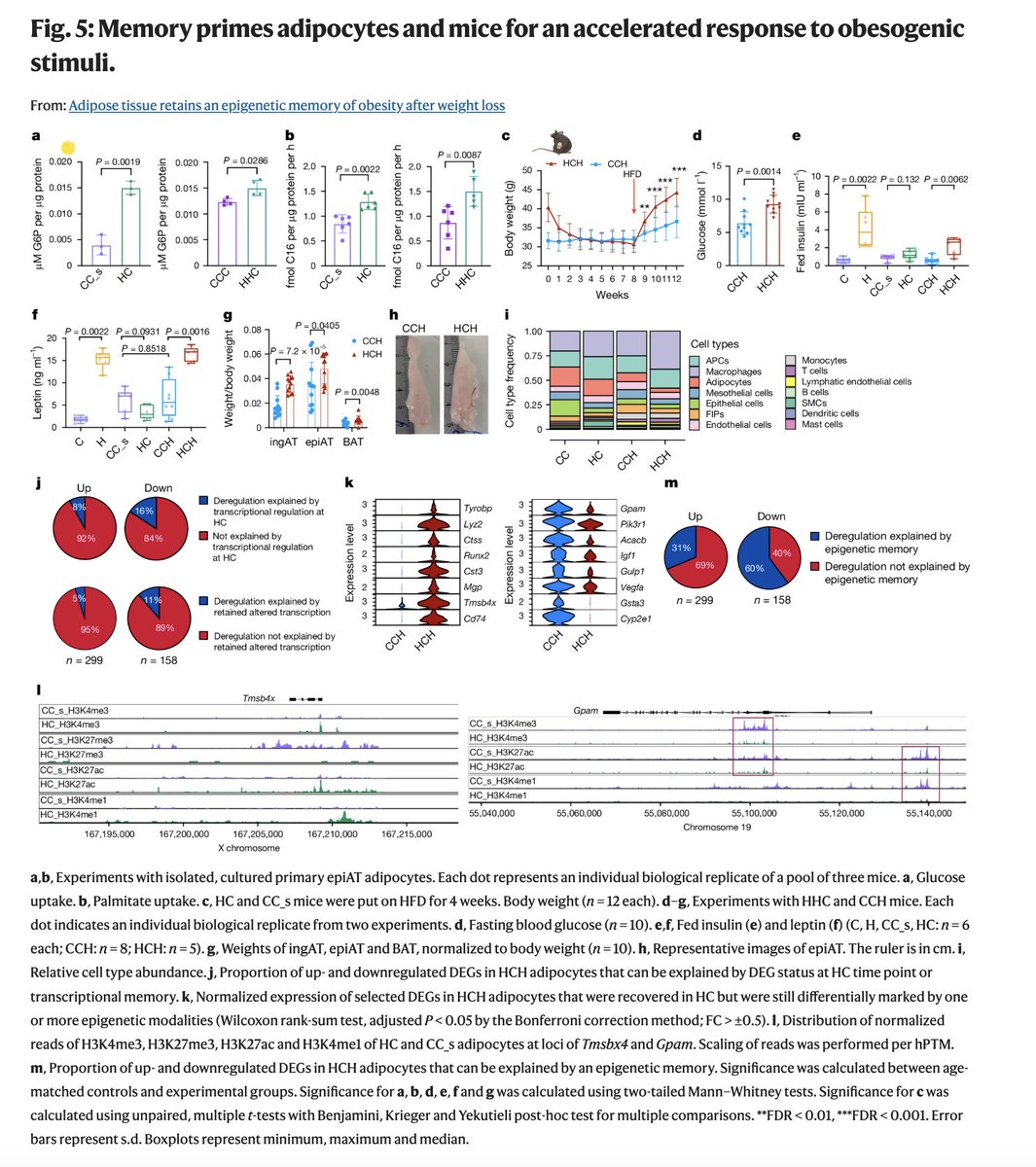
Genes involved in:
➞ Fat metabolism
➞ Fat tissue structure
Stay dysregulated, even after losing the weight.
In other words, the fat remains “primed” in an obesity-like, stiff, inflamed state.
This makes it easier to regain the weight after dieting.
6
Cutting calories raises cortisol.
Cortisol rises to help give your body extra energy, by turning your tissues into energy.
But high cortisol is a huge problem for your health,
and it can also promote fat gain, especially around the belly.
It also drives overeating.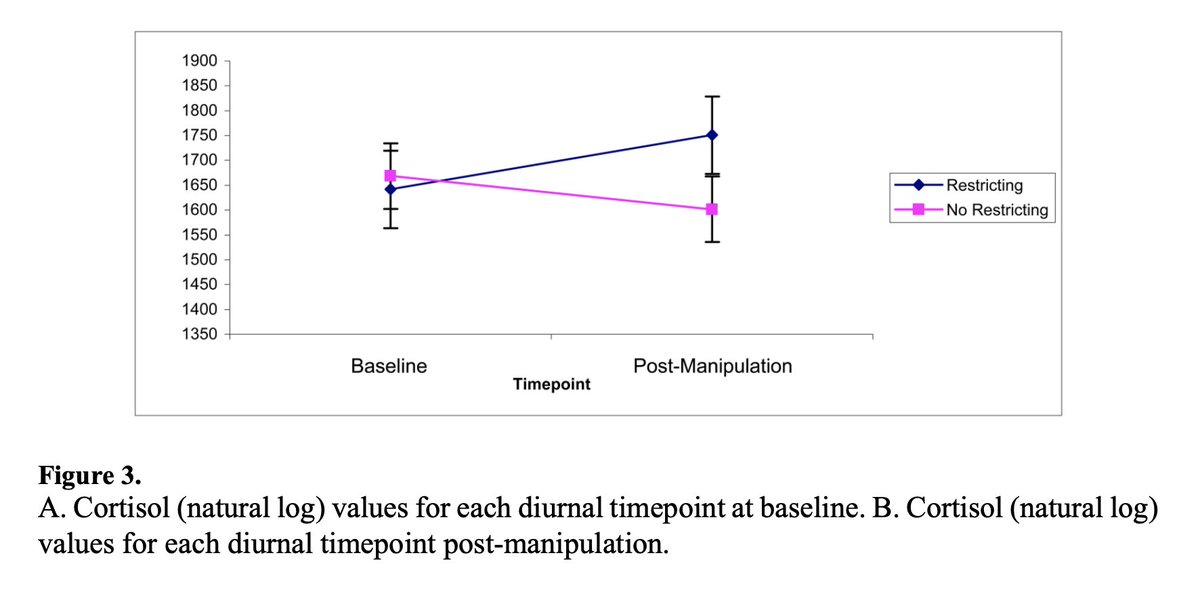
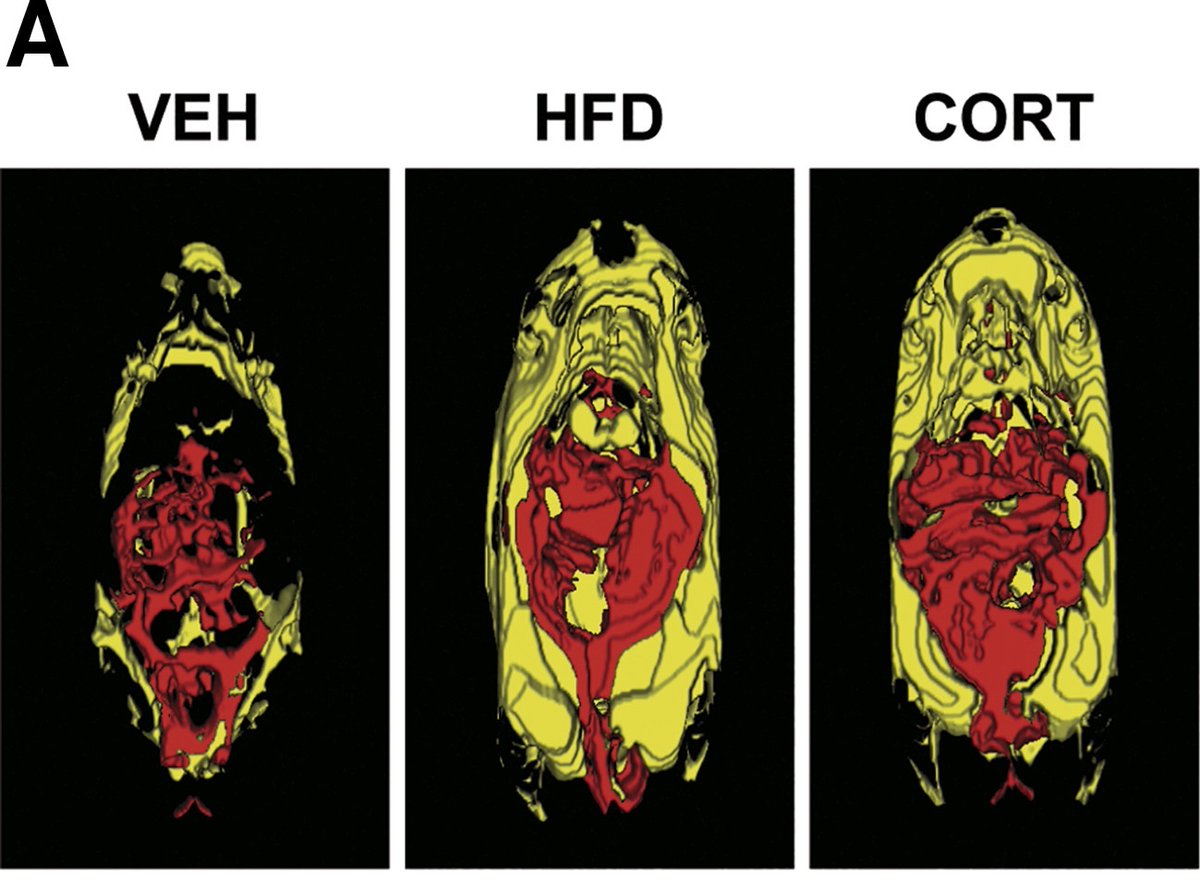
Cortisol rises to help give your body extra energy, by turning your tissues into energy.
But high cortisol is a huge problem for your health,
and it can also promote fat gain, especially around the belly.
It also drives overeating.
7
The main point here is that WEIGHT LOSS is not the same as being NATURALLY LEAN + HEALTHY.
➜ Tanked metabolism vs high metabolism
➜ Less energy for exercise vs active
➜ High vs low cortisol
➜ Low vs high leptin
➜ Low calories vs normal cals
➜ Need to constantly remember to diet vs don't think about it
The question shouldn't be "how can I lose weight?"
It should be "how can I get my physiology to be the same of a naturally lean / healthy person?"
➜ Tanked metabolism vs high metabolism
➜ Less energy for exercise vs active
➜ High vs low cortisol
➜ Low vs high leptin
➜ Low calories vs normal cals
➜ Need to constantly remember to diet vs don't think about it
The question shouldn't be "how can I lose weight?"
It should be "how can I get my physiology to be the same of a naturally lean / healthy person?"
8
Exercise can also lower basal metabolism.
The idea is that exercise = calories burned on top of what you're already burning, thus this = weight loss.
However, in reality, the body compensates and burns less in other areas when physical activity is increased.
This means you will have to exercise EVEN MORE than you think,
and this is on top of you already lowering your basal metabolism because you're eating less.
See the issue?

The idea is that exercise = calories burned on top of what you're already burning, thus this = weight loss.
However, in reality, the body compensates and burns less in other areas when physical activity is increased.
This means you will have to exercise EVEN MORE than you think,
and this is on top of you already lowering your basal metabolism because you're eating less.
See the issue?
9
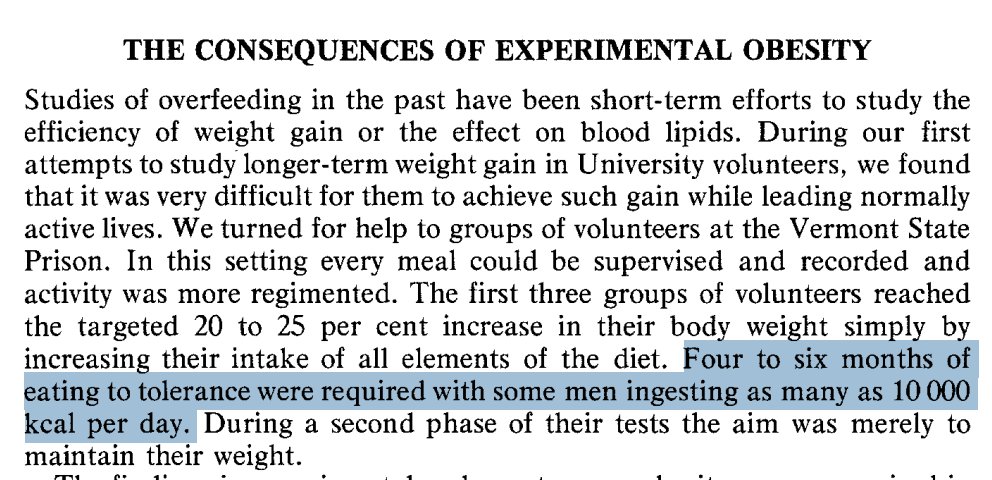
If you TRY to make people obese, it requires MUCH more calories than expected.
For naturally lean people, the amount of food needed to make them fat far exceeds what is expected.
Some men required 10,000 calories to fatten up properly.
The healthy body can use extra calories and stay thin.
For naturally lean people, the amount of food needed to make them fat far exceeds what is expected.
Some men required 10,000 calories to fatten up properly.
The healthy body can use extra calories and stay thin.
10
Forcing people to become obese requires more than DOUBLE the amount of calories than naturally obese people.
Obese men came in burning ~2400 calories.
Men who were made obese in the lab by overfeeding? Over 5,000.
It's not about simply eating more and moving less.
There are fundamental problems with obese physiology.
Obese men came in burning ~2400 calories.
Men who were made obese in the lab by overfeeding? Over 5,000.
It's not about simply eating more and moving less.
There are fundamental problems with obese physiology.
11
Let's suppose you are fat simply because you're eating too much.
The real question is, why? Why can't you regulate your food intake properly?
There are TONS of factors that govern this.
The real question is, why? Why can't you regulate your food intake properly?
There are TONS of factors that govern this.
12
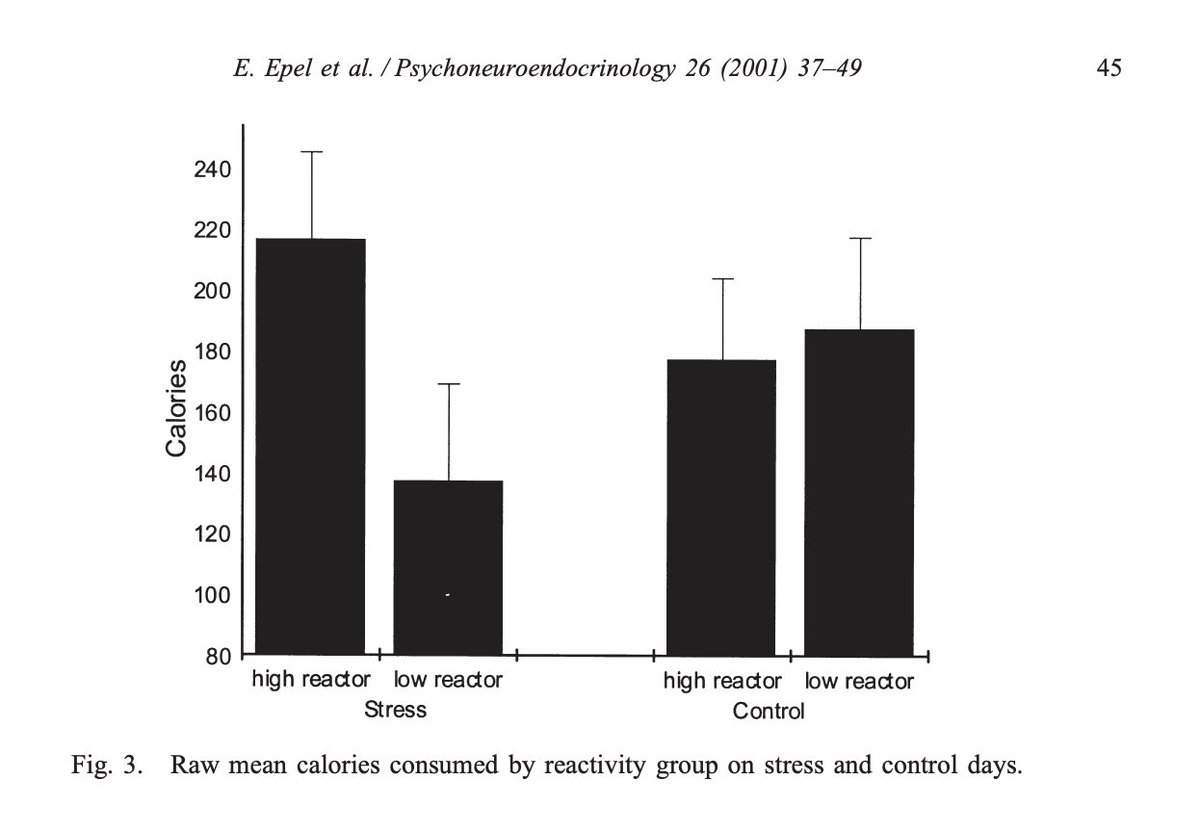
High cortisol can cause overeating.
Simply telling someone to force themselves to eat less in this situation not only is incredibly unhealthy,
but also makes the weight loss much more difficult.
Controlling cortisol is VITAL here. Full guide below. x.com/Outdoctrinatio…
Simply telling someone to force themselves to eat less in this situation not only is incredibly unhealthy,
but also makes the weight loss much more difficult.
Controlling cortisol is VITAL here. Full guide below. x.com/Outdoctrinatio…
13
Leptin signaling is what tells your brain to stop eating.
In obesity, leptin signaling is impaired.
After weight loss, leptin levels are too low.
This means you will be hungrier AND your metabolism will be slower.
This needs to be addressed.
x.com/Outdoctrinatio…
In obesity, leptin signaling is impaired.
After weight loss, leptin levels are too low.
This means you will be hungrier AND your metabolism will be slower.
This needs to be addressed.
x.com/Outdoctrinatio…
14
Your GUT is also key for appetite control.
If your gut health is off, your body will not be able to properly perceive appetite signals, leaving you prone to overeating.
Simply telling someone to eat less in this scenario does not help.
x.com/Outdoctrinatio…
If your gut health is off, your body will not be able to properly perceive appetite signals, leaving you prone to overeating.
Simply telling someone to eat less in this scenario does not help.
x.com/Outdoctrinatio…
15
Overeating can be caused by poor NUTRITION.
Adding in vitamins or calcium suppresses inappropriate appetite increases.
You WILL keep eating if you do not supply the body with what it needs.
Evaluating this is VITAL.
Or, you can just eat even less and get even fewer nutrients.

Adding in vitamins or calcium suppresses inappropriate appetite increases.
You WILL keep eating if you do not supply the body with what it needs.
Evaluating this is VITAL.
Or, you can just eat even less and get even fewer nutrients.
16
The type of food matters, too.
The "satiety index" was studied to see what foods stimulate satisfaction after eating the most.
It matters WHAT you eat, not simply how much.
Potatoes FTW.
The "satiety index" was studied to see what foods stimulate satisfaction after eating the most.
It matters WHAT you eat, not simply how much.
Potatoes FTW.
17
Simply eating an "unprocessed" diet can cause reduced food intake.
This is subconscious calorie reduction, because the body is:
➜ Getting proper appetite signaling in the gut
➜ Getting more nutrients
with a more whole food diet.
Not "eat less," "eat RIGHT."
This is subconscious calorie reduction, because the body is:
➜ Getting proper appetite signaling in the gut
➜ Getting more nutrients
with a more whole food diet.
Not "eat less," "eat RIGHT."
18
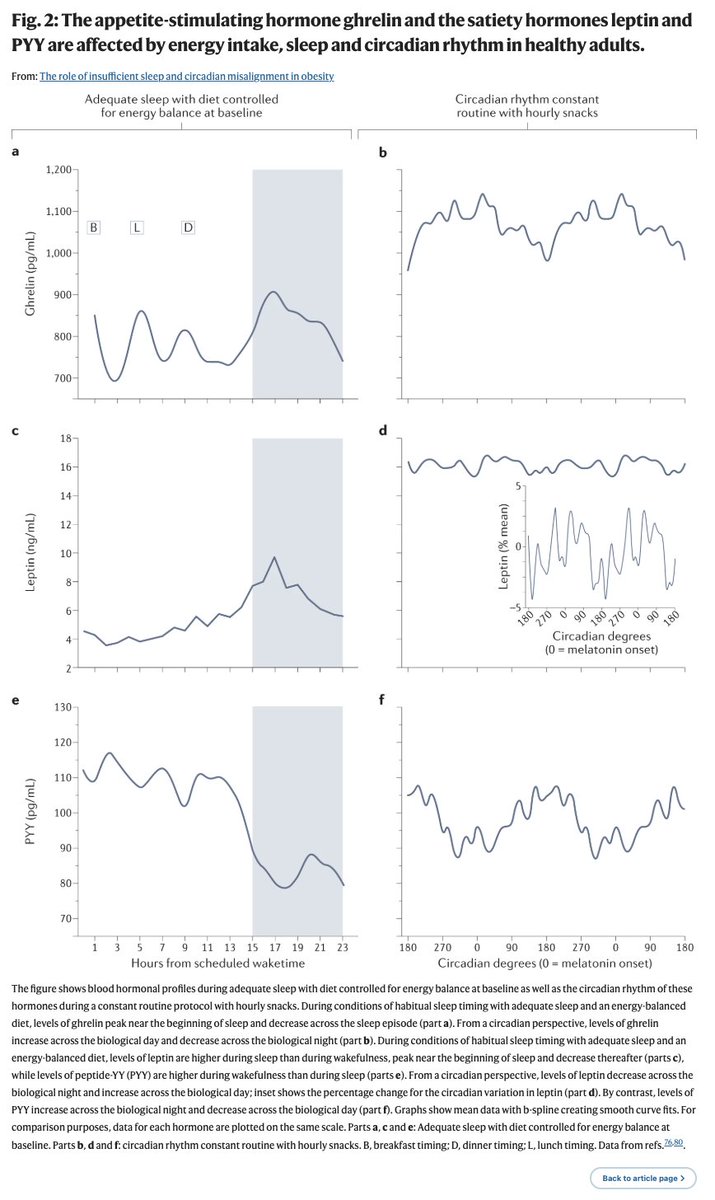
Poor SLEEP can also contribute to overeating.
Sleep is vital for regulating hunger / satiety hormones.
People can eat north of 300 calories extra per day from this alone.
Undereating is also a great way to worsen your sleep.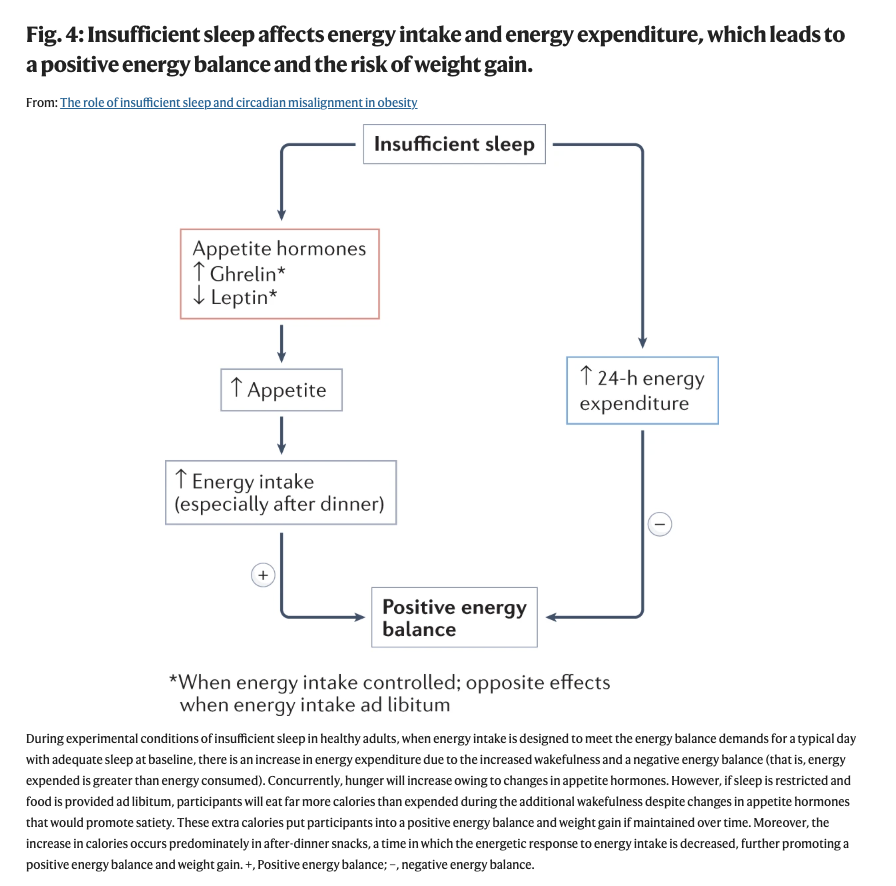
Sleep is vital for regulating hunger / satiety hormones.
People can eat north of 300 calories extra per day from this alone.
Undereating is also a great way to worsen your sleep.
19
Your hunger hormones also vary with your circadian rhythm.
If your circadian rhythm is thrown off by:
◇ Not seeing enough bright sunlight
◇ Having erratic sleep / wake times
◇ Having inconsistent feeding times
then you're not going to be able to regulate appetite properly.
If your circadian rhythm is thrown off by:
◇ Not seeing enough bright sunlight
◇ Having erratic sleep / wake times
◇ Having inconsistent feeding times
then you're not going to be able to regulate appetite properly.
20
Focusing on these areas of your HEALTH:
➝ Nutrients
➝ Gut health
➝ Leptin / sensitivity
➝ Diet composition
➝ Circadian rhythm
➝ Sleep quality
and other factors is what matters.
The net effect could be that you eat less, but this is a consequence, not the thing you should aim for.
➝ Nutrients
➝ Gut health
➝ Leptin / sensitivity
➝ Diet composition
➝ Circadian rhythm
➝ Sleep quality
and other factors is what matters.
The net effect could be that you eat less, but this is a consequence, not the thing you should aim for.
21
The real question is - why is your body primed to store fat?
Your body could use extra energy for:
◇ Tissue repair
◇ Heat
◇ Cognitive function
◇ Physical activity
and more, why does it choose to not use it at all and store fat instead?
Let's go through a few.
Your body could use extra energy for:
◇ Tissue repair
◇ Heat
◇ Cognitive function
◇ Physical activity
and more, why does it choose to not use it at all and store fat instead?
Let's go through a few.
22
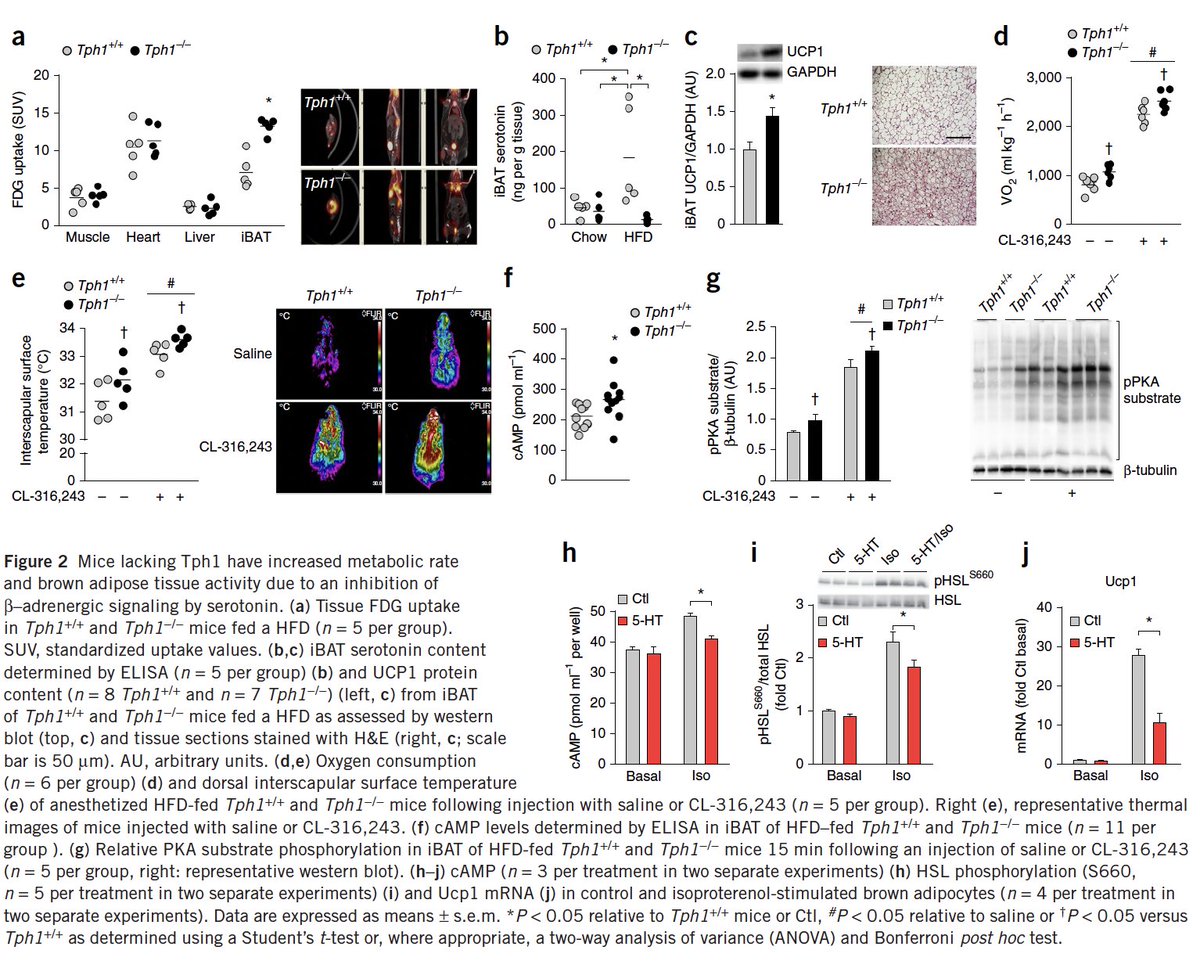
High serotonin causes obesity.
Serotonin released systemically from the gut lowers metabolism and:
◇ Prevents "browning" of fat - which increases energy production
◇ Drives insulin resistance
◇ Fattens the liver
without increasing calories. x.com/Outdoctrinatio…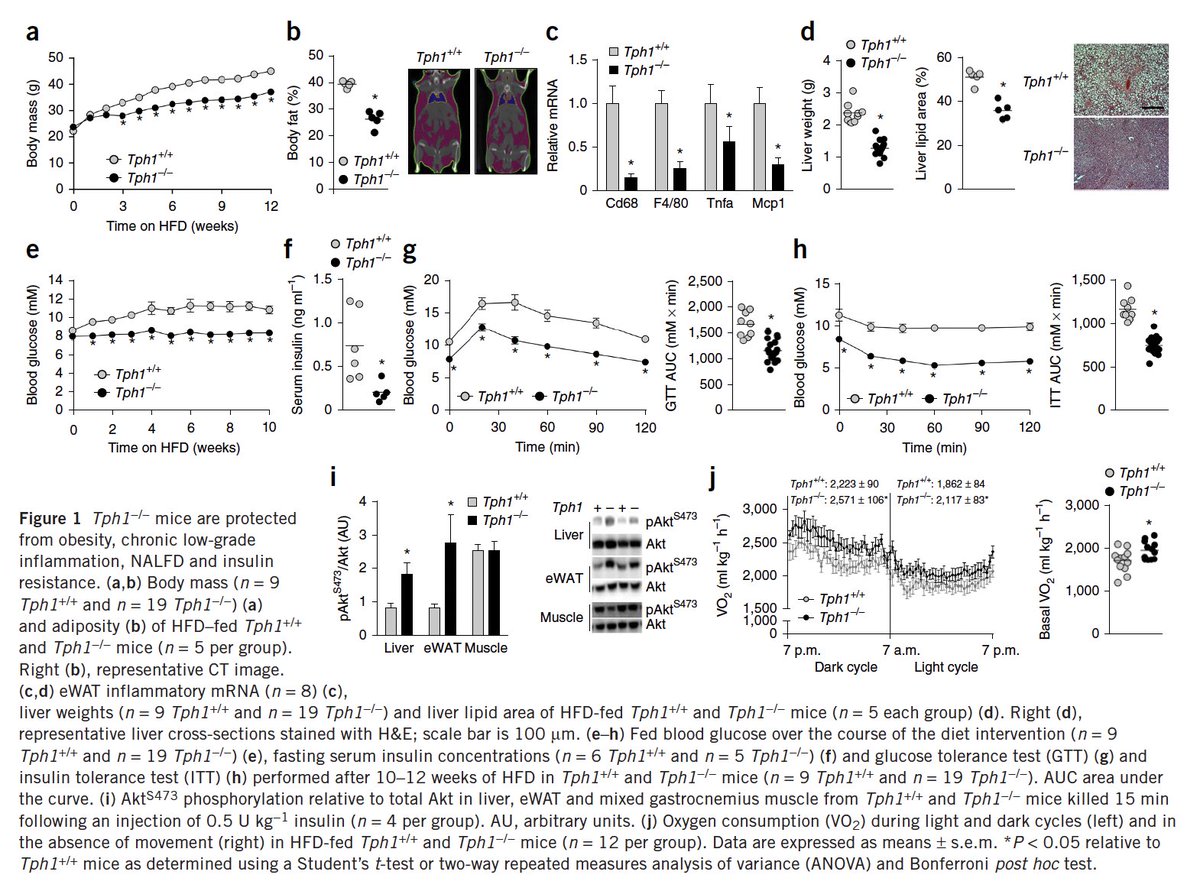
Serotonin released systemically from the gut lowers metabolism and:
◇ Prevents "browning" of fat - which increases energy production
◇ Drives insulin resistance
◇ Fattens the liver
without increasing calories. x.com/Outdoctrinatio…
23
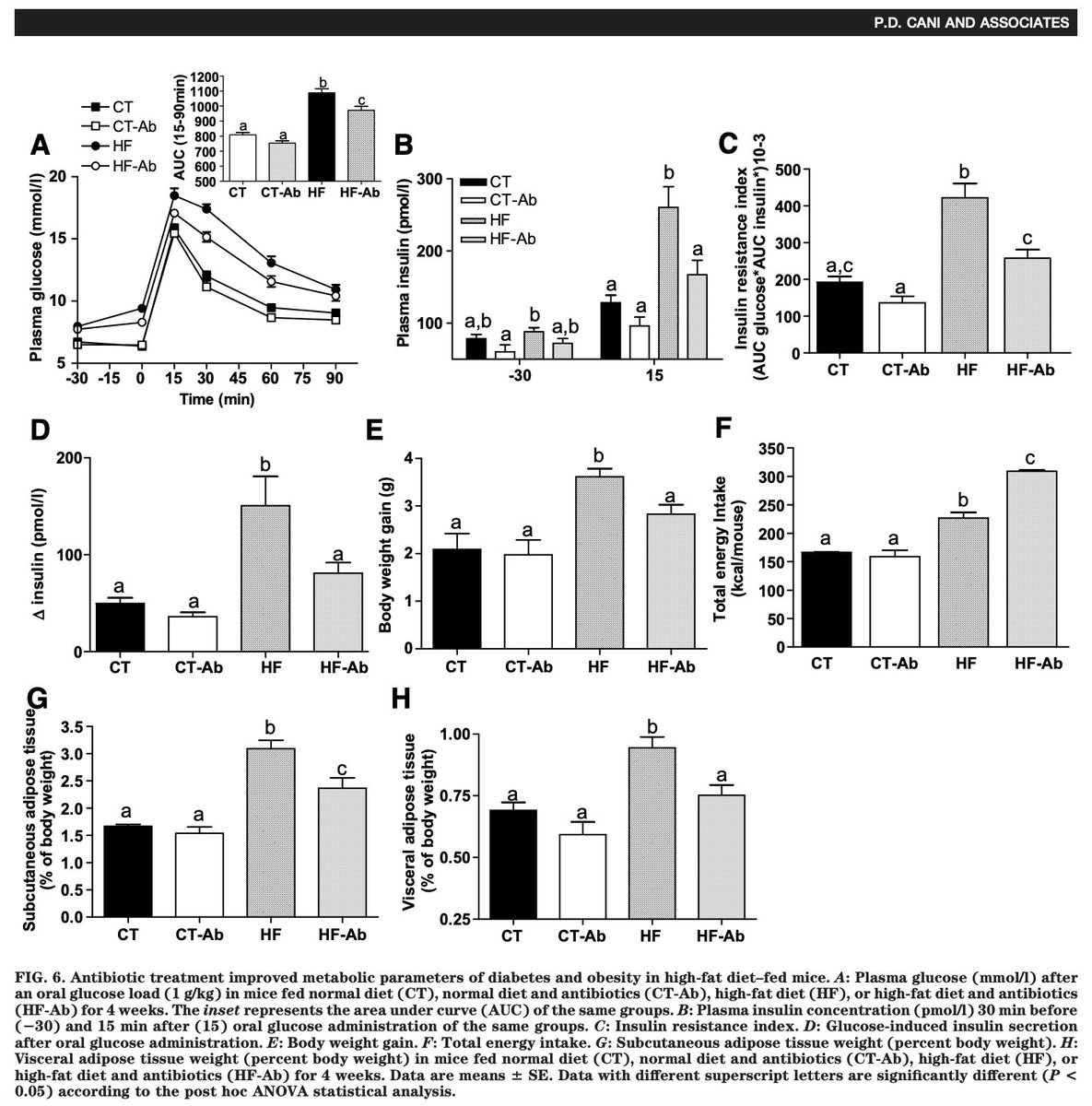
Gut issues can promote fat gain, without changing calories.
The primary reason behind this is because of endotoxin, an inflammatory bacterial component.
Give endotoxin = obesity
Eliminate it (here, with antibiotics) = obesity gone
No calorie change.
x.com/Outdoctrinatio…
The primary reason behind this is because of endotoxin, an inflammatory bacterial component.
Give endotoxin = obesity
Eliminate it (here, with antibiotics) = obesity gone
No calorie change.
x.com/Outdoctrinatio…
24
Thyroid hormones are also a key player here.
These are the primary hormones that upregulate your metabolism.
As mentioned, cutting calories lowers thyroid hormone output.
Full guide on thyroid optimization below.
x.com/Outdoctrinatio…
These are the primary hormones that upregulate your metabolism.
As mentioned, cutting calories lowers thyroid hormone output.
Full guide on thyroid optimization below.
x.com/Outdoctrinatio…
25
People with low vitamin D are at over double the risk of becoming fat within a few years.
Vitamin D:
◇ Ups thyroid hormone production
◇ Regulates gut bacteria
◇ Improves leptin sensitivity
◇ Increases fat metabolism
Vitamin D deficiency makes weight loss efforts less effective.
After surgery to lower food intake, animals with low vitamin D lose less fat,
especially in the belly area.

Vitamin D:
◇ Ups thyroid hormone production
◇ Regulates gut bacteria
◇ Improves leptin sensitivity
◇ Increases fat metabolism
Vitamin D deficiency makes weight loss efforts less effective.
After surgery to lower food intake, animals with low vitamin D lose less fat,
especially in the belly area.
26
Low zinc status drives weight gain - adding it back induces fat loss, without changing diet.
30 mg a day:
➔ Reduces waistline
➔ Drops bodyweight
➔ Lowers triglycerides
Zinc is one of the most common depletions in obesity.
30 mg a day:
➔ Reduces waistline
➔ Drops bodyweight
➔ Lowers triglycerides
Zinc is one of the most common depletions in obesity.
27
Having enough MUSCLE also prevents fat gain + helps in weight loss.
Your muscles consume a ton of energy, especially fat, even while at rest.
Having lots of it is one of the easiest ways to protect yourself here.
Going to be hard to have enough muscle while eating very little.
Your muscles consume a ton of energy, especially fat, even while at rest.
Having lots of it is one of the easiest ways to protect yourself here.
Going to be hard to have enough muscle while eating very little.
28
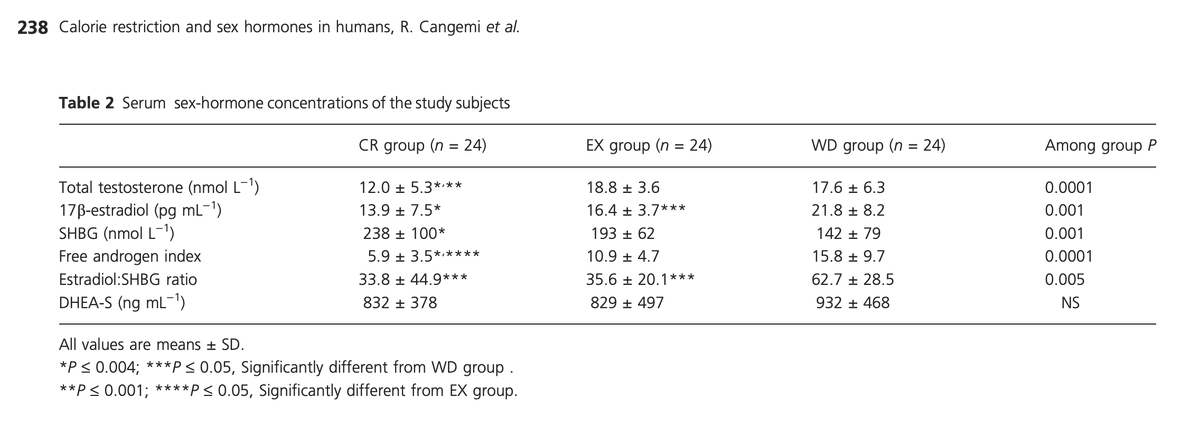
Low testosterone is another factor that can cause you to put on more fat.
Testosterone is one of the primary hormones responsible for reducing body fat + instead putting calories into muscle.
Having low T is common in long term calorie restriction.
x.com/Outdoctrinatio…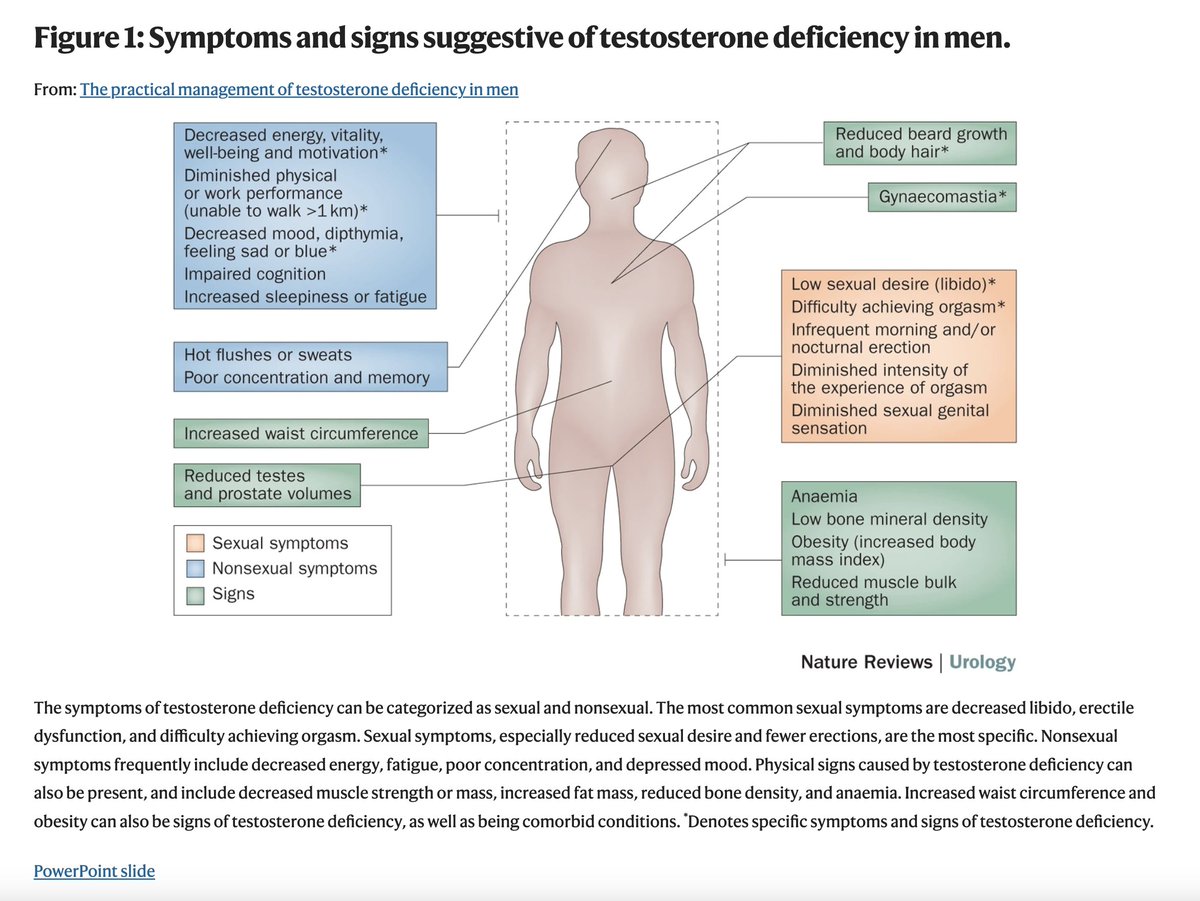
Testosterone is one of the primary hormones responsible for reducing body fat + instead putting calories into muscle.
Having low T is common in long term calorie restriction.
x.com/Outdoctrinatio…
29
High PROLACTIN can also contribute to fat gain.
This is a sign of:
➜ High estrogen
➜ High serotonin
➜ Low dopamine
or a pituitary tumor.
Raising dopamine also increases metabolism.
Master dopamine guide below.
x.com/Outdoctrinatio…
This is a sign of:
➜ High estrogen
➜ High serotonin
➜ Low dopamine
or a pituitary tumor.
Raising dopamine also increases metabolism.
Master dopamine guide below.
x.com/Outdoctrinatio…
30
High INFLAMMATION can DIRECTLY cause fat gain, too.
This is because various components of the inflammatory cascade can:
➜ Inhibit mitochondrial energy production
➜ Directly expand fat tissue
meanwhile, anti-inflammatory cytokines (IL-10) reverse this - once again without a change in the diet.
Inflammation can come from:
➜ Poor antioxidant status
➜ Seed oils
➜ Heavy metals
➜ Mycotoxins
➜ Persistent infections
➜ Air pollution
➜ Gut dysbiosis / inflammation
and so on.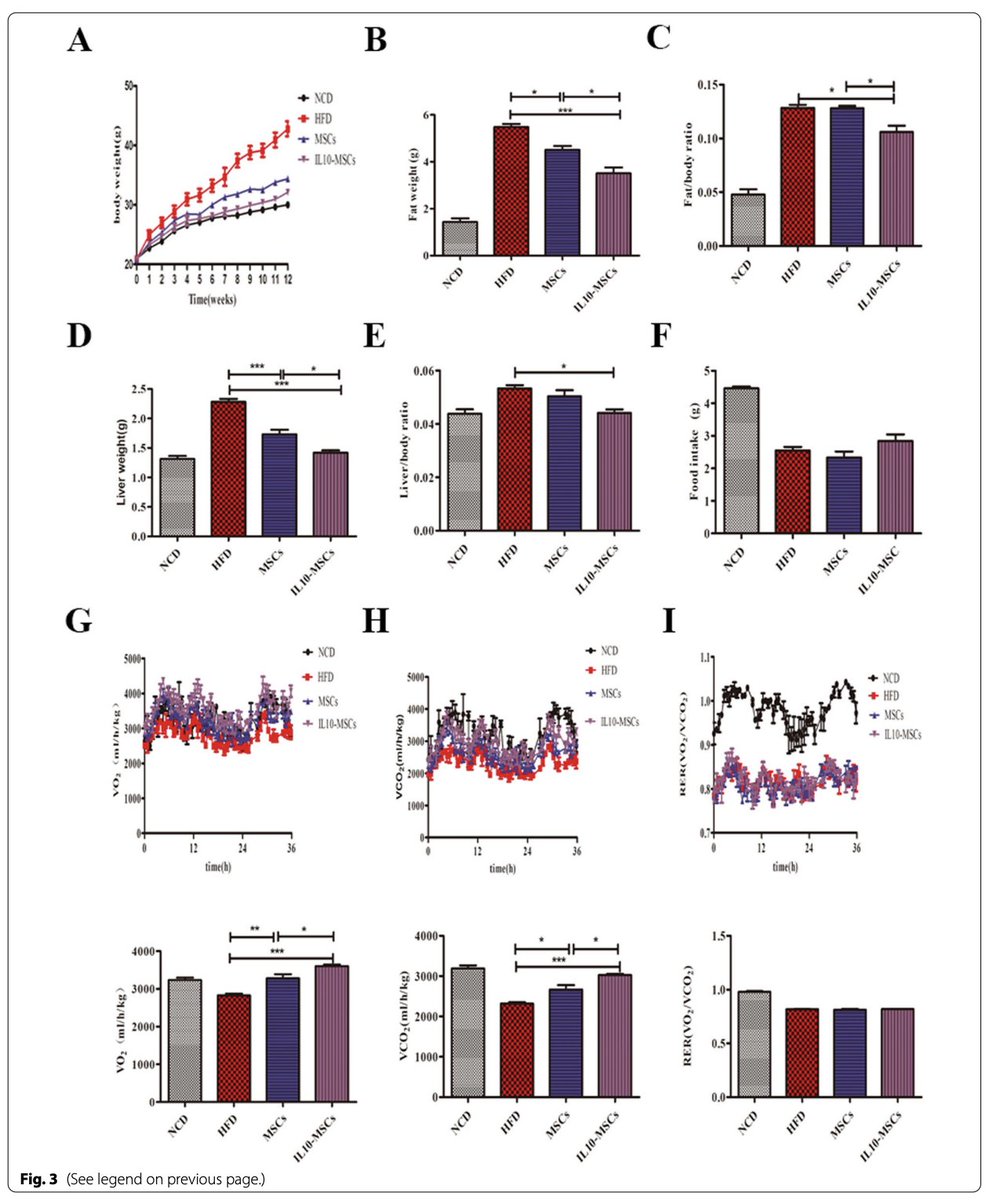
This is because various components of the inflammatory cascade can:
➜ Inhibit mitochondrial energy production
➜ Directly expand fat tissue
meanwhile, anti-inflammatory cytokines (IL-10) reverse this - once again without a change in the diet.
Inflammation can come from:
➜ Poor antioxidant status
➜ Seed oils
➜ Heavy metals
➜ Mycotoxins
➜ Persistent infections
➜ Air pollution
➜ Gut dysbiosis / inflammation
and so on.
31
SEED OILS promote obesity, regardless of calories.
Seed oils have TONS of LINOLEIC ACID.
This is a fat is not very abundant in nature,
but we now MASSIVELY over consume it.
A diet that has as much we eat today (8%) induces fat gain relative to an "ancestral" amount (1%).
Seed oils are metabolically distinct - and they can cause your fat tissue to want to store more fat. Simply eating less does nothing here.

Seed oils have TONS of LINOLEIC ACID.
This is a fat is not very abundant in nature,
but we now MASSIVELY over consume it.
A diet that has as much we eat today (8%) induces fat gain relative to an "ancestral" amount (1%).
Seed oils are metabolically distinct - and they can cause your fat tissue to want to store more fat. Simply eating less does nothing here.
32
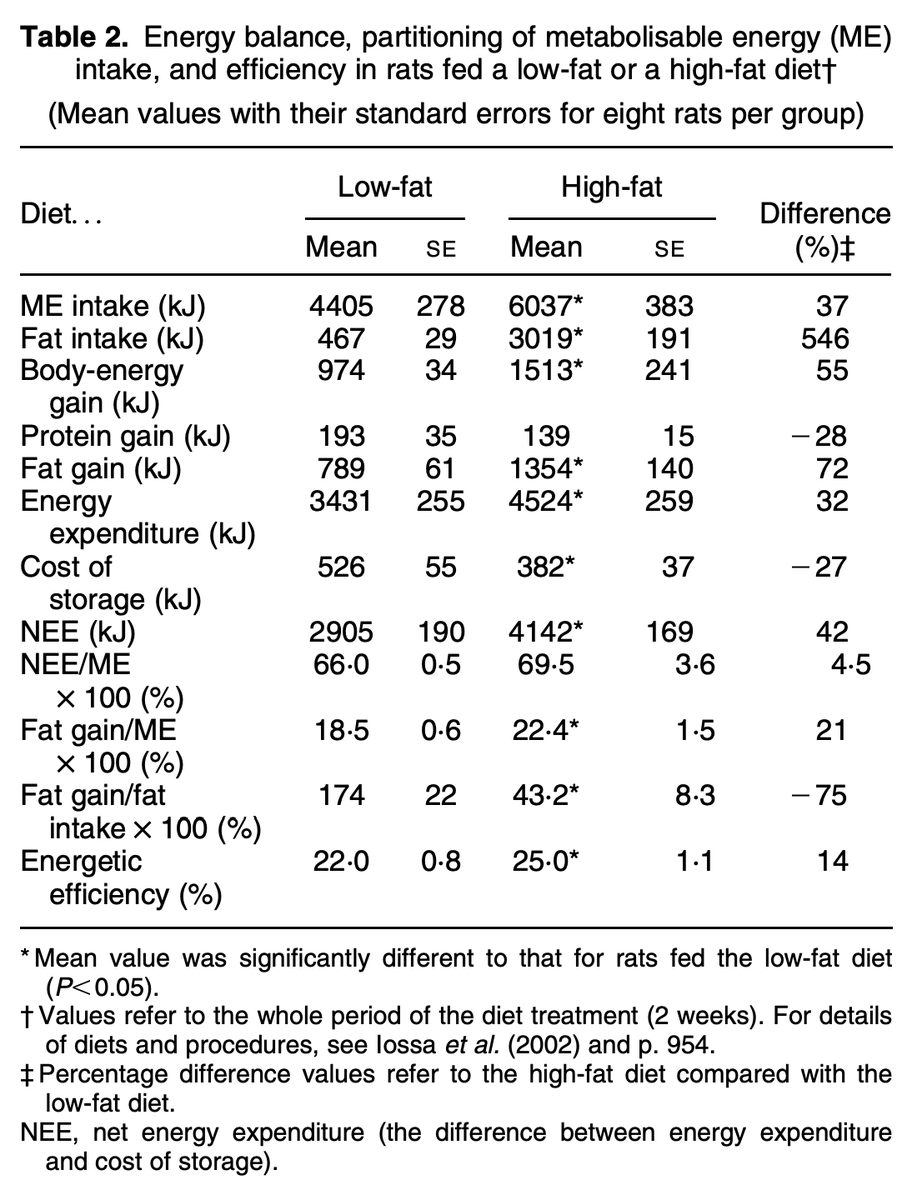
In fact, this is well known in research.
The "high fat diet" that is used to make animals fat has an increased "feed efficiency."
In other words more calories stored per calorie consumed, compared to the healthier diet.
It is very common in these studies to see that animals eat the same amount or even FEWER calories on the fattening diets.
The diet COMPOSITION is what makes it fattening, NOT the calorie amount.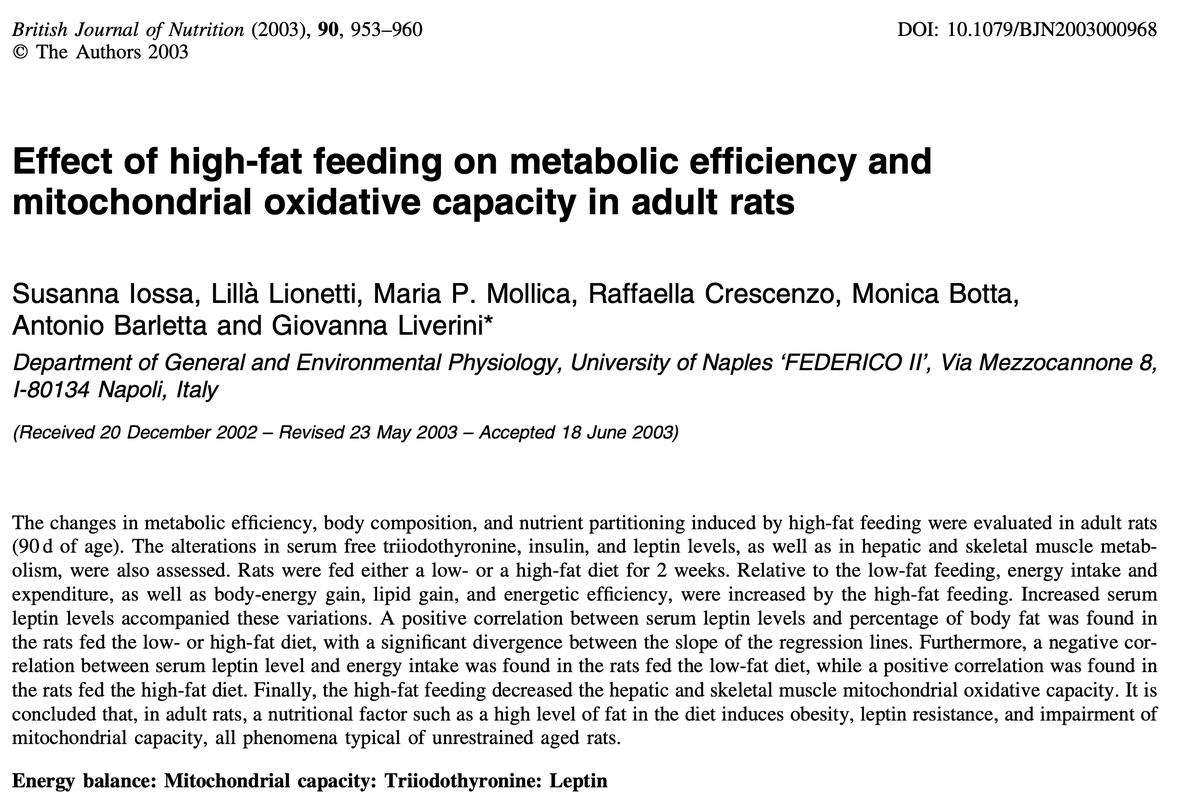
The "high fat diet" that is used to make animals fat has an increased "feed efficiency."
In other words more calories stored per calorie consumed, compared to the healthier diet.
It is very common in these studies to see that animals eat the same amount or even FEWER calories on the fattening diets.
The diet COMPOSITION is what makes it fattening, NOT the calorie amount.
33
There's also tons of evidence that obese people do not eat more than lean people to begin with!
At least, not consistently.
More on that below.
x.com/Outdoctrinatio…
At least, not consistently.
More on that below.
x.com/Outdoctrinatio…
34
Yes, you can get lean on twinkies.
You can eat less and move more and lose weight. It is possible and happens all the time.
If you did it, then I’m happy for you.
BUT in the LONG RUN, the questions are:
a) Is it sustainable practically?
b) Is it going to be healthy?
c) Why doesn’t it work for most statistically?
d) How likely are you to regain the weight?
This is not a simple cure all solution. My issue is when people pretty much say "oh it’s not working? Just eat EVEN LESS and move EVEN MORE
This approach is not mimicking the naturally lean.
The goal should be to get your body's physiology to be similar to that of the naturally lean. People who don’t need to consciously think to be lean.
In other words, a healthy person.
You don’t want to be on a diet forever.
I am not saying we can violate thermodynamics.
My problem is when people act like:
➜ Calories out or stored is static
➜ Calories stored is all held equal (muscle v fat)
➜ Calories in is all about will power / gluttony
➜ Fat loss is more important than health
You can eat less and move more and lose weight. It is possible and happens all the time.
If you did it, then I’m happy for you.
BUT in the LONG RUN, the questions are:
a) Is it sustainable practically?
b) Is it going to be healthy?
c) Why doesn’t it work for most statistically?
d) How likely are you to regain the weight?
This is not a simple cure all solution. My issue is when people pretty much say "oh it’s not working? Just eat EVEN LESS and move EVEN MORE
This approach is not mimicking the naturally lean.
The goal should be to get your body's physiology to be similar to that of the naturally lean. People who don’t need to consciously think to be lean.
In other words, a healthy person.
You don’t want to be on a diet forever.
I am not saying we can violate thermodynamics.
My problem is when people act like:
➜ Calories out or stored is static
➜ Calories stored is all held equal (muscle v fat)
➜ Calories in is all about will power / gluttony
➜ Fat loss is more important than health
35
Losing weight the right way can be difficult, but it's not impossible.
We help folks with optimizing their overall health all the time, including for weight loss.
If you want some help with any of your health goals, schedule a free call with us here: go.prism.miami/consultation
We help folks with optimizing their overall health all the time, including for weight loss.
If you want some help with any of your health goals, schedule a free call with us here: go.prism.miami/consultation
36
Thank you for reading through this. Give this tweet below a repost if you found it interesting to spread the message.
x.com/Outdoctrinatio…
x.com/Outdoctrinatio…
37
Be sure to check out all of our content, supplements, lab testing options and join our email list for exclusive offers here: analyzeandoptimize.io
