Why do living organisms need sleep? A new theory suggests that...

Nicholas Fabiano, MD@NTFabiano
101 views
Apr 29, 2025
~2 min read
Advertisement
1
Why do living organisms need sleep?
A new theory suggests that myelin acts as a proton capacitor, accumulating energy during sleep.
🧵1/12
A new theory suggests that myelin acts as a proton capacitor, accumulating energy during sleep.
🧵1/12
2
These findings are from a paper in @ElsevierConnect which discussed a novel hypothesis as to why living organisms need sleep. sciencedirect.com/science/articl… 2/12

3
Myelin is formed by specific glial cell types (oligodendrocytes in the central nervous system and Schwann cells in the peripheral nervous system) that generate a multilayer sheath around nerve cell axons. 3/12

4
The capacity of myelin to synthesize ATP through the conventional oxidative phosphorylation, despite the absence of mitochondria, is substantiated by numerous experimental findings. 4/12

5
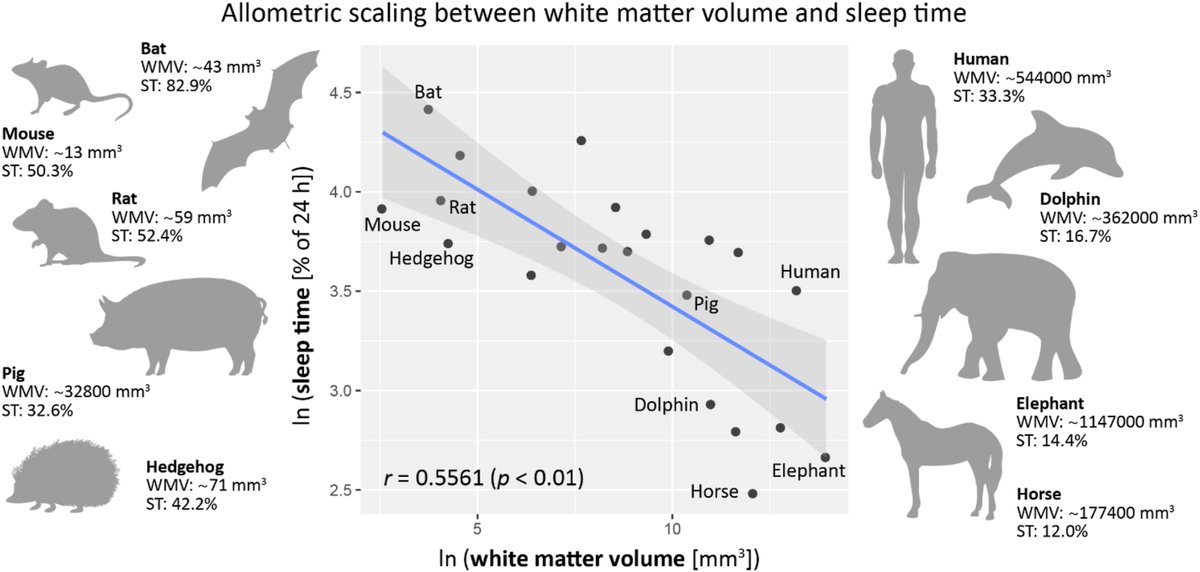
Across organisms, sleep duration depends on brain white matter volume (which is composed of >95% myelin) and neuronal energy consumption. 5/12
6
This can be interpreted as an indication that a lack of myelin results in a reduction in the energy required for waking activities. 6/12
7
It is hypothesized that the metabolism of glucose, the primary nutrient for the brain, accumulates energy within the myelin sheath during periods of sleep and releases it during periods of wakefulness. 7/12
8
This process makes use of the glycolytic catabolism, which involves the pentose phosphate pathway (PPP) as the main metabolic pathway of glucose, with the possibility of recycling. sciencedirect.com/science/articl… 8/12

9
As sleep progresses, myelin basic protein (MBP) and myelin proteolipid protein (PLP) are progressively loaded with protons until saturation. 9/12
10
The waking phase is characterized by the opening of the gap junction, which allows the ATP synthase to receive a flow of protons released by the laminar buffers, which are composed of MBP and the major dense line basic domain of the PLP. 10/12
11
Upon the discharge of the laminar buffer of protons, the synthesis of reserve ATP is no longer possible, resulting in the cessation of nerve conduction and the onset of the sleep phase. 11/12
12
Overall, the presented model allows for the examination of myelin as a glial component that functions as a proton capacitor, aligning with the widely accepted notion that sleep serves to recharge the nervous system with energy. 12/12
13
TL;DR sleep literally recharges your brain

