Five days of ultra-processed foods changed the insulin and reward...

Nicholas Fabiano, MD@NTFabiano
61 views
Mar 02, 2025
~1 min read
Advertisement
1
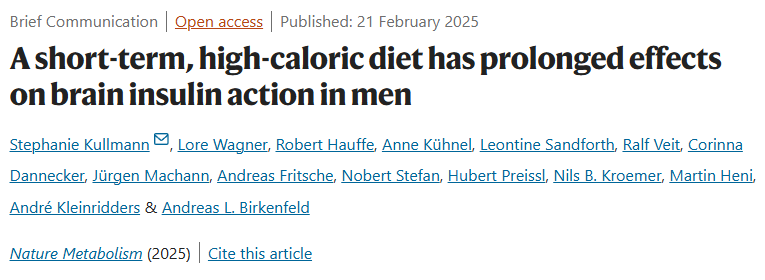
Five days of ultra-processed foods changed the insulin and reward functions of the brain.
🧵1/10
🧵1/10
2
These findings are from a study in @NatMetabolism which investigated the short-term effects of an ultra-processed, high-caloric diet on brain insulin action before significant weight gain. nature.com/articles/s4225… 2/10
3
Findings from numerous studies suggest that the disruption of insulin responsiveness in the human brain promotes metabolic, psychiatric and neurodegenerative diseases. 3/10
4
In this study, 29 healthy male participants aged 19–27 years (BMI 19–25 kg/m²) were assigned to either a high-caloric diet (HCD) group (n=18) or a control group (n=11). 4/10

5
Over five days, the HCD group attempted to consume an additional 1,500 kcal daily from ultra-processed snacks while the control group maintained their regular diet. 5/10
6
In the HCD group, brain insulin responsiveness increased in the right insular cortex, left rolandic operculum, and right midbrain/pons. 6/10

7
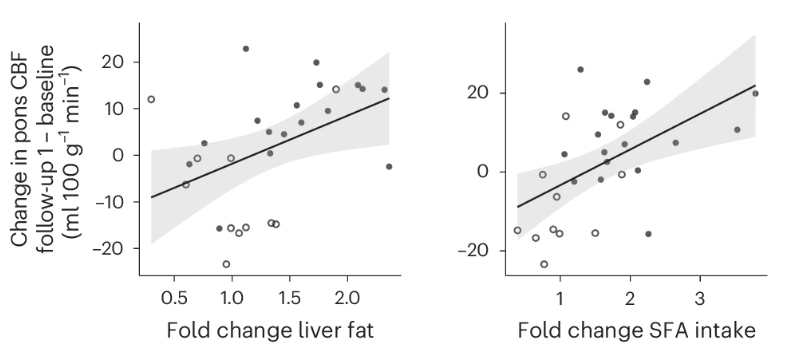
Changes in brain insulin responsiveness correlated with liver fat accumulation and dietary fat intake. 7/10
8
Participants in the HCD group showed decreased reward sensitivity and increased punishment sensitivity; this suggests that participants found rewarding outcomes less motivating and gained a heightened reaction to punishments. 8/10

9
However, one week after resuming a regular diet, insulin activity was significantly lower in the right hippocampus and bilateral fusiform gyrus and reward processing trended towards baseline, but did not fully reverse. 9/10
10
Overall, short-term overeating with commonly used ultra-processed high-caloric snacks can trigger liver fat accumulation and short-term disrupted brain insulin action that outlast the time-frame of the HCD in men. 10/10
11
@drjasonfung may be of interest

