Since legalization, new schizophrenia cases linked to heavy...

Nicholas Fabiano, MD@NTFabiano
43 views
Feb 10, 2025
~1 min read
Advertisement
1
Since legalization, new schizophrenia cases linked to heavy cannabis use have tripled.
🧵1/9
🧵1/9
2
These findings are from a study in @JAMANetworkOpen which aimed to examine changes in the population-attributable risk fraction (PARF) for cannabis use disorder (CUD) associated with schizophrenia after legalization of nonmedical cannabis in Canada. jamanetwork.com/journals/jaman… 2/9
3
Cannabis use and the tetrahydrocannabinol (THC) content of cannabis products are increasing globally; while evidence suggests a dose-response relationship, with more frequent use of higher-potency cannabis products associated with a greater risk of schizophrenia. 3/9
4
Mechanistically, legalization would gradually increase cannabis use, increasing cannabis use would increase the incidence of psychosis, and individuals with incident psychosis would then need to be diagnosed in the health system. 4/9
5
Consequently, studies evaluating changes in the proportion of incident cases of schizophrenia associated with cannabis use after policy changes can provide an earlier indicator of the possible associations of legalization with schizophrenia. 5/9
6
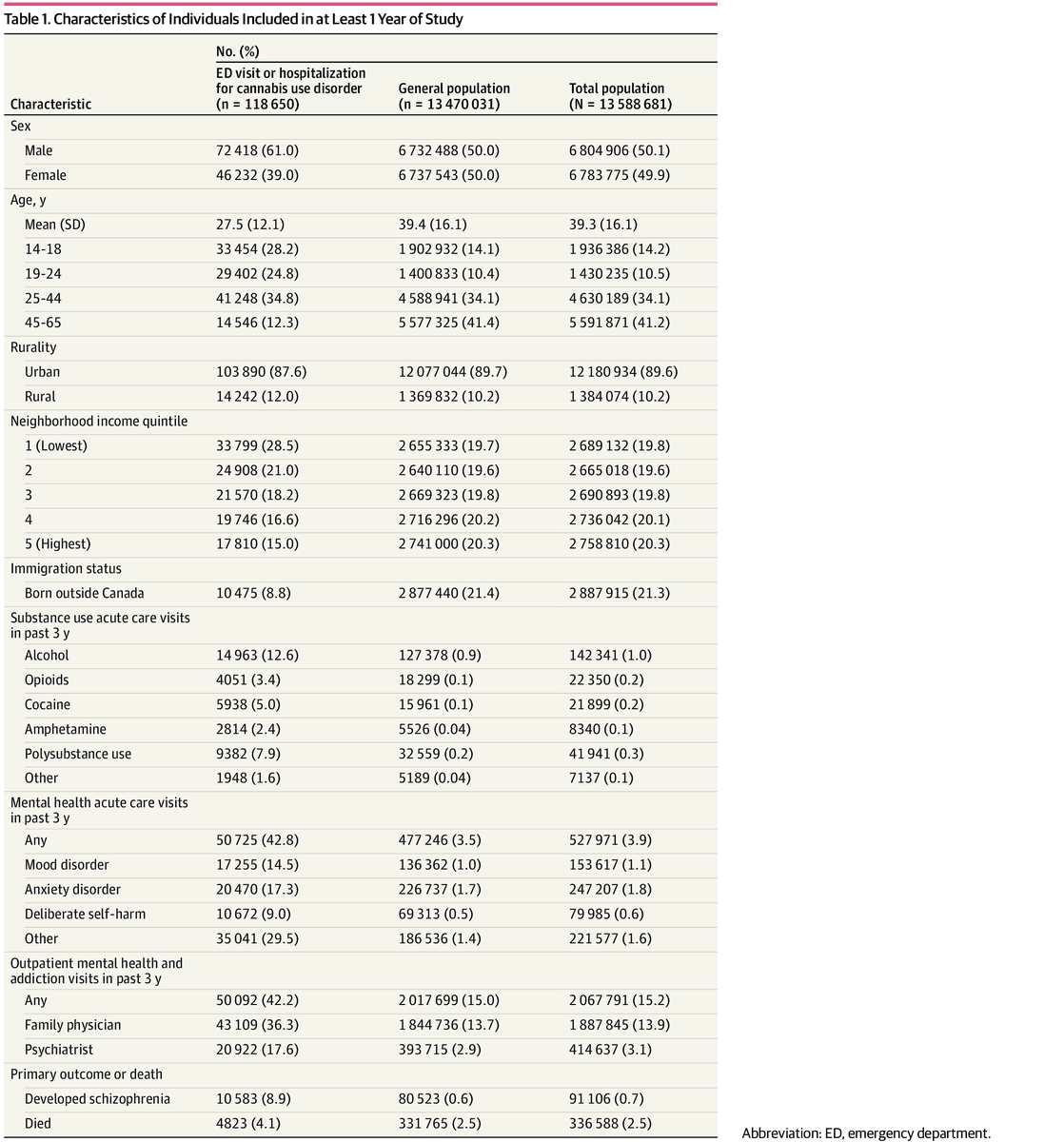
The study included 13 588 681 individuals (mean [SD] age, 39.3 [16.1] years; 6 804 906 males [50.1%]), of whom 118 650 (0.9%) had CUD. 6/9
7
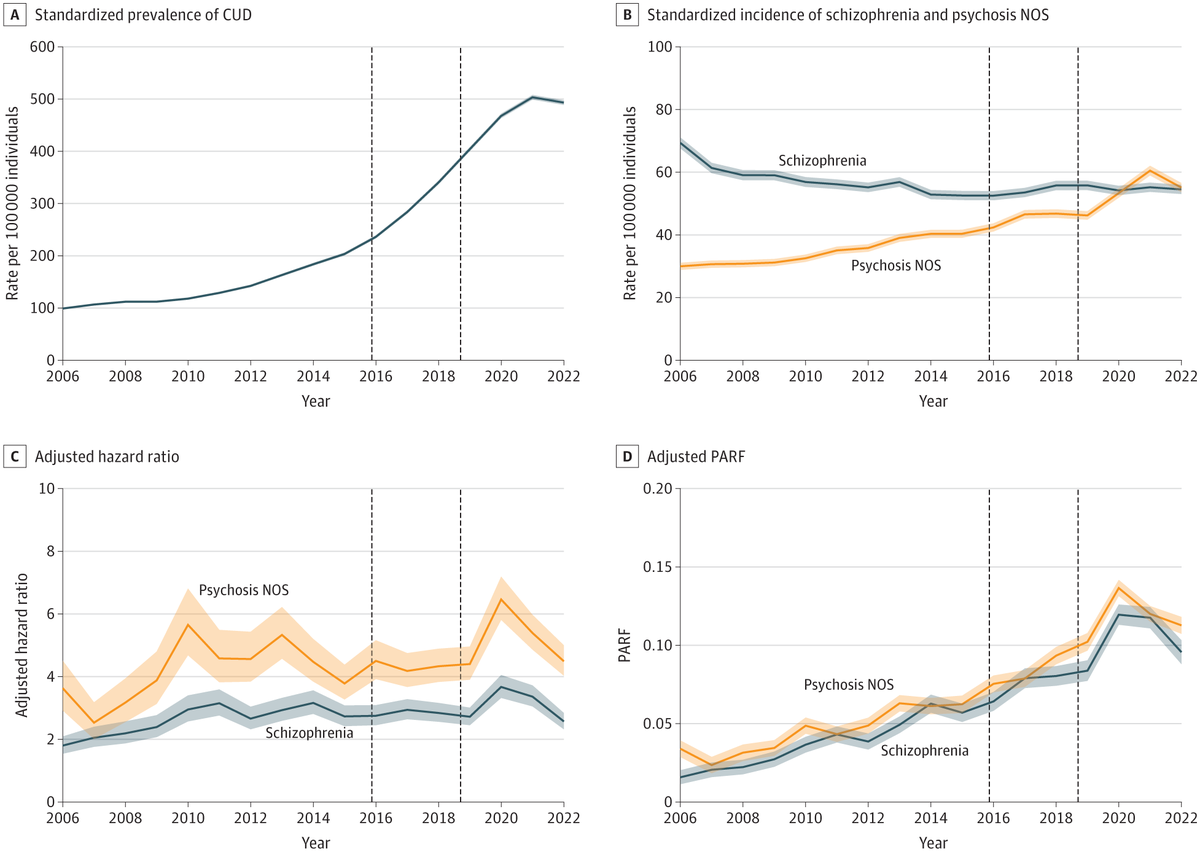
The PARF for CUD associated with schizophrenia almost tripled from 3.7% (95% CI, 2.7%-4.7%) during the prelegalization period to 10.3% (95% CI, 8.9%-11.7%) during the legalization period. 7/9
8
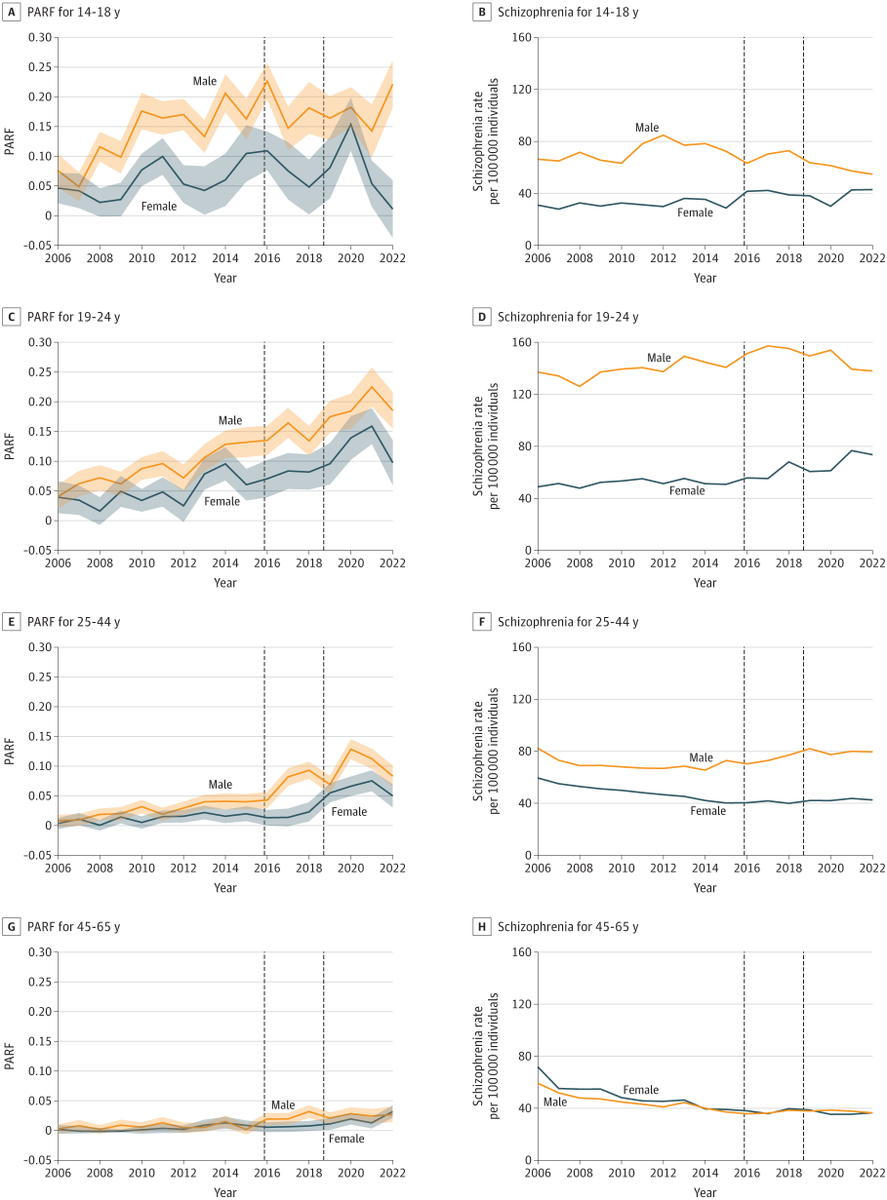
The PARF in the postlegalization period ranged from 18.9% (95% CI, 16.8%-21.0%) among males aged 19 to 24 years to 1.8% (95% CI, 1.1%-2.6%) among females aged 45 to 65 years. 8/9
9
Overall, ongoing research is needed on long-term trends in the incidence of psychotic disorders associated with changes in cannabis policy, particularly the commercialization of the legal cannabis market, which was not well captured in this study. 9/9
10
A reminder:

