An underrated factor when it comes to hormonal issues, skin issues,...

George Ferman@Helios_Movement
129 views
Jan 11, 2025
~6 min read
Advertisement
1
An underrated factor when it comes to hormonal issues, skin issues, digestive issues, growth, high cholesterol and a lot more.
Thread on bile🧵
Thread on bile🧵
2
Tens of thousands (if not more) of DNA-related processes are based on nutrients.
So, when we deprive ourselves of nutrients (either by not providing enough of them OR by messing up their absorption), TENS OF THOUSANDS of DNA-related processes become dysfunctional.
We have talked about how certain factors such as stress, birth control pills, the inability to inactive certain plant compounds such as phytic acid, xenoestrogens, alcohol and so on can deplete us of nutrients, but we haven't talked about how improper bile metabolism/homeostasis can have similar effects by negatively affecting our ability to absorb and digest fat properly.
3
Bile is a green-yellow liquid, made out of bile salts (acids such as colic, chenodeoxycholic, lithocholic and deoxycholic), fatty acids, lecithin, inorganic salts and water all of which give it it’s alkalinity (bile has a PH of 7 to 8).
It is produced in the hepatocytes (liver) in amounts of 600 all the way to even 1.200 ml per day (measured based on the amount that reaches the duodenum (a part of the small intestine)) and has great antibacterial properties especially for the small intestine (acts as bactericide) but protects us from enteric infections in general by excreting IgA (immune globulin A), is crucial for the absorption of fat soluble vitamins, byproducts of red blood cells called bilirubin, is an excretory route for lipophilic toxicants, and acts on the “surface” of lipids (triglycerides for examples) in order to emulsify them (partly why bile is responsible for the elimination of cholesterol) which is crucial step in order for pancreatic lipase to do its job properly.
It is produced in the hepatocytes (liver) in amounts of 600 all the way to even 1.200 ml per day (measured based on the amount that reaches the duodenum (a part of the small intestine)) and has great antibacterial properties especially for the small intestine (acts as bactericide) but protects us from enteric infections in general by excreting IgA (immune globulin A), is crucial for the absorption of fat soluble vitamins, byproducts of red blood cells called bilirubin, is an excretory route for lipophilic toxicants, and acts on the “surface” of lipids (triglycerides for examples) in order to emulsify them (partly why bile is responsible for the elimination of cholesterol) which is crucial step in order for pancreatic lipase to do its job properly.
4
Bile is also stored in the gallbladder when it’s then transported to things such as the duodenum with the help of hormones such as cholecystokinin, gastrin, somatostatin and secretin (these hormones signal to the gallbladder to release the stored bile among other things (they also promote things such as gut motility)).

5
So in a nutshell, poor bile flow will not only lead to malnutrition, hormonal issues and gut issues, but also the accumulation of toxins in the body.
Obviously, bile is a big topic that can't be discussed in length in a single thread.
This is just an introduction for the people who perhaps have no idea what it even is.
Obviously, bile is a big topic that can't be discussed in length in a single thread.
This is just an introduction for the people who perhaps have no idea what it even is.
6
So here are some practical tips (none of which are of course substitute for medical advice):
Number 1: Limit the amount of toxins that you're exposing yourself to.
This one is simply common sense since the greater the toxic burden that your liver is exposed to, the more unhealthy it will be.
Number 1: Limit the amount of toxins that you're exposing yourself to.
This one is simply common sense since the greater the toxic burden that your liver is exposed to, the more unhealthy it will be.
7
The main things that you need to identify and try your best to avoid if you want a healthy liver are the following:
1. Bad fats
sciencedaily.com/releases/2018/…
We need to state here that these fats, negatively affect the liver both directly, but also indirectly by damaging the pancreas which reduces the ability of the liver to remove toxins.
1. Bad fats
sciencedaily.com/releases/2018/…
We need to state here that these fats, negatively affect the liver both directly, but also indirectly by damaging the pancreas which reduces the ability of the liver to remove toxins.
8
2. Pesticides and herbicides
If you can invest in your food quality, invest in it, now.
Both herbicides and pesticides will damage your liver especially if you live in the States where the limits that are allowed are way higher compared to other nations.
The maximum level of glyphosate accepted in the United States is 0.7 mg/L while in places like Europe is 0.028 mg/L for example.
ncbi.nlm.nih.gov/pmc/articles/P……
9
3. The mindless usage of medications (anabolic steroids included).
Commonly used medications such as NSAIDs, ibuprofen, Tylenol, statins and even H1 negatively affect the liver (among multiple other things) and you should never pop them like candy.
4. Alcohol.
Commonly used medications such as NSAIDs, ibuprofen, Tylenol, statins and even H1 negatively affect the liver (among multiple other things) and you should never pop them like candy.
4. Alcohol.
10
5. Xenoestrogens
x.com/Helios_Movemen…
x.com/Helios_Movemen…
11
Number 2: Further support your liver by:
-Taking care of your gut
he gut can affect the liver in multiple ways (check the gut-liver axis here: pubmed.ncbi.nlm.nih.gov/31622696/
) but one of them is the portal vein which transports gut-derived products to the liver.
So, take good care of your gut.
-Taking care of your gut
he gut can affect the liver in multiple ways (check the gut-liver axis here: pubmed.ncbi.nlm.nih.gov/31622696/
) but one of them is the portal vein which transports gut-derived products to the liver.
So, take good care of your gut.
12
-Detoxing
Be aware of nutritional and supplemental tools that can AID detoxification
1) Sulfur rich foods since toxins such as heavy metals have an affinity to bind to sulfur.
2) Raw milk will decrease gastrointestinal lead absorption and cadmium toxicity.
3) Quality oysters, organic berries, camu camu and acerola cherries can reduce blood levels of aluminum.
4) Almost all quality animal products (except dairy) can help you battle methylmercury due to their selenium content.
5) Sun dried raisins will displace fluoride from the glands.
6)Organic granny smiths apples can increase the excretion of aluminum.
7) Carrots will bind excess estrogens in the gut.
Supplemental tools for detoxification:
1) Thiamine (B1) which is a chelator for most of the heavy metals
2) Magnesium malate has the ability to bind aluminum and remove it from the body.
3) Activated charcoal / H. zeolites
Activated charcoal is made by heating carbon rich material such as wood, peat or coconut shells to a very high temperature and the AC then becomes a fine black powder which when consumed will bind to tons of endotoxins (from heavy metals, to xenoestrogens, to parasites) because it carries slight negative electrical charge which acts like a magnet for the positively charged toxins.
BUT, if taken for over a few weeks it will bind into important minerals and this is why zeolites are preferable for most cases.
13
-Pineapple
ncbi.nlm.nih.gov/pmc/articles/P…
-Mastic post meals
ncbi.nlm.nih.gov/pmc/articles/P…
(Especially if you are struggling with excessive body fat pubmed.ncbi.nlm.nih.gov/33629536/)
ncbi.nlm.nih.gov/pmc/articles/P…
-Mastic post meals
ncbi.nlm.nih.gov/pmc/articles/P…
(Especially if you are struggling with excessive body fat pubmed.ncbi.nlm.nih.gov/33629536/)
14
-Beef heart for the CoQ10
pubmed.ncbi.nlm.nih.gov/26156412/
-Lose excessive body fat and resistance train
ncbi.nlm.nih.gov/pmc/articles/P…
-Provide liver supporting nutrients such as bioavailable protein with a BALANCED amino acid profile (bone in meats etc), B vitamins, vitamin K, choline, vitamin E, taurine and glycine.
pubmed.ncbi.nlm.nih.gov/26156412/
-Lose excessive body fat and resistance train
ncbi.nlm.nih.gov/pmc/articles/P…
-Provide liver supporting nutrients such as bioavailable protein with a BALANCED amino acid profile (bone in meats etc), B vitamins, vitamin K, choline, vitamin E, taurine and glycine.
15
-Beet root juice
pubmed.ncbi.nlm.nih.gov/37662597/
-Lower excessive serotonin
Reasoning: nature.com/articles/s4146……
Now some tools that you can use in order to battle excessive serotonin are the following:
-Ginger
-Thiamine
-Raw carrots
-Ginkgo (not for daily usage)
-Cinnamon
-Grass fed (beef) gelatin
pubmed.ncbi.nlm.nih.gov/37662597/
-Lower excessive serotonin
Reasoning: nature.com/articles/s4146……
Now some tools that you can use in order to battle excessive serotonin are the following:
-Ginger
-Thiamine
-Raw carrots
-Ginkgo (not for daily usage)
-Cinnamon
-Grass fed (beef) gelatin
16
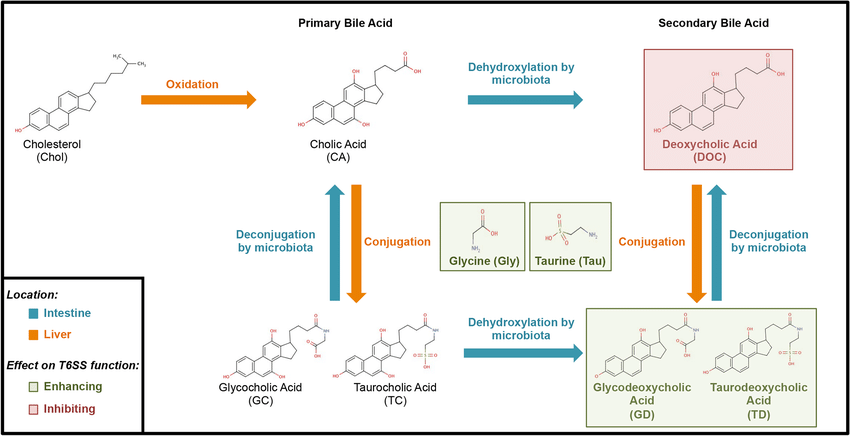
Number 3: Get enough glycine and taurine (grass fed beef gelatine, quality seafood etc), since without them, you won't be able to increase the water solubility of bile acids.
17
Number 4: Understand that vitamin C is crucial for 7-alpha-hydroxylase and get some dietary vitamin C.
Without this rate-limiting enzyme cholesterol catabolism will take a hit and bile acid synthesis as well.
-Camu camu
-Acerola cherry
-Berries
-Hibiscus
-Oranges
and so on, have plenty of vitamin C.
Without this rate-limiting enzyme cholesterol catabolism will take a hit and bile acid synthesis as well.
-Camu camu
-Acerola cherry
-Berries
-Hibiscus
-Oranges
and so on, have plenty of vitamin C.
18
Number 5: Colostrum (or lactoferrin).
Bile is produced by hepatocytes but it can’t be carried by them obviously.
Bile ducts are multiple thin tubes that go from the liver to the small intestine which carry bile from the liver and gallbladder, through the pancreas, and into the small intestine.
Why does this matter?
Because if they get harmed, bile ends up in the wrong places.
The effect that lactoferrin has on bile ducts is partly the reason why it’s shown to increase fecal cholesterol excretion.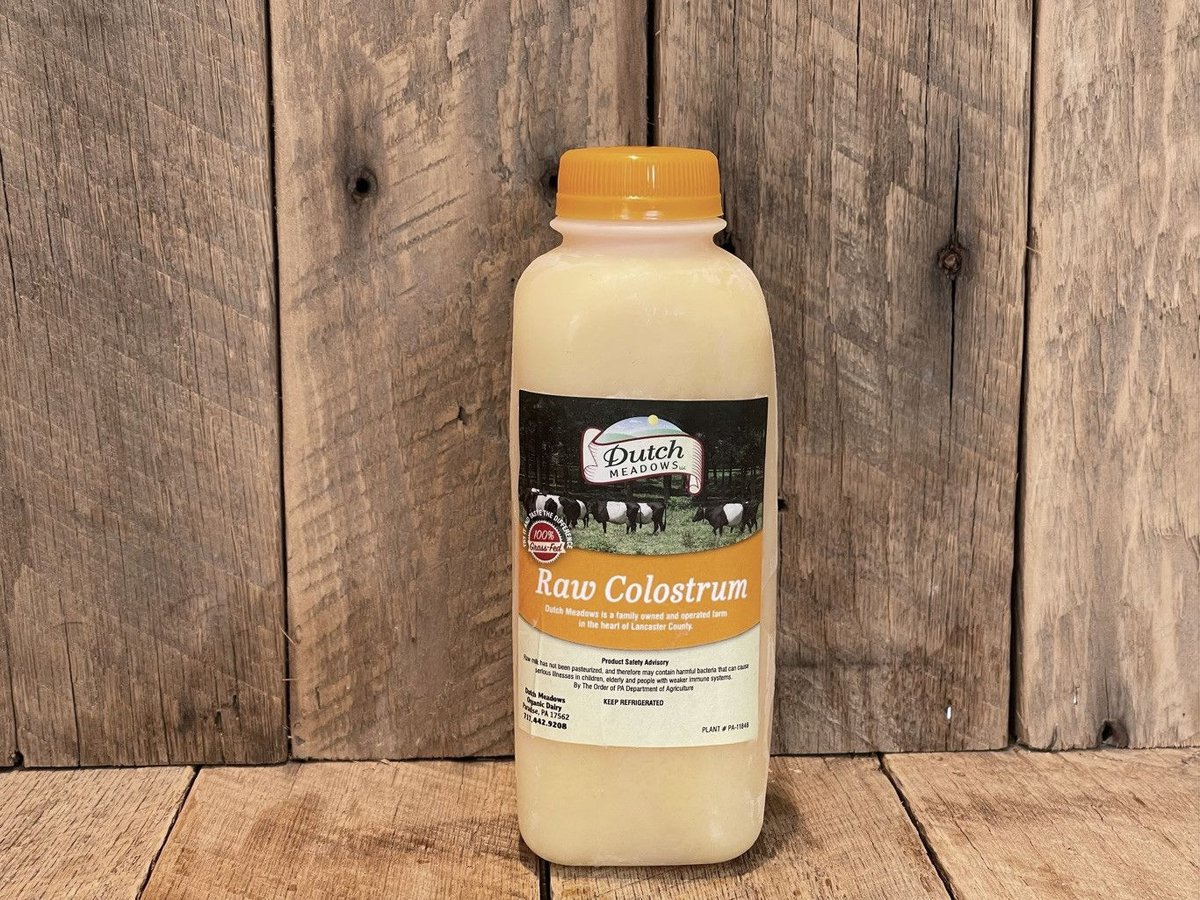
Bile is produced by hepatocytes but it can’t be carried by them obviously.
Bile ducts are multiple thin tubes that go from the liver to the small intestine which carry bile from the liver and gallbladder, through the pancreas, and into the small intestine.
Why does this matter?
Because if they get harmed, bile ends up in the wrong places.
The effect that lactoferrin has on bile ducts is partly the reason why it’s shown to increase fecal cholesterol excretion.
19
Number 6: Stay hydrated

George Ferman@Helios_Movement
"Drinking more water" is not enough.
There's more to hydration than "drinking a gallon of water a day".
In fact, this advice is counterproductive most of the time since most water is depleted of minerals these days which greatly affect how much water reaches and is utilized by your cells.
In order to be properly hydrated:
First, you will need electrolytes.
Without the proper amount of electrolytes, water will not be absorbed by the cells but linger between the walls of the cells.
Electrolytes dissolve in water and give it the ability to conduct electricity.
The most important electrolytes are:
1)Sodium
2)Chloride
3)Potassium
4)Magnesium
5)Calcium
We want to make sure we have enough electrolytes in our system so our cells can communicate electrically with each other.
Good sources of the above mentioned electrolytes that you can start with are:
-Coconut water
-Sea salt
-Magnesium both orally and topically
-Eggshell powder
-Raw milk
-Some alkaline juices (not for everyone, needs context)
-Spring water (findaspring.com)
But hold on a second, this also means that you need to avoid the things that deplete us of electrolytes some of which are:
-Alcohol
-Sodium fluoride
-Phytic acid
-Stimulants
-Birth control pills
-Lots of carbs
-Stress
Then you will also need to manage your nnEMF exposure which interferes with our cells' natural electrical currents (you can also search how they loosen the cells' junctions).
The most common sources of nnEMF are:
-WiFi
-Cell phones
-Radio towers
-Wireless electronic devices
So, things such as grounding and getting some early A.M and late P.M sunlight will also help with cellular hydration.
Now an underrated hydration tool is also optimizing one's glucose metabolism which in a nutshell can be done by:
-Optimizing your circadian rhythm
-Getting sunlight
-Getting enough B vitamins (this does not necessarily mean supplement them)
-Avoiding artificial blue light
-Getting enough vitamin K
-Resistance training
-Getting enough glycine (once again, i am not saying "supplement glycine" necessarily)
-Focusing on thyroid health
-Making sure that you do not struggle with a pathogenic overgrowth (big one)
I think that these short tips are enough in order to move the needle forward for lots of people but not overload them.
If you actually, pay attention to electrolytes and what's depleting you of them, your nnEMF exposure and glucose metabolism i guarantee that you will see a difference.
On a last note, 3 drinks and an extra tip that can help you hydration wise are:
-Watermelon juice (do not consume if you're struggling with things such as SIBO)
-Nettle root tea
-Hibiscus tea
-Eating smaller meals
Now even though i do not have the space to elaborate on this one, riboflavin (B2) will also play a role so things such as brewer's yeast and small portions of organs can also help you out.
The next step after implementing these, would be balancing minerals out and checking if you've been exposed to any heavy metals both of which are also key for cellular hydration.
20
Number 7: Don’t mess up glucose metabolism or the thyroid.
*In the first case, the link is been made through FXR activation and in the second one through multiple others such as the FGF19-FGFR4 pathway*
Getting sunlight, quality seasonal carbs, minerals, quality sleep, resistance training, cutting out alcohol, getting enough B vitamins, CoQ10 and vitamin K will all help.
21
Number 8: Include some gallbladder-supportive tools.
As we said, bile is stored in the gallbladder and things such as:
-Bitters which increase bile solubility
-Onions
-Tart cherry juice
-EVOO
-Grapefruit juice
-Magnesium
will all help.
As we said, bile is stored in the gallbladder and things such as:
-Bitters which increase bile solubility
-Onions
-Tart cherry juice
-EVOO
-Grapefruit juice
-Magnesium
will all help.
22
That was pretty much it.
Some basic stuff for starters that i hope helped some people get familiar with this concept.
If you liked this, make sure to leave a like or RT at the first tweet.
Some basic stuff for starters that i hope helped some people get familiar with this concept.
If you liked this, make sure to leave a like or RT at the first tweet.
George Ferman@Helios_Movement
An underrated factor when it comes to hormonal issues, skin issues, digestive issues, growth, high cholesterol and a lot more.
Thread on bile🧵
Thread on bile🧵
