#F1 Season 2022-2024 Car Development Recap 🟥 Scuderia Ferrari 🟥...

Vanja H@AeroTechVH
63 views
Jan 11, 2025
~4 min read
Advertisement
1
#F1 Season 2022-2024 Car Development Recap
🟥 Scuderia Ferrari 🟥
Ferrari started this 3-year period as the strongest car, dropped down hard right after and found its way back to competitive form in the 2nd half of 3rd year. In the meantime, in 2025 there will be a whole new TP, TD, chassis leaders, PU leaders, pit wall leaders and a new driver - yes, it took so many changes and the work is not yet done
Photo credit - none of the photos are my own, only some illustrations and wording. Large majority comes from @AlbertFabrega @RosarioGiuliana @Auto_Racer_it @xavigazquez @Motorsport @Giorgio_Piola
F1-75 started the year visually very much like it ended it, apart from minor changes of bodywork and visible floor. The car based its strength in low-speed traction and excellent balance overall. It was lacking in Top Speed and high-speed corners. It also lacked in PU reliability, costing the team at least 2 wins, while other strategy blunders cost them even more
2
2023 was a season of two parts, the longer part was a lot of hit & miss and the second part was when the car finally became competitive for podiums at every race - after the Japan floor update. Even then, it took Ferrari some time to iron everything out and find the setup sweet spot
Early in the season, car had a very competitive Q pace, but it dropped down significantly in the race. Massive update brought to Spain got Ferrari on a new path, not too different from their original F1-75 but seemingly a lot more towards what Red Bull was doing. It remains the only car to win in 2023 other than RB19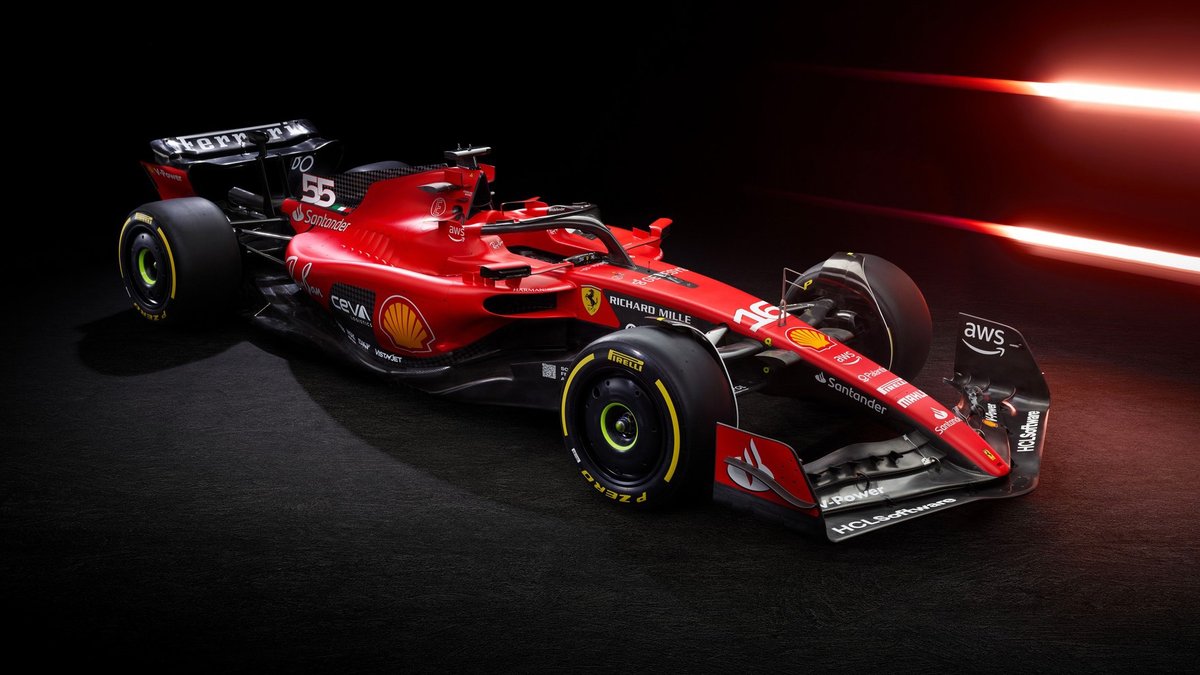

Early in the season, car had a very competitive Q pace, but it dropped down significantly in the race. Massive update brought to Spain got Ferrari on a new path, not too different from their original F1-75 but seemingly a lot more towards what Red Bull was doing. It remains the only car to win in 2023 other than RB19
3
SF24 started as an evolution of final SF23, but a big step in every area. It kept being competitive in low-speed and traction zones, was often the best car in medium-speed zones and with the final few updates in the season it finally equaled Red Bull and McLaren in high-speed sections
The car saw a steep development curve, finalised with an intriguing Monza+Vegas floor specs, which feature some solutions no other team utilises. With those updates, Ferrari was marginally the best car overall in the final 10 races, where Leclerc even managed to win the most points after the summer break.
The weak area of the car throughout the season remained to be cold track conditions and 1-lap pace, both of them connected to an inherit trait of taking some time to warm up the tyres. This cost Ferrari a lot of places in grid positions and a lot of points in the final standings because of it
4
As it usually goes for Ferrari, the Italian media pundits are full of insider information, speculation and leaks. Most of the expected changed for SF-25 have been repeated for some time already:
🔸 front suspension will switch to pull-rod in an effort to maximise aerodynamic outwash by using such a kinematic system; in practice there are no changes to suspension dynamics simply by switching to pull-rod
🔸 the cockpit, PU and the gearbox will be moved towards the rear to bring the CoG to the rear as well; this will enable Ferrari to move the CoP to the rear as well. This should allow them to keep the same amount of load at the front axle, while increasing rear load substantially without changing the balance of the car - in short this will bring them some "free" downforce
🔸 these changes will also influence rear suspension geometry and this will be a chance to improve the aerodynamics in this area as well
🔸 tyre warm up is a critical issue and the team will work on improving this without sacrificing race-pace and excellent tyre degradation performance of SF24
To this I would add some of my expectations
🔸 we might see a few all-new solutions on the floor of SF25, as Ferrari have used the updated Wind Tunnel to test the experimental Vegas flood were happy with results - so happy they decided to keep it on Leclerc's car in Qatar and won a valuable 2nd place with it
🔸 the front wing flexibility is the great saga of 2024, but in reality it doesn't bring a lot of performance on its own; it does bring better feel between low- and high-speed corners to the driver and this confidence boost translates to better lap times
🔸 we might also see innovation in sidepod area too and some all-new solutions there, as Ferrari has a lot of experience with different concepts and what each of them offers and where its missing on others
🔸 finally, rear and beam wings will likely be mostly kept in 2025, where the latest setup trend is definitely to unload the rear end aerodynamics to allow a bit softer suspension and better traction performance; we might see a new medium-low loaded rear wing and a bigger range of beam wings used on different tracks
Bellow this post, I will attach all 6 threads of this week with details about each aerodynamic development area on Ferrari cars
Thanks for reading! 😁
5
Front Wing Development

Vanja H@AeroTechVH
#F1 Season 2022-2024 Car Development Recap
Kicking off the Red Team's development path in this week's megathreads
🟥 Front Wings - Ferrari 🟥
Photo credit - none of the photos are my own, only some illustrations and wording. Large majority comes from @AlbertFabrega @RosarioGiuliana @Auto_Racer_it @xavigazquez @Motorsport @Giorgio_Piola
If you like this kind of F1 Tech content, hit that Like button and Follow me for much more in 2025 😎
February 2022, Launch Season is up and Ferrari launched the F1-75. Everyone is looking at their wide sidepods. Second thing they notice - the front wing, specifically the nose. Very pointy, narrow and different from other noses seen until then - and also from then on.
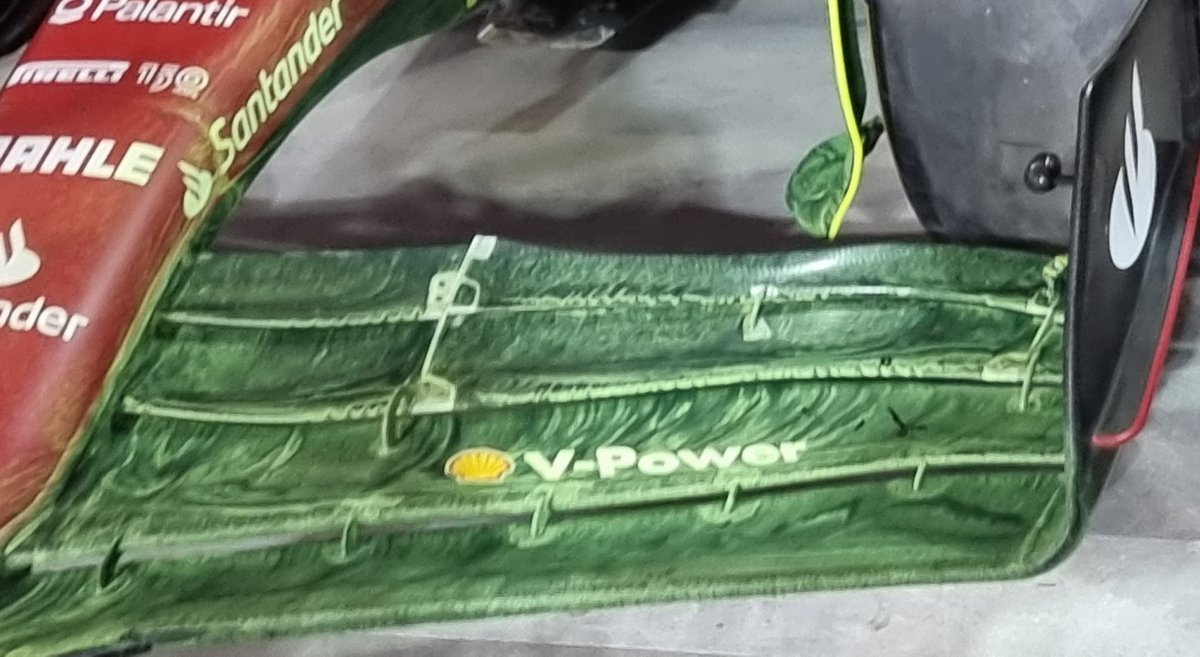
As we started looking around and got to preseason testing, it turned out Ferrari also seemingly loaded their front wing much more than the likes of Red Bull and Mercedes. F1-75 featured a big centre-loaded front wing with a gradual, curved transition to the endplate to provide outwash to handle front tyre flow structures. As we got to testing, we also got to see the flow vis in action to give us an indication on the amount of outwash at hand
6
Rear Wing Development

Vanja H@AeroTechVH
#F1 Season 2022-2024 Car Development Recap
🟥 Rear Wing Development - Ferrari 🟥
Photo credit - none of the photos are my own, only some illustrations and wording. Large majority comes from @AlbertFabrega @RosarioGiuliana @Auto_Racer_it @xavigazquez @Motorsport @Giorgio_Piola
Much like the front wings, rear wings were also a subject of considerable development shifts on Ferrari. Well, to be honest, most teams had those big shifts with rear wings in these 3 years. Red Bull didn't because they nailed them from the start and Mercedes didn't because this still don't fully understand their suspension and floor, so they don't chase small gains with rear wings in any case
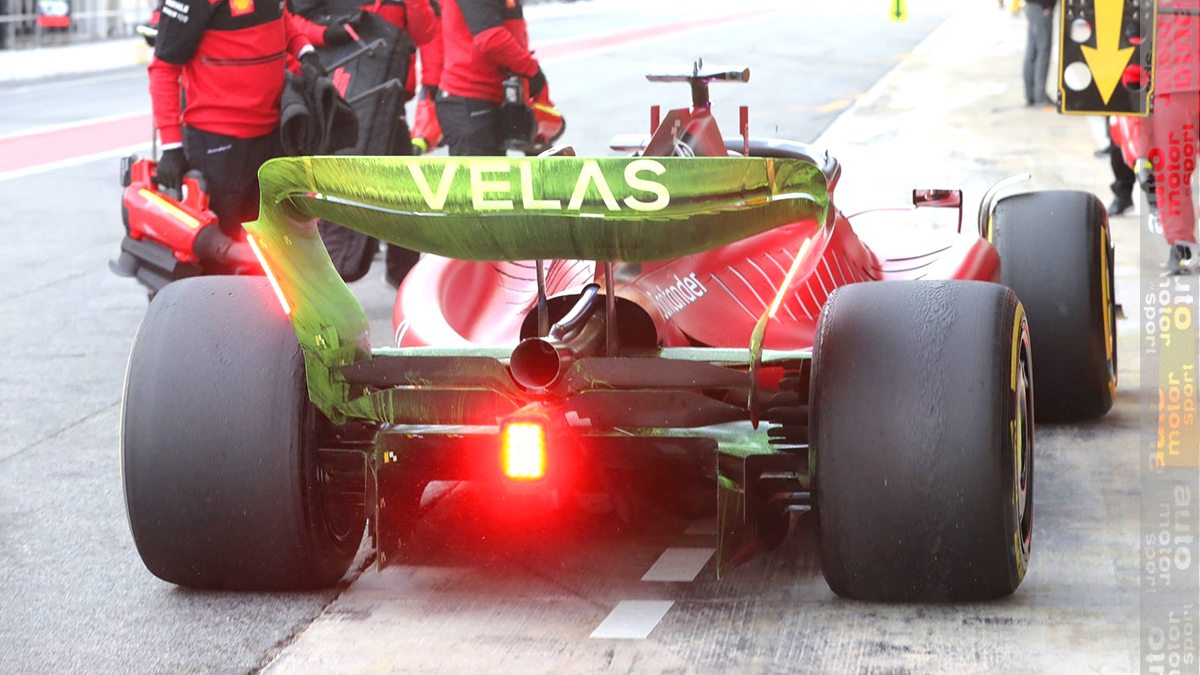
1st spec Ferrari started the new GE Era with turned out to be a future medium-high load spec which was used in 2022 and 2023. On the photos bellow we see a very good flow vis pattern, with a borderline trailing-edge separation and a bit more of it near the symmetry plane. This means the wing was working on knife-edge but it was stable and behaved predictably 👍
7
Beam Wing Development

Vanja H@AeroTechVH
#F1 Season 2022-2024 Car Development Recap
🟥 Beam Wing Development - Ferrari 🟥
Merry Christmas to all! 🎅
Photo credit - none of the photos are my own, only some illustrations and wording. Large majority comes from @AlbertFabrega @RosarioGiuliana @Auto_Racer_it @xavigazquez @Motorsport @Giorgio_Piola
Until mid-2023, Ferrari kept their Beam Wings exclusively stacked, the way that probably drives the diffuser the most. When we say "drive" we are talking about the effect that suction zone on the underside of the beam wing contributes to additional acceleration of air within diffuser and thus under the whole floor - which means more downforce. Stacked beam wings have a drag flaw though, their design box is such that you have to put them at a high angle to maximise the "driving" factor
While drag was one of the issues of F1-75 in some races, there's no denying the floor generated very high level of downforce. Ferrari did make some adjustments to it though, so lets see how they improved from the launch-spec seen bellow - with some flow vis on
8
9
10

