#F1 Season 2022-2024 Car Development Recap 🟦 Engine Cover...

Vanja H@AeroTechVH
64 views
Jan 13, 2025
~4 min read
Advertisement
1
#F1 Season 2022-2024 Car Development Recap
🟦 Engine Cover Development - Red Bull Racing 🟦
Captain's Log, entry 1.6 - final detail report of the week 🫡
Photo credit - none of the photos are my own, only some illustrations and wording. Large majority comes from @AlbertFabrega @RosarioGiuliana @Auto_Racer_it @xavigazquez @Motorsport @Giorgio_Piola
If you like this kind of F1 Tech content, hit that Like button and Follow me for much more in 2025
When you talk about Engine Covers today, you wouldn't think there's much performance in them, right? Well, there isn't 🤣 Nevertheless, with the grid getting ever tighter, small gains can mean a win or a P5 basically, which is a lot more than just 15p less. Trying to anticipate this, Red Bull made a huge change at the start of 2024, only to come back to their original solution basically... But, let's not get ahead of ourselves
Going into season 2022, Red Bull's car during pre-season testing was very much a bleak version of things to come. The general shape was kept on, but every single detail was changed - including the engine cover eventually. From a generic cover shape with a big outlet, we got a tightly packaged sculpture in Silverstone - fully equipped with an engine cover shelf, now a typical feature on an F1 car. This shelf design allows the turbulent, dirty cockpit air to be contained to one area without spilling to the sides too much. There, it could find it's way to the rear suspension and beam wing, which would drag down the floor performance in general
2
This same overall shape was kept on and went without big changes all the way to the final Round of 2023. Most of the changes were made for cooler and hotter races only, now that cooling louvres are allowed on bodywork once again.
The one big change between 2022 and 2023 was slightly smaller airbox inlet, suggesting reduced centre-line radiator cooling requirements on RB19.
The one big change between 2022 and 2023 was slightly smaller airbox inlet, suggesting reduced centre-line radiator cooling requirements on RB19.
3
But then, one of many unexpected twists on RB20 - completely new shape of the engine cover, seemingly borrowed and perfected version of the cover shape on the original launch-spec Mercedes W14 from 2023. This is, truth be told, a more aggressive shape of the shelf outlet, as it features sausages and gulleys where the cockpit losses are contained far better and also surely provide some differences under yaw angles

4
Of course, Red Bull team wouldn't be themselves if they didn't do something completely different as well. In their effort to remove as much of the radiator core surfaces from sidepods (one of the reasons why bigger airbox was now back) so they could reduce the sidepod inlet area, they also added small radiator behind the Halo and under their new shoulder cover


5
The above mentioned Cover spec was used since the first race without many changes (other than event+temeprature specific changes). Until it didn't. In Hungary this year, Red Bull introduced a whole new spec, very reminiscnet of their original (and basic) RB18 cover spec
Only, this one was evolved in a completely different direction. It definitely felt like Red Bull's struggles made them question and re-examine every development desicion they made. The new Hungary-spec cover was allegedly introduced for high-load circuits only and on quicker circuits the original RB20 cover would be used. And it was indeed back in use in Spa, Monza and Baku races.

Only, this one was evolved in a completely different direction. It definitely felt like Red Bull's struggles made them question and re-examine every development desicion they made. The new Hungary-spec cover was allegedly introduced for high-load circuits only and on quicker circuits the original RB20 cover would be used. And it was indeed back in use in Spa, Monza and Baku races.
6
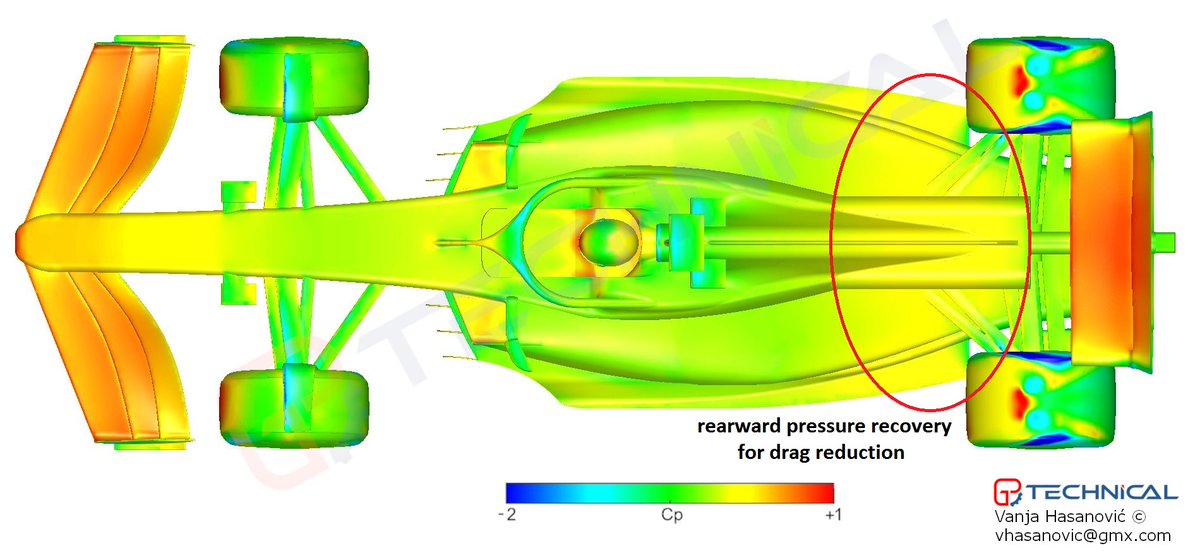
The reason behind this would most likely have to do with pressure field in the rear end. There's a decent amount of pressure recovery in this area, as you can see on a result of my rudimentary RB18 sidepod CFD simulation. This ensures drag reduction, but also some local load - downforce. If you expand this area and point it down, you may improve the flow towards the rear wing a lot, even if the overall result is also increased drag due to pressurisation on the bottom side
7
The Brasil weekend came after Texas and Mexico races and we expected to see the original RB20 choulder-gulley cover back. But it wasn't back. And then it also wasn't back at the high-speed Vegas Strip race. Instead, the cover spec with smaller outlet (introduced in Texas) was used in all upcoming events
Red Bul decided to abandon their gulleys completely. Unrealted, but who knows - they won Brasil and Qatar races with this new engine cover specification. Somehow, I don't think we'll see gulleys back in 2025 - after all, Mercedes abandoned them after just one season as well.
This is the final post for today, tomorrow I will make a summary on each of these 3 cars and I will share some of my expectations for RB21.
Thanks for reading!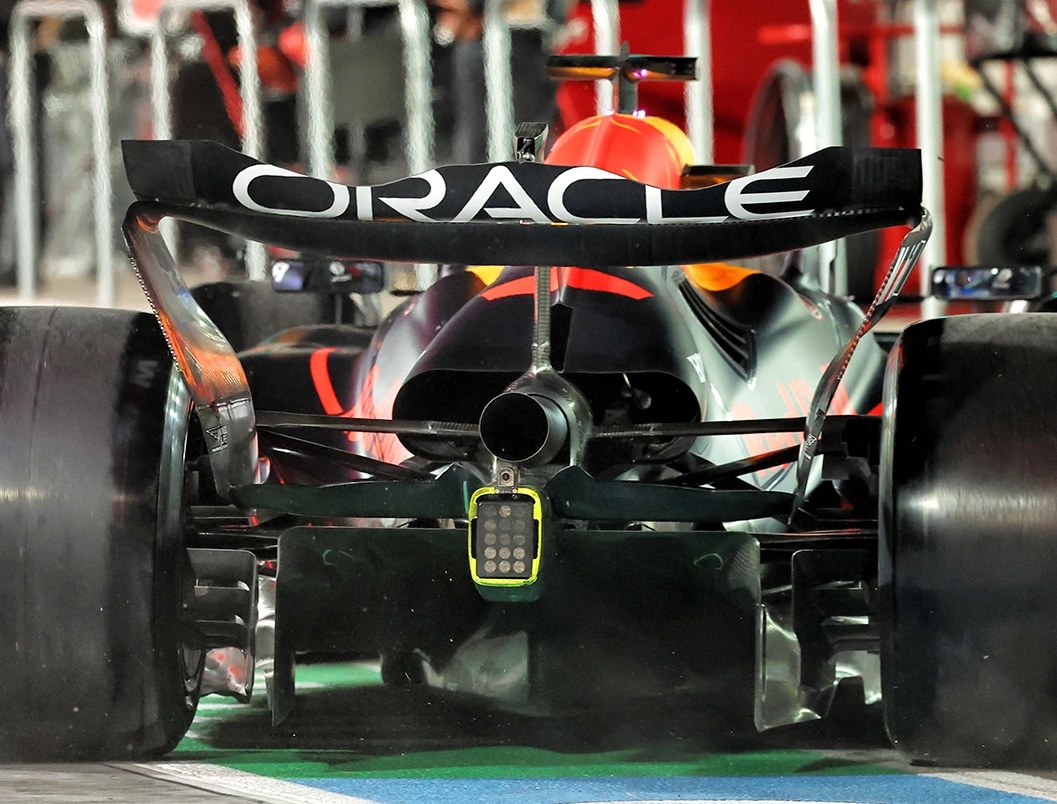
Red Bul decided to abandon their gulleys completely. Unrealted, but who knows - they won Brasil and Qatar races with this new engine cover specification. Somehow, I don't think we'll see gulleys back in 2025 - after all, Mercedes abandoned them after just one season as well.
This is the final post for today, tomorrow I will make a summary on each of these 3 cars and I will share some of my expectations for RB21.
Thanks for reading!

