#F1 Season 2022-2024 Car Development Recap 🟥 Rear Wing Development...

Vanja H@AeroTechVH
65 views
Jan 24, 2025
~7 min read
Advertisement
1
#F1 Season 2022-2024 Car Development Recap
🟥 Rear Wing Development - Ferrari 🟥
Photo credit - none of the photos are my own, only some illustrations and wording. Large majority comes from @AlbertFabrega @RosarioGiuliana @Auto_Racer_it @xavigazquez @Motorsport @Giorgio_Piola
Much like the front wings, rear wings were also a subject of considerable development shifts on Ferrari. Well, to be honest, most teams had those big shifts with rear wings in these 3 years. Red Bull didn't because they nailed them from the start and Mercedes didn't because this still don't fully understand their suspension and floor, so they don't chase small gains with rear wings in any case
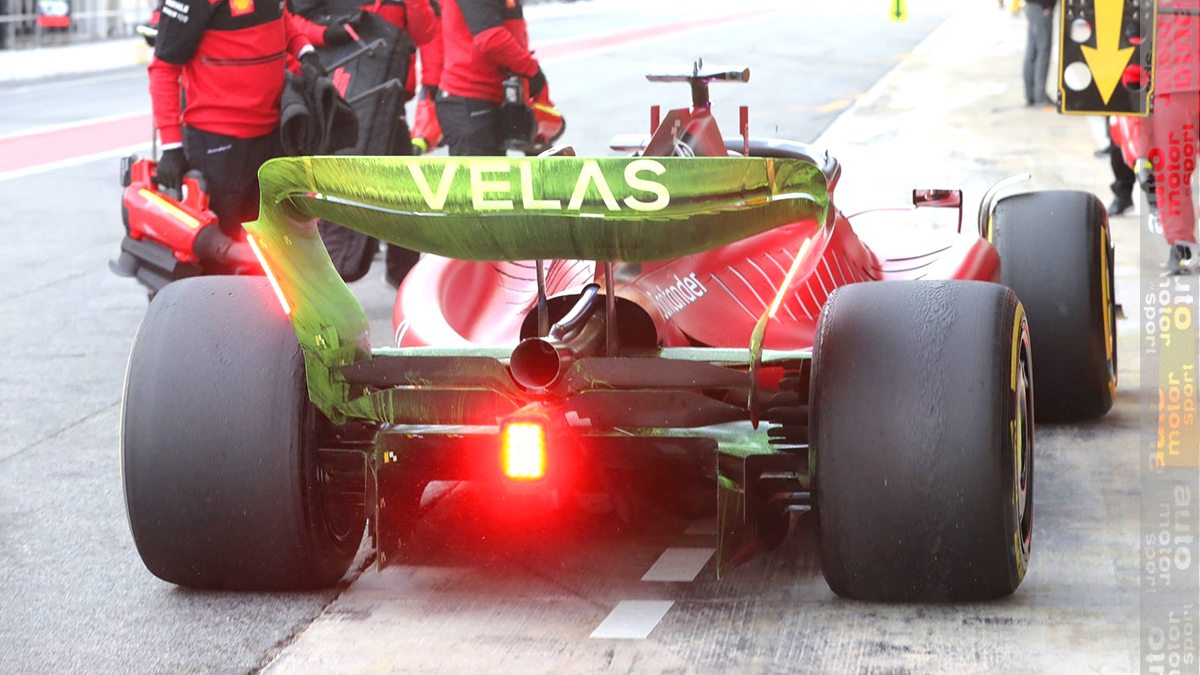
1st spec Ferrari started the new GE Era with turned out to be a future medium-high load spec which was used in 2022 and 2023. On the photos bellow we see a very good flow vis pattern, with a borderline trailing-edge separation and a bit more of it near the symmetry plane. This means the wing was working on knife-edge but it was stable and behaved predictably 👍
🟥 Rear Wing Development - Ferrari 🟥
Photo credit - none of the photos are my own, only some illustrations and wording. Large majority comes from @AlbertFabrega @RosarioGiuliana @Auto_Racer_it @xavigazquez @Motorsport @Giorgio_Piola
Much like the front wings, rear wings were also a subject of considerable development shifts on Ferrari. Well, to be honest, most teams had those big shifts with rear wings in these 3 years. Red Bull didn't because they nailed them from the start and Mercedes didn't because this still don't fully understand their suspension and floor, so they don't chase small gains with rear wings in any case
1st spec Ferrari started the new GE Era with turned out to be a future medium-high load spec which was used in 2022 and 2023. On the photos bellow we see a very good flow vis pattern, with a borderline trailing-edge separation and a bit more of it near the symmetry plane. This means the wing was working on knife-edge but it was stable and behaved predictably 👍
2
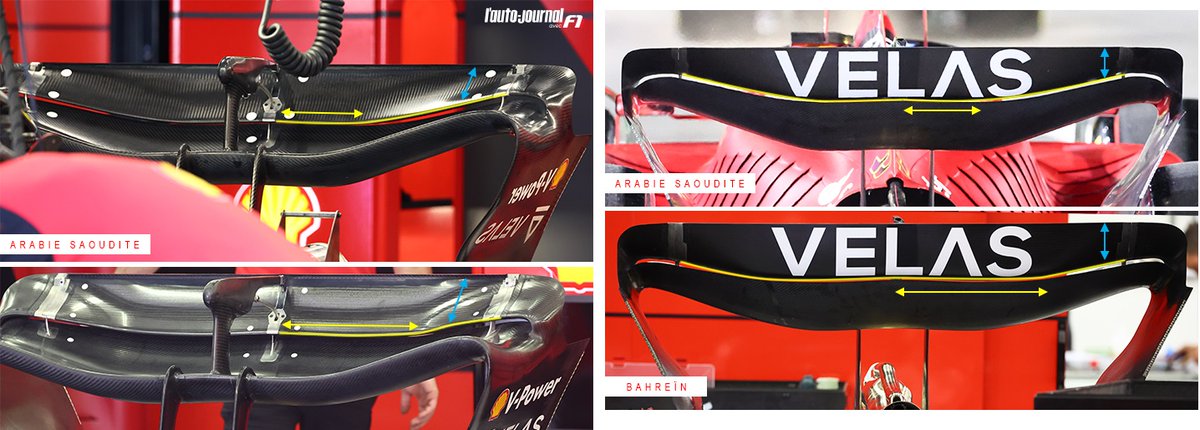
2nd spec was introduced for R2 in Jeddah, where you need less downforce and a lot less drag. It was of the same design language, but scaled laterally and was used as a medium-load wing for a time. The problem turned out to be insufficient flap frontal area and angle, making the DRS delta very small compared to Red Bull
3
BONUS FEATURE - In FP sessions in Australia, Ferrari did something you don't really see anywhere - they've reversed the G-flap and turned it on the suction side. The idea was to reduce drag with DRS off be generating higher pressure on the rear surface locally. As it wasn't used in the race, my guess is it was either too unstable or (more likely) it simply reduced the downforce way too much

4
For high-load tracks Ferrari had a new spec, which wasn't maximised span-wise. It was the same design language, but maximising the downforce and drag Ferrari had a lot smaller Top Speed gap to Red Bull when both ran this spec than with other wing specs

5
For low-load tracks, like Baku and Spa, Ferrari used a lot smaller wing. It proved to have a very good efficiency with DRS off, as it had a very small flap angle (small is a relative term in this case). This made the DRS delta extremely small though


6
In order to cut the Top Speed deficit to Red Bull on most tracks, Ferrari introduced a new medium-load spec which effectively replaced the one from Jeddah in Canada. A V-shaped wing with a maximised DRS flap frontal area did a good job vs Red Bull in terms of Top Speed and also gave a very much needed aero efficiency boost to Ferrari


7
During Spa FP sessions, Ferrari tested the Monza-spec rear wing, likely hoping they may be able to use it in Belgium as well. They didn't but it was used in Monza as planned
This was the 6th and final Rear Wing spec from Ferrari in 2022

This was the 6th and final Rear Wing spec from Ferrari in 2022
8
Season 2023 started with the MVP wing of previous season, used in Bahrain preseason testing and the race as well. Race wasn't planned, but as the new (slightly bigger) wing was broken in Bahrain (too light and not stiff enough) they had to use what they had. This wing was never used again in 2023
The new spec was very similar, but had two important differences - a slightly larger frontal area and centerline load and a mono-pylon bracket. This was the first time Ferrari used such a bracket on an F1 car even though other teams adopted it several seasons earlier for improved wing flex around the pylon

The new spec was very similar, but had two important differences - a slightly larger frontal area and centerline load and a mono-pylon bracket. This was the first time Ferrari used such a bracket on an F1 car even though other teams adopted it several seasons earlier for improved wing flex around the pylon
9
In Baku the same wing was used as last year, first and final time in 2023. It was replaced by a new low-load spec in Spa

10
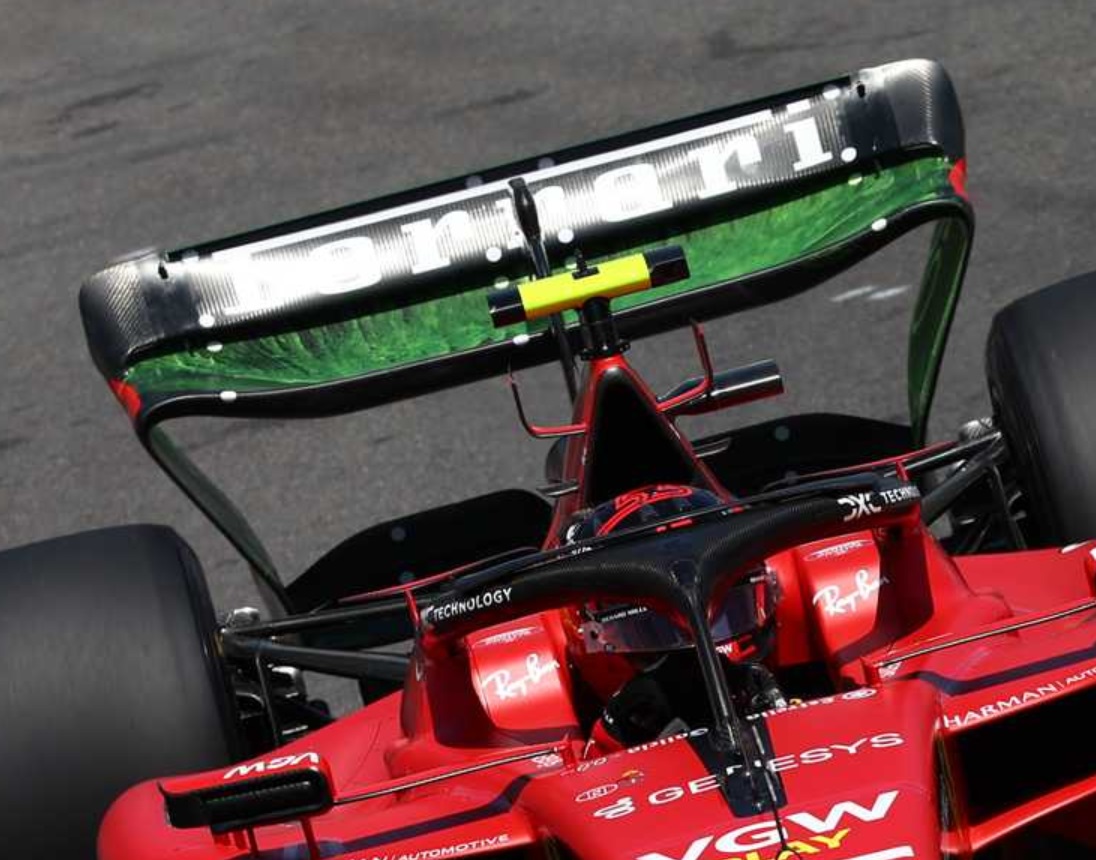
For Monaco and upcoming high-load tracks (Hungary, Singapore etc) a new high-load spec was introduced and also with a mono-pylon. This time the high-load aero foil span was maximised. You can see on the flow vis trace how much the flow wants to escape to the side without endplates around. This was the intention behind wings without endplates (in order to reduce wing tip vorticity), but all it ended up doing was lowering the rear wing efficiency - which is why endplates are back in 2026

11
The medium-high load wing of 2022 was used in 2023 again on several tracks and the only novelty was the mono-pylon, with Ferrari focusing on a whole new bodywork and floor package to sort out

12
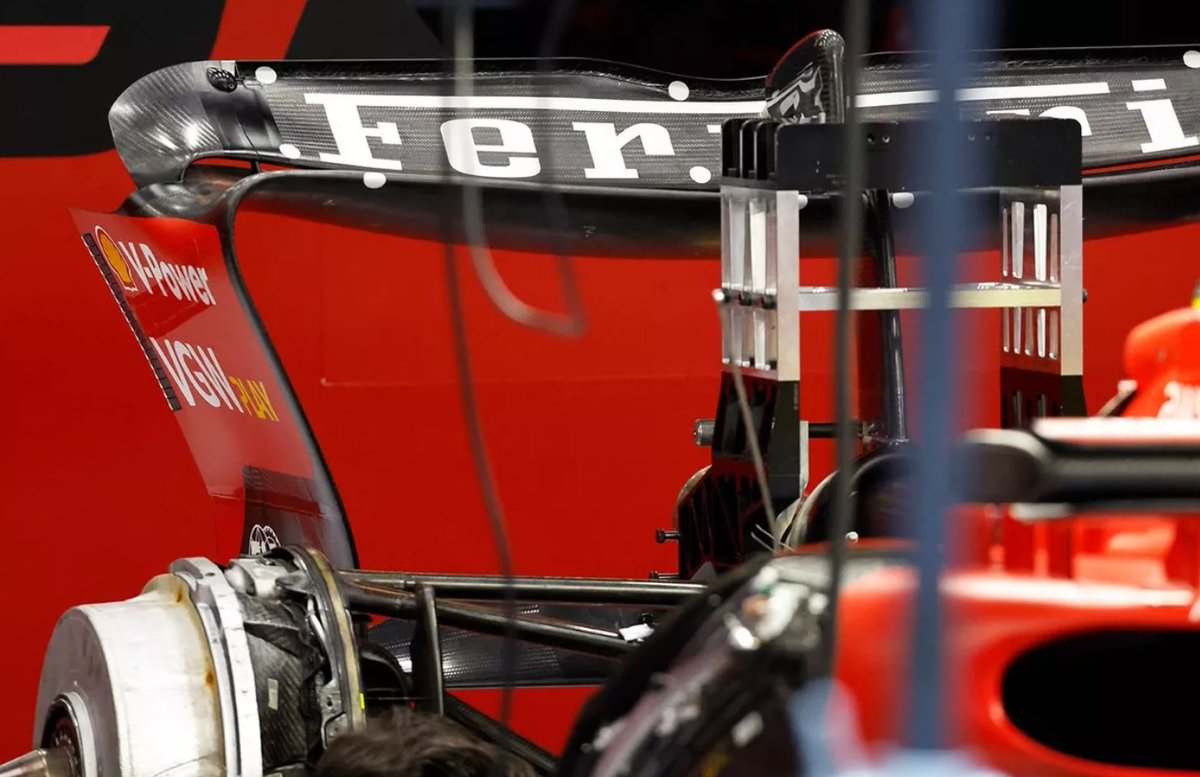
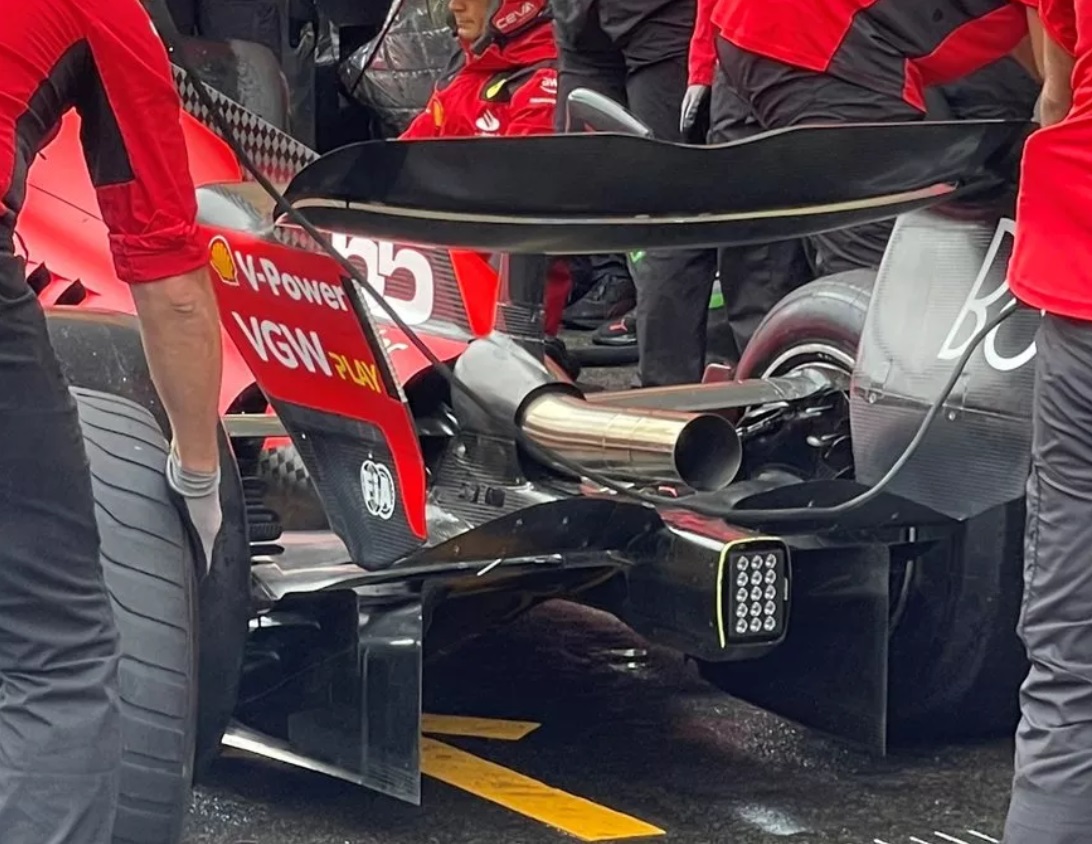
At Spa, a new low-load spec was used and it was a step towards what Red Bull was doing with their wings. This U-shaped spoon design was the first of a new family of wings used in 2024. It brough Ferrari at the same DRS-delta level of Red Bull and was the first such rear wing for Ferrari.
13
In Monza, Ferrari used the same wing like 2022, without bothering to redesign to mono-pylon bracket
This was the 7th and final spec used by Ferrari in 2023, where 2 specs were used in single events and were replaced later though.
This was the 7th and final spec used by Ferrari in 2023, where 2 specs were used in single events and were replaced later though.
14
For 2024 Ferrari introduced again a whole new medium-load spec wing. This time, it was the right mix of good load level and a good DRS delta compared to Red Bull. It proved to be such a versatile wing and Ferrari used it for 7 straight races at the start of 2024 (combined with different beam wings though)

15
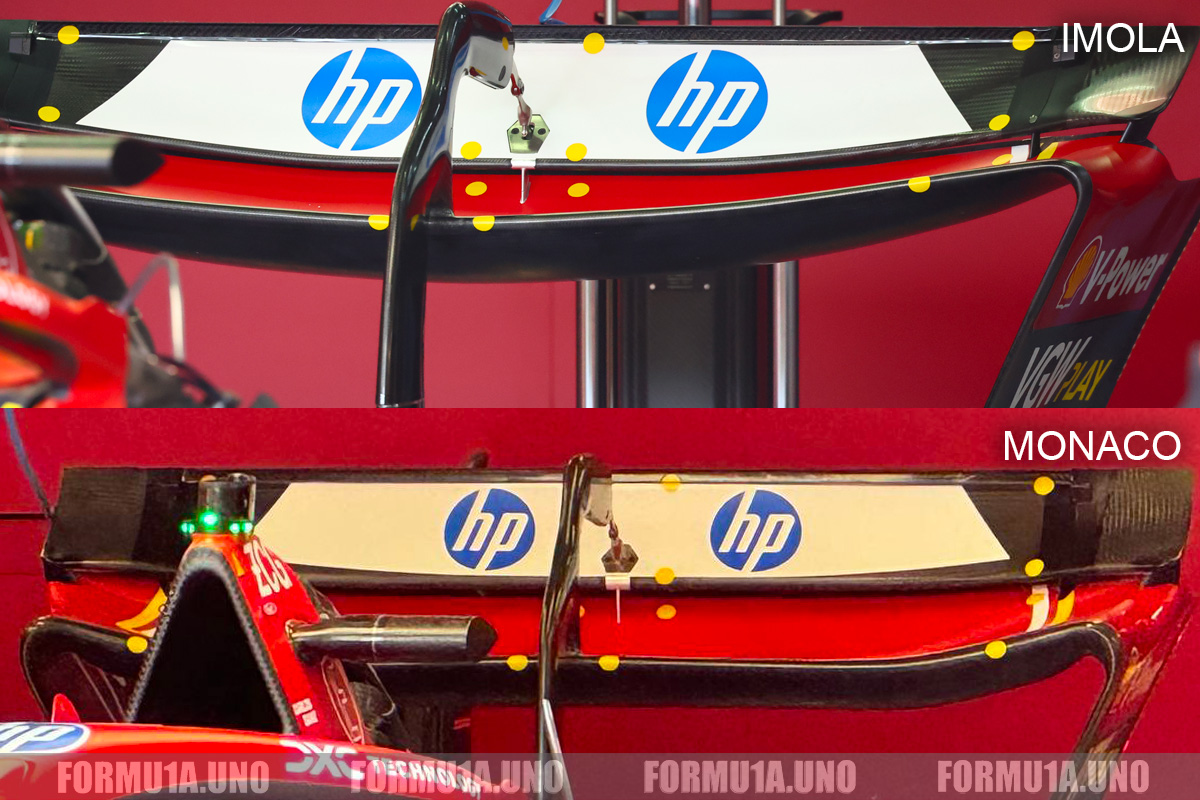
For Imola, Ferrari made some updates to endplates and DRS flap tip design to match what Red Bull was doing. The goal was to make a small investment to improve the efficiency of the wing in all conditions. Flap tips were extended forward to form a big forward sweep angle of the leading edge, to align it with the incoming flow


16
A few months ago I did a brief study of various wing designs, with V, U and \_/ shapes. The U shape proved to be the shape with the highest load (which is why Red Bull used it on 2023/24 medium-load wing) and why Ferrari adopted this shape in 2024. You can see how the flow moves away from high-pressure field in the middle, which is why aligning DRS flap tips is so important to improve efficiency of the whole wing

17
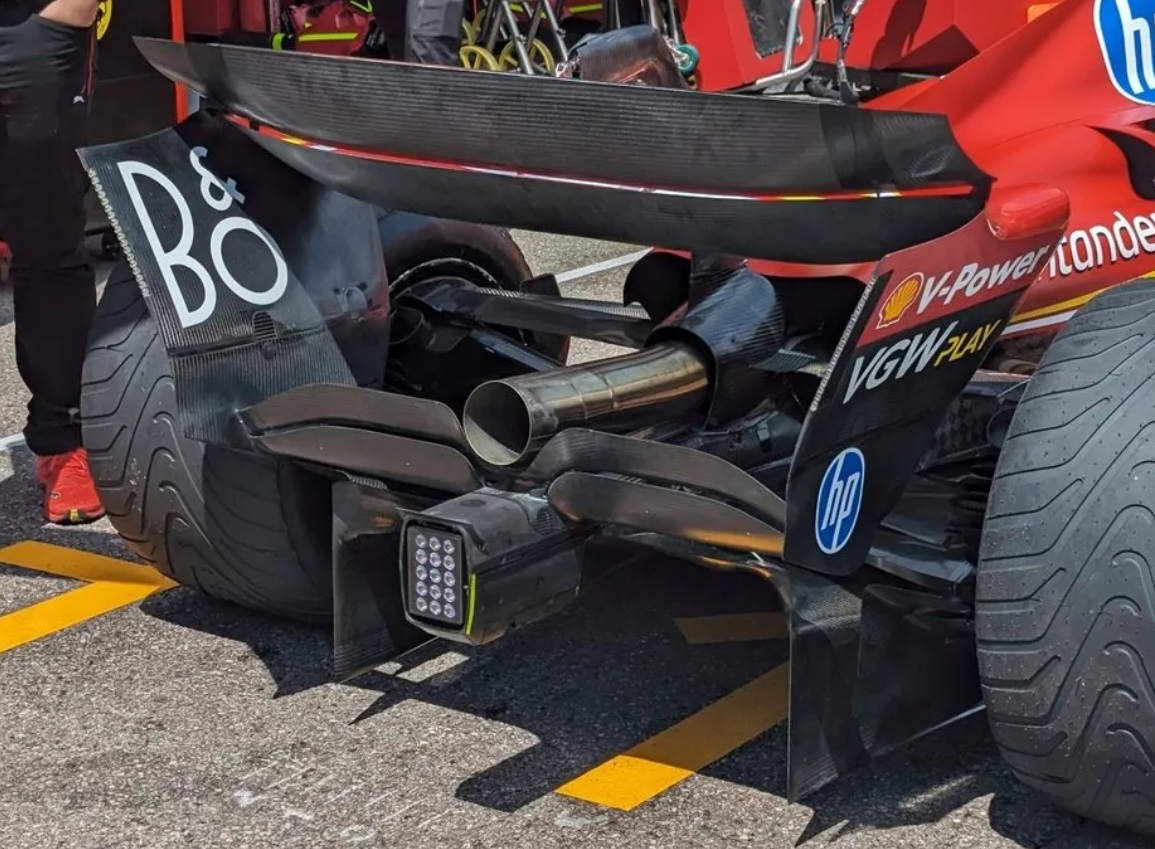
For high-load tracks Ferrari used the main parts of the same 2023 wing with redesigned endplates and flap tips to improve its efficiency some more. Very thin leading edge near the endplate joint is very important to avoid draggy stagnation in that area, where no downforce can be generated because of endplate transition
18
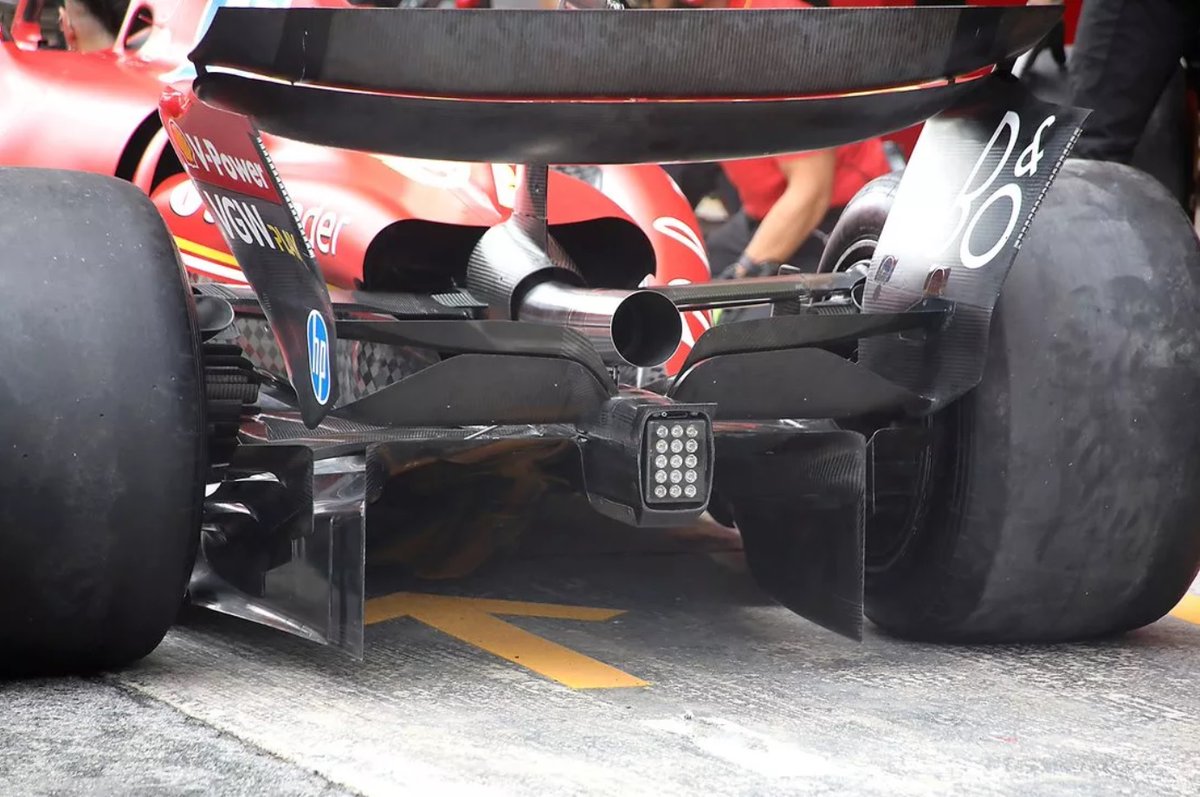
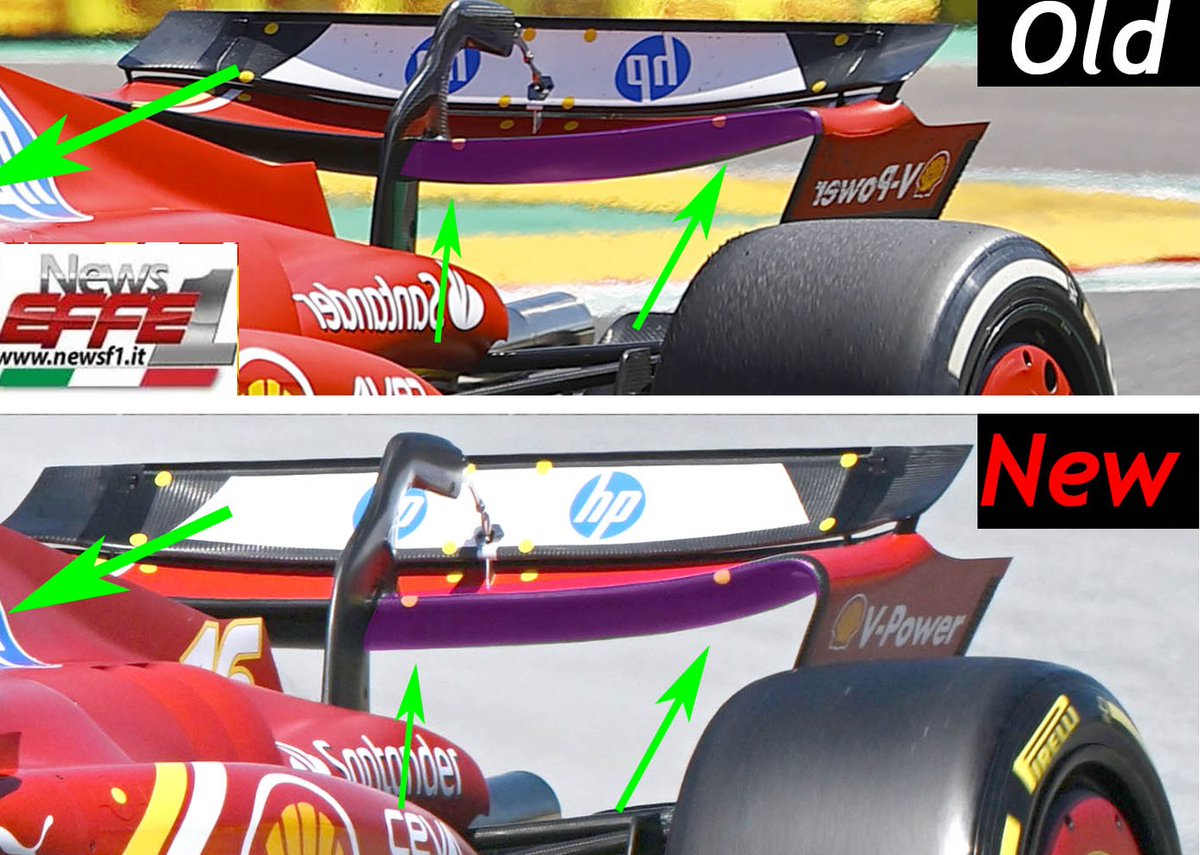
A new medium-high spec was used as well, basically the medium-sized wing was stretched laterally to increase the higher loaded mid span area. Following all the good design trends, this spec was also comparable to Red Bull's DRS delta with a similar-sized rear wing
19
The 2023 Spa wing was reused in Spa and Baku, with flap tips also redesigned to follow the latest trends of season 2024

20
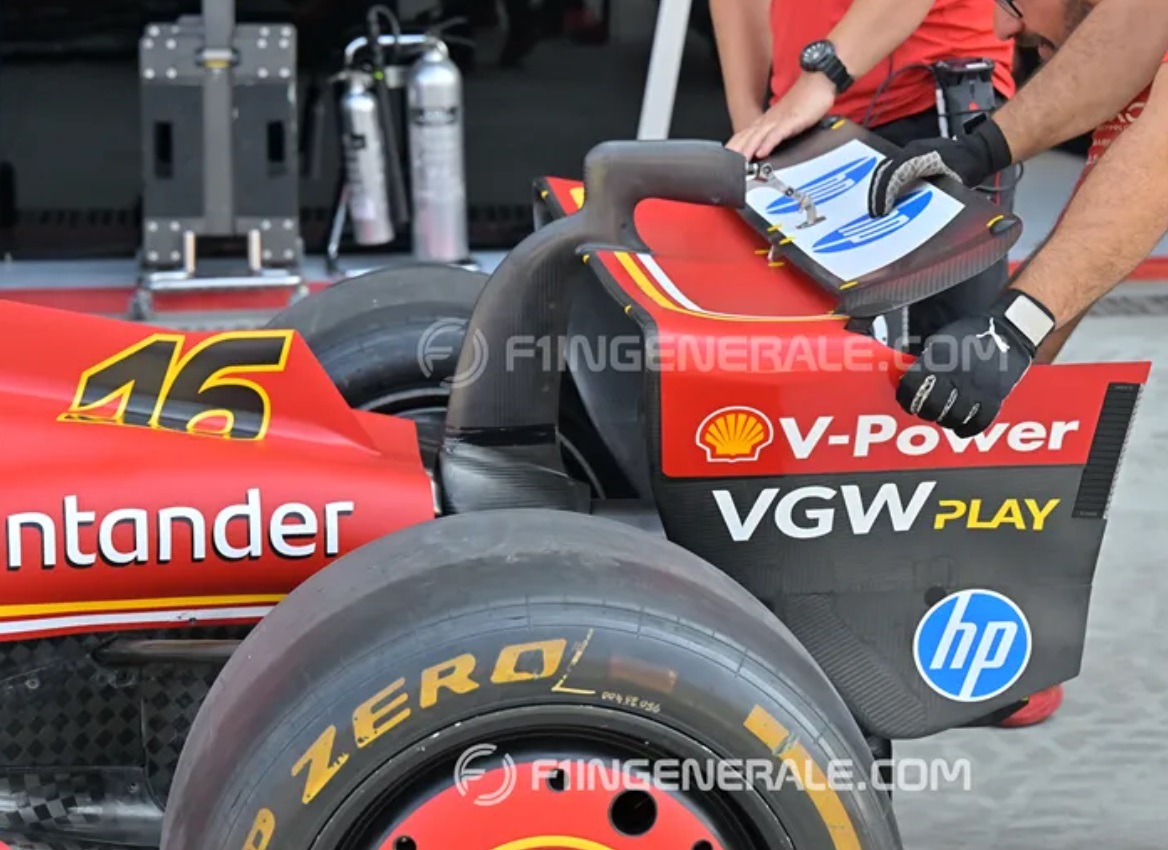
The 5th and final spec in 2024 was the Monza spec wing, used also in Vegas. Compared to original 2022 wing, aero efficiency was further improved and maximised. The same "flat" type of aero foils were used and it proved to be the right wing for those tracks. After 3 years of following Red Bull's steps, Ferrari's Monza-special wings will be an inspiration for Red Bull in 2025 - as confirmed by dr Helmut Marko himself.
This is the final post for today, tomorrow I will cover Ferrari Rear Wings 2022-2024. On Sunday, I will make a summary on each of these 3 cars and I will share some of my expectations for SF-25.
Thanks for reading!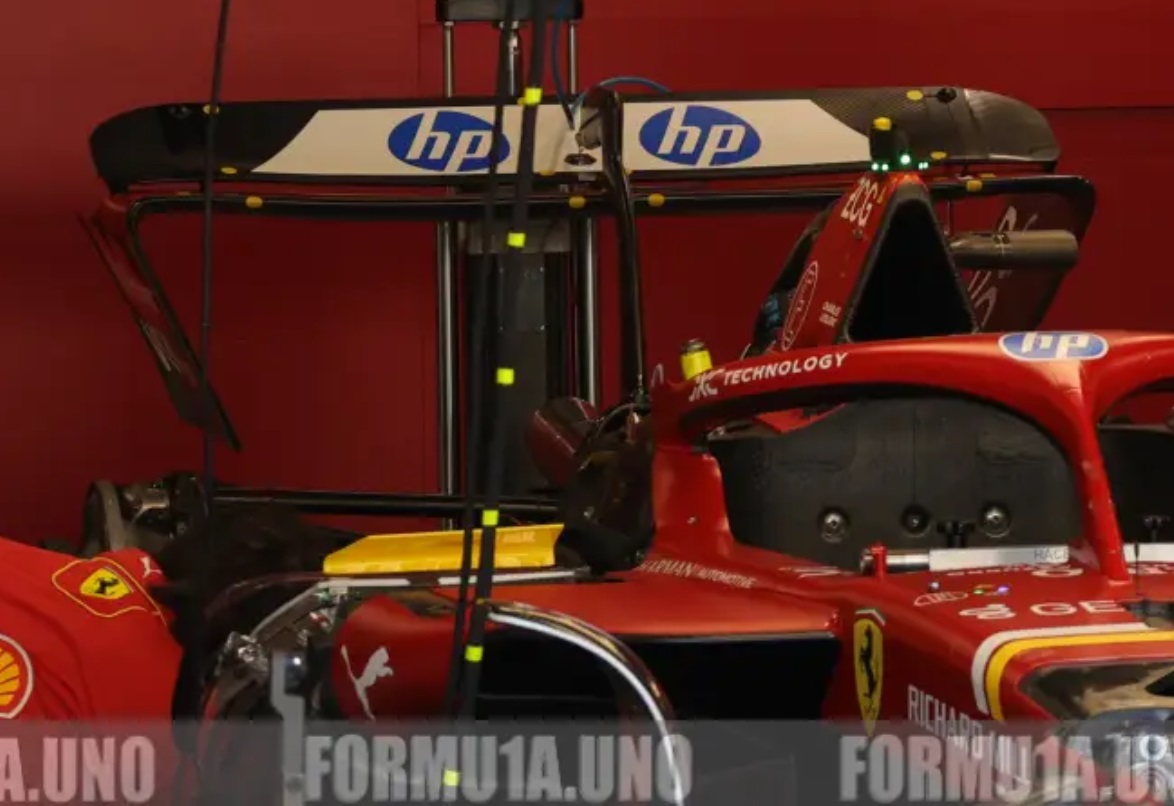
This is the final post for today, tomorrow I will cover Ferrari Rear Wings 2022-2024. On Sunday, I will make a summary on each of these 3 cars and I will share some of my expectations for SF-25.
Thanks for reading!

