#F1 Season 2022-2024 Car Development Recap 🟥 Sidepod Development -...

Vanja H@AeroTechVH
55 views
Jan 25, 2025
~4 min read
Advertisement
1
#F1 Season 2022-2024 Car Development Recap
🟥 Sidepod Development - Ferrari 🟥
Why Ferrari changed so much to change so little? 🤔
Photo credit - none of the photos are my own, only some illustrations and wording. Large majority comes from @AlbertFabrega @RosarioGiuliana @Auto_Racer_it @xavigazquez @Motorsport @Giorgio_Piola
At the start of 2022, Ferrari ran conventional-but-odd looking sidepods on F1-75. They were carved on the top side into a tub-shaped "bowls" and left many puzzled, but together with jjn9128 and Vyssion on @f1technical forum I made some rudimentary CFD simulations to find out.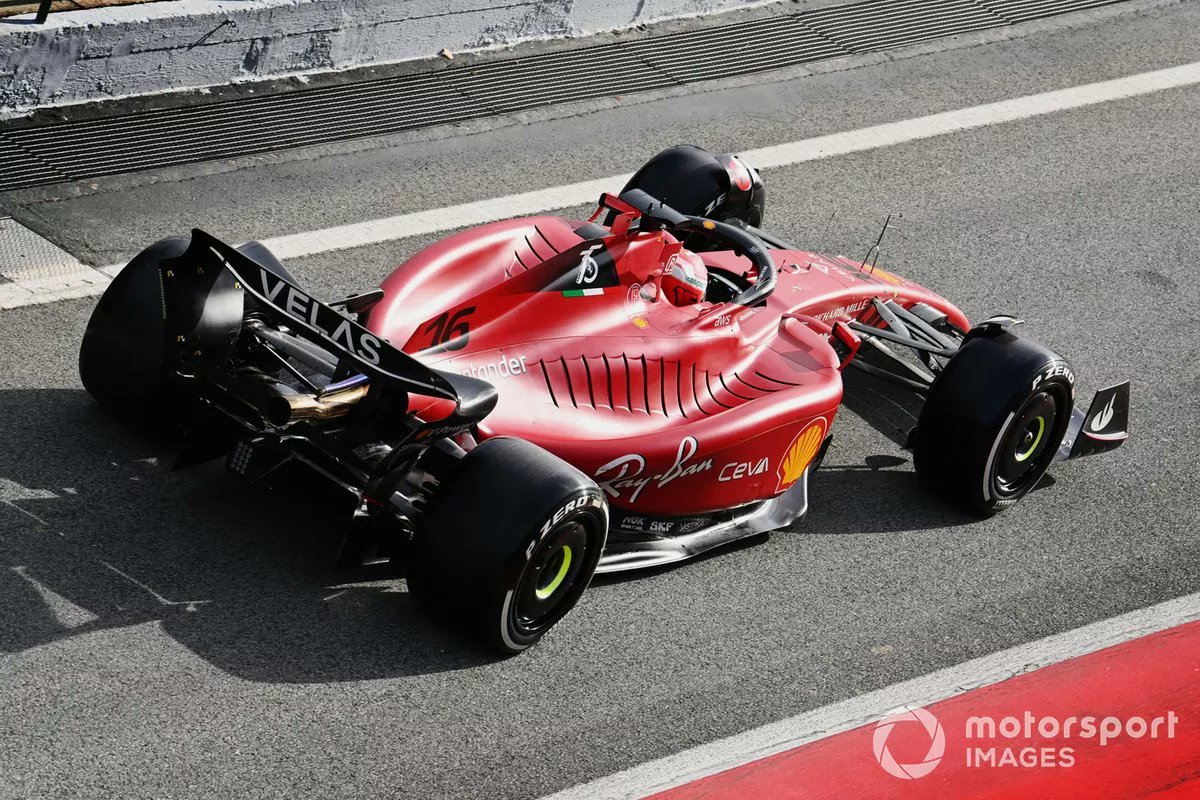
🟥 Sidepod Development - Ferrari 🟥
Why Ferrari changed so much to change so little? 🤔
Photo credit - none of the photos are my own, only some illustrations and wording. Large majority comes from @AlbertFabrega @RosarioGiuliana @Auto_Racer_it @xavigazquez @Motorsport @Giorgio_Piola
At the start of 2022, Ferrari ran conventional-but-odd looking sidepods on F1-75. They were carved on the top side into a tub-shaped "bowls" and left many puzzled, but together with jjn9128 and Vyssion on @f1technical forum I made some rudimentary CFD simulations to find out.
2
Simulations showed a decent amount of pressure recovery on rear-facing surfaces, which means there was some drag-reduction at hand. Some of those surfaces were also top-facing, which means downforce generation. There was a bad separation on the side that I couldn't resolve (not enough curvature on the bottom corner most likely) which did influence final results, but not enough to skew the overall conclusion
F1-75 sidepods generated a lot of outwash with blunt frontal sidepod surface, while also reducing drag and adding some downforce with tapering rear end combined with tub-shaped top surface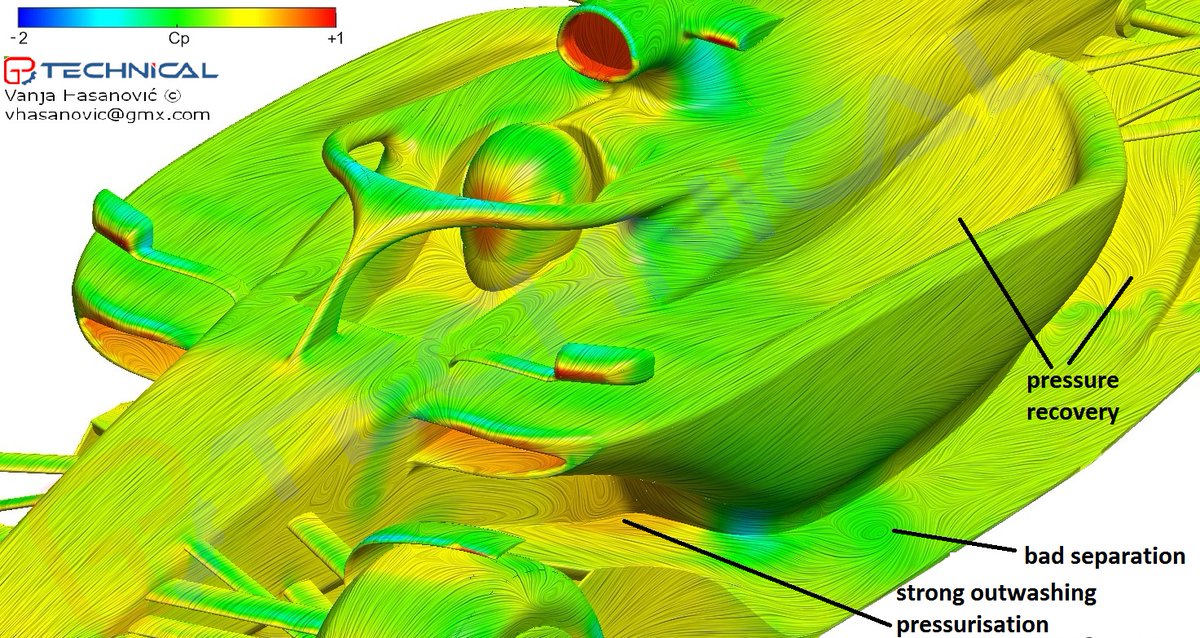
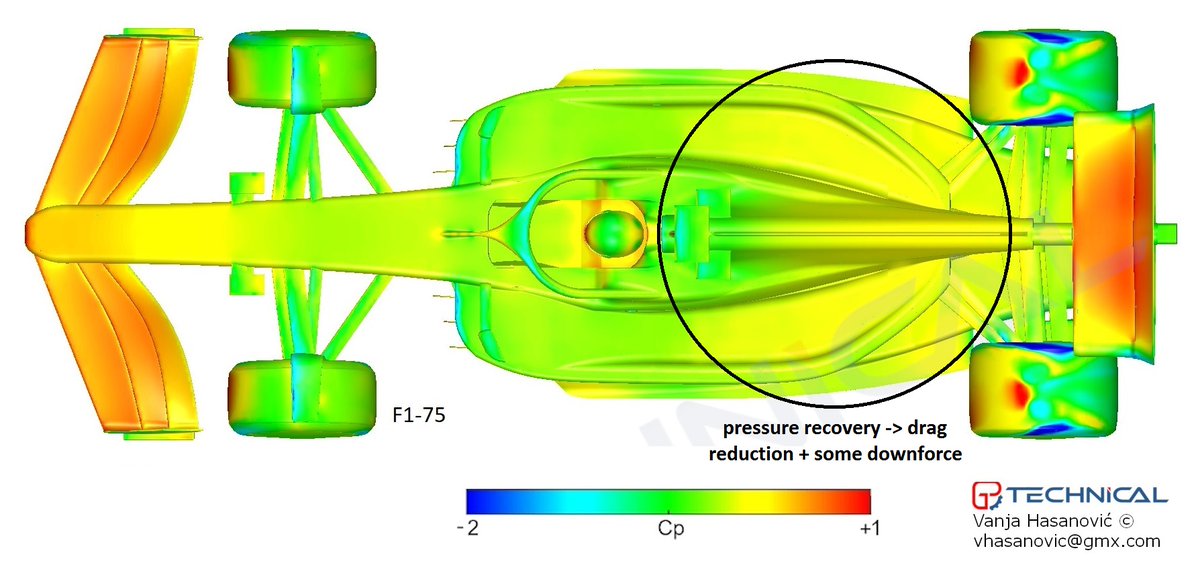
F1-75 sidepods generated a lot of outwash with blunt frontal sidepod surface, while also reducing drag and adding some downforce with tapering rear end combined with tub-shaped top surface
3
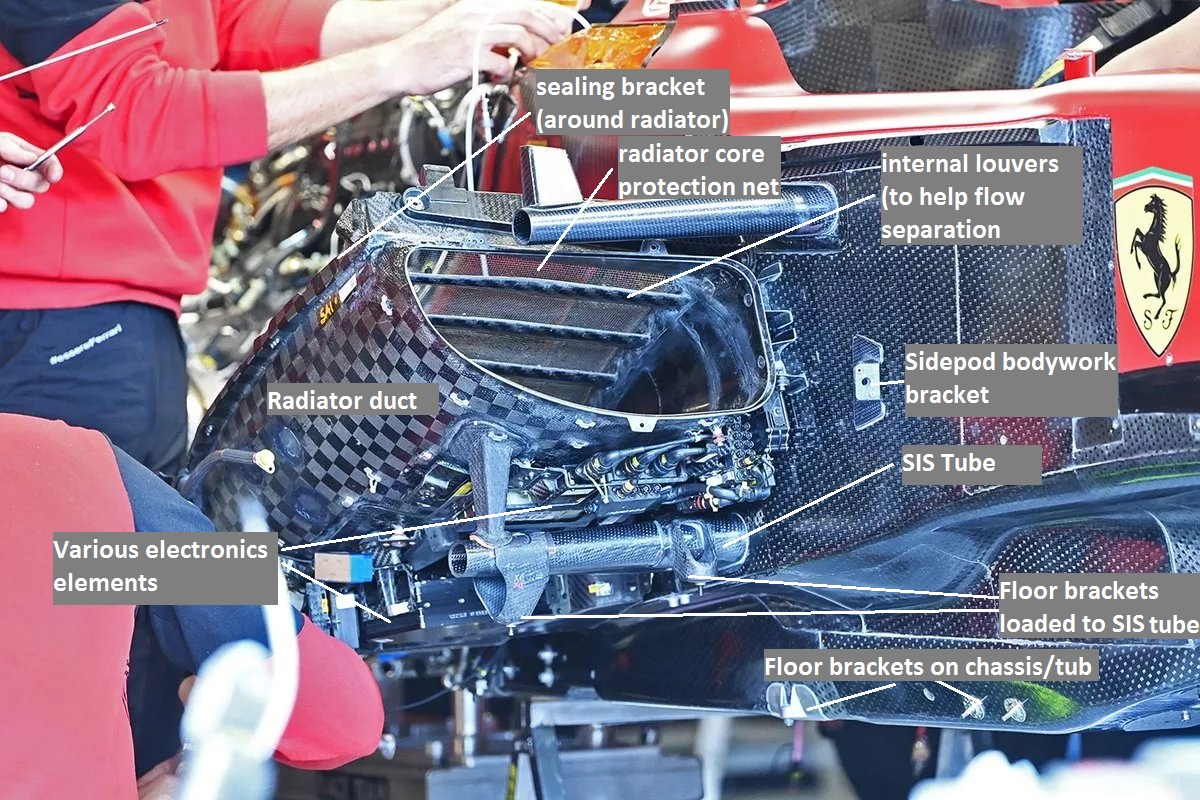
BONUS FEATURE - insides of F1-75 sidepod with some extra explanation I added
4
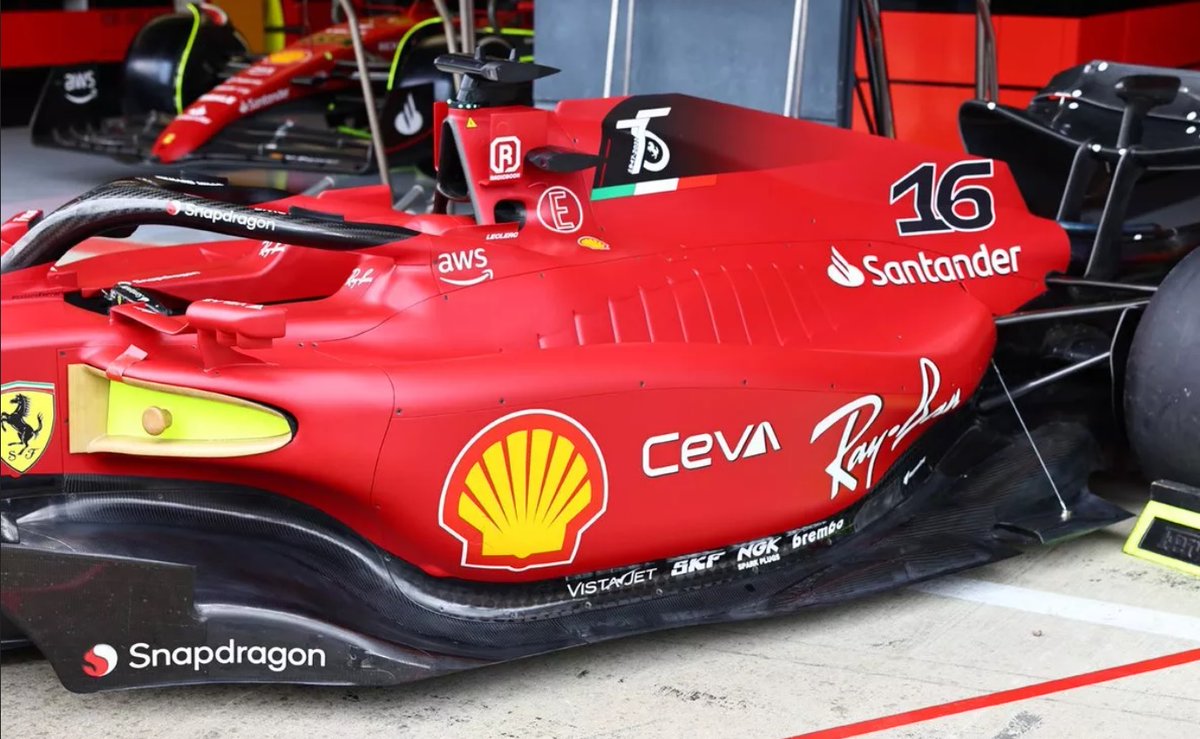
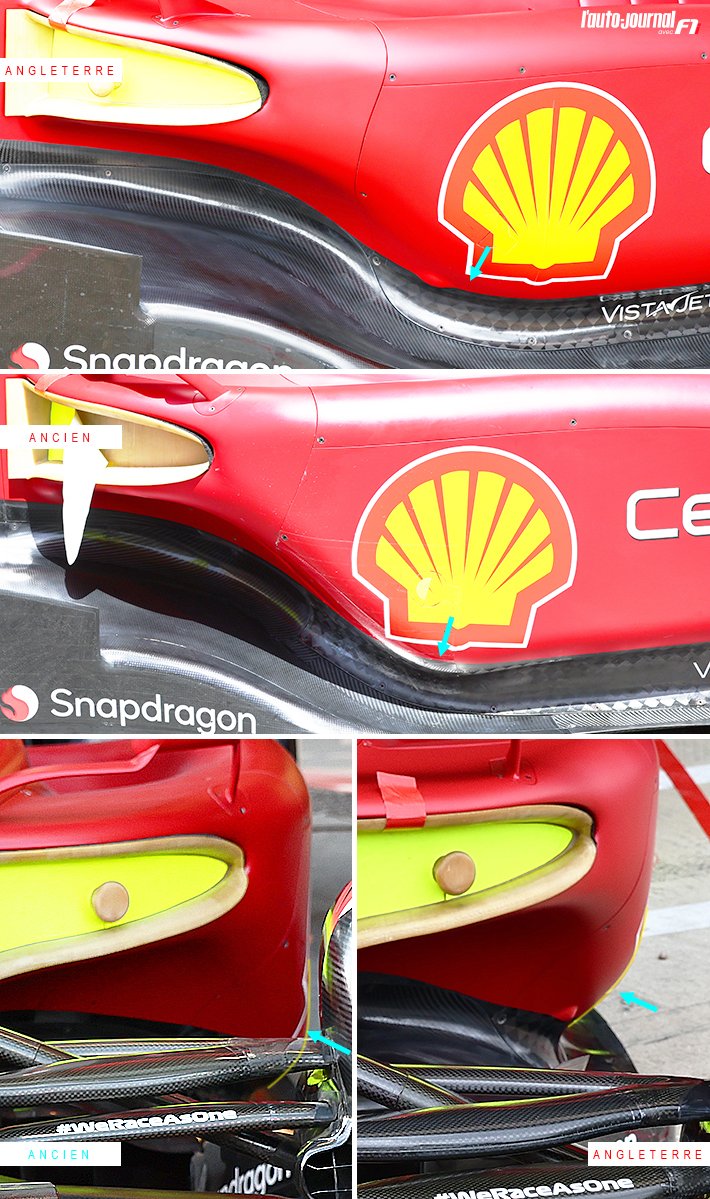
The only update on sidepods during the season was made in Silverstone, with bigger undercut made around the front corner. This update was aimed at improved flow stability (Ferrari may have also had separation issues in some yaw conditions around sidepods) and lower drag by reducing frontal area and abrupt surface transition from orthogonal to parallel to flow
5
For SF23 launch spec, Ferrari kept the same overall philosophy with lots of focus on reducing drag - as they said themselves. Increasing the undercut under the intake and tapering in the rear meant smaller frontal pressurisation and more pressure recovery in the rear and this was clear as day as soon as they launched the car.
Ferrari were clever to integrate an S-duct near the chassis that lead the air on top of the engine cover to provide some flow energising on the outlet and over the cooling louvers. I will discuss this in more detail on Saturday when I will focus on Engine Cover Development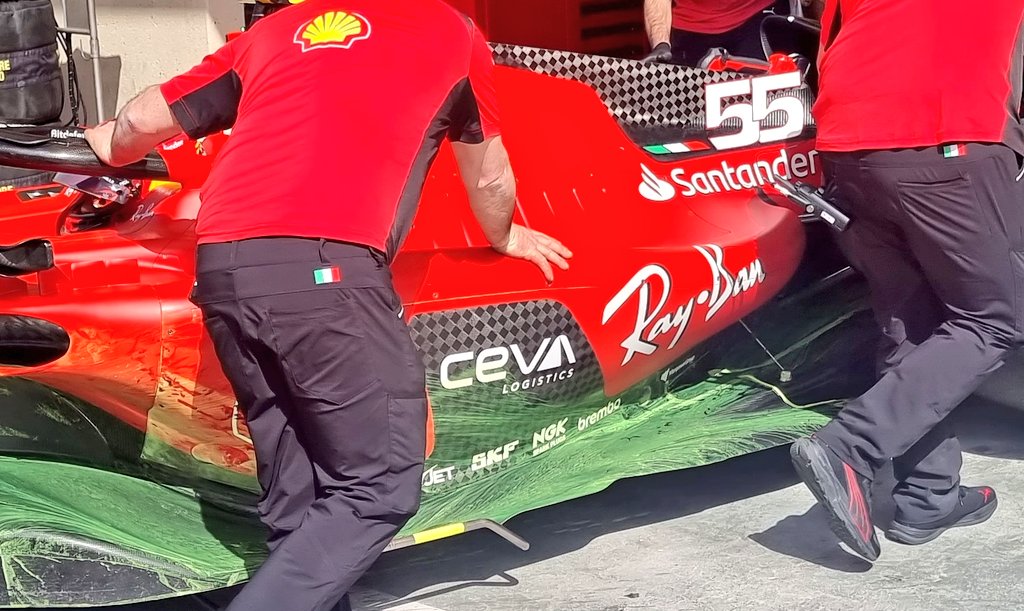

Ferrari were clever to integrate an S-duct near the chassis that lead the air on top of the engine cover to provide some flow energising on the outlet and over the cooling louvers. I will discuss this in more detail on Saturday when I will focus on Engine Cover Development
6
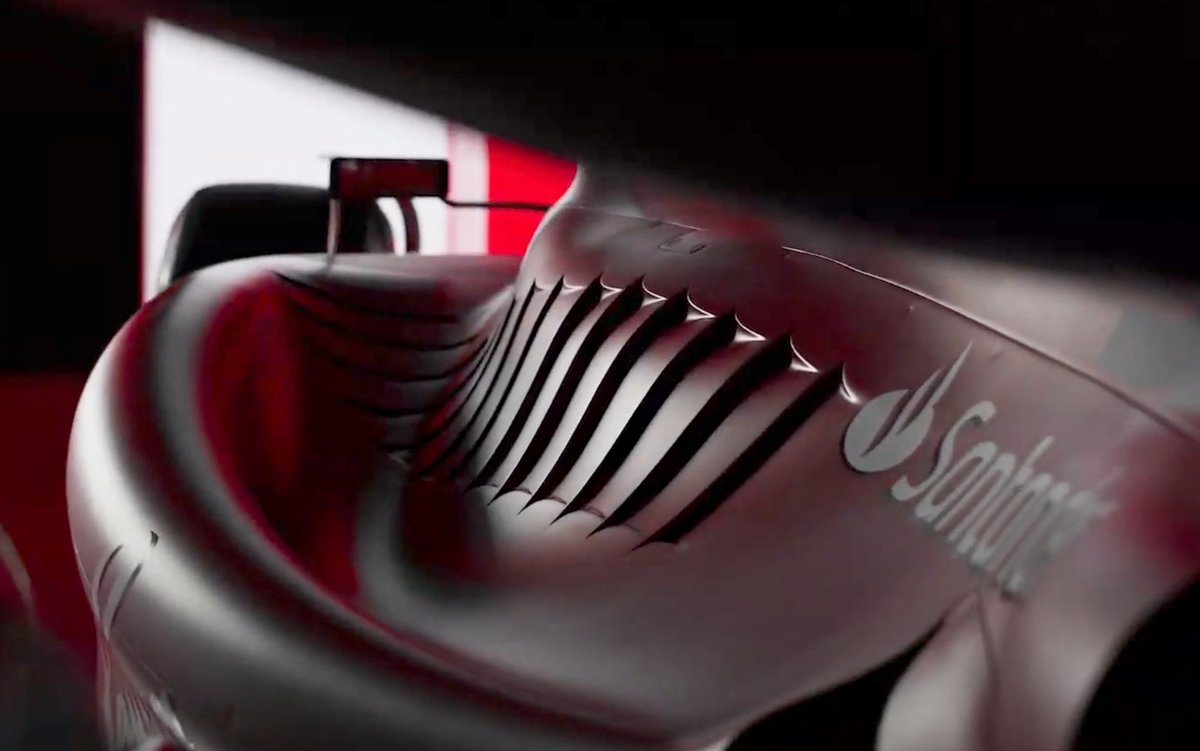
At the end of the season, Ferrari allowed a TV crew to make a short video about their work which included a short clip with SF23 CFD results. The reason why Ferrari revealed this was because they already abandoned this approach earlier in the season and this didn't help any other team in any way.
What we could see from results is that the Cp (coefficient of pressure) plot shows strong pressurisation on the frontal sidepod undercut as well as a lot of pressure recovery in the rear of sidepods and on the engine cover. Compared to my CFD results made more than 18 months before - we actually learned nothing new 😂 Still, it was a great verification of those rudimentary simulations made before 😁

What we could see from results is that the Cp (coefficient of pressure) plot shows strong pressurisation on the frontal sidepod undercut as well as a lot of pressure recovery in the rear of sidepods and on the engine cover. Compared to my CFD results made more than 18 months before - we actually learned nothing new 😂 Still, it was a great verification of those rudimentary simulations made before 😁
7
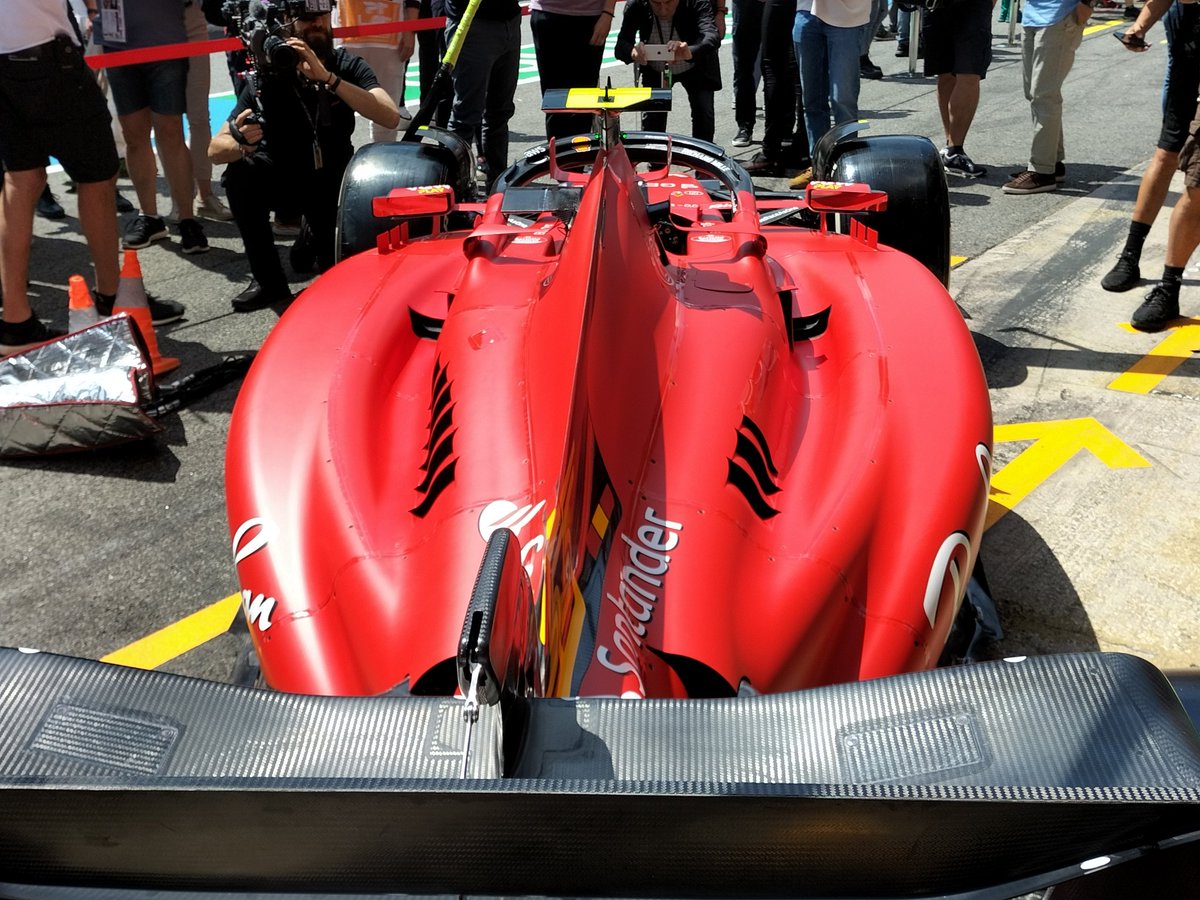
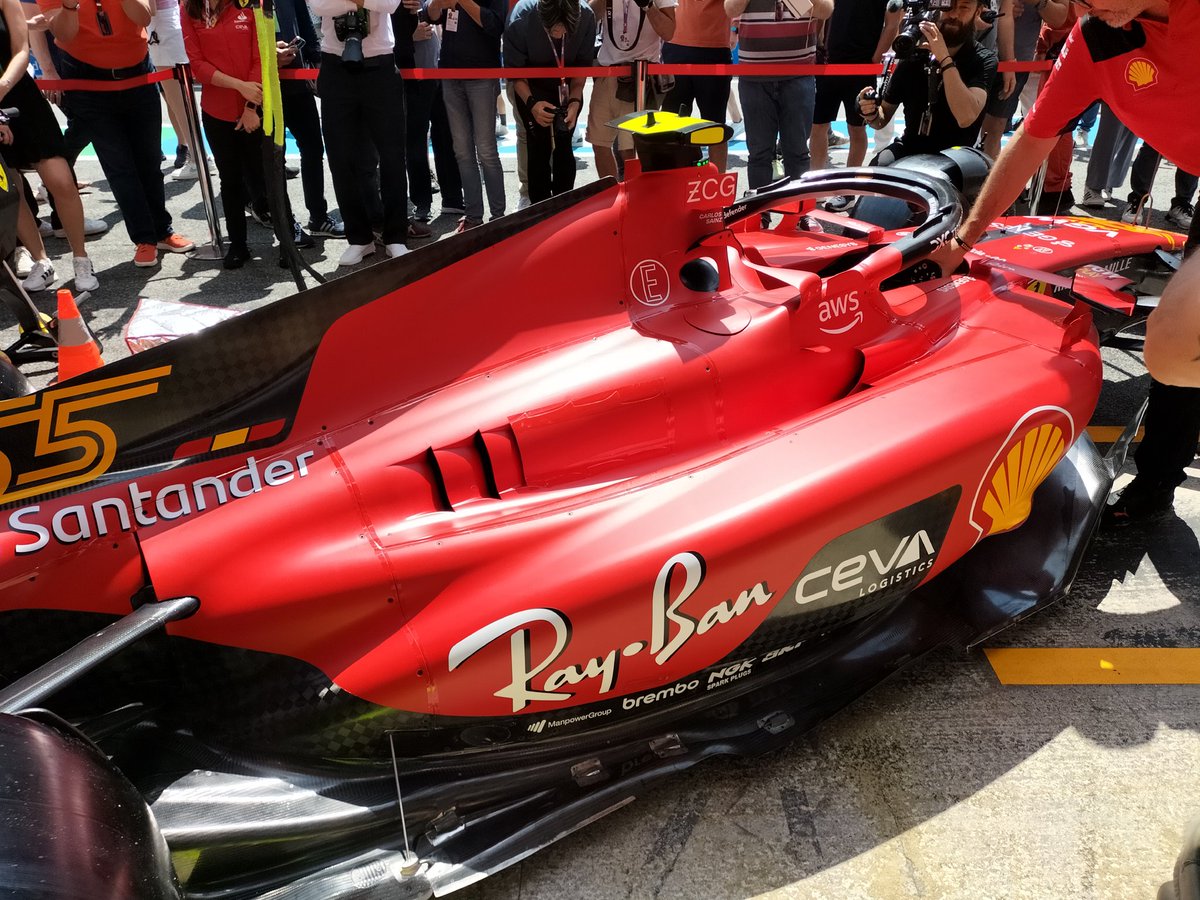
When Ferrari brought completely different bodywork+floor in Spain in 2023, everyone jumped to conclusion Ferrari switched to Red Bull-like downwash sidepods. This was wrong, as the basic geometry clearly showed their inwash concept was still present and most likely couldn't be changed due to the way rear suspension interacted with the oncoming airflow
The front end changed massively, increasing the undercut as much as possible with existing chassis designed for a very different sidepod concept

The front end changed massively, increasing the undercut as much as possible with existing chassis designed for a very different sidepod concept
8
The inwashing geometry was very clear and it was also confirmed by flow vis trace of the rear corner on the 3rd photo

9
The SIS Tube and its position limited Ferrari's options a lot. However, seeing how the sidepod grew to a bulge over the SIS tube compared to a small bubble on launch-spec car - Ferrari used what it could to its advantage. This bulge served the same purpose a similar-looking bulge did on RB19 - to increase the area that generates outwash to the extend they needed it. It wasn't a bug, it was a feature!
There were some small changes of the undercut geometry later in the season, which means Ferrari had 3 different spec of sidepod bodywork in 2023.
There were some small changes of the undercut geometry later in the season, which means Ferrari had 3 different spec of sidepod bodywork in 2023.
10
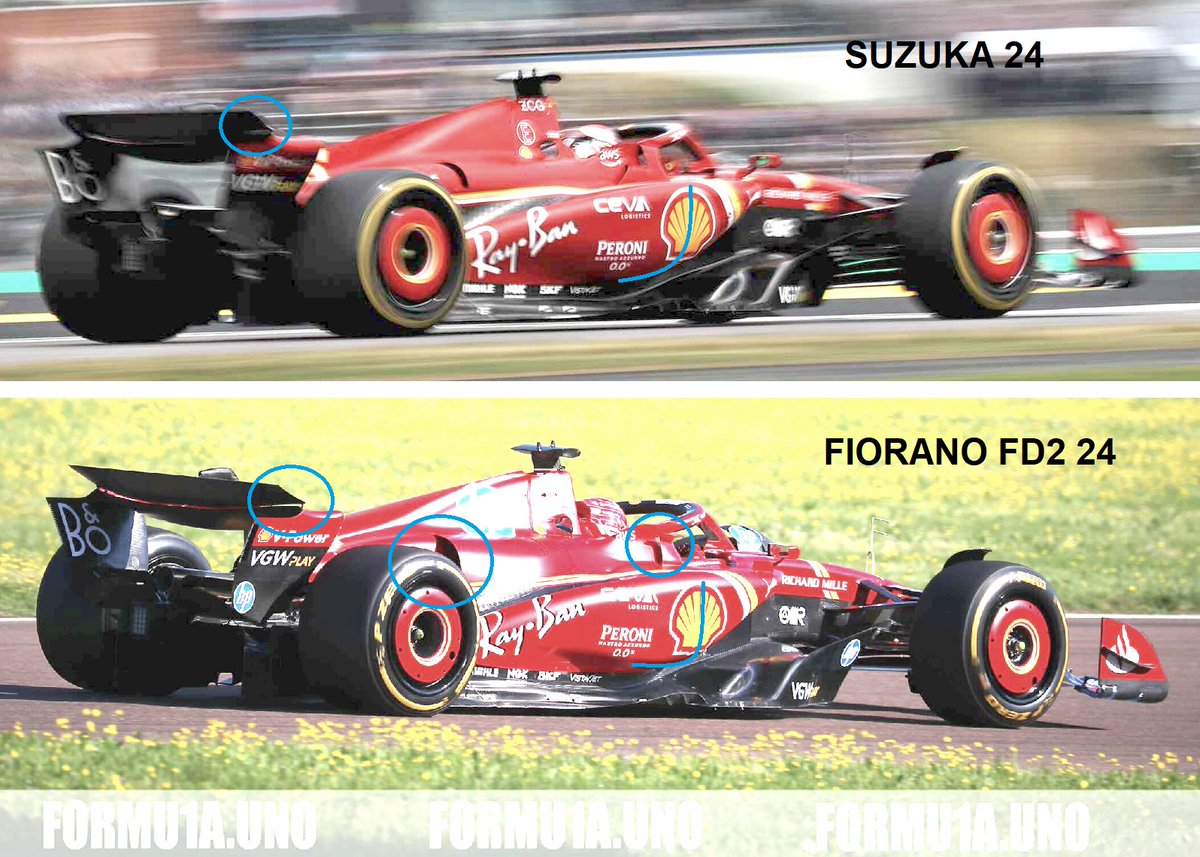
SF24 continued towards full downwash solution with the launch-spec sidepods. Even though a lot has changed, the core idea of generating outwash with pressurisation and providing a long sidewall to prevent too early inwash seen on F1-75 was still present on SF24. In my view, the 2nd feature was missing on first SF23 spec we saw and this caused some trouble with the floor which I will focus on tomorrow
While this first sidepod spec on SF24 looked basic compared to direct rivals, it did its job perfectly and also left the team a lot of development room to move to a bit different design if needed. This is exactly what they did when they introduced Imola bodywork update


While this first sidepod spec on SF24 looked basic compared to direct rivals, it did its job perfectly and also left the team a lot of development room to move to a bit different design if needed. This is exactly what they did when they introduced Imola bodywork update
11
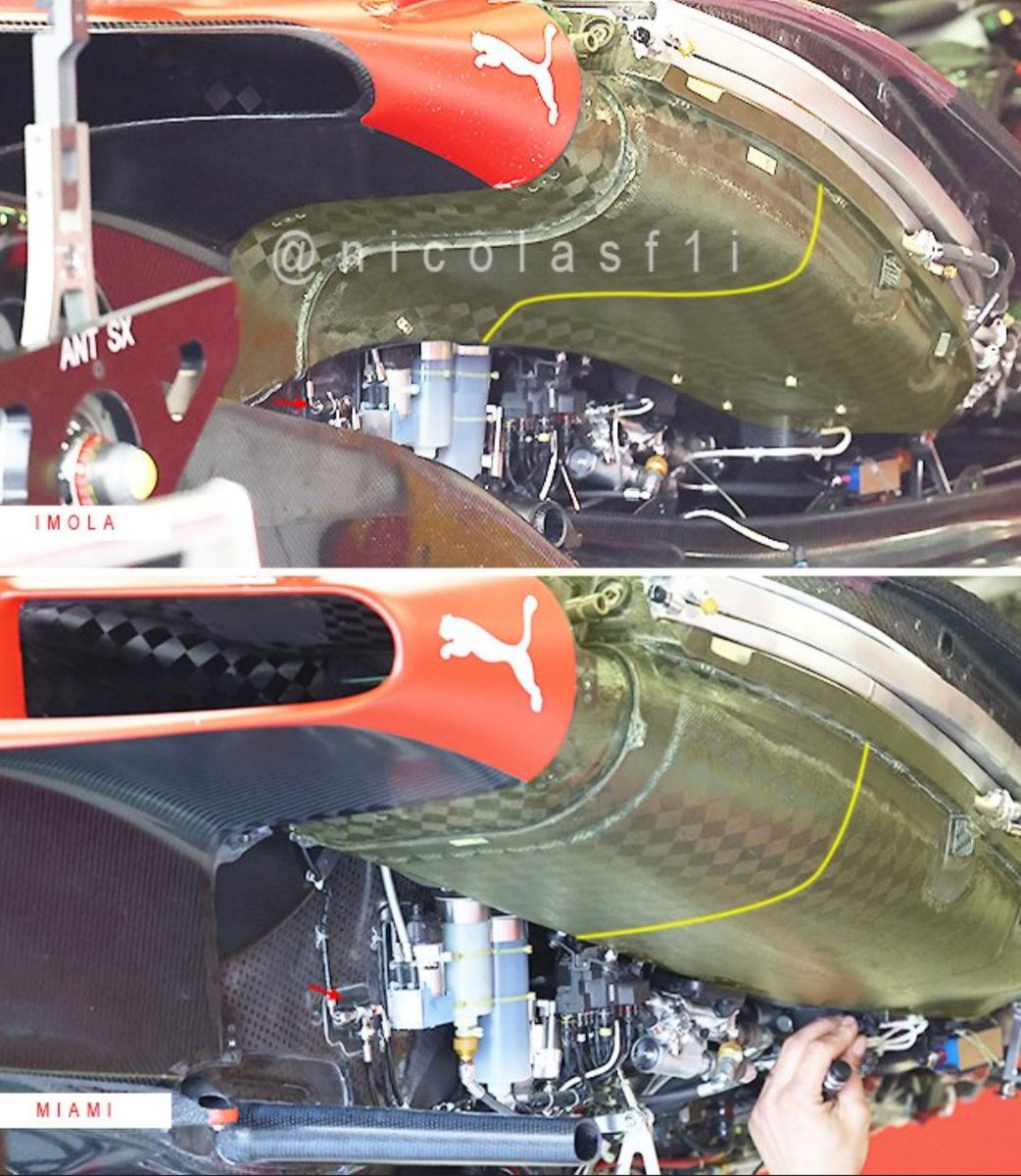
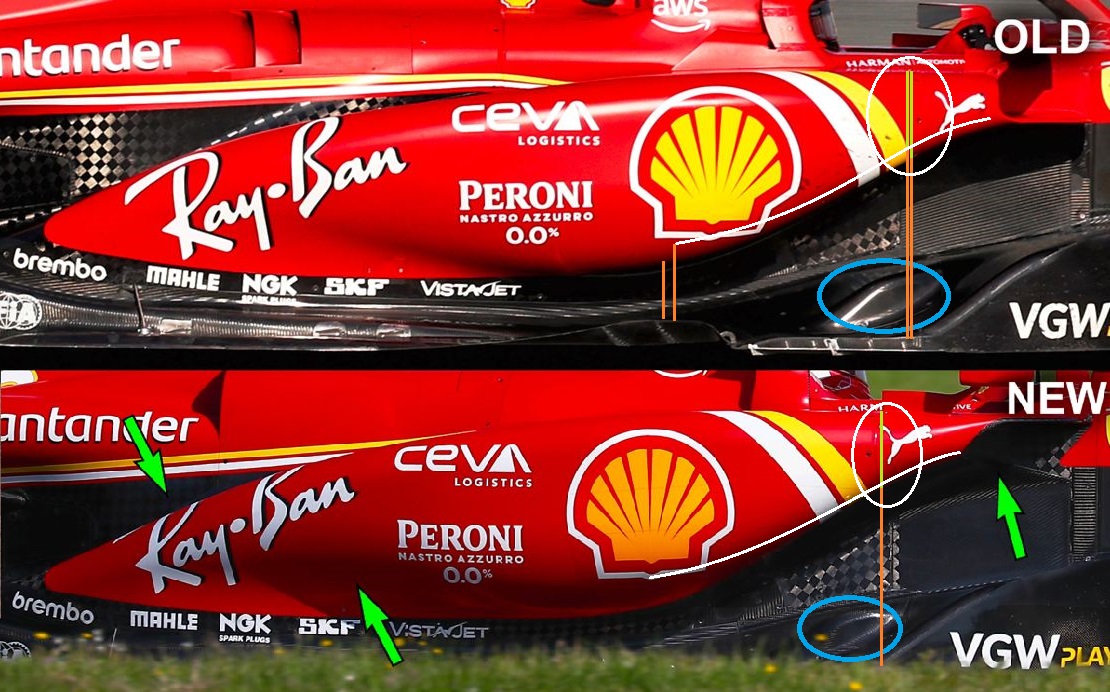
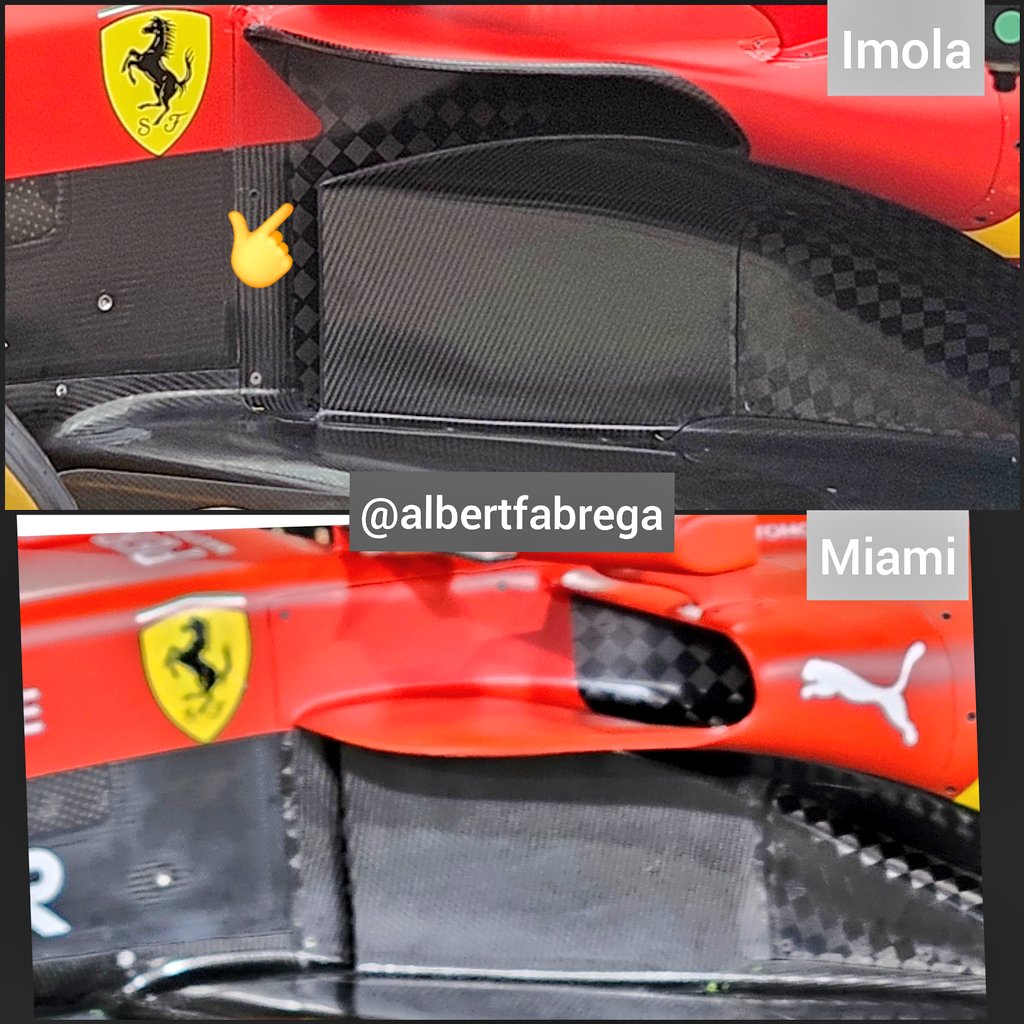
Imola update saw a few changes and improvements of sidepod area among other things. Bodywork was tighter, the inlet solution was inspired by RB20 solution and the S-duct inlet was merged with radiator inlet. Update was focused on cutting drag while keeping core function of sidepods regarding outwash generation and handling rear floor corner area
12
Posting photo of merged S+radiator ducting for future reference, by @carpentiers_f1