How to Turn Anything You Know Into a Claude Skill

Five free, open-source ways to turn a book, video, or doc into a Claude skill.

You already own knowledge that lives in the wrong place. A textbook you bought and read once. A video you've rewatched three times looking for the same five minutes. A docs site you keep re-Googling the same three settings on. The fix isn't reading it again. It's converting it once.
That's what a skill actually is underneath the terminology. A one-time conversion cost that turns into free recall forever after. You pay the setup once, then you just ask.
Subscribe to simplifyingai.co for more daily AI insights like this.
There's no ceiling on what can become a skill, genuinely no limit. This covers five solid, free, open-source starting points, the shapes that "something you already have" tends to take most often. Not the whole territory. Enough to get you moving today, walked through with real situations, not just described in passing.

1. The pattern behind all of this
Every method below does the same three things, just against different source material. Point a tool at something. It reads through the whole thing once and pulls out the structure, the frameworks, the actual useful parts, not just a summary. Claude loads that structure on demand instead of re-reading the source every time you ask a question.
That's the whole idea. The rest of this guide is five different answers to "what am I pointing it at," each one walked through against a real situation, not just named and moved past.
2. Turn a book or document into a skill
Tool: book-to-skill (22.4k stars, MIT, virgiliojr94)
git clone https://github.com/virgiliojr94/book-to-skill.git ~/.claude/skills/book-to-skillThen in Claude Code, point it at a PDF:
/book-to-skill /path/to/your-book.pdfIt builds an index plus one file per chapter, loaded only when a question actually touches that chapter.

Walkthrough, the student scenario.
Say the book is a required data structures textbook for a class. Convert it once, at the start of the semester, before you've even opened chapter one:
/book-to-skill ~/textbooks/data-structures.pdf ds-textbookThe night before an exam, instead of flipping back through 400 pages hunting for the one diagram you remember but can't place, you ask directly:
What's the time complexity difference between a red-black tree and a regular BST, and which chapter covers the rebalancing logic?
The skill answers from the actual chapter, cites which one, and if you follow up asking for the worked example, it pulls that specific section instead of a generic explanation reconstructed from memory.

Walkthrough, the certification-prep scenario.
Same tool, different pressure. A PMP or bar-exam prep manual, one dense 400-page book you'll re-open dozens of times over a study period, not once like the class textbook above. That repetition is exactly where converting pays for itself hardest. Convert it once, at the start of your study window:
/book-to-skill ~/study/pmp-prep-manual.pdf pmp-prepThen treat every study session as a conversation instead of a re-read:
Quiz me on earned value management formulas, five questions, don't tell me the answer until I guess

Because the skill holds the actual formulas and worked examples from the manual, not a generic PMP summary pulled from training data, the quiz questions stay grounded in what your specific prep book actually covers, including whatever edition-specific terminology or formula variants that book uses.
That distinction matters more than it sounds like it should, certification bodies update formulas and definitions between editions, and a generic answer that's technically correct in principle can still cost you points if it doesn't match what your specific exam actually tests.
3. Turn a docs site, GitHub repo, or PDF into a skill
Tool: Skill_Seekers (13.8k stars, MIT, yusufkaraaslan)
pip install skill-seekers
skill-seekers create https://docs.example.com/ --agent claude
The --agent claude flag routes the conversion through your existing Claude Code session instead of a separate paid API key.

Walkthrough, the small business scenario.
Say you run a small shop and use a POS system whose settings you re-Google every few months, refund policies, tax settings, inventory sync, whatever it is this quarter. Convert the docs site once:
skill-seekers create https://docs.your-pos-system.com/ --agent claudeNext time a customer wants a partial refund on a multi-item order and you can't remember the exact click path:
How do I process a partial refund on an order with three items when only one is being returned?
Instead of a support search that surfaces five tangential articles, you get the exact steps, sourced from the docs you already converted.

Walkthrough, the freelancer scenario.
A new client hands you access to their internal wiki or an unfamiliar tool on day one, and the first working session is usually where a client decides whether they trust you with the harder work later. Convert it before that first real session, not during it:
skill-seekers create ./exported-wiki-folder --agent claudeThen instead of interrupting the client with setup questions that make the first call feel like onboarding instead of work:
What's their branch naming convention and which environment does a PR to staging deploy to?
You walk into the first call already knowing the answer, pulled from their own wiki instead of guessed at or asked out loud. The difference isn't just saved time, it's the difference between looking like you've worked with their stack before and looking like you're still finding your footing, on the one call where that impression actually sets the tone for the engagement.
4. Turn a video into a skill
Tool: /watch (mathiaschu/watch, a fork of bradautomates/claude-video, local transcription, no API key)
/plugin marketplace add mathiaschu/claude-video
/plugin install watch@claude-video
/watch https://youtube.com/watch?v=... what does this actually cover?
Walkthrough, the learner scenario.
An hour-long knife skills tutorial you've rewatched three times, always scrubbing for the same two-minute grip demonstration buried somewhere in the middle:
/watch https://youtube.com/watch?v=... what grip does he use for the julienne cut, and at what timestamp?
Because /watch pulls actual frames alongside the transcript, it answers from what's genuinely shown on screen, the grip, the angle, the specific motion, not just what was said in the audio.

Walkthrough, the parent or teacher scenario.
A 45-minute recorded school meeting or webinar you'll never rewatch start to finish, but you know you'll need to reference one specific decision from it weeks later, and scrubbing a timeline hoping to land near the right minute wastes exactly the time this is supposed to save:
/watch ./recorded-meeting.mp4 what were the action items, and who was assigned each one?
Since transcription runs locally through the on-device Whisper model instead of a cloud API, nothing about the recording leaves your machine, which matters more here than with a public YouTube video, a school meeting often includes names, schedules, and details about specific kids that have no business going anywhere near a third-party server.
5. Turn the open web into a skill
Tool: Firecrawl, self-hosted (168k stars, AGPL)
git clone https://github.com/mendableai/firecrawl.git
cd firecrawl
docker compose up
Point the official firecrawl-mcp-server at your local instance instead of the hosted API, no account, no key, no tier limit.

Walkthrough, the sports fan scenario.
Say you follow the NBA closely enough to have an actual opinion on who's really a title contender right now
Scrape https://www.espn.com/nba/team/_/name/lal/los-angeles-lakers, https://www.espn.com/nba/team/_/name/bos/boston-celtics, and https://www.espn.com/nba/team/_/name/den/denver-nuggets, then compare their current records and tell me which one actually looks like the strongest title contender right now

Firecrawl pulls all three pages into clean text, and Claude answers from what's actually on those pages, not a vague recollection of car reviews it half-remembers.

Walkthrough, the job search scenario.
Researching a company before an interview, comp data, culture page, recent news, normally spread across five tabs you're frantically re-checking in the elevator:
Scrape https://careers.jpmorgan.com/us/en/home and https://www.jpmorganchase.com/about, then tell me what they actually emphasize as priorities versus what a typical "we value our people" corporate page says, and note anything specific enough that you could actually bring it up in an interview
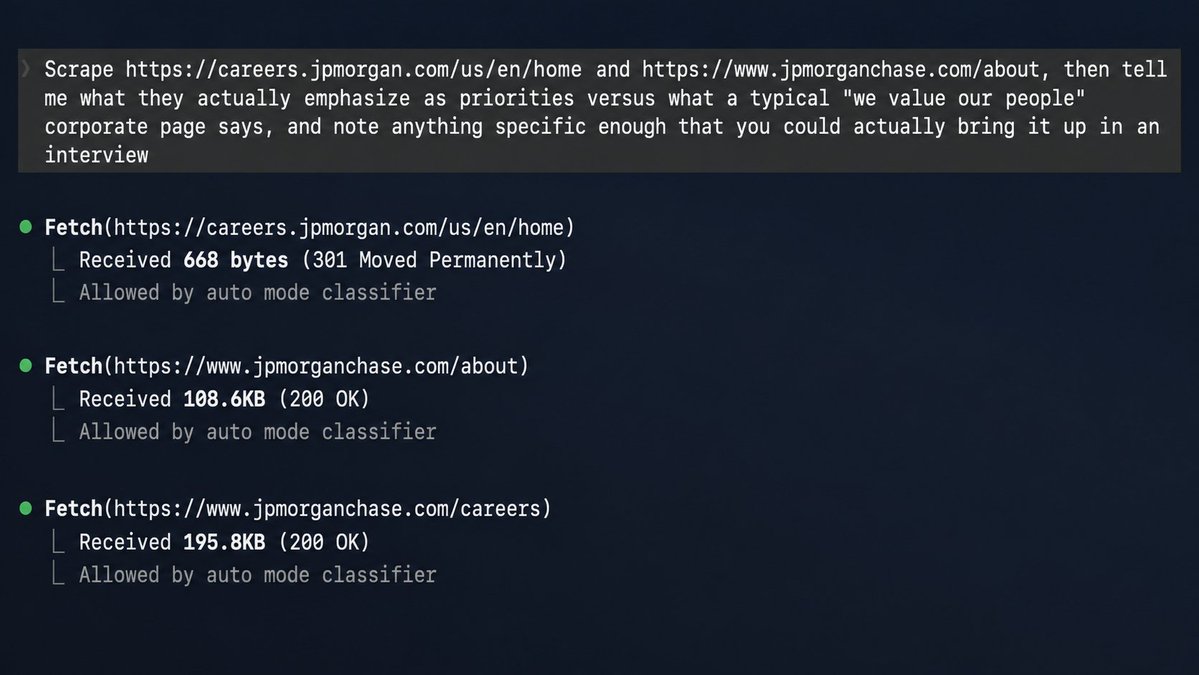
Because it's pulling the real pages rather than a generic impression, the answer reflects what that specific company actually published, not a generic "what do companies value" answer.


6. Turn your own notes into a skill
Tool: obsidian-skills (46.4k stars, official, published by Steph Ango, Obsidian's CEO)
git clone https://github.com/kepano/obsidian-skills.git ~/.claude/skills/obsidian-skills
Walkthrough, the lifelong-notes scenario.
Years of class notes, half-finished journal entries, and saved ideas sitting in a vault nobody revisits. Once the skill is installed:
Pull together everything I've ever written about machine learning across my vault, even old scattered notes, and organize it into one summary
Because the skill teaches Claude to actually navigate wikilinks and frontmatter correctly instead of guessing at the format, it finds genuinely connected notes across years of scattered entries, not just files with "machine learning" literally in the filename.

Walkthrough, the small business owner scenario.
Years of client notes, project decisions, and meeting summaries accumulated in a vault. Before a call with a client you haven't spoken to in six months:
Summarize everything I've noted about this client over the past year, and flag anything I said I'd follow up on

Instead of scrolling through a folder trying to remember what was actually agreed to, you walk into the call already briefed.
7. How to know when not to create a skill
Two honest checks before you spend real time converting something.
First, it might already exist.
skills.sh (29.1k stars, Vercel Labs) is a free, searchable registry of skills other people have already built and shared.
npx skills find "topic or book title"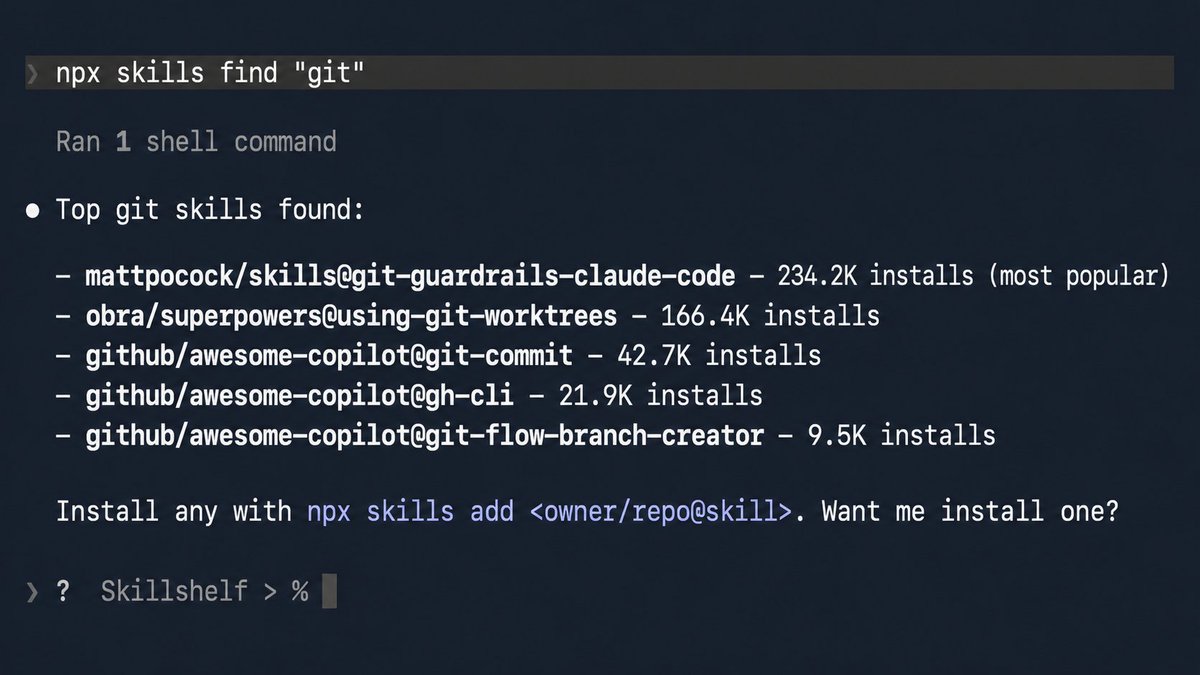
Before spending twenty minutes running book-to-skill on a well-known textbook, worth the thirty-second check, there's a real chance someone already did it.
Second, if you'll only ever ask about something once, don't convert it.
Just attach the file and ask directly. The entire value of a skill comes from repeated use. Spending the conversion time on something you'll touch a single time is wasted effort in the other direction.
8. Taking it further, a standing workflow for creators
If you're working with reference material constantly, this stops being five separate tricks and becomes one habit. Every book, video, or doc that comes in during research gets converted on intake, right when you first touch it, into one growing skills folder.
Nothing gets read once and forgotten. Everything gets queried later instead of re-found from scratch.

That's the actual shift. Not five tools reached for occasionally, one folder that gets a little smarter every time you feed it something.
Closing
Five ways in, not the whole territory, but between a book, a docs site, a video, the open web, and your own notes, there's a real chance something you already have sitting around fits one of these right now.
That's all I'm asking.
See you in the next one :)
