✝️Bäumler's Nietzsche. The only acceptable form of Nietzsche for...

𝖍𝖎𝖙𝖑𝖊𝖗 𝖑𝖔𝖛𝖊𝖉 𝖈𝖍𝖗𝖎𝖘𝖙@GasMaskNat
68 views
Jan 03, 2026
~13 min read
Advertisement
1
✝️Bäumler's Nietzsche. The only acceptable form of Nietzsche for the true Nationalist race realist.
This thread shares excerpts from Alfred Bäumler's "Nietzsche and National Socialism" from 1937. Alfred Bäumler was the main man tasked with adapting Nietzsche's writings to the NS worldview.
This would be part of THE semi-"official" viewpoint on Nietzsche from the Third Reich, and it gives us a clearer picture of how vastly different the "Nazis" would have viewed him 90 years ago. I will compare and contrast this Nietzsche with the modern left wing "Heathen revisionist" neo pagan version that treats his writings as a bludgeon against European identity.
This Post will outline 5 Sections from the piece with a subtitles so I can then use those subtitles to refer to the passages at the end of the thread with my comments.
🟥1. Christians are Superior.
⬜️2. Jesus Christ is not of the World.
⬛️3. Christ heightened responsibility, as should we.
🟨4. Will to Power as a Blueprint for the NSDAP.
🟦5. Anti-Clerical, NOT anti-Christian.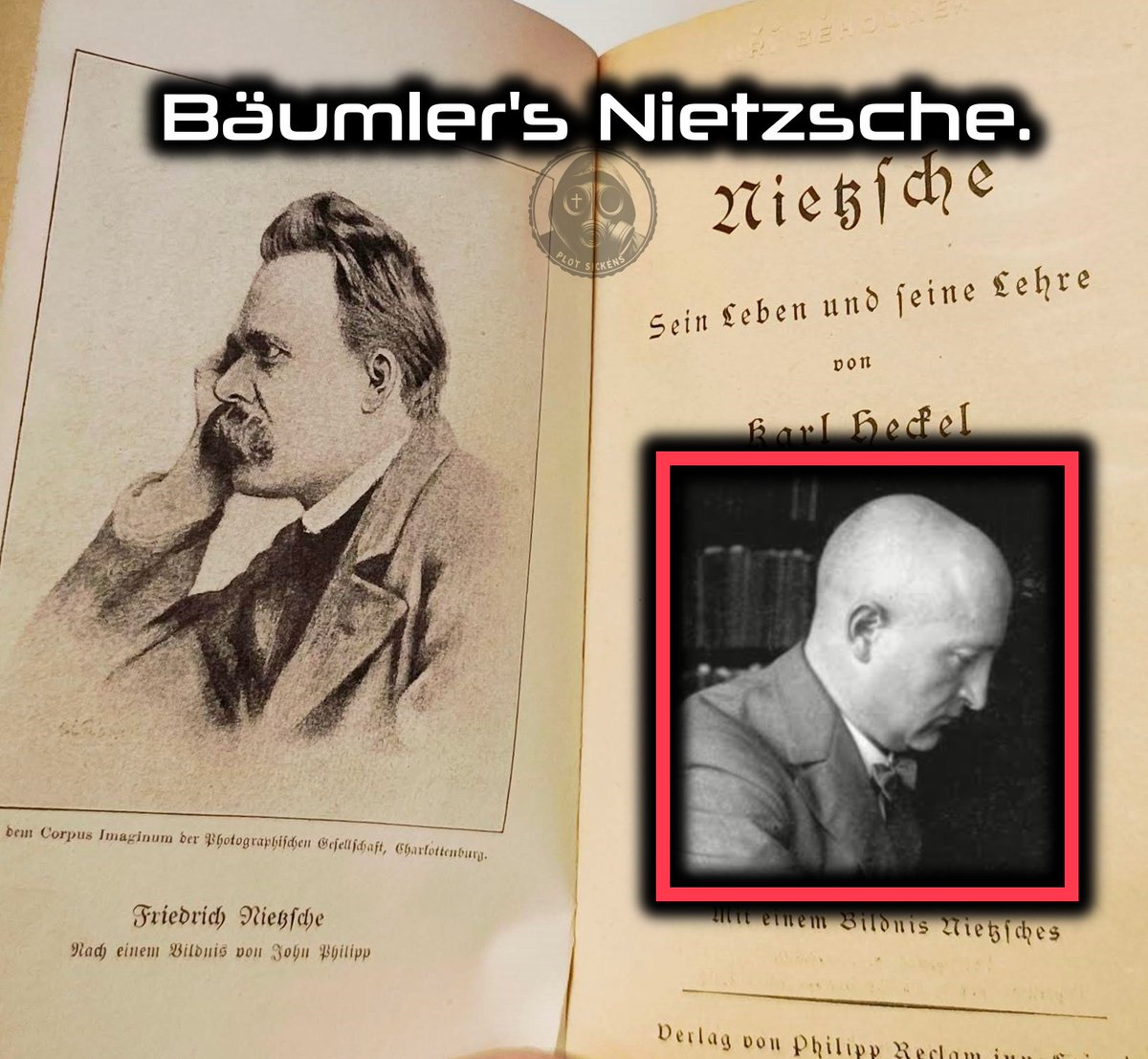
This thread shares excerpts from Alfred Bäumler's "Nietzsche and National Socialism" from 1937. Alfred Bäumler was the main man tasked with adapting Nietzsche's writings to the NS worldview.
This would be part of THE semi-"official" viewpoint on Nietzsche from the Third Reich, and it gives us a clearer picture of how vastly different the "Nazis" would have viewed him 90 years ago. I will compare and contrast this Nietzsche with the modern left wing "Heathen revisionist" neo pagan version that treats his writings as a bludgeon against European identity.
This Post will outline 5 Sections from the piece with a subtitles so I can then use those subtitles to refer to the passages at the end of the thread with my comments.
🟥1. Christians are Superior.
⬜️2. Jesus Christ is not of the World.
⬛️3. Christ heightened responsibility, as should we.
🟨4. Will to Power as a Blueprint for the NSDAP.
🟦5. Anti-Clerical, NOT anti-Christian.
2
Bäumler begins by comparing Nietzsche critique of European secularism and Nihilism, to Hitler's challenge of the Weimar decay in the 1920's. He then begins to discuss Christianity in depth:
🟥1. Christians are Superior:
"Beyond this suffocating ideology stands Nietzsche’s stark declaration: "God is dead." This statement has often been understood only as a historical observation—that faith in God has disappeared, that he no longer holds power over men’s lives. Nietzsche did not struggle against the Christian God, nor was he shaken by his death. He did not deny that some Christians still remained. In fact, he regarded them with a certain respect, seeing in them a superior type of person compared to the decadent artists and intellectuals of his time. He was entirely free from the resentment of those who fight against religion only to liberate themselves from its burden.
For Nietzsche, knowledge of the death of the Christian God was not a doctrine or a program but the recognition of an epochal transformation. He did not seek the death of the Christian God but bore witness to the decline of faith in him. What had come to an end was not merely a theology but an entire world order. It was the close of the Middle Ages in Europe."
🟥1. Christians are Superior:
"Beyond this suffocating ideology stands Nietzsche’s stark declaration: "God is dead." This statement has often been understood only as a historical observation—that faith in God has disappeared, that he no longer holds power over men’s lives. Nietzsche did not struggle against the Christian God, nor was he shaken by his death. He did not deny that some Christians still remained. In fact, he regarded them with a certain respect, seeing in them a superior type of person compared to the decadent artists and intellectuals of his time. He was entirely free from the resentment of those who fight against religion only to liberate themselves from its burden.
For Nietzsche, knowledge of the death of the Christian God was not a doctrine or a program but the recognition of an epochal transformation. He did not seek the death of the Christian God but bore witness to the decline of faith in him. What had come to an end was not merely a theology but an entire world order. It was the close of the Middle Ages in Europe."
3
⬜️2. Jesus Christ is not of the World:
Nietzsche’s critique of Christianity is rooted in the historical reality he experienced first hand. He perceives a striking paradox: as faith in God declines, a self-sustaining moralism rises to take its place. For him, this is the defining feature of the bourgeois condition, a morality that has been severed from religion.
The substance of this morality largely reflects what was once known as Christian ethics, yet it is now detached from its original foundation. The transition from Christian faith to secular moralism appears seamless, but Nietzsche exposes the concealed rupture beneath the surface.
Modern thought assumes that morality can be preserved without its religious foundation, but this inevitably leads to nihilism. The Christian-moral God is no longer tenable, leaving modern man facing atheism, as if no other form of divinity were conceivable. What has truly been overcome is not God as such, but only the moral God.
Nietzsche further states that Christianity has become something wholly different from what its founder envisioned and desired. What the Church proclaims as Christianity is, in reality, the negation of its original essence. From the very beginning, what is considered Christian in the ecclesiastical sense has been anti-Christian—simple facts and persons substituted for symbols, mere stories in place of eternal truths, empty rites, formulas, and dogmas instead of a practice of life. The true Christian, in Nietzsche’s view, is utterly indifferent to dogma, worship, priesthood, the Church, and theology.
Nietzsche considers it an unparalleled fraud that these institutions of decadence, the Church and its dogmatic faith, continue to claim the sacred name of Christianity. He poses the ultimate question: what did Christ reject? Everything that is today called Christian. These words would undoubtedly have been affirmed by that great Protestant of the North, Kierkegaard.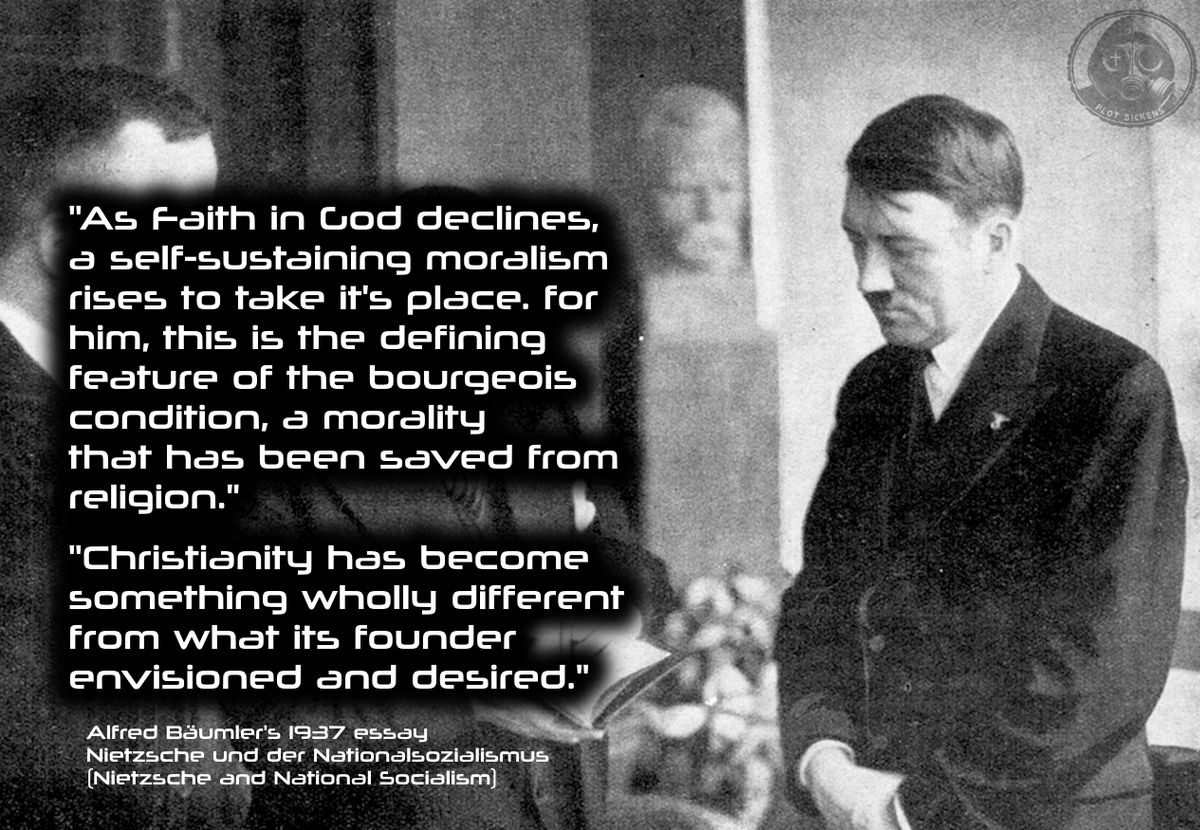
Nietzsche’s critique of Christianity is rooted in the historical reality he experienced first hand. He perceives a striking paradox: as faith in God declines, a self-sustaining moralism rises to take its place. For him, this is the defining feature of the bourgeois condition, a morality that has been severed from religion.
The substance of this morality largely reflects what was once known as Christian ethics, yet it is now detached from its original foundation. The transition from Christian faith to secular moralism appears seamless, but Nietzsche exposes the concealed rupture beneath the surface.
Modern thought assumes that morality can be preserved without its religious foundation, but this inevitably leads to nihilism. The Christian-moral God is no longer tenable, leaving modern man facing atheism, as if no other form of divinity were conceivable. What has truly been overcome is not God as such, but only the moral God.
Nietzsche further states that Christianity has become something wholly different from what its founder envisioned and desired. What the Church proclaims as Christianity is, in reality, the negation of its original essence. From the very beginning, what is considered Christian in the ecclesiastical sense has been anti-Christian—simple facts and persons substituted for symbols, mere stories in place of eternal truths, empty rites, formulas, and dogmas instead of a practice of life. The true Christian, in Nietzsche’s view, is utterly indifferent to dogma, worship, priesthood, the Church, and theology.
Nietzsche considers it an unparalleled fraud that these institutions of decadence, the Church and its dogmatic faith, continue to claim the sacred name of Christianity. He poses the ultimate question: what did Christ reject? Everything that is today called Christian. These words would undoubtedly have been affirmed by that great Protestant of the North, Kierkegaard.
4
⬛️3. Christ heightened responsibility at the sermon on the mount and so should we.
"Nietzsche scorns those who believe Christianity can be refuted by the natural sciences. "Christian value judgments are not at all overcome in this way. 'Christ on the cross' remains the most exalted symbol."
Christian morality is rooted in religious individualism, the consciousness of sin, humility, and the preoccupation with personal salvation. Nietzsche stands entirely apart from these principles, rejecting their foundation and their influence on human life.
Nietzsche rejects the very notion of repentance. "I do not love this kind of cowardice in the face of what has been done. One should not succumb to a sudden feeling of unexpected shame and remorse. Extreme arrogance must stand firm on this point. And, ultimately, what good is repentance? No action can be undone simply because one regrets having committed it..."
Here, Nietzsche does not seek to diminish responsibility but to heighten it. He speaks as one who understands how much courage and pride are necessary to affirm oneself before fate. From the perspective of his amor fati, he looks upon Christianity with scorn, rejecting its promise of bliss. As a man of the North, he does not grasp why he should require redemption. The Mediterranean religion of salvation is utterly foreign to his Nordic essence. Nietzsche sees man as a being who struggles against fate. A worldview that perceives only punishment in struggle and action is wholly alien to him.
"Our real life is a false, rejected, and sinful existence, a punitive existence..." This is the Christian vision of the world that Nietzsche repudiates. Pain, struggle, labor, and death—these are treated as accusations against life itself. He declares, "The innocent, idle, immortal, happy man—this ideal, which stands at the summit of all our desires, must first of all be criticized."
With particular vehemence, Nietzsche directs his attack against the monastic life and the Augustinian vision of the Saturday of Saturdays. He praises Luther for bringing an end to the contemplative life. At this point, the Nordic spirit of struggle and activity resounds with full force. The tone in which we speak these words today was first sounded by Nietzsche."
"Nietzsche scorns those who believe Christianity can be refuted by the natural sciences. "Christian value judgments are not at all overcome in this way. 'Christ on the cross' remains the most exalted symbol."
Christian morality is rooted in religious individualism, the consciousness of sin, humility, and the preoccupation with personal salvation. Nietzsche stands entirely apart from these principles, rejecting their foundation and their influence on human life.
Nietzsche rejects the very notion of repentance. "I do not love this kind of cowardice in the face of what has been done. One should not succumb to a sudden feeling of unexpected shame and remorse. Extreme arrogance must stand firm on this point. And, ultimately, what good is repentance? No action can be undone simply because one regrets having committed it..."
Here, Nietzsche does not seek to diminish responsibility but to heighten it. He speaks as one who understands how much courage and pride are necessary to affirm oneself before fate. From the perspective of his amor fati, he looks upon Christianity with scorn, rejecting its promise of bliss. As a man of the North, he does not grasp why he should require redemption. The Mediterranean religion of salvation is utterly foreign to his Nordic essence. Nietzsche sees man as a being who struggles against fate. A worldview that perceives only punishment in struggle and action is wholly alien to him.
"Our real life is a false, rejected, and sinful existence, a punitive existence..." This is the Christian vision of the world that Nietzsche repudiates. Pain, struggle, labor, and death—these are treated as accusations against life itself. He declares, "The innocent, idle, immortal, happy man—this ideal, which stands at the summit of all our desires, must first of all be criticized."
With particular vehemence, Nietzsche directs his attack against the monastic life and the Augustinian vision of the Saturday of Saturdays. He praises Luther for bringing an end to the contemplative life. At this point, the Nordic spirit of struggle and activity resounds with full force. The tone in which we speak these words today was first sounded by Nietzsche."
5
🟨4. Will to Power as a Blueprint for the NSDAP:
"Against the Christian rejection of the political sphere, and especially of the realm of action, Nietzsche formulates the phrase that resolves the old conflict between Catholicism and Protestantism, between faith and works:
"One must train oneself, not in the strengthening of the feeling of value, but in doing. Above all, one must be capable of something."
With this, he restores the primacy of action, of politics, of will made manifest.
Values emerge only through the risk inherent in action. It is in this struggle that they gain their force, and upon this force that every true ordering of men is built. No great form of historical life has ever been realized through an individualistic morality, even when rooted in religion. According to Nietzsche, conventional morality has paralyzed the will to action, making the establishment of any genuine historical order impossible. What remains are isolated individuals, fragmented souls, and a social existence that holds only a provisional meaning, lacking enduring types or forms of cohesive and long-lasting activity.
The individual, however, is not granted the opportunity to affirm himself as such. Instead, all becomes mere performance, a mise-en-scène rather than an organic expression. Modern man lacks the sure instinct that comes from belonging to a lasting and coherent human type. As a result, he is incapable of true accomplishment and never overcomes his own deficiencies as an individual.
Nietzsche tells us that we are utterly removed from the perfection of being, doing, and willing. The effort of will that extends over a long period of time, the choice of conditions and valuations that make it possible to shape the coming centuries, this is what is truly anti-modern in the highest sense of the word. The principles governing our age are dissolute, leading to its defining characteristics: the excessive proliferation of intermediary forms and the decline of qualitative distinctions.
National Socialism, by contrast, embodies the restoration of foundational principles. It represents the return of organic order and selective discipline."
"Against the Christian rejection of the political sphere, and especially of the realm of action, Nietzsche formulates the phrase that resolves the old conflict between Catholicism and Protestantism, between faith and works:
"One must train oneself, not in the strengthening of the feeling of value, but in doing. Above all, one must be capable of something."
With this, he restores the primacy of action, of politics, of will made manifest.
Values emerge only through the risk inherent in action. It is in this struggle that they gain their force, and upon this force that every true ordering of men is built. No great form of historical life has ever been realized through an individualistic morality, even when rooted in religion. According to Nietzsche, conventional morality has paralyzed the will to action, making the establishment of any genuine historical order impossible. What remains are isolated individuals, fragmented souls, and a social existence that holds only a provisional meaning, lacking enduring types or forms of cohesive and long-lasting activity.
The individual, however, is not granted the opportunity to affirm himself as such. Instead, all becomes mere performance, a mise-en-scène rather than an organic expression. Modern man lacks the sure instinct that comes from belonging to a lasting and coherent human type. As a result, he is incapable of true accomplishment and never overcomes his own deficiencies as an individual.
Nietzsche tells us that we are utterly removed from the perfection of being, doing, and willing. The effort of will that extends over a long period of time, the choice of conditions and valuations that make it possible to shape the coming centuries, this is what is truly anti-modern in the highest sense of the word. The principles governing our age are dissolute, leading to its defining characteristics: the excessive proliferation of intermediary forms and the decline of qualitative distinctions.
National Socialism, by contrast, embodies the restoration of foundational principles. It represents the return of organic order and selective discipline."
6
🟦5. Anti-Clerical, NOT anti-Christian:
"Nietzsche’s concept of values is Nordic and warlike, in direct opposition to the Mediterranean and priestly conception of values. His critique of religion is, at its core, a critique of the priest, and it emerges from the perspective of the warrior. Nietzsche shows that even the origins of religion lie within the realm of power. From this, the inherent contradiction of Christian morality becomes clear.
Here, for the first time, the doctrine is explicitly formulated:
"It is possible to bring virtue to power only by the same means through which power is generally obtained. Not through virtue."
"One must be very immoral in order to become moral by action."
Against bourgeois moral philosophy, Nietzsche erects the philosophy of the will to power—which is, in essence, political philosophy.
Humanity desires the decline of the unsuccessful, the weak, the degenerate. But Christianity opposes all of this as a conservative force...
Here lies the fundamental antithesis. One can either affirm the natural order of life or uphold the equality of all individuals before God. The latter serves as the ultimate foundation of the democratic and egalitarian ideal, while the former holds the essential elements of a new political vision."
"Nietzsche’s concept of values is Nordic and warlike, in direct opposition to the Mediterranean and priestly conception of values. His critique of religion is, at its core, a critique of the priest, and it emerges from the perspective of the warrior. Nietzsche shows that even the origins of religion lie within the realm of power. From this, the inherent contradiction of Christian morality becomes clear.
Here, for the first time, the doctrine is explicitly formulated:
"It is possible to bring virtue to power only by the same means through which power is generally obtained. Not through virtue."
"One must be very immoral in order to become moral by action."
Against bourgeois moral philosophy, Nietzsche erects the philosophy of the will to power—which is, in essence, political philosophy.
Humanity desires the decline of the unsuccessful, the weak, the degenerate. But Christianity opposes all of this as a conservative force...
Here lies the fundamental antithesis. One can either affirm the natural order of life or uphold the equality of all individuals before God. The latter serves as the ultimate foundation of the democratic and egalitarian ideal, while the former holds the essential elements of a new political vision."
7
OH, what a Journey! What an essay! How different is this Nietzsche, the semi-official NS Nietzsche of Baumler, vs the Nietzsche of the "Anti-Abrahamic" fool.
🟥Bäumler's Nietzsche respects a withdrawn apolitical life, but demands that we cease this authenticity to become active, and I agree. We must reclaim the Churches and flip tables.
Modern left wing "Heathens" routinely dismiss Christianity wholesale as the origin of "slave morality" -a hated regression of values by the weak to undermine the strong, leading to modern "Universalist" egalitarianism. There is no understanding of the private faith vs it's institutional form. The entire tradition of Christianity is attacked without a shred of nuance or honesty.
Bäumler's version, preserves and creates a Nietzschean admiration for the authentic Christian as a strong individual.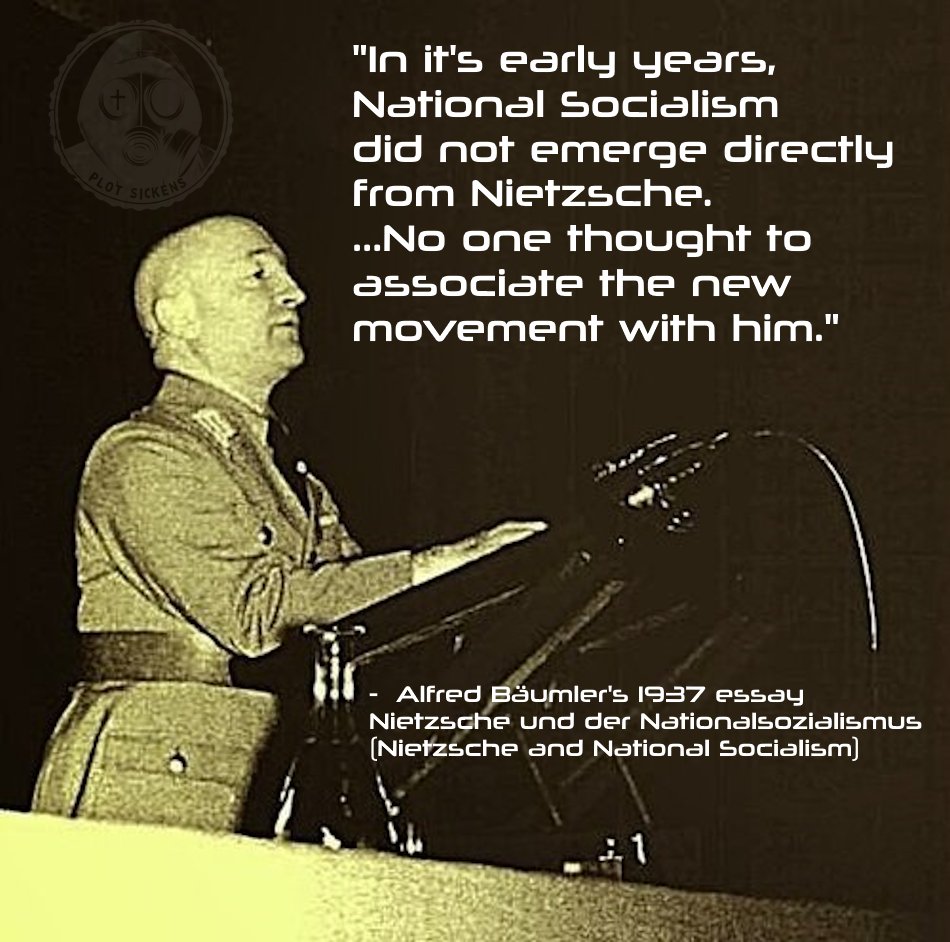
🟥Bäumler's Nietzsche respects a withdrawn apolitical life, but demands that we cease this authenticity to become active, and I agree. We must reclaim the Churches and flip tables.
Modern left wing "Heathens" routinely dismiss Christianity wholesale as the origin of "slave morality" -a hated regression of values by the weak to undermine the strong, leading to modern "Universalist" egalitarianism. There is no understanding of the private faith vs it's institutional form. The entire tradition of Christianity is attacked without a shred of nuance or honesty.
Bäumler's version, preserves and creates a Nietzschean admiration for the authentic Christian as a strong individual.
8
⬜️Bäumler's Nietzsche intersects with John 18:36 : "My kingdom is not of this world". He says that Christ rejected everything that is today called Christian.
In contrast to much modern left wing "Heathen" anti-Christian rhetoric obsessed with "Slave morality", Bäumler's Nietzsche retains a layered distinction: honoring the symbolic power of "Christ on the cross" as the "most exalted symbol" while condemning the Church's perversion into moralistic laziness or bourgeois piety. This is not a rejection by Nietzsche but a tragic observation of a lost, private ideals transformed into something life-denying.
I would say with honesty that this is exactly what Liberal Humanism has done to the Church, either through Vatican two, or through a corrupted dispensationalism.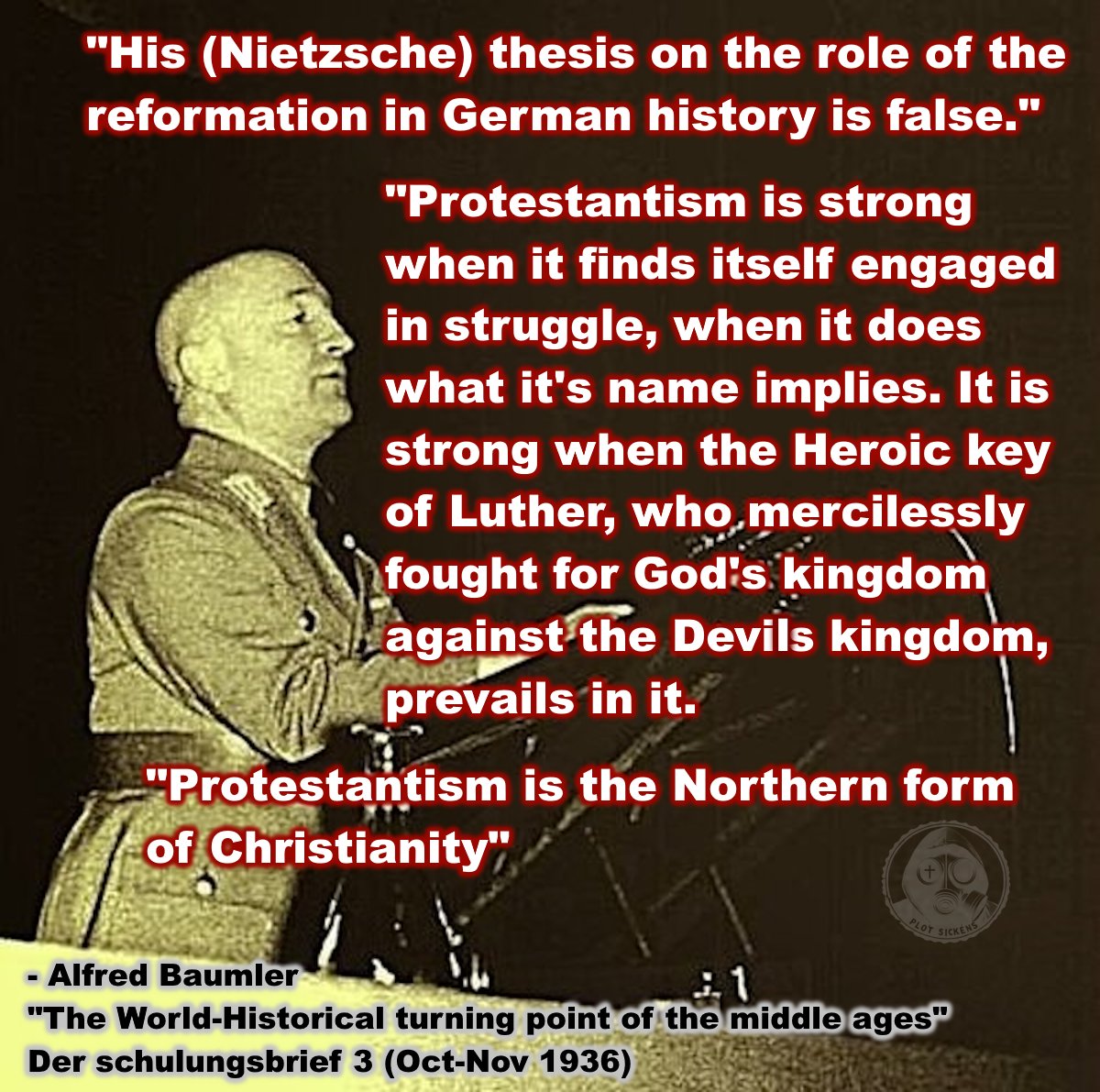
In contrast to much modern left wing "Heathen" anti-Christian rhetoric obsessed with "Slave morality", Bäumler's Nietzsche retains a layered distinction: honoring the symbolic power of "Christ on the cross" as the "most exalted symbol" while condemning the Church's perversion into moralistic laziness or bourgeois piety. This is not a rejection by Nietzsche but a tragic observation of a lost, private ideals transformed into something life-denying.
I would say with honesty that this is exactly what Liberal Humanism has done to the Church, either through Vatican two, or through a corrupted dispensationalism.
9
⬛️ Bäumler's Nietzsche shows that Christ heightened responsibility with the sermon on the mount and by elevating the Ten Commandments to a stricter interpretation. Jesus did not preach a lazy or peaceful morality. On the contrary, he radicalized the demand for inner purity and responsibility:
"Not just the act, but the desire, the anger in the heart, the lustful glance—these already make one guilty."
This is exactly what Hitler preached on the streets of Berlin in the 1920's and 1930's. As I have put forth many times before the National Socialist were seeking to define themselves as the true fundamentalist Christians.
True Christian existence, in this reading, is therefore incredibly demanding: it requires constant self-overcoming, absolute honesty with oneself, and a rejection of all outward justification.
Bäumler shows that the new political order (National Socialism) must demand a similarly heightened responsibility—not inward and passive, but outward, active, and communal.
"We (National Socialism) must now raise it just as high in the kingdom that is of this world—through discipline, selection, struggle, and unconditional service to the community."
Today's online anti-Christian rhetoric almost always presents the Sermon on the Mount as weakness, an origin for guilt and self-loathing, and a morality that glorifies victimhood. The Irony being that this is a left wing, secular, and even jevvish interpretation being presented as somehow "Right Wing".
No one rightly shows that Nietzsche himself saw Jesus' teaching as psychologically profound and extremely demanding. Christianity is a call to private control and truth that most people are too cowardly to live up to or even attempt.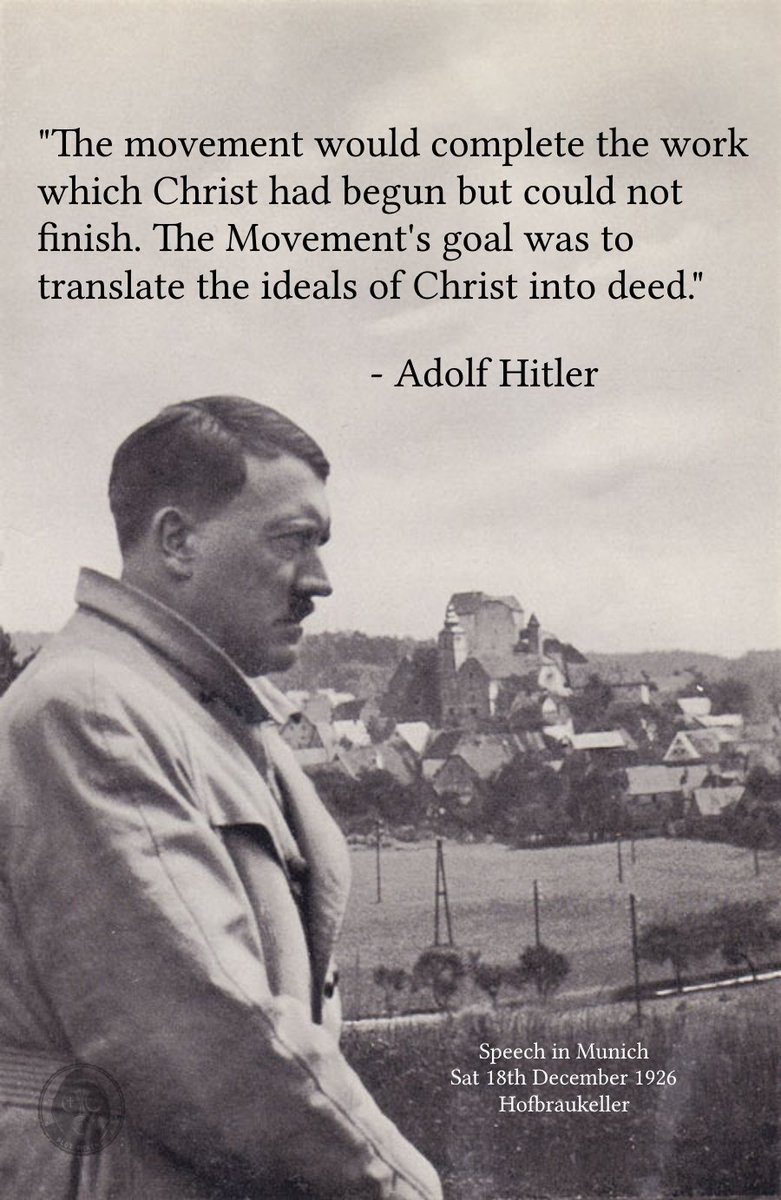
"Not just the act, but the desire, the anger in the heart, the lustful glance—these already make one guilty."
This is exactly what Hitler preached on the streets of Berlin in the 1920's and 1930's. As I have put forth many times before the National Socialist were seeking to define themselves as the true fundamentalist Christians.
True Christian existence, in this reading, is therefore incredibly demanding: it requires constant self-overcoming, absolute honesty with oneself, and a rejection of all outward justification.
Bäumler shows that the new political order (National Socialism) must demand a similarly heightened responsibility—not inward and passive, but outward, active, and communal.
"We (National Socialism) must now raise it just as high in the kingdom that is of this world—through discipline, selection, struggle, and unconditional service to the community."
Today's online anti-Christian rhetoric almost always presents the Sermon on the Mount as weakness, an origin for guilt and self-loathing, and a morality that glorifies victimhood. The Irony being that this is a left wing, secular, and even jevvish interpretation being presented as somehow "Right Wing".
No one rightly shows that Nietzsche himself saw Jesus' teaching as psychologically profound and extremely demanding. Christianity is a call to private control and truth that most people are too cowardly to live up to or even attempt.
10
🟨 Bäumler's Nietzsche then gives us a clear framework to translate "The Will to Power" into political action!
Many orthodox Christians today emphasizes denying the overly emotional nature of some strains of Christianity, and submitting to God's will, and this sits flush with Bäumler's apologetic.
Modern Christianity does promote a passiveness and a universal pity for the Non-European, but this is really just making Idol of "Anti-Racism" as a new religion that is a false gospel. National Socialism, as it was presented by Hitler through the 25 point plan seeks to wipe away this false idol of mutated liberal humanism and create a new framework for the state.
Discipline.
Action.
Order.
Modern slop on social media reduces Nietzsche to gym motivation, career advice, and individualistic secular development. This is a hollow path to nihilism that we must reject. The strong individual ONLY HAS MEANING insofar as he serves the Volk through Christian Socialism.
This framework will allow the Christian to return to the superior inward state that Bäumler's Nietzsche champions. National Socialism is the affirmative answer to the nihilism Nietzsche diagnosed.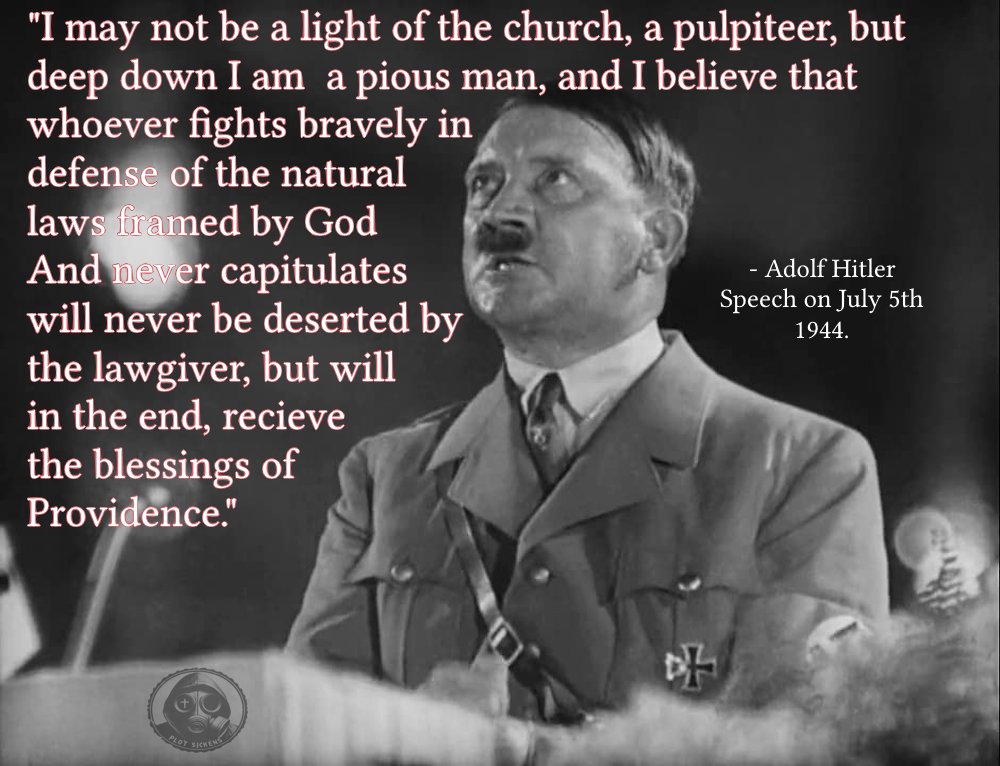
Many orthodox Christians today emphasizes denying the overly emotional nature of some strains of Christianity, and submitting to God's will, and this sits flush with Bäumler's apologetic.
Modern Christianity does promote a passiveness and a universal pity for the Non-European, but this is really just making Idol of "Anti-Racism" as a new religion that is a false gospel. National Socialism, as it was presented by Hitler through the 25 point plan seeks to wipe away this false idol of mutated liberal humanism and create a new framework for the state.
Discipline.
Action.
Order.
Modern slop on social media reduces Nietzsche to gym motivation, career advice, and individualistic secular development. This is a hollow path to nihilism that we must reject. The strong individual ONLY HAS MEANING insofar as he serves the Volk through Christian Socialism.
This framework will allow the Christian to return to the superior inward state that Bäumler's Nietzsche champions. National Socialism is the affirmative answer to the nihilism Nietzsche diagnosed.
11
🟦 Bäumler's Nietzsche is Anti-clerical, and not Anti-Christian. Beyond the last point, this may be Bäumler's masterstroke: The real target is the priestly class of elites and their fake morality that has been separated from Christ.
This was essentially Jesus Christ's charge against the 2nd Temple Jevvs; that legalism damages the spirit of the law. This also contradicts the idea that Paul somehow tricked the world because he was the great dejudaizer who stripped away old laws and old promises.
Bourgeois and overly emotional Protestants along with Liberal humanistic Catholics encouraged a spirit of laziness on the alter of foreign demands. National Socialism calls us to overcome the decay and rot in our churches and breath new life into them in the pulpit, and the pew.
In short, Bäumler’s Nietzsche doesn’t want to destroy Christianity, he wants to overcome the priest and reclaim the warrior’s right to create Aryan Socialism on earth. An Aryan Socialism that Protestant Americans enjoyed for hundreds of years.
The modern left wing "Heathen" neo-pagan cannot fathom these complexities, and can never march in lock step with our cause. Their corruption is cowardly cancer that attacks everything we hold dear when they sneer and claim we "Worship a jew". A man who, in reality, violently challenged Usury with a Whip.
This was essentially Jesus Christ's charge against the 2nd Temple Jevvs; that legalism damages the spirit of the law. This also contradicts the idea that Paul somehow tricked the world because he was the great dejudaizer who stripped away old laws and old promises.
Bourgeois and overly emotional Protestants along with Liberal humanistic Catholics encouraged a spirit of laziness on the alter of foreign demands. National Socialism calls us to overcome the decay and rot in our churches and breath new life into them in the pulpit, and the pew.
In short, Bäumler’s Nietzsche doesn’t want to destroy Christianity, he wants to overcome the priest and reclaim the warrior’s right to create Aryan Socialism on earth. An Aryan Socialism that Protestant Americans enjoyed for hundreds of years.
The modern left wing "Heathen" neo-pagan cannot fathom these complexities, and can never march in lock step with our cause. Their corruption is cowardly cancer that attacks everything we hold dear when they sneer and claim we "Worship a jew". A man who, in reality, violently challenged Usury with a Whip.
12
In Summary, this is a Nietzsche that I am comfortable with contemplating. A Nietzsche stripped of layers of deconstructionist pablum aimed at the heart of Western Civilization. This also explains why Hitler would say "Nietzsche is not my guide" in the early 1930's when he visited his sister, to giving him limited praise in the 1940's:
Nietzsche had been adapted into the Christian Socialism worldview, and the 25 Point Program by Alfred Baeumler in 1937, and finally given room to actualize the warrior Christ that Hitler loved to profess!
This is a Nietzsche hidden from the White man by anti-Christian forces and atheistic fools, that I unearth for you today to share with the world.
Go with God.
*Special thanks to Chad Crowley for his translation, for a link to his full work please check the replies below*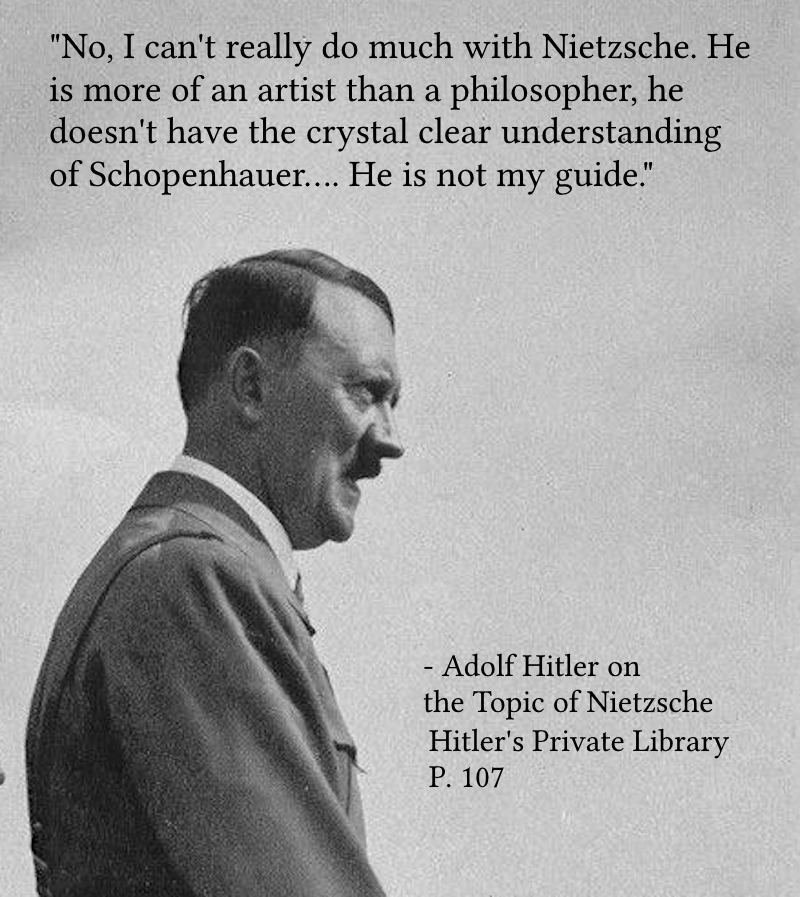
Nietzsche had been adapted into the Christian Socialism worldview, and the 25 Point Program by Alfred Baeumler in 1937, and finally given room to actualize the warrior Christ that Hitler loved to profess!
This is a Nietzsche hidden from the White man by anti-Christian forces and atheistic fools, that I unearth for you today to share with the world.
Go with God.
*Special thanks to Chad Crowley for his translation, for a link to his full work please check the replies below*
13
You can find the full unabridge Translation by Chad Crowly here: chadcrowley.substack.com/p/nietzsche-an…
Also thanks to
@BMaruno12
for the inspiration! Hail Christ!
Also thanks to
@BMaruno12
for the inspiration! Hail Christ!