Market Learning - Choppy Base vs Linear Base Both look like...

Hitesh Unadkat@HiteshUnadkat89
35 views
Dec 29, 2025
~4 min read
Advertisement
1
Market Learning - Choppy Base vs Linear Base
Both look like consolidation,
but their outcomes are very different.
First, understand the structure.
Then, see real stock examples.
👇 👇 👇 👇 👇
Both look like consolidation,
but their outcomes are very different.
First, understand the structure.
Then, see real stock examples.
👇 👇 👇 👇 👇
2
Choppy Base
A Choppy Base reflects indecision.
Wide swings, overlapping candles,
and emotional price movement dominate.
This often signals weak structure.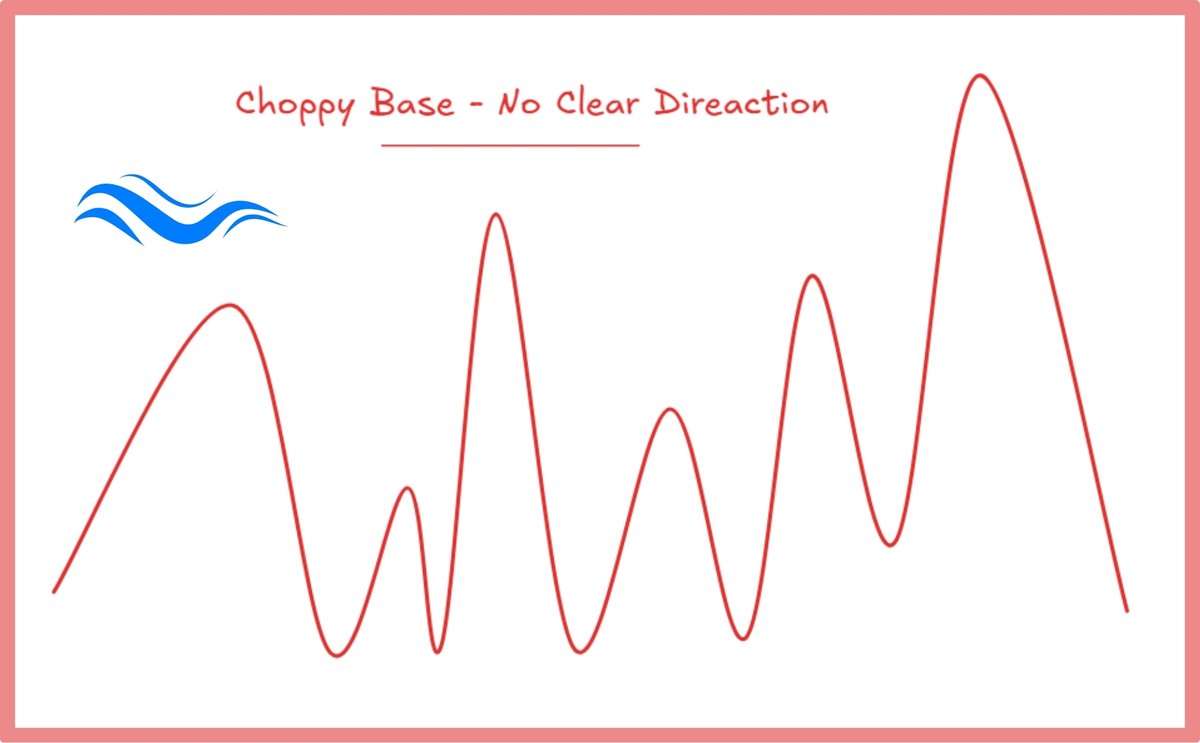
A Choppy Base reflects indecision.
Wide swings, overlapping candles,
and emotional price movement dominate.
This often signals weak structure.
3
Linear Base
A Linear Base reflects control.
Price moves calmly in a tight range
with no panic selling.
This shows strength resting, not distribution.
A Linear Base reflects control.
Price moves calmly in a tight range
with no panic selling.
This shows strength resting, not distribution.
4
Volatility Difference
Choppy Base:
• High volatility
• Wide range
• Erratic movement
Linear Base:
• Low volatility
• Narrow range
• Smooth price action
Volatility tells you who is in control.
Choppy Base:
• High volatility
• Wide range
• Erratic movement
Linear Base:
• Low volatility
• Narrow range
• Smooth price action
Volatility tells you who is in control.
5
Volume Behavior
Choppy Base:
• Random volume spikes
• No follow-through
Linear Base:
• Volume contracts during consolidation
• Expands only on upside
Smart money stays quiet while accumulating.
Choppy Base:
• Random volume spikes
• No follow-through
Linear Base:
• Volume contracts during consolidation
• Expands only on upside
Smart money stays quiet while accumulating.
6
Institutional Clue
Choppy bases form when institutions are absent or distributing.
Linear bases form when institutions are holding positions.
Price behavior reveals intent.
Choppy bases form when institutions are absent or distributing.
Linear bases form when institutions are holding positions.
Price behavior reveals intent.
7
Breakout Quality
Choppy Base:
• Frequent fake breakouts
• Quick failures
Linear Base:
• Breakouts are smoother
• Better follow-through
Most breakout failures come from bad bases.
Choppy Base:
• Frequent fake breakouts
• Quick failures
Linear Base:
• Breakouts are smoother
• Better follow-through
Most breakout failures come from bad bases.
8
Simple Identification Rule
If the base feels:
• Stressful and noisy → Choppy
• Calm and boring → Linear
Good setups don’t demand attention.
If the base feels:
• Stressful and noisy → Choppy
• Calm and boring → Linear
Good setups don’t demand attention.
9
IMPORTANT INSIGHT (Character Change)
Stocks don’t stay choppy forever.
Strong stocks often change character —
from a noisy choppy base into a tight linear base.
This transition is where real opportunities begin.
Stocks don’t stay choppy forever.
Strong stocks often change character —
from a noisy choppy base into a tight linear base.
This transition is where real opportunities begin.
10
KITEX – Choppy Base Example
• Wide and overlapping candles
• No tight range
• Frequent up–down swings
• Volume spikes without follow-through
Price spent time, but did not build strength.
KITEX – Linear Base Example
• Price moved in a controlled range
• Higher lows formed
• Pullbacks respected moving average
• Volume stayed calm during consolidation
This shows institutional holding, not selling.
KITEX - Entry Explained
KITEX entry came after a long linear base and a multi-year breakout.
• Price was already holding above key moving averages
• Volatility was low before the move
• Entry came near the rising average, not at the top
• Breakout expanded smoothly with follow-through
This is how linear bases reward patience with controlled risk and strong continuation.


• Wide and overlapping candles
• No tight range
• Frequent up–down swings
• Volume spikes without follow-through
Price spent time, but did not build strength.
KITEX – Linear Base Example
• Price moved in a controlled range
• Higher lows formed
• Pullbacks respected moving average
• Volume stayed calm during consolidation
This shows institutional holding, not selling.
KITEX - Entry Explained
KITEX entry came after a long linear base and a multi-year breakout.
• Price was already holding above key moving averages
• Volatility was low before the move
• Entry came near the rising average, not at the top
• Breakout expanded smoothly with follow-through
This is how linear bases reward patience with controlled risk and strong continuation.
11
NACLIND – Choppy Base Example
• Emotional price movement
• Sharp swings on both sides
• No directional bias
• Volume noisy, structure weak
Such bases often trap breakout traders.
NACLIND – Linear Base Example
• Tight price action after prior move
• Clean candles with less overlap
• Gradual upward drift
• Volume expansion only on upside
This is how strong trends pause before continuation.
NACLIND – Entry Explained
NACLIND shows a perfect character change entry.
• Choppy action ended, structure tightened
• Linear base formed above moving averages
• Volume dried up during consolidation
• Entry triggered when price resumed trend from a calm zone
The move didn’t start from excitement —
it started from structure and contraction.


• Emotional price movement
• Sharp swings on both sides
• No directional bias
• Volume noisy, structure weak
Such bases often trap breakout traders.
NACLIND – Linear Base Example
• Tight price action after prior move
• Clean candles with less overlap
• Gradual upward drift
• Volume expansion only on upside
This is how strong trends pause before continuation.
NACLIND – Entry Explained
NACLIND shows a perfect character change entry.
• Choppy action ended, structure tightened
• Linear base formed above moving averages
• Volume dried up during consolidation
• Entry triggered when price resumed trend from a calm zone
The move didn’t start from excitement —
it started from structure and contraction.
12
PANACEA BIOTEC – Choppy Base Example
• Sideways but unstable structure
• Repeated shakeouts
• Long wicks and failed attempts
• Time spent without progress
Time alone does not create a good base.
PANACEA BIOTEC – Linear Base Example
• Smooth price compression
• Higher lows maintained
• Breakout came after calm consolidation
• Volume supported the move
This is where risk stays low and reward expands.
PANACEA BIOTEC – Entry Explained
PANACEA’s entry became clear only after noise disappeared.
• Price compressed into a clean linear base
• Pullbacks stayed shallow
• Volume remained dry during consolidation
• Entry came before expansion, not after it
This is where risk stays small and reward expands.


• Sideways but unstable structure
• Repeated shakeouts
• Long wicks and failed attempts
• Time spent without progress
Time alone does not create a good base.
PANACEA BIOTEC – Linear Base Example
• Smooth price compression
• Higher lows maintained
• Breakout came after calm consolidation
• Volume supported the move
This is where risk stays low and reward expands.
PANACEA BIOTEC – Entry Explained
PANACEA’s entry became clear only after noise disappeared.
• Price compressed into a clean linear base
• Pullbacks stayed shallow
• Volume remained dry during consolidation
• Entry came before expansion, not after it
This is where risk stays small and reward expands.
13
These entries worked
not because of indicators,
but because structure improved first.
Choppy → Linear → Entry
That’s the sequence.
Simple Rule to Remember
If the base:
• Feels calm → Linear
• Feels stressful → Choppy
Good bases are boring.
Bad bases are exciting.
Trading Insight
Most failed breakouts don’t fail because of entries.
They fail because the base quality was poor.
Structure first. Breakout later.
Final Thought
Don’t ask:
“Is it breaking out?”
First ask:
“Is this a Linear Base or a Choppy Base?”
Your consistency depends on this answer.
Thank You Everyone 🙂
not because of indicators,
but because structure improved first.
Choppy → Linear → Entry
That’s the sequence.
Simple Rule to Remember
If the base:
• Feels calm → Linear
• Feels stressful → Choppy
Good bases are boring.
Bad bases are exciting.
Trading Insight
Most failed breakouts don’t fail because of entries.
They fail because the base quality was poor.
Structure first. Breakout later.
Final Thought
Don’t ask:
“Is it breaking out?”
First ask:
“Is this a Linear Base or a Choppy Base?”
Your consistency depends on this answer.
Thank You Everyone 🙂
