The Siege of Sarajevo: April 5th 1992 - February 29 1996. We...

Arnesa Buljušmić-Kustura@arnesa_kustura
14 views
Jun 16, 2024
~3 min read
Advertisement
1
The Siege of Sarajevo: April 5th 1992 - February 29 1996.
We remember. We do not forgive. We do not forget. We cannot allow the past to be repeated.
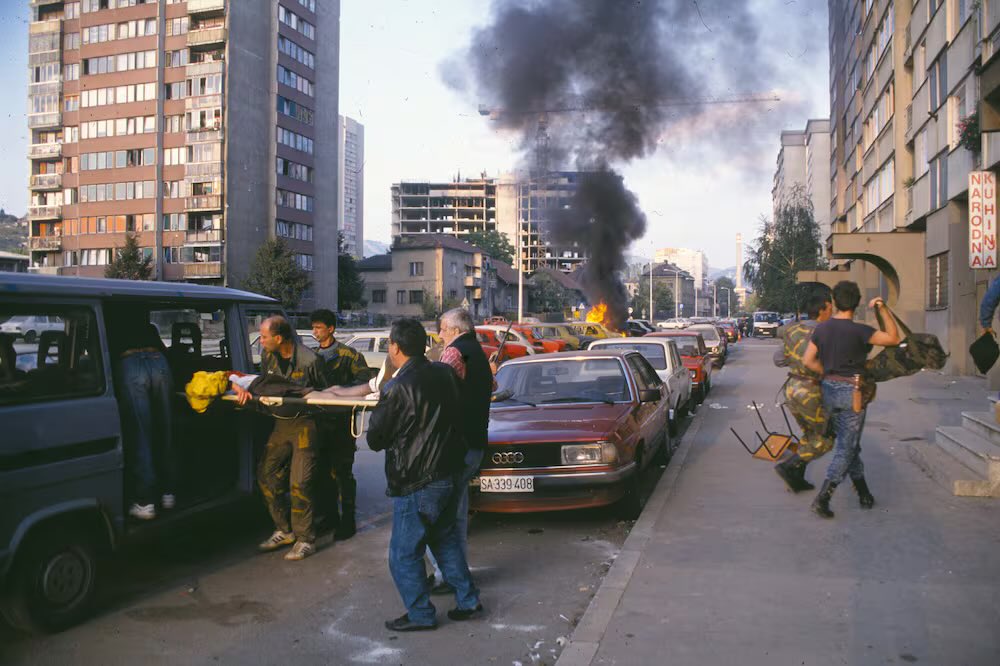
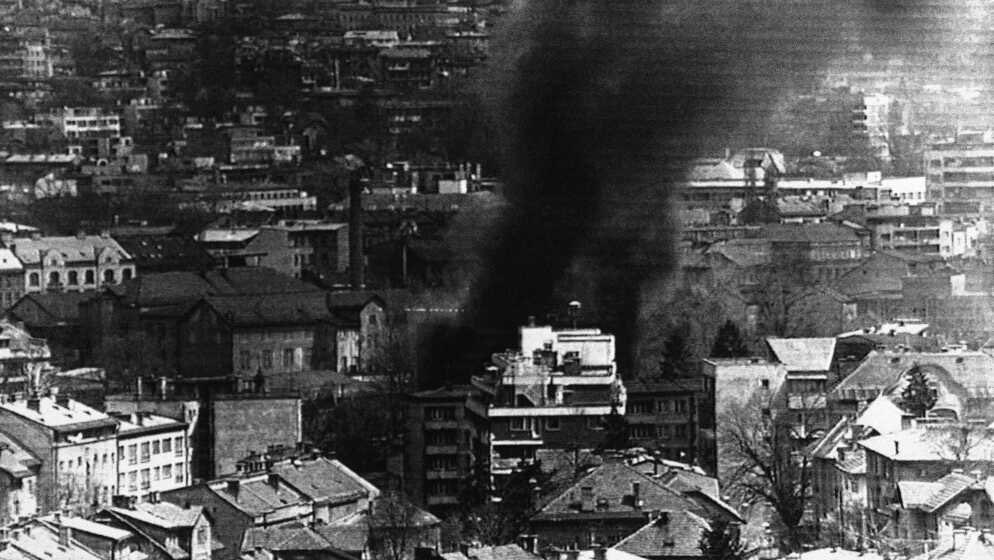

We remember. We do not forgive. We do not forget. We cannot allow the past to be repeated.
2
In every image of the genocide in Gaza, I find similarities to the genocide in Bosnia. Both places under a siege. Both people crying out for justice and help. Both being ignored. I wonder what the number of lives it is that need to be taken before the horrors are stopped.


3
10,000 apartments were destroyed in Sarajevo and over 100,000 others were damaged. Of the other buildings in the city, 23% were reported as seriously damaged, 64% as partially damaged and 10% as slightly damaged. Intentional attacks on cultural, historical, and govt buildings.


4
I do not often like to share photographs from the Bosnian Genocide. But these days I am getting over that. It is important to see and remember the destruction. It is important to recognise the patterns that are being repeated.
5
At some point during the Bosnian Genocide, a total of 23 people lived in our 3 bedroom apartment. As our homes were destroyed or taken over by Serb forces, we all moved in together to shelter. Most of my time was spent in the damp, cold, and dark basement of our building.
6
The kids I grew up with during the Bosnian Genocide…my neighbours and I…we still grab coffee together and we still reminisce about the days we sheltered in the basement. The days we were hungry and had no aid. How scared we were that “they” would come for us .
7
And still even that was a privilege. There were many who had no places to shelter in. There were many in camps, in destroyed homes. Look at Gaza now, they have nowhere to go. Nowhere to shelter from. No basement to hide in.
8
Last summer, I met up with my neighbour Adna and we grabbed coffee. Both of us married, kids, happy and safe now. We both have successful careers. We graduated. We are happy.
Yet all we talked about was the genocide, the time of the siege and the aftermath. The friends we lost.
Yet all we talked about was the genocide, the time of the siege and the aftermath. The friends we lost.
9
We spoke about how one of our neighbours got ahold of a banana somehow and shared it with all of us kids. We all got the tiniest piece of it and it was amazing. That is our core childhood memory.
10
We spoke about how after the war, we were playing at Dzenita’s balcony…(our neighbour from the 4th floor) when the teenage boy across our building jumped off his balcony and killed himself b/c he couldn’t handle the horrors he survived.
11
30 years later and we spent our time reminiscing on the worst years of our life. Through humour and some tears. “Do you remember when…” was the question we threw at each other back and forth.
12
Wars may end but the horrors do not. The trauma remains. Tomorrow, if there’s finally an end to the Palestinian Genocide, an end to the occupation…those children who survived will live with their horrors for the rest of their lives. Many are orphaned now. Who will remember them?
13
The family members of mine who happened to survive the Bosnian Genocide, have all also died very young. Most of them had/have some form of cancer. I believe that the high rates of cancer in Bosnia are directly connected to the Bosnian Genocide. Depleted Uranium was used.
14
Bosnia’s cancer rates, following the war and genocide, are far above the average. You cannot shell, bomb, and utilise chemical attacks against a population for 4 years and expect that it does not have an impact. There are very few studies done on this issue, sadly.
15
My point is that even when genocides end, they do not truly end. The trauma remains, certainly. But other side effects do as well. Illness, alcoholism, suicides all heavily increased following the Bosnian Genocide.
16
Even when the ceasefire agreement gets put into place. Even when the occupation ends…we must ensure that we do not neglect and forget the Palestinian population. Their suffering will not end when the last bomb drops. Ours has not ended yet…and it’s been 30 years.

