🚨THE #ISLAMIC DILEMMA: WHEN AN ACADEMIC THEORY BECOMES AN ESCAPE...

Jay49er@Jay_49erTikTok
26 views
Oct 26, 2026
~8 min read
Advertisement
1
🚨THE #ISLAMIC DILEMMA: WHEN AN ACADEMIC THEORY BECOMES AN ESCAPE ROUTE
@SCApologia , @IraniRoxanna
Chris Frost vs. Roxxana Irani - The Two-Kitab Theory and Mussadiq (Confirmation)
💥💥💥(Similar arguments made by @DrJavadTHashmi against @GodLogic_GL, and by @KhalilAndani on X)
🔥In this series, I'm looking at three defenses:
1⃣The two-kitab theory
2⃣Mussadiq / Tasdiq - what "confirmation" actually covers
3⃣Muhaymin - the claim that the Quran is the final authority over earlier scriptures
This article covers the first two. I'll deal with Muhaymin separately later, since it needs its own thread.
Chris Frost just spent over five hours debating Roxxana Irani on the Islamic Dilemma.
👉The problem is pretty simple: The Quran says it "confirms" what was revealed before it, speaks positively of the Torah and Gospel, and tells their followers to uphold what Allah revealed.
But what happens when the scriptures Christians and Jews actually possess say things that conflict with the Quran?
Roxxana's strategy was to appeal to modern academic theories about what the Quran means by Kitab (scripture/book) and Mussadiq (confirming).
2
PART ONE - THE TWO-KITĀB THEORY: DOES THE GOSPEL GET EXCLUDED?
👉1. What Roxxana is arguing:
Roxxana brings Mohsen Goudarzi’s @MohsenGT two-kitab theory into play.
The idea (simplified) is that Torah and Quran can be in a special category of comprehensive scriptural revelation while Injil has a different role. This is real scholarly proposal not something she made up. But it does not follow that the Gospel is irrelevant to the Quran’s claims about revealed scriptures.
She says the Quran doesn’t say anything about confirming the Gospel.
🚨That is when you have to stop and test the verses.
3:59
3
🔥2. What the Quran itself says about the Gospel
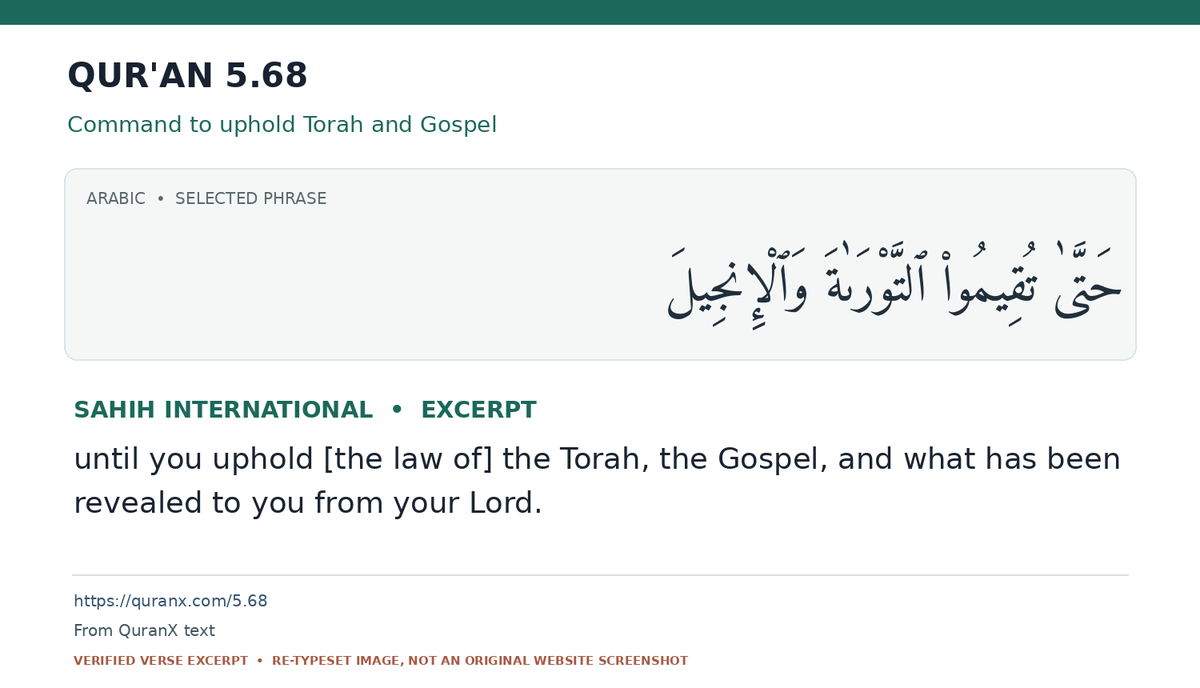
So let's be precise. Saying the Torah, Injil, and Quran can have different functions is one thing. Saying the Quran's affirmation of divine revelation somehow stops applying to the Injil is quite another.
🚨My question: Even if I grant Goudarzi's special classification for the sake of discussion, why does Allah still call the Gospel guidance and light and tell Christians to judge by it?
🔥Quran 3:3 says that the Quran confirms what came before it and immediately names both the Torah and Gospel. Quran 5:46-47 says that the Gospel is revelation containing guidance and light, and Christians are told to judge by it.
👉So even if Roxxana can defend a narrower grammatical reading of that particular Mussadiq phrase, it doesn't make the Gospel disappear from the Quran's affirmations of earlier Scripture.
of Jesus holding a completed, bound Gospel book.
👉In plain English: Two revelations can have different jobs, and they're still from Allah. Giving the Gospel a different job doesn't take away the Quran's command to Christians to follow what Allah revealed in it.

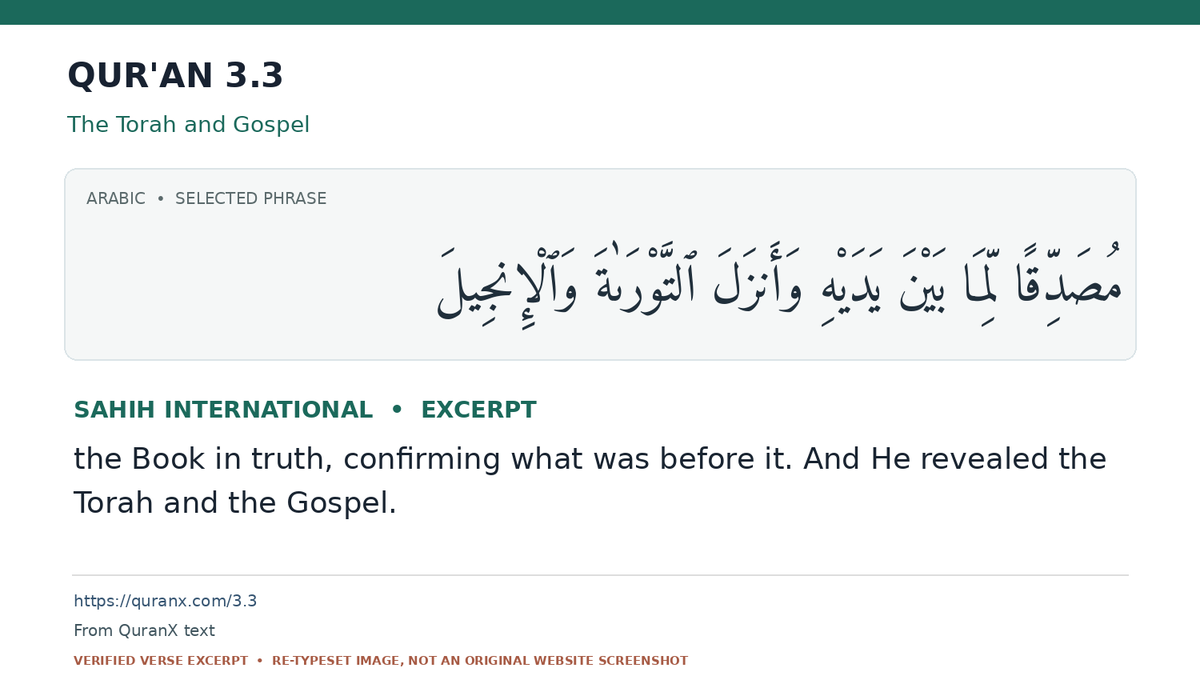
So let's be precise. Saying the Torah, Injil, and Quran can have different functions is one thing. Saying the Quran's affirmation of divine revelation somehow stops applying to the Injil is quite another.
🚨My question: Even if I grant Goudarzi's special classification for the sake of discussion, why does Allah still call the Gospel guidance and light and tell Christians to judge by it?
🔥Quran 3:3 says that the Quran confirms what came before it and immediately names both the Torah and Gospel. Quran 5:46-47 says that the Gospel is revelation containing guidance and light, and Christians are told to judge by it.
👉So even if Roxxana can defend a narrower grammatical reading of that particular Mussadiq phrase, it doesn't make the Gospel disappear from the Quran's affirmations of earlier Scripture.
of Jesus holding a completed, bound Gospel book.
👉In plain English: Two revelations can have different jobs, and they're still from Allah. Giving the Gospel a different job doesn't take away the Quran's command to Christians to follow what Allah revealed in it.
4
🔥3. Sinai himself poses the plural kutub problem.
Chris' point about Kitab is simple: Quranic Kitab doesn't need to be a finished, bound physical volume. The Quran calls its own progressively delivered revelation Kitab.
👉In plain English: If Allah tells people to believe in His books, plural, you can't just say He means only two. Sinai points out this very difficulty for the two-Kitab theory.
🚨Nicolai Sinai discusses heavenly Scripture, earthly revealed Scripture, and related usages in Key Terms of the Quran (printed pp. 592-594).
On p. 594, while discussing Goudarzi's hypothesis, Sinai refers to Quran 2:285 and 4:136, where God's books or scriptures are spoken of in the plural - Kutub.
Sinai explicitly mentions that this might include the Injil, which makes things complicated for a strict technical theory involving only two Kitabs.
👉What it does show is that Roxxana cannot present the two-Kitab theory as though there were no textual problem to solve.
My question is simple: If Kutub can refer to the plurality of scriptures Allah revealed, including the Gospel, then why are we acting as though a proposed technical category somehow excludes the Injil?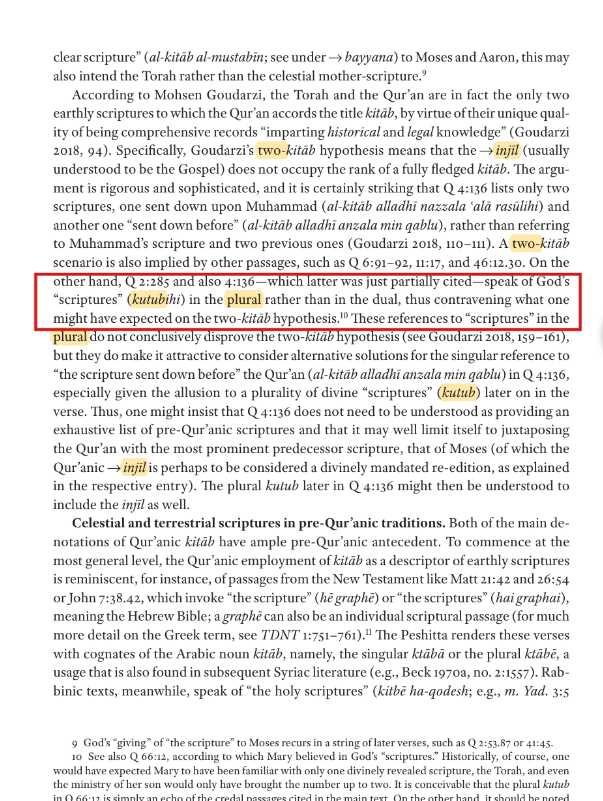
Chris' point about Kitab is simple: Quranic Kitab doesn't need to be a finished, bound physical volume. The Quran calls its own progressively delivered revelation Kitab.
👉In plain English: If Allah tells people to believe in His books, plural, you can't just say He means only two. Sinai points out this very difficulty for the two-Kitab theory.
🚨Nicolai Sinai discusses heavenly Scripture, earthly revealed Scripture, and related usages in Key Terms of the Quran (printed pp. 592-594).
On p. 594, while discussing Goudarzi's hypothesis, Sinai refers to Quran 2:285 and 4:136, where God's books or scriptures are spoken of in the plural - Kutub.
Sinai explicitly mentions that this might include the Injil, which makes things complicated for a strict technical theory involving only two Kitabs.
👉What it does show is that Roxxana cannot present the two-Kitab theory as though there were no textual problem to solve.
My question is simple: If Kutub can refer to the plurality of scriptures Allah revealed, including the Gospel, then why are we acting as though a proposed technical category somehow excludes the Injil?
5
4. The same surah brings the Gospel back into the discussion
🤔Roxxana talks about legal material in Quran 5:44-48 (Torah, retaliation, Jesus, Gospel, and judgment). At 2:15:47, she says, "Quran harmonises Torah rule of retaliation with Jesus teaching about retaliation." Her example naturally brings in the Gospel.
🚨🔥My point is this: Roxxana herself reads the passage in conversation with Gospel teaching. Add Quran 5:46-47, and the claim that the Christians' Gospel is somehow irrelevant becomes harder to defend.
6:10
6
🔥PART TWO- MUṢADDIQ: WHEN DOES "CONFIRMATION" MEAN "LAW ONLY"?🔥
👉5. Listen to Roxxana's actual claim
At 2:24:05, Roxxana says, "Confirmation means specifically law." Earlier, she cites Nicolai Sinai, Holger Zellentin, and the Didascalia Apostolorum to explain how the Quran can confirm the Torah while still allowing legal changes.
Fine. Quran 5:44-48 does talk about law. At 2:18:39, Chris acknowledges that himself.
But just because a passage discusses law doesn't mean the Arabic word for "confirm" only means "confirm laws." That's a much bigger claim, and it needs to hold up against the other passages too.
Quran 5:46. Allah calls the Gospel guidance, light, confirmation of the Torah, and instruction for the righteous. So why are we suddenly reducing all of that to legal commandments?
7
🔥6. Quran 12:111 - Why put confirmation at the end of Joseph's story?
Read Quran 12:111. It comes at the end of a long account of Joseph and other prophetic history. The verse says the Quran is not an invented story but confirms what came before it.
👉🚨Notice something. This is the end of a prophetic narrative, not a list of legal commandments.
Chris presses Roxxana on this very verse. At 2:27:48, Roxxana acknowledges that the Quran "claims historical coherence with Torah." She continues defending her narrower interpretation and places more emphasis on the Torah than the Gospel.
💥😎But here's my question: If confirmation specifically means confirming laws, why does the Quran use that language at the end of a prophetic story? 6.
🔥Why is it talking about confirmation in a passage dealing with historical narratives rather than legal commandments?
You cannot simply insist that confirmation is restricted to law when the Quran itself uses the language in this context.
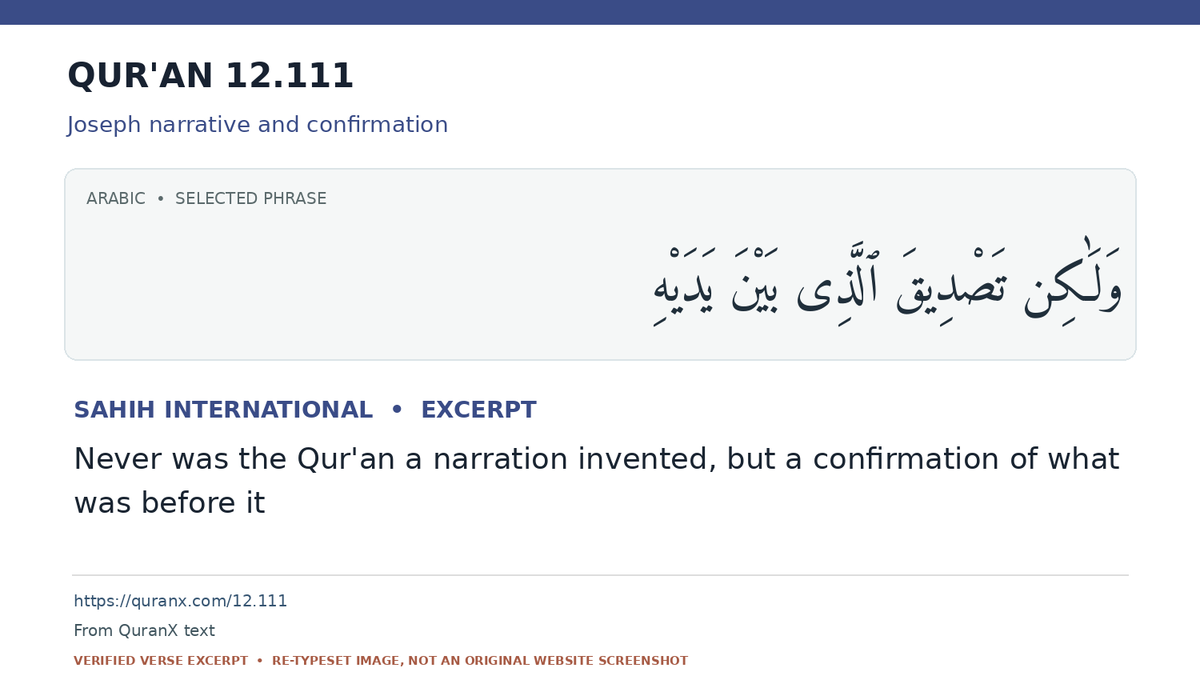
Read Quran 12:111. It comes at the end of a long account of Joseph and other prophetic history. The verse says the Quran is not an invented story but confirms what came before it.
👉🚨Notice something. This is the end of a prophetic narrative, not a list of legal commandments.
Chris presses Roxxana on this very verse. At 2:27:48, Roxxana acknowledges that the Quran "claims historical coherence with Torah." She continues defending her narrower interpretation and places more emphasis on the Torah than the Gospel.
💥😎But here's my question: If confirmation specifically means confirming laws, why does the Quran use that language at the end of a prophetic story? 6.
🔥Why is it talking about confirmation in a passage dealing with historical narratives rather than legal commandments?
You cannot simply insist that confirmation is restricted to law when the Quran itself uses the language in this context.
8
🔥7. The Arabic vocabulary goes beyond law
1⃣Quran 37:37: Confirming the earlier messengers - saddaqa al-mursalin.
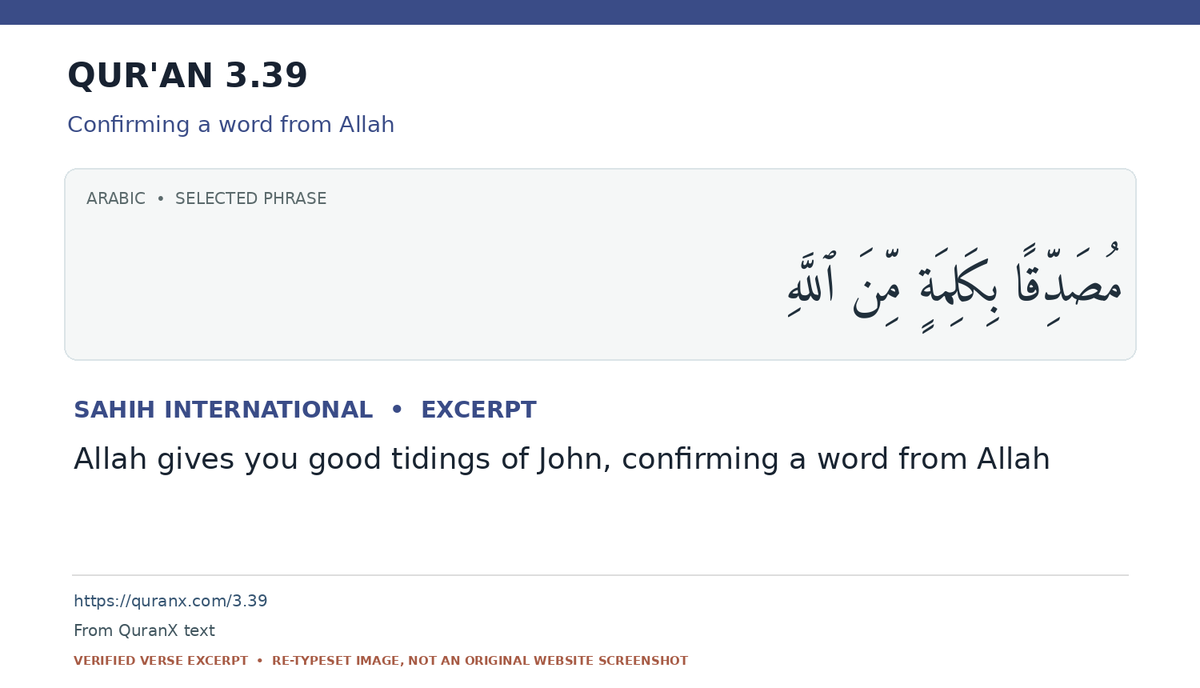
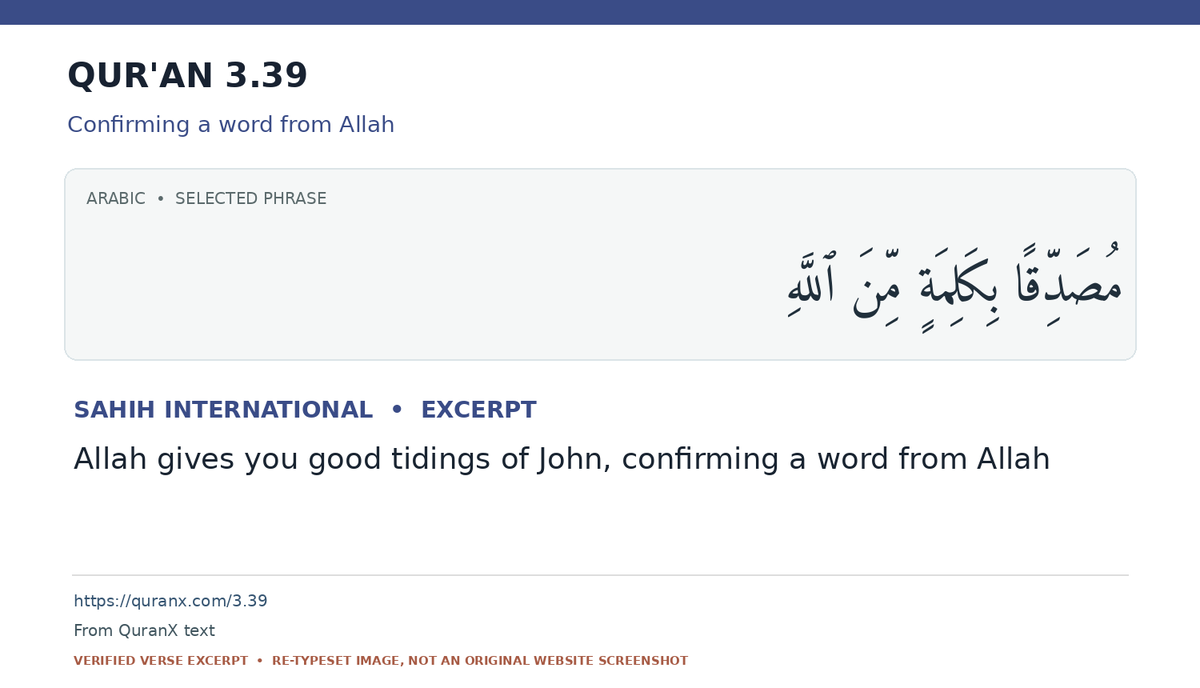
2⃣Quran 3:39: John is confirming a word from God - musaddiqan bi-kalimatin min Allah.
3⃣Quran 12:111: The confirmation formula concludes a prophetic narrative.
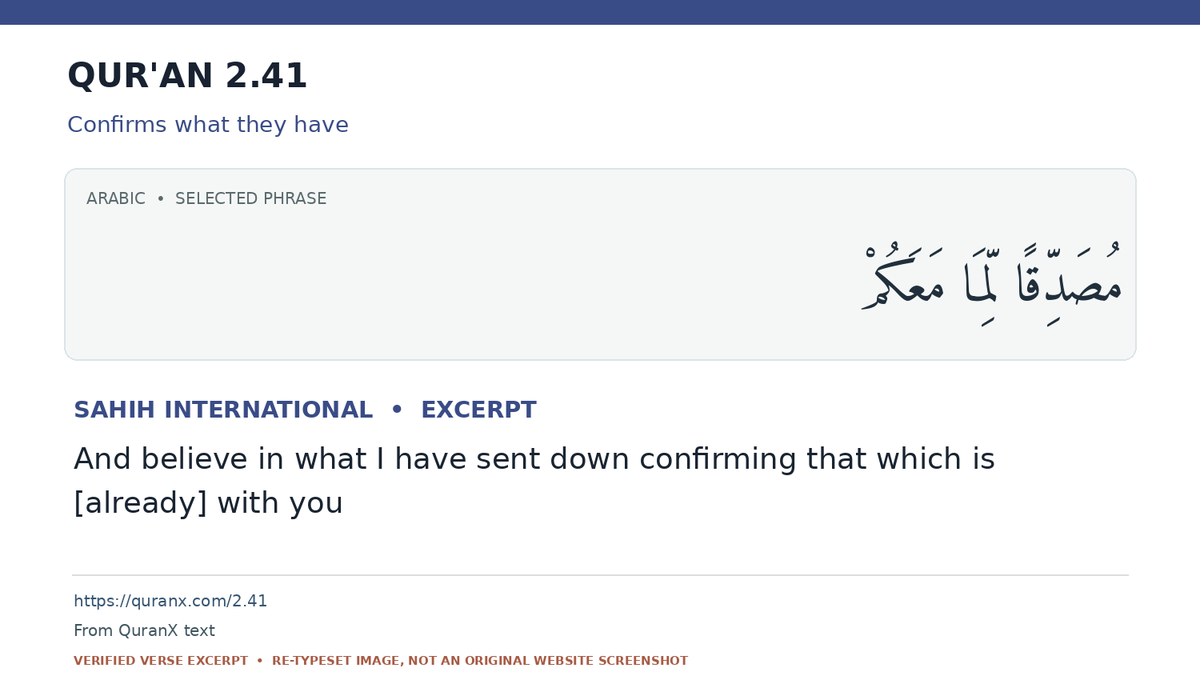
4⃣Quran 2:41: The Quran confirms what is with the Israelites, immediately following covenant language in Quran 2:40.
Not every passage uses the same grammatical construction or object, but taken together, they undermine the claim that the vocabulary itself is restricted to legal statutes or the torah.
1⃣Quran 37:37: Confirming the earlier messengers - saddaqa al-mursalin.
2⃣Quran 3:39: John is confirming a word from God - musaddiqan bi-kalimatin min Allah.
3⃣Quran 12:111: The confirmation formula concludes a prophetic narrative.
4⃣Quran 2:41: The Quran confirms what is with the Israelites, immediately following covenant language in Quran 2:40.
Not every passage uses the same grammatical construction or object, but taken together, they undermine the claim that the vocabulary itself is restricted to legal statutes or the torah.
9
🔥8. Covenants are not just legal fine print.
👉💯Chris points to Quran 2:40-44. A covenant is about who God is, who His people are, what He promises, and what He commands. You can't just draw a line through it and say, "Laws count, but theology doesn't."
Take Deuteronomy 14:1, for example. Israel is called God's children at the beginning of a legal instruction. Theological identity and legal obligations are right there in the same paragraph.
0:55
10
🔥9. And what about salvation and correct belief in the same surah?
👉💯In plain English: If the previous Scriptures could guide their followers toward salvation, the discussion cannot just be about which legal penalties remain in force. Beliefs about God and Jesus matter too.
Quran 5:66-69 connects upholding earlier Scripture with belief in God, the Last Day, and righteous conduct.
🤔Roxxana says she does not believe Trinitarian Christians are covered by the salvation promise.
Chris makes the broader point even more clearly: The Quran claims continuity with earlier histories, prophecy, and the prospect of salvation through the revelations Jews and Christians possessed.
In the continuation, he specifies the people before the Quran's arrival. He is not claiming that all Christians receive salvation unconditionally.
So theology matters to her own reading. Are Christians being told to uphold their Gospel, yet reject what they understand it to teach about Jesus and God?
1:11
11
🚨10. The academic sources don’t give @IraniRoxanna , @DrJavadTHashmi , @KhalilAndani the slogan they want.
1⃣Nicolai Sinai, Key Terms of the Quran (pp. 468-469), discusses Saddaqa / Mussadiq in terms of continuity with earlier revelations, messengers, and their religious messages. His discussion allows for legal adjustments but does not establish "confirm legislation only" as a universal definition.
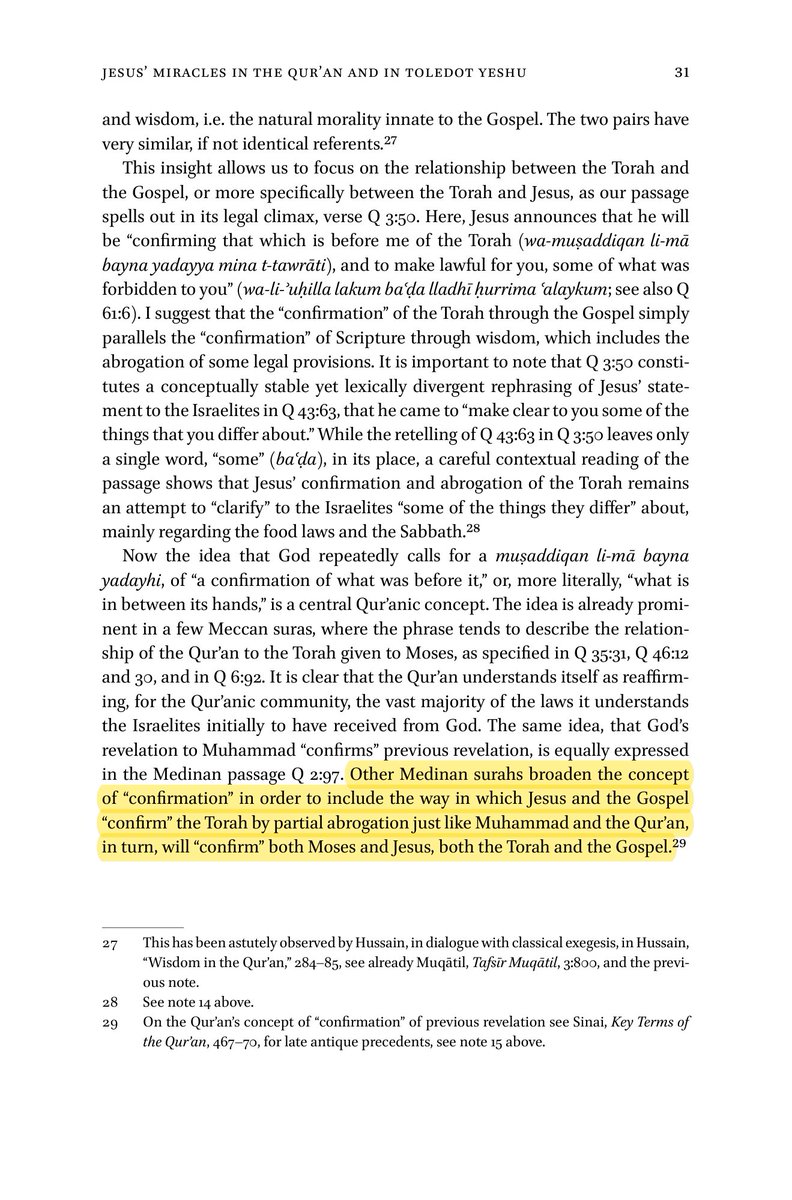
2⃣Holger Zellentin, "Jesus' Miracles in the Quran and in Toledot Yeshu" (2025), printed p. 31, acknowledges continuity of law but says later Medinan surahs broaden the concept of confirmation to include Moses, Jesus, the Torah, the Gospel, and the Quran. His wider discussion still gives considerable weight to law. The point is not that Zellentin endorses every Christian theological interpretation.
3⃣Mohsen Goudarzi makes a serious theoretical distinction between different forms of scripture and the Gospel. But it remains a scholarly proposal to be evaluated, not a verse in which Allah explicitly says, "The Gospel is not a Kitab."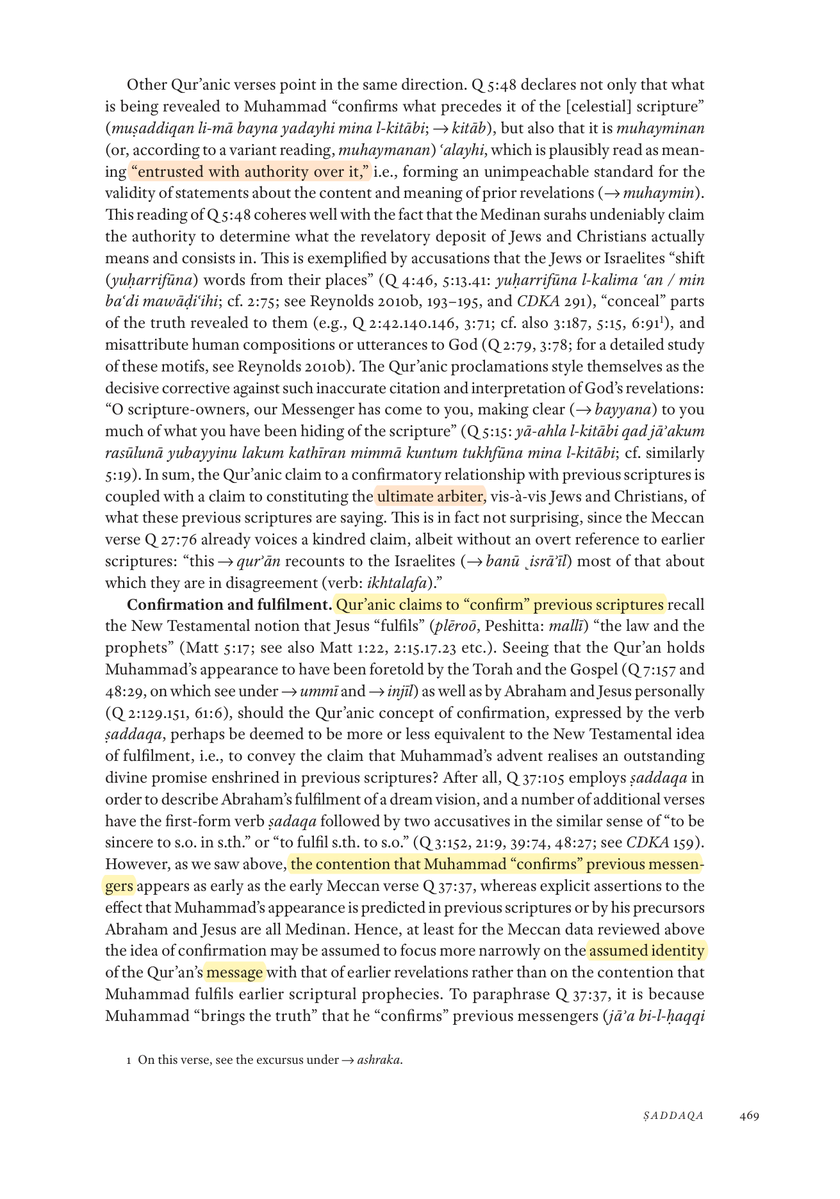
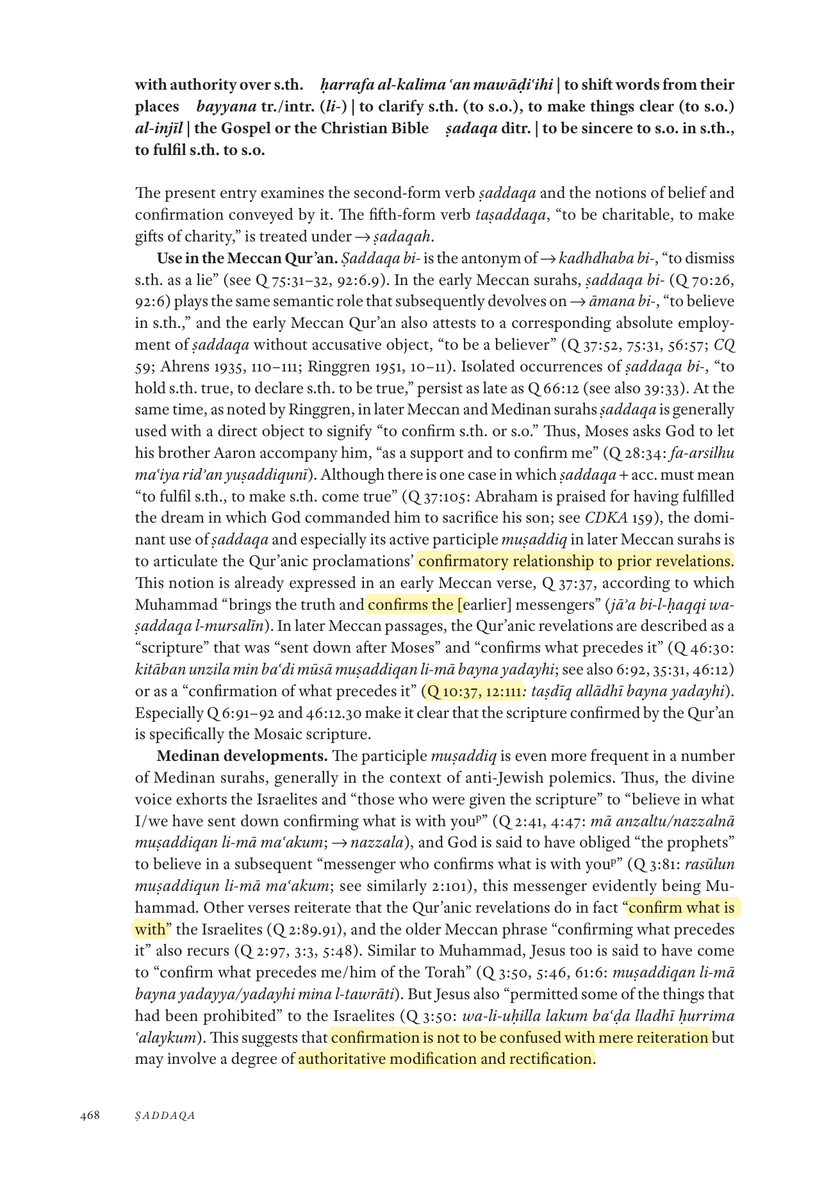
1⃣Nicolai Sinai, Key Terms of the Quran (pp. 468-469), discusses Saddaqa / Mussadiq in terms of continuity with earlier revelations, messengers, and their religious messages. His discussion allows for legal adjustments but does not establish "confirm legislation only" as a universal definition.
2⃣Holger Zellentin, "Jesus' Miracles in the Quran and in Toledot Yeshu" (2025), printed p. 31, acknowledges continuity of law but says later Medinan surahs broaden the concept of confirmation to include Moses, Jesus, the Torah, the Gospel, and the Quran. His wider discussion still gives considerable weight to law. The point is not that Zellentin endorses every Christian theological interpretation.
3⃣Mohsen Goudarzi makes a serious theoretical distinction between different forms of scripture and the Gospel. But it remains a scholarly proposal to be evaluated, not a verse in which Allah explicitly says, "The Gospel is not a Kitab."
12
🚨My challenge to Roxxana🚨
You've demonstrated that some confirmation passages discuss laws. Chris granted that. What you haven't done is establish that the word muṣaddiq means law and nothing else.
So explain Q 12:111, where the formula appears at the end of Joseph's story. Explain Q 37:37, which confirms previous messengers. Explain Q 3:39, which confirms a word from God. Explain the covenant language in Q 2:40–44. And explain why Allah calls the Gospel guidance and light and tells Christians to judge by what He revealed in it.
Then come back to the two-kitāb proposal. Show us why it should exclude the Gospel when Sinai himself raises kutub in Q 2:285 and Q 4:136 as a difficulty for a strict reading, and when the very Gospel passages you're trying to sidestep are still sitting there in Surah 5.
I'm not asking how many scholars you can name. I'm interested in whether your interpretation survives the verses those scholars have to explain.


