Four months after George Orwell published 1984, his former teacher...

Students For Liberty@sfliberty
130 views
Apr 25, 2026
~3 min read
Advertisement
1
Four months after George Orwell published 1984, his former teacher sent him a letter.
Aldous Huxley had one message: you described the wrong dystopia. 🧵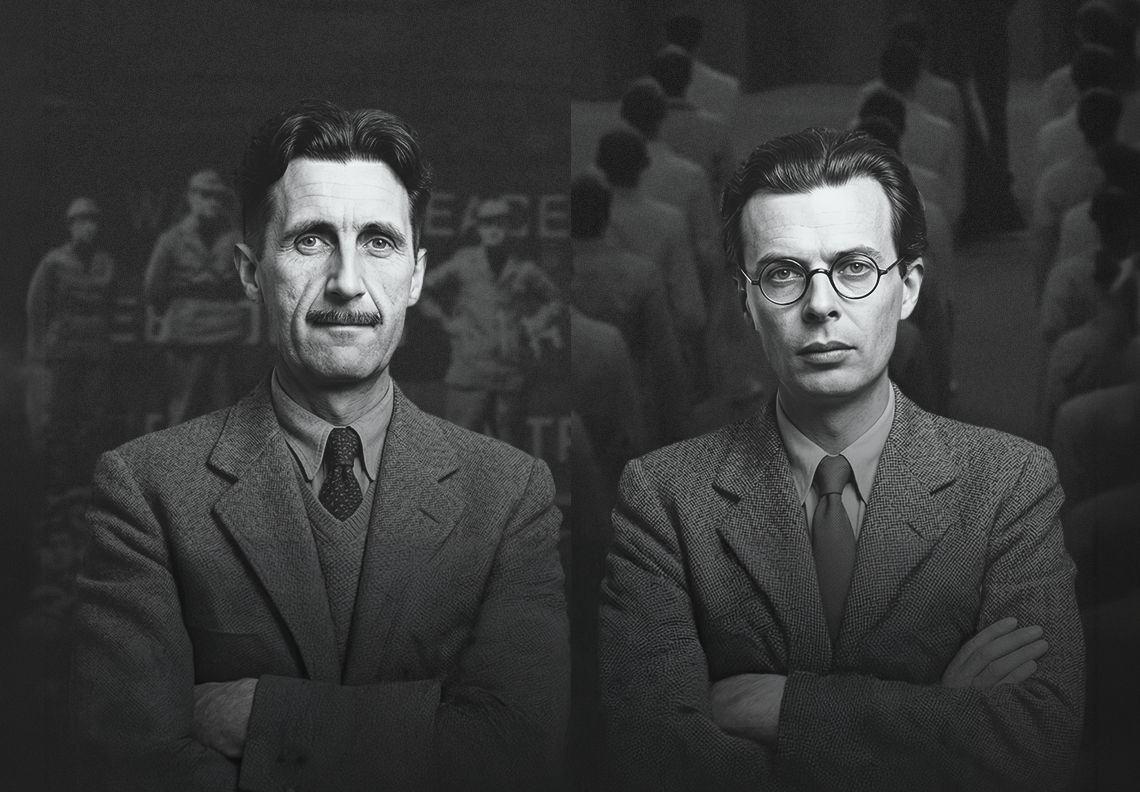
Aldous Huxley had one message: you described the wrong dystopia. 🧵
2
Two of the greatest dystopian minds of the 20th century clashed over how we would ultimately lose our freedom.
In Orwell's vision, the State controls through fear. Surveillance cameras in every room. Thought Police hunting dissent. History rewritten daily to match whoever holds power. A branch of government called the Ministry of Truth exists to manufacture lies.
Its enforcer, O'Brien, describes the endgame plainly: "A boot stamping on a human face. Forever."
In Orwell's vision, the State controls through fear. Surveillance cameras in every room. Thought Police hunting dissent. History rewritten daily to match whoever holds power. A branch of government called the Ministry of Truth exists to manufacture lies.
Its enforcer, O'Brien, describes the endgame plainly: "A boot stamping on a human face. Forever."
3
In Huxley's Brave New World, there is no boot.
Citizens are genetically conditioned before birth, slotted into castes by design. A drug called soma eliminates discomfort on demand. Entertainment is infinite and shallow. Every desire is immediately satisfied.
No one burns books. No one needs to. The desire to read them has already been engineered away.
Freedom is surrendered voluntarily, cheerfully, in exchange for comfort.
Citizens are genetically conditioned before birth, slotted into castes by design. A drug called soma eliminates discomfort on demand. Entertainment is infinite and shallow. Every desire is immediately satisfied.
No one burns books. No one needs to. The desire to read them has already been engineered away.
Freedom is surrendered voluntarily, cheerfully, in exchange for comfort.
4
October 21, 1949. Huxley writes from Wrightwood, California.
He tells Orwell: the boot-on-the-face model is unstable. Violence creates friction. Friction creates martyrs. Martyrs create resistance. It is too costly to sustain forever.
The smarter path: make the cage comfortable enough that no one looks for the door.
His prediction, written 77 years ago: "The lust for power can be just as completely satisfied by suggesting people into loving their servitude as by flogging and kicking them into obedience."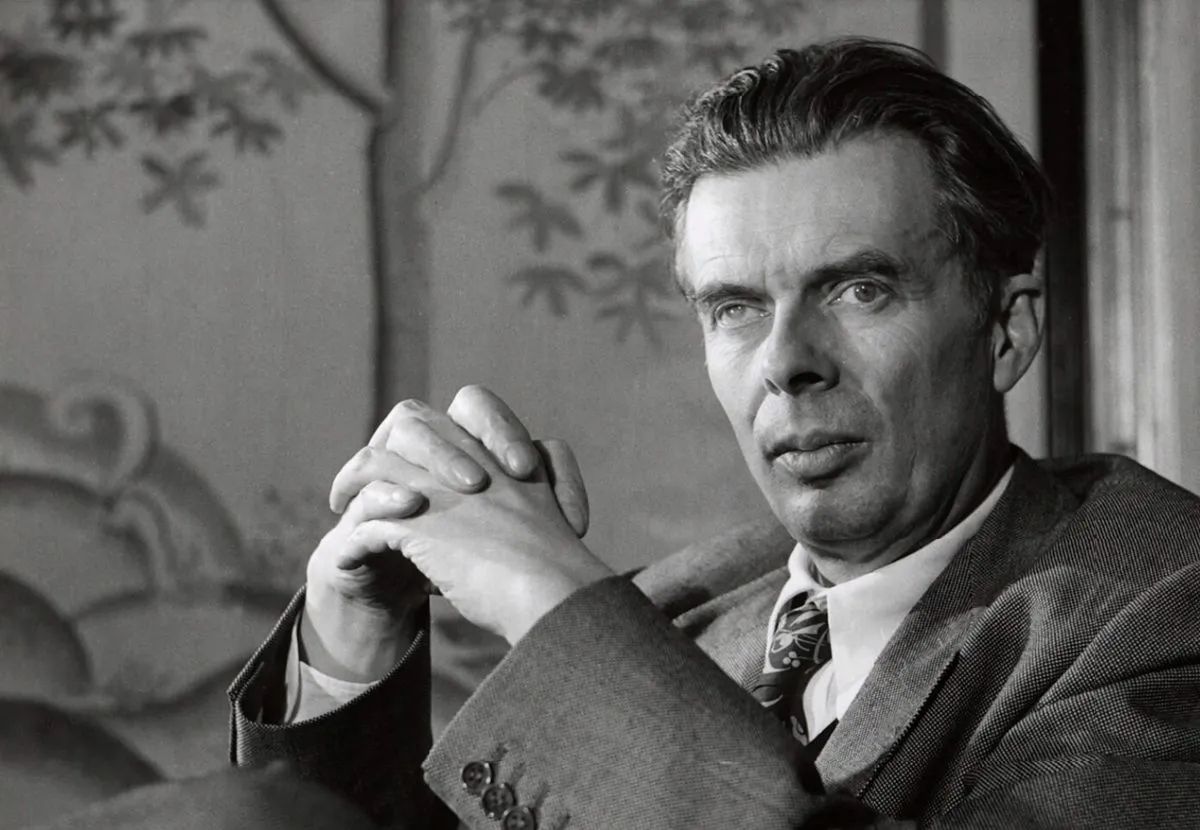
He tells Orwell: the boot-on-the-face model is unstable. Violence creates friction. Friction creates martyrs. Martyrs create resistance. It is too costly to sustain forever.
The smarter path: make the cage comfortable enough that no one looks for the door.
His prediction, written 77 years ago: "The lust for power can be just as completely satisfied by suggesting people into loving their servitude as by flogging and kicking them into obedience."
5
Before writing Brave New World, Huxley had spent two years as Orwell's French teacher at Eton, in 1917, when Orwell was a teenager named Eric Blair.
The letter was not an abstract debate between strangers.
It was a teacher telling his former student: I've been watching the same forces you have. We drew different conclusions. And I think mine will prove correct.
The letter was not an abstract debate between strangers.
It was a teacher telling his former student: I've been watching the same forces you have. We drew different conclusions. And I think mine will prove correct.
6
Why did Huxley think pleasure would win over pain as a control mechanism?
Because pain is palpable. A population that knows it is oppressed can name its oppressor, organize against it, and fight back. The history of every revolution runs on that logic.
Pleasure is different. A population that is comfortable has no grievance to organize around. The cage doesn't need guards if the prisoner has stopped looking for the door.
Rational rulers eventually discover that a happy slave is cheaper than a frightened one.
Because pain is palpable. A population that knows it is oppressed can name its oppressor, organize against it, and fight back. The history of every revolution runs on that logic.
Pleasure is different. A population that is comfortable has no grievance to organize around. The cage doesn't need guards if the prisoner has stopped looking for the door.
Rational rulers eventually discover that a happy slave is cheaper than a frightened one.
7
Both visions exist today. In different countries.
Orwell's world: North Korea. The state controls every broadcast, every movement, every meal. Leaving without government permission is illegal. Citizens are executed for watching foreign films. China runs 600 million surveillance cameras, a social credit system that can ban you from trains and flights, and a firewall that erases inconvenient history in real time. Russia jails journalists. Iran deploys morality police.
These are nations you recognize as unfree. The cage is visible. People know they're in it.
Orwell's world: North Korea. The state controls every broadcast, every movement, every meal. Leaving without government permission is illegal. Citizens are executed for watching foreign films. China runs 600 million surveillance cameras, a social credit system that can ban you from trains and flights, and a firewall that erases inconvenient history in real time. Russia jails journalists. Iran deploys morality police.
These are nations you recognize as unfree. The cage is visible. People know they're in it.
8
Huxley's world: The United States. Western Europe. The democratic world. No secret police. No travel bans. Shallow sensory entertainment, infinite and on demand, engineered to occupy every idle moment.
The soma is literal: the U.S. consumed 80% of the world's opioid supply at the peak of the crisis. Antidepressant use has tripled since 1990. And for those who prefer a legal high, there are 7 hours of daily screen time and a scroll that never ends.
Here is the uncomfortable question Huxley poses: which cage is harder to escape, the one you hate or the one you love?
The soma is literal: the U.S. consumed 80% of the world's opioid supply at the peak of the crisis. Antidepressant use has tripled since 1990. And for those who prefer a legal high, there are 7 hours of daily screen time and a scroll that never ends.
Here is the uncomfortable question Huxley poses: which cage is harder to escape, the one you hate or the one you love?
9
Orwell described a nightmare you would recognize. You'd feel the boot. You'd know the cage. That tangibility is what makes resistance possible.
Huxley described something harder: a cage you'd furnish yourself, and call home.
The most dangerous tyranny needs no enforcement, because the population enforces it voluntarily.
Look around. Which dystopia are you living in?
Huxley described something harder: a cage you'd furnish yourself, and call home.
The most dangerous tyranny needs no enforcement, because the population enforces it voluntarily.
Look around. Which dystopia are you living in?