The Transgenerational Legacy of a Workout - From Squats to Sperm...

Nick Norwitz MD PhD@nicknorwitz
23 views
Oct 09, 2025
~3 min read
Advertisement
1
The Transgenerational Legacy of a Workout - From Squats to Sperm (Link at the end)
1/9) What if your workout could rewire your sperm to change the metabolic destiny of your children?
A new paper in Cell Metabolism provides a stunning look at the mechanism.
It shows how your time in the gym can directly alter the biological code you pass down, shaping the muscles and metabolism of your kids before they’re even conceived.
Stick with me. I’ll break it down. But be warned! This thread goes deep...
2
2/9) In an experiment, researchers divided male mice into two groups.
Exercise Group: Trained on a treadmill for eight weeks.
Sedentary Group: Couch Potatoes.
Then each group was mated with females.
Nuance note: there’s a reason this isn’t a human RCT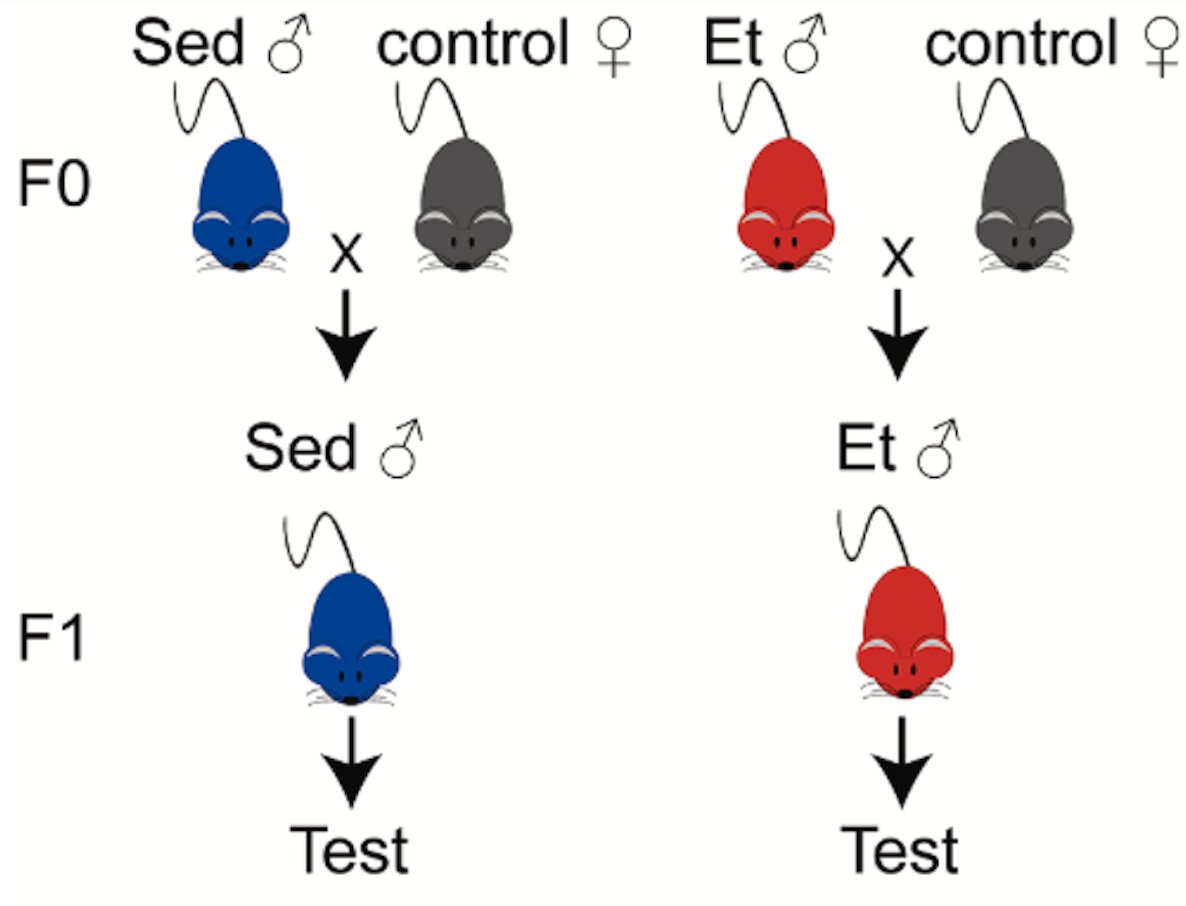
Exercise Group: Trained on a treadmill for eight weeks.
Sedentary Group: Couch Potatoes.
Then each group was mated with females.
Nuance note: there’s a reason this isn’t a human RCT
3
3/9) The offspring of the exercise-trained fathers were born with an innate biological advantage.
They had more lean mass, less fat mass, rewired muscles, and more mitochondrial mass.
And when put on a treadmill, they could run significantly longer and farther than the offspring of the sedentary fathers—without ever having exercised themselves.
To quote the authors: the offspring inherited an “enhanced aerobic capacity and improved metabolic profile.”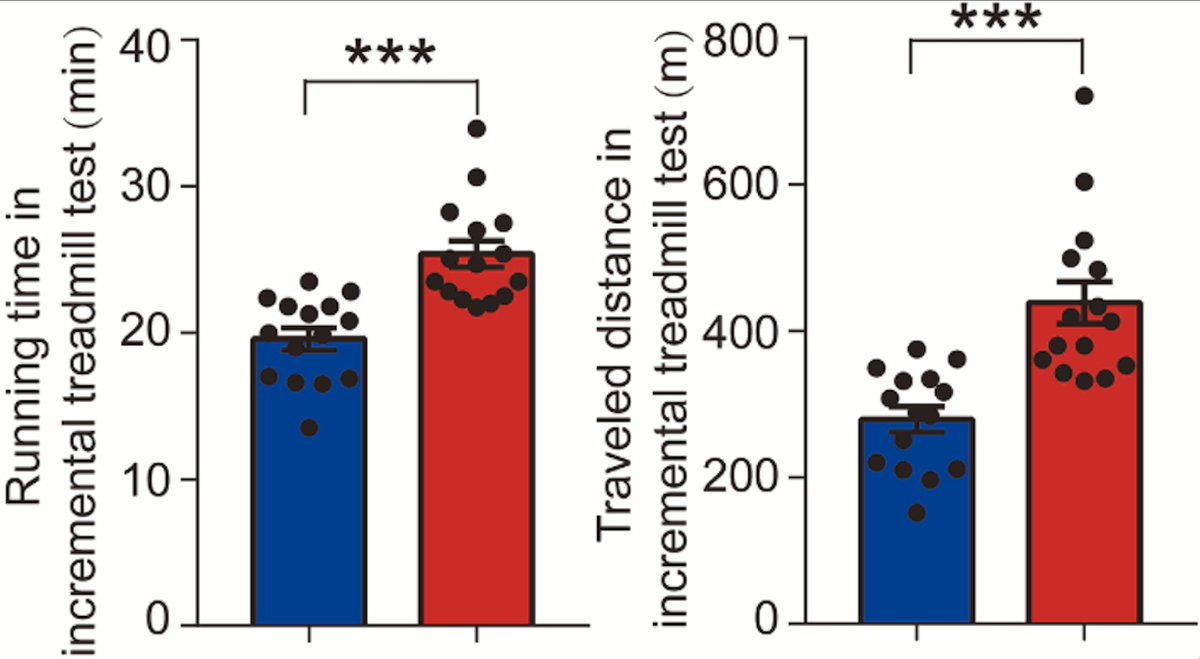
They had more lean mass, less fat mass, rewired muscles, and more mitochondrial mass.
And when put on a treadmill, they could run significantly longer and farther than the offspring of the sedentary fathers—without ever having exercised themselves.
To quote the authors: the offspring inherited an “enhanced aerobic capacity and improved metabolic profile.”
4
4/9) So, what happened at a biological level?
The researchers found the offspring’s muscles were fundamentally rewired.
Cross-sections of their muscle tissue revealed more endurance-type muscle fibers and greater mitochondrial mass.
Their cellular engines were built better from the ground up, all because their father (not them) exercised.
The researchers found the offspring’s muscles were fundamentally rewired.
Cross-sections of their muscle tissue revealed more endurance-type muscle fibers and greater mitochondrial mass.
Their cellular engines were built better from the ground up, all because their father (not them) exercised.
5
5/9) This brings us to the core question: HOW?
The answer isn’t in the DNA sequence itself. It’s in the cargo the sperm carries.
The researchers traced the effect to small fragments of RNA called microRNAs.
Exercise changed the specific microRNAs packaged inside the father’s sperm, altering the molecular instructions passed on at fertilization.
The sperm isn't just a DNA delivery truck; it's carrying a suitcase full of epigenetic software.
6
6/9) This is where the "butterfly effect" begins.
These modified microRNAs influenced a key embryonic regulator called NCoR1. By tweaking this single molecular switch, a cascade of developmental changes was set in motion, reshaping everything from muscle fiber type to mitochondrial density in the offspring.
A tiny change in the sperm rippled out to redefine the physiology of the entire organism. It’s a humbling example of how profound biological inheritance is.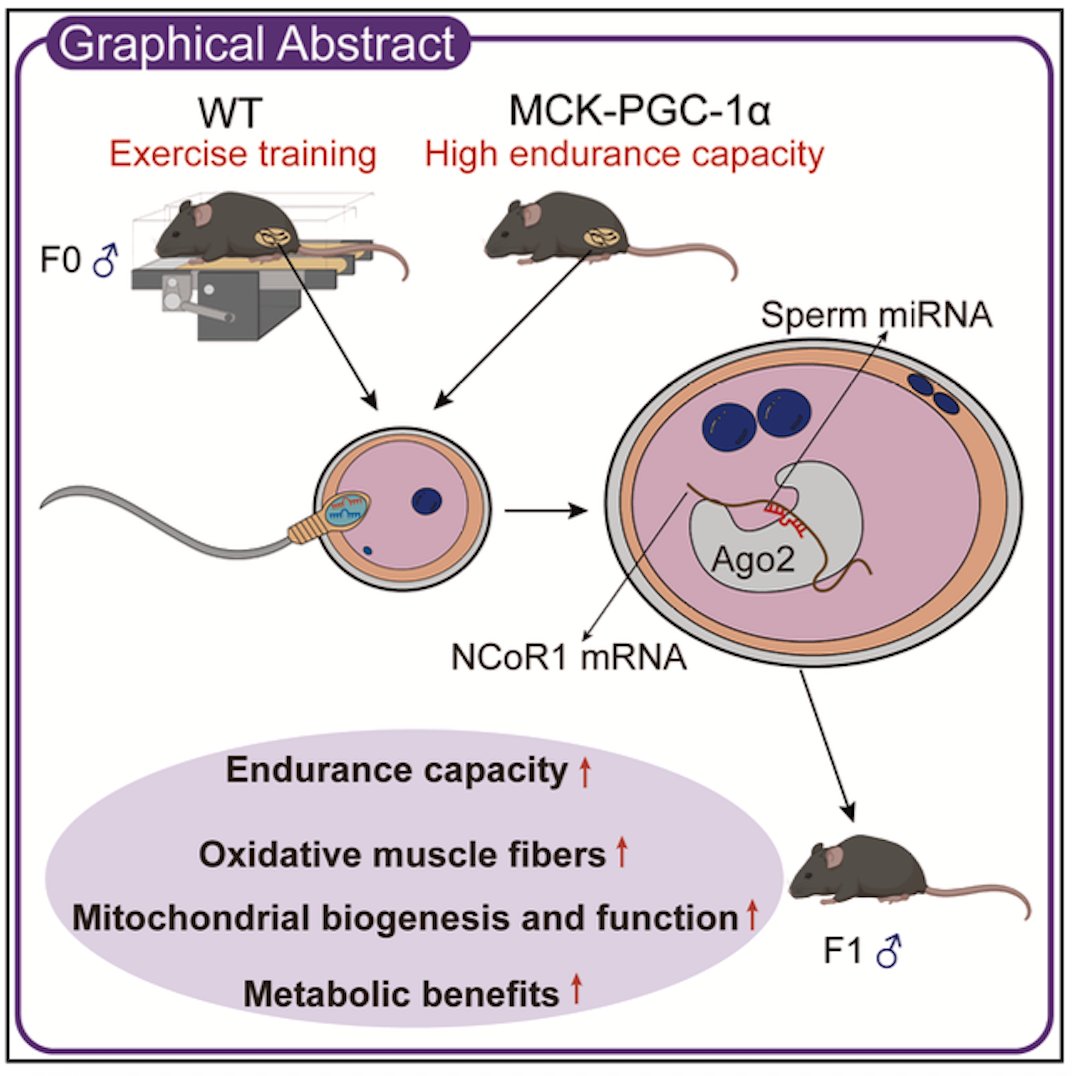
These modified microRNAs influenced a key embryonic regulator called NCoR1. By tweaking this single molecular switch, a cascade of developmental changes was set in motion, reshaping everything from muscle fiber type to mitochondrial density in the offspring.
A tiny change in the sperm rippled out to redefine the physiology of the entire organism. It’s a humbling example of how profound biological inheritance is.
7
7/9) Nuance note: The researchers also found that PGC1α, the master regulator of mitochondrial biogenesis, was a key player.
Artificially boosting PGC1α in the fathers’ muscles was enough to replicate the benefits in the offspring, though the exact link between muscle PGC1α and sperm microRNAs is still being worked out. This adds another layer to this fascinating mechanism.
Artificially boosting PGC1α in the fathers’ muscles was enough to replicate the benefits in the offspring, though the exact link between muscle PGC1α and sperm microRNAs is still being worked out. This adds another layer to this fascinating mechanism.
8
8/9) But does this apply to humans? The researchers checked.
They identified the key microRNAs in the mouse sperm and then looked for them in trained vs. untrained human males. The result: Yes. Seven of the ten critical microRNAs were conserved and upregulated in the sperm of trained men.
To quote the paper, this suggests “a potential role for these sperm miRNAs in intergenerational exercise adaptation in humans.”
This isn't “just a mouse thing.”
(And since we frown on sex trafficking, we aren’t going to conduct a human RCT)
9
9/9) In the full letter, I explore the future of engineering inheritance and what you can do now—from specific fitness targets to dietary factors that also appear to influence offspring. #StayCurious
staycuriousmetabolism.substack.com/p/this-study-r…
staycuriousmetabolism.substack.com/p/this-study-r…

