One of the most powerful life skills you can develop: Building the...

Pep@peptalksblog
51 views
Sep 11, 2025
~6 min read
Advertisement
1
One of the most powerful life skills you can develop:
Building the capacity to feel.
So many issues across life are downstream of low feeling capacity that I think this should be core curriculum.
Here's why it matters and how to practice it: 🧵
Building the capacity to feel.
So many issues across life are downstream of low feeling capacity that I think this should be core curriculum.
Here's why it matters and how to practice it: 🧵
2
Examples of what happens when the feeling in your body exceeds your capacity to handle it:
- Premature ejaculation
- Triple texting instead of waiting
- Panic-selling when markets dip
These are reflexes to prevent (or escape) overwhelm. We all have them in 1 form or another:
- Premature ejaculation
- Triple texting instead of waiting
- Panic-selling when markets dip
These are reflexes to prevent (or escape) overwhelm. We all have them in 1 form or another:
3
The mechanism behind all of these is simple:
Each moment offers sensations our senses can perceive.
If they feel too intense, we do something to release or escape them.
This can be as simple as looking at our phone (or refusing to look at it). ↓↓
Each moment offers sensations our senses can perceive.
If they feel too intense, we do something to release or escape them.
This can be as simple as looking at our phone (or refusing to look at it). ↓↓
4
While often labeled as bad, I think there's nothing wrong with escaping or numbing feelings.
Better to feel them sustainably than be chronically overwhelmed.
But life gets easier as your capacity to feel increases, because what you remove yourself from, you lose agency within↓
Better to feel them sustainably than be chronically overwhelmed.
But life gets easier as your capacity to feel increases, because what you remove yourself from, you lose agency within↓
5
When our capacity to feel is very low, we're vulnerable to addiction:
Dependence on external sources for either numbness (escaping sensations) or stimulation (strong enough sensations to bypass our numbness).
When our capacity to feel is very high, we are nearly unhookable.↓↓
Dependence on external sources for either numbness (escaping sensations) or stimulation (strong enough sensations to bypass our numbness).
When our capacity to feel is very high, we are nearly unhookable.↓↓
Pep@peptalksblog
For most of my teenage years and early twenties, I was addicted to alcohol and other substances.
It was more than a habit for me. It felt like a part of my identity.
Then, one day, I chose not to drink—and it challenged everything I thought I knew about addiction: 🧵
It was more than a habit for me. It felt like a part of my identity.
Then, one day, I chose not to drink—and it challenged everything I thought I knew about addiction: 🧵
6
Procrastination, anxiety, indecisiveness, worry, emotional unavailability—these all become less frequent with increased capacity to feel.
Because we're not avoiding actions or outcomes, but the feelings we think they'll bring. Based on how we estimate our ability to handle them.
Because we're not avoiding actions or outcomes, but the feelings we think they'll bring. Based on how we estimate our ability to handle them.
Pep@peptalksblog
@lora_losso Confidence is, in essence, faith in your ability to handle a wide variety of possible scenarios (and your ability to emotionally handle the times they get the best of you).
7
How to increase your capacity to feel?
By training awareness of the sensations in the body.
You can do this without formal practice—just go through the day & make it a game to feel as much of the body as possible during each activity.
That said, here are some actionable tips:
By training awareness of the sensations in the body.
You can do this without formal practice—just go through the day & make it a game to feel as much of the body as possible during each activity.
That said, here are some actionable tips:
Pep@peptalksblog
@heynibras When I was a kid, my mom used to take me to this man.
He’d have me lay down and stare at the ceiling.
Then for an hour he’d try to get me to concentrate on my pinky toe or something.
“You gotta be the toe, Pep. Be the toe.”
I mostly remember the ceiling, but they were spot on
He’d have me lay down and stare at the ceiling.
Then for an hour he’d try to get me to concentrate on my pinky toe or something.
“You gotta be the toe, Pep. Be the toe.”
I mostly remember the ceiling, but they were spot on
8
1/
Meditating from the vantage point of the body:
Instead of "being aware of the body", can you be aware FROM it?
Exploriment with unhooking awareness from the mind entirely.
What's it like to let awareness arise from your belly button, your skin, or your heart?
Meditating from the vantage point of the body:
Instead of "being aware of the body", can you be aware FROM it?
Exploriment with unhooking awareness from the mind entirely.
What's it like to let awareness arise from your belly button, your skin, or your heart?
9
2/
Finding the pleasure in anything your body makes contact with:
From physical surfaces to sunlight or a soft breeze.
Finding the pleasure in anything your body makes contact with:
From physical surfaces to sunlight or a soft breeze.
Pep@peptalksblog
@RosesUnfolding Folding your clothes or doing the dishes get so much more pleasant when you connect to the stimulation of all the nerve endings in your hands.
Same for eating. The tongue is full of pleasure receptors.
Next experiment: Can you feel the cells touching each other inside the body?
Same for eating. The tongue is full of pleasure receptors.
Next experiment: Can you feel the cells touching each other inside the body?
10
3/
Notice where you brace in the face of (potential) sensations you label as painful, and experiment with embracing them.

Notice where you brace in the face of (potential) sensations you label as painful, and experiment with embracing them.
Guy@nosilverv
Doing brace/embrace under a cold shower and realised that the pleasure you get once you embrace is not at all from the cold water but, rather, from dropping resistance/tension 🤯🤯🤯
11
4/
Notice situations when you lose bodily awareness. See what happens when you allow yourself to feel more of it.
(Btw this is what people mean by "being in your head": We retreat into a virtual reality so we don’t have to feel the physical one we don’t have capacity for.)


Notice situations when you lose bodily awareness. See what happens when you allow yourself to feel more of it.
(Btw this is what people mean by "being in your head": We retreat into a virtual reality so we don’t have to feel the physical one we don’t have capacity for.)
Could Be Defender@DefenderOfBasic
@nosilverv "are you in the pull?" has been a great addition to my IRL language of friends and loved ones. From Peter limberg
open.substack.com/pub/lessfoolis…
open.substack.com/pub/lessfoolis…
12
5/
When an intense emotion arises, try this:
Lay down. Do nothing. Stay conscious of as many parts of your body as possible, for as long as you can. Notice you can handle it.
Repeat this to build reference experiences of your feeling capacity.

When an intense emotion arises, try this:
Lay down. Do nothing. Stay conscious of as many parts of your body as possible, for as long as you can. Notice you can handle it.
Repeat this to build reference experiences of your feeling capacity.
Pep@peptalksblog
"Negative" emotions aren't bad for you.
All emotions offer love, wisdom & power in their own way.
Once you allow them to do so, everything changes.
How to find the love inside your feelings:
🧵
All emotions offer love, wisdom & power in their own way.
Once you allow them to do so, everything changes.
How to find the love inside your feelings:
🧵
13
6/
Find the edges of your window of tolerance:
The exact things that trigger you into dysregulation (but not hyper- or hypo arousal)
Now slow down. Feel how the thing impacts your body. Can you relax 5% more without taking your awareness away from it?

Find the edges of your window of tolerance:
The exact things that trigger you into dysregulation (but not hyper- or hypo arousal)
Now slow down. Feel how the thing impacts your body. Can you relax 5% more without taking your awareness away from it?
Pep@peptalksblog
Posture, collapse, dignity, humility and equanimity aren't just metaphors for how we relate. They're actual physical states.
Collapse and posture happen when we're outside of our nervous system's window of tolerance—when it no longer feels safe to stay open and grounded.
↓↓
Collapse and posture happen when we're outside of our nervous system's window of tolerance—when it no longer feels safe to stay open and grounded.
↓↓
14
7/
Try to spot the tension inside decisions, social situations, financial challenges, etc.
Where is it? Can you point to it?
This is shockingly effective for me. Nearly everything I describe as "tension" is an illusion; a projection of how I hold my body in relation to it.
Try to spot the tension inside decisions, social situations, financial challenges, etc.
Where is it? Can you point to it?
This is shockingly effective for me. Nearly everything I describe as "tension" is an illusion; a projection of how I hold my body in relation to it.
Pep@peptalksblog
Reading my journal, I noticed a recurring theme where, in the morning, I’m describing a tension between possible choices:
- Multiple urgent matters to address
- 2 different paths I could take that day, which I feel equally excited about
- Deciding whether to do the thing that leads to long-term results, or the one that takes care of short-term needs
On many mornings, I outline these different paths on a piece of paper.
I describe the tension between them.
Each one feels like it’s pulling me in a different direction—with equal force.
Seeing this pattern, I had a big a-ha moment:
Is it true that there’s a tension between all these different choices and decisions?
Not really. How could there be?
None of those paths exist yet.
They’re just potential.
So what’s actually tense?
Not the decision.
Not the options.
Not even the consequences.
What’s tense is how I hold myself while approaching the choice.
The actual process is simple:
1) Two timelines appear
2) I choose one
3) I step into it and make it real
That's only question we have to answer:
"Which one do I choose?"
Over and over again.
Whether I make that choice in a tense or a relaxed way is simply another choice:
The choice of how I relate to the choices I have the privilege of making.
(*And yes, sometimes a certain degree of tension is helpful.)
- Multiple urgent matters to address
- 2 different paths I could take that day, which I feel equally excited about
- Deciding whether to do the thing that leads to long-term results, or the one that takes care of short-term needs
On many mornings, I outline these different paths on a piece of paper.
I describe the tension between them.
Each one feels like it’s pulling me in a different direction—with equal force.
Seeing this pattern, I had a big a-ha moment:
Is it true that there’s a tension between all these different choices and decisions?
Not really. How could there be?
None of those paths exist yet.
They’re just potential.
So what’s actually tense?
Not the decision.
Not the options.
Not even the consequences.
What’s tense is how I hold myself while approaching the choice.
The actual process is simple:
1) Two timelines appear
2) I choose one
3) I step into it and make it real
That's only question we have to answer:
"Which one do I choose?"
Over and over again.
Whether I make that choice in a tense or a relaxed way is simply another choice:
The choice of how I relate to the choices I have the privilege of making.
(*And yes, sometimes a certain degree of tension is helpful.)
15
Finally, here are 4 ways this skill can benefit the people around you:
1/
Greater capacity for empathy.
(If we can't be with our own feelings, we won't easily be with other people's. Typical manifestation of this is unsolicited advice: The Premature Ejaculation of empathy.)
1/
Greater capacity for empathy.
(If we can't be with our own feelings, we won't easily be with other people's. Typical manifestation of this is unsolicited advice: The Premature Ejaculation of empathy.)
Pep@peptalksblog
Empathy is often misunderstood (I know, ironic).
Some call it a weakness or energy drain, others an essential trait.
The confusion stems from fuzzy or conflated definitions.
A thread on what empathy is (and isn't) 🧵
Some call it a weakness or energy drain, others an essential trait.
The confusion stems from fuzzy or conflated definitions.
A thread on what empathy is (and isn't) 🧵
16
2/
More effective leadership (particularly making challenging decisions + facing uncertainty).
More effective leadership (particularly making challenging decisions + facing uncertainty).
Pep@peptalksblog
The capacity to make tough decisions responsibly is directly tied to the capacity to hold grief.
Grieving well is a leadership skill.
Grieving well is a leadership skill.
17
3/
Co-regulation. In group situations, we look to each other for cues (panic or stay calm?) and operate like a shared nervous system, distributing emotional "charge" so no one processes it alone.
Every high-capacity person is basically a grounding chord.
x.com/AvantPrince_/s…
Co-regulation. In group situations, we look to each other for cues (panic or stay calm?) and operate like a shared nervous system, distributing emotional "charge" so no one processes it alone.
Every high-capacity person is basically a grounding chord.
x.com/AvantPrince_/s…
18
4/
Deeper capacity for connection—because you can be vulnerable, take social risks and bond with people on things most wouldn't dare to talk about (which of course, are precisely the areas most of us feel unseen or alone in).
Deeper capacity for connection—because you can be vulnerable, take social risks and bond with people on things most wouldn't dare to talk about (which of course, are precisely the areas most of us feel unseen or alone in).
Pep@peptalksblog
The issue with desperately seeking connection:
If we cling to every chance of it, we don’t allow space for disconnect.
But if disconnection isn’t a possibility, connection isn’t either.
Because you can’t discover what connects you unless you’re willing to know what wouldn’t.
If we cling to every chance of it, we don’t allow space for disconnect.
But if disconnection isn’t a possibility, connection isn’t either.
Because you can’t discover what connects you unless you’re willing to know what wouldn’t.
19
Want to make this a part of your way of being so you can show up differently in your relationships?
This is exactly what we’ll be practicing in the 12-week online group journey "Fundamentals of Realating".
You can claim your spot here:
peptalksblog.com/connection-coh…
This is exactly what we’ll be practicing in the 12-week online group journey "Fundamentals of Realating".
You can claim your spot here:
peptalksblog.com/connection-coh…
20
5/
Improved decision making. By checking in as many parts of the system as possible, you get access to more nonlinear/holistic wisdom about the decision.
(You can build upon this video and add as many parts of you as you learn to feel.)
Improved decision making. By checking in as many parts of the system as possible, you get access to more nonlinear/holistic wisdom about the decision.
(You can build upon this video and add as many parts of you as you learn to feel.)
21
6/
Increased capacity for nuance.
Understanding of nuance is limited by our capacity to feel.
Because less nuance = filtering out more data points or stimula we could feel things about = greater perceived predictability = greater sense of safety.
Increased capacity for nuance.
Understanding of nuance is limited by our capacity to feel.
Because less nuance = filtering out more data points or stimula we could feel things about = greater perceived predictability = greater sense of safety.
Pep@peptalksblog
@su_dreams In 2017, I did a radical exploriment with being wrong:
For months on end, I countered all my thoughts with "What if the opposite was true though?"
Then I'd find arguments, talk to people & read books to support the opposite of my worldview.
I wasn't ready for the outcome:
For months on end, I countered all my thoughts with "What if the opposite was true though?"
Then I'd find arguments, talk to people & read books to support the opposite of my worldview.
I wasn't ready for the outcome:
22
The more we learn to feel anger & fear without going into overwhelm, the greater our capacity for nuance becomes.
If we feel scared or enraged about something but we don't want to feel the feeling, we project the feeling on the thing ↓↓
If we feel scared or enraged about something but we don't want to feel the feeling, we project the feeling on the thing ↓↓
Pep@peptalksblog
Learning to let anger move through us is a key component in building the capacity for nuance.
Because when anger isn’t fully felt through, it tends to lock us in a mental positionality:
“That person is evil.”
“That perspective is wrong.”
“Pineapple ruined pizza.”
Because when anger isn’t fully felt through, it tends to lock us in a mental positionality:
“That person is evil.”
“That perspective is wrong.”
“Pineapple ruined pizza.”
23
By projecting our feeling on the trigger, we don't have to own it.
Instead of "I feel angry in response to ____" , we say "____ makes me angry".
This spell creates the illusion the anger isn't felt within us—it's "out there" & can be avoided or removed.
Instead of "I feel angry in response to ____" , we say "____ makes me angry".
This spell creates the illusion the anger isn't felt within us—it's "out there" & can be avoided or removed.
Pep@peptalksblog
@nosilverv Maybe both, definitely loud:
Identifying with triggers is 1 way of denying them.
It dissolves the distinction between person & trigger.
Trigger now appears not to exist.
But the cost is that the trigger speaks (or yells) & the person thinks it’s them choosing the words.
Identifying with triggers is 1 way of denying them.
It dissolves the distinction between person & trigger.
Trigger now appears not to exist.
But the cost is that the trigger speaks (or yells) & the person thinks it’s them choosing the words.
24
1 thing that helped me a lot with feeling strong feelings:
Feel as much of the body as possible when there aren't any strong emotions present.
If you want to get good at boxing, don't jump into a high stakes fight with champions.
Practice in a friendly environment first.
Feel as much of the body as possible when there aren't any strong emotions present.
If you want to get good at boxing, don't jump into a high stakes fight with champions.
Practice in a friendly environment first.
25
More benefits
Pep@peptalksblog
Our capacity to feel
=
Our capacity for truth
=
Our capacity to respond intelligently
=
Our capacity for truth
=
Our capacity to respond intelligently
26
Another small habit, that can develop the capacity to feel over time:
(The pause allows you to notice you're okay.)
(The pause allows you to notice you're okay.)
Pep@peptalksblog
A tiny habit that can make a huge difference:
Pausing.
Just a fraction of a moment.
Before speaking, to digest what you heard & your internal response to it.
Before action, to notice the intention that gave rise to it.
1 conscious breath to move from conditioning to choice🧵
Pausing.
Just a fraction of a moment.
Before speaking, to digest what you heard & your internal response to it.
Before action, to notice the intention that gave rise to it.
1 conscious breath to move from conditioning to choice🧵
27
Avoiding a feeling is somewhat of an illusion, because "avoiding it" is, in fact, holding on to it:
Pep@peptalksblog
Grudges, resentments & regrets are holding patterns:
We notice a feeling (e.g. anger, shame) & decide not to let it pass until what triggered it was atoned for.
This requires blocking spontaneous feelings that can loosen our grip, thereby limiting aliveness & self-expression.
We notice a feeling (e.g. anger, shame) & decide not to let it pass until what triggered it was atoned for.
This requires blocking spontaneous feelings that can loosen our grip, thereby limiting aliveness & self-expression.
28
Pushing back on a feeling simply changes the timescale on which it's felt.
When we use words like "avoidance" or "repression" people assume we also mean "bad".
But that's not what those words mean, "avoidance" is an action, "bad" is how we relate to it.
When we use words like "avoidance" or "repression" people assume we also mean "bad".
But that's not what those words mean, "avoidance" is an action, "bad" is how we relate to it.
Pep@peptalksblog
Our resistance to a sensation we perceive as painful changes its impact.
Low resistance = full impact is felt in 1 peak, then passes.
High resistance = lower initial impact. But the impact’s surface area stretches across time—and for that duration, remains part of our being.
Low resistance = full impact is felt in 1 peak, then passes.
High resistance = lower initial impact. But the impact’s surface area stretches across time—and for that duration, remains part of our being.
29
You can compare the experience of emotional waves with the experience of any other wave:
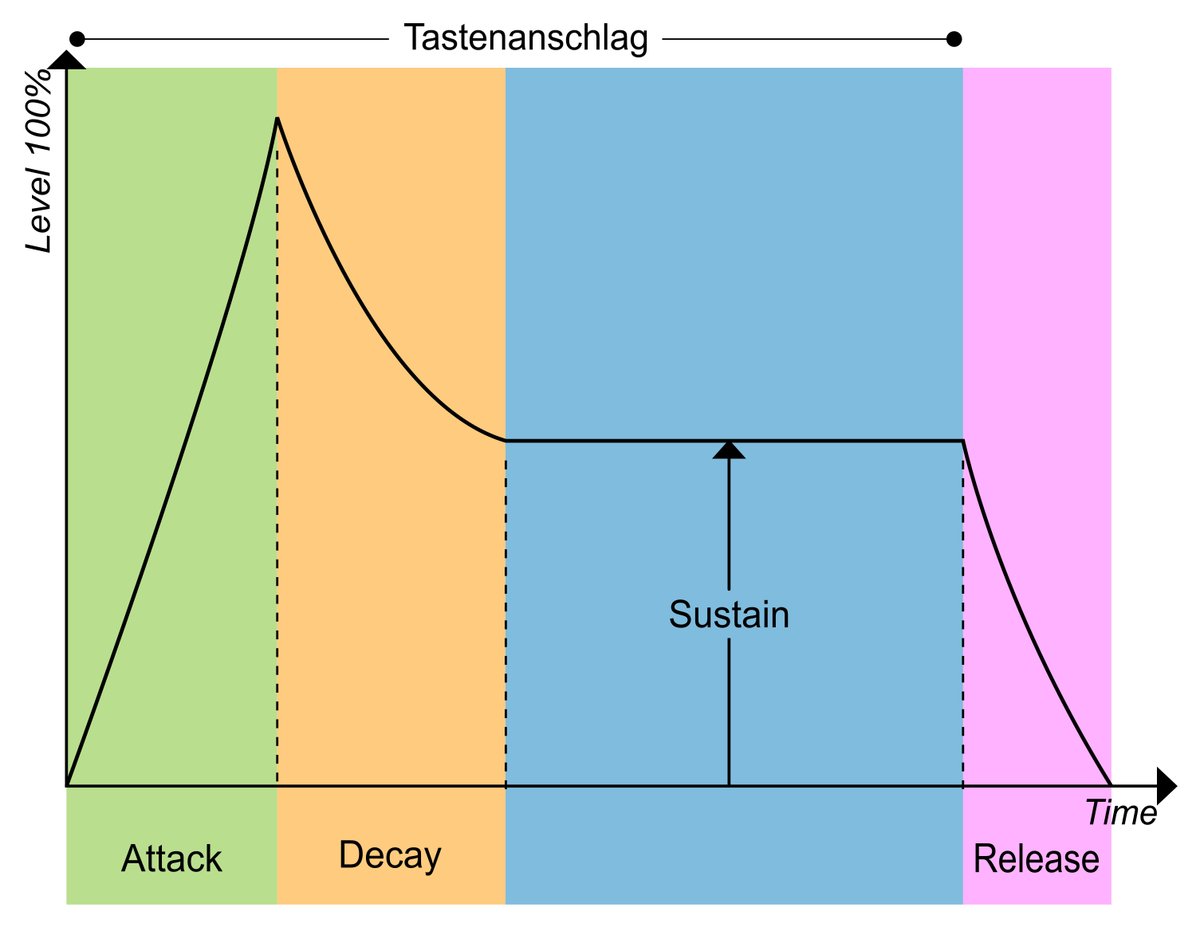
Pep@peptalksblog
ADSR, (Attack, Decay, Sustain, and Release), is a set of parameters which determine how a sound, once initiated, evolves and ends.
(For example, synths or guitar pedals can change sounds by tweaking these.)
I believe this model applies to emotional experiences too.
(For example, synths or guitar pedals can change sounds by tweaking these.)
I believe this model applies to emotional experiences too.
30
The body affects the wave.
"Clenching" and "releasing" affect your feelings the same way a synthesizer or guitar pedal affects your sound.
"Clenching" and "releasing" affect your feelings the same way a synthesizer or guitar pedal affects your sound.
Pep@peptalksblog
Btw for people into both guitars & somatics:
Your body is a pedalboard in this case.
1) Emotional signal enters
2) By contracting & relaxing in certain places (pressing pedals) you can change the emotional experience:
Distort, gate, harmonize, compress, amplify...
Your body is a pedalboard in this case.
1) Emotional signal enters
2) By contracting & relaxing in certain places (pressing pedals) you can change the emotional experience:
Distort, gate, harmonize, compress, amplify...
