1/ Can Utah still be "Utah" if it ceases to be White & Mormon? Can...

Sam Parker 🇺🇸🧯@BasedSamParker
77 views
Jul 20, 2025
~11 min read
Advertisement
1
1/ Can Utah still be "Utah" if it ceases to be White & Mormon? Can America still be "America" if it ceases to be White & Christian?
Utah: Founded, colonized & built by White Mormons (The Church of Jesus Christ of Latter-day Saints, LDS). In the 1990s, after a 49-year colonization period followed by 100 years of statehood, Utah was still 90% White & 75% LDS. Note that LDS membership hasn't ever been required to hold office or establish residency in Utah, nor has the LDS church ever been enshrined as the official state church in any founding document. Even so, anyone who's spent any time in Utah would easily observe Utah's distinctly peculiar White Mormon culture permeating everywhere, impacting nearly everything. Even the grid-layout road system is Mormon!
Regardless of someone's personal feelings toward the LDS faith, any intellectually honest soul would acknowledge that Utah would cease to be uniquely "Utah" if it ever ceased to be [White + Mormon]. Anyone alleging otherwise is simply too stupid or disingenuous to even waste breath on.
America: Founded, colonized & overwhelmingly built by White Christians of various European ethnicities & Christian denominations. In 1965, after a 169-year colonization period followed by nearly 200 years of nation-building, America was still 89.5% White & 93% Christian.
So, I ask again: Can America still be "America" if it ceases to be [White + Christian]? Can your answer really be any different than your answer for Utah?
In this thread, we will review some of the White Christian origins, organizing principles & foundations of America. Please leave your comments and feedback.

Utah: Founded, colonized & built by White Mormons (The Church of Jesus Christ of Latter-day Saints, LDS). In the 1990s, after a 49-year colonization period followed by 100 years of statehood, Utah was still 90% White & 75% LDS. Note that LDS membership hasn't ever been required to hold office or establish residency in Utah, nor has the LDS church ever been enshrined as the official state church in any founding document. Even so, anyone who's spent any time in Utah would easily observe Utah's distinctly peculiar White Mormon culture permeating everywhere, impacting nearly everything. Even the grid-layout road system is Mormon!
Regardless of someone's personal feelings toward the LDS faith, any intellectually honest soul would acknowledge that Utah would cease to be uniquely "Utah" if it ever ceased to be [White + Mormon]. Anyone alleging otherwise is simply too stupid or disingenuous to even waste breath on.
America: Founded, colonized & overwhelmingly built by White Christians of various European ethnicities & Christian denominations. In 1965, after a 169-year colonization period followed by nearly 200 years of nation-building, America was still 89.5% White & 93% Christian.
So, I ask again: Can America still be "America" if it ceases to be [White + Christian]? Can your answer really be any different than your answer for Utah?
In this thread, we will review some of the White Christian origins, organizing principles & foundations of America. Please leave your comments and feedback.
2
2/ America Was Built By Christians & Christian Systems
Everywhere the European settlers & colonizers went, they built churches and organized themselves & their communities around their congregations & Christian beliefs.
Typical founding/organizing documents include the Mayflower Compact (1620) & the Charlestown-Boston Church Covenant (1630). These were covenants made between the individuals in the community & God, in the name of Jesus Christ.
As time went on, these Compacts and Covenants grew, merged & evolved--eventually developing into the great colonial charters & state constitutions, which then became the templates for the US Constitution. You can draw a straight line from these early community covenants and the US Constitution. Without these and others like them, we literally wouldn't have the US Constitution.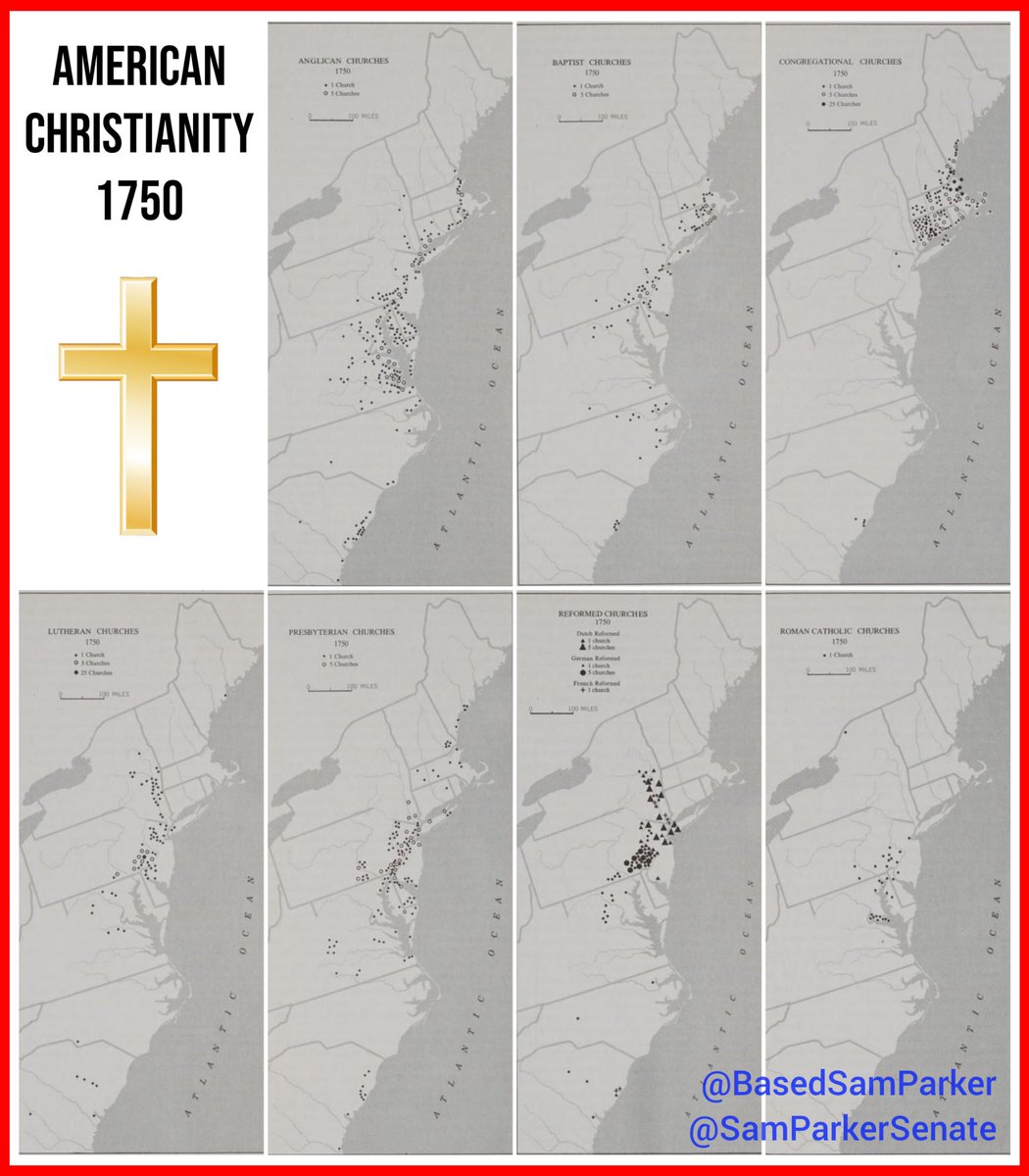
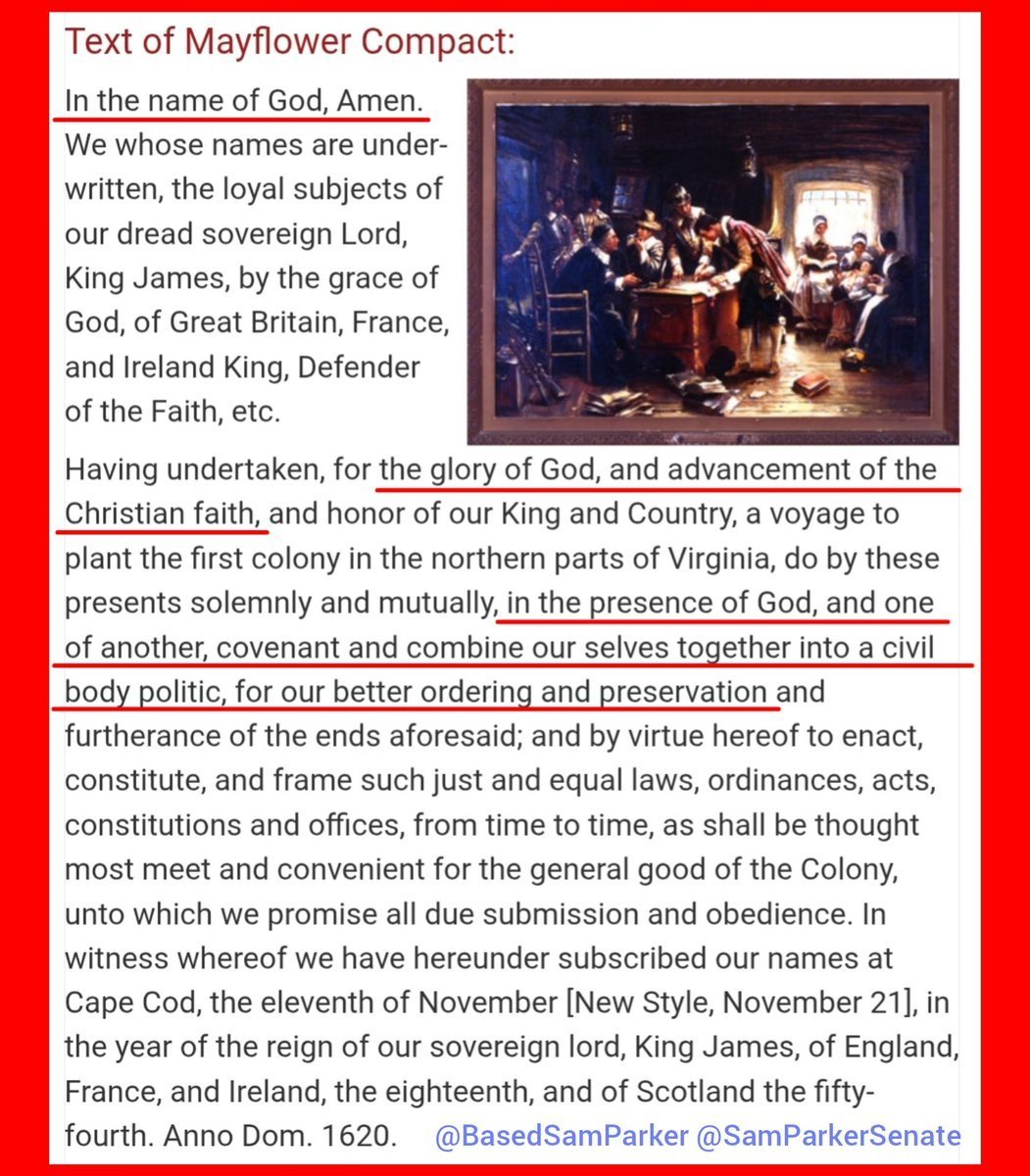

Everywhere the European settlers & colonizers went, they built churches and organized themselves & their communities around their congregations & Christian beliefs.
Typical founding/organizing documents include the Mayflower Compact (1620) & the Charlestown-Boston Church Covenant (1630). These were covenants made between the individuals in the community & God, in the name of Jesus Christ.
As time went on, these Compacts and Covenants grew, merged & evolved--eventually developing into the great colonial charters & state constitutions, which then became the templates for the US Constitution. You can draw a straight line from these early community covenants and the US Constitution. Without these and others like them, we literally wouldn't have the US Constitution.
3
3/ American-Style Government "Of, By, And For The People" Is Directly Rooted In Protestant Christianity
The Protestant concept of the "priesthood of all believers" taught that each person had equal spiritual authority & direct access to God. This led to congregational church governance where members ruled themselves through mutual consent.
In early America, this church model influenced local civic life—town meetings & community decisions mirrored congregational practices, often being one and the same: the church meeting was the town meeting, and vice versa. Over time, this spiritual self-rule evolved into a political ideal: government of, by, and for the people--grounded in consent, not hierarchy.
When they say "America is an idea," this is one of the vital core ideas, and it's profoundly Christian. Without Christianity, this American ideal simply wouldn't even exist. If this isn't a fundamental national organizing principle of the United States, I don't know what is.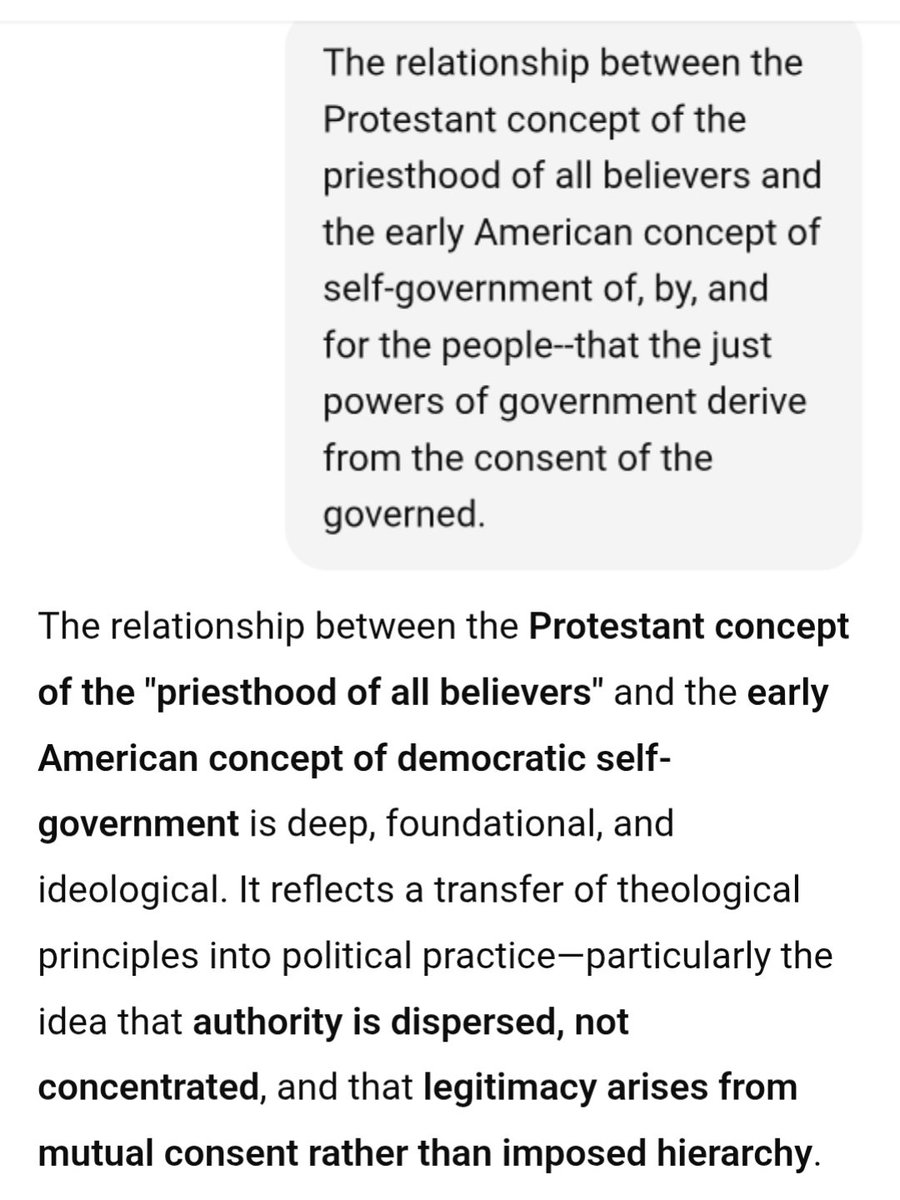

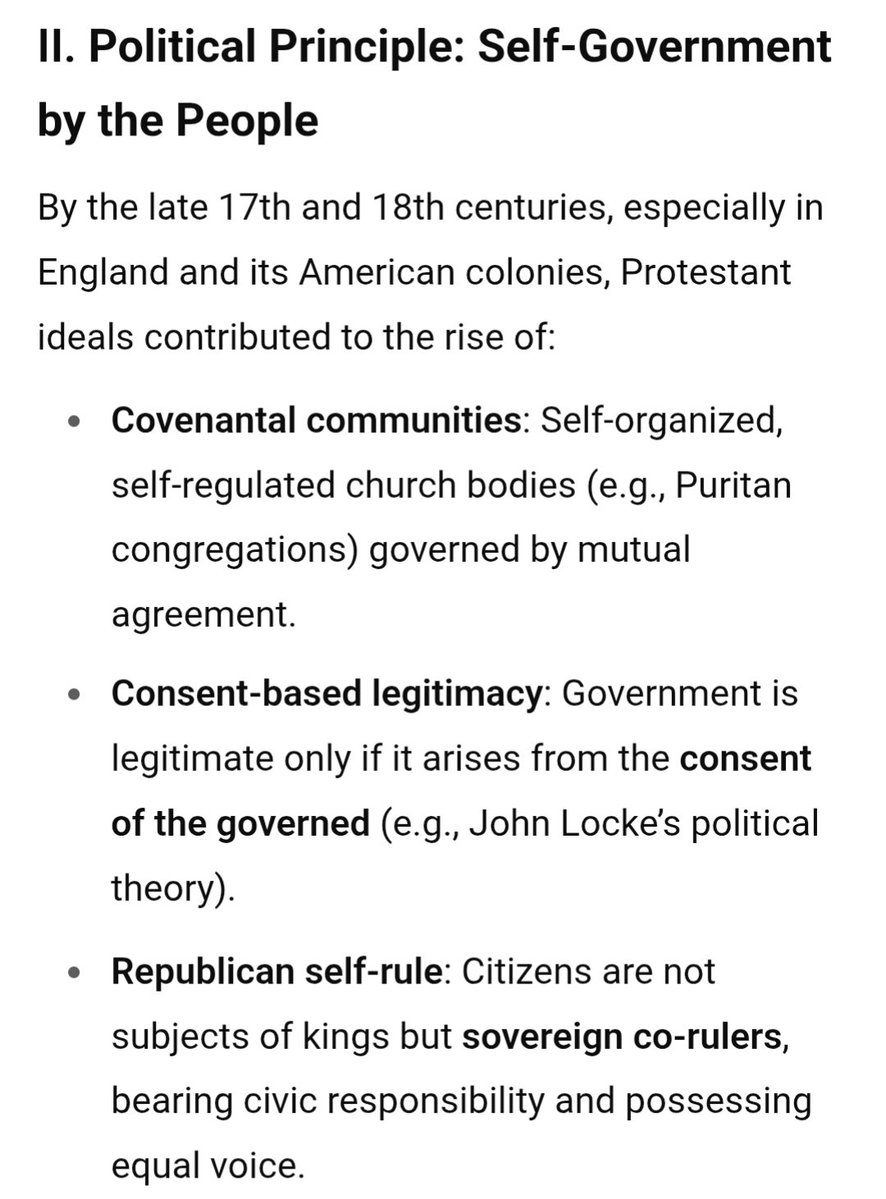
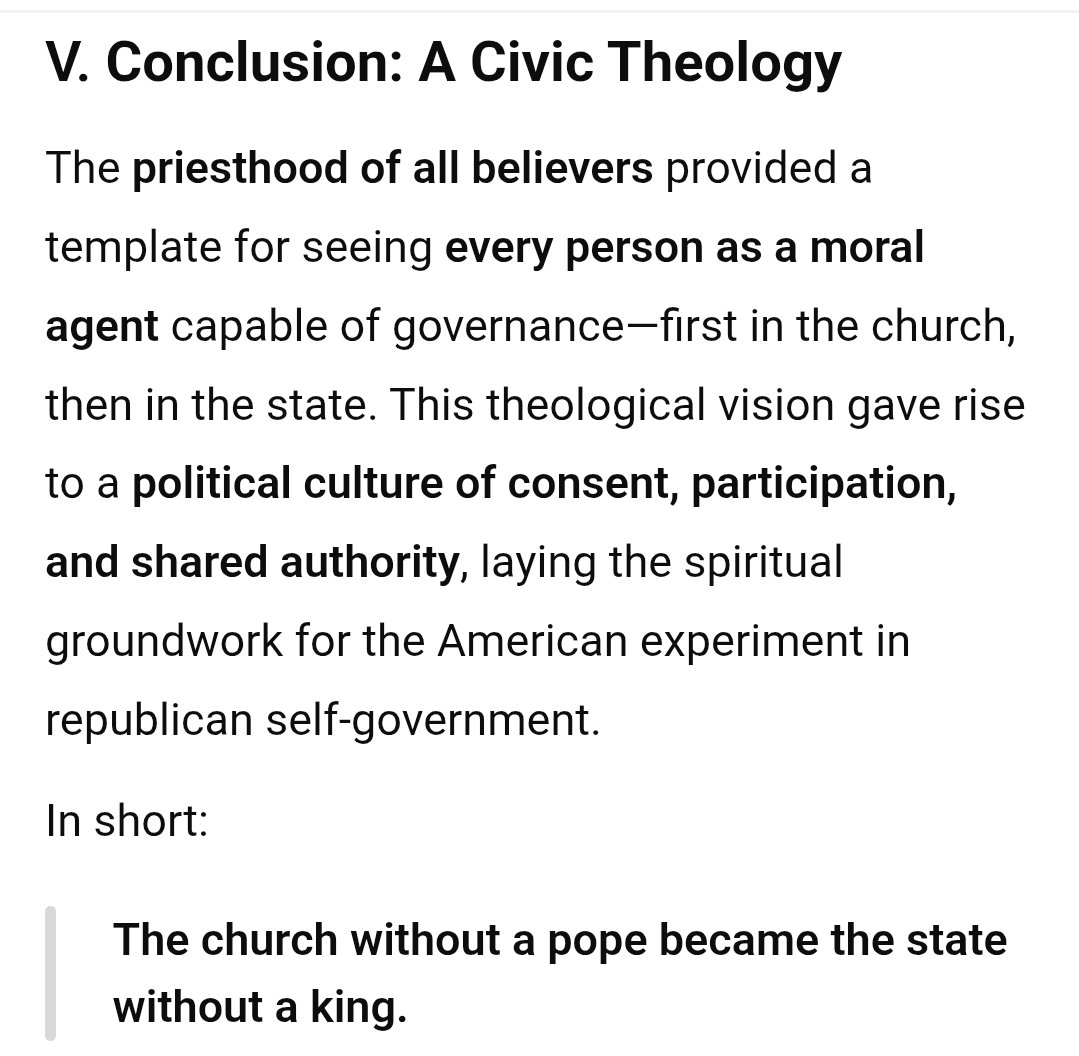
The Protestant concept of the "priesthood of all believers" taught that each person had equal spiritual authority & direct access to God. This led to congregational church governance where members ruled themselves through mutual consent.
In early America, this church model influenced local civic life—town meetings & community decisions mirrored congregational practices, often being one and the same: the church meeting was the town meeting, and vice versa. Over time, this spiritual self-rule evolved into a political ideal: government of, by, and for the people--grounded in consent, not hierarchy.
When they say "America is an idea," this is one of the vital core ideas, and it's profoundly Christian. Without Christianity, this American ideal simply wouldn't even exist. If this isn't a fundamental national organizing principle of the United States, I don't know what is.
4
4/ Revolutionary America: A Christian Nation
By the time America was founded on July 4, 1776, 9 of the 13 states had official state-sponsored Christian religions subsidized by taxes. 12 of them had some kind of Christian requirement for holding public office--the only exception being Rhode Island, the smallest & least populous state--and it was still 98% Christian anyway. In most of the 12 states, these religious tests persisted for several decades, with New Hampshire being the last holdout until 1877. Overall, >99% of the White population in the US was some kind of Christian.
Christianity was a fundamental organizing principle of America.
By the time America was founded on July 4, 1776, 9 of the 13 states had official state-sponsored Christian religions subsidized by taxes. 12 of them had some kind of Christian requirement for holding public office--the only exception being Rhode Island, the smallest & least populous state--and it was still 98% Christian anyway. In most of the 12 states, these religious tests persisted for several decades, with New Hampshire being the last holdout until 1877. Overall, >99% of the White population in the US was some kind of Christian.
Christianity was a fundamental organizing principle of America.
5
5/ "Sam, If America Is Supposed To Be A Christian Country, Why Don't The Founding Documents Say So?"
Our founding documents and laws were parsimoniously tailored to the people they were written for, as John Adams (2nd US President, signer of the Declaration of Independence) famously observed and as the Constitution itself explicitly references: He literally says who the Constitution was written for (a moral and religious people, i.e. Christians), and the Constitution itself literally says who it's written for ("Our Posterity," >99% of White Americans were Christians).
To be a little facetious, if a basketball team got together and drafted rules for their basketball team, would they need to specify the rules are for basketball players and not football players? No, it's just a given.
The Constitution doesn't explicitly say the country was to be White European, either, yet it implicitly was, just as it was implicitly Christian.
One of the reasons why the Constitution was relatively short & sparse, and left so much power to the States and the People is because it could! The church-going, religious Christians were people of "good character" already highly organized in their communities around their congregations and civic life.
Finally, as I noted above, the Constitution is itself partially an outgrowth of earlier Christian documents, covenants, compacts and charters.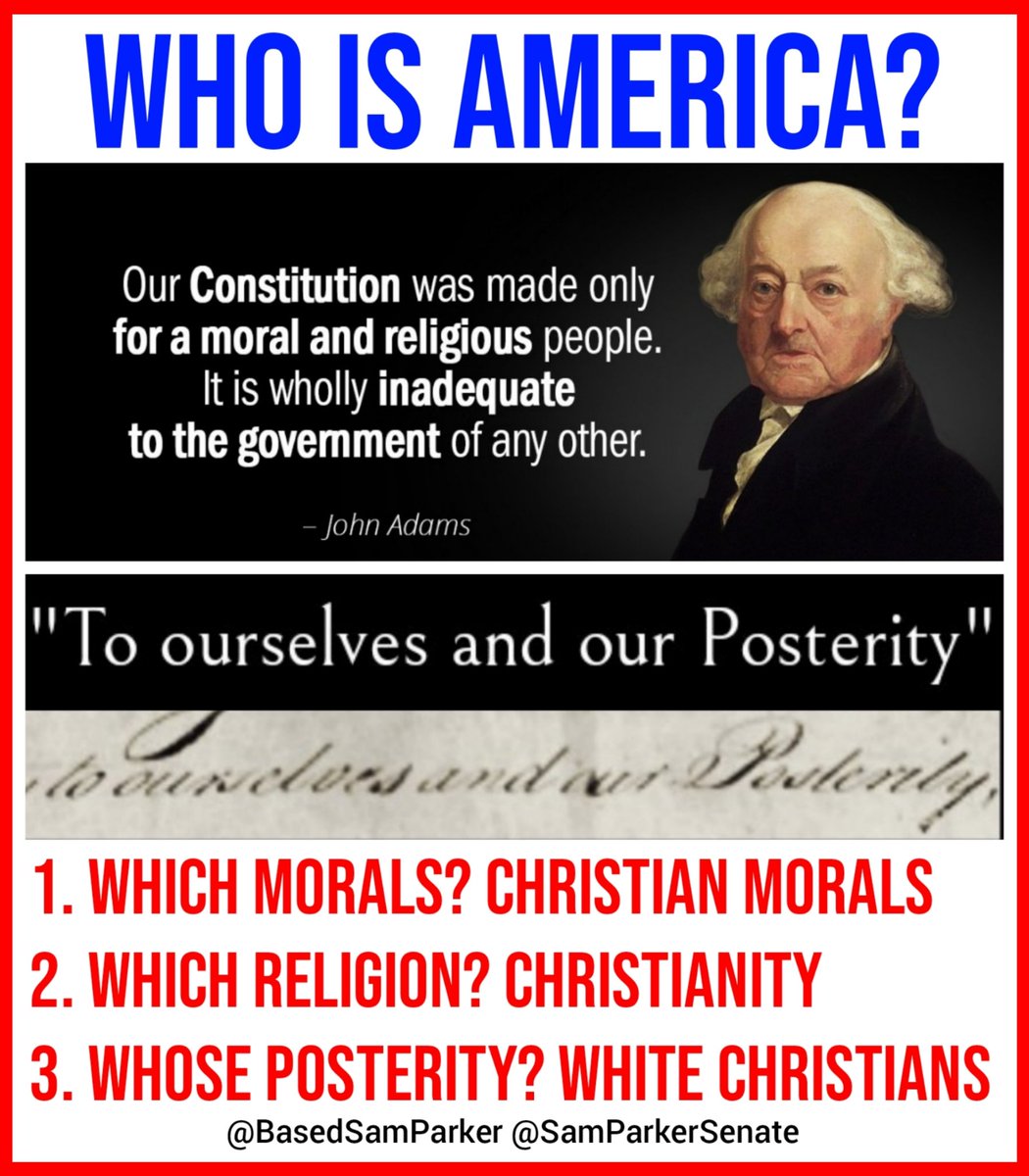
Our founding documents and laws were parsimoniously tailored to the people they were written for, as John Adams (2nd US President, signer of the Declaration of Independence) famously observed and as the Constitution itself explicitly references: He literally says who the Constitution was written for (a moral and religious people, i.e. Christians), and the Constitution itself literally says who it's written for ("Our Posterity," >99% of White Americans were Christians).
To be a little facetious, if a basketball team got together and drafted rules for their basketball team, would they need to specify the rules are for basketball players and not football players? No, it's just a given.
The Constitution doesn't explicitly say the country was to be White European, either, yet it implicitly was, just as it was implicitly Christian.
One of the reasons why the Constitution was relatively short & sparse, and left so much power to the States and the People is because it could! The church-going, religious Christians were people of "good character" already highly organized in their communities around their congregations and civic life.
Finally, as I noted above, the Constitution is itself partially an outgrowth of earlier Christian documents, covenants, compacts and charters.
6
6/ The Constitution Created Neutral Ground For Christianity to Thrive & Unite, Not Barren Ground Meant To Eradicate It From Public Life
The things the Constitution says--and doesn't say--about religion must be understood within the context of the time.
The Context:
▪️Everyone was a Christian (>99%), but
▪️There were several Christian denominations represented that got into kinetic fights & wars over their religious differences back in Europe
▪️Several states had religious tests that differed from one another
▪️Several states had state-sponsored religions
See the problem? To achieve unity, buy-in and ratification amongst the several states fragmented over their Christian differences, the newly written Federal Constitution had to remain *NEUTRAL* towards the Christian denominations and state-backed factions. That is why the Constitution imposed no religious test for federal office and why the 1st amendment prohibited the establishment of a federal-government backed official religion.
Furthermore, "religion" referred to the Christian religions. To extend the previous metaphor, when a basketball player refers to his "sport," he's understood to be referring to basketball, not some other sport like football or baseball. When the Founders referenced religion, they were speaking of their religion in this context, they were speaking of Christianity.
The 1st amendment and the prohibition for a religious test for federal office were not meant to eradicate Christianity from our institutions or to have our institutions devoid of Christian influence. Rather, they were meant to create neutral ground whereby no single Christian faction was favored above the others, placing the rest at a disadvantage. These two elements of the Constitution are tacit acknowledgements of the importance of Christianity.
Neutral ground, not barren ground. What this dynamic did was force the various Christian factions to find the common ground between them to get things done. Remember, these factions all had varying beliefs about God & Jesus Christ, and interpreted the Bible differently. They had different rites, ceremonies and practices.
Back in the Old World, these differences drove conflict. But, in America with this newly created neutral ground, the factions were forced to come together over what they shared in common. Thus, Christianity helped unify the European ethnicities in early America rather than keep them divided as it had in the Old World.
America's civic institutions became a distillation of common Christian principles and European customs that the factions & ethnicities could agree on. In a sense, American civic structures represented the "common" Christian religion and European ethos: the limited one-size-fits-all institutions for everyone that represented everybody's interests to some degree.
Figuratively speaking, American civic institutions were the "state church" that everyone could get behind while still being free to personally & fully worship Christ in their own way.
The modern interpretation of the First Amendment where religion is maniacally driven from the public square and where all non-Christian religions are given equal protection and footing is absolutely contrary to the original intent of the Founders.
The things the Constitution says--and doesn't say--about religion must be understood within the context of the time.
The Context:
▪️Everyone was a Christian (>99%), but
▪️There were several Christian denominations represented that got into kinetic fights & wars over their religious differences back in Europe
▪️Several states had religious tests that differed from one another
▪️Several states had state-sponsored religions
See the problem? To achieve unity, buy-in and ratification amongst the several states fragmented over their Christian differences, the newly written Federal Constitution had to remain *NEUTRAL* towards the Christian denominations and state-backed factions. That is why the Constitution imposed no religious test for federal office and why the 1st amendment prohibited the establishment of a federal-government backed official religion.
Furthermore, "religion" referred to the Christian religions. To extend the previous metaphor, when a basketball player refers to his "sport," he's understood to be referring to basketball, not some other sport like football or baseball. When the Founders referenced religion, they were speaking of their religion in this context, they were speaking of Christianity.
The 1st amendment and the prohibition for a religious test for federal office were not meant to eradicate Christianity from our institutions or to have our institutions devoid of Christian influence. Rather, they were meant to create neutral ground whereby no single Christian faction was favored above the others, placing the rest at a disadvantage. These two elements of the Constitution are tacit acknowledgements of the importance of Christianity.
Neutral ground, not barren ground. What this dynamic did was force the various Christian factions to find the common ground between them to get things done. Remember, these factions all had varying beliefs about God & Jesus Christ, and interpreted the Bible differently. They had different rites, ceremonies and practices.
Back in the Old World, these differences drove conflict. But, in America with this newly created neutral ground, the factions were forced to come together over what they shared in common. Thus, Christianity helped unify the European ethnicities in early America rather than keep them divided as it had in the Old World.
America's civic institutions became a distillation of common Christian principles and European customs that the factions & ethnicities could agree on. In a sense, American civic structures represented the "common" Christian religion and European ethos: the limited one-size-fits-all institutions for everyone that represented everybody's interests to some degree.
Figuratively speaking, American civic institutions were the "state church" that everyone could get behind while still being free to personally & fully worship Christ in their own way.
The modern interpretation of the First Amendment where religion is maniacally driven from the public square and where all non-Christian religions are given equal protection and footing is absolutely contrary to the original intent of the Founders.
7
7/ The American Revolution Was A Christian Rebellion
Many of the greatest champions of the American Revolution and voices calling for independence were America's preachers & pastors. Men like George Whitefield were lions roaring for revolution.
Many of the greatest champions of the American Revolution and voices calling for independence were America's preachers & pastors. Men like George Whitefield were lions roaring for revolution.
8
8/ The Revolution Was Biblical...And European
In a study of 3,154 citations from the political literature of the Revolutionary Era (1760-1805), 34% come directly from the Bible, mainly the New Testament. 60% come from other European sources.
The political philosophy and thought that drove their thinking and motivated the colonists to action sprang from Christianity and European concepts.
This unique fusion between Christianity & European philosophy is the beating heart of America's magic sauce.
In a study of 3,154 citations from the political literature of the Revolutionary Era (1760-1805), 34% come directly from the Bible, mainly the New Testament. 60% come from other European sources.
The political philosophy and thought that drove their thinking and motivated the colonists to action sprang from Christianity and European concepts.
This unique fusion between Christianity & European philosophy is the beating heart of America's magic sauce.
9
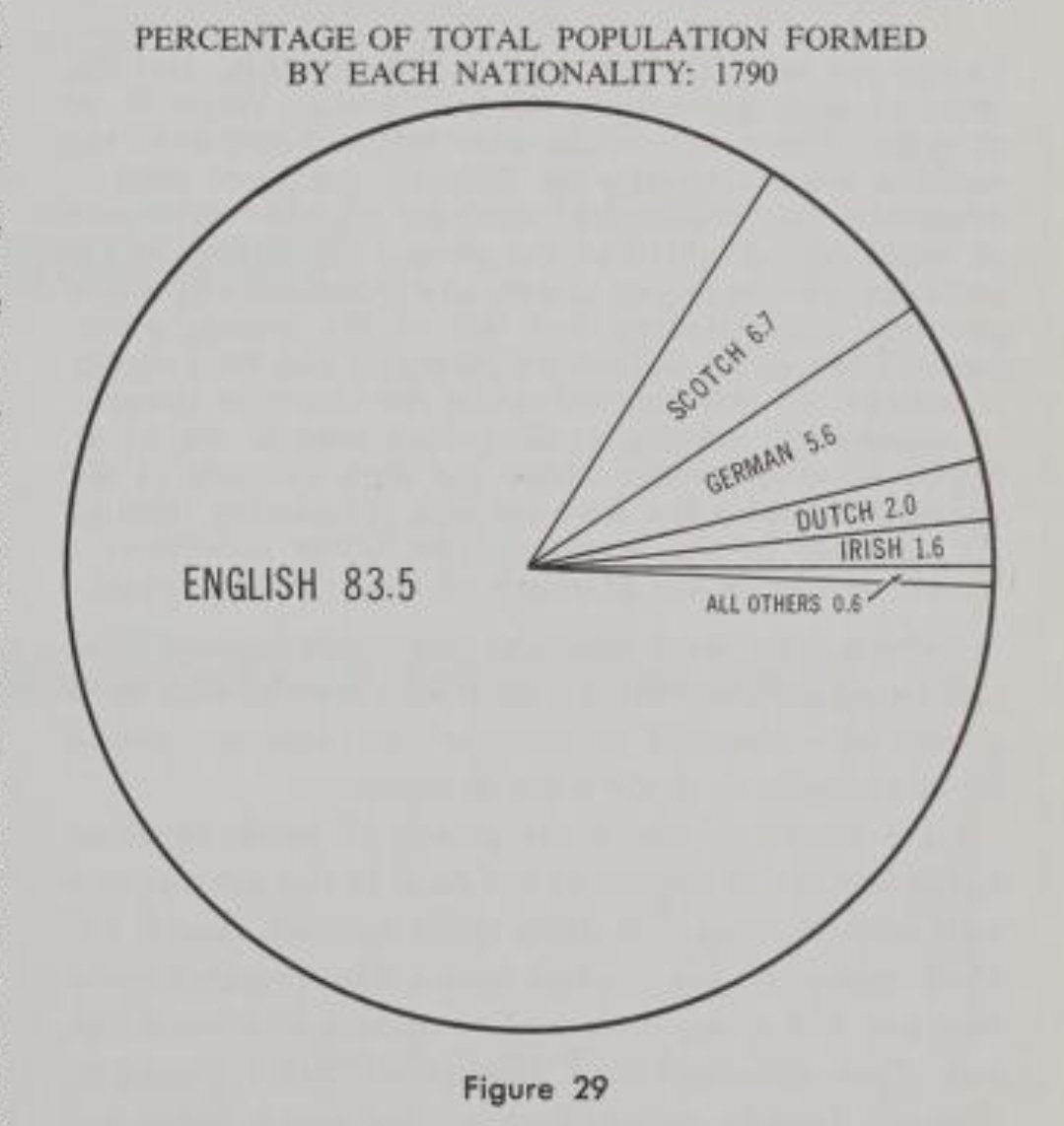
9/ American Wasn't Just Christian From The Beginning, It Was Also "White"

10
10/ America Is A White Country
Starting with the 1790 Act of the First Congress, American Citizenship was formally limited to White people. This fundamental constraint was consistently reinforced several times through further acts of congress, like the Chinese Exclusion Act of 1882, the Asiatic Barred Zone Immigration Act of 1917, the Johnson-Reed National Origins Quota Immigration Act of 1924 & the McCarran–Walter Immigration Act of 1952.

Starting with the 1790 Act of the First Congress, American Citizenship was formally limited to White people. This fundamental constraint was consistently reinforced several times through further acts of congress, like the Chinese Exclusion Act of 1882, the Asiatic Barred Zone Immigration Act of 1917, the Johnson-Reed National Origins Quota Immigration Act of 1924 & the McCarran–Walter Immigration Act of 1952.
11
11/ America Is A Patchwork & Tapestry Of The European Ethnicities
Whereas in the Old World, the various European ethnicities & denominations fought wars for thousands of years, here in America they were united into peaceful coexistence through our unique institutions that drew upon our shared Christian values & common European customs, sensibilities & philosophies.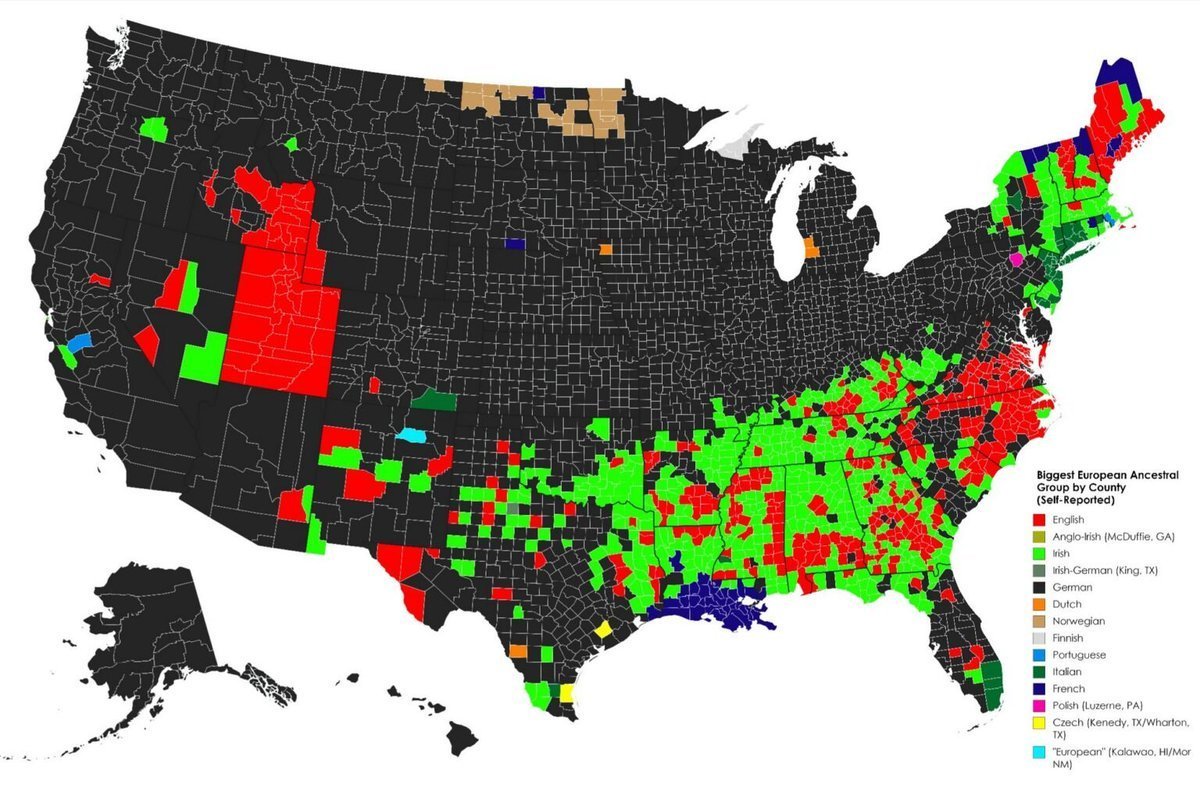

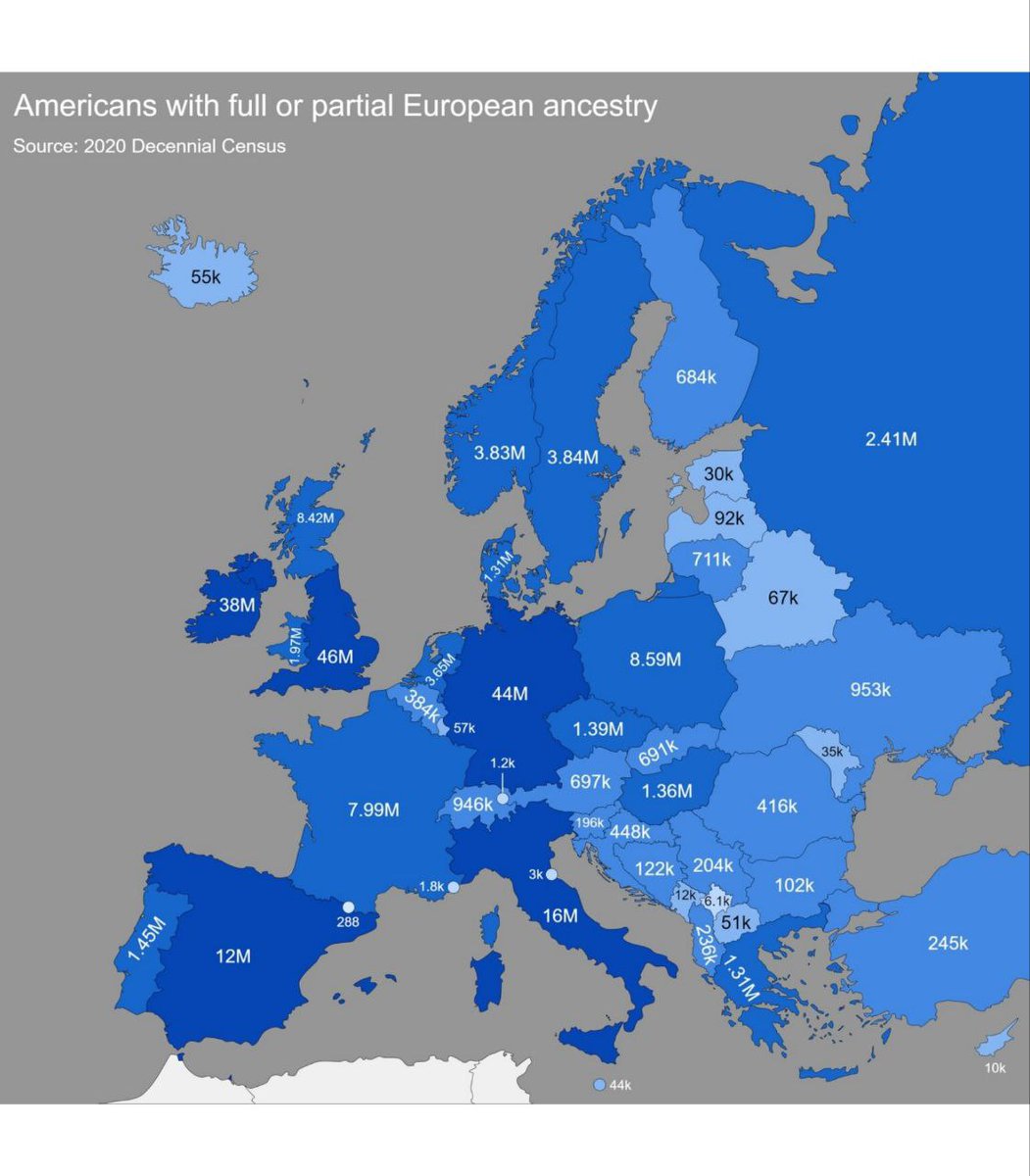
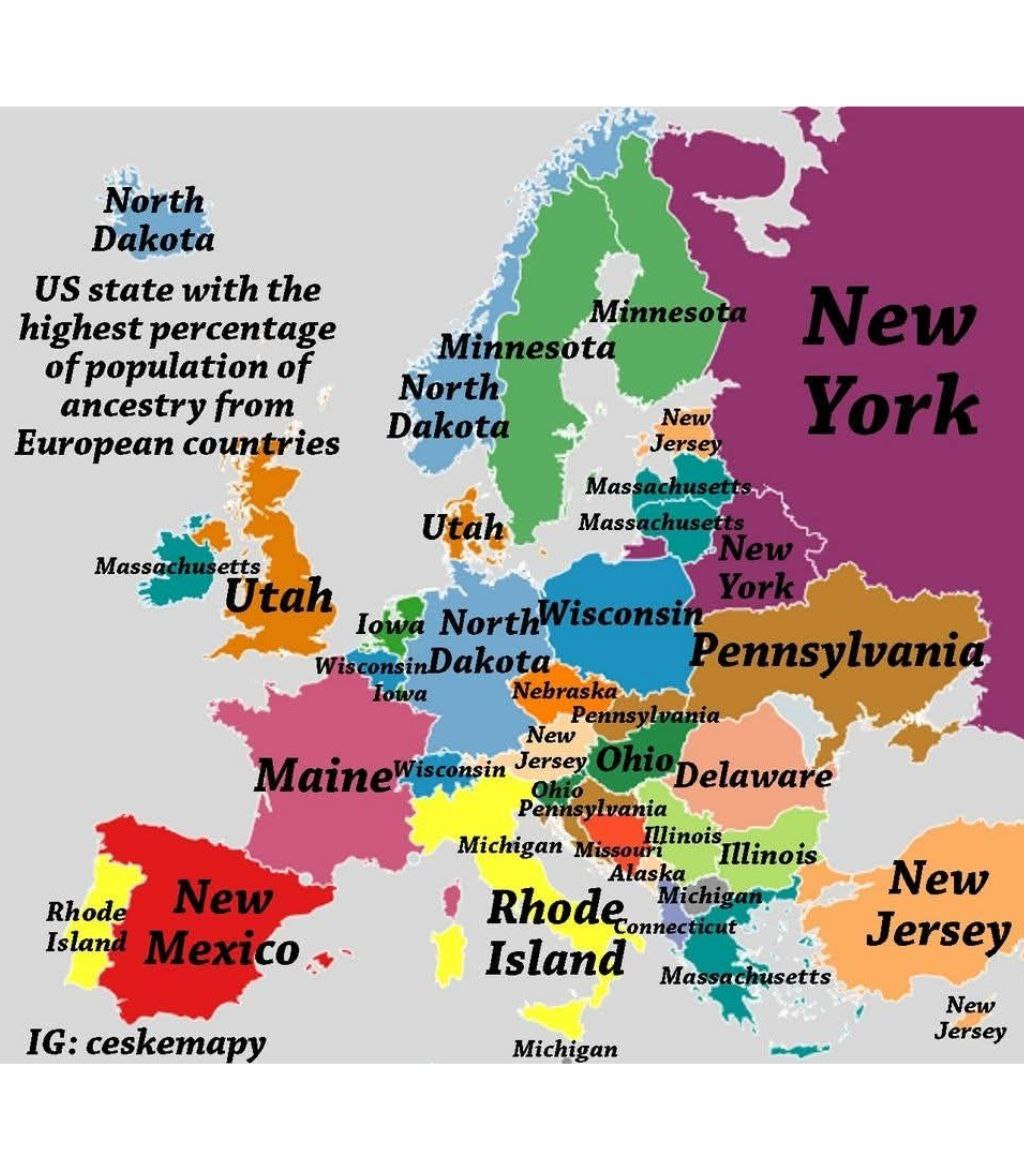
Whereas in the Old World, the various European ethnicities & denominations fought wars for thousands of years, here in America they were united into peaceful coexistence through our unique institutions that drew upon our shared Christian values & common European customs, sensibilities & philosophies.
12
12/ Christianity Is the American Religion Of White People
So strong was the correlation, connection & compatibility between "Whiteness" and Christianity, that in 1965 the country was 89.5% White and 93% Christian.
And as America becomes less White, it becomes less Christian.
So strong was the correlation, connection & compatibility between "Whiteness" and Christianity, that in 1965 the country was 89.5% White and 93% Christian.
And as America becomes less White, it becomes less Christian.
13
13/ Twin Pillars Of American Nationalism = [White + Christian]
Many Americans mistakenly believe that our Nation was founded for all races & cultures, but that's just not true. "Multicultural America" is a post-1965 concept, a "retcon."
While the emergent White Nationalist movement acknowledges this & seeks to promote the truth about our White history, it tends to struggle with our nation's Christian history & character. Many White Nationalists are ignorant of the Christian demographic construction and organization of America which, as I've shown, actually preceded the 1790 Immigration Act that they uphold as a foundational pillar of White Nationalism.
But as I've shown in this thread, you literally can't have America without Christianity. The Constitution wouldn't exist. Government of, by and for the people as we know it wouldn't exist. And the American Character & Spirit would just be radically different.
Meanwhile, Christian and "Civic" Nationalists either downplay or deny the fundamentally "White" roots, organization & origins of America. Liberia is a country that's 85% Christian, speaks English and had a Constitution patterned after ours, but no serious person would ever compare Liberia to the US.
Bottom Line: if you destroy White people, you destroy America. But, if you destroy Christianity, you likewise destroy America.
That's just a fact. And your own personal feelings about Christianity one way or the other are irrelevant, just as your feelings about White people are irrelevant.
America is White. America is Christian. This is what I call "American Nationalism."
Many Americans mistakenly believe that our Nation was founded for all races & cultures, but that's just not true. "Multicultural America" is a post-1965 concept, a "retcon."
While the emergent White Nationalist movement acknowledges this & seeks to promote the truth about our White history, it tends to struggle with our nation's Christian history & character. Many White Nationalists are ignorant of the Christian demographic construction and organization of America which, as I've shown, actually preceded the 1790 Immigration Act that they uphold as a foundational pillar of White Nationalism.
But as I've shown in this thread, you literally can't have America without Christianity. The Constitution wouldn't exist. Government of, by and for the people as we know it wouldn't exist. And the American Character & Spirit would just be radically different.
Meanwhile, Christian and "Civic" Nationalists either downplay or deny the fundamentally "White" roots, organization & origins of America. Liberia is a country that's 85% Christian, speaks English and had a Constitution patterned after ours, but no serious person would ever compare Liberia to the US.
Bottom Line: if you destroy White people, you destroy America. But, if you destroy Christianity, you likewise destroy America.
That's just a fact. And your own personal feelings about Christianity one way or the other are irrelevant, just as your feelings about White people are irrelevant.
America is White. America is Christian. This is what I call "American Nationalism."
14
14/ A Note On The Black Population
Founding Population & Growth Of America:
Citizens
▪️White Protestants: ~2.45 million
▪️White Catholics: ~47.5k
▪️~2,000 jews (who originally were prevented from holding office in many states)
Non-Citizens
▪️700k slaves
By 1865, America was ~88% White/10% Black. In 1965, it was 89.5% White, still only around 9-10% Black. 93% Christian.
Until 1965, the US was a stable ethnostate w/a small Black carve-out. We fought the Civil War, passed some Amendments & formally decided as a nation to make Blacks citizens.
But this didn't transform the fabric of America which was principally White & Christian. Nor did it make Blacks capable of perpetuating America. They can be citizens, but they can't be perpetuaters: America was born of and organized & populated by White Christians. Only the genius and biology of this American Christian Whiteness can perpetuate America.
Founding Population & Growth Of America:
Citizens
▪️White Protestants: ~2.45 million
▪️White Catholics: ~47.5k
▪️~2,000 jews (who originally were prevented from holding office in many states)
Non-Citizens
▪️700k slaves
By 1865, America was ~88% White/10% Black. In 1965, it was 89.5% White, still only around 9-10% Black. 93% Christian.
Until 1965, the US was a stable ethnostate w/a small Black carve-out. We fought the Civil War, passed some Amendments & formally decided as a nation to make Blacks citizens.
But this didn't transform the fabric of America which was principally White & Christian. Nor did it make Blacks capable of perpetuating America. They can be citizens, but they can't be perpetuaters: America was born of and organized & populated by White Christians. Only the genius and biology of this American Christian Whiteness can perpetuate America.
15
15/ Commercial Break: If you'd like to support my work, or you find it of value, I have Buymeacoffee, CashApp, Venmo, PayPal & crypto. Twitter has demonetized both my accounts & stripped me of my paid subs. Anything is appreciated!
(thread continues)
Flow.page/SamParkerSenate
(thread continues)
Flow.page/SamParkerSenate
16
16/ More on the "Perpetuation of America" here:

Sam Parker 🇺🇸🧯@BasedSamParker
Being an American isn't just a matter of assimilating by adopting language, customs & culture--although that's critical. Simply put, non-Europeans can't perpetuate America, because it's Europeans who built America. And too many non-Europeans would overrun & dilute America, destroying it. Stay with me as I explain what I mean.
America can--and did--tolerate a mix of a small minority population, mostly black. But it was that 90% White Christian population that made America and created its national spirit, culture, character, systems & infrastructure. A dominant demographic can withstand a small, assimilated minority population. I'm not saying it's ideal or that that's what I want, I'm just stating a fact. That's what America has historically been.
I could go live on the nearby Indian reservation and adopt its clothing, food, customs & language. The tribe could tolerate my presence without disruption in that limited scenario. It could even tolerate me, my wife and my kids. But, if my descendents started outnumbering theirs, it would be extremely disruptive & destructive. At some point, it would cease to be the Indian tribe and start to become my tribe.
As a result, the original tribe's genius would be lost, being replaced by my genius. I can't perpetuate the Indian tribe. I don't have its genetic legacy, I don't have its mind, I don't have its inborn traits, predilections & aptitudes. I have my own.
By the same token, Mexicans, Indians, Africans, Asians, jews, etc.--they can't perpetuate America. The best they can do is assimilate as small minority populations under an overwhelmingly dominant White Christian demographic. Anything more than that is disruptive & destructive to America.
This isn't hateful, it's just true. And even if it were hateful, it wouldn't matter because my nation's survival is more important than your feelings and selfish desire for my civilization.
We've pretended for 60 years that non-European populations can be Americans just as much as the Founding stock. But that's only true in the limited sense of the dominant demographic remaining dominant and exerting the necessary influence on the minority body. Pretending otherwise has done a great disservice to the country.
To limited-scope, non-White monitory populations, we extended the full privileges of citizenship. But having citizenship and being capable of perpetuating America are two entirely different things: I can go be adopted by the local tribe, but I can't perpetuate it. We've mistaken "equality under the law" for "same-ness." Non-Whites, as a small minority population, can be equal under the law. But they can never be "the same" in terms of being able to maintain, sustain and perpetuate America.
Since the ability of Whites to exert natural cultural dominance is slipping away, it might be time to explore intentional & active systems of cultural dominance until the natural, passive order is restored. That includes citizenship limitations for non-Whites that we don't (or can't) deport. Voting privileges, government services, taxation & benefits differentials, preferential employment considerations, repeal of various Civil Rights era legislations, etc., should all be on the table.
It's not the ideal scenario, but neither was importing mass waves of people who are incapable of perpetuating America. Anyone who doesn't like it could always just go back to his/her home country and regain full & equal citizenship privileges back there.
Moreover, if you as a non-White still think anyone can be an American and perpetuate America, then it should be no problem for you to reproduce America in your home country.
And, tbh, not even every kind of European is necessarily capable of perpetuating America. But that's a whole 'nother tweet.
America can--and did--tolerate a mix of a small minority population, mostly black. But it was that 90% White Christian population that made America and created its national spirit, culture, character, systems & infrastructure. A dominant demographic can withstand a small, assimilated minority population. I'm not saying it's ideal or that that's what I want, I'm just stating a fact. That's what America has historically been.
I could go live on the nearby Indian reservation and adopt its clothing, food, customs & language. The tribe could tolerate my presence without disruption in that limited scenario. It could even tolerate me, my wife and my kids. But, if my descendents started outnumbering theirs, it would be extremely disruptive & destructive. At some point, it would cease to be the Indian tribe and start to become my tribe.
As a result, the original tribe's genius would be lost, being replaced by my genius. I can't perpetuate the Indian tribe. I don't have its genetic legacy, I don't have its mind, I don't have its inborn traits, predilections & aptitudes. I have my own.
By the same token, Mexicans, Indians, Africans, Asians, jews, etc.--they can't perpetuate America. The best they can do is assimilate as small minority populations under an overwhelmingly dominant White Christian demographic. Anything more than that is disruptive & destructive to America.
This isn't hateful, it's just true. And even if it were hateful, it wouldn't matter because my nation's survival is more important than your feelings and selfish desire for my civilization.
We've pretended for 60 years that non-European populations can be Americans just as much as the Founding stock. But that's only true in the limited sense of the dominant demographic remaining dominant and exerting the necessary influence on the minority body. Pretending otherwise has done a great disservice to the country.
To limited-scope, non-White monitory populations, we extended the full privileges of citizenship. But having citizenship and being capable of perpetuating America are two entirely different things: I can go be adopted by the local tribe, but I can't perpetuate it. We've mistaken "equality under the law" for "same-ness." Non-Whites, as a small minority population, can be equal under the law. But they can never be "the same" in terms of being able to maintain, sustain and perpetuate America.
Since the ability of Whites to exert natural cultural dominance is slipping away, it might be time to explore intentional & active systems of cultural dominance until the natural, passive order is restored. That includes citizenship limitations for non-Whites that we don't (or can't) deport. Voting privileges, government services, taxation & benefits differentials, preferential employment considerations, repeal of various Civil Rights era legislations, etc., should all be on the table.
It's not the ideal scenario, but neither was importing mass waves of people who are incapable of perpetuating America. Anyone who doesn't like it could always just go back to his/her home country and regain full & equal citizenship privileges back there.
Moreover, if you as a non-White still think anyone can be an American and perpetuate America, then it should be no problem for you to reproduce America in your home country.
And, tbh, not even every kind of European is necessarily capable of perpetuating America. But that's a whole 'nother tweet.
17
17/ More on Utah and its relevance to the various Nationalist movements

Sam Parker 🇺🇸🧯@BasedSamParker
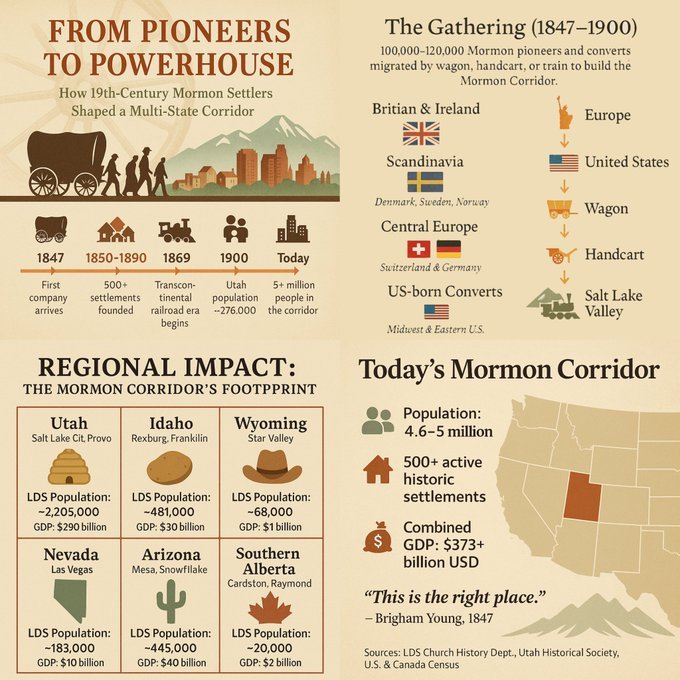
1/ Mormons? I see the Church of Jesus Christ of Latter-day Saints is trending, so I've put together a little thread for my Frens.
In the mid-1840s, Mormons were driven from their homes & property in Ohio, Missouri & Illinois by mob violence & extermination orders and fled to the desolate wasteland of the Great Salt Lake, where they "made the desert bloom."
Between 1847-1900, about 120,000 Mormon pioneers immigrated from North/Western Europe & fled the US into the Intermountain West.
Once there, they founded over 500 settlements from Mexico to Canada. Today, these "Mormon Corridor" settlements comprise about 5 million members of the LDS church and contribute an annual GDP of nearly $400 Billion.
San Bernardino (CA), Las Vegas (NV) & Mesa (AZ) are notable places Mormons helped establish outside of Utah, which itself became a state in 1896--joining the Union it had been driven out of only a half century earlier.
(cont)
In the mid-1840s, Mormons were driven from their homes & property in Ohio, Missouri & Illinois by mob violence & extermination orders and fled to the desolate wasteland of the Great Salt Lake, where they "made the desert bloom."
Between 1847-1900, about 120,000 Mormon pioneers immigrated from North/Western Europe & fled the US into the Intermountain West.
Once there, they founded over 500 settlements from Mexico to Canada. Today, these "Mormon Corridor" settlements comprise about 5 million members of the LDS church and contribute an annual GDP of nearly $400 Billion.
San Bernardino (CA), Las Vegas (NV) & Mesa (AZ) are notable places Mormons helped establish outside of Utah, which itself became a state in 1896--joining the Union it had been driven out of only a half century earlier.
(cont)
18
18/ This long thread explores who is behind the demographic destruction of America:

Sam Parker 🇺🇸🧯@BasedSamParker
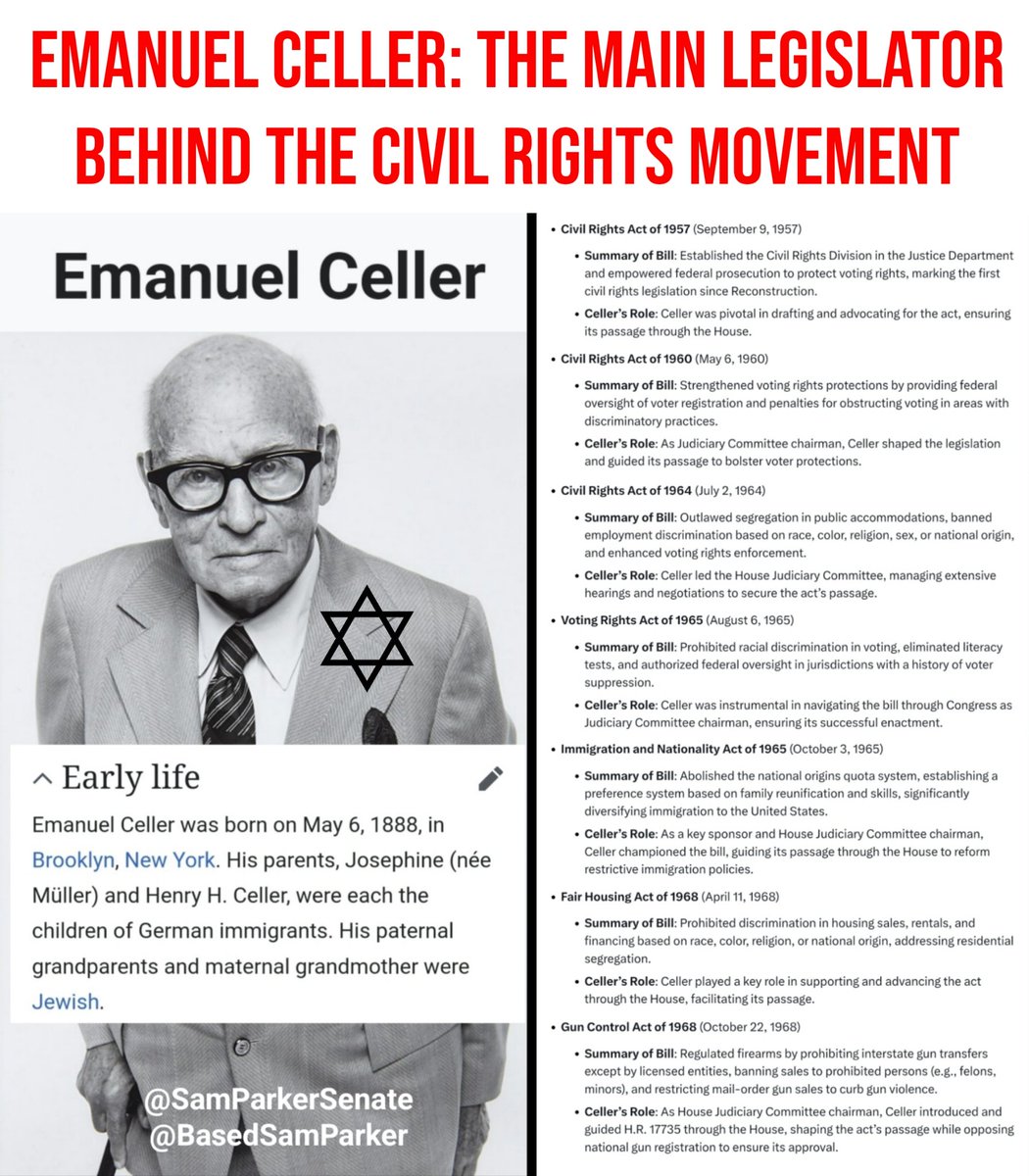
Congressman Emanuel Celler sponsored & wrote the Civil Rights Act of 1964 that created the Community Relations Service--the "shadowy" agency that helped propel the Civil Rights movement. He also wrote the 1957 Civil Rights Act that created the Civil Rights Division of the DOJ in the first place.
Auron & @AcademicAgent_X did not tell you this in their podcast today. Important info to understand the whole picture.
Auron & @AcademicAgent_X did not tell you this in their podcast today. Important info to understand the whole picture.
19
19/ Parting Shot
Leo Pfeffer: the jew who helped launch the assault on Christianity in the public square. Coined the term "Secular Humanism."
Leo Pfeffer: the jew who helped launch the assault on Christianity in the public square. Coined the term "Secular Humanism."
20
20/ Note on Liberia. This was inadvertently left out of a tweet above.
Liberia is descended from former American slaves who spoke English & adopted an identical constitution. It's 85% Christian. It suffered over a century of political strife. In 2019, it was ranked 178 in per capita GDP in the world.
Liberia is descended from former American slaves who spoke English & adopted an identical constitution. It's 85% Christian. It suffered over a century of political strife. In 2019, it was ranked 178 in per capita GDP in the world.
21
@TruthArchiveAI save thread