A Youtuber has termed India's foreign policy under Modi as...

DeepDownAnalysis@deepdownanlyz
16 views
Jun 21, 2025
~9 min read
Advertisement
1
A Youtuber has termed India's foreign policy under Modi as "Disaster".
Video's Thumbnail : "Surrender Modi?"
As usual, he presents selective articles cut to prove his propaganda point.
As a result, that video is far from the truth.
India has come a long way from "Request, Restraint and Complain" diplomacy to "Assertive, Authoritative and Outcome" diplomacy.
Read this thread till the end:

Video's Thumbnail : "Surrender Modi?"
As usual, he presents selective articles cut to prove his propaganda point.
As a result, that video is far from the truth.
India has come a long way from "Request, Restraint and Complain" diplomacy to "Assertive, Authoritative and Outcome" diplomacy.
Read this thread till the end:
2
Let's Meet Dr. S. Jaishankar: the man leading India’s diplomacy:
A 1977 IFS topper, ex-Ambassador to the U.S., China & Singapore, he helped negotiate the U.S.-India Civil Nuclear Deal.
As Foreign Secretary, he handled Uri, Doklam, and internationalized counter-terror diplomacy.
First career diplomat to become EAM. Speaks 5 languages, a realist strategist, and the architect of India’s multipolar positioning.
Contrast this with Congress-era EAMs like SM Krishna reading Portuguese speeches in Brazil or Salman Khurshid’s gaffe-laden tenure.
Natwar Singh, as External Affairs Minister under UPA, was forced to resign in 2005 after being named in the UN's Iraq Oil-for-Food scam.
S. Jaishankar isn’t symbolic—he’s strategic.
A 1977 IFS topper, ex-Ambassador to the U.S., China & Singapore, he helped negotiate the U.S.-India Civil Nuclear Deal.
As Foreign Secretary, he handled Uri, Doklam, and internationalized counter-terror diplomacy.
First career diplomat to become EAM. Speaks 5 languages, a realist strategist, and the architect of India’s multipolar positioning.
Contrast this with Congress-era EAMs like SM Krishna reading Portuguese speeches in Brazil or Salman Khurshid’s gaffe-laden tenure.
Natwar Singh, as External Affairs Minister under UPA, was forced to resign in 2005 after being named in the UN's Iraq Oil-for-Food scam.
S. Jaishankar isn’t symbolic—he’s strategic.
3
Now Come to India's Diplomacy:
And let's start with Pakistan.
India has moved from getting sympathy of others to taking action on its own.
After 26/11 attack, US and West all gave sympathy to India but Indian political leadership couldn't get courage, support or approval to take action against Pakistan.
This was not the only attack, it was preceeded and succeeded with many more attacks.
India signed a statement giving Pakistan a reason to blame India for Balochistan movement.
This was our previous diplomacy with Pakistan.
Under Modi:
And let's start with Pakistan.
India has moved from getting sympathy of others to taking action on its own.
After 26/11 attack, US and West all gave sympathy to India but Indian political leadership couldn't get courage, support or approval to take action against Pakistan.
This was not the only attack, it was preceeded and succeeded with many more attacks.
India signed a statement giving Pakistan a reason to blame India for Balochistan movement.
This was our previous diplomacy with Pakistan.
Under Modi:
4
India gave Pakistan enough chance before started to act on its own - surgical strike, Balakot strike, Got Abhinandan back within a day, got BSF soldier back safe despite escalated situation and Operation Sindoor.
Before this Modi invited Sharif in swearing in ceremony, went to Pakistan as a good gesture, asked ISI to investigate Pathankot attack.
It showed world enough, how India wanted to establish peace with Pakistan. After this, India went assertive and bold.
Demonetization, Article 370 abrogation and decisive response to terror attacks.
India didnt seek permission from US or West unlike Congress govt's foreign policy.
Let's come to our friends who went away as per Rathi:
Before this Modi invited Sharif in swearing in ceremony, went to Pakistan as a good gesture, asked ISI to investigate Pathankot attack.
It showed world enough, how India wanted to establish peace with Pakistan. After this, India went assertive and bold.
Demonetization, Article 370 abrogation and decisive response to terror attacks.
India didnt seek permission from US or West unlike Congress govt's foreign policy.
Let's come to our friends who went away as per Rathi:
5
Bangladesh:
Since Modi coming to power, India achieved something extraordinary with Bangladesh before elected govt was overthrown in 2024:
1. Land Boundary Agreement (2015):
Exchanged 162 enclaves, ending a 41-year-old border dispute.
2. Maritime Boundary Settlement (2014):
Finalized sea borders via UN tribunal, ensuring clear EEZ rights.
3. Feni & Kushiyara River Agreements:
Enabled mutual water sharing for irrigation and drinking needs.
4. Tin Bigha Corridor Finalization:
Improved access and integration for enclave residents.
5. Connectivity Boost:
Launched Akhaura–Agartala rail link, Maitri Setu, oil pipeline, and access to Chittagong & Mongla ports.
But....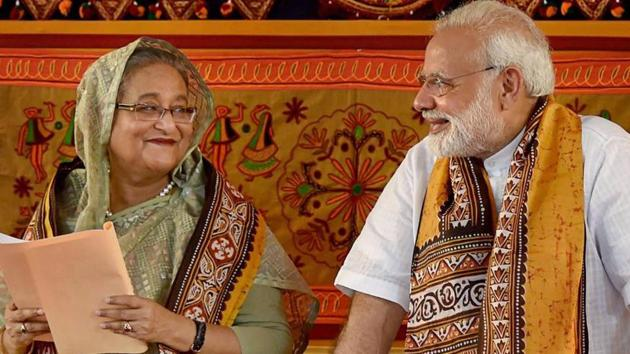
Since Modi coming to power, India achieved something extraordinary with Bangladesh before elected govt was overthrown in 2024:
1. Land Boundary Agreement (2015):
Exchanged 162 enclaves, ending a 41-year-old border dispute.
2. Maritime Boundary Settlement (2014):
Finalized sea borders via UN tribunal, ensuring clear EEZ rights.
3. Feni & Kushiyara River Agreements:
Enabled mutual water sharing for irrigation and drinking needs.
4. Tin Bigha Corridor Finalization:
Improved access and integration for enclave residents.
5. Connectivity Boost:
Launched Akhaura–Agartala rail link, Maitri Setu, oil pipeline, and access to Chittagong & Mongla ports.
But....
6
.... deep state and China installed puppet Yunus will definitely tried to sabotage all this.
Look at Bangladesh's closeness to Pakistan under Yunus vs Sheikh Hasina.
Minorities are being raped and killed at scale.
India, unlike in past, will make sure an elected govt comes to power favourably Awami League.
Rathi excluded all the above steps take by Modi govt.
Let's come to Maldives:
Look at Bangladesh's closeness to Pakistan under Yunus vs Sheikh Hasina.
Minorities are being raped and killed at scale.
India, unlike in past, will make sure an elected govt comes to power favourably Awami League.
Rathi excluded all the above steps take by Modi govt.
Let's come to Maldives:
7
Maldives: Dhruv claims India lost Maldives.
Reality: Modi weathered the regime change.
When Maldives’ President Muizzu launched the “India Out” campaign, PM Modi and EAM Jaishankar responded with firm diplomacy and strategic calm. India agreed to withdraw 77 military personnel by May 2024, but retained control of radar stations, medical teams, and critical infrastructure.
India stayed Maldives’ top development partner, committing $2.6+ billion, including the $500 million Greater Malé Connectivity Project. Jaishankar also strengthened ties with Sri Lanka, Mauritius, and Seychelles to balance China’s influence in the region.
In January 2024, PM Modi’s photos from Lakshadweep showcasing India's pristine island tourism went viral. This smart soft-power move redirected global attention and sparked a massive backlash against Maldives' anti-India rhetoric, leading to #BoycottMaldives trending and Indian bookings plummeting.
Under growing public, diplomatic, and economic pressure, Muizzu softened his stance, welcomed Indian teams, and acknowledged India’s role in over 70% of Maldives’ medical evacuations.
The episode became a case study in Modi-Jaishankar diplomacy: strategic, patient, and backed by public sentiment, soft power, and hard facts
What about Bhutan:
Reality: Modi weathered the regime change.
When Maldives’ President Muizzu launched the “India Out” campaign, PM Modi and EAM Jaishankar responded with firm diplomacy and strategic calm. India agreed to withdraw 77 military personnel by May 2024, but retained control of radar stations, medical teams, and critical infrastructure.
India stayed Maldives’ top development partner, committing $2.6+ billion, including the $500 million Greater Malé Connectivity Project. Jaishankar also strengthened ties with Sri Lanka, Mauritius, and Seychelles to balance China’s influence in the region.
In January 2024, PM Modi’s photos from Lakshadweep showcasing India's pristine island tourism went viral. This smart soft-power move redirected global attention and sparked a massive backlash against Maldives' anti-India rhetoric, leading to #BoycottMaldives trending and Indian bookings plummeting.
Under growing public, diplomatic, and economic pressure, Muizzu softened his stance, welcomed Indian teams, and acknowledged India’s role in over 70% of Maldives’ medical evacuations.
The episode became a case study in Modi-Jaishankar diplomacy: strategic, patient, and backed by public sentiment, soft power, and hard facts
What about Bhutan:
8
According to Dhruv Rathi, Bhutan is slipping away from India. But the truth is:
India–Bhutan Ties Under Modi & Jaishankar: Stronger Than Ever
1. Massive Economic Support:
In 2024, India doubled its assistance to Bhutan’s 13th Five-Year Plan from ₹5,000 crore to ₹10,000 crore (~$1.2 billion).
2. Focus areas: Hydropower, healthcare, digital infrastructure, agriculture, and space collaboration.
3. Breakthrough Connectivity Projects
Launched the Kokrajhar–Gelephu rail link—India’s first cross-border railway to Bhutan.
4. Upgraded trade routes, immigration checkpoints, and border infrastructure to enhance movement and trade.
5. High-Level Strategic Engagement
PM Modi met Bhutan’s King twice in two years, reaffirming trust and alignment on China-Bhutan boundary talks (especially around Doklam).
EAM Jaishankar hosted Bhutanese leadership and CEOs, building economic and strategic bridges.
6. People-Centric Integration
Expanded RuPay card usage between India and Bhutan.
Enhanced cross-border services like digital payments, green energy partnerships, and seamless travel.
7. Strategic Outcome
Despite China’s push, Bhutan remains India’s closest and most trusted neighbour, thanks to targeted funding, deep engagement, and quiet diplomacy.
Read about Nepal:
India–Bhutan Ties Under Modi & Jaishankar: Stronger Than Ever
1. Massive Economic Support:
In 2024, India doubled its assistance to Bhutan’s 13th Five-Year Plan from ₹5,000 crore to ₹10,000 crore (~$1.2 billion).
2. Focus areas: Hydropower, healthcare, digital infrastructure, agriculture, and space collaboration.
3. Breakthrough Connectivity Projects
Launched the Kokrajhar–Gelephu rail link—India’s first cross-border railway to Bhutan.
4. Upgraded trade routes, immigration checkpoints, and border infrastructure to enhance movement and trade.
5. High-Level Strategic Engagement
PM Modi met Bhutan’s King twice in two years, reaffirming trust and alignment on China-Bhutan boundary talks (especially around Doklam).
EAM Jaishankar hosted Bhutanese leadership and CEOs, building economic and strategic bridges.
6. People-Centric Integration
Expanded RuPay card usage between India and Bhutan.
Enhanced cross-border services like digital payments, green energy partnerships, and seamless travel.
7. Strategic Outcome
Despite China’s push, Bhutan remains India’s closest and most trusted neighbour, thanks to targeted funding, deep engagement, and quiet diplomacy.
Read about Nepal:
9
According to Dhruv Rathi, Nepal has dumped India and embraced China.
He highlighted how China including Nepal in BRI and PM Oli skipped visiting India but went to China.
Yes there is China tilted PM in power in Nepal. Modi govt has taken one major change in its diplomacy with Nepal.
It is investing in People centric project in Nepal where Nepali mass will have trust in India and India's effort rather than just rhetoric.
Nepal and Nepali people are looking for development.
Here are highlights:
1. Big Energy Partnership
India signed a 10,000 MW power trade agreement with Nepal over 10 years making India the main buyer of Nepal’s hydroelectricity.
This move not only boosts Nepal’s economy but also blocks Chinese energy firms from gaining a foothold.
2. Cross-Border Connectivity
Completed the Motihari–Amlekhgunj oil pipeline, saving Nepal ~$20 million annually.
Expanded rail projects like Jaynagar–Bardibas and planning Raxaul–Kathmandu link enhancing trade, mobility, and people-to-people ties.
3. High-Level Diplomacy:
Jaishankar chaired the 7th India-Nepal Joint Commission in 2024, signing key deals in power, infrastructure, education, and space.
PM Modi and Nepal PM Prachanda have met multiple times, agreeing to peacefully resolve boundary issues and deepen cooperation.
4. Smart Strategy vs China:
While China’s Belt & Road projects in Nepal have largely stalled, India focused on deliverable, people-first infrastructure.
By showing results not promises, India regained trust lost during the 2015 blockade and boundary tensions.
Outcome:
Modi and Jaishankar have turned a delicate relationship into a strategic partnership, built on trust, power trade, connectivity, and quiet diplomacy outpacing China with action over announcements.
He highlighted how China including Nepal in BRI and PM Oli skipped visiting India but went to China.
Yes there is China tilted PM in power in Nepal. Modi govt has taken one major change in its diplomacy with Nepal.
It is investing in People centric project in Nepal where Nepali mass will have trust in India and India's effort rather than just rhetoric.
Nepal and Nepali people are looking for development.
Here are highlights:
1. Big Energy Partnership
India signed a 10,000 MW power trade agreement with Nepal over 10 years making India the main buyer of Nepal’s hydroelectricity.
This move not only boosts Nepal’s economy but also blocks Chinese energy firms from gaining a foothold.
2. Cross-Border Connectivity
Completed the Motihari–Amlekhgunj oil pipeline, saving Nepal ~$20 million annually.
Expanded rail projects like Jaynagar–Bardibas and planning Raxaul–Kathmandu link enhancing trade, mobility, and people-to-people ties.
3. High-Level Diplomacy:
Jaishankar chaired the 7th India-Nepal Joint Commission in 2024, signing key deals in power, infrastructure, education, and space.
PM Modi and Nepal PM Prachanda have met multiple times, agreeing to peacefully resolve boundary issues and deepen cooperation.
4. Smart Strategy vs China:
While China’s Belt & Road projects in Nepal have largely stalled, India focused on deliverable, people-first infrastructure.
By showing results not promises, India regained trust lost during the 2015 blockade and boundary tensions.
Outcome:
Modi and Jaishankar have turned a delicate relationship into a strategic partnership, built on trust, power trade, connectivity, and quiet diplomacy outpacing China with action over announcements.
10
Iran- Afghanistan: Both are our strategic allies. It continues to grow stronger than ever.
India has been investing heavily in Chabhar port. India has remained neutral in Israel-Iran conflict.
Before sanctions, India used to be one of the top importers of Iranian oil that too in local currency.
Iran opened its airspace for Indian students to be rescued.
Even with Taliban in power, India's tie with Afghanistan is as good and stable as before. Because of India's people centric development work done there.
Indian foreign ministry under Jaishankar have been in continuous touch with Taliban ministry.
Relations with Iran, Afghanistan are strategic and strong.
Let's come to China:
India has been investing heavily in Chabhar port. India has remained neutral in Israel-Iran conflict.
Before sanctions, India used to be one of the top importers of Iranian oil that too in local currency.
Iran opened its airspace for Indian students to be rescued.
Even with Taliban in power, India's tie with Afghanistan is as good and stable as before. Because of India's people centric development work done there.
Indian foreign ministry under Jaishankar have been in continuous touch with Taliban ministry.
Relations with Iran, Afghanistan are strategic and strong.
Let's come to China:
11
China: India-China Bhai Bhai diplomacy costed India seat in UNSC and 38000 SqKM of Aksai Chin Area.
Under Congress, India has always miscalculated and given up to Chinese Aggression and expansionist agenda.
While Modi's diplomacy have been very particular in dealing border issues, trade and business.
Look at how India dealt with China:
Under Congress, India has always miscalculated and given up to Chinese Aggression and expansionist agenda.
While Modi's diplomacy have been very particular in dealing border issues, trade and business.
Look at how India dealt with China:
12
Modi–Jaishankar China Strategy: Firm, Strategic, Balanced
1. Strong Military Stand & Disengagement
Galwan Clash (June 2020): 20 Indian soldiers martyred; India responded with military deployments and infrastructure push along LAC.
Disengagement Achieved (Oct 2024): After 21 rounds of military talks, both sides agreed to restore status quo in Depsang, Demchok, and Galwan.
High-level coordination by Jaishankar & NSA Doval ensured firm yet peaceful resolution.
2. Strategic Diplomatic Re-engagement
BRICS 2024 (Kazan): Modi–Xi Jinping meeting reopened diplomatic engagement.
Agreements on resuming Kailash Mansarovar Yatra and direct India–China flights.
Border issues kept off public agenda—managed quietly through backchannels.
3. Economic Assertiveness with Pragmatism
300+ Chinese apps banned, Huawei & ZTE blocked from telecom sector.
FDI from China placed under strict scrutiny post-2020.
Yet, trade surged to over $100 billion in FY24—India balancing economic dependence with strategic caution.
4. Smart Global Signaling
India strengthened Quad ties (with US, Japan, Australia) and improved ties with Taiwan, while keeping diplomacy open with China.
It shows India's assertive, outcome oriented and independent approach towards handling a powerful adversary.
According to Dhruv Rathi, we should have chosen Nehru's methodolgy.
1. Strong Military Stand & Disengagement
Galwan Clash (June 2020): 20 Indian soldiers martyred; India responded with military deployments and infrastructure push along LAC.
Disengagement Achieved (Oct 2024): After 21 rounds of military talks, both sides agreed to restore status quo in Depsang, Demchok, and Galwan.
High-level coordination by Jaishankar & NSA Doval ensured firm yet peaceful resolution.
2. Strategic Diplomatic Re-engagement
BRICS 2024 (Kazan): Modi–Xi Jinping meeting reopened diplomatic engagement.
Agreements on resuming Kailash Mansarovar Yatra and direct India–China flights.
Border issues kept off public agenda—managed quietly through backchannels.
3. Economic Assertiveness with Pragmatism
300+ Chinese apps banned, Huawei & ZTE blocked from telecom sector.
FDI from China placed under strict scrutiny post-2020.
Yet, trade surged to over $100 billion in FY24—India balancing economic dependence with strategic caution.
4. Smart Global Signaling
India strengthened Quad ties (with US, Japan, Australia) and improved ties with Taiwan, while keeping diplomacy open with China.
It shows India's assertive, outcome oriented and independent approach towards handling a powerful adversary.
According to Dhruv Rathi, we should have chosen Nehru's methodolgy.
13
Now comes to big US, Canada and West"
Claim: India failed to get U.S. support post terror attacks
Reality: Modi has secured unprecedented strategic alignment with the U.S.
After Pahalgam attack in 2025, U.S. (Trump, Rubio, NSA, FBI) condemned Pakistan and affirmed India’s right to act.
India signed LEMOA, COMCASA, BECA, enabling interoperability and tech transfer.
Modi addressed U.S. Congress twice; Jaishankar established the 2+2 format for institutionalized dialogue.
Modi-Jaishankar Difference: Deep, defense-driven U.S. ties vs UPA’s reliance on sympathy & symbolic visits post-crisis.
Claim: India failed to get U.S. support post terror attacks
Reality: Modi has secured unprecedented strategic alignment with the U.S.
After Pahalgam attack in 2025, U.S. (Trump, Rubio, NSA, FBI) condemned Pakistan and affirmed India’s right to act.
India signed LEMOA, COMCASA, BECA, enabling interoperability and tech transfer.
Modi addressed U.S. Congress twice; Jaishankar established the 2+2 format for institutionalized dialogue.
Modi-Jaishankar Difference: Deep, defense-driven U.S. ties vs UPA’s reliance on sympathy & symbolic visits post-crisis.
14
Youtuber's Claim: India is blindly aligning with the West
Reality: India practices strategic autonomy.
On Ukraine, India refused to buckle to Western pressure, calling for diplomacy, sending humanitarian aid, while continuing oil trade with Russia for its national interest.
India maintained relations with Iran, stood firm on Israel–Palestine, and rejected OBOR over sovereignty concerns.
Participated in Quad, BRICS, SCO—balancing all major power blocs based on own interests.
Modi-Jaishankar Difference: They are Pursuing multipolarity and national interest over ideological camps and seeking sympathy.
Reality: India practices strategic autonomy.
On Ukraine, India refused to buckle to Western pressure, calling for diplomacy, sending humanitarian aid, while continuing oil trade with Russia for its national interest.
India maintained relations with Iran, stood firm on Israel–Palestine, and rejected OBOR over sovereignty concerns.
Participated in Quad, BRICS, SCO—balancing all major power blocs based on own interests.
Modi-Jaishankar Difference: They are Pursuing multipolarity and national interest over ideological camps and seeking sympathy.
15
This video is a propaganda, cherry-picking optics and one-off events. Modi–Jaishankar’s foreign policy is built on assertiveness, deals, national interest, and global respect.
India is no longer pleading for support and sympathy; it's setting the agenda from defense alliances to trade pacts to digital diplomacy.
Dhruv sees silence as weakness. Jaishankar’s diplomacy proves that measured assertion achieves more than performative outrage.
India is no longer pleading for support and sympathy; it's setting the agenda from defense alliances to trade pacts to digital diplomacy.
Dhruv sees silence as weakness. Jaishankar’s diplomacy proves that measured assertion achieves more than performative outrage.
16
India's diplomacy: will you call it failure or success?

17
Is this Failure and Insensitivity of Indian diplomacy?

