NEURALINK: CHANGING THE FUTURE, ONE THOUGHT AT A TIME “You don’t...

Mario Nawfal@MarioNawfal
105 views
Apr 26, 2025
~1 min read
Advertisement
1
NEURALINK: CHANGING THE FUTURE, ONE THOUGHT AT A TIME
“You don’t realize how much of your life is just moving a cursor around.”
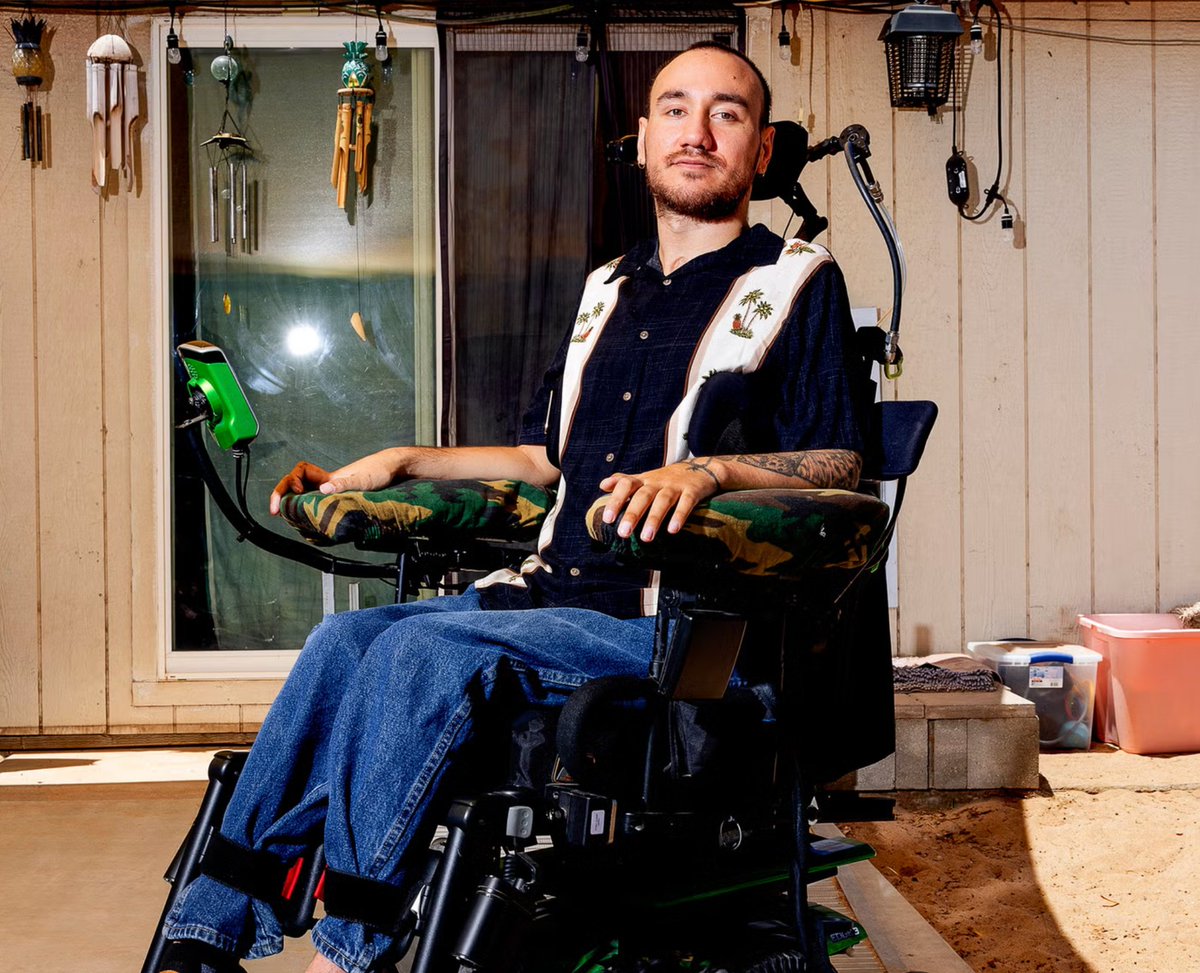
At home in Yuma, Arizona—the house he swore he’d never return to—Noland Arbaugh sits in the kitchen, under a Carhartt beanie that hides a coin-sized implant in his skull.
A simple disk held over his head wakes up the Neuralink device.
Then he thinks—and the cursor moves.
“Work,” @ModdedQuad says aloud, almost playfully.
A command. A symbol.
After losing all movement below his shoulders in a devastating accident, Noland tried everything to stay independent.
But the accident changed everything.
With Neuralink’s brain-computer interface, he controls a screen without lifting a finger.
Not science fiction. Reality.
“It’s just a relief to be doing something normal."
Early tests show Noland can move a cursor faster than any paralyzed patient using older tech.
Small actions. Huge freedom.
The chip didn't just restore function.
It restored a future.
Source: Men’s Health
“You don’t realize how much of your life is just moving a cursor around.”
At home in Yuma, Arizona—the house he swore he’d never return to—Noland Arbaugh sits in the kitchen, under a Carhartt beanie that hides a coin-sized implant in his skull.
A simple disk held over his head wakes up the Neuralink device.
Then he thinks—and the cursor moves.
“Work,” @ModdedQuad says aloud, almost playfully.
A command. A symbol.
After losing all movement below his shoulders in a devastating accident, Noland tried everything to stay independent.
But the accident changed everything.
With Neuralink’s brain-computer interface, he controls a screen without lifting a finger.
Not science fiction. Reality.
“It’s just a relief to be doing something normal."
Early tests show Noland can move a cursor faster than any paralyzed patient using older tech.
Small actions. Huge freedom.
The chip didn't just restore function.
It restored a future.
Source: Men’s Health
Mario Nawfal@MarioNawfal
🇺🇸 THAT SPECIAL MOMENT A NEURALINK PATIENT MOVED THE CURSOR WITH HIS MIND AFTER PARALYSIS
A 29-year-old paralyzed man used Neuralink’s brain implant to play online chess and move a computer cursor—just by thinking. In a livestream on X,
The implant, invisible once placed, reads brain signals and translates them into digital movement.
Neuralink received FDA approval last year, and Arbaugh is the first known test subject. “It has already changed my life,” he added.
No side effects have been reported.
Neuralink now races against competitors to bring brain-computer tech to the mainstream.
Source: Wired, Interesting Engineering, @neuralink, @ModdedQuad
A 29-year-old paralyzed man used Neuralink’s brain implant to play online chess and move a computer cursor—just by thinking. In a livestream on X,
The implant, invisible once placed, reads brain signals and translates them into digital movement.
Neuralink received FDA approval last year, and Arbaugh is the first known test subject. “It has already changed my life,” he added.
No side effects have been reported.
Neuralink now races against competitors to bring brain-computer tech to the mainstream.
Source: Wired, Interesting Engineering, @neuralink, @ModdedQuad

