Ever felt torn between people-pleasing or being a jerk, not knowing...

Pep@peptalksblog
49 views
Sep 15, 2025
~8 min read
Advertisement
1
Ever felt torn between people-pleasing or being a jerk, not knowing how to be neither?
Here’s a thread on why that happens, how to build self-respect without losing care for others—and be kind without betraying yourself 🧵
Here’s a thread on why that happens, how to build self-respect without losing care for others—and be kind without betraying yourself 🧵
2
As kids, we haven’t yet developed the capacity for emotional nuance.
So when social tension arises, we tend to fall into binary strategies to maintain belonging.
Some of us do this by agreeing, pleasing, and accommodating. Others by learning to take up space fast and hard. ↓
So when social tension arises, we tend to fall into binary strategies to maintain belonging.
Some of us do this by agreeing, pleasing, and accommodating. Others by learning to take up space fast and hard. ↓
3
The same strategies that kept us safe and approved in childhood can block intimacy in adult relationships.
If we haven't learned how to honor our truth AND feel secure in connection, how can we ever be fully loved as we are—or love freely, without needing to please? ↓
If we haven't learned how to honor our truth AND feel secure in connection, how can we ever be fully loved as we are—or love freely, without needing to please? ↓
4
You don’t need to pick between being a doormat or a bulldozer.
There’s a way to be assertive without being cold—and to be caring without abandoning yourself.
Here's a framework I learned while training with ART International that can help you find your center:
There’s a way to be assertive without being cold—and to be caring without abandoning yourself.
Here's a framework I learned while training with ART International that can help you find your center:
5
At the heart of relational presence are two qualities:
1) Dignity: “I matter.” (I don't need to make myself smaller than you.)
2) Humility: “You matter.” (I don't need to make myself bigger than you.)
But that's just the start of it: ↓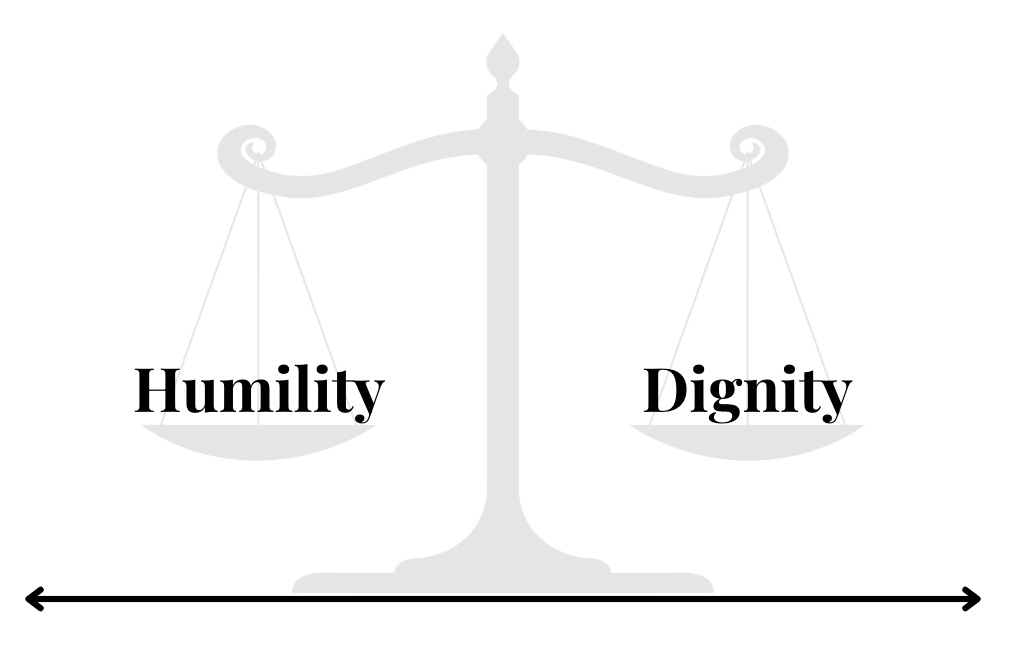
1) Dignity: “I matter.” (I don't need to make myself smaller than you.)
2) Humility: “You matter.” (I don't need to make myself bigger than you.)
But that's just the start of it: ↓
6
If we have dignity but no humility, we take the last piece of cake—no asking. We speak confidently, but don’t listen like their words carry weight.
If we're humble without dignity, we ask who wants it when they've had seconds. We listen but don't see the worth of our reply ↓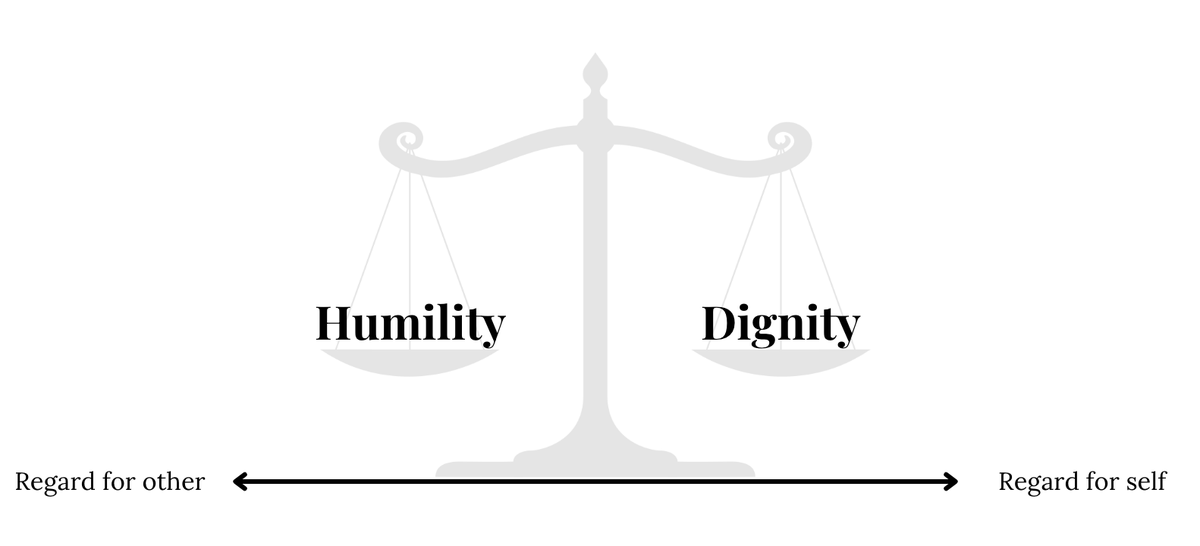
If we're humble without dignity, we ask who wants it when they've had seconds. We listen but don't see the worth of our reply ↓
7
What I just said isn’t entirely true.
In reality, dignity and humility can’t fully exist without each other.
To be humble requires dignity—a knowing that bowing to another doesn’t make us lesser. ↓
In reality, dignity and humility can’t fully exist without each other.
To be humble requires dignity—a knowing that bowing to another doesn’t make us lesser. ↓
8
To have dignity requires humility.
Without acknowledging that others can encroach on us, there’s no need to advocate for ourselves. No boundaries to uphold. ↓
Without acknowledging that others can encroach on us, there’s no need to advocate for ourselves. No boundaries to uphold. ↓
9
But what happens when we can’t access either dignity or humility?
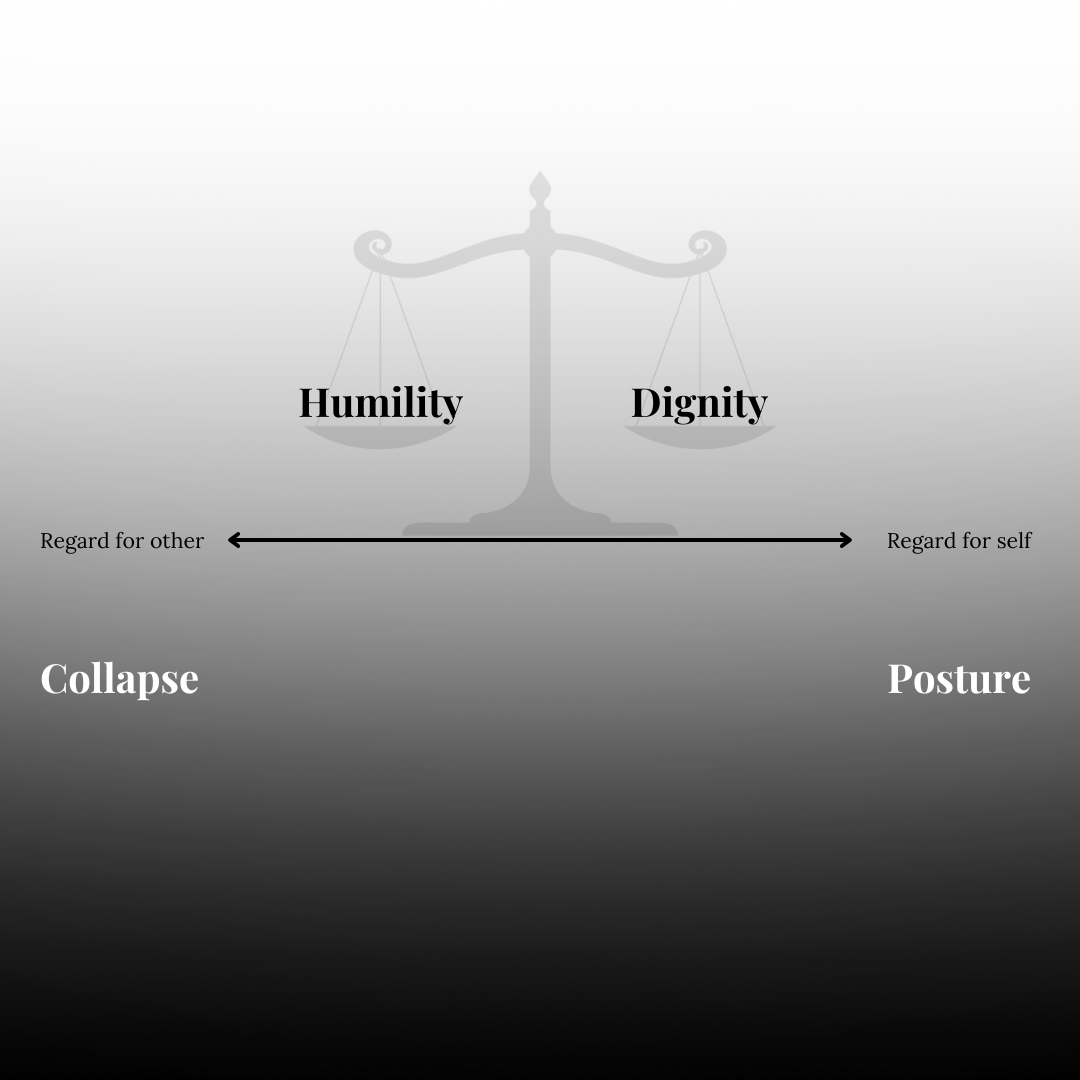
That’s when we fall into their shadows:
– Posture: the appearance of dignity through force or arrogance
– Collapse: distorted humility rooted in self-denial or defeat
↓↓
That’s when we fall into their shadows:
– Posture: the appearance of dignity through force or arrogance
– Collapse: distorted humility rooted in self-denial or defeat
↓↓
10
Posture looks like:
– "IDGAF"
– Aggressive boundaries
– Needing to win the argument
– Bragging or talking over people
– Dismissing others to feel strong
Collapse looks like:
– Fawning
– Minimizing your needs
– Saying yes when you mean no
– Withdrawing instead of speaking up ↓
– "IDGAF"
– Aggressive boundaries
– Needing to win the argument
– Bragging or talking over people
– Dismissing others to feel strong
Collapse looks like:
– Fawning
– Minimizing your needs
– Saying yes when you mean no
– Withdrawing instead of speaking up ↓
11
Just like dignity and humility rely on each other, posture and collapse are inseparable.
When we act overly tough, it's a protective shell around feeling overwhelmed and powerless.
And at the heart of collapse is a quiet voice: “Do what you want. You can’t hurt me anymore.”↓
When we act overly tough, it's a protective shell around feeling overwhelmed and powerless.
And at the heart of collapse is a quiet voice: “Do what you want. You can’t hurt me anymore.”↓
12
Posture and collapse are survival mechanisms.
They protect us when we feel unsafe and can't access dignity or humility.
Here's how you can shift out of them:
They protect us when we feel unsafe and can't access dignity or humility.
Here's how you can shift out of them:
13
Labels like “I’m a people-pleaser” or “I’m just brutally honest” make it harder to access healthy dignity—because they reduce nervous system patterns (like posture and collapse) to personality traits.
And if you think that’s who you are, it’s harder to change what you do. ↓↓
And if you think that’s who you are, it’s harder to change what you do. ↓↓
14
What if you drop the label?
You’re not a “people-pleaser” or a “well-meaning asshole”.
You’re a human with a body responding to threat—through posture (“you don’t matter”) or collapse (“I don’t matter”).
Presence is what helps your dignity and humility come back online.
↓↓
You’re not a “people-pleaser” or a “well-meaning asshole”.
You’re a human with a body responding to threat—through posture (“you don’t matter”) or collapse (“I don’t matter”).
Presence is what helps your dignity and humility come back online.
↓↓
15
The mature form of holding both dignity and humility is called "equanimity".
It’s not a performance and doesn't require perfect balance.
Just the capacity to honor your worth and theirs at the same time—so you can speak honestly, and stay in connection while you do.
↓↓
It’s not a performance and doesn't require perfect balance.
Just the capacity to honor your worth and theirs at the same time—so you can speak honestly, and stay in connection while you do.
↓↓
16
Posture, collapse, dignity, humility and equanimity aren't just metaphors for how we relate. They're actual physical states.
Collapse and posture happen when we're outside of our nervous system's window of tolerance—when it no longer feels safe to stay open and grounded.
↓↓
Collapse and posture happen when we're outside of our nervous system's window of tolerance—when it no longer feels safe to stay open and grounded.
↓↓
17
One reason presence can return us to equanimity is that it widens our window of tolerance.
We slow down. Feel the body. Notice thoughts and emotions.
We remember: I’m here. I’m alive.
And with time, we build the capacity to stay with what’s real—without leaving ourselves. ↓↓
We slow down. Feel the body. Notice thoughts and emotions.
We remember: I’m here. I’m alive.
And with time, we build the capacity to stay with what’s real—without leaving ourselves. ↓↓
18
Presence also restores equanimity by putting us in the witness seat.
Our nervous system might be in collapse—and we hold that with dignity.
Our ego might be posturing—and we humble accept our humanity. Equanimity becomes how we relate to it all. ↓↓
Our nervous system might be in collapse—and we hold that with dignity.
Our ego might be posturing—and we humble accept our humanity. Equanimity becomes how we relate to it all. ↓↓
19
Plot twist:
There’s a shortcut to equanimity—available in any state. If you're in posture or collapse, connect to what drives them:
The wish to stay safe, loved, alive, in relationship to others.
They ARE equanimity in disguise.
There’s a shortcut to equanimity—available in any state. If you're in posture or collapse, connect to what drives them:
The wish to stay safe, loved, alive, in relationship to others.
They ARE equanimity in disguise.
20
If you're stuck in a drama triangle, restoring equanimity can break the cycle.
The victim role often emerges when the nervous system is in collapse.
The rescuer & persecutor roles are posture—protective states masked as control or righteousness.↓↓ x.com/peptalksblog/s…
The victim role often emerges when the nervous system is in collapse.
The rescuer & persecutor roles are posture—protective states masked as control or righteousness.↓↓ x.com/peptalksblog/s…
21
If you repeatedly struggle with drama or disappointment in dating, here's a post mapping dating attitudes onto collapse, posture and equanimity: ↓↓ x.com/peptalksblog/s…
22
What equanimity looks like in conversation:
Dignity: “I speak what’s true for me.”
Humility: “I don’t blame you—and I’m open to your perspective.”
Dignity: “I set a boundary.”
Humility: “I care how it lands.”
This is the art of staying connected in tension. ↓↓
Dignity: “I speak what’s true for me.”
Humility: “I don’t blame you—and I’m open to your perspective.”
Dignity: “I set a boundary.”
Humility: “I care how it lands.”
This is the art of staying connected in tension. ↓↓
23
"What if I show up with humility & dignity but the other doesn't?"
Humility is not demanding they show up the same way.
Dignity means recognizing what I need—sometimes, that means walking away.
Equanimity can be: "I have the capacity, and this matters… why not lead the way?"
Humility is not demanding they show up the same way.
Dignity means recognizing what I need—sometimes, that means walking away.
Equanimity can be: "I have the capacity, and this matters… why not lead the way?"
24
If you look at my graph of "fucks given by feeling", you'll see:
- From "shame" until "courage", we cycle between posture & collapse.
- Humility starts at "neutrality"
- Full dignity starts at "willingness"
- Equanimity starts at "love"

- From "shame" until "courage", we cycle between posture & collapse.
- Humility starts at "neutrality"
- Full dignity starts at "willingness"
- Equanimity starts at "love"
Pep@peptalksblog
What if "fucks given" isn't just about how many, but about why?
And what if that "why" is shaped by your emotional state?
Explored this in my latest article.
(Link in first reply because the algorithm gives a fuck where I put it.)
And what if that "why" is shaped by your emotional state?
Explored this in my latest article.
(Link in first reply because the algorithm gives a fuck where I put it.)
25
If this thread resonated, I’m launching an online cohort next week that teaches this through experience.
Doors close in 3 days. If you want to transform how you connect with yourself & others, sign up here: peptalksblog.com/connection-coh…
Doors close in 3 days. If you want to transform how you connect with yourself & others, sign up here: peptalksblog.com/connection-coh…
26
Follow me @peptalksblog for more on relating with reality, people and yourself.
Found this helpful and want others to read it? Share here:
Found this helpful and want others to read it? Share here:
Pep@peptalksblog
Ever felt torn between people-pleasing or being a jerk, not knowing how to be neither?
Here’s a thread on why that happens, how to build self-respect without losing care for others—and be kind without betraying yourself 🧵
Here’s a thread on why that happens, how to build self-respect without losing care for others—and be kind without betraying yourself 🧵
27
Time to expand on this thread:
The way we relate to anything can be compared to a "physical stance" we approach it with.
This is why I spoke of "humility" or "dignity" as somatic experiences, not just abstract concepts.
They are stances. ↓↓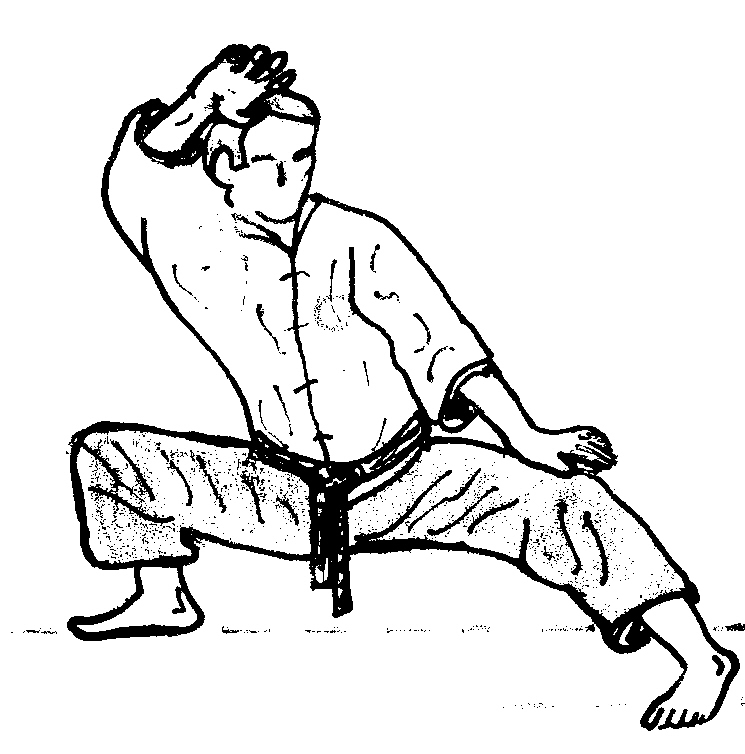
The way we relate to anything can be compared to a "physical stance" we approach it with.
This is why I spoke of "humility" or "dignity" as somatic experiences, not just abstract concepts.
They are stances. ↓↓
28
Sometimes, our stance is a specific response to something external (e.g. a person we don't trust).
Other times, our stance is a default. It's a stance towards the whole of existence (e.g. a mistrusting way of being).
Here's how to make this idea useful:
Other times, our stance is a default. It's a stance towards the whole of existence (e.g. a mistrusting way of being).
Here's how to make this idea useful:
29
1) If the same problem shows up in all relationships, your default stance might not be helping you
2) A default stance, will also show up in relation to life, yourself & the divine
3) This means identifying shifting the stance can change everything ↓↓
2) A default stance, will also show up in relation to life, yourself & the divine
3) This means identifying shifting the stance can change everything ↓↓
Pep@peptalksblog
If you like spirituality & feel like we vibe on that level, but wonder why I don't (seem to) write about it, here's a fun game:
You can take any post on interpersonal relating / self-relating & read it as if being about your relationship to life, deit(y)(ies) or your acid trip.
You can take any post on interpersonal relating / self-relating & read it as if being about your relationship to life, deit(y)(ies) or your acid trip.
30
Approaching interpersonal relationships with a stance of equanimity can greatly improve the quality of the interactions between us (for everyone involved).
Similarly, approaching life itself with a stance of equanimity can greatly improve the way our interactions with it. ↓↓
Similarly, approaching life itself with a stance of equanimity can greatly improve the way our interactions with it. ↓↓
31
...so what does it look like to approach life itself with a state of equanimity?
Here's the dignity/humility framework, adapted for life itself:
Here's the dignity/humility framework, adapted for life itself:
32
(Side note:
I believe this framework is related.
Agentic sages are sages with a stance of equanimity.)
x.com/PaulaGhete/sta…
I believe this framework is related.
Agentic sages are sages with a stance of equanimity.)
x.com/PaulaGhete/sta…
33
You can start shifting your default stance from whichever entry point is most accessible to you, e.g.:
- Through relationship with others
- Through relationship with self
- Through the body
- Through the mind
- Through spiritual practice
Some tools for each:
- Through relationship with others
- Through relationship with self
- Through the body
- Through the mind
- Through spiritual practice
Some tools for each:
34
If you want to shift to a stance of equanimity in relationships, here's a program that reliably guides people there:

Pep@peptalksblog
Every 3-6 months I host an immersive online connection cohort called “Fundamentals of Realating”:
- Weekly 3 hour workshops (learning by experience)
- Weekly 90 minute integration call
- Weekly 1:1 mentoring
You can find the next dates & sign up here: peptalksblog.com/connection-coh…
- Weekly 3 hour workshops (learning by experience)
- Weekly 90 minute integration call
- Weekly 1:1 mentoring
You can find the next dates & sign up here: peptalksblog.com/connection-coh…
35
If you want to shift to a stance of greater equanimity in relationship to yourself, my book "Effortless" is guide for that:
amazon.com/Effortless-Tra…
amazon.com/Effortless-Tra…
36
A stance of equanimity towards reality allows us to relax in the face of life.
Because humility lets us admit we don’t know anything beyond direct experience, while dignity means we’re confident we can handle most unknowns without bracing or clenching.

Because humility lets us admit we don’t know anything beyond direct experience, while dignity means we’re confident we can handle most unknowns without bracing or clenching.
Jonny Miller@jonnym1ller
I had a curious experience this morning where it felt as if the stance of embodied 'humility' created the conditions for latches/clenches to open.
Maybe the felt sense of "I don't know-ness" acts as a counterbalancing cue to the predictive process of clenched knowing?
Maybe the felt sense of "I don't know-ness" acts as a counterbalancing cue to the predictive process of clenched knowing?
37
Understanding that posture and collapse are ways of attempting to embody love (dignity & humility) when we are dysregulated also helps us see how harmful behaviors, at their core, are often twisted attempts at accessing love:
38
Beyond the bottom ends of this graph, are various depths of hell:
E.g.
Humiliation, domination, or even destruction may be the only ways for a person to experience something resembling dignity.
Or stance of complete apathy can be a dark substitute for humility & acceptance.
E.g.
Humiliation, domination, or even destruction may be the only ways for a person to experience something resembling dignity.
Or stance of complete apathy can be a dark substitute for humility & acceptance.
39
You could say that the darker someone’s emotional state gets; the harder it is for them to see the love inside and outside of them.
It’s like playing hide and seek on hard mode.

It’s like playing hide and seek on hard mode.
Pep@peptalksblog
"Negative" emotions aren't bad for you.
All emotions offer love, wisdom & power in their own way.
Once you allow them to do so, everything changes.
How to find the love inside your feelings:
🧵
All emotions offer love, wisdom & power in their own way.
Once you allow them to do so, everything changes.
How to find the love inside your feelings:
🧵
40
What honoring self, other and reality looks like in speech:

Vacha@TVachaW
Honesty without discernment can become a liability.
The Buddha’s advice was to only say what is:
1. True
2. Beneficial
3. Timely
4. Delivered with kindness and care (delivered “smoothly” is closest literal translation of the Pali)
So becoming a skilled truth teller is not only about telling the truth.
It’s also learning *how* to tell the truth.
If we’re just firing out random truths at random times in a careless or harmful manner, we’re not being a skilled truth teller.
Honesty can either be an expression of wisdom and compassion or an expression of verbal diarrhoea and emotional continence.
Discernment is what separates the two.
The Buddha’s advice was to only say what is:
1. True
2. Beneficial
3. Timely
4. Delivered with kindness and care (delivered “smoothly” is closest literal translation of the Pali)
So becoming a skilled truth teller is not only about telling the truth.
It’s also learning *how* to tell the truth.
If we’re just firing out random truths at random times in a careless or harmful manner, we’re not being a skilled truth teller.
Honesty can either be an expression of wisdom and compassion or an expression of verbal diarrhoea and emotional continence.
Discernment is what separates the two.
