1/ "We are born into this time and must courageously follow the...

Chad Crowley@CCrowley100
71 views
Mar 21, 2025
~14 min read
Advertisement
1
1/ "We are born into this time and must courageously follow the path to the end as destiny demands. There is no other way..."
Let us discuss Oswald Spengler's "Man and Technics" 🧵👇
Let us discuss Oswald Spengler's "Man and Technics" 🧵👇
2
2/ Oswald Spengler’s "Man and Technics" is a grim meditation on the fate of Western civilization, a continuation of the historical trajectory he outlined in The Decline of the West. Where his earlier work traced the grand rise and inevitable fall of civilizations through organic cycles, "Man and Technics" narrows its focus to the role of technology as both the engine of Western dominance and the instrument of its destruction.
Spengler identifies the West as uniquely Faustian, a civilization driven by an insatiable will to mastery over nature, an impulse that has fueled its expansion, innovation, and military dominance. Unlike other civilizations, which were content to exist within the natural order, the West sought to subjugate it. From the Gothic cathedrals to the Industrial Revolution, Western man pursued infinite growth, infinite conquest, and infinite knowledge. Yet this ambition without end is also a curse to be borne. The very forces that propelled Europe to global supremacy will, Spengler warns, be the cause of its demise.
The problem, in his view, is that the Western world has entered its late civilizational stage. The creative impulse that once animated its culture has given way to mechanization, mass production, and bureaucratic efficiency. The West, having unlocked the secrets of nature and built a world-spanning empire through technological prowess, is now enslaved by its own creations. The machines that once served as tools of conquest now dictate the structure of life itself. Industry, finance, and mass society have replaced the aristocratic warrior ethos that built civilization in the first place.
Spengler frames this as an existential dilemma. The Faustian man, who once set out to conquer the world, now finds himself trapped in an inescapable system, bound by the very techniques and technologies he unleashed. The world he built is being inherited by men who no longer understand the vision that created it, and the forces of history are shifting power away from the European nations that once ruled unchallenged. The West, Spengler predicts, will be overtaken not by superior ideas or superior morality, but by civilizations that still possess the vital energy and ruthless will to power that the Western world has lost.
This diagnosis, written in the early 20th century, reads as prophetic. Spengler saw that technology was not a neutral force, nor simply a tool of Western advancement, but a universal power that would eventually pass into other hands. He foresaw that the industrial and military supremacy of the West would not last forever. As new powers adapted to the technological paradigm the West had created, they would inevitably turn those very techniques against their originators. This, in Spengler’s eyes, is the ultimate tragedy of the Faustian spirit. The very ambition that led to its greatness will be the cause of its undoing.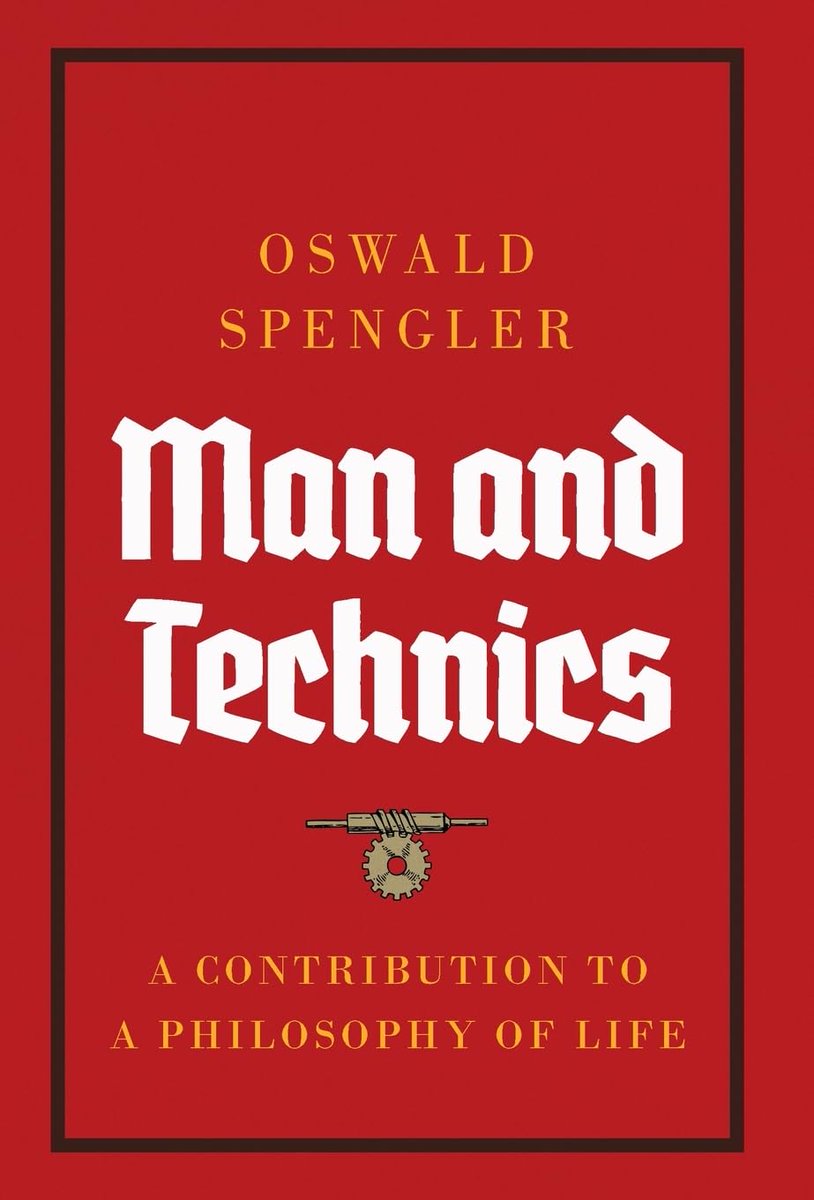
Spengler identifies the West as uniquely Faustian, a civilization driven by an insatiable will to mastery over nature, an impulse that has fueled its expansion, innovation, and military dominance. Unlike other civilizations, which were content to exist within the natural order, the West sought to subjugate it. From the Gothic cathedrals to the Industrial Revolution, Western man pursued infinite growth, infinite conquest, and infinite knowledge. Yet this ambition without end is also a curse to be borne. The very forces that propelled Europe to global supremacy will, Spengler warns, be the cause of its demise.
The problem, in his view, is that the Western world has entered its late civilizational stage. The creative impulse that once animated its culture has given way to mechanization, mass production, and bureaucratic efficiency. The West, having unlocked the secrets of nature and built a world-spanning empire through technological prowess, is now enslaved by its own creations. The machines that once served as tools of conquest now dictate the structure of life itself. Industry, finance, and mass society have replaced the aristocratic warrior ethos that built civilization in the first place.
Spengler frames this as an existential dilemma. The Faustian man, who once set out to conquer the world, now finds himself trapped in an inescapable system, bound by the very techniques and technologies he unleashed. The world he built is being inherited by men who no longer understand the vision that created it, and the forces of history are shifting power away from the European nations that once ruled unchallenged. The West, Spengler predicts, will be overtaken not by superior ideas or superior morality, but by civilizations that still possess the vital energy and ruthless will to power that the Western world has lost.
This diagnosis, written in the early 20th century, reads as prophetic. Spengler saw that technology was not a neutral force, nor simply a tool of Western advancement, but a universal power that would eventually pass into other hands. He foresaw that the industrial and military supremacy of the West would not last forever. As new powers adapted to the technological paradigm the West had created, they would inevitably turn those very techniques against their originators. This, in Spengler’s eyes, is the ultimate tragedy of the Faustian spirit. The very ambition that led to its greatness will be the cause of its undoing.
3
3/ For Spengler, "technik" is not just a tool but an extension of man’s nature. It is not something learned, but something lived. Every civilization has its own distinct way of interacting with the world, a mode of existence shaped by its inner character. The Faustian civilization, driven by an unquenchable hunger for expansion, sees technology as a weapon in its war against nature. It is not simply about survival or comfort. It is about conquest.
Spengler contrasts this with other cultures, which developed techniques to harmonize with the environment rather than to dominate it. The Chinese, for instance, cultivated an elaborate philosophy of balance and restraint. The Arabs, inheritors of an ancient desert tradition, saw knowledge as something to be preserved rather than aggressively expanded. The Faustian world, by contrast, is restless. From medieval alchemists to modern engineers, Western man has been possessed by an impulse to break limits and impose his will on the material world.
This, Spengler argues, is what separates the Faustian civilization from all others. Its very essence is struggle. He sees man as a predator, an apex hunter who does not merely exist within nature but seeks to remake it in his own image. The invention of tools was not a passive adaptation but an act of war, a declaration that man would no longer be bound by his biological limitations. The spear, the ship, the printing press, and the locomotive were all part of the same trajectory, an ever-escalating quest to push further, build higher, and reshape the world in ever more ambitious ways.
But this technological prowess comes at a cost. The same tools that allowed Western man to conquer the world now bind him in a web of his own making. Machines have stripped the soul from labor, finance has supplanted warrior aristocracies, and efficiency has replaced nobility. The Faustian man, who once stood at the frontier of the unknown, now finds himself trapped in a mechanized existence where he is little more than a cog in the vast system he created.
Spengler does not see this as mere economic development, but as destiny unfolding. Civilizations do not choose their fates. They follow the logic of their own inner nature. The West was doomed the moment it began its relentless expansion, because the same drive that built its empires would ultimately render it obsolete. The world it has shaped is now up for grabs, and other civilizations, less burdened by self-doubt and decadence, will inherit it.
The tragedy of the Faustian spirit, then, is not just that it burns itself out, but that it leaves behind a world where its achievements live on while its creators do not.
Spengler contrasts this with other cultures, which developed techniques to harmonize with the environment rather than to dominate it. The Chinese, for instance, cultivated an elaborate philosophy of balance and restraint. The Arabs, inheritors of an ancient desert tradition, saw knowledge as something to be preserved rather than aggressively expanded. The Faustian world, by contrast, is restless. From medieval alchemists to modern engineers, Western man has been possessed by an impulse to break limits and impose his will on the material world.
This, Spengler argues, is what separates the Faustian civilization from all others. Its very essence is struggle. He sees man as a predator, an apex hunter who does not merely exist within nature but seeks to remake it in his own image. The invention of tools was not a passive adaptation but an act of war, a declaration that man would no longer be bound by his biological limitations. The spear, the ship, the printing press, and the locomotive were all part of the same trajectory, an ever-escalating quest to push further, build higher, and reshape the world in ever more ambitious ways.
But this technological prowess comes at a cost. The same tools that allowed Western man to conquer the world now bind him in a web of his own making. Machines have stripped the soul from labor, finance has supplanted warrior aristocracies, and efficiency has replaced nobility. The Faustian man, who once stood at the frontier of the unknown, now finds himself trapped in a mechanized existence where he is little more than a cog in the vast system he created.
Spengler does not see this as mere economic development, but as destiny unfolding. Civilizations do not choose their fates. They follow the logic of their own inner nature. The West was doomed the moment it began its relentless expansion, because the same drive that built its empires would ultimately render it obsolete. The world it has shaped is now up for grabs, and other civilizations, less burdened by self-doubt and decadence, will inherit it.
The tragedy of the Faustian spirit, then, is not just that it burns itself out, but that it leaves behind a world where its achievements live on while its creators do not.
0:15
4
4/ Spengler does not treat race as a static biological category, but as something organic, fluid, and intimately tied to the fate of civilizations. He dismisses the crude racial determinism of skull measurements and phrenology, arguing instead that race is expressed through a people’s form, not just their physical traits, but their movements, instincts, and modality of being. A true race, in his view, is not simply a collection of individuals with similar features, but a cohesive force that expresses itself through history, struggle, and creative power.
At the peak of any civilization stands what Spengler calls the "Rassemensch," the race-man. This is not a generic racial specimen, but the purest embodiment of his people’s inner character. Every high culture has produced such men, whether among the Europeans, Asians, or pre-Columbian civilizations. They are the aristocrats of destiny, the driving force behind art, war, and empire. Without them, a people drifts into stagnation. The race-man is not simply born, he is the culmination incarnate of hardship, selection, and historical necessity.
Spengler sees the modern world as a graveyard for such figures. The rise of mass society, democracy, and industrial labor has leveled the once-distinct hierarchies that made great civilizations possible. Instead of the natural aristocracy of strong and visionary men, leadership has passed into the hands of bureaucrats, financiers, and politicians who have no connection to the life-force of their civilization. Culture, once the domain of an elite capable of shaping it with purpose, has been handed over to the masses, who do not create but imitate.
This ties directly into his larger critique of egalitarianism. Spengler rejects the idea that all people, races, or civilizations can be judged by the same standard. The notion that history is moving toward universal progress is, to him, a naive and destructive illusion. Every civilization rises with its own unique soul and follows its own trajectory, growing, flourishing, and eventually withering when its inner vitality is spent. The modern obsession with equality and human rights, he argues, is not a sign of strength but of decay, a civilization turning against the very forces that made it great.
In this regard, Spengler’s thinking overlaps with that of Arnold Toynbee, who argued that history is shaped by "creative minorities," a small, vigorous elite that leads a civilization forward while the masses follow. Once this creative energy is lost, society becomes inert, incapable of responding to challenges, and eventually collapses. Spengler, however, is far more pessimistic. He does not believe that civilizations can be rejuvenated once they have entered their decline. For Spengler, the Faustian world is past the point of renewal and its fate is already sealed.
Thus, from Spengler’s perspective, race is not simply a question of genetics or biology, but of destiny. A people true to itself is not defined by blood alone but by will, discipline, and the capacity to shape its future. The West, by surrendering its identity and embracing universalism, has forfeited its claim to the future. In the coming struggle, power will pass to those who still possess a strong racial and cultural identity, while those who have abandoned theirs will be swept aside.
At the peak of any civilization stands what Spengler calls the "Rassemensch," the race-man. This is not a generic racial specimen, but the purest embodiment of his people’s inner character. Every high culture has produced such men, whether among the Europeans, Asians, or pre-Columbian civilizations. They are the aristocrats of destiny, the driving force behind art, war, and empire. Without them, a people drifts into stagnation. The race-man is not simply born, he is the culmination incarnate of hardship, selection, and historical necessity.
Spengler sees the modern world as a graveyard for such figures. The rise of mass society, democracy, and industrial labor has leveled the once-distinct hierarchies that made great civilizations possible. Instead of the natural aristocracy of strong and visionary men, leadership has passed into the hands of bureaucrats, financiers, and politicians who have no connection to the life-force of their civilization. Culture, once the domain of an elite capable of shaping it with purpose, has been handed over to the masses, who do not create but imitate.
This ties directly into his larger critique of egalitarianism. Spengler rejects the idea that all people, races, or civilizations can be judged by the same standard. The notion that history is moving toward universal progress is, to him, a naive and destructive illusion. Every civilization rises with its own unique soul and follows its own trajectory, growing, flourishing, and eventually withering when its inner vitality is spent. The modern obsession with equality and human rights, he argues, is not a sign of strength but of decay, a civilization turning against the very forces that made it great.
In this regard, Spengler’s thinking overlaps with that of Arnold Toynbee, who argued that history is shaped by "creative minorities," a small, vigorous elite that leads a civilization forward while the masses follow. Once this creative energy is lost, society becomes inert, incapable of responding to challenges, and eventually collapses. Spengler, however, is far more pessimistic. He does not believe that civilizations can be rejuvenated once they have entered their decline. For Spengler, the Faustian world is past the point of renewal and its fate is already sealed.
Thus, from Spengler’s perspective, race is not simply a question of genetics or biology, but of destiny. A people true to itself is not defined by blood alone but by will, discipline, and the capacity to shape its future. The West, by surrendering its identity and embracing universalism, has forfeited its claim to the future. In the coming struggle, power will pass to those who still possess a strong racial and cultural identity, while those who have abandoned theirs will be swept aside.
5
5/ The rise of industrialism was, in Spengler’s view, the final transformation of the West from a civilization of warriors, explorers, and artists into one dominated by machines, finance, and mass production. What was once an organic, hierarchical order shaped by visionaries and conquerors has been replaced by an impersonal system where efficiency is valued above all else. The age of great men has given way to the reign of functionaries.
This shift was not an accident. The same impulse that built cathedrals, sent explorers across the seas, and crafted the masterpieces of European art also fueled the relentless advance of technology. What began as an assertion of will over nature eventually led to mechanization taking over every aspect of life. The machines that once served man now dictate the rhythm of his existence, reducing him to a cog within a system too vast to control.
Spengler saw industrialism as both an inevitability and a curse. It was the logical end of the Faustian drive, the final stage of a civilization that had spent centuries expanding, building, and conquering. But instead of securing the future, this technological power would prove to be the great equalizer. The techniques of mass production, military logistics, and bureaucratic administration would no longer be the exclusive property of Europe and America. Other civilizations, unburdened by the exhaustion that now gripped the West, would learn to wield these tools for their own purposes. What was once the foundation of European dominance would become the instrument of its undoing.
There was no turning back. The age of warriors and statesmen had been replaced by the rule of engineers, bankers, and bureaucrats. Creativity, heroism, and high culture had been subordinated to commerce and administration. The artist had become an advertiser, the philosopher a public intellectual, the soldier a disposable pawn in conflicts dictated by corporate and financial interests.
What remained was no longer a living culture but what Spengler called "civilization" in its purest sense. The early, creative phase of a people was defined by passion, vision, and an organic unity between man and his way of life. The late phase was cold and mechanical, where all endeavors were measured in economic calculations, statistics, and productivity. Human beings, once the masters of history, had become interchangeable parts in an industrial machine.
Spengler regarded this mechanization of life as the inevitable fate of the West. Industrialism, which had once been its great triumph, had stripped away the very qualities that had made its civilization unique. What remained was a world still in possession of immense material power, but increasingly hollow, its people cut off from the instincts that had once driven them to greatness.
This shift was not an accident. The same impulse that built cathedrals, sent explorers across the seas, and crafted the masterpieces of European art also fueled the relentless advance of technology. What began as an assertion of will over nature eventually led to mechanization taking over every aspect of life. The machines that once served man now dictate the rhythm of his existence, reducing him to a cog within a system too vast to control.
Spengler saw industrialism as both an inevitability and a curse. It was the logical end of the Faustian drive, the final stage of a civilization that had spent centuries expanding, building, and conquering. But instead of securing the future, this technological power would prove to be the great equalizer. The techniques of mass production, military logistics, and bureaucratic administration would no longer be the exclusive property of Europe and America. Other civilizations, unburdened by the exhaustion that now gripped the West, would learn to wield these tools for their own purposes. What was once the foundation of European dominance would become the instrument of its undoing.
There was no turning back. The age of warriors and statesmen had been replaced by the rule of engineers, bankers, and bureaucrats. Creativity, heroism, and high culture had been subordinated to commerce and administration. The artist had become an advertiser, the philosopher a public intellectual, the soldier a disposable pawn in conflicts dictated by corporate and financial interests.
What remained was no longer a living culture but what Spengler called "civilization" in its purest sense. The early, creative phase of a people was defined by passion, vision, and an organic unity between man and his way of life. The late phase was cold and mechanical, where all endeavors were measured in economic calculations, statistics, and productivity. Human beings, once the masters of history, had become interchangeable parts in an industrial machine.
Spengler regarded this mechanization of life as the inevitable fate of the West. Industrialism, which had once been its great triumph, had stripped away the very qualities that had made its civilization unique. What remained was a world still in possession of immense material power, but increasingly hollow, its people cut off from the instincts that had once driven them to greatness.
6
6/ The West pushed beyond every limit, bent nature to its will, and shaped the modern world in its image. Yet for all its triumphs, it now stands at the edge of exhaustion. The drive that once propelled it forward has faded, replaced by a civilization running on momentum rather than vision. What was once a dynamic force has become rigid, held together by systems too vast to control and institutions too entrenched to reform.
Spengler saw this as the final stage of history for the Faustian world. The techniques that once ensured European dominance no longer belonged to it alone. Others had learned, adapted, and now stood ready to take its place. This was not an anomaly but the natural order of civilizations. Each rises, flourishes, and then fades as new forces emerge to inherit what was built.
The West would not collapse in fire and ruin, nor would it be conquered outright. Spengler predicted something slower, something more insidious. It would continue to exist, still wielding immense technological and financial power, but without the spirit that had once animated it. The machines would still run, the systems would function, and the illusion of continuity would persist. Yet the civilization itself would be hollow, governed by those who maintained its structures without understanding the impulse that created them.
He did not expect a great revolt or sudden catastrophe. Instead, he described a process of replacement. The ruling class, once defined by vision and strength, would give way to a managerial elite concerned only with sustaining the system. In time, the West would be overtaken by those who still possessed identity, confidence, and the will to shape the future. While its leaders preached universal values and cooperation, the world would be remade by those with no interest in such things.
Technology would remain, but its masters would change. The power of industrial civilization, built by men who once reached for the infinite, would pass into the hands of those who saw only its material rewards. The Western world, having spent its creative energy, would find itself ruled by those who viewed it not as a destiny, but as a prize.
For Spengler, there was no path to renewal, no revolution that could undo the trajectory of history. The West had already crossed its threshold. The only question left was not whether it could be saved, but who would rule in its place.
Spengler saw this as the final stage of history for the Faustian world. The techniques that once ensured European dominance no longer belonged to it alone. Others had learned, adapted, and now stood ready to take its place. This was not an anomaly but the natural order of civilizations. Each rises, flourishes, and then fades as new forces emerge to inherit what was built.
The West would not collapse in fire and ruin, nor would it be conquered outright. Spengler predicted something slower, something more insidious. It would continue to exist, still wielding immense technological and financial power, but without the spirit that had once animated it. The machines would still run, the systems would function, and the illusion of continuity would persist. Yet the civilization itself would be hollow, governed by those who maintained its structures without understanding the impulse that created them.
He did not expect a great revolt or sudden catastrophe. Instead, he described a process of replacement. The ruling class, once defined by vision and strength, would give way to a managerial elite concerned only with sustaining the system. In time, the West would be overtaken by those who still possessed identity, confidence, and the will to shape the future. While its leaders preached universal values and cooperation, the world would be remade by those with no interest in such things.
Technology would remain, but its masters would change. The power of industrial civilization, built by men who once reached for the infinite, would pass into the hands of those who saw only its material rewards. The Western world, having spent its creative energy, would find itself ruled by those who viewed it not as a destiny, but as a prize.
For Spengler, there was no path to renewal, no revolution that could undo the trajectory of history. The West had already crossed its threshold. The only question left was not whether it could be saved, but who would rule in its place.
7
7/ "Man and Technics" is Spengler at his most fatalistic. The book offers no escape, no hope for renewal, and no path forward for the West beyond the cold recognition of its fate. Industrialism, mechanization, and mass civilization are not problems to be solved but realities to be endured. The Faustian world exhausted itself in its own triumphs. The same will that once drove it to conquer, build, and innovate now binds it to an existence where everything runs on inertia. The machine has replaced the man, and the West can do nothing but continue on its predetermined course until the inevitable transfer of power takes place.
In this work, Spengler offers no heroes, no resistance, and no way to reclaim what has been lost. He does not speak of leaders who might change history or of movements that might defy its course. The men of the future are not statesmen or conquerors but engineers, financiers, and bureaucrats who will preside over the West’s decline, ensuring that its structures remain intact even as its spirit fades away. If there is dignity to be found, it is only in recognizing the truth, standing at one’s post, and refusing illusions.
Yet in his final work, "The Hour of Decision," Spengler allows for something more. He still insists that the grand arc of history cannot be reversed, that civilizations grow, flourish, and decline according to an organic pattern. But here, he concedes that the manner of decline is not fixed. It can be met with passivity or with struggle, with submission or with defiance. He warns of the external forces that will inherit what the West has built, of rising non-European powers ready to assert themselves as the West loses its will. Unlike in "Man and Technics," he no longer speaks only of inevitabilities but of choices.
This is the crucial distinction. In "Man and Technics," the machine consumes the civilization that created it, and no one can resist. In "The Hour of Decision," there is still the possibility of those who will take command of the machine rather than be ruled by it. He does not believe in restoration, nor does he think the West can return to its prime, but he does see the potential for resistance, for the formation of a new ruling elite that will at least dictate the terms of its own decline rather than submit to forces beyond its control.
Spengler did not believe in salvation, but by the end of his life, he did not believe in pure fatalism either. "Man and Technics" offers only resignation, "The Hour of Decision" offers a final contest. The West cannot be saved, but it can still act. The fate of a civilization may be written, but the men who live within it still have choices to make. Whether they stand and shape what remains or drift into oblivion is up to them.
In this work, Spengler offers no heroes, no resistance, and no way to reclaim what has been lost. He does not speak of leaders who might change history or of movements that might defy its course. The men of the future are not statesmen or conquerors but engineers, financiers, and bureaucrats who will preside over the West’s decline, ensuring that its structures remain intact even as its spirit fades away. If there is dignity to be found, it is only in recognizing the truth, standing at one’s post, and refusing illusions.
Yet in his final work, "The Hour of Decision," Spengler allows for something more. He still insists that the grand arc of history cannot be reversed, that civilizations grow, flourish, and decline according to an organic pattern. But here, he concedes that the manner of decline is not fixed. It can be met with passivity or with struggle, with submission or with defiance. He warns of the external forces that will inherit what the West has built, of rising non-European powers ready to assert themselves as the West loses its will. Unlike in "Man and Technics," he no longer speaks only of inevitabilities but of choices.
This is the crucial distinction. In "Man and Technics," the machine consumes the civilization that created it, and no one can resist. In "The Hour of Decision," there is still the possibility of those who will take command of the machine rather than be ruled by it. He does not believe in restoration, nor does he think the West can return to its prime, but he does see the potential for resistance, for the formation of a new ruling elite that will at least dictate the terms of its own decline rather than submit to forces beyond its control.
Spengler did not believe in salvation, but by the end of his life, he did not believe in pure fatalism either. "Man and Technics" offers only resignation, "The Hour of Decision" offers a final contest. The West cannot be saved, but it can still act. The fate of a civilization may be written, but the men who live within it still have choices to make. Whether they stand and shape what remains or drift into oblivion is up to them.
8
For those interested, both Arktos (@ArktosJournal) and Legend Books (@LegendBooksCo) offer excellent editions of Spengler’s "Man and Technics" for purchase.
