1/ The modern world fears strength. It pities failure and punishes...

Chad Crowley@CCrowley100
61 views
Apr 13, 2025
~9 min read
Advertisement
1
1/ The modern world fears strength. It pities failure and punishes excellence. Nietzsche saw it coming. He warned of the Last Man, the soft tyrant of safety. This essay is for those who still believe in greatness. Let’s explore what his philosophy means today.🧵👇
1:07
2
2/ A civilization is not judged by its average but by its apex. For Nietzsche, the measure of a people is the quality of its highest type, not its institutions, not its GDP, not its moral posturing, but the level of excellence it can produce and sustain. The Übermensch is not a myth or abstraction. He is the fulfilled man: rooted in instinct, elevated in mind, aristocratic in soul. He acts without apology, creates without permission, suffers without complaint. He is the rare outcome of a culture that honors strength, discipline, and becoming. When a civilization is pointed toward that man, it has a future. When it forgets him, it declines.
Nietzsche understood this from the inside. He knew what he was and what he wasn’t. “I am one thing,” he wrote, “my writings another.” That was not posturing. It was honesty. His own body betrayed him from the beginning. His health was a wreck. His stomach failed him. His eyes dimmed to near-blindness. His mind eventually collapsed into madness. He knew humiliation, rejection, solitude. But the spirit behind the works never bent. He carried his books, his “club foot,” from boarding house to boarding house like a wounded monk preserving fire in a dark age.
The Übermensch was not a self-image. It was a standard he could not reach but refused to lower. As Sir Oswald Mosley would later write, “We are not here for comfort. We are here for glory.” That glory, for Nietzsche, was not personal indulgence or acclaim. It was the demand of form, the burden of becoming. He offered the world an image of what man could be, not as an escape from suffering, but as its transfiguration. The vision was never meant to soothe. It was meant to burn.
This alone separates him from the modern intellectual. He did not flatter the world or accommodate its sickness. He made war on it. He saw the petty cruelty of egalitarians, the hidden malice of the meek, the quiet hatred behind compassion. He spoke to the few, not the many. He wrote for the future, not the present. And he did so without bitterness, without envy, without self-pity. There is no resentment in Nietzsche. There is only fire.
The question, then, is not whether he lived up to his vision. Few ever have. The question is whether that vision still burns in the ruins of the West. Whether a man, once again, can say: I am not enough. But I know what is.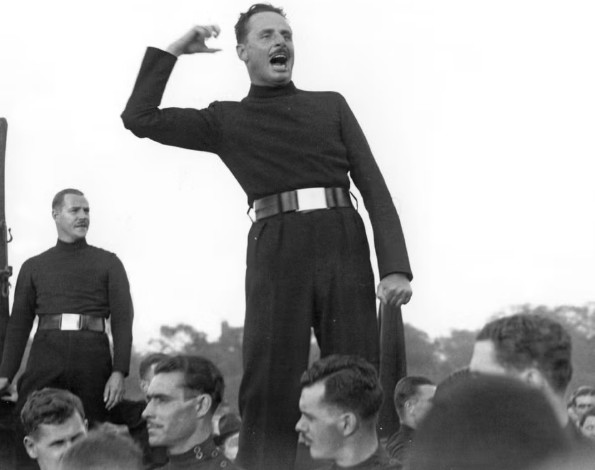
Nietzsche understood this from the inside. He knew what he was and what he wasn’t. “I am one thing,” he wrote, “my writings another.” That was not posturing. It was honesty. His own body betrayed him from the beginning. His health was a wreck. His stomach failed him. His eyes dimmed to near-blindness. His mind eventually collapsed into madness. He knew humiliation, rejection, solitude. But the spirit behind the works never bent. He carried his books, his “club foot,” from boarding house to boarding house like a wounded monk preserving fire in a dark age.
The Übermensch was not a self-image. It was a standard he could not reach but refused to lower. As Sir Oswald Mosley would later write, “We are not here for comfort. We are here for glory.” That glory, for Nietzsche, was not personal indulgence or acclaim. It was the demand of form, the burden of becoming. He offered the world an image of what man could be, not as an escape from suffering, but as its transfiguration. The vision was never meant to soothe. It was meant to burn.
This alone separates him from the modern intellectual. He did not flatter the world or accommodate its sickness. He made war on it. He saw the petty cruelty of egalitarians, the hidden malice of the meek, the quiet hatred behind compassion. He spoke to the few, not the many. He wrote for the future, not the present. And he did so without bitterness, without envy, without self-pity. There is no resentment in Nietzsche. There is only fire.
The question, then, is not whether he lived up to his vision. Few ever have. The question is whether that vision still burns in the ruins of the West. Whether a man, once again, can say: I am not enough. But I know what is.
3
3/ What happens when a civilization turns its back on the higher type? Nietzsche gave the answer in prophecy: the rise of the Last Man. He is not evil, but exhausted. Not demonic, but domesticated. He avoids suffering, risk, greatness, and pain. He has no enemies because he believes in nothing worth defending. He believes in comfort, equality, and peace above all. He blinks. He grins. He survives.
Nietzsche saw this figure taking shape in the liberal democracies of his time. We now live in his empire. The Last Man fills our cities, staffs our institutions, teaches our children. He writes our laws and enforces our norms. He is tolerant of everything except strength. He confuses weakness with virtue and calls it empathy. He replaces reverence with irony, struggle with therapy, honor with social credit. He has no memory of nobility, and no desire for future greatness. He is the death of tragedy, the flattening of man.
The worst part is not his cowardice. It is his pride. The Last Man believes himself to be the end of history—the moral culmination of all that came before. He looks at the ruins and calls them progress. He calls his softness wisdom, his passivity justice, his sterility peace. He pities the higher type and calls it hate. In this inversion, even the language of life is poisoned. “Self-overcoming” becomes “trauma.” “Duty” becomes “oppression.” “Hierarchy” becomes “abuse.” The West no longer even speaks in a vocabulary capable of greatness.
The Last Man will never kill you. He doesn’t have the will. But he will smother everything that reminds him of what he is not. He will flood the temple, not to destroy it, but to make sure no gods ever return.

Nietzsche saw this figure taking shape in the liberal democracies of his time. We now live in his empire. The Last Man fills our cities, staffs our institutions, teaches our children. He writes our laws and enforces our norms. He is tolerant of everything except strength. He confuses weakness with virtue and calls it empathy. He replaces reverence with irony, struggle with therapy, honor with social credit. He has no memory of nobility, and no desire for future greatness. He is the death of tragedy, the flattening of man.
The worst part is not his cowardice. It is his pride. The Last Man believes himself to be the end of history—the moral culmination of all that came before. He looks at the ruins and calls them progress. He calls his softness wisdom, his passivity justice, his sterility peace. He pities the higher type and calls it hate. In this inversion, even the language of life is poisoned. “Self-overcoming” becomes “trauma.” “Duty” becomes “oppression.” “Hierarchy” becomes “abuse.” The West no longer even speaks in a vocabulary capable of greatness.
The Last Man will never kill you. He doesn’t have the will. But he will smother everything that reminds him of what he is not. He will flood the temple, not to destroy it, but to make sure no gods ever return.
4
4/ Nietzsche saw modernity not as progress, but as exhaustion. The death of God was not a liberation but a diagnosis. What would fill the void? Not new greatness, but the Last Man, the end product of democratic decay. A creature content with comfort, allergic to suffering, and repulsed by the very idea of hierarchy.
The Last Man does not wish to rule or be ruled. He wishes to be left alone, to be safe, to be liked. He anesthetizes himself with petty pleasures. He is proud not of his virtue but of his tolerance, not of his strength but of his fragility. The world must be padded for him. Art must flatter him. Language must never offend him. Religion becomes therapy. Politics becomes pity.
This is not simply weakness. It is sanctified weakness. The Last Man believes he is morally superior because he is too cowardly to hate, too soft to fight, too tired to create. He calls his impotence empathy and his despair progress. In this man, Nietzsche saw not a tragic fall but a smug settling. He survives, but only by convincing himself that survival is the highest good.
Nietzsche warned: “They have their little pleasures for the day, and their little pleasures for the night, but they have a health for that.” The sickness is spiritual, not physical. A loss of will. A fear of life itself. Where the Übermensch would ascend, the Last Man lies down and calls it a revolution.
The Last Man does not wish to rule or be ruled. He wishes to be left alone, to be safe, to be liked. He anesthetizes himself with petty pleasures. He is proud not of his virtue but of his tolerance, not of his strength but of his fragility. The world must be padded for him. Art must flatter him. Language must never offend him. Religion becomes therapy. Politics becomes pity.
This is not simply weakness. It is sanctified weakness. The Last Man believes he is morally superior because he is too cowardly to hate, too soft to fight, too tired to create. He calls his impotence empathy and his despair progress. In this man, Nietzsche saw not a tragic fall but a smug settling. He survives, but only by convincing himself that survival is the highest good.
Nietzsche warned: “They have their little pleasures for the day, and their little pleasures for the night, but they have a health for that.” The sickness is spiritual, not physical. A loss of will. A fear of life itself. Where the Übermensch would ascend, the Last Man lies down and calls it a revolution.
5
5/ What began as a moral inversion has hardened into biological reality. The Last Man, once a cultural archetype, now rules not only by numbers but by breeding. His opposite, the higher type, is outproduced, outvoted, and outcast. In an age that worships safety, those born to command are treated as threats. Strength is pathologized. Genius is punished. Beauty is suspect.
The higher man once stood as the peak of a civilizational pyramid. Today he is seen as a relic, a danger, or a villain. Every domain has been restructured to reward conformity and to humiliate distinction. In art, education, media, and politics, excellence is treated not as an ideal but as a problem. The spiteful mutant, as Edward Dutton names him, thrives in this environment. He is Nietzsche’s inverse: not life-affirming but parasitic, not powerful but bitter, not self-overcoming but self-loathing. And yet, he flourishes, not despite his weakness, but because of it.
Jonathan Bowden called this the disprivileging of excellence. It is not just that greatness is ignored. It is actively hunted, rooted out, and degraded. In universities, the brilliant are lectured by the envious. In politics, the courageous are smothered by bureaucrats. In culture, the sublime is replaced by the grotesque, the heroic by the neurotic. What was once aspirational is now taboo. The tall are cut down. The noble are made to kneel.
This is the final triumph of ressentiment. The herd no longer merely pities itself; it has institutionalized its envy. The revenge of the mediocre is now policy. What once required secret sabotage is now law, curriculum, and social contract.
To Nietzsche, a society could still be measured by the greatness it allowed to emerge. Ours measures itself by the pain it can prevent, the offense it can avoid, and the limits it can impose. The result is a world that not only forgets its best but fears them.
The higher man once stood as the peak of a civilizational pyramid. Today he is seen as a relic, a danger, or a villain. Every domain has been restructured to reward conformity and to humiliate distinction. In art, education, media, and politics, excellence is treated not as an ideal but as a problem. The spiteful mutant, as Edward Dutton names him, thrives in this environment. He is Nietzsche’s inverse: not life-affirming but parasitic, not powerful but bitter, not self-overcoming but self-loathing. And yet, he flourishes, not despite his weakness, but because of it.
Jonathan Bowden called this the disprivileging of excellence. It is not just that greatness is ignored. It is actively hunted, rooted out, and degraded. In universities, the brilliant are lectured by the envious. In politics, the courageous are smothered by bureaucrats. In culture, the sublime is replaced by the grotesque, the heroic by the neurotic. What was once aspirational is now taboo. The tall are cut down. The noble are made to kneel.
This is the final triumph of ressentiment. The herd no longer merely pities itself; it has institutionalized its envy. The revenge of the mediocre is now policy. What once required secret sabotage is now law, curriculum, and social contract.
To Nietzsche, a society could still be measured by the greatness it allowed to emerge. Ours measures itself by the pain it can prevent, the offense it can avoid, and the limits it can impose. The result is a world that not only forgets its best but fears them.
6
6/ Nietzsche’s project was not to reform the modern world but to burn its false altars and rebuild its values from first principles. Where others saw progress, he saw decline. Where others preached equality, he proclaimed hierarchy. Not the hierarchy of money, or popularity, or birth, but of soul. The higher man must not only return; he must rule.
This is not a call for nostalgia. The past cannot be restored. But the principle remains: life flourishes through order, not chaos; through distinction, not sameness; through ascent, not leveling. A healthy society affirms rank. It dares to discriminate between high and low, noble and base, beautiful and deformed. It dares to prefer.
A civilization reveals itself in the kind of man it honors, obeys, and protects. Not in its slogans or systems, but in the souls it cultivates and the heights it permits them to reach. The highest type is not a product of chance. He is the result of discipline, struggle, and selection. Where he is welcomed, a culture grows upward. Where he is exiled, it sinks.
This is not to say pity is evil. But Nietzsche saw that pity, in excess, becomes an invitation to weakness. To affirm life means to affirm struggle, pain, and the tragic nature of existence. Pity becomes corrupt when it shields the unworthy from consequence, when it turns failure into entitlement, when it demands that the strong kneel before the weak. It inverts the values that sustain higher development.
If the West is to recover, it must unlearn its deepest moral instincts. Compassion, tolerance, comfort—these are not ultimate goods. They are tools. Means. To make them into ends is to kneel before weakness. A civilization is not judged by how softly it speaks, but by the type of man it produces and protects.
This is the revaluation Nietzsche demanded: to see cruelty in sentimentality, to see cowardice in pacifism, to see decay where others see safety. Our age asks, “How can we avoid suffering?” His question was harder: “What suffering is worth it?” That one question divides the Last Man from the higher one.
The time is short. Every institution is against us. But so was the world against every great man who ever lived. If we are to begin again, it must start with a new will to rank. To measure not by mass but by height. Not by comfort but by cost. Not by peace, but by the type of men it takes to sustain it.
There can be no recovery without hierarchy. No excellence without exclusion. No future without fire. Let others chase equality. We are here to resurrect greatness.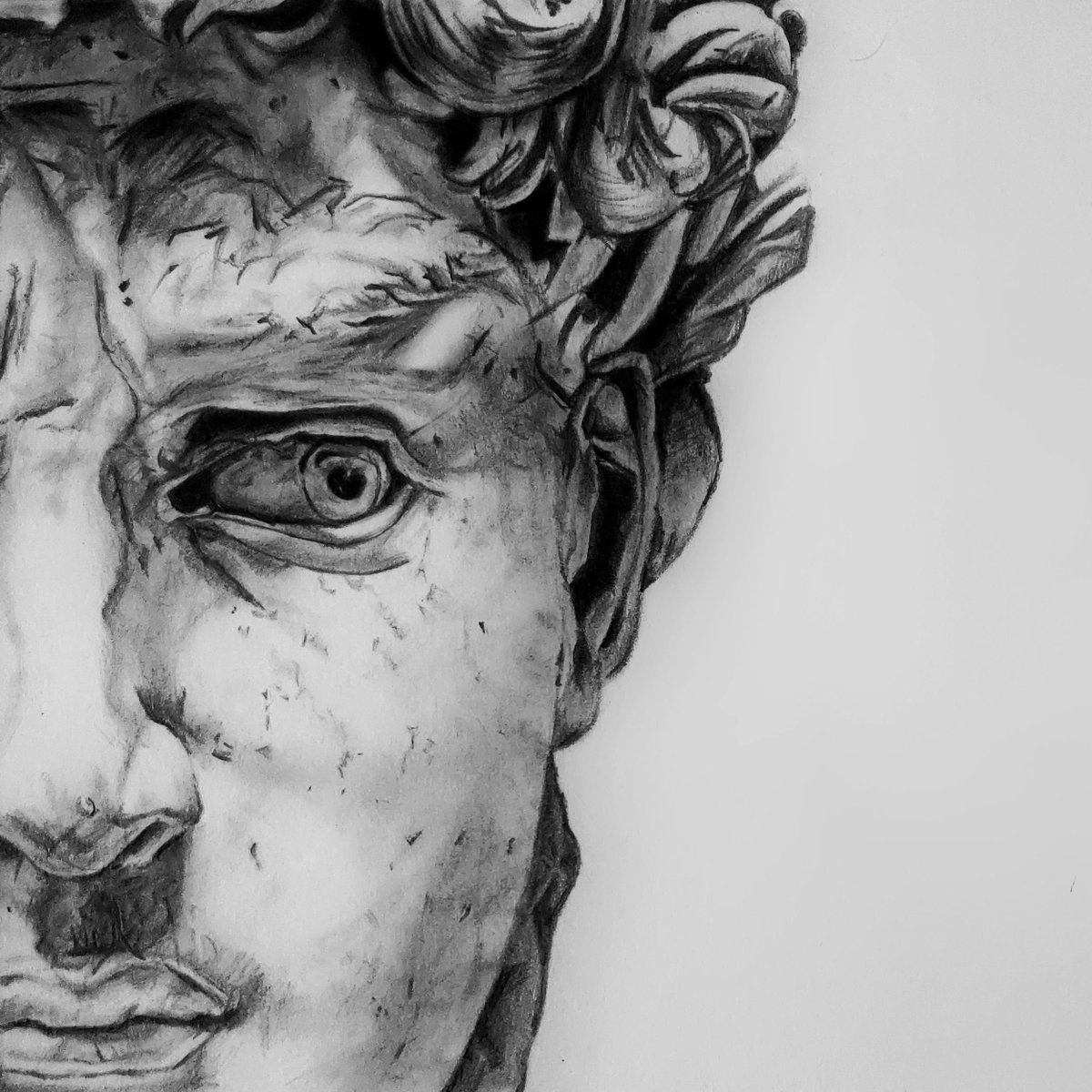
This is not a call for nostalgia. The past cannot be restored. But the principle remains: life flourishes through order, not chaos; through distinction, not sameness; through ascent, not leveling. A healthy society affirms rank. It dares to discriminate between high and low, noble and base, beautiful and deformed. It dares to prefer.
A civilization reveals itself in the kind of man it honors, obeys, and protects. Not in its slogans or systems, but in the souls it cultivates and the heights it permits them to reach. The highest type is not a product of chance. He is the result of discipline, struggle, and selection. Where he is welcomed, a culture grows upward. Where he is exiled, it sinks.
This is not to say pity is evil. But Nietzsche saw that pity, in excess, becomes an invitation to weakness. To affirm life means to affirm struggle, pain, and the tragic nature of existence. Pity becomes corrupt when it shields the unworthy from consequence, when it turns failure into entitlement, when it demands that the strong kneel before the weak. It inverts the values that sustain higher development.
If the West is to recover, it must unlearn its deepest moral instincts. Compassion, tolerance, comfort—these are not ultimate goods. They are tools. Means. To make them into ends is to kneel before weakness. A civilization is not judged by how softly it speaks, but by the type of man it produces and protects.
This is the revaluation Nietzsche demanded: to see cruelty in sentimentality, to see cowardice in pacifism, to see decay where others see safety. Our age asks, “How can we avoid suffering?” His question was harder: “What suffering is worth it?” That one question divides the Last Man from the higher one.
The time is short. Every institution is against us. But so was the world against every great man who ever lived. If we are to begin again, it must start with a new will to rank. To measure not by mass but by height. Not by comfort but by cost. Not by peace, but by the type of men it takes to sustain it.
There can be no recovery without hierarchy. No excellence without exclusion. No future without fire. Let others chase equality. We are here to resurrect greatness.