"The Wild Chase" (1889) by Franz von Stuck depicts the Germanic God...

Chad Crowley@CCrowley100
127 views
Jan 19, 2025
~4 min read
Advertisement
1
"The Wild Chase" (1889) by Franz von Stuck depicts the Germanic God Wotan (Odin) leading a spectral army of the dead. AH encountered this painting at the age of 13 and was reportedly fascinated by it. As he rose to power, he included it in his personal collection. It is said that AH even modeled aspects of his appearance and style after the depiction of Wotan.
Carl Jung & Wotan Essay Below
Carl Jung & Wotan Essay Below
2
Part 1/
In the denazification craze following the end of the Second World War, Carl Jung, founder of Analytical Psychology, was accused by the victorious powers that be of harboring "Nazi sympathies." Jung, always a staunch man of the Right, first gave a lecture on Wotan in 1936, analyzing Hitlerism as an evocation of the god, a repressed archetype in the German collective unconscious. This lecture was later expanded into an essay and republished after the war as part of a collection of analytical observations on the modern world. This analysis aroused suspicions that he was, in fact, an apologist for National Socialism. However, residing in the neutral nation of Switzerland during the war's aftermath spared him from any harsher scrutiny or political persecution.
Jung’s essay on Wotan was not a political endorsement but a clinical diagnosis of the catalyzing currents that instigated the Second World War. His detached, scholarly approach was often deliberately misunderstood by his contemporaries to discredit him and his work. Examining National Socialism, fascism, or any pre-WW2 movements, ideas, or metaphysics without a distorting liberal-humanist ideological lens was then, as it is now, strictly forbidden.
In Jungian psychology, archetypes are primal symbols inherited through the collective unconscious, transcending individual psyches and passed down from our ancestors. These symbols are universal, yet they possess a unique racial specificity, distinct to particular peoples across different times and places.
According to Jung, Wotan, the ancient Germanic god, was an archetype that profoundly influenced the German psyche, metapolitics, and thus exoteric politics, before World War II. In his correspondence with the philosopher and former Chilean diplomat, Miguel Serrano, during the 1960s, Jung proposed a series of remedies for modern man's predicament in a world gone mad. He emphasized the importance of finding individual identity within the nexus of the group or tribe, warning against the dangers of hyper-individualism: "He can only discover himself when he is deeply and unconditionally related to some, and generally related to a great many, individuals with whom he has a chance to compare, and from whom he is able to discriminate himself."
Jung’s concept of the psyche includes layers of inherited ancestral experience, deposited in the personal unconscious, part of the collective unconscious. These recurring motifs become protosymbols, or archetypes. The psyche, a storehouse of memories, encompasses personal experiences and the collective experiences of one’s forebears, encapsulating race, culture, and universal memory. The psyche's layers are akin to the human brain's layers, a physiological record of cerebral evolution from the primal limbic system to the cerebral cortex.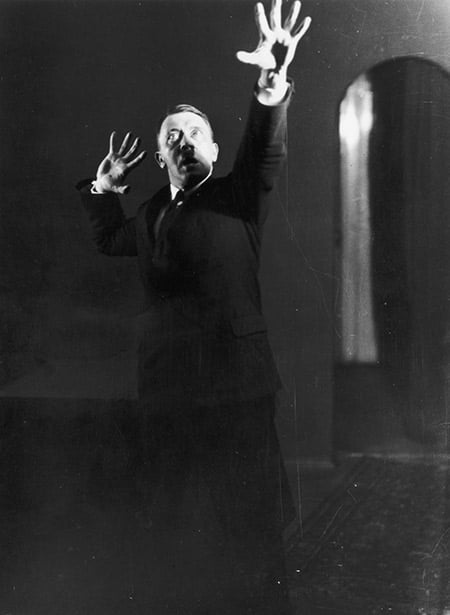
In the denazification craze following the end of the Second World War, Carl Jung, founder of Analytical Psychology, was accused by the victorious powers that be of harboring "Nazi sympathies." Jung, always a staunch man of the Right, first gave a lecture on Wotan in 1936, analyzing Hitlerism as an evocation of the god, a repressed archetype in the German collective unconscious. This lecture was later expanded into an essay and republished after the war as part of a collection of analytical observations on the modern world. This analysis aroused suspicions that he was, in fact, an apologist for National Socialism. However, residing in the neutral nation of Switzerland during the war's aftermath spared him from any harsher scrutiny or political persecution.
Jung’s essay on Wotan was not a political endorsement but a clinical diagnosis of the catalyzing currents that instigated the Second World War. His detached, scholarly approach was often deliberately misunderstood by his contemporaries to discredit him and his work. Examining National Socialism, fascism, or any pre-WW2 movements, ideas, or metaphysics without a distorting liberal-humanist ideological lens was then, as it is now, strictly forbidden.
In Jungian psychology, archetypes are primal symbols inherited through the collective unconscious, transcending individual psyches and passed down from our ancestors. These symbols are universal, yet they possess a unique racial specificity, distinct to particular peoples across different times and places.
According to Jung, Wotan, the ancient Germanic god, was an archetype that profoundly influenced the German psyche, metapolitics, and thus exoteric politics, before World War II. In his correspondence with the philosopher and former Chilean diplomat, Miguel Serrano, during the 1960s, Jung proposed a series of remedies for modern man's predicament in a world gone mad. He emphasized the importance of finding individual identity within the nexus of the group or tribe, warning against the dangers of hyper-individualism: "He can only discover himself when he is deeply and unconditionally related to some, and generally related to a great many, individuals with whom he has a chance to compare, and from whom he is able to discriminate himself."
Jung’s concept of the psyche includes layers of inherited ancestral experience, deposited in the personal unconscious, part of the collective unconscious. These recurring motifs become protosymbols, or archetypes. The psyche, a storehouse of memories, encompasses personal experiences and the collective experiences of one’s forebears, encapsulating race, culture, and universal memory. The psyche's layers are akin to the human brain's layers, a physiological record of cerebral evolution from the primal limbic system to the cerebral cortex.
3
Part 2/
According to Jung, gods, demons, and illusions are names for the inherited inhabitants of the psyche, both individually and collectively. These forces exist and function anew with every generation, wielding an enormous influence on both individual and collective life. They are curiously non-human, which is why they were called gods and demons in the past and are understood in modern times as psychical manifestations of instincts. These are the basic forms that have a high degree of autonomy, not disappearing even when their manifest images change.
Repressed psychic complexes continue to influence not only the individual but also the collective unconscious. This concept is evident in the figure of Wotan, who embodies the "furor teutonicus"—a state of being seized or possessed by a powerful force. Jung argued that this archetype explained more about the phenomenon of National Socialism than economic, political, or psychological factors alone. Wotan, as an "Ergreifer" (one who seizes), had a deep and unsettling impact on the German psyche, inciting a state of collective possession that led to the tumultuous events of the 20th century.
Jung’s analysis of Wotan provides a deep and complex understanding of the forces of the collective unconscious that shaped and continue to shape the world. By exploring these perennial archetypes, Jung offers insights into the "hidden" or "occult" dynamics that still influence human behavior and drive destiny.
In short, read Jung.
According to Jung, gods, demons, and illusions are names for the inherited inhabitants of the psyche, both individually and collectively. These forces exist and function anew with every generation, wielding an enormous influence on both individual and collective life. They are curiously non-human, which is why they were called gods and demons in the past and are understood in modern times as psychical manifestations of instincts. These are the basic forms that have a high degree of autonomy, not disappearing even when their manifest images change.
Repressed psychic complexes continue to influence not only the individual but also the collective unconscious. This concept is evident in the figure of Wotan, who embodies the "furor teutonicus"—a state of being seized or possessed by a powerful force. Jung argued that this archetype explained more about the phenomenon of National Socialism than economic, political, or psychological factors alone. Wotan, as an "Ergreifer" (one who seizes), had a deep and unsettling impact on the German psyche, inciting a state of collective possession that led to the tumultuous events of the 20th century.
Jung’s analysis of Wotan provides a deep and complex understanding of the forces of the collective unconscious that shaped and continue to shape the world. By exploring these perennial archetypes, Jung offers insights into the "hidden" or "occult" dynamics that still influence human behavior and drive destiny.
In short, read Jung.