Tylenol use during pregnancy has been linked to childhood ADHD in a...

Brandon Luu, MD@BrandonLuuMD
24 views
Mar 26, 2025
~2 min read
Advertisement
1
Tylenol use during pregnancy has been linked to childhood ADHD in a new study:
📊 3x higher odds of ADHD diagnosis
💊 5x more likely to be prescribed ADHD meds
🧬 In females, 5.22% higher odds, mediated by placental gene expression
Let’s break it down 🧵👇 1/9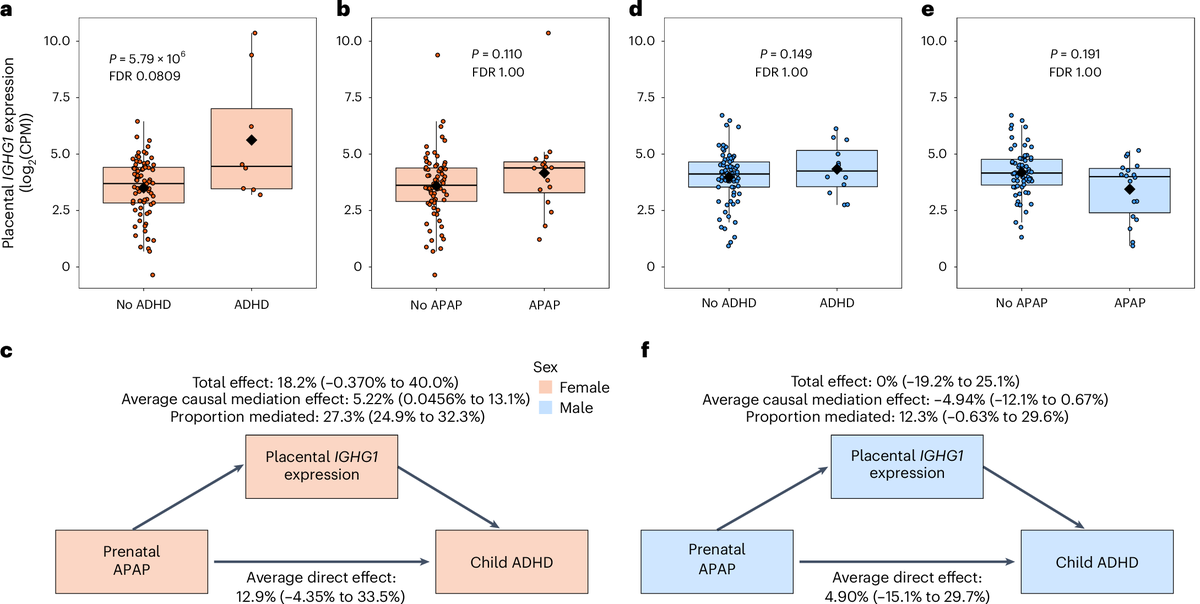
📊 3x higher odds of ADHD diagnosis
💊 5x more likely to be prescribed ADHD meds
🧬 In females, 5.22% higher odds, mediated by placental gene expression
Let’s break it down 🧵👇 1/9
2
Researchers analyzed 307 African American mother–child pairs, measuring APAP (Tylenol) metabolites in maternal blood during pregnancy and tracking ADHD outcomes in children at ages 8–10.
The key question: Does prenatal APAP exposure impact neurodevelopment? /2
The key question: Does prenatal APAP exposure impact neurodevelopment? /2
3
🧠 Children exposed to APAP in the womb had 3.15x higher odds of an ADHD diagnosis.
💊 They were also 5.2x more likely to be prescribed ADHD medications.
This adds to growing concerns about APAP’s effects on fetal brain development. /3
💊 They were also 5.2x more likely to be prescribed ADHD medications.
This adds to growing concerns about APAP’s effects on fetal brain development. /3
4
Sex differences emerged:
♀️ In girls, the risk appeared higher:
🔹 6.16x higher odds of ADHD diagnosis
🔹 10.26x higher odds of ADHD medication use
♂️ In boys, there was a positive trend but not statistically significant. /4
♀️ In girls, the risk appeared higher:
🔹 6.16x higher odds of ADHD diagnosis
🔹 10.26x higher odds of ADHD medication use
♂️ In boys, there was a positive trend but not statistically significant. /4
5
To uncover how APAP might influence brain development, researchers analyzed placental gene expression.
🧬 Prenatal APAP exposure altered immune system pathways in girls and energy metabolism (oxidative phosphorylation) in both sexes. These biological changes may contribute to ADHD risk. /5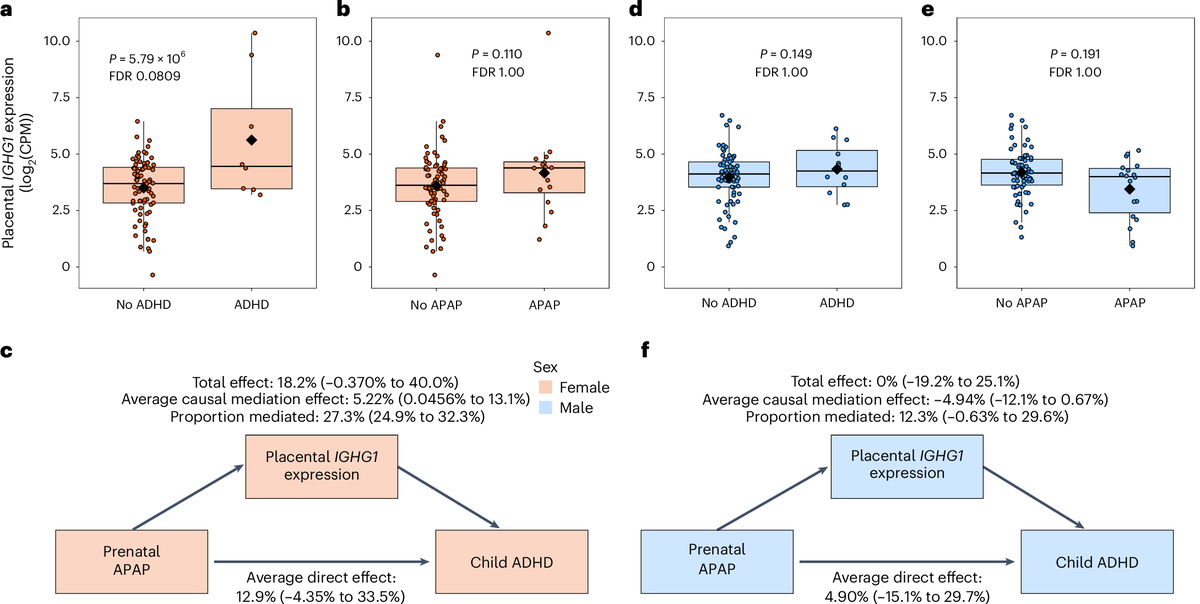
🧬 Prenatal APAP exposure altered immune system pathways in girls and energy metabolism (oxidative phosphorylation) in both sexes. These biological changes may contribute to ADHD risk. /5
6
A key link: Higher expression of IGHG1 (an immune-related gene) in the placenta was associated with higher ADHD risk in girls.Statistical mediation analysis suggests that prenatal APAP exposure increased ADHD risk by 5.22% through IGHG1 expression. /6
7
This study aligns with prior research linking prenatal APAP to ADHD but strengthens the evidence by using biomarkers instead of self-reported use. It also highlights potential molecular mechanisms, particularly immune activation and disrupted energy metabolism in the placenta. /7
8
Limitations to consider:
🔹 The study focused on African American mothers in the urban South, limiting generalizability.
🔹 Small sample size for placental RNA analysis.
🔹 APAP exposure was measured at one time point, though effects may vary across pregnancy.
Further research is needed. /8
🔹 The study focused on African American mothers in the urban South, limiting generalizability.
🔹 Small sample size for placental RNA analysis.
🔹 APAP exposure was measured at one time point, though effects may vary across pregnancy.
Further research is needed. /8
9
Tylenol is widely used in pregnancy, but emerging evidence suggests possible neurodevelopmental risks. For now, medical agencies still consider it safe, but more research is needed. /9
nature.com/articles/s4422…
nature.com/articles/s4422…