Eating at night causes circadian misalignment—harming metabolic...

Brandon Luu, MD@BrandonLuuMD
29 views
Nov 24, 2025
~2 min read
Advertisement
1
Eating at night causes circadian misalignment—harming metabolic health.
A study found it led to a 19% higher morning blood sugar spike.
Here’s why when you eat may be just as important as what you eat 🧵1/9
A study found it led to a 19% higher morning blood sugar spike.
Here’s why when you eat may be just as important as what you eat 🧵1/9
2
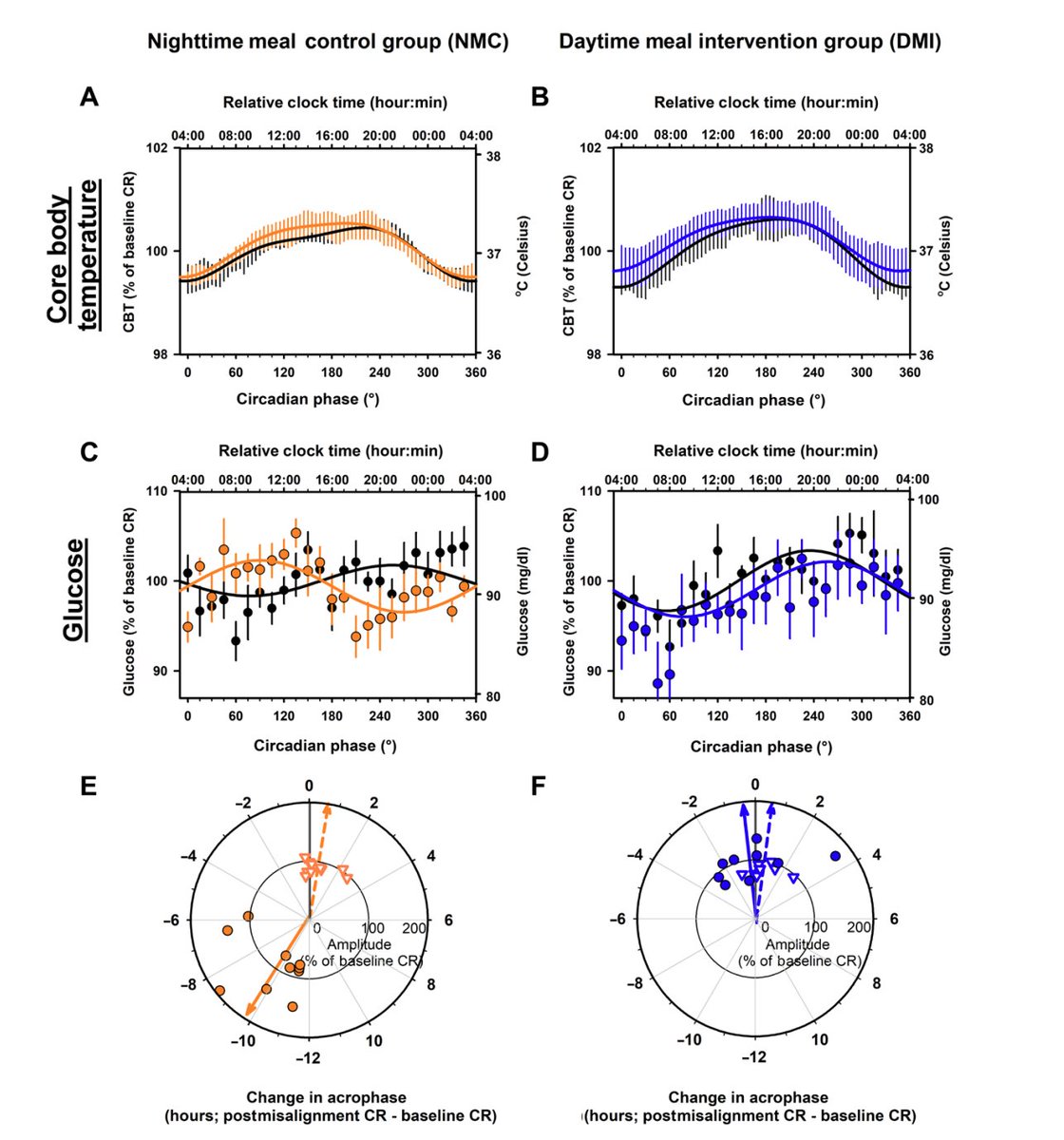
This study had 19 healthy adults undergo simulated night shifts for 14 days. One group ate during the night, the other during the day. Researchers measured core body temperature, glucose, and insulin to track circadian rhythms and metabolism /2
pmc.ncbi.nlm.nih.gov/articles/PMC86…
pmc.ncbi.nlm.nih.gov/articles/PMC86…
3
Eating at night caused misalignment between the brain’s central clock and the body's metabolic rhythms. This led to higher blood sugar levels and poorer glucose control—hallmarks of diabetes risk /3
4
📉 The night-eating group had 19% higher post-meal blood sugar. Their glucose rhythms were out of sync with their brain’s circadian clock. Their insulin response was 52% lower after breakfast, making it harder to regulate blood sugar /4

5
✅ The solution?
The daytime eating group had no significant blood sugar spikes and maintained normal glucose rhythms. Despite working night shifts, their metabolism stayed aligned with their internal clock, preventing the negative effects seen in the night-eating group /5
The daytime eating group had no significant blood sugar spikes and maintained normal glucose rhythms. Despite working night shifts, their metabolism stayed aligned with their internal clock, preventing the negative effects seen in the night-eating group /5
6
Why does this matter? Shift work is linked to a higher risk of diabetes, and this study suggests meal timing plays a major role.
Eat at night → Circadian misalignment → Glucose intolerance.
Eat during the day → Circadian alignment → Stable glucose levels. /6
Eat at night → Circadian misalignment → Glucose intolerance.
Eat during the day → Circadian alignment → Stable glucose levels. /6
7
Overall, your brain's central clock (regulated by light) and your body’s metabolic clock (regulated by food) must be in sync for optimal health. Eating at night confuses the system, sending mixed signals that disrupt metabolism, increasing diabetes risk /7
8
This study suggests people should avoid eating at night if you want to protect your metabolic health. Whether you're a shift worker or just up late, nighttime eating disrupts your body's natural rhythms, raises blood sugar, and increases diabetes risk. There are exceptions to every rule of course, and some people’s alignment may vary, but the results were quite significant (and the reason I never eat during overnight shifts) /8
9
In summary, this study highlights that meal timing matters just as much as meal content—especially for shift workers.
Eating at night disrupts circadian rhythms and impairs glucose tolerance, increasing diabetes risk. Align your meals with your body’s clock. /9
Eating at night disrupts circadian rhythms and impairs glucose tolerance, increasing diabetes risk. Align your meals with your body’s clock. /9
