Can’t fall asleep before 2 AM. Hit snooze five times. Wide awake at...

Brandon Luu, MD@BrandonLuuMD
66 views
Jan 14, 2026
~3 min read
Advertisement
1
Can’t fall asleep before 2 AM.
Hit snooze five times.
Wide awake at midnight.
This is likely a delayed circadian rhythm.
Morning light helps, but only if the timing, intensity, and delivery are right. Get it wrong and you delay your clock further.
Here’s what to do🧵1/13
Hit snooze five times.
Wide awake at midnight.
This is likely a delayed circadian rhythm.
Morning light helps, but only if the timing, intensity, and delivery are right. Get it wrong and you delay your clock further.
Here’s what to do🧵1/13
2
Delayed circadian rhythms are linked to impaired concentration, mood disturbances, increased metabolic and cardiovascular risk, and weakened immune function.
The good news: properly timed light can rapidly and effectively shift your internal clock.
brandonluumd.substack.com/p/how-to-shift…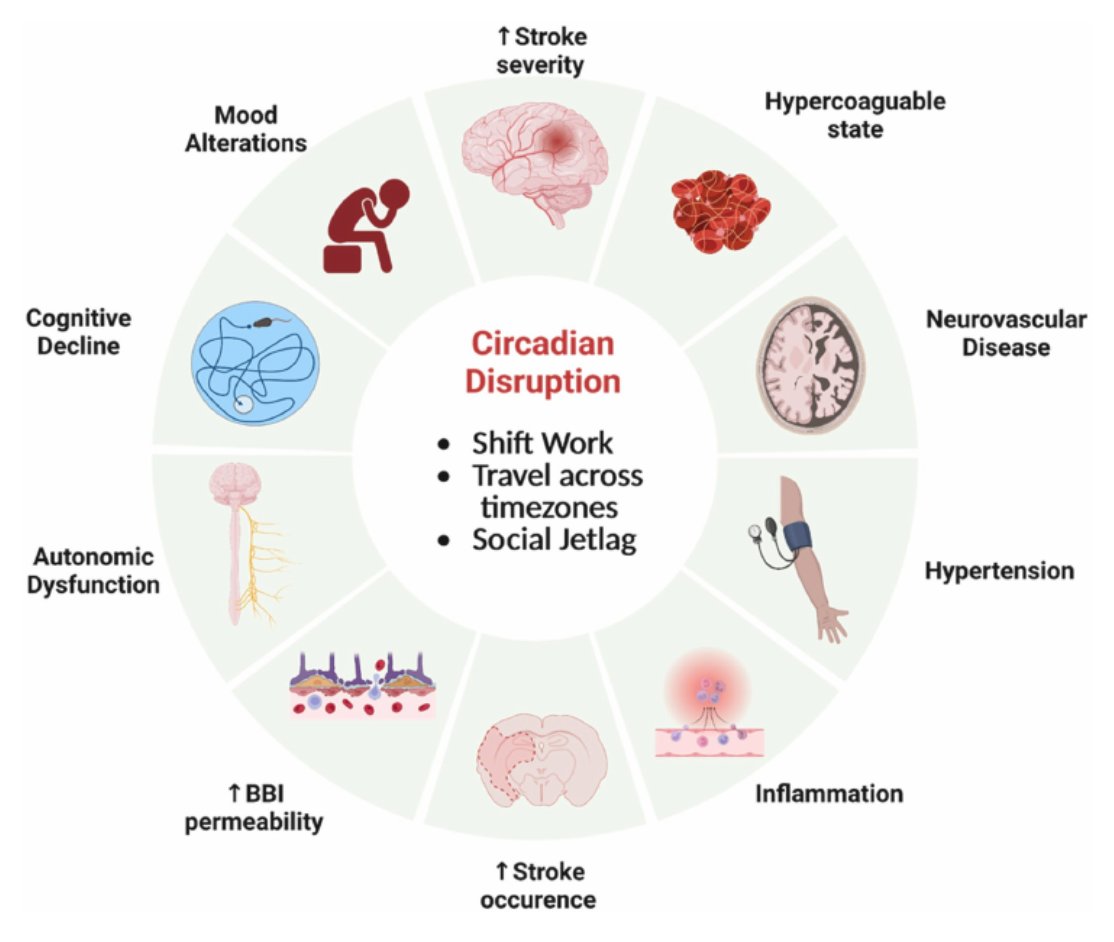
The good news: properly timed light can rapidly and effectively shift your internal clock.
brandonluumd.substack.com/p/how-to-shift…
3
Timing is everything.
Light after your core body temperature minimum (~last third of sleep) causes phase advance.
Light before it causes phase delay, making things worse.
Bright light should only be done at least 2-3 hours past your sleep midpoint.
For example, if you usually sleep midnight-8 AM and suddenly force a 5 AM wake time, you may wake before your core body temperature minimum.
Early light at that point can delay your circadian clock, not advance it, and push your sleep even later. /3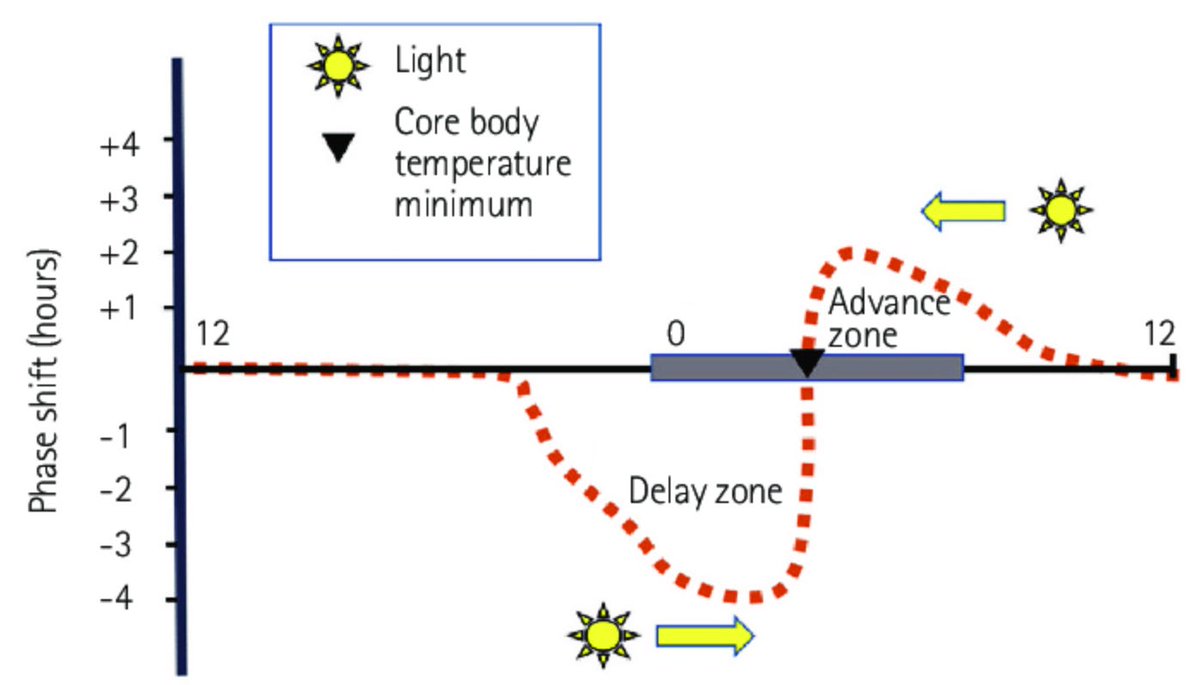
Light after your core body temperature minimum (~last third of sleep) causes phase advance.
Light before it causes phase delay, making things worse.
Bright light should only be done at least 2-3 hours past your sleep midpoint.
For example, if you usually sleep midnight-8 AM and suddenly force a 5 AM wake time, you may wake before your core body temperature minimum.
Early light at that point can delay your circadian clock, not advance it, and push your sleep even later. /3
4
How fast should you shift?
1 hour/day: smooth circadian adaptation, minimal sleep disruption
2 hours/day: larger melatonin shifts but circadian rhythms failed to keep pace by day 3
Never exceed 1 hour/day advancement (take your time) /4
1 hour/day: smooth circadian adaptation, minimal sleep disruption
2 hours/day: larger melatonin shifts but circadian rhythms failed to keep pace by day 3
Never exceed 1 hour/day advancement (take your time) /4
5
The gold standard protocol: 10,000 lux light box for 30-60 minutes daily (as soon as you wake up, as long as this is after temperature min)
Study over 10-14 days:
↑ Phase advances up to 2.7 hours in some patients
↑ Consistent meaningful shifts in seasonal affective disorder /5
Study over 10-14 days:
↑ Phase advances up to 2.7 hours in some patients
↑ Consistent meaningful shifts in seasonal affective disorder /5
6
Longer durations at lower lux seem to be an acceptable alternative (even on weekends only)
Weekend-only protocol (teenagers): 2.5 hours at 6,000 lux on Saturdays and Sundays produced meaningful phase advances /6
Weekend-only protocol (teenagers): 2.5 hours at 6,000 lux on Saturdays and Sundays produced meaningful phase advances /6
7
Blue light works but requires evening restriction.
No advantage of 225 lux blue light over dim light when evening exposure wasn’t controlled, suggesting that controlling the full 24-hour light-dark pattern matters more than morning light intensity alone /7
No advantage of 225 lux blue light over dim light when evening exposure wasn’t controlled, suggesting that controlling the full 24-hour light-dark pattern matters more than morning light intensity alone /7
8
Dawn simulators help too.
RCT in seasonal affective disorder comparing dawn simulation (gradual light 0-250 lux over 90 min before wake) vs standard bright light vs placebo:
Dawn simulation: higher remission and response rates than both placebo AND standard bright light /8
RCT in seasonal affective disorder comparing dawn simulation (gradual light 0-250 lux over 90 min before wake) vs standard bright light vs placebo:
Dawn simulation: higher remission and response rates than both placebo AND standard bright light /8
9
Natural outdoor sunlight reaches 10,000-100,000 lux depending on conditions and is the best option when possible. Even cloudy days provide 1,000-5,000 lux outdoors. Indoor lighting is typically only tens to hundreds of lux. /9

10
Protocol for phase advancement:
Wake 15 minutes earlier per day (max 1 hour/day)
Use bright light within 30-60 min of waking (sooner the better)
Move bedtime earlier by same 15 minutes
Continue daily for 1-2 weeks
Hold steady if sleep onset or mornings become difficult /10
Wake 15 minutes earlier per day (max 1 hour/day)
Use bright light within 30-60 min of waking (sooner the better)
Move bedtime earlier by same 15 minutes
Continue daily for 1-2 weeks
Hold steady if sleep onset or mornings become difficult /10
11
Expected timeline:
Days 1-3: Acute alerting during light, possible morning fatigue and difficulty falling asleep if advancing too fast
Days 4-7: Easier waking at new earlier time
Days 8-14: 1-2 hour shift with standard protocols in most responders /11
Days 1-3: Acute alerting during light, possible morning fatigue and difficulty falling asleep if advancing too fast
Days 4-7: Easier waking at new earlier time
Days 8-14: 1-2 hour shift with standard protocols in most responders /11
12
Important caveats:
Bipolar disorder: can trigger manic episodes, use only with psychiatric supervision
Retinal disease: consult ophthalmologist first
Advancing too fast (>1 hour/day): causes sleep disruption and morning grogginess
Always use UV-filtered devices /12
Bipolar disorder: can trigger manic episodes, use only with psychiatric supervision
Retinal disease: consult ophthalmologist first
Advancing too fast (>1 hour/day): causes sleep disruption and morning grogginess
Always use UV-filtered devices /12
13
Your circadian clock controls sleep, energy, mood, focus, metabolism, and hormone timing. Light is the strongest signal it uses.
Get the methods right and you can rapidly advance your circadian rhythm.
Full evidence based protocol here:
brandonluumd.substack.com/p/how-to-shift…
Get the methods right and you can rapidly advance your circadian rhythm.
Full evidence based protocol here:
brandonluumd.substack.com/p/how-to-shift…
