During 100+ hour workweeks with sleepless 26-hour shifts, most...

Brandon Luu, MD@BrandonLuuMD
54 views
Feb 18, 2025
~3 min read
Advertisement
1
During 100+ hour workweeks with sleepless 26-hour shifts, most think there's no time for exercise.
I found the opposite to be true.
Here’s how I use science-backed strategies to turn exercise into my greatest performance enhancer—not just another task 🧵1/18👇
I found the opposite to be true.
Here’s how I use science-backed strategies to turn exercise into my greatest performance enhancer—not just another task 🧵1/18👇
2
During medical training, time is a precious currency. With up to three sleepless 26-hour shifts a week, staying athletic seemed impossible—but I didn’t give up.
Digging into the research, I learned that exercise might be the most important thing to do when sleep-deprived /2
Digging into the research, I learned that exercise might be the most important thing to do when sleep-deprived /2
3
💡 Sleep catch-up vs. exercise
After 30 hours without sleep, I wondered… should I just sleep all day to recover, or can exercise offset some of the damage?
I still had loads of work to get done. A literature search helped answer this question. /3
After 30 hours without sleep, I wondered… should I just sleep all day to recover, or can exercise offset some of the damage?
I still had loads of work to get done. A literature search helped answer this question. /3
4
In one study, 24 hours of sleep deprivation disrupted glucose control, insulin response, and fatty acid levels—but exercise protected against this.
After just 2 weeks of HIIT (3x/week, 12x60s rounds), these negatives were mitigated. /4
After just 2 weeks of HIIT (3x/week, 12x60s rounds), these negatives were mitigated. /4
5
🔬 Another large cohort study suggested that regular exercise reduces the mortality risk associated with sleep deprivation.
Of course, sleep + exercise is ideal. But when you're working 26-hour shifts every 4 days, for a year, exercise can help offset the damage /5
Of course, sleep + exercise is ideal. But when you're working 26-hour shifts every 4 days, for a year, exercise can help offset the damage /5
6
🧠 Exercise boosts learning & memory
It’s not just physical—exercise has major cognitive benefits, especially with a learning task. I did a deep dive on this meta-analysis for those interested, but will also cover key parts below /6
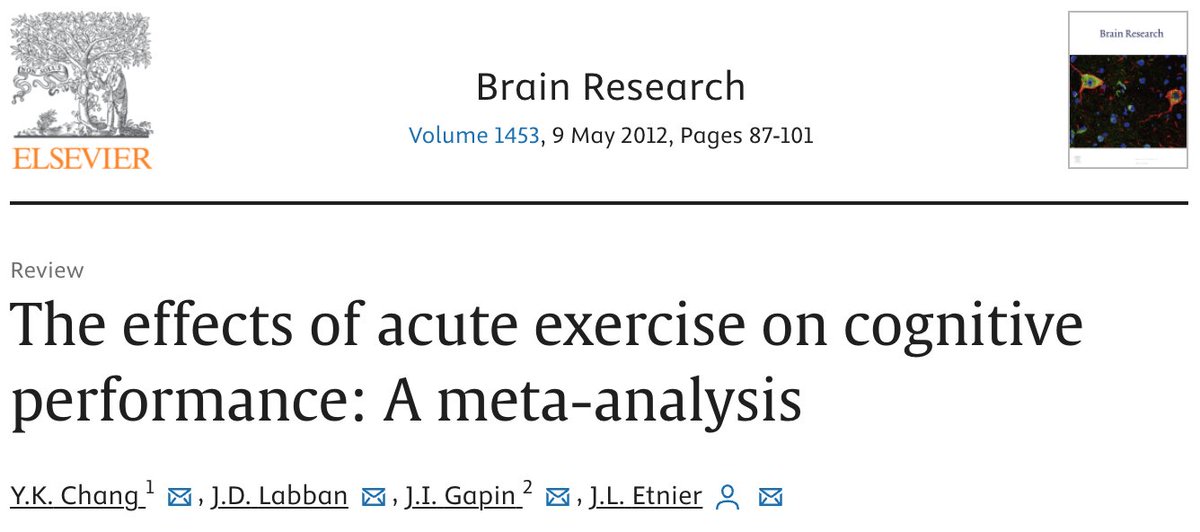
It’s not just physical—exercise has major cognitive benefits, especially with a learning task. I did a deep dive on this meta-analysis for those interested, but will also cover key parts below /6
Brandon Luu, MD@BrandonLuuMD
This is one of the largest meta-analyses on the effects of exercise on cognitive performance.
Here are my top 4 evidence-based protocols from it to leverage exercise to maximize cognitive performance.
1/13
Here are my top 4 evidence-based protocols from it to leverage exercise to maximize cognitive performance.
1/13
7
In this study for example, a 20-minute jog before studying improved:
✅ Memory recall (short- & long-term)
✅ Reaction times (better focus & inhibitory control) /7
✅ Memory recall (short- & long-term)
✅ Reaction times (better focus & inhibitory control) /7
8
In another study, exercise before encoding enhanced long-term episodic memory recall for at least 8 weeks.
Over time, when studying after 30 hours of sleep deprivation, any improvement is a massive advantage when juggling complex concepts /8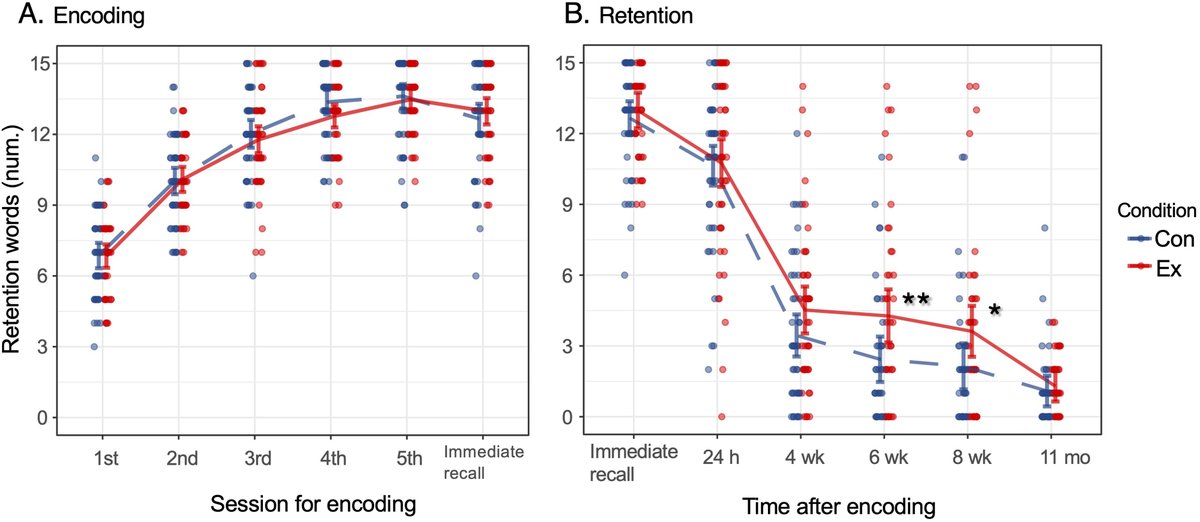
Over time, when studying after 30 hours of sleep deprivation, any improvement is a massive advantage when juggling complex concepts /8
9
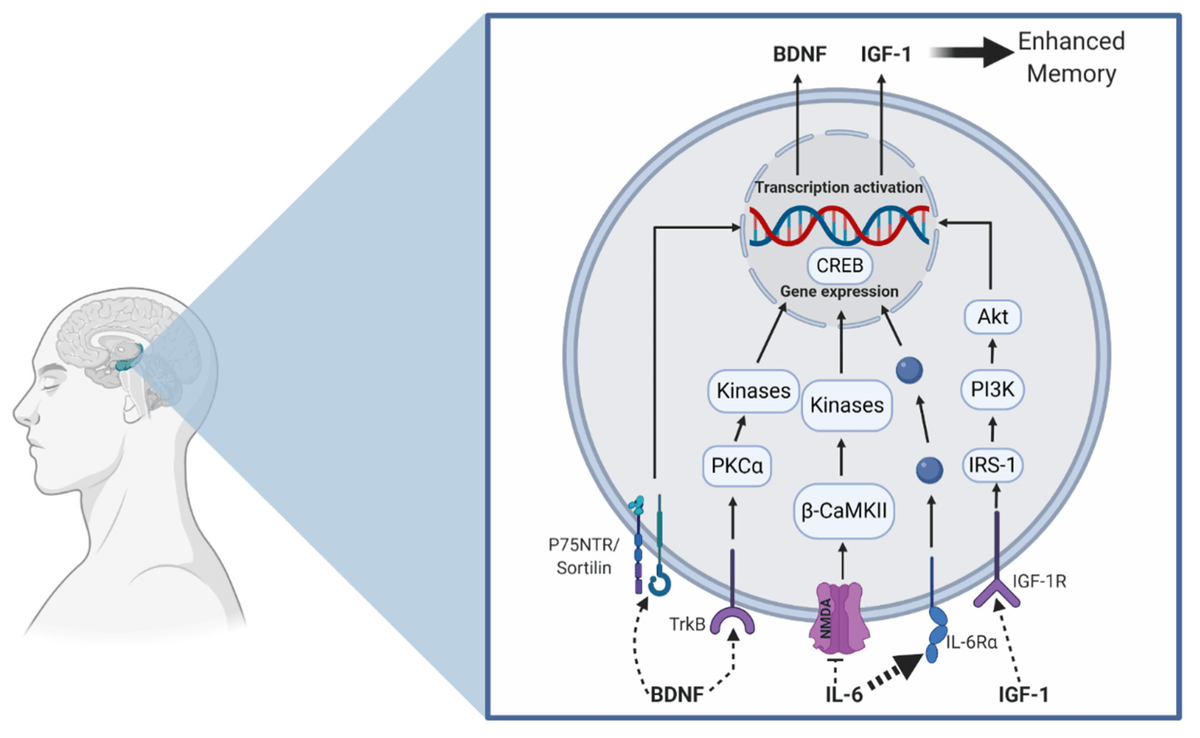
Aerobic and resistance exercise both enhance episodic memory, but through distinct mechanisms /9

10
Aerobic training increases hippocampal BDNF, TrkB, and glutamatergic proteins, while resistance training improves neural communication, attentional resource allocation, and reduces inflammation. The best approach? Do both /10
11
My walking desk was also a game-changer—it helped me stay active while working and turn movement into a cognitive boost, enhancing focus and productivity /11

12
Here’s how I structured my training around sleep deprivation while prepping for a half-marathon:
📅 Mon, Fri, Sun → 26-hour shifts
🚀 Morning before shifts → 30-45 min high-intensity run or HIIT on a spin bike (to simulate the protective metabolic effects from the study) /12
📅 Mon, Fri, Sun → 26-hour shifts
🚀 Morning before shifts → 30-45 min high-intensity run or HIIT on a spin bike (to simulate the protective metabolic effects from the study) /12
13
💤 Post-call Protocol (after 30 hours awake):
1️⃣ Sleep 2-3 hours
2️⃣ Wake up & run immediately → Long runs on these days felt safer since I naturally went slower and easier, reducing injury risk /13
1️⃣ Sleep 2-3 hours
2️⃣ Wake up & run immediately → Long runs on these days felt safer since I naturally went slower and easier, reducing injury risk /13
14
Post-run/workout:
3️⃣ Deep work for ~2-3 hours right after, maximizing focus while still energized.
4️⃣ Sleep another 90 minutes to recharge before the rest of the day /14
3️⃣ Deep work for ~2-3 hours right after, maximizing focus while still energized.
4️⃣ Sleep another 90 minutes to recharge before the rest of the day /14
15
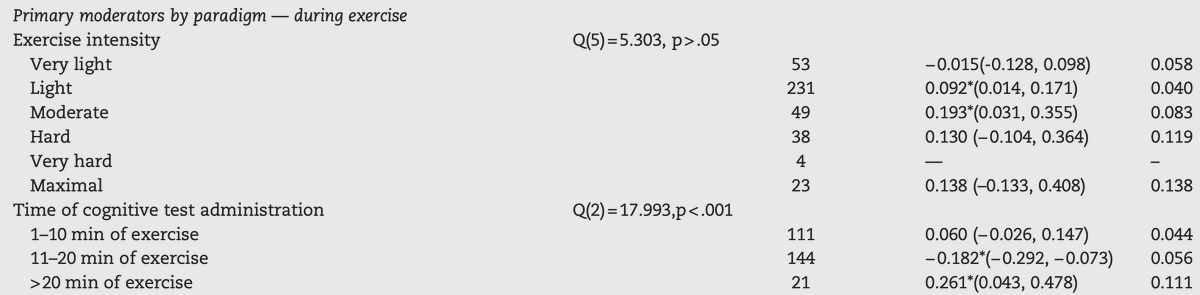
Throughout the next few hours, I would use a walking desk as a cool-down from the run & intermittently when I felt like I was slowing down. As per the above meta analysis, walking and working can actually improve cognitive performance /15
16
🏋️♂️ Strength training matters too
The above meta-analysis showed that combining resistance + aerobic training had an even greater cognitive benefit.
So I make sure to lift weights 2-3x/week, usually upper body the same day after an easy run (to reduce injury risk) /16
The above meta-analysis showed that combining resistance + aerobic training had an even greater cognitive benefit.
So I make sure to lift weights 2-3x/week, usually upper body the same day after an easy run (to reduce injury risk) /16
17
🐕 The most important part of this routine? My dog. She’s a rescue with endless energy, so daily runs became a natural fit—and honestly, she’s the main reason I started running.
Find what drives you. It makes consistency effortless /17
Find what drives you. It makes consistency effortless /17
18
There will always be reasons to skip exercise: tired, busy, no time.
But if you reframe exercise as a tool to supercharge your day:
✔️ You perform better
✔️ You feel & look healthier
✔️ You take control of your energy & focus
Make movement non-negotiable /18
But if you reframe exercise as a tool to supercharge your day:
✔️ You perform better
✔️ You feel & look healthier
✔️ You take control of your energy & focus
Make movement non-negotiable /18