Markets are pricing in vastly different impacts from the possible...

Bob Elliott@BobEUnlimited
26 views
Jan 22, 2025
~3 min read
Advertisement
1
Markets are pricing in vastly different impacts from the possible implementation of tariff policy ahead.
While foreign markets most likely targeted have weakened considerably, very little impact is expected on US companies and asset markets most impacted.
Thread.
While foreign markets most likely targeted have weakened considerably, very little impact is expected on US companies and asset markets most impacted.
Thread.
2
While there has been no new tariff policy to kick off the term, rhetoric has ramped up about prospective tariffs coming as soon as Feb 1 on CHN, MEX, CAN, EUR and others. The impact is pretty clear in their markets.
The peso trading to multi-year lows: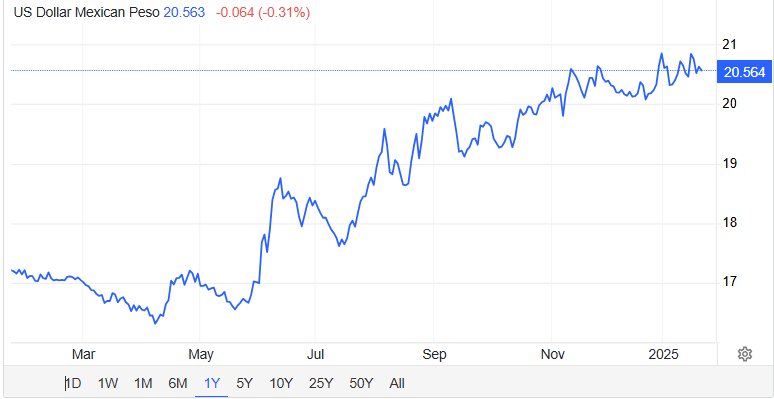
The peso trading to multi-year lows:
3
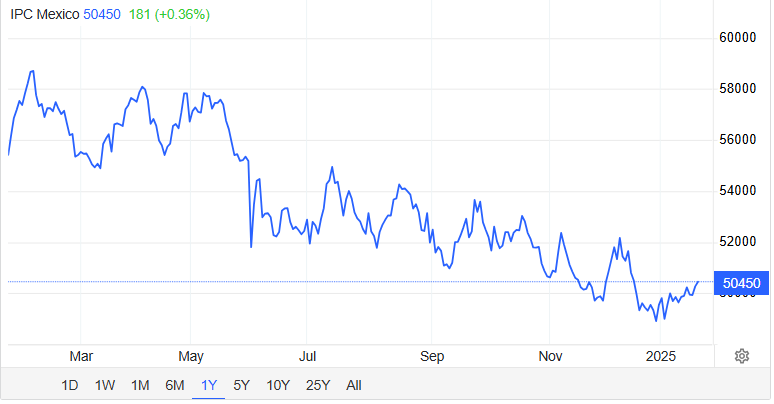
Mexican equity market weakening in sharp contrast to US markets which are pushing toward all-time highs.
4
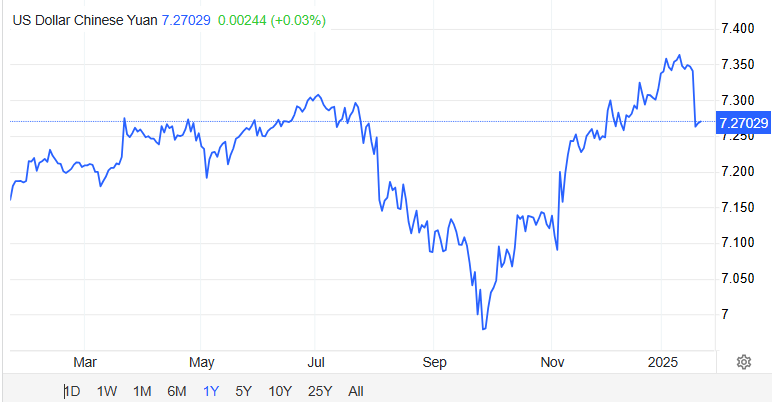
While there is a lot going on in China beyond just the prospective tariffs, the exchange rate weakened to multi-decade lows before a pop back in recent days. Still roughly the weakest its been since mid-00s.
5
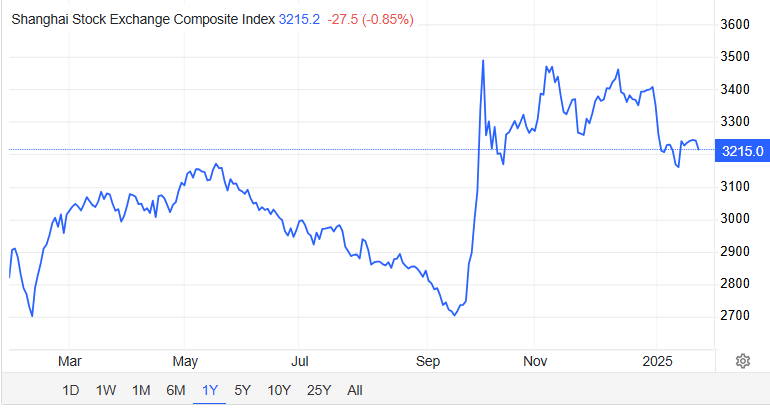
Notable that the US election date marked roughly the nearby peak in Chinese stocks, which have been weak for some time.
6
European markets have all sorts of companies not necessarily impacted by tariffs, so it is notable that the stock prices of those most directly impacted by tariffs have significantly underperformed the rest of the index over the last year.

7
Taken together most of the biggest markets that would likely face pain from tariff impacts are trading quite weak relative to the last couple years across foreign markets.
And yet, when we look at US companies, very little impact is expected.
And yet, when we look at US companies, very little impact is expected.
8
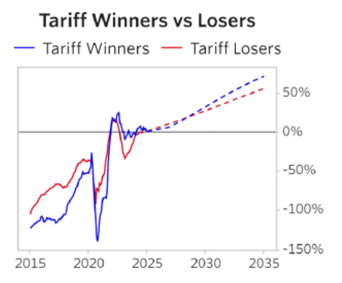
From a fundamental expectations standpoint, there is only a 1% EPS growth diff in what is being expected between tariff winners and losers in the US markets over the next 10 years. And in the short-term tariff winners are expected to *underperform.*
9
And since the election tariff losers have actually *outperformed* the S&P500.

10
After very little relative performance differences leading into the election as well. Certainly compared to the vast swings we saw around the covid period (which would be related given similar supply-chains and production would be impacted) (this is leading up to the election)

11
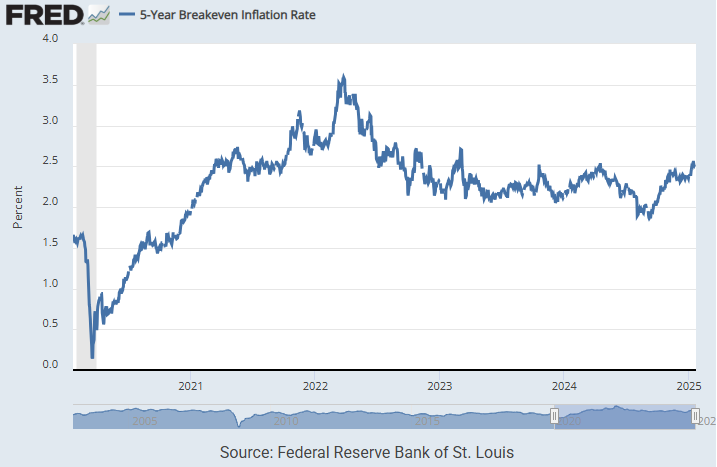
Bond markets are also not pricing much of a difference from the implementation of prospective tariffs. Short-term breakevens reacted modestly on the Fed over easy policy, but have been basically flat since the election and in the narrow range of the last couple years.
12
While the actual policies that ultimately get implemented are still pretty darn ambiguous, the shape of how markets are pricing is pretty clear.
Markets expect no impact on the US companies most impacted and significant impact on the rest of the world.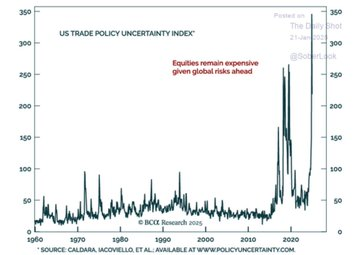
Markets expect no impact on the US companies most impacted and significant impact on the rest of the world.
13
That's setting up a classic macro opportunity where the same outcome is priced quite differently - likely overstated in foreign markets and understated in the US on a relative basis.
It doesn't require *predicting* policy ahead, but instead fading incongruous pricing of policy.
It doesn't require *predicting* policy ahead, but instead fading incongruous pricing of policy.
14
While doing so requires a sharp pencil to get the mix & risk matching right, it looks pretty clear that this foreign/domestic tariff pricing diff may be one of the best macro opportunities from a risk/return perspective in '25.