The Hawk T2 Replacement Shambles – Why the MoD Still Cannot Do the...

MtarfaLee@MtarfaL
7 views
Nov 18, 2026
~11 min read
Advertisement
1
The Hawk T2 Replacement Shambles – Why the MoD Still Cannot Do the Simple Thing
Views my own, comments and corrections welcome.
Slightly different style for me.
1/25 The Hawk T2 problem is not new. The OSD has simply been brought forward.
Persistent Adour Mk 951 low-pressure compressor issues cut engine life from a planned 4,000 hours to 1,700. In 2022–23 the RAF averaged eight serviceable T2s a day and roughly half the contracted flying hours. By March 2024, 16 of 28 aircraft were unavailable for fast-jet training. A September 2026 crash at RAF Valley (both crew ejected; investigation later focused on a missing fuel cap) grounded the entire T1/T2 fleet. Senior officers, including then-CAS Sir Richard Knighton, had already said the service was “getting about half of what we should.”
The Defence Investment Plan allocated £360 million for full Jet Training System recapitalisation and £860 million to keep the Hawks flying safely until a replacement arrives. OSD for the T2 has moved well ahead of the original 2040 date; the Red Arrows’ T1s are confirmed “out” by March 2030.
2
MFTS was supposed to fix exactly this.
2/25 After a damning 2000 National Audit Office report on slow, expensive, fragmented flying training, the MoD created the UK Military Flying Training System. Ascent (Lockheed Martin/Babcock) won the 25-year contract in 2008. Aims: shorter time to front line, better skills match, lower cost, more flexibility.
Reality: full capability delayed years; shortfalls of 45–86 % in some years; training times for fast-jet pilots stretched beyond seven years against an ideal closer to four.
Hawk T2 availability problems sit on top of an already constrained pipeline.
3
The pilot pipeline continues to fall short.
3/25 Parliamentary answers in mid-2026 showed 119 trainee fast-jet pilots in the system between Cranwell and OCU; 48 of them were on holdovers or waiting for conversion places.
Instructor numbers on Hawk T2 remained critically low (around 17 qualified at the end of 2024, later rising slowly). Overseas outsourcing to Italy (IFTS), Qatar and the United States has become routine.
Basic Flying Training on the Texan T1 has its own capacity problem: the fleet of roughly 14 aircraft has suffered availability shortfalls linked to earlier short-term savings.
The MoD is now examining options to buy more Texans simply to feed the advanced stage.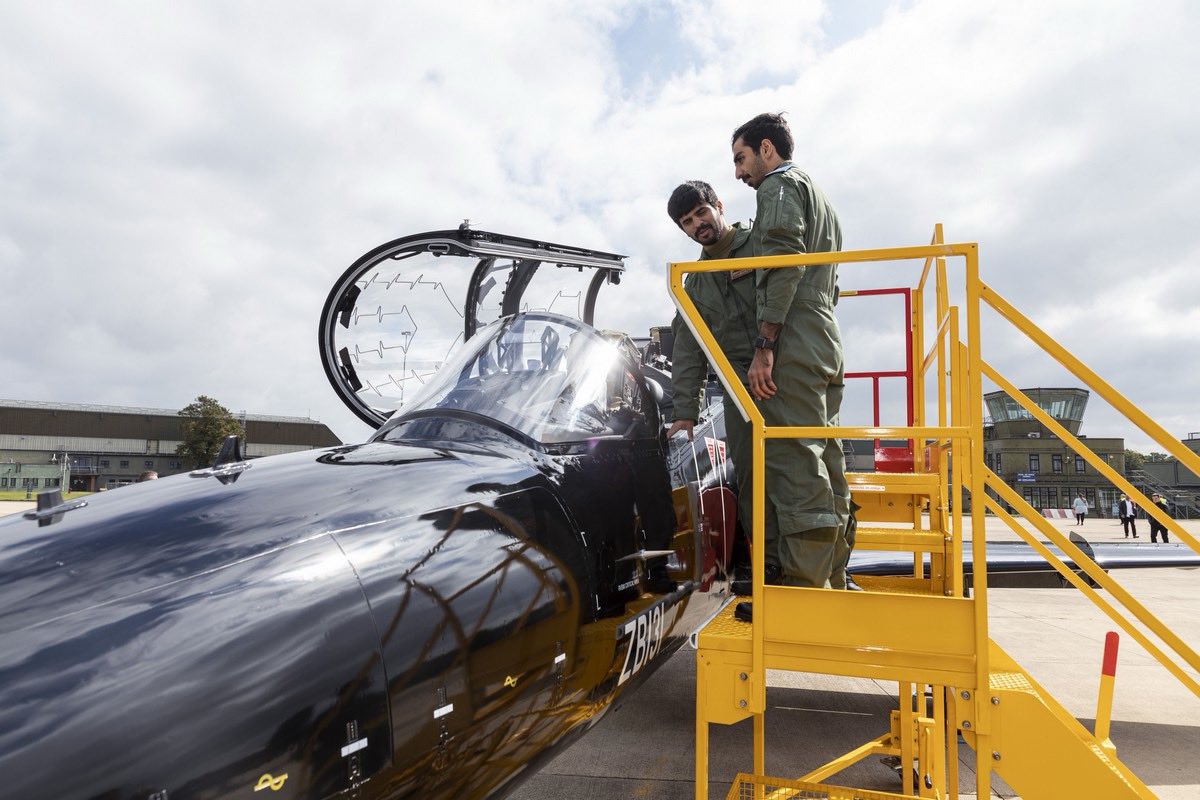
3/25 Parliamentary answers in mid-2026 showed 119 trainee fast-jet pilots in the system between Cranwell and OCU; 48 of them were on holdovers or waiting for conversion places.
Instructor numbers on Hawk T2 remained critically low (around 17 qualified at the end of 2024, later rising slowly). Overseas outsourcing to Italy (IFTS), Qatar and the United States has become routine.
Basic Flying Training on the Texan T1 has its own capacity problem: the fleet of roughly 14 aircraft has suffered availability shortfalls linked to earlier short-term savings.
The MoD is now examining options to buy more Texans simply to feed the advanced stage.
4
BFT aircraft numbers and availability are a classic short-term cost trap.
4/25 When MFTS was scoped, the assumption was that fewer, more efficient aircraft plus high-fidelity simulation would suffice. Short-term budget pressure reduced the Texan fleet below the level needed for reliable throughput. Students now queue, lose currency, and create further holds downstream. This is not an isolated engineering problem; it is the predictable result of treating training capacity as a cost centre rather than the foundation of combat air.
4/25 When MFTS was scoped, the assumption was that fewer, more efficient aircraft plus high-fidelity simulation would suffice. Short-term budget pressure reduced the Texan fleet below the level needed for reliable throughput. Students now queue, lose currency, and create further holds downstream. This is not an isolated engineering problem; it is the predictable result of treating training capacity as a cost centre rather than the foundation of combat air.
5
Draft basic Key User Requirements (what a simple requirement actually looks like).
5/25
• Deliver a minimum of 6,000–7,000 reliable advanced jet training hours per year with high daily availability.
• Provide endurance and diversion capability suitable for UK weather and geography (internal fuel plus wet-wing or equivalent capacity).
• Use a UK-supported ejection seat (Martin-Baker) for commonality, logistics and sovereign sustainment.
• Integrate high-fidelity synthetic training at a 1:1 or better live-to-sim ratio.
• Prepare students for Typhoon, F-35 and GCAP/Tempest cockpits and tactics.
• Sustainment and support must remain under UK control with a clear sovereign industrial footprint.
• In-service date that closes the gap before the current Hawk OSD, not after it. These are not exotic. They are the minimum for a nation that still intends to generate its own fast-jet pilots.
6
NADG and the consultancies are over-complicating a simple requirement.
6/25 The National Armaments Director Group (NADG) issued the Jet Training System RFI in August 2026. Instead of translating clear KURs into a crisp request that industry can answer quickly, the process has been wrapped in layers of systems engineering, workshare scoring, “future combat air” language and external consultancy input. The result is delay, not clarity. Industry already knows the contenders. What is missing is a decision-maker willing to state the simple operational need and hold the process to it.
6/25 The National Armaments Director Group (NADG) issued the Jet Training System RFI in August 2026. Instead of translating clear KURs into a crisp request that industry can answer quickly, the process has been wrapped in layers of systems engineering, workshare scoring, “future combat air” language and external consultancy input. The result is delay, not clarity. Industry already knows the contenders. What is missing is a decision-maker willing to state the simple operational need and hold the process to it.
7
BAE Systems has partnered with Boeing and Saab to push the T-7.
7/25 A letter of intent was signed in November 2025; a formal teaming agreement followed at Farnborough in July 2026. BAE will prime a UK bid and promises a final-assembly and integration facility in Britain, with “hundreds of high-value jobs” and a UK supply chain. The pitch is that the T-7 is modern, open-architecture, and better suited to fifth- and sixth-generation training than the Hawk.
7/25 A letter of intent was signed in November 2025; a formal teaming agreement followed at Farnborough in July 2026. BAE will prime a UK bid and promises a final-assembly and integration facility in Britain, with “hundreds of high-value jobs” and a UK supply chain. The pitch is that the T-7 is modern, open-architecture, and better suited to fifth- and sixth-generation training than the Hawk.
8
The T-7 has been turned down by the US Navy and is still not in full service with the USAF.
8/25 Boeing withdrew the T-7 from the US Navy’s Undergraduate Jet Training System competition in June 2026, stating it did not meet requirements without lengthy further development. The USAF approved Milestone C (low-rate initial production) only in April 2026. Initial operational capability with 14 aircraft is targeted for August 2027; full-rate production decision has slipped to 2029. Developmental testing is still incomplete. This is not a mature, off-the-shelf solution.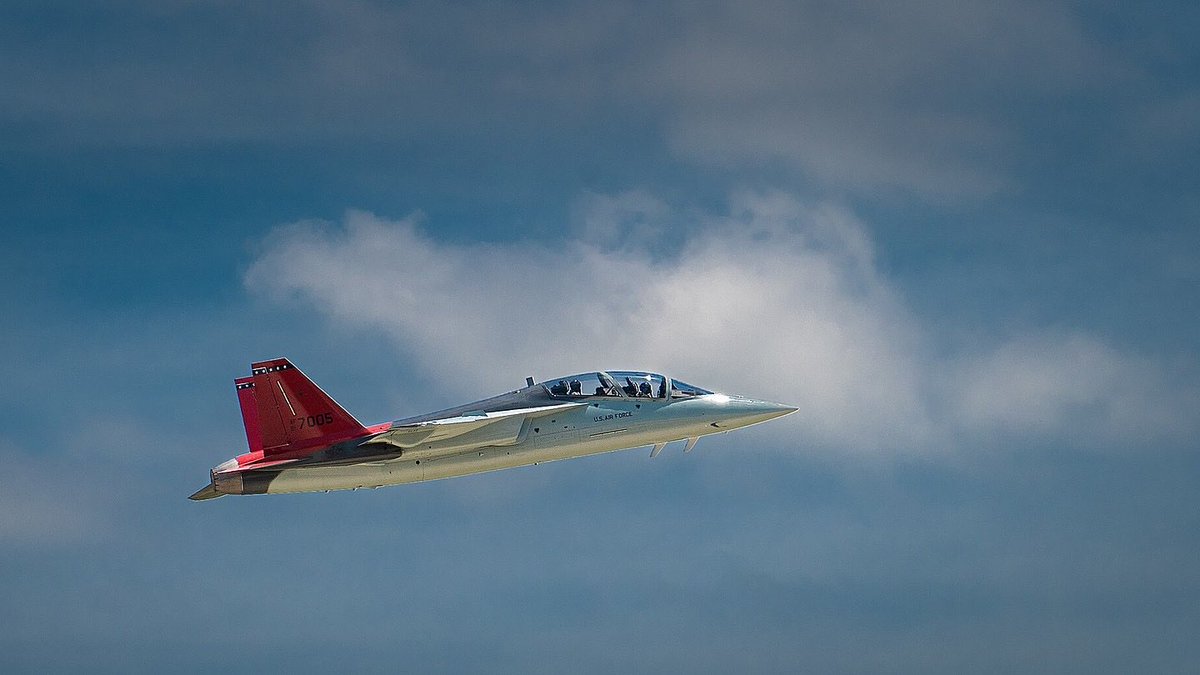
8/25 Boeing withdrew the T-7 from the US Navy’s Undergraduate Jet Training System competition in June 2026, stating it did not meet requirements without lengthy further development. The USAF approved Milestone C (low-rate initial production) only in April 2026. Initial operational capability with 14 aircraft is targeted for August 2027; full-rate production decision has slipped to 2029. Developmental testing is still incomplete. This is not a mature, off-the-shelf solution.
9
Why the T-7 is poorly suited to UK requirements.
9/25 It carries its fuel primarily in the fuselage rather than offering the wet-wing capacity familiar on the Hawk and needed for UK training profiles (longer sorties, weather diversions, multi-base operations). Its ejection seats are Collins Aerospace ACES 5, not Martin-Baker. The UK has long preferred Martin-Baker for commonality across the combat-air fleet, logistics support, and sovereign industrial interest. Introducing a non-UK seat creates a new sustainment and training burden. These are not minor details; they are direct mismatches with the basic KURs above.
9/25 It carries its fuel primarily in the fuselage rather than offering the wet-wing capacity familiar on the Hawk and needed for UK training profiles (longer sorties, weather diversions, multi-base operations). Its ejection seats are Collins Aerospace ACES 5, not Martin-Baker. The UK has long preferred Martin-Baker for commonality across the combat-air fleet, logistics support, and sovereign industrial interest. Introducing a non-UK seat creates a new sustainment and training burden. These are not minor details; they are direct mismatches with the basic KURs above.
10
Ejection-seat problems delayed the T-7 for years.
10/25 Early sled testing revealed risks of injury, particularly for lighter pilots, across the expanded anthropometric range the USAF demanded. Multiple redesigns of canopy fracturing and seat sequencing were required. A final high-speed sled test was completed only in October 2026. The system is still not fully qualified for the full intended pilot population. Adopting it would import an unresolved or only recently mitigated risk into the UK training system.
10/25 Early sled testing revealed risks of injury, particularly for lighter pilots, across the expanded anthropometric range the USAF demanded. Multiple redesigns of canopy fracturing and seat sequencing were required. A final high-speed sled test was completed only in October 2026. The system is still not fully qualified for the full intended pilot population. Adopting it would import an unresolved or only recently mitigated risk into the UK training system.
11
Historical preference for Boeing solutions when operational urgency overrides sovereign capability.
11/25 In the 2010s the RAF acquired significant Boeing equipment (Chinook, P-8 Poseidon, etc.) because the operational need was immediate and the platform was available. Strategic industrial sovereignty was secondary. The same pattern is visible now: an aircraft that has not yet completed its primary customer’s test programme and has been rejected by the US Navy is being actively lobbied as the answer, with UK workshare offered as the political sweetener.
11/25 In the 2010s the RAF acquired significant Boeing equipment (Chinook, P-8 Poseidon, etc.) because the operational need was immediate and the platform was available. Strategic industrial sovereignty was secondary. The same pattern is visible now: an aircraft that has not yet completed its primary customer’s test programme and has been rejected by the US Navy is being actively lobbied as the answer, with UK workshare offered as the political sweetener.
12
ACM Sir Harv Smyth and the broader institutional context.
12/25 Air Chief Marshal (CAS) Sir Harv Smyth has been Chief of the Air Staff (CAS) since August 2025. His earlier career included a period as the UK National Director for the F-35 programme. No public evidence shows a personal commercial relationship with Boeing. The relevant point is institutional: senior RAF leadership has repeatedly prioritised platforms that deliver operational capability quickly over those that maximise long-term UK industrial and sustainment sovereignty.
The T-7 bid fits that pattern.
13
France shows what a simpler, more coherent approach looks like.
13/25 When the Armée de l’Air et de l’Espace retired its Alpha Jets it did not commission a complex multi-type jet solution. It bought Pilatus PC-21s (26 aircraft) and built an integrated synthetic training system at Cognac. The PC-21 delivers advanced training with embedded simulation, glass cockpits configurable to front-line types, and dramatically lower operating costs. France has since ordered PC-7 MKX aircraft for basic training, creating a single-manufacturer, high-availability pipeline. Training times and costs fell sharply.
13/25 When the Armée de l’Air et de l’Espace retired its Alpha Jets it did not commission a complex multi-type jet solution. It bought Pilatus PC-21s (26 aircraft) and built an integrated synthetic training system at Cognac. The PC-21 delivers advanced training with embedded simulation, glass cockpits configurable to front-line types, and dramatically lower operating costs. France has since ordered PC-7 MKX aircraft for basic training, creating a single-manufacturer, high-availability pipeline. Training times and costs fell sharply.
14
Italy’s IFTS / M-346 model is mature and working.
14/25 The International Flight Training School at Decimomannu uses Leonardo M-346s with a high live-to-sim ratio, Embedded Tactical Training System, and a clear Phase 4 syllabus that feeds directly into Typhoon and F-35 conversion. The Italian Air Force retains control of standards while Leonardo provides aircraft, hours and infrastructure under a pay-by-the-hour model. RAF students have already completed courses there successfully. The platform is in service, proven, and supported by a European industrial base.
14/25 The International Flight Training School at Decimomannu uses Leonardo M-346s with a high live-to-sim ratio, Embedded Tactical Training System, and a clear Phase 4 syllabus that feeds directly into Typhoon and F-35 conversion. The Italian Air Force retains control of standards while Leonardo provides aircraft, hours and infrastructure under a pay-by-the-hour model. RAF students have already completed courses there successfully. The platform is in service, proven, and supported by a European industrial base.
15
Comparison: France and Italy versus the UK.
15/25 France and Italy prioritised availability, cost-effectiveness and a clear training outcome over perfect fifth-generation replication in every sortie. They accepted that high-fidelity simulation plus a reliable, supportable aircraft would get pilots to the OCU faster and cheaper. The UK has spent years with an unreliable Hawk T2, a constrained Texan fleet, long holds, and a procurement process that has yet to turn simple KURs into a usable RFI. The contrast is not about technology; it is about decision-making culture.
15/25 France and Italy prioritised availability, cost-effectiveness and a clear training outcome over perfect fifth-generation replication in every sortie. They accepted that high-fidelity simulation plus a reliable, supportable aircraft would get pilots to the OCU faster and cheaper. The UK has spent years with an unreliable Hawk T2, a constrained Texan fleet, long holds, and a procurement process that has yet to turn simple KURs into a usable RFI. The contrast is not about technology; it is about decision-making culture.
16
The complete system from MFTS conception to today.
16/25 2000 NAO report → 2008 Ascent contract → delayed introduction → 2010 SDSR cuts that halved expected throughput → further NAO criticism in 2015 and 2019 → Hawk T2 engine problems from 2022 → accelerated OSD → RFI in August 2026 still at the market-engagement stage. Every layer (aircraft availability, instructor numbers, basic-training capacity, conversion bottlenecks, procurement process) has compounded the previous one. The result is a pipeline that still cannot meet demand while the front line faces growing threats.
16/25 2000 NAO report → 2008 Ascent contract → delayed introduction → 2010 SDSR cuts that halved expected throughput → further NAO criticism in 2015 and 2019 → Hawk T2 engine problems from 2022 → accelerated OSD → RFI in August 2026 still at the market-engagement stage. Every layer (aircraft availability, instructor numbers, basic-training capacity, conversion bottlenecks, procurement process) has compounded the previous one. The result is a pipeline that still cannot meet demand while the front line faces growing threats.
17
Why simple KURs have not been translated into a clean RFI.
17/25 The RAF’s operational users know what they need: reliable hours, suitable endurance, a supportable seat, good simulation, and a platform that can be fielded before the Hawk OSD. Turning that into a requirement that industry can bid against has been slowed by NADG processes, workshare scoring, consultancy input, and the desire to keep every political option open. The RFI exists; a decisive, time-bound competition does not.
17/25 The RAF’s operational users know what they need: reliable hours, suitable endurance, a supportable seat, good simulation, and a platform that can be fielded before the Hawk OSD. Turning that into a requirement that industry can bid against has been slowed by NADG processes, workshare scoring, consultancy input, and the desire to keep every political option open. The RFI exists; a decisive, time-bound competition does not.
18
Lobbying is active and predictable.
18/25 BAE Systems, Boeing and Saab are offering UK final assembly and jobs. Leonardo is pitching the mature M-346 and its IFTS experience, including as a potential GCAP training element. Other contenders (T-50, Hürjet) remain in the background. The lobbying is normal. What is not normal is the absence of a clear, published set of KURs against which those bids can be judged quickly.
18/25 BAE Systems, Boeing and Saab are offering UK final assembly and jobs. Leonardo is pitching the mature M-346 and its IFTS experience, including as a potential GCAP training element. Other contenders (T-50, Hürjet) remain in the background. The lobbying is normal. What is not normal is the absence of a clear, published set of KURs against which those bids can be judged quickly.
19
Short-term cost savings continue to create long-term capacity shortfalls.
19/25 Reducing Texan numbers, accepting lower Hawk availability, and outsourcing rather than fixing the domestic system were all rationalised as temporary measures. Each has lengthened the pipeline, increased holds, and raised the political pressure for a “quick” foreign solution. The £360 million recapitalisation figure is modest relative to the scale of the problem; the £860 million sustainment pot keeps the current inadequate system alive a little longer.
19/25 Reducing Texan numbers, accepting lower Hawk availability, and outsourcing rather than fixing the domestic system were all rationalised as temporary measures. Each has lengthened the pipeline, increased holds, and raised the political pressure for a “quick” foreign solution. The £360 million recapitalisation figure is modest relative to the scale of the problem; the £860 million sustainment pot keeps the current inadequate system alive a little longer.
20
The cultural pattern.
20/25 When operational urgency appears, the MoD reaches for the platform that is most heavily marketed by established primes with UK workshare offers, even if that platform is immature, mismatched on key requirements (fuel, seats), and still incomplete with its primary customer. Sovereign industrial capability and simple, supportable solutions are treated as secondary. The Hawk T2 replacement is repeating the pattern.
20/25 When operational urgency appears, the MoD reaches for the platform that is most heavily marketed by established primes with UK workshare offers, even if that platform is immature, mismatched on key requirements (fuel, seats), and still incomplete with its primary customer. Sovereign industrial capability and simple, supportable solutions are treated as secondary. The Hawk T2 replacement is repeating the pattern.
21
What a successful outcome would look like.
21/25 A competition judged against the basic KURs listed earlier, with a hard in-service date that closes the training gap. Preference for a platform already in service elsewhere, with wet-wing or equivalent endurance, Martin-Baker seats, and a proven high-fidelity synthetic package. UK industrial participation that is real (support, simulation, future upgrades) rather than purely political final assembly of a foreign design. Transparent reporting of availability and throughput once the new system is in place.
21/25 A competition judged against the basic KURs listed earlier, with a hard in-service date that closes the training gap. Preference for a platform already in service elsewhere, with wet-wing or equivalent endurance, Martin-Baker seats, and a proven high-fidelity synthetic package. UK industrial participation that is real (support, simulation, future upgrades) rather than purely political final assembly of a foreign design. Transparent reporting of availability and throughput once the new system is in place.
22
Risks of the current path.
22/25 Selecting the T-7 on the basis of lobbying and workshare promises risks importing further delays, a non-UK ejection seat, limited endurance, and another period of low availability while the aircraft matures. Continuing to over-engineer the requirement risks missing the Red Arrows 2030 OSD and leaving the advanced training pipeline dependent on overseas capacity for years.
22/25 Selecting the T-7 on the basis of lobbying and workshare promises risks importing further delays, a non-UK ejection seat, limited endurance, and another period of low availability while the aircraft matures. Continuing to over-engineer the requirement risks missing the Red Arrows 2030 OSD and leaving the advanced training pipeline dependent on overseas capacity for years.
23
The numbers that matter.
23/25
• Hawk T2: 28 aircraft, chronically low availability since 2022.
• Pipeline: 119 fast-jet trainees, nearly 40 % on hold or waiting.
• Funding: £360 m recapitalisation, £860 m to keep current fleet flying.
• T-7: IOC targeted 2027 with 14 aircraft; full-rate 2029; withdrawn from USN competition.
• French PC-21: 26 aircraft, integrated system, major cost and time reductions.
• Italian M-346/IFTS: mature, already training RAF pilots.
24
Once again the MoD is failing because of its own culture.
24/25 The requirement to replace the Hawk T2 is not technically complex. A reliable advanced jet trainer with adequate endurance, a supportable seat, good simulation, and a clear path to front-line types is well within current industrial capability. The difficulty has been self-inflicted: fragmented decision-making, over-complication of simple KURs, acceptance of chronic low availability, short-term savings that destroy capacity, and a preference for marketed solutions over proven ones. The September 2026 grounding and the still-open RFI are the latest symptoms.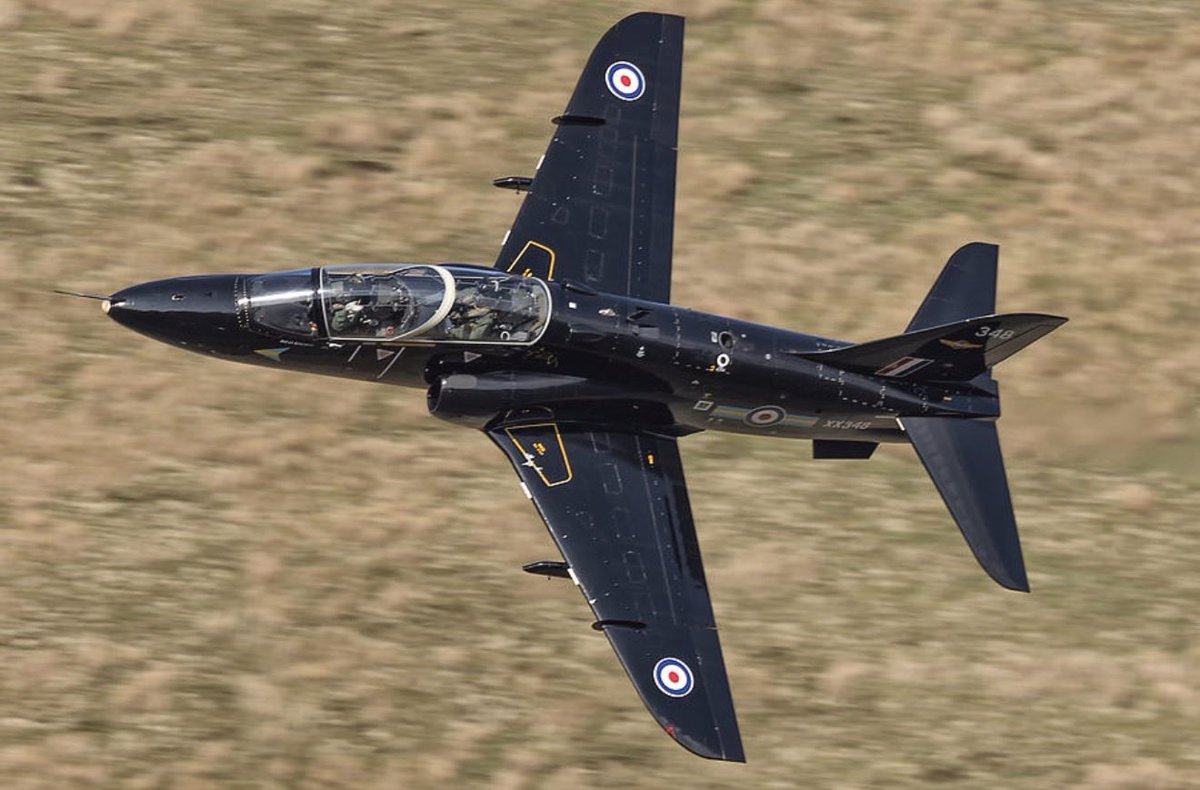
24/25 The requirement to replace the Hawk T2 is not technically complex. A reliable advanced jet trainer with adequate endurance, a supportable seat, good simulation, and a clear path to front-line types is well within current industrial capability. The difficulty has been self-inflicted: fragmented decision-making, over-complication of simple KURs, acceptance of chronic low availability, short-term savings that destroy capacity, and a preference for marketed solutions over proven ones. The September 2026 grounding and the still-open RFI are the latest symptoms.
25
Conclusion.
25/25 The Hawk T2 replacement should have been straightforward. Instead it has become another demonstration that the MoD’s processes, incentives and culture continue to prioritise process, political workshare and industrial lobbying over the timely delivery of a simple, supportable training system. Until that culture changes, the pilot pipeline will remain fragile, the Red Arrows will face a hard 2030 deadline, and the next generation of RAF and RN fast-jet pilots will keep paying the price in holds, lost currency and delayed operational readiness. The facts are public. The decision still is not.
25/25 The Hawk T2 replacement should have been straightforward. Instead it has become another demonstration that the MoD’s processes, incentives and culture continue to prioritise process, political workshare and industrial lobbying over the timely delivery of a simple, supportable training system. Until that culture changes, the pilot pipeline will remain fragile, the Red Arrows will face a hard 2030 deadline, and the next generation of RAF and RN fast-jet pilots will keep paying the price in holds, lost currency and delayed operational readiness. The facts are public. The decision still is not.