Alright #canmiltwitter, I’ve stated a few times my belief that Leo2...

Militiaman 🇨🇦🇨🇵🇱🇹@m_Janelle
22 views
Aug 29, 2025
~7 min read
Advertisement
1
Alright #canmiltwitter, I’ve stated a few times my belief that Leo2 and other modern 65-70t MBTs are not the right fit for our Heavy Cav force. While strategic mobility is a small part of it, it is far from the only reason. A long thread. 1/
2
I agree that 70t MBTs remain the apex predators of the modern battlefield. The combination of (tactical) mobility, firepower and protection means they are important for an army’s offensive and defensive potential. But they have flaws. 2/

3
I think we need to accept/embrace our medium-ness as a force, and replace our Leo2 MBTs with something more suited. Something like the modernized Leo1 C2 MEXAS with a 120mm, M10 Booker (w/ 120mm), Type 90, or Leclerc – ~45t total. If it comes with autoloader that's fine. 3/

4
I think we still want a tracked, protected vehicle with high caliber gun turret, that can do the same work as the Leo2, but 20t lighter. I will argue on the basis of Lethality, Mobility, Survivability, and Sustainability. 4/
5
Lethality – No difference here. 120mm guns remain highly lethal against vehicles, troops, fortifications, etc. Even with M10, in the Heavy Cav role, I would procure them with 120mm, at the cost of less ammo stowage. Not sure I'm sold yet on the need for a 130 or 140mm... 5/

6
A lighter platform will still have a modern FCS + fully stabilized turret, allowing accurate target detection, identification and engagement, static or on the move. A lighter tank may need to sacrifice on some of the Gucci RWSs and turret gubbins, to focus on armour and APS 6/
7
Survivability – A modern MBT can stop main gun rounds and certain ATGMs to the front, autocannons and lighter AT threats to the sides and rear. 20t less means a lighter tank will be vulnerable to these direct fire threats. 7/
8
But heavy caliber guns and ATGMs aren’t the only threats. Top attack munitions, AT mines, artillery, Loitering Munitions, and yes, FPV drones ... 70t MBTs aren’t any less vulnerable to immobilization and/ or destruction from these threats than a lighter alternative. 8/

9
A 45t tank should still be proof against medium caliber autocannons and certain older tank rounds. For the high end threats, we can mitigate risk by firing from hull down positions, using terrain on the advance... existing TTPs. Hills stop incoming more reliably than armour. 9/
10
APS systems like Iron fist should also be a relatively lightweight solution to mitigate risks from at least the initial engagement from ATGMs. Yes, the same is true for heavy MBTs, and yes a light tank will be vulnerable after exhausting APS, but how many ATGMs do we expect? 10/
11
Mobility – Generally, the lighter tanks should retain about the same power to weight ratio as the heavy MBTs, with similar or lower ground pressures. Tactical mobility should be a wash, and somewhat terrain dependent. 11/
12
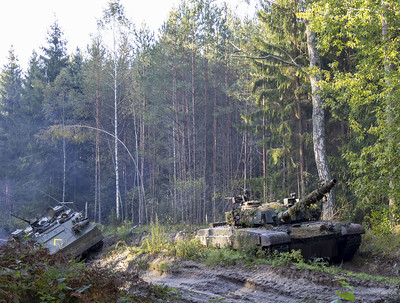
Strategic mobility – the lighter platforms will have a small advantage here, on certain types of transport. For sealift, given the size of modern ROROs, probably not a big deal to carry a 70t beast, unless there is an MLC constraint (possibly pertinent for loading ramps) 12/
13
Airlift – with a payload of ~85t, a C-17 can only carry 1 Leo2, but you might be able to squeeze 2 lighter MBTs. So to lift a full Sqn of 19 tanks (+ ech), you might be able to go from ~25-30 flights down to ~16-20. 13/

14
An improvement to be sure... but strategic airlift of a full Heavy Cav Sqn will remain an expensive endeavour, consuming far more airlift capacity than we have. Kind of makes you want an RCN on-demand sealift capability... kinda like the original JSS? 14/

15
For rail transport, our modern MBTs are so large (literally), that they cannot fit on several NATO rail transport templates, something a smaller, narrower tank has fewer issues with. Lighter MBTs can simply be shipped more places. 15/
16
Operational Mobility – This is where a lighter tank differentiates itself (though not as well as most wheeled platforms). Driving itself, the lighter weight will large fuel savings – a not insignificant factor when planning long road moves 16/
17
And especially considering the vulnerability of refueling infrastructure, reducing demands helps improve survivability. Further, at this weight, you can actually buy rubber band or segmented rubber tracks, which help a lot. 17/
18
Reduced vibration (and reduced crew maintenance requirement) as compared to steel tracks on the 70t MBTs should mean better road speeds, better reliability overall, and reduced crew fatigue (and hearing loss) on long marches. Quicker to arrive, and quicker to get stuck in... 18/
19
It is much easier and cheaper to buy, rent, or hire heavy equipment transporters for 50tloads than for 70t. 70t is heavier than commercial carriers are equipped for. This increases the ability to move many tanks long distances. Not impossible to do with MBTs... just harder... 19/

20
Bridging is the next challenge. MBTs currently use MLC 80 bridging equipment. While it isn’t any more specialized than MLC 60 bridging, it is bigger and heavier, requiring heavier and even more specialized vehicles to deploy. And you increase the number of civilian bridges 20/
21
that become impassible. Rivers and streams become a more significant and canalizing obstacle for the MBT. This impacts Operational mobility, including in Canada. Speaking of which... have you seen our assault bridging? Right, we have none since divestment of the Leo 1 AVLBs. /21

22
Sustainment - Recovery, backloading, and cost of acquiring and sustaining the light tanks vs the MBT. This aspect is all too often ignored or minimized, but is critical to staying in the fight. 1St, on recovery – yes ARVs exist for MBTs, but they are incredibly specialised /22
23
and expensive, and rare. At 45t, you are in the ballpark where a vehicle that can extricate a modern IFV can pull out the light tank. Even the eventual ACSV recovery variant could likely pull out a 45t tank with 2:1 pulls... so long as it is not stuck up to the turret roof /23
24
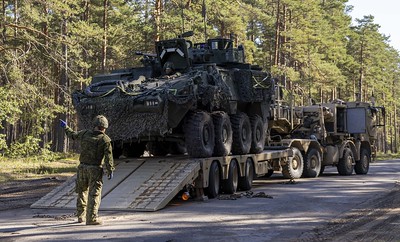
By needing less specialized equipment, you increase resilience and flexibility of 1st line recovery system, as recovery vehicles can be tasked to any job. Backloading for repair is easier when you only need a 50t goose neck trailer... or in a pinch, the same flatbed as LAVs /24
25
Then there is the reliability. Lighter armoured vehicles can have their issues, but it is easy to forget, given the smooth ride on modern MBTs, just how much they want to shake themselves to pieces. As simple as it sounds... /25
26
Shuffling 20t less mass around will result in fewer component failures (especially on rubber track). Less maintenance, means more availability for commanders to achieve their missions, and less cost to sustain. Speaking of which - cranes and repair infrastructure –26/
27
Current MBTs need very heavy (and specialised, rare and expensive) cranes to lift and replace powerpacks and turrets. 10-15t industrial gantry cranes are not cheap, but they are much less expensive than 20t ones. Same goes for deployable MRT cranes to lift powerpacks. 27/
28
The bigger / heavier the PP, the bigger, rarer and more expensive the required crane becomes. It is all interrelated. A 45t light tank PP will not be much bigger than on our LAVs So with certain caveats, our existing/incoming crop of MRT cranes could replace a PP in a pinch.28/
29
Again, this would increase the flexibility of the 1st line repair and sustainment system, increasing effectiveness over time. Finally, acquisition costs... yes Light tanks will still be expensive, but they will come at a steep discount compared to new MBTs. 29/
30
Gun, FCS, APS systems... many of these systems will be the same as the MBT, and just as expensive. But 20t less mass means a smaller Powerpack... you get to a realm where you can adapt a commercial engine (ditto for transmission, taken from current tracked IFVs) /30
31
This means a MUCH cheaper powerpack. And then there is the armour... which is expensive to say the least. 15t-ish less armour means that much less expense to acquire the light tank vs the heavier MBT. Overall, I would expect a 30% discount (or more) for the light tank. /31
32
@blackcloudsix. -as this was drafted partly in response to an exchange with you... Genuinely interested in your input and further discussion...

