How do viruses cause cancer? (Thread #2 of a 5 part series)....

Arijit Chakravarty@arijitchakrav
19 views
Jun 10, 2024
~5 min read
Advertisement
1
How do viruses cause cancer? (Thread #2 of a 5 part series).
There's been a fair bit of twitter-chatter about this topic lately, so let's talk about it. Understanding the process of viral carcinogenesis is key to managing the risk of viral infections. (1/)
There's been a fair bit of twitter-chatter about this topic lately, so let's talk about it. Understanding the process of viral carcinogenesis is key to managing the risk of viral infections. (1/)
2
Disclosure: I'm not a viral carcinogenesis expert. I've published on cancer as part of my day job for 25+ yrs (& on The Virus That Cannot Be Named as a 'night job' for (ugh) 4+ yrs now. This experience provides me with a unique perspective on the topic. (2/)
3
In my opinion, the field of viral carcinogenesis has been both driven forward & held back by the Oncogene Addiction hypothesis.
In a recent thread, I discussed its limitations & explained why an evolutionary paradigm for cancer is more appropriate.
x.com/arijitchakrav/… (3/)
In a recent thread, I discussed its limitations & explained why an evolutionary paradigm for cancer is more appropriate.
x.com/arijitchakrav/… (3/)
4
@greg_travis and I have previously written about the delayed health harms from certain viral infections.
As it turns out, one of the major drivers of cancer (responsible for ~20% of all diagnoses) is infections, particularly with certain viruses.
howtohideapandemic.substack.com/p/the-thieves-… (4/)
As it turns out, one of the major drivers of cancer (responsible for ~20% of all diagnoses) is infections, particularly with certain viruses.
howtohideapandemic.substack.com/p/the-thieves-… (4/)
5
Which viruses? There are 7 that are accepted as oncogenic (going forward, I will use the term carcinogenic rather than oncogenic, for reasons that will become obvious).
Most, but not all, known carcinogenic viruses encode oncogenes, which often integrate into host DNA. (5/)
Most, but not all, known carcinogenic viruses encode oncogenes, which often integrate into host DNA. (5/)
6
The traditional view of viral carcinogenesis is thus very oncogene-centric.
Indeed, the first oncogene (SRC) was discovered from a chicken retrovirus, as were a number of other human oncogenes discovered in the 70s (e.g. RAS and MYC). (6/)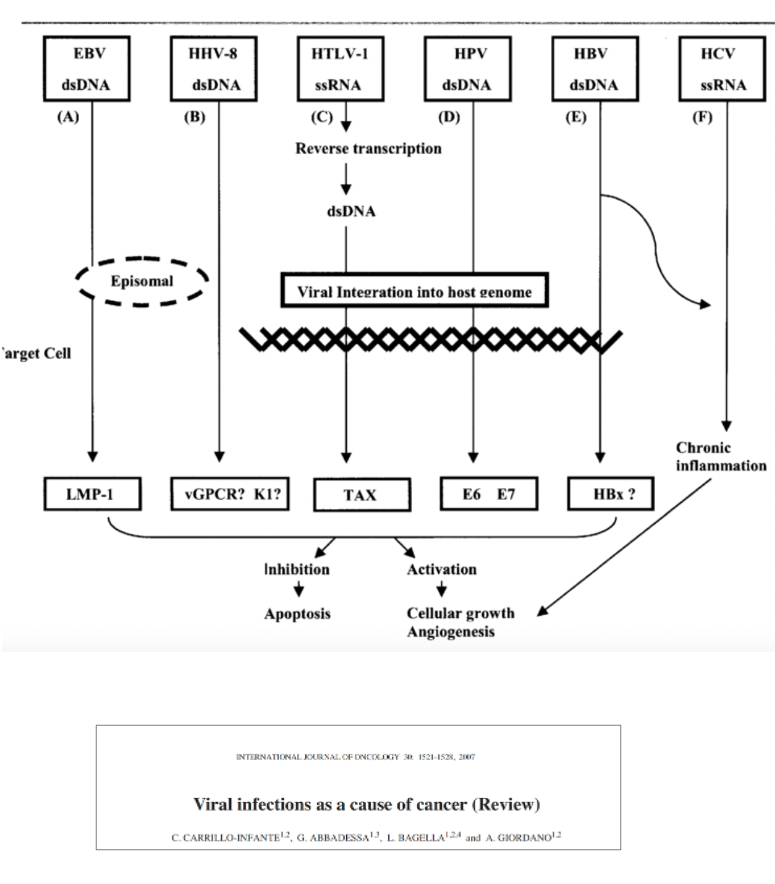
Indeed, the first oncogene (SRC) was discovered from a chicken retrovirus, as were a number of other human oncogenes discovered in the 70s (e.g. RAS and MYC). (6/)
7
Given the limited range of techniques available to them, the fact that researchers back then were even able to identify oncogenes is impressive! Oncogene-bearing viruses were low hanging fruit.
The presence of oncogenes is a limiting criteria for carcinogenesis, though. (7/)
The presence of oncogenes is a limiting criteria for carcinogenesis, though. (7/)
8
As we discussed, relying on the oncogenic paradigm for carcinogenesis requires oncogenes.
So, when you have viruses (such as HCV) that cause cancer without having an oncogene present, you have to resort to special pleading. (8/)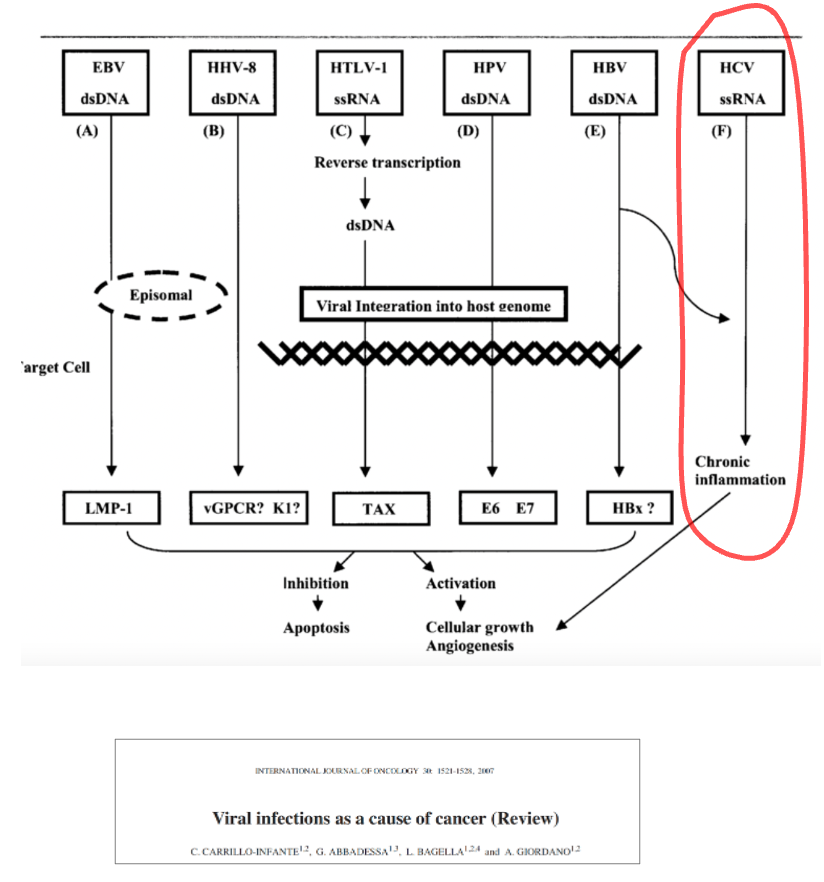
So, when you have viruses (such as HCV) that cause cancer without having an oncogene present, you have to resort to special pleading. (8/)
9
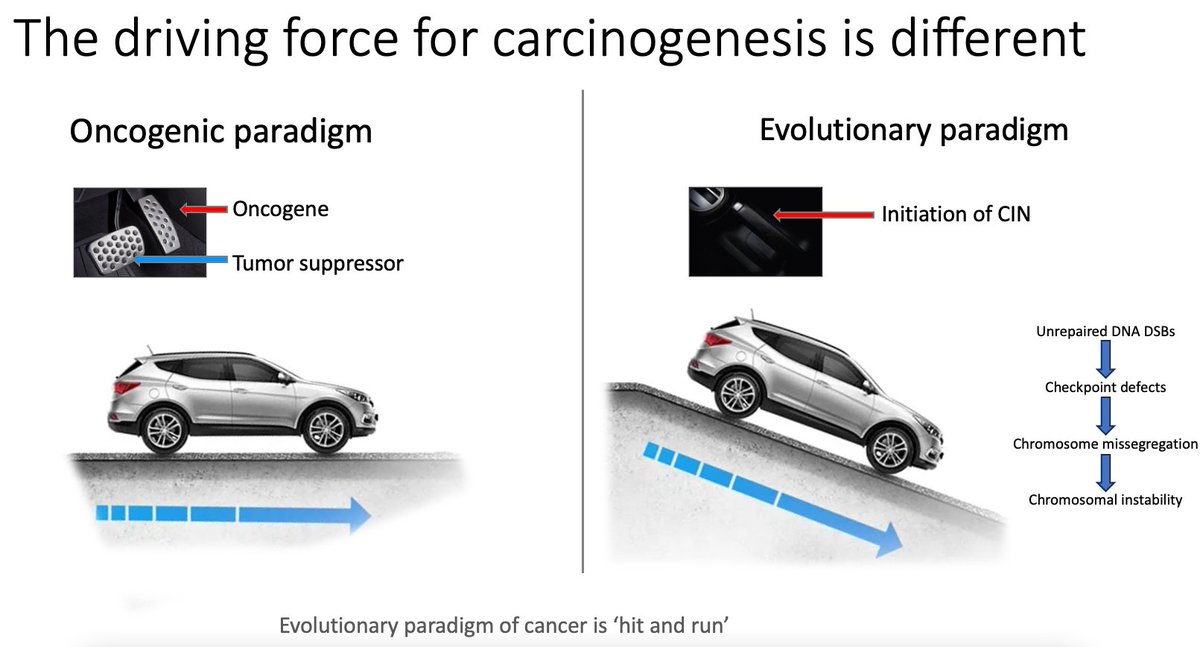
In fact, there's a better way to think about carcinogenesis, as I've discussed in a previous thread- the evolutionary paradigm, which posits that genomic (usually chromosomal) instability (CIN), is the main driver of carcinogenesis. (9/)

10
Carcinogenicity for all the viruses considered to be oncogenic is easily explained by the CIN paradigm.
For each of these viruses, their oncogene causes cellular insults - DNA double strand breaks (DSBs), DNA damage repair (DDR) checkpoint inhibition- leading to CIN. (10/)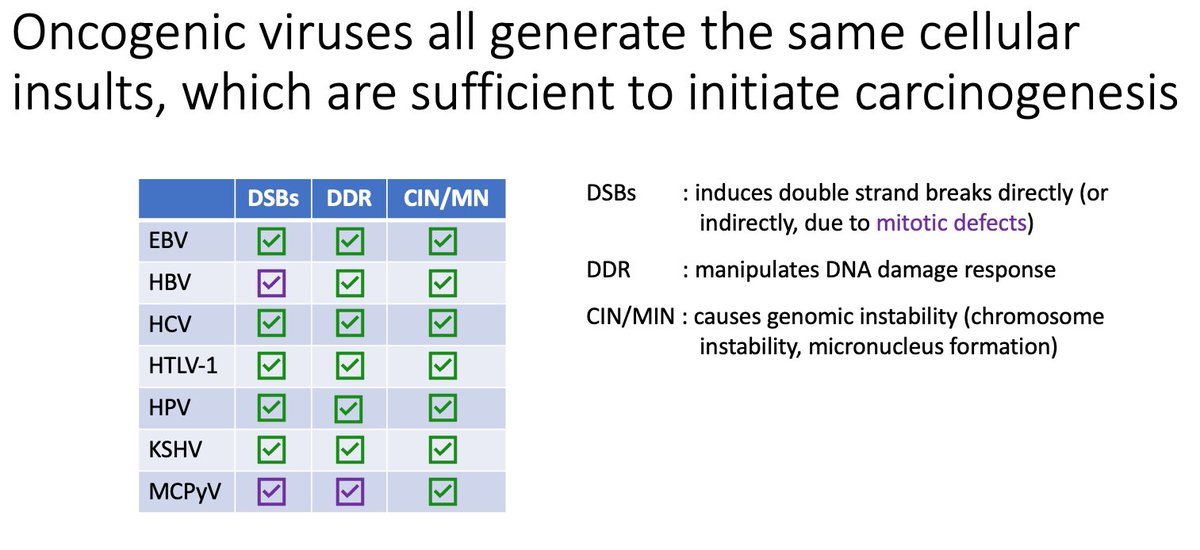
For each of these viruses, their oncogene causes cellular insults - DNA double strand breaks (DSBs), DNA damage repair (DDR) checkpoint inhibition- leading to CIN. (10/)
11
Lots more detail to come in blog posts & YouTube videos, but for now let's look at one example.
The Mercel Cell Polyoma oncogene (Small T-antigen protein) causes CIN, placing it squarely in the context of the evo paradigm of cancer (compare the language in the screenshots).(11/)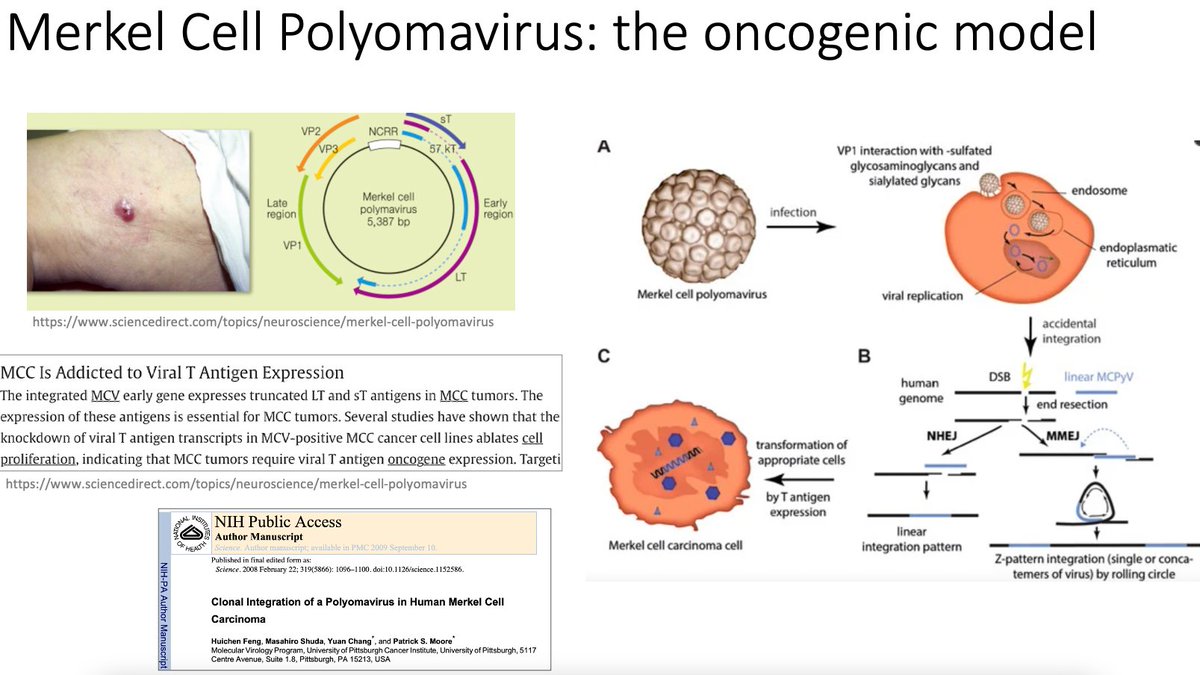

The Mercel Cell Polyoma oncogene (Small T-antigen protein) causes CIN, placing it squarely in the context of the evo paradigm of cancer (compare the language in the screenshots).(11/)
12
An updated model of viral carcinogenesis, then, accounts for the central role of genomic instability in tumorigenesis.
Other extrinsic factors also play a strong role in cancer progression once initiated - especially chronic inflammation & immune suppression. (12/)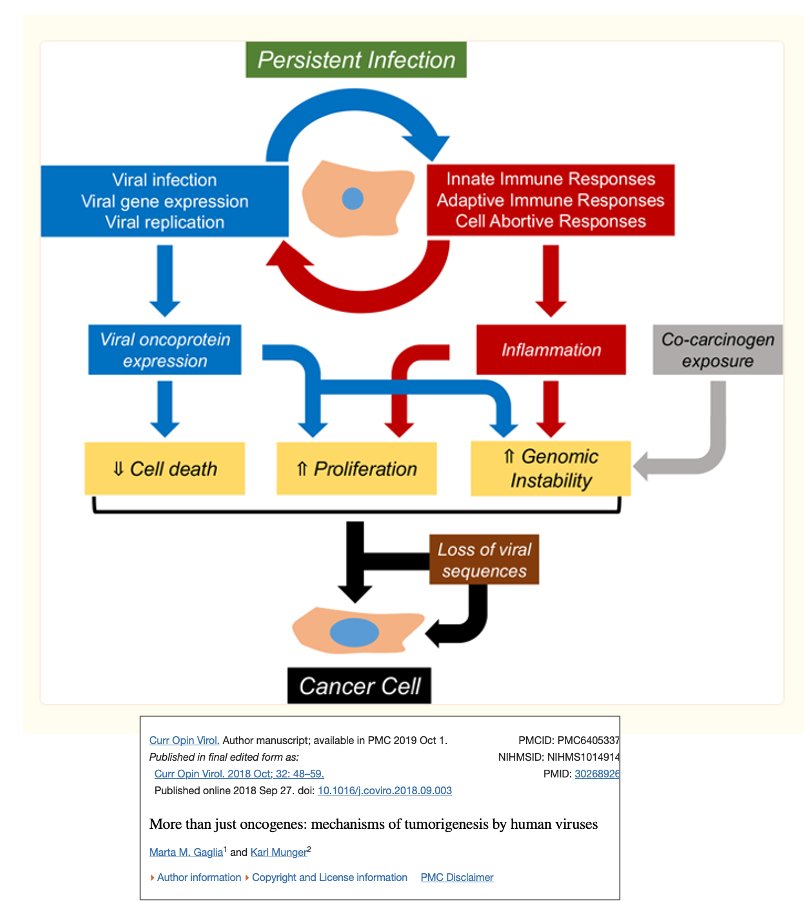
Other extrinsic factors also play a strong role in cancer progression once initiated - especially chronic inflammation & immune suppression. (12/)
13
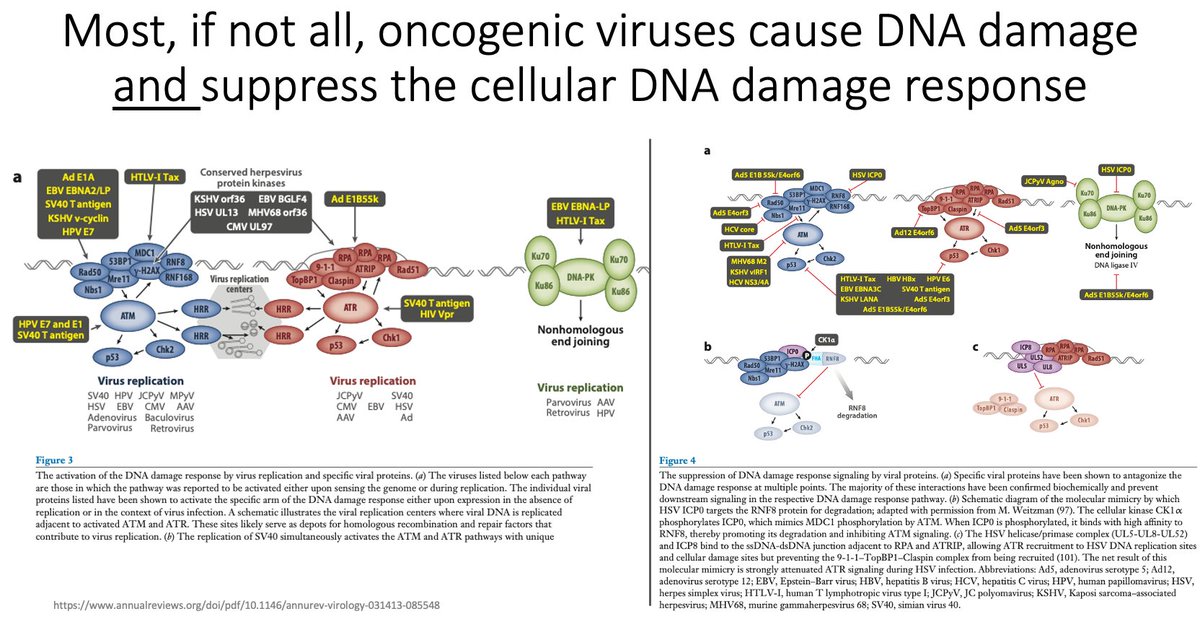
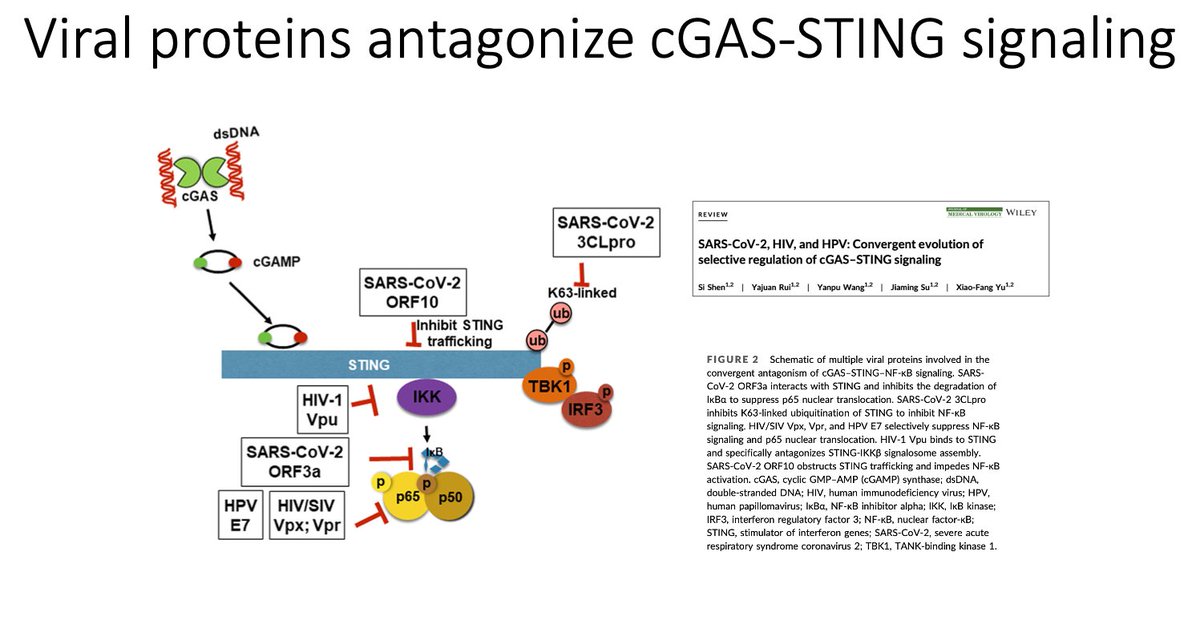
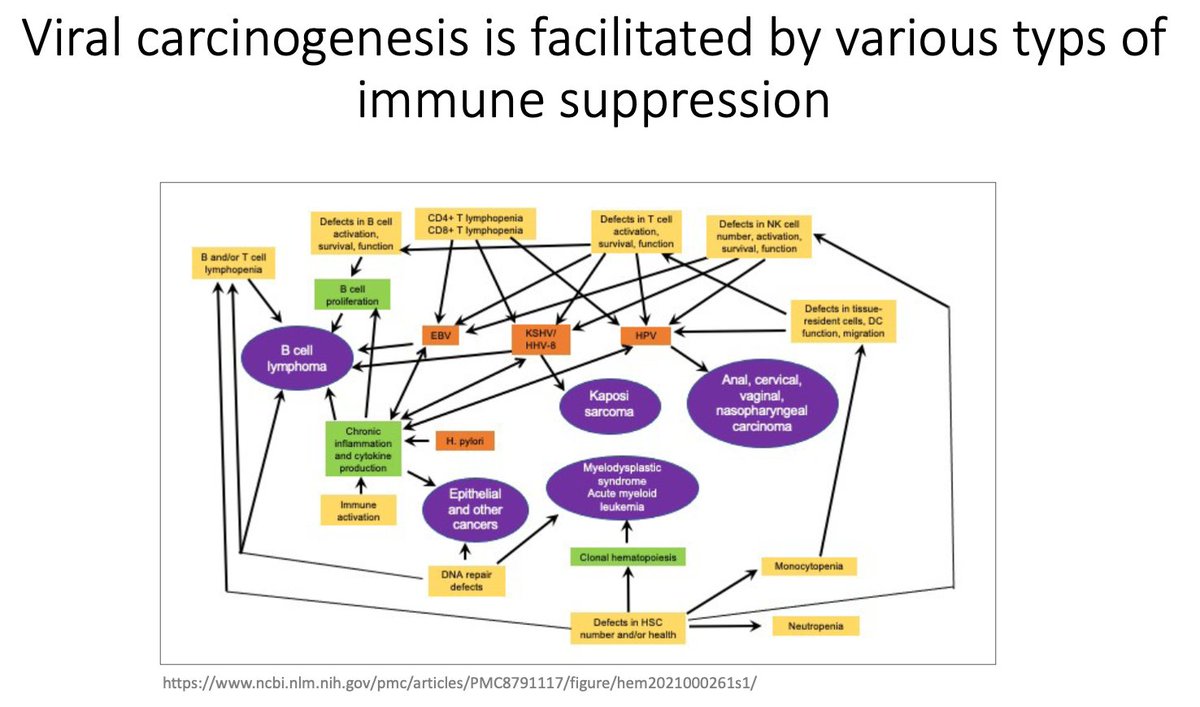
Viral carcinogenesis is facilitated by suppression of the apoptotic response, the immune system & checkpoints (including DDR checkpoints as well as the cGAS-STING pathway, which eliminates micronucleated cells). (13/)

14
A couple of other key properties of all carcinogenic viruses is that they persist within the body, and infect dividing tissues.
This is not surprising, in the context of the CIN paradigm. Inducing genomic instability in dividing cells is a great way to get a tumor going! (14/)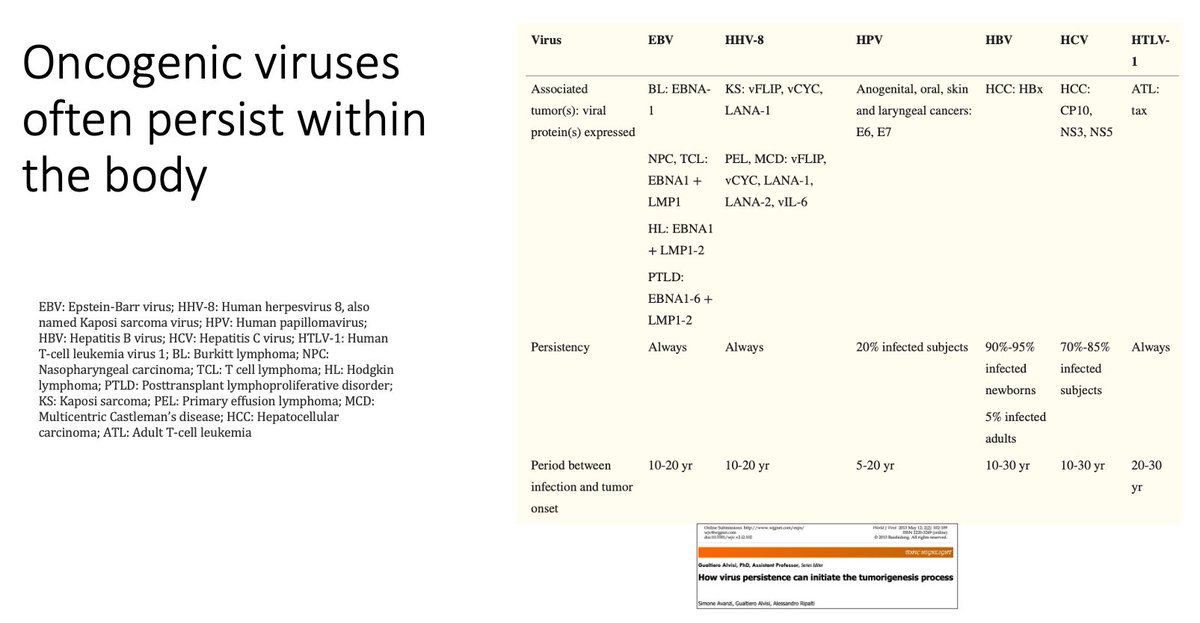
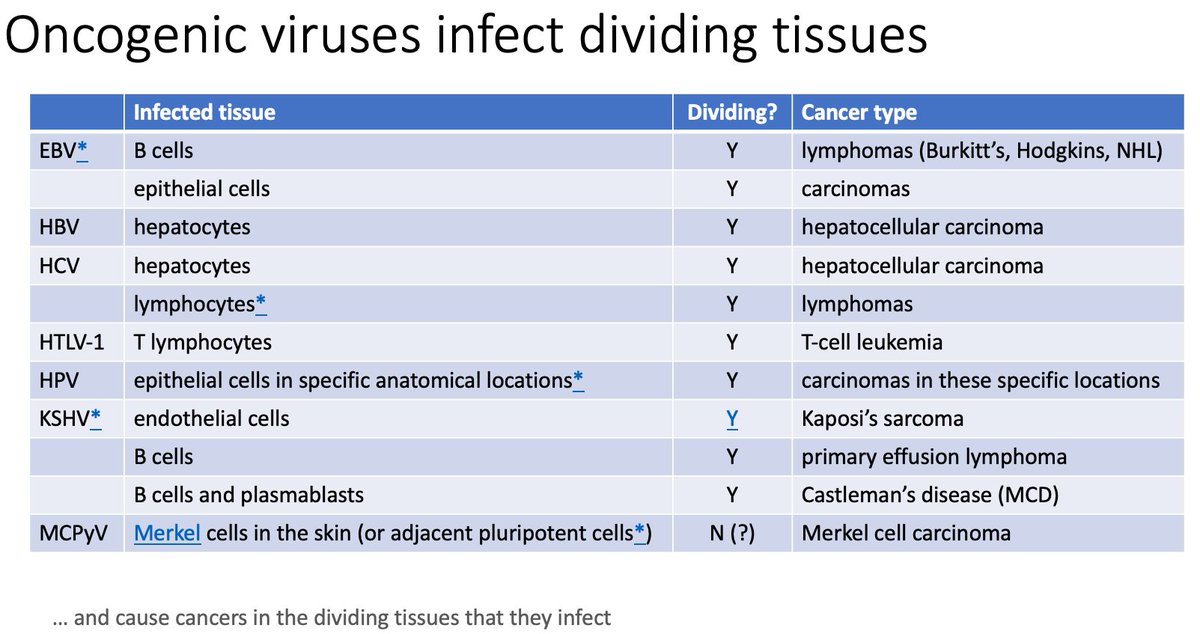
This is not surprising, in the context of the CIN paradigm. Inducing genomic instability in dividing cells is a great way to get a tumor going! (14/)
15
Taken together, this gives us a common set of properties (a checklist) for carcinogenic viruses:
- persistent infections in dividing tissues
- CIN
- secondary effects that facilitate tumor progression (e.g. suppression of the immune system & checkpoint signaling). (15/)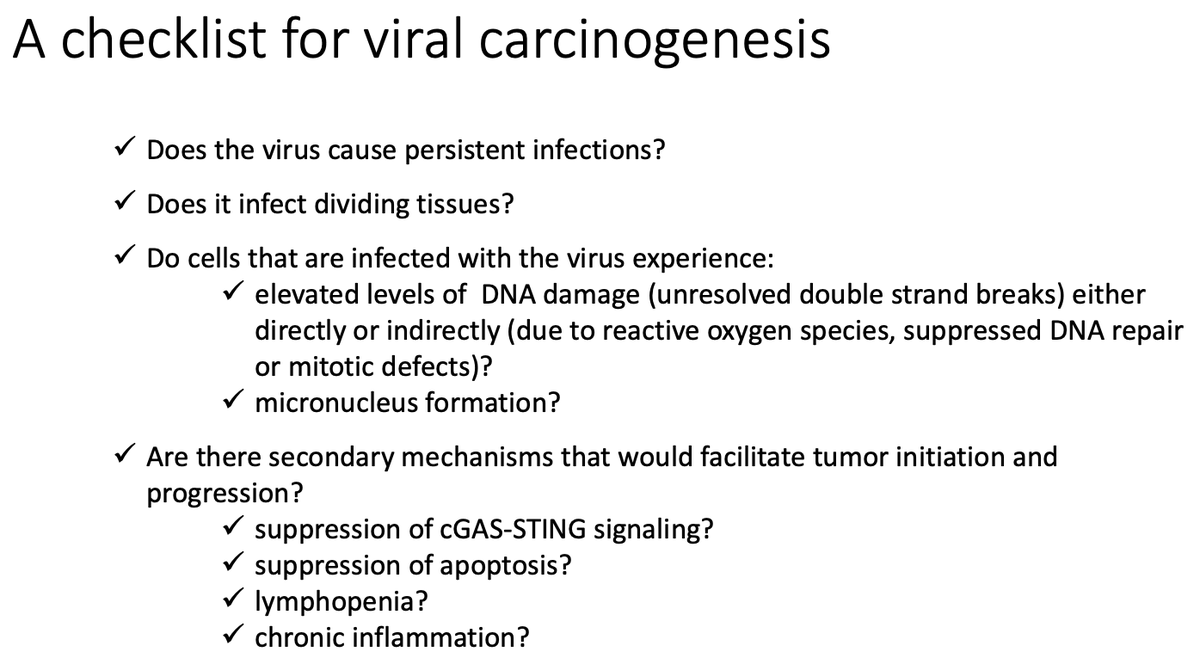
- persistent infections in dividing tissues
- CIN
- secondary effects that facilitate tumor progression (e.g. suppression of the immune system & checkpoint signaling). (15/)
16
All carcinogenic viruses tick these boxes.
Other viruses that tick all these boxes are not currently recognized as carcinogenic.
I will explain how the established criteria for carcinogenesis shape our understanding of carcinogenicity, and not the other way around. (16/)
Other viruses that tick all these boxes are not currently recognized as carcinogenic.
I will explain how the established criteria for carcinogenesis shape our understanding of carcinogenicity, and not the other way around. (16/)
17
It's tempting to think of the difference between the oncogenic and evolutionary paradigms of cancer as being about semantics, but it's not.
Importantly, the evolutionary paradigm allows for hit-and-run carcinogenesis, while the oncogenic paradigm does not. (17/)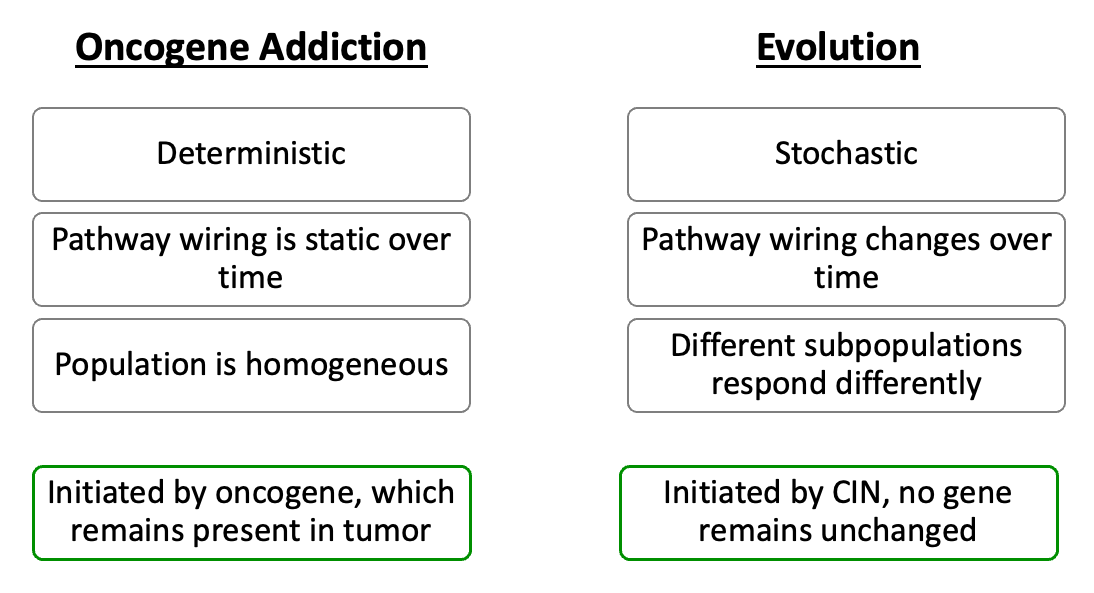
Importantly, the evolutionary paradigm allows for hit-and-run carcinogenesis, while the oncogenic paradigm does not. (17/)
18
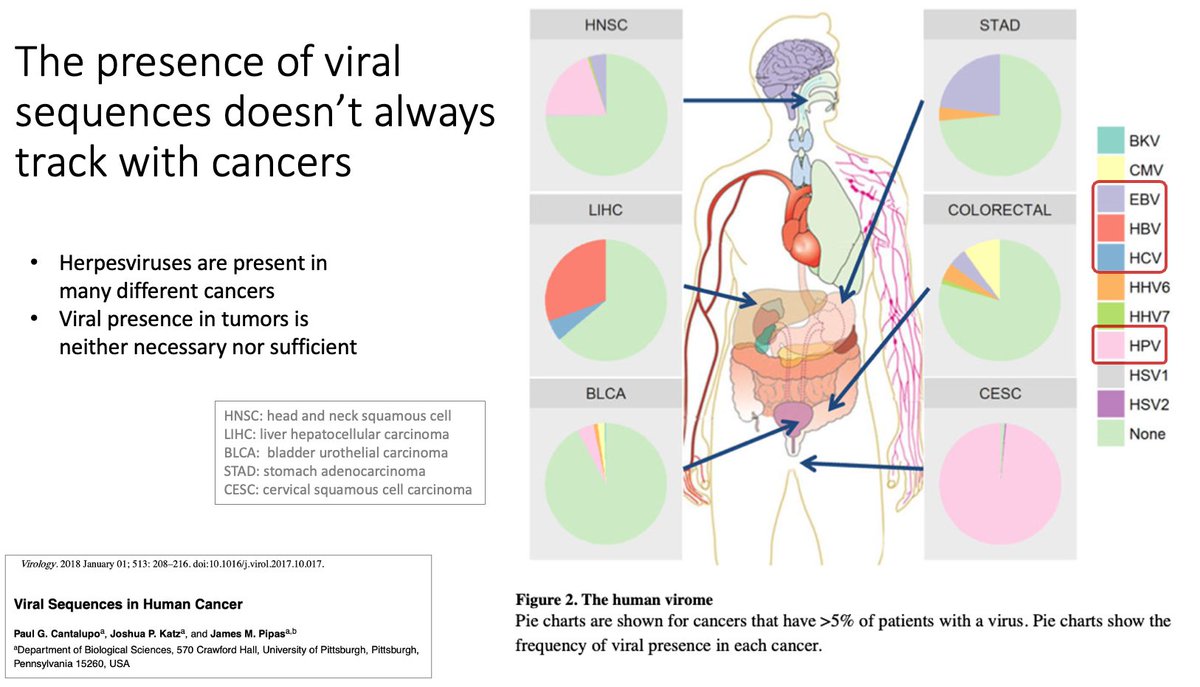
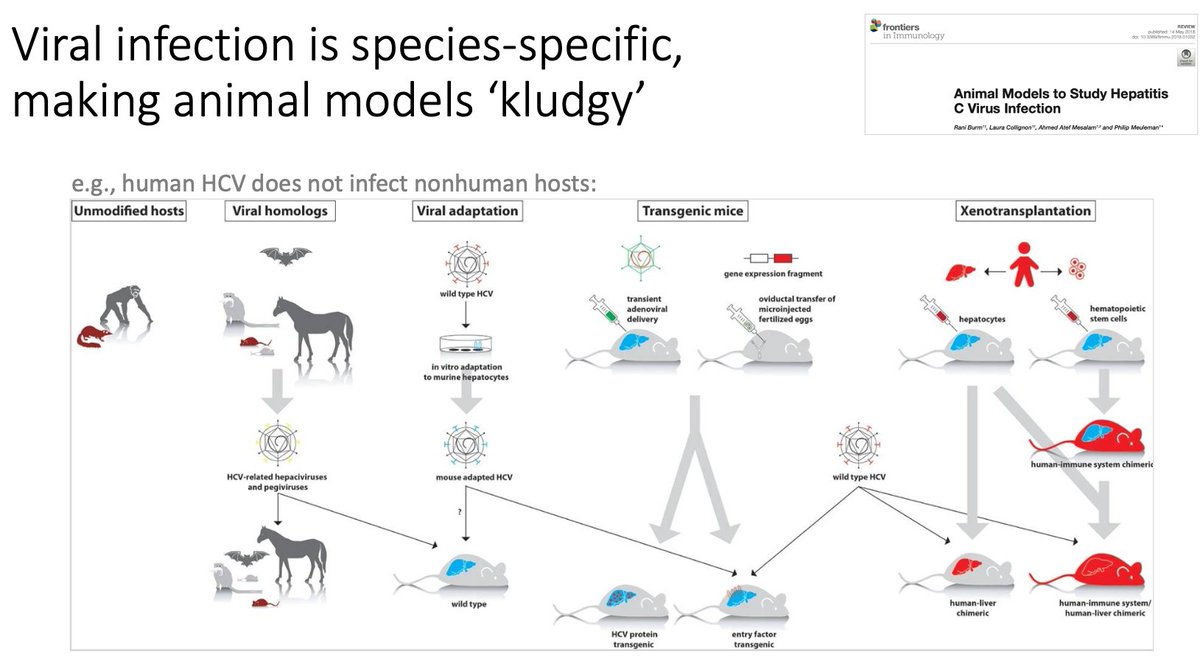
Viral carcinogenicity is hard to prove in the lab, as it turns out- the presence of viral sequences doesn't always track with cancers, animal models are pretty hinky, and the clonal transformation assay is dated & relies on the oncogene hypothesis (lots more on this later). (18/)

19
Traditional epidemiological approaches to prove viral carcinogenicity are similarly dated.
Koch's postulates don't work. The accepted criteria for establishing viral carcinogenicity (updated Koch's, Zur Hausen and Hill) are heavily dependent on the oncogene hypothesis. (19/)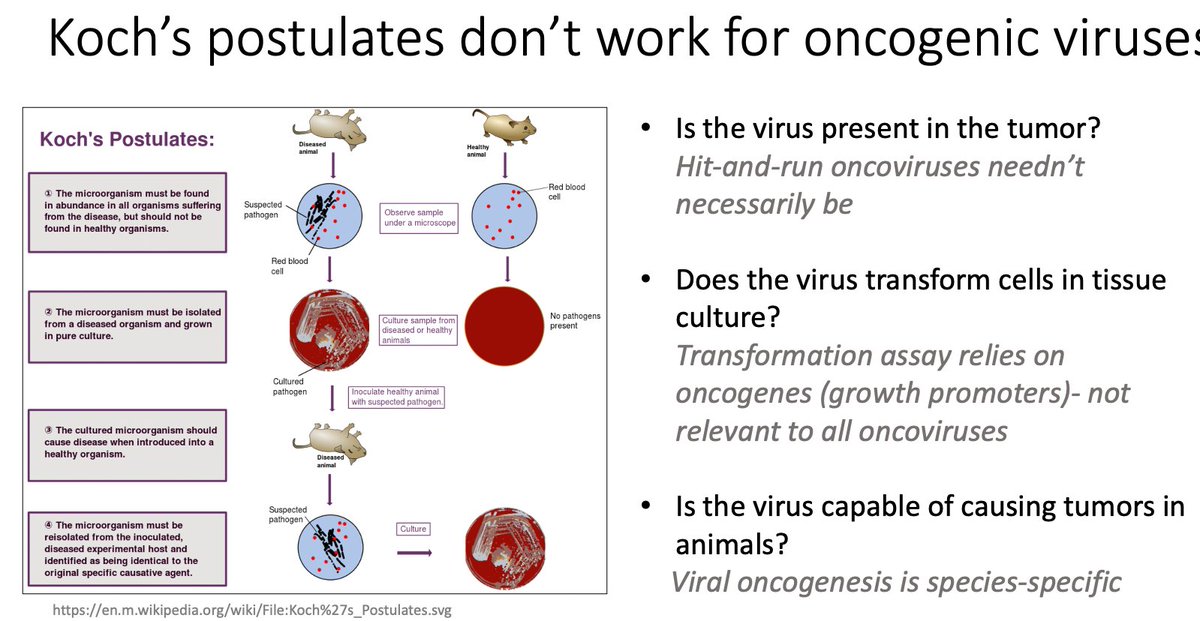
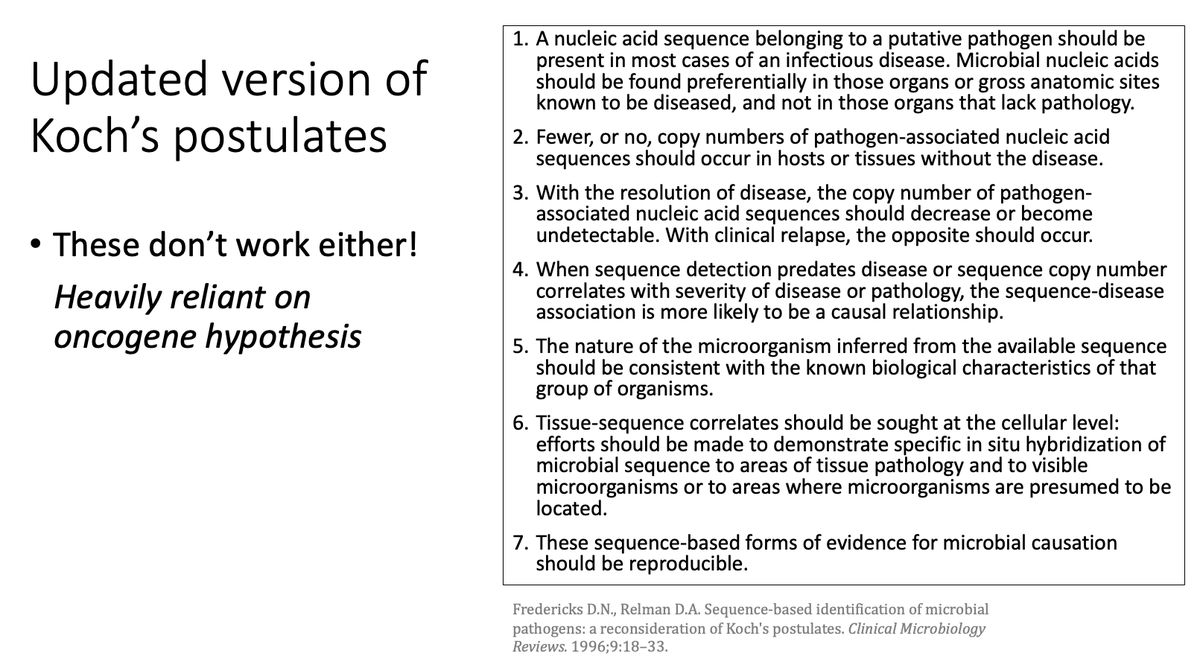
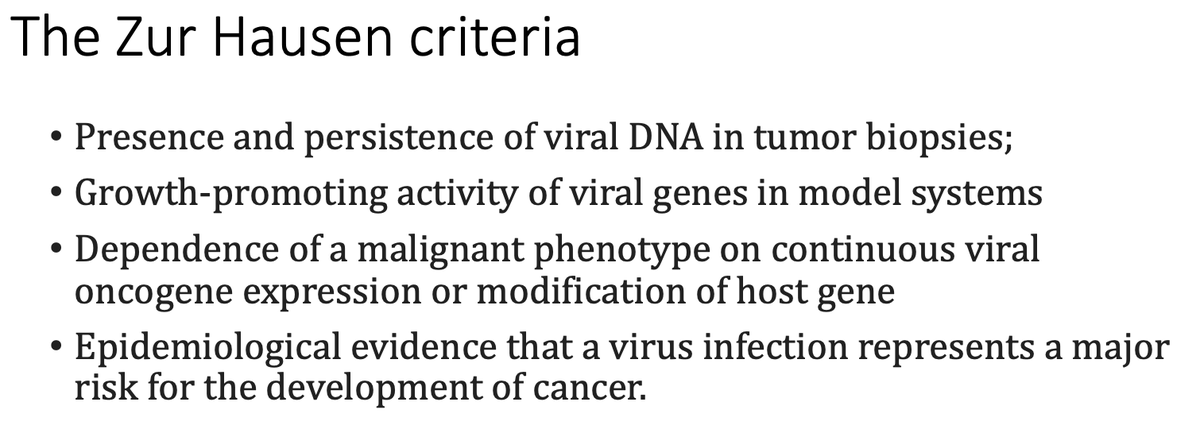
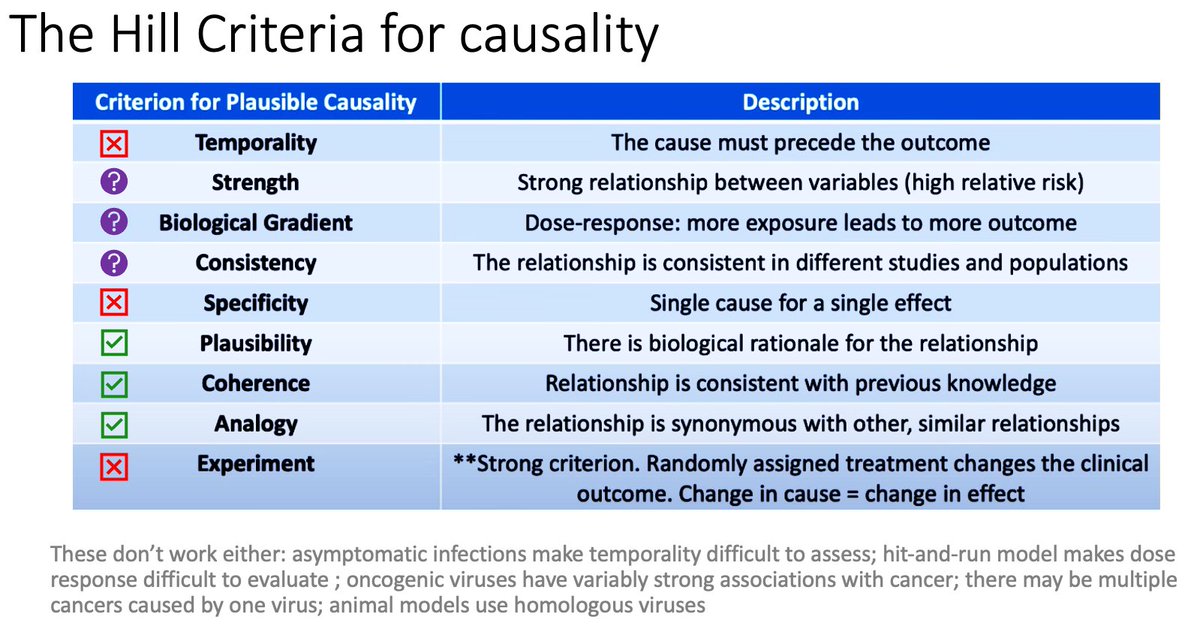
Koch's postulates don't work. The accepted criteria for establishing viral carcinogenicity (updated Koch's, Zur Hausen and Hill) are heavily dependent on the oncogene hypothesis. (19/)
20
An argument can be made that there is a better way to establish viral carcinogenicity- by using deductive reasoning (modus ponens logic).
The checklist for viral carcinogenicity that we saw above (tweet #15) is uses the formal structure of modus ponens logic. (20/)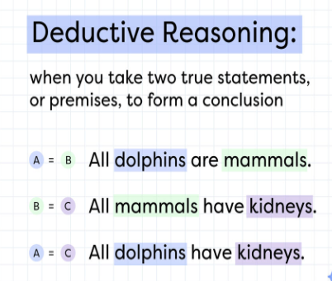
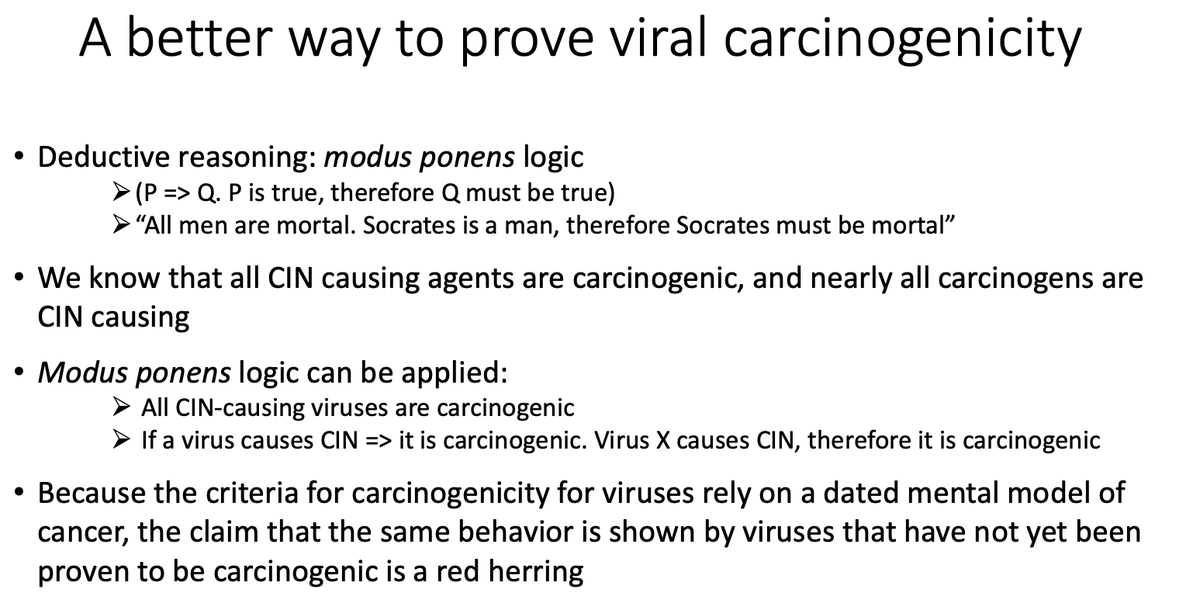
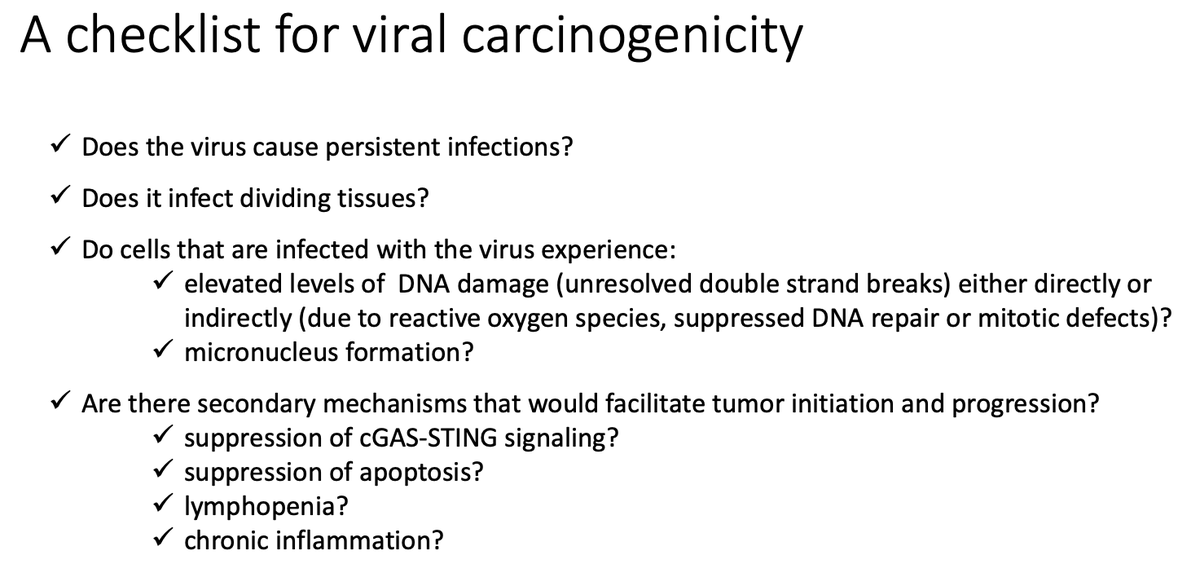
The checklist for viral carcinogenicity that we saw above (tweet #15) is uses the formal structure of modus ponens logic. (20/)
21
We will dig further into the evidence for each of the known carcinogenic viruses later. (This 🧵is a Cliff's notes version that will be expanded soon in blog posts, YouTube videos and maybe review articles.) (21)
22
As mentioned before, every single one of the known carcinogenic viruses ticks pretty much all of the boxes on the checklist.
Are there other viruses that tick all of the boxes are not described as carcinogenic at this point?
Yes. (22/)
Are there other viruses that tick all of the boxes are not described as carcinogenic at this point?
Yes. (22/)
23
In upcoming threads, I will name one such virus, and we will talk specifically about why it will be impossible to prove that this virus is carcinogenic using the traditional criteria for establishing viral carcinogenicity. (23/)
24
We will also discuss why the time-honored minimizer approach of "let's just wait for the epidemiological data to prove it to us" will set us up for a potential public health disaster.
Stay tuned for the next episode! (24/)
Stay tuned for the next episode! (24/)
25
H/T @TRyanGregory @SGriffin_Lab @white_bite @0bj3ctivity @kasza_leslie @DavidJoffe64 @RS_Rose_Sauvage @Falseflag
@lisa_iannattone @DaniBeckman @ToshiAkima @FdAdF66 @WesleyWilson @_Lisa_LJ @RolandBakerIII @calirunnerdoc @ejustin46 @RadCentrism @bronterDoc @tohmes1 @DrGrahamLJ
@lisa_iannattone @DaniBeckman @ToshiAkima @FdAdF66 @WesleyWilson @_Lisa_LJ @RolandBakerIII @calirunnerdoc @ejustin46 @RadCentrism @bronterDoc @tohmes1 @DrGrahamLJ
26
@TRyanGregory @SGriffin_Lab @white_bite @0bj3ctivity @kasza_leslie @DavidJoffe64 @RS_Rose_Sauvage @Falseflag @lisa_iannattone @DaniBeckman @ToshiAkima @FdAdF66 @WesleyWilson @_Lisa_LJ @RolandBakerIII @calirunnerdoc @ejustin46 @RadCentrism @bronterDoc @tohmes1 @DrGrahamLJ Part 3 is here: