Some of the greatest paintings in history contain secrets most...

Culture Explorer@CultureExploreX
15 views
Nov 21, 2026
~4 min read
Advertisement
1
Some of the greatest paintings in history contain secrets most people walk right past.
Here are 16 extraordinary paintings worth looking at twice. 🧵
Here are 16 extraordinary paintings worth looking at twice. 🧵
2
1. A celebration of faith on the French coast.
*Arrival of the Pardon of Sainte Anne at Concarneau* by Alfred Guillou.
An entire community gathers around a religious tradition in Brittany. The crowded boats, traditional clothing, and colorful banners preserve a way of life that was already changing.
Musée des Beaux-Arts de Quimper, France.
*Arrival of the Pardon of Sainte Anne at Concarneau* by Alfred Guillou.
An entire community gathers around a religious tradition in Brittany. The crowded boats, traditional clothing, and colorful banners preserve a way of life that was already changing.
Musée des Beaux-Arts de Quimper, France.
3
2. Can a portrait capture someone's entire personality?
*Madame Ramón Subercaseaux* (1880–81) by John Singer Sargent.
Notice the relaxed pose, the luxurious fabrics, and the remarkable confidence of his brushwork.
Sargent could turn a fashionable portrait into something that feels remarkably alive.
Metropolitan Museum of Art, New York.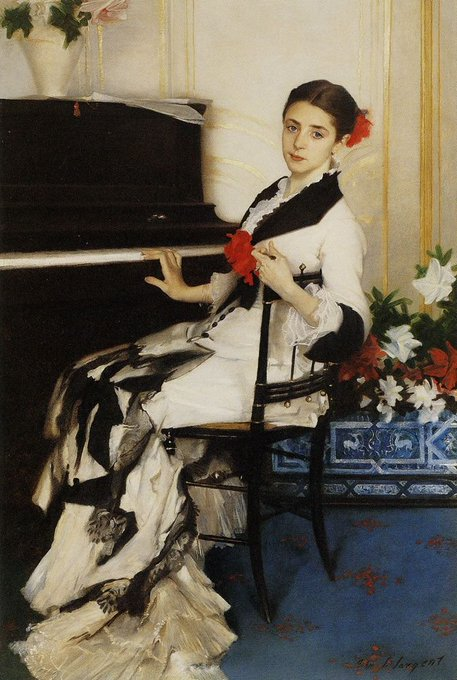
*Madame Ramón Subercaseaux* (1880–81) by John Singer Sargent.
Notice the relaxed pose, the luxurious fabrics, and the remarkable confidence of his brushwork.
Sargent could turn a fashionable portrait into something that feels remarkably alive.
Metropolitan Museum of Art, New York.
4
3. A goodbye that feels almost unbearable.
Adieu! (1892) by Alfred Guillou.
A moment of separation on the Breton coast, where life depended upon the sea.
Guillou understood something about human sorrow: a single gesture can communicate more than a thousand words.
Musée des Beaux-Arts de Quimper, France.
Adieu! (1892) by Alfred Guillou.
A moment of separation on the Breton coast, where life depended upon the sea.
Guillou understood something about human sorrow: a single gesture can communicate more than a thousand words.
Musée des Beaux-Arts de Quimper, France.
5
4. One of the most disturbing details in Renaissance art is almost invisible.
Landscape with the Fall of Icarus, after Pieter Bruegel the Elder.
According to Greek mythology, Icarus flew too close to the sun and plunged into the sea.
Can you find him?
Look at the bottom right. Only his legs remain above the water.
The farmer keeps plowing. The ships continue sailing.
A man has fallen from the sky, and the world barely notices.
Royal Museums of Fine Arts of Belgium, Brussels.
6
5. The painter placed his own severed head in this masterpiece.
Judith with the Head of Holofernes by Cristofano Allori.
According to a traditional interpretation, Allori painted his former lover as Judith and himself as the defeated Holofernes.
The biblical heroine becomes part of a deeply personal drama.
Versions are associated with Palazzo Pitti, Florence, and the British Royal Collection.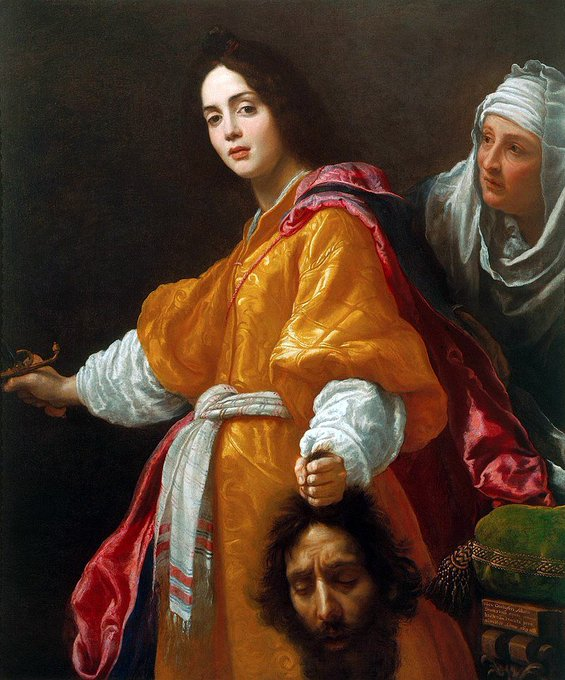
Judith with the Head of Holofernes by Cristofano Allori.
According to a traditional interpretation, Allori painted his former lover as Judith and himself as the defeated Holofernes.
The biblical heroine becomes part of a deeply personal drama.
Versions are associated with Palazzo Pitti, Florence, and the British Royal Collection.
7
6. A landscape that helped change the history of painting.
The Bridge at Narni (1826) by Jean-Baptiste-Camille Corot.
Corot traveled to Italy and studied the countryside directly.
Look at how naturally the sunlight moves across the ancient bridge, hills, and river.
Long before Impressionism, painters were discovering new ways to capture the effects of light.
Musée du Louvre, Paris.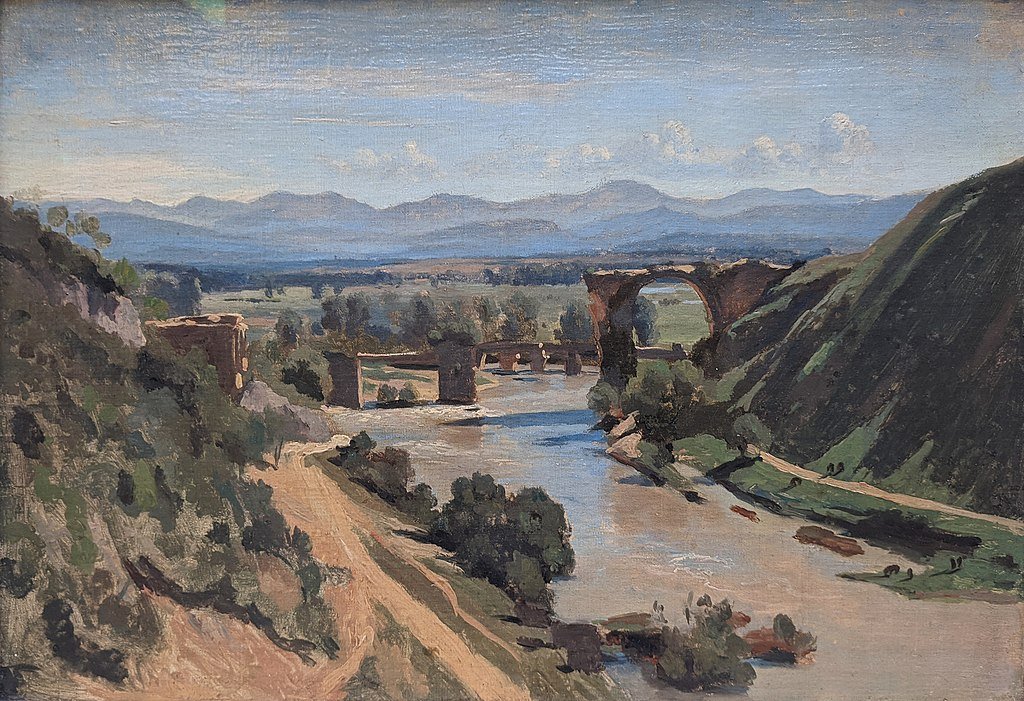
The Bridge at Narni (1826) by Jean-Baptiste-Camille Corot.
Corot traveled to Italy and studied the countryside directly.
Look at how naturally the sunlight moves across the ancient bridge, hills, and river.
Long before Impressionism, painters were discovering new ways to capture the effects of light.
Musée du Louvre, Paris.
8
7. Three aristocratic sisters. One remarkable portrait.
The Ladies Waldegrave (1780–81) by Joshua Reynolds.
Three women sit together, absorbed in their needlework.
The arrangement looks effortless, yet Reynolds carefully orchestrated their poses, hands, and expressions.
It remains one of the great group portraits of the 18th century.
Scottish National Gallery, Edinburgh.
9
8. Something is terribly strange about this mirror.
A Bar at the Folies-Bergère (1882) by Édouard Manet.
A barmaid stands before us, surrounded by the excitement of Parisian nightlife.
Behind her, a mirror reflects the crowded room.
But look closely at her reflection. Why does it appear so far to the right?
More than 140 years later, the painting still invites debate about what we are actually seeing.
The Courtauld Gallery, London.
10
9. A defeated army. A victorious general. And an extraordinary act of respect.
The Surrender of Breda (1634–35) by Diego Velázquez.
The Dutch commander offers the keys of Breda to the Spanish general Ambrogio Spinola.
But Spinola reaches toward him with a gesture of dignity.
Velázquez chose to portray victory through the humanity of the encounter.
Museo del Prado, Madrid.
The Surrender of Breda (1634–35) by Diego Velázquez.
The Dutch commander offers the keys of Breda to the Spanish general Ambrogio Spinola.
But Spinola reaches toward him with a gesture of dignity.
Velázquez chose to portray victory through the humanity of the encounter.
Museo del Prado, Madrid.
11
10. Look closely at the dragon. Something unexpected is happening.
Saint George and the Dragon (c. 1470) by Paolo Uccello.
Saint George attacks the dragon while a princess stands nearby.
But she is holding a leash attached to the creature.
The painting draws on a medieval legend in which the princess leads the subdued dragon back to the city.
National Gallery, London.
12
11. One of the most haunting images of Christian martyrdom.
The Young Martyr (1855) by Paul Delaroche.
A young woman floats lifeless in dark water, her hands bound, a delicate halo above her head.
Delaroche places extraordinary beauty beside terrible violence.
And the contrast makes the scene unforgettable.
Musée du Louvre, Paris.
The Young Martyr (1855) by Paul Delaroche.
A young woman floats lifeless in dark water, her hands bound, a delicate halo above her head.
Delaroche places extraordinary beauty beside terrible violence.
And the contrast makes the scene unforgettable.
Musée du Louvre, Paris.
13
12. An ancient civilization imagined by a Filipino master.
Las Damas Romanas (1882) by Juan Luna.
Two women in classical Rome are surrounded by elegant objects, rich fabrics, and carefully rendered details.
Luna's technical command earned him recognition in European artistic circles.
His paintings remain an important part of Filipino cultural history.
Private collection.
14
13. Van Gogh painted these flowers knowing they would eventually die.
Sunflowers (1888) by Vincent van Gogh.
The yellow petals, thick brushstrokes, and changing stages of the flowers' lives create an astonishing study of color.
Van Gogh made his sunflower paintings partly to decorate the room where Paul Gauguin would stay in Arles.
National Gallery, London.
Sunflowers (1888) by Vincent van Gogh.
The yellow petals, thick brushstrokes, and changing stages of the flowers' lives create an astonishing study of color.
Van Gogh made his sunflower paintings partly to decorate the room where Paul Gauguin would stay in Arles.
National Gallery, London.
15
14. A lion approaches a sleeping woman in the desert.
The Sleeping Gypsy (1897) by Henri Rousseau.
The woman sleeps beneath the moon while a lion stands over her.
Will it attack?
Rousseau leaves us in suspense. The animal seems to study her, while the desert remains perfectly still.
Museum of Modern Art, New York.
The Sleeping Gypsy (1897) by Henri Rousseau.
The woman sleeps beneath the moon while a lion stands over her.
Will it attack?
Rousseau leaves us in suspense. The animal seems to study her, while the desert remains perfectly still.
Museum of Modern Art, New York.
16
14+2 paintings. Centuries of human experience.
Love, sacrifice, courage, grief, wonder, faith, and the quiet beauty of everyday life.
Which painting stopped you the longest?
And what forgotten masterpiece would you add to this collection?
Join 20,000+ readers. Recovering the standards that shape people — and through them, the future.
newsletter.thecultureexplorer.com