Whenever they tell you it can't be done in the modern age, show...

The Culturist@the_culturist_
39 views
Apr 10, 2024
~3 min read
Advertisement
1
Whenever they tell you it can't be done in the modern age, show them Dresden.
Everything you see in the bottom image was rebuilt in the last 20 years... (thread) 🧵
Everything you see in the bottom image was rebuilt in the last 20 years... (thread) 🧵
2
The German city of Dresden was a jewelry box of Baroque beauty — once known as the Florence of the Elbe. This is how it looked at the turn of the 20th century:
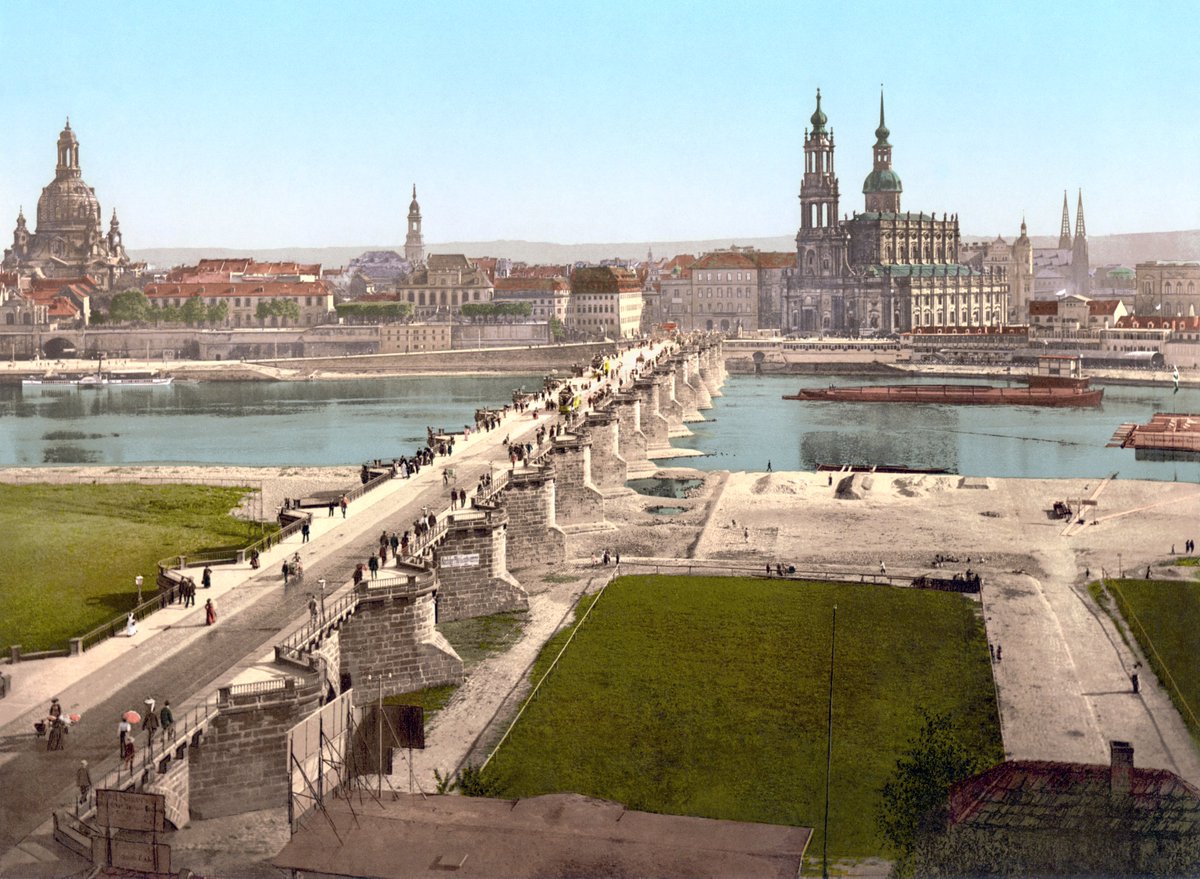
3
Many don't know the extent of the devastation that happened here. When Churchill turned his bombers on civilian targets in 1945 to demoralize Germany, Dresden was obliterated.
25,000 people died in one night — and possibly far more.
25,000 people died in one night — and possibly far more.
4
It remained Churchill's biggest regret. He said himself: "the destruction of Dresden remains a serious query against the conduct of Allied bombing."
You've seen this famous image before:
You've seen this famous image before:
5
Some 80% of buildings in the historic center were damaged or totally destroyed. Everything in this image (the palatial complex called the Zwinger, and the church behind) was decimated.

6
And this was the Frauenkirche, the luminous church at the heart of Dresden that was once one of Europe's largest domes...


7
After the war, when the USSR imposed a puppet state over East Germany, the communists ruled that the church must lie in rubble rather than be rebuilt.
Ostensibly, this was to memorialize the war — more likely, it was for the same reason it was destroyed in the first place: to demoralize.
Ostensibly, this was to memorialize the war — more likely, it was for the same reason it was destroyed in the first place: to demoralize.
8
The Soviets were effective at weaponizing architecture. They went about clearing away the remains of war-ravaged beauty and erecting brutalist blocks across Europe.
Postwar Dresden became a vastly different city...
Postwar Dresden became a vastly different city...
9
Its once-charming squares became exercises in building the model cities of socialism.

10
The Frauenkirche lay in pieces for 50 years — until the Berlin Wall fell and Germans went about healing half-century-old wounds.
In 1993, the people of Dresden decided to piece their church back together, brick by brick.
In 1993, the people of Dresden decided to piece their church back together, brick by brick.
11
Every stone in the pile was sorted and analyzed. Except for a brand new dome, the church was built with as much original stone as possible, to the exact specifications of the original — as much as could be pieced together from old photographs.

12
Rebuilding took 11 years, and in 2005, the cathedral was reconsecrated; rising like a phoenix from the ashes. It was finished one year ahead of schedule.

13
And here's what happened around it. Elegant historicism that is putting Dresden back on the map of Europe's most awe-inspiring centers.
Much more work is planned, but it's fighting considerable bureaucratic resistance.
Much more work is planned, but it's fighting considerable bureaucratic resistance.
14
Dresden's revival isn't important because it's an insightful rebuilding project. It's important because it proves that beauty is what binds cultures together.
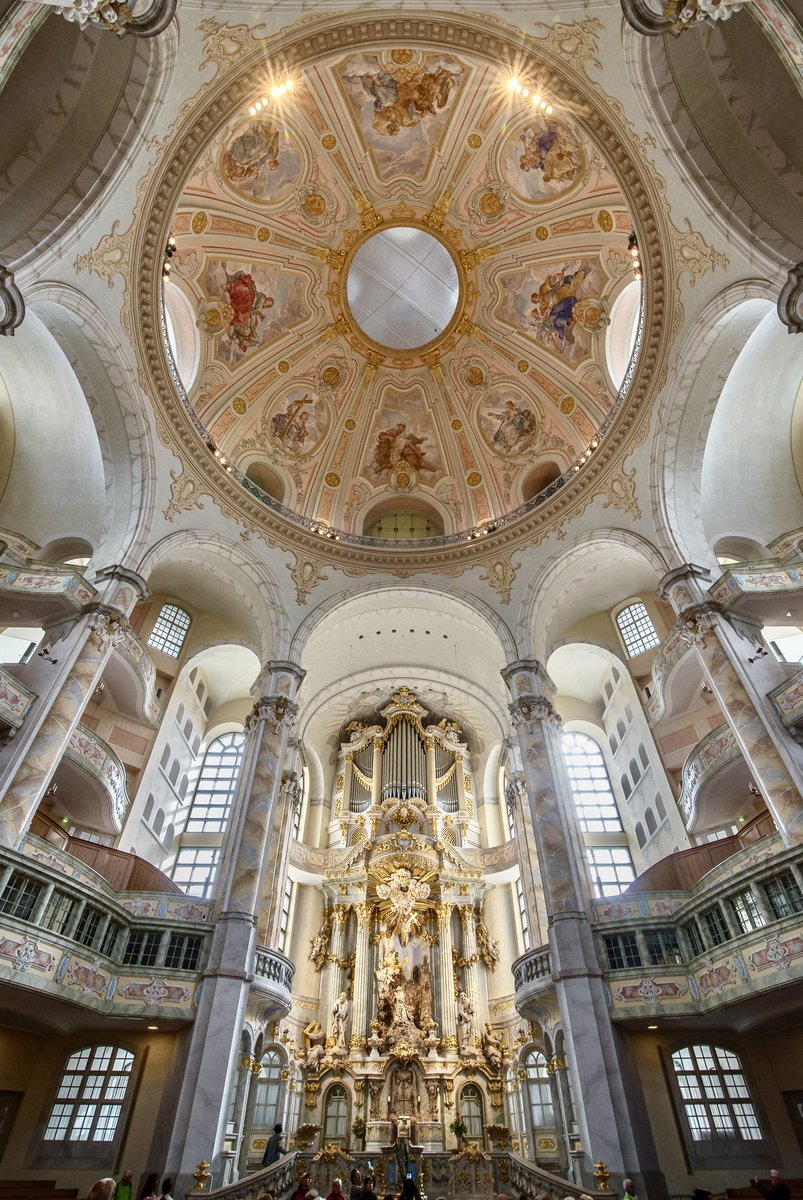
15
Here's proof: the gilded orb and cross atop the new dome were crafted by an English goldsmith — one whose father partook in the firebombing of 1945.
Queen Elizabeth contributed directly to its funding.
Queen Elizabeth contributed directly to its funding.
16
The Frauenkirche was left in rubble perhaps because it reminded people of the terrifying risk of war. You might say sights like that deter future conflict — but rebuilding it is what brought nations together.

17
Acts of mutual rebuilding are what brought peace to war-torn Europe.
Dresden took the traditions of its past and built them (literally) into hope for the future.
Dresden took the traditions of its past and built them (literally) into hope for the future.