Past societies produced so much beauty because they knew that math...

The Culturist@the_culturist_
36 views
Feb 17, 2025
~3 min read
Advertisement
1
Past societies produced so much beauty because they knew that math and beauty are deeply connected.
It all started when Pythagoras discovered something mind-blowing about reality:
The universe is not made of matter — but music... (thread) 🧵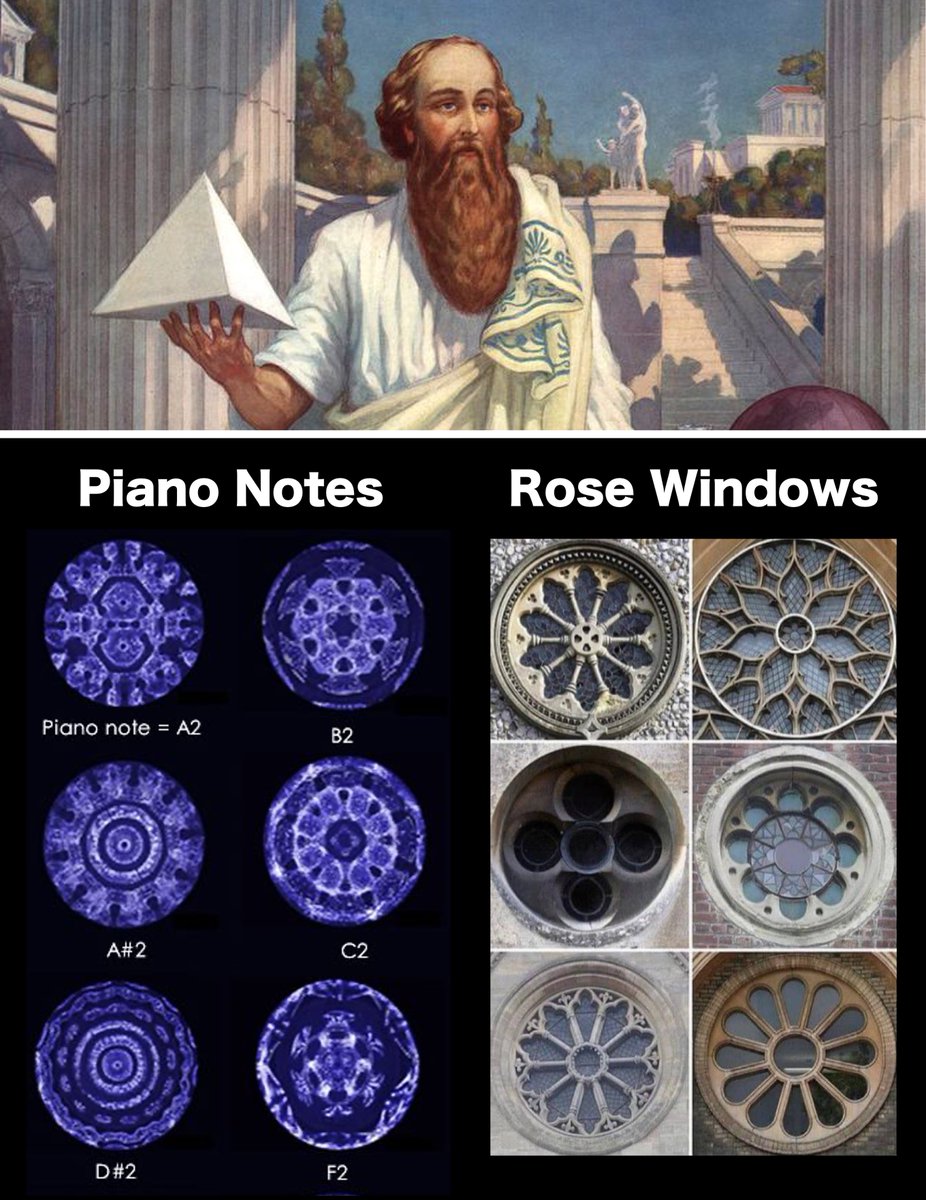
It all started when Pythagoras discovered something mind-blowing about reality:
The universe is not made of matter — but music... (thread) 🧵
2
When walking past a blacksmith, Pythagoras noticed a strange harmony in the sounds of banging hammers.
He realized that two hammers make a harmonious sound if one is exactly twice as heavy as the other.
He realized that two hammers make a harmonious sound if one is exactly twice as heavy as the other.
3
He worked out this 2:1 weight ratio produces an octave (notes separated by an octave sound alike).
Likewise, a 3:2 ratio creates a perfect fifth, and 4:3 a perfect fourth. This discovery evolved into our musical scale of today...
Likewise, a 3:2 ratio creates a perfect fifth, and 4:3 a perfect fourth. This discovery evolved into our musical scale of today...
4
It wasn't just weight — a note's pitch is inversely proportional to the length of the string that produces it.
Pythagoras had discovered that sounds can be harmonious together because of a mathematical relationship between them...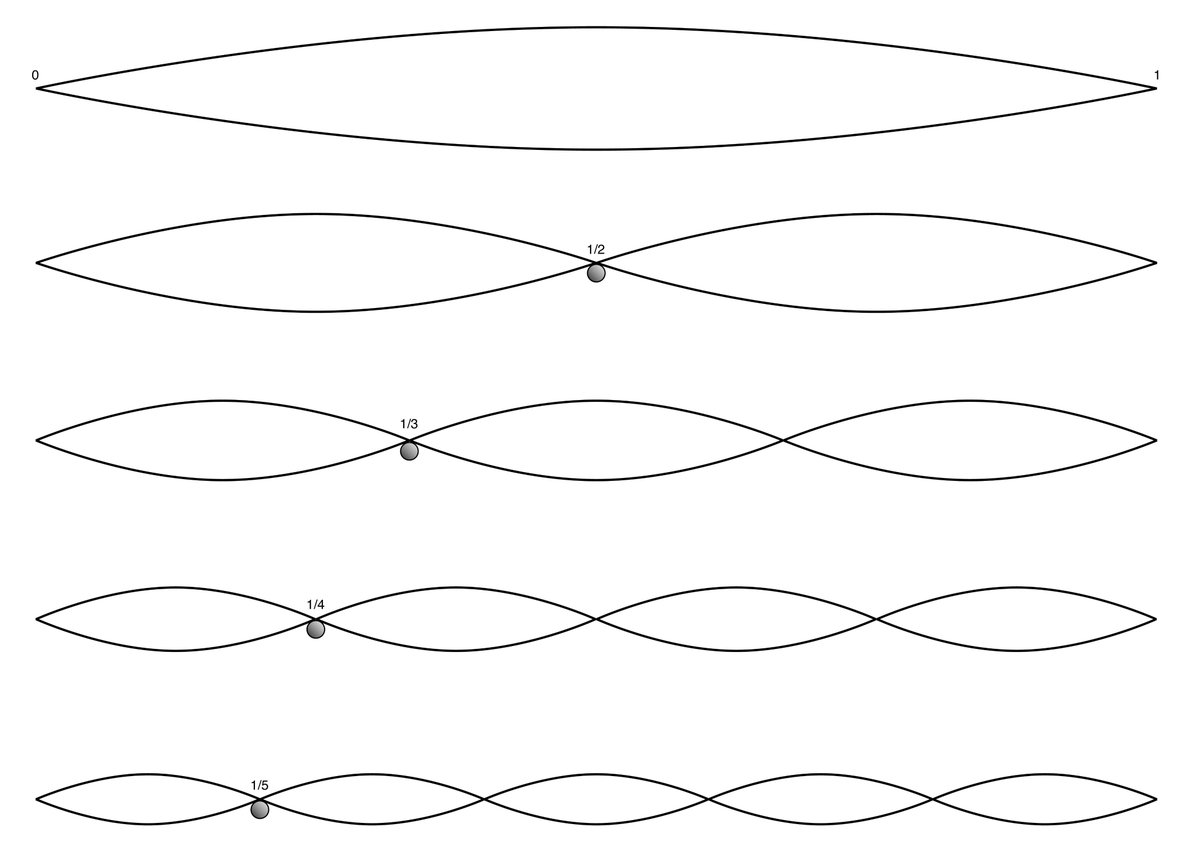
Pythagoras had discovered that sounds can be harmonious together because of a mathematical relationship between them...
5
This got him thinking.
If music is essentially math, perhaps the universe *itself* is also governed by mathematical patterns?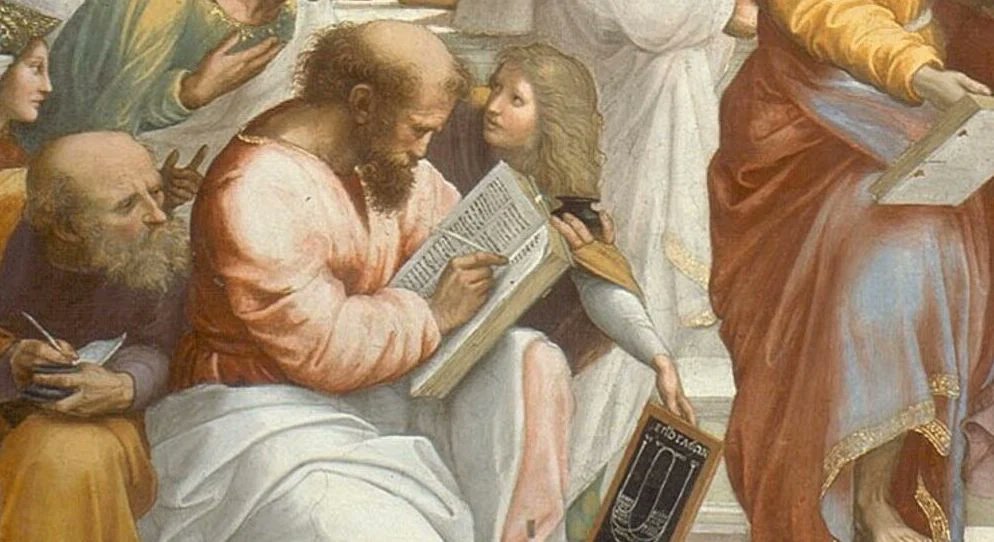
If music is essentially math, perhaps the universe *itself* is also governed by mathematical patterns?
6
Eventually he came to the idea that the universe and everything in it is vibrating. As math and music are interconnected, the universe too is musical.
In that sense, "physical matter is music solidified."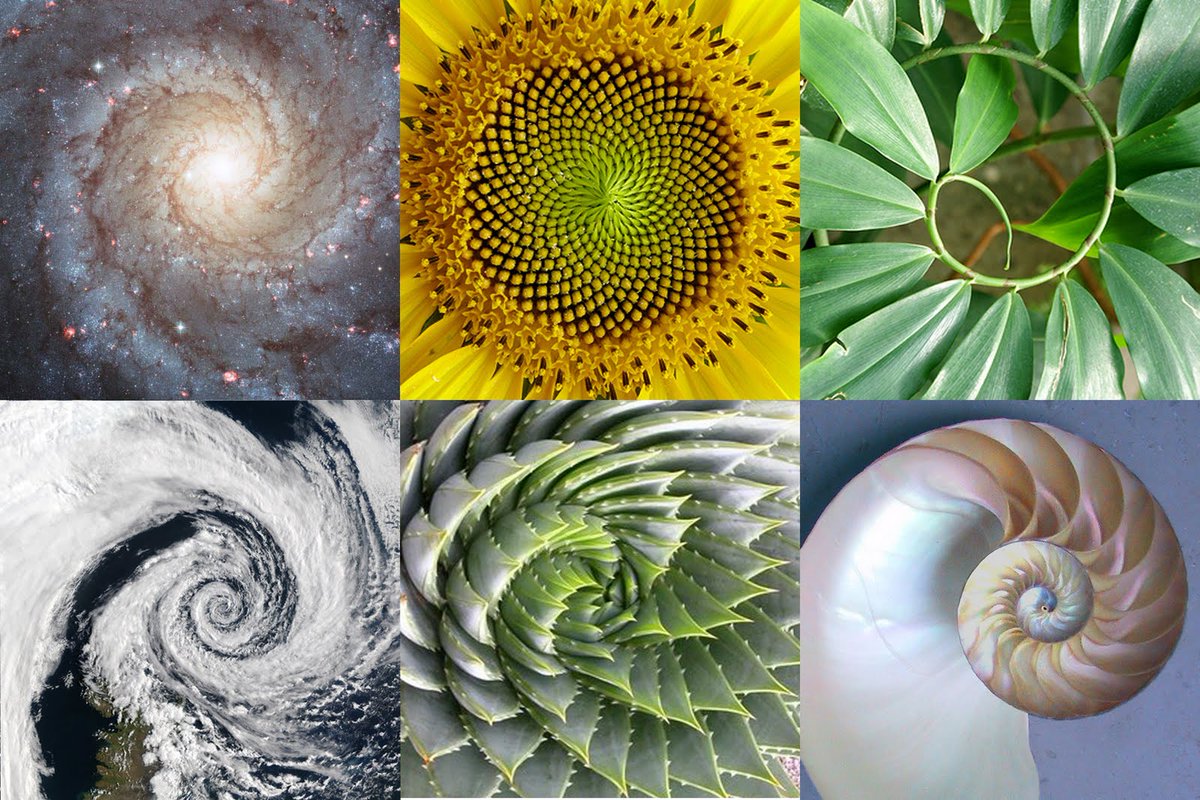
In that sense, "physical matter is music solidified."
7
He developed a theory called the "music of spheres," that celestial bodies "hum" a kind of music as they move, unheard by human ears:
"There is geometry in the humming of the strings, there is music in the spacing of the spheres."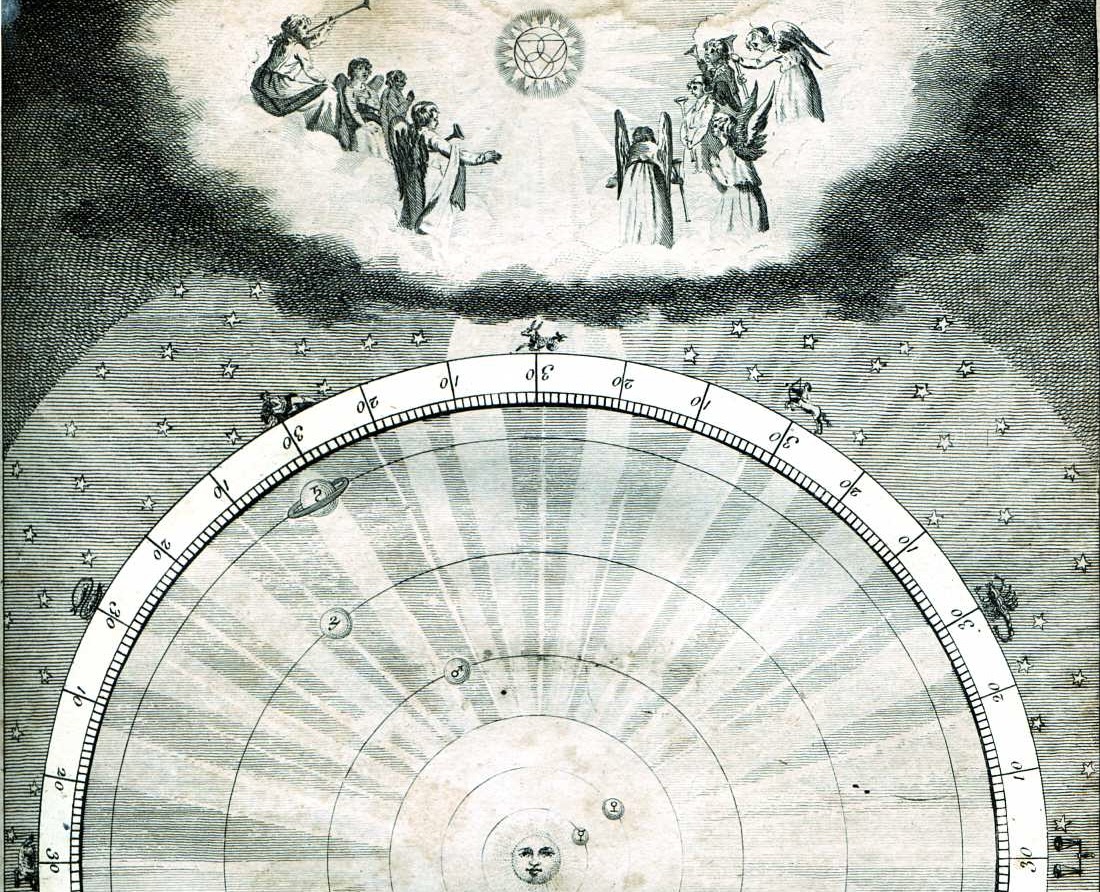
"There is geometry in the humming of the strings, there is music in the spacing of the spheres."
8
He mapped the sun and planets, assigning each a unique tone based on distance and orbit.
We cannot hear this music with our ears — but it's heard by the soul...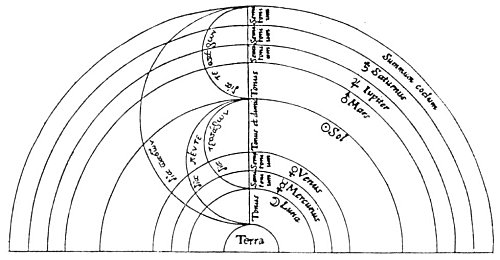
We cannot hear this music with our ears — but it's heard by the soul...
9
Pythagorean thinking carried into the Middle Ages, with Boethius explaining the 3 kinds of music:
1. Musica mundana: unheard music of the cosmos
2. Musica humana: harmony between body and soul
3. Musica instrumentalis: music of instruments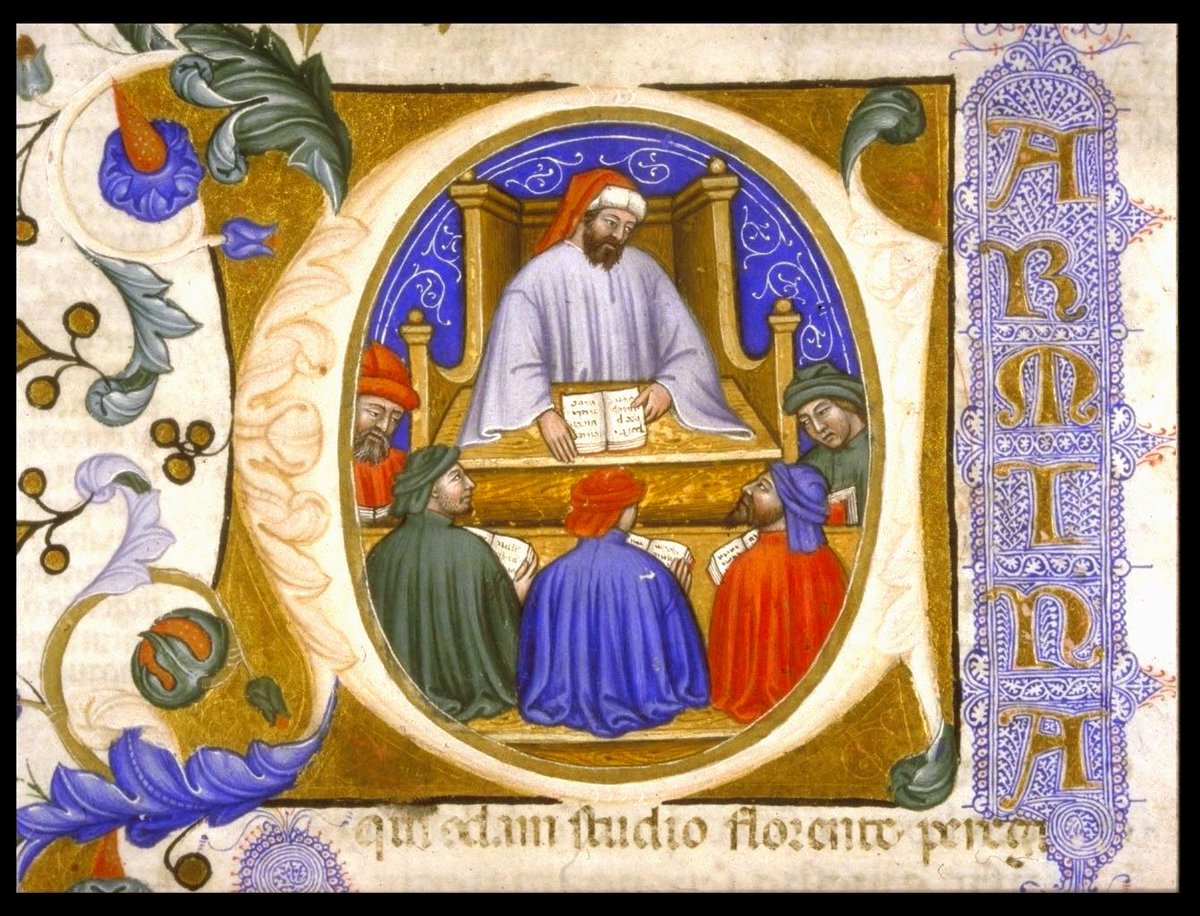
1. Musica mundana: unheard music of the cosmos
2. Musica humana: harmony between body and soul
3. Musica instrumentalis: music of instruments
10
These weren't just radical, isolated theories. This worldview permeated society for centuries.
People believed the universe was bound by a mathematical, musical harmony.
People believed the universe was bound by a mathematical, musical harmony.
11
For example, if you went to university in the Middle Ages, you learned music as one of four *sciences*: the quadrivium.
Arithmetic, geometry, music, and astronomy.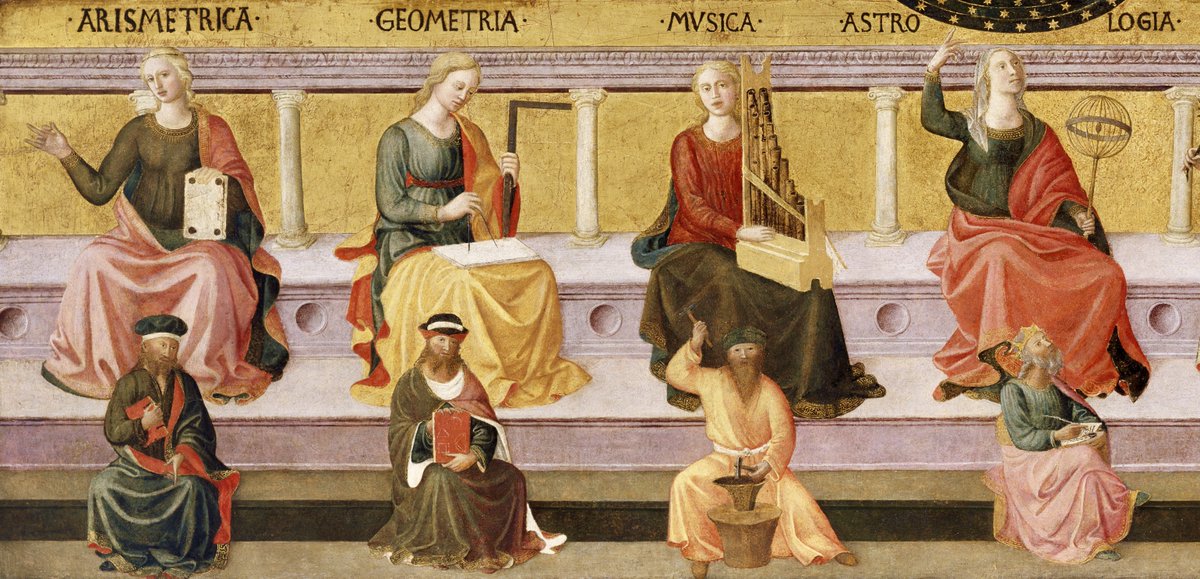
Arithmetic, geometry, music, and astronomy.
12
The idea was that music, math, and the cosmos were inextricably linked.
The universe was deeply mathematical and God must himself be a divine geometer.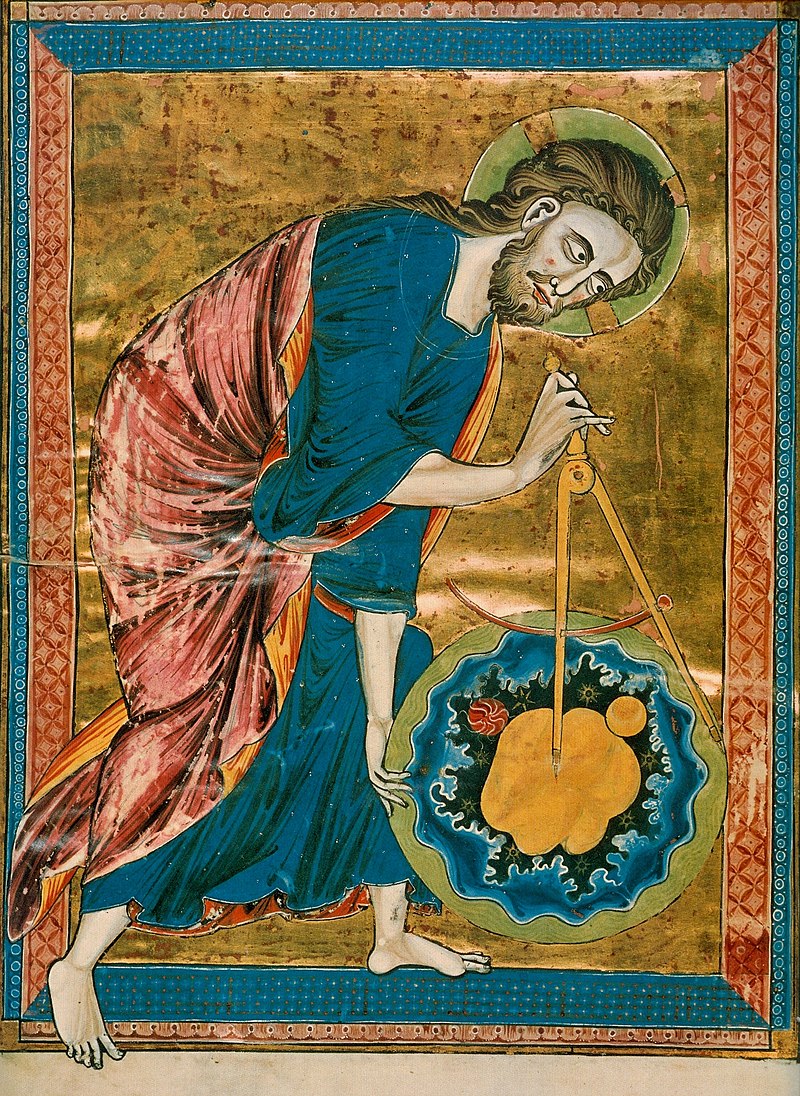
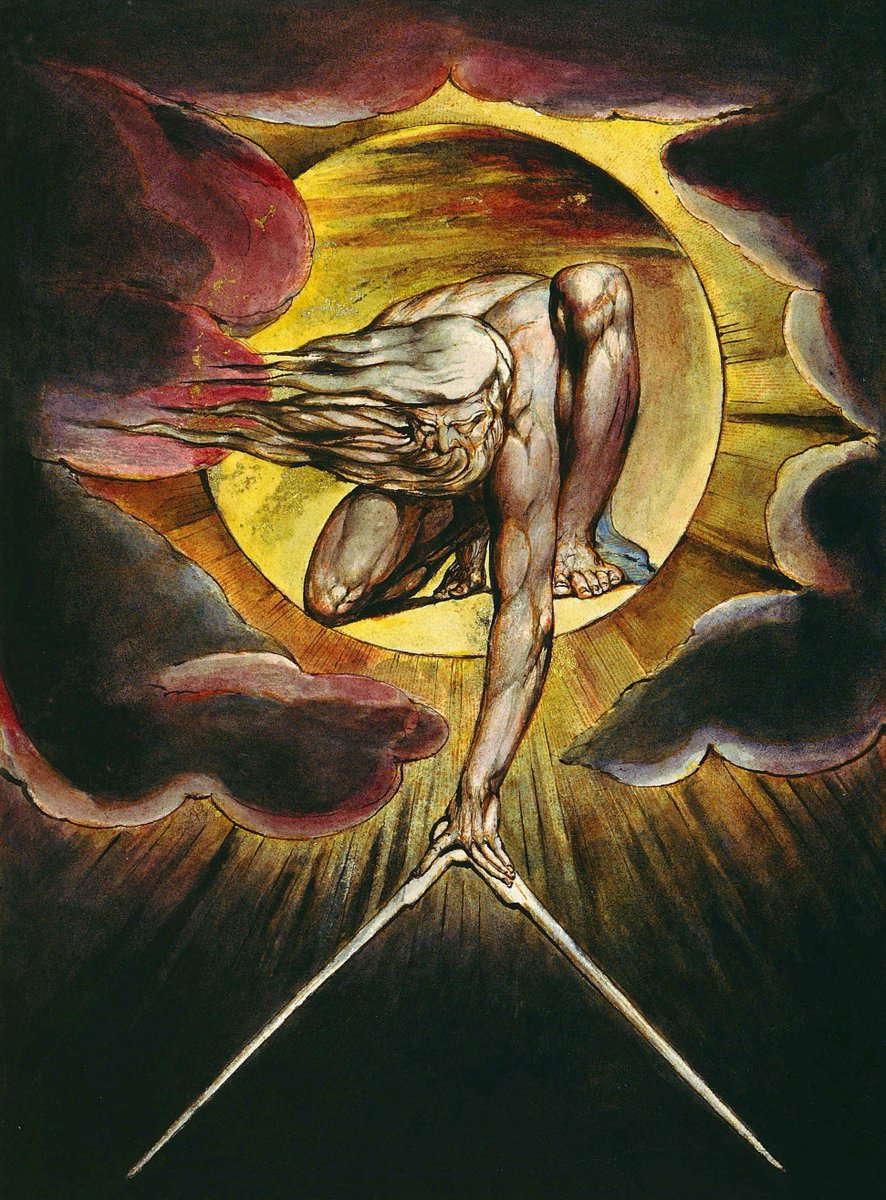
The universe was deeply mathematical and God must himself be a divine geometer.
13
So, if the universe is one great musical composition, how do you live your life to be in tune with it?
Well, by making music that connects you to that divine order — but you can do it in visual art too...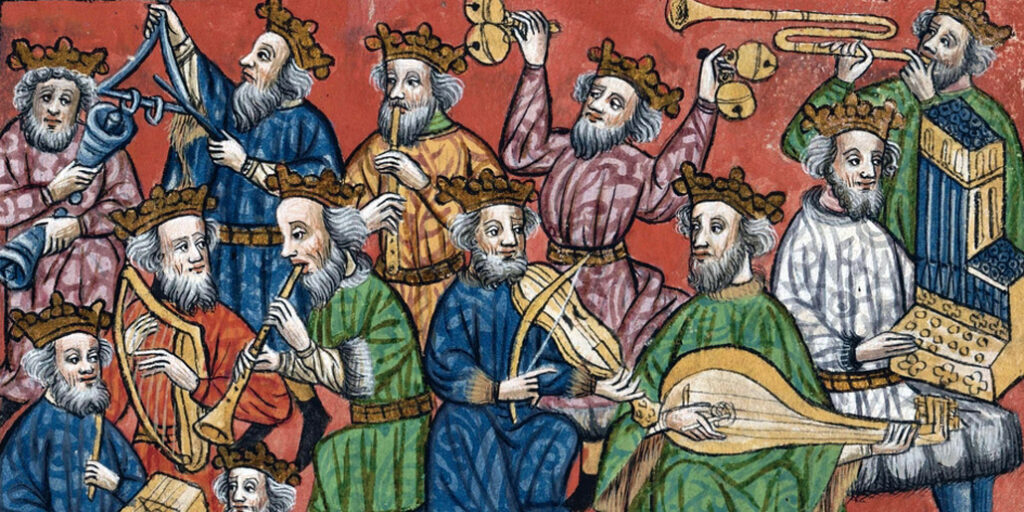
Well, by making music that connects you to that divine order — but you can do it in visual art too...
14
Art from antiquity to the Renaissance and beyond tapped into that mathematical order.
The Golden Ratio fascinated artists from Da Vinci to William Blake, who knew mathematical harmony touches us with a sense of otherworldly beauty.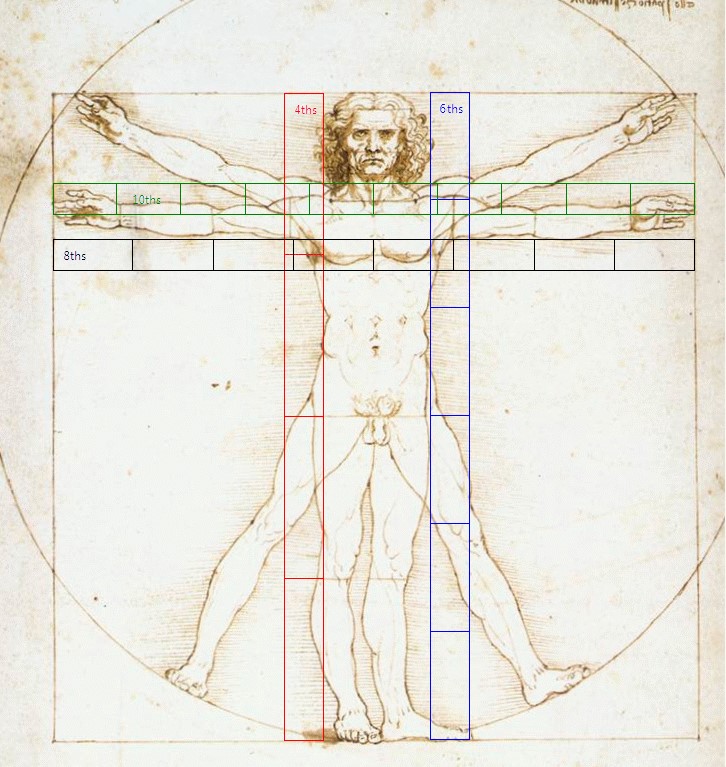
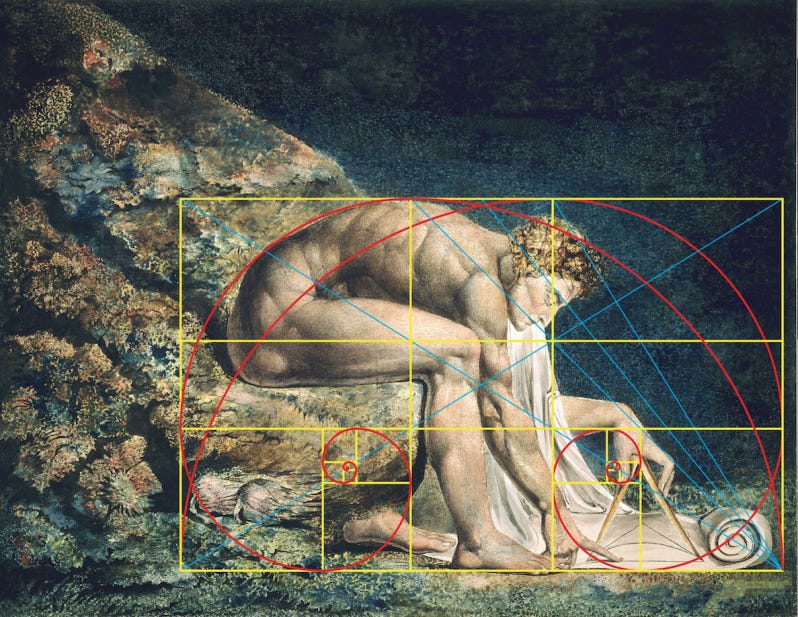
The Golden Ratio fascinated artists from Da Vinci to William Blake, who knew mathematical harmony touches us with a sense of otherworldly beauty.
15
In architecture, cathedral builders wove Gothic facades with immensely complex geometry.
As Pythagoras had found harmony in the mathematical order of music, geometry could produce visual harmony.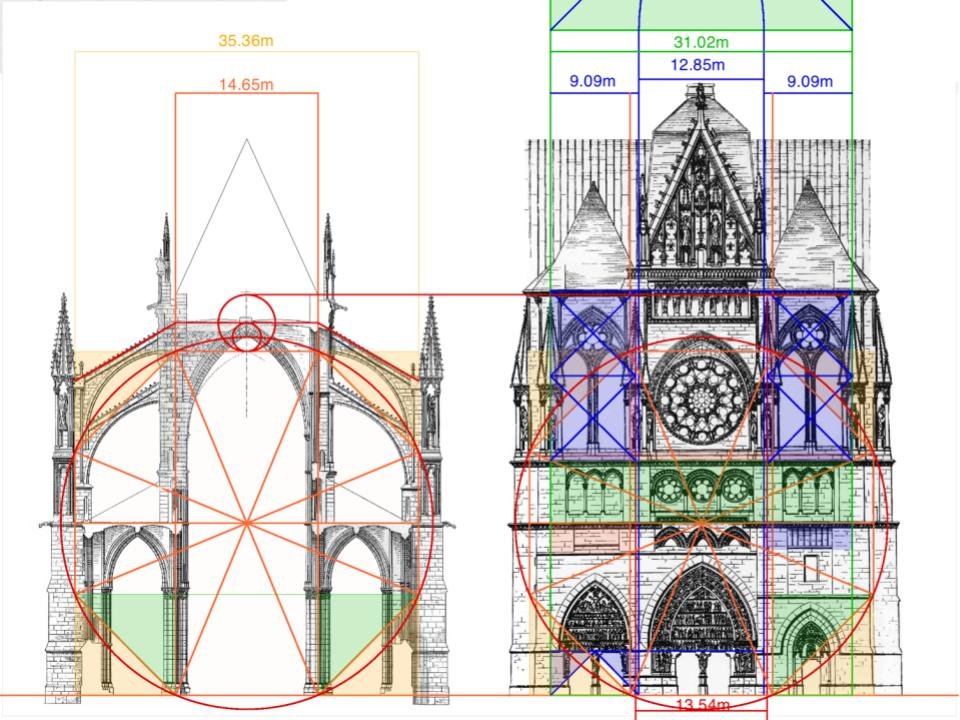
As Pythagoras had found harmony in the mathematical order of music, geometry could produce visual harmony.
16
Music and visual beauty were bound by the same divine forces — notice the similarity of vibrations of musical notes in water and rose windows.
"Music is liquid architecture; architecture is frozen music."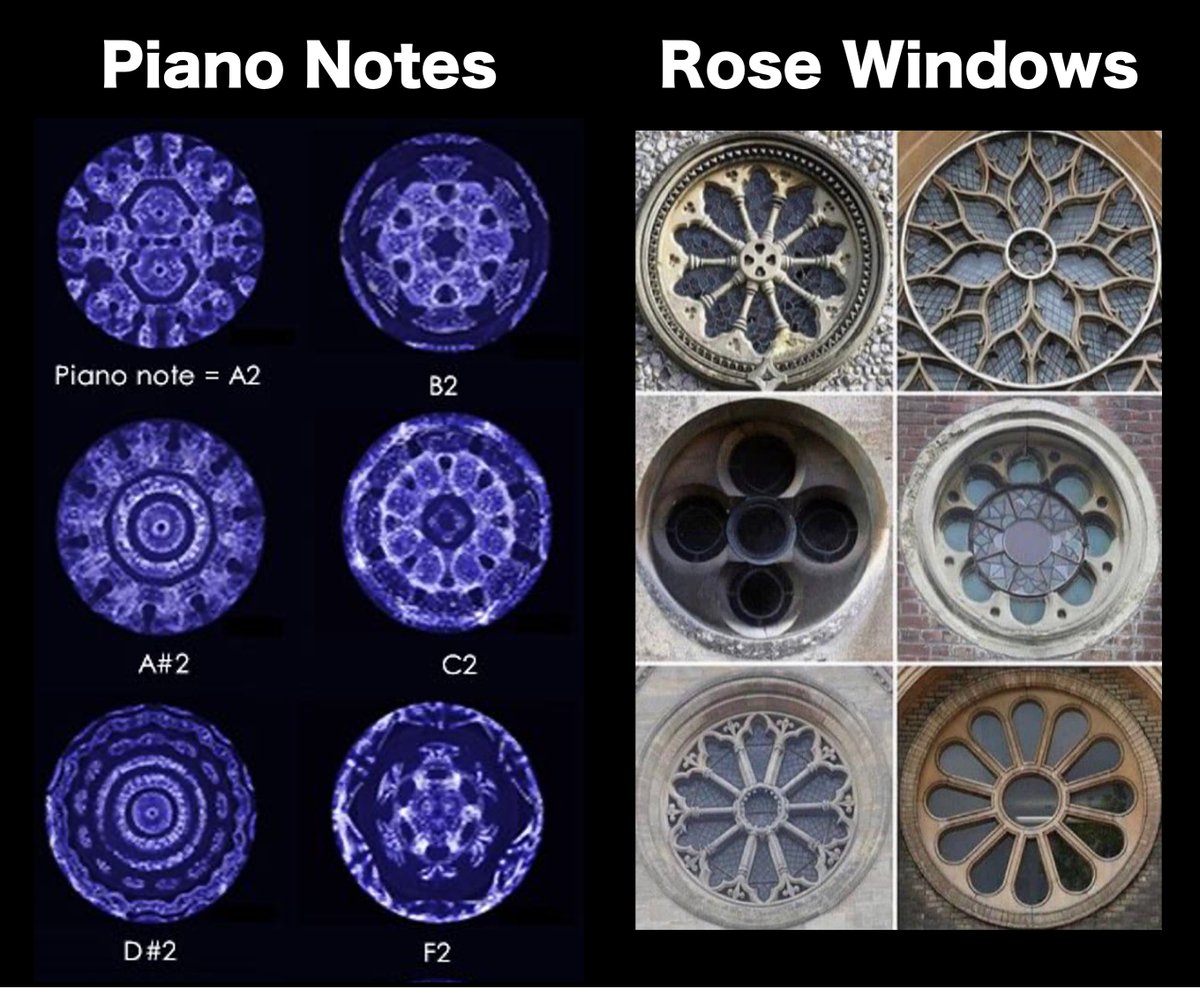
"Music is liquid architecture; architecture is frozen music."
17
Medieval people's obsession with math might seem strange or unnecessary to the modern-day architect.
But the results speak for themselves.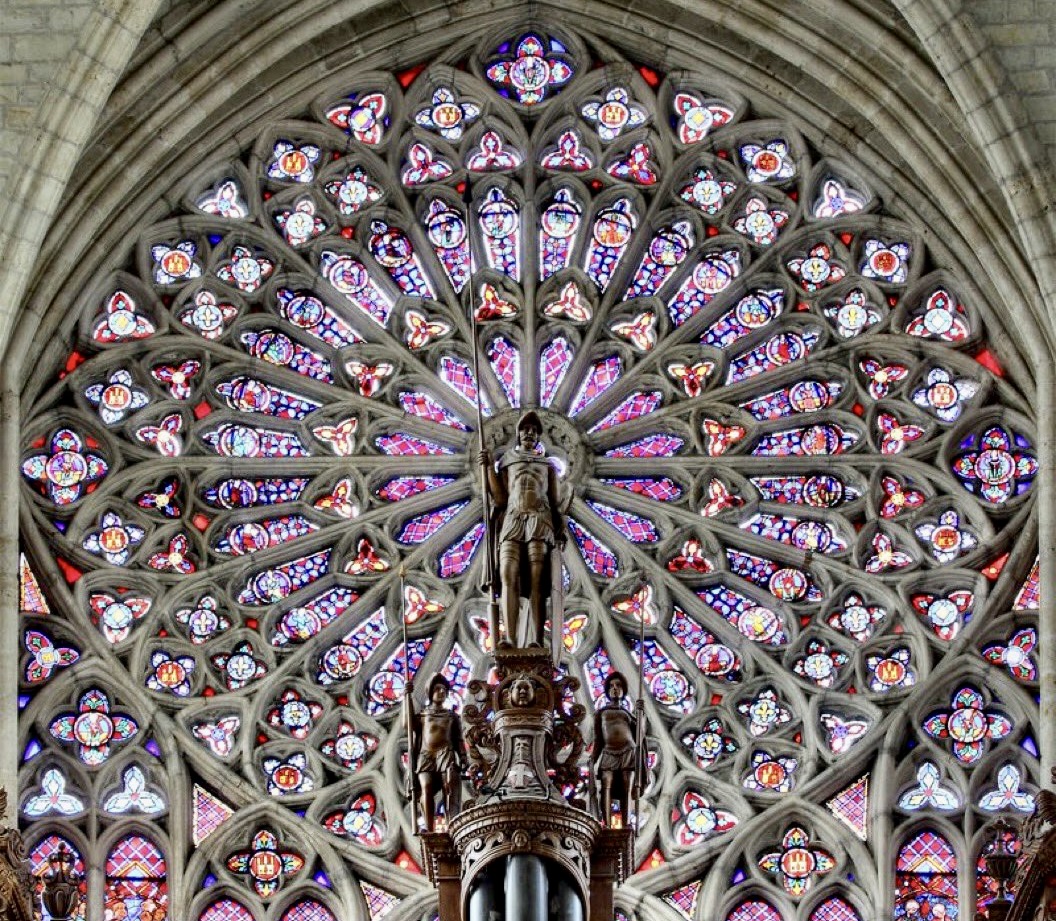
But the results speak for themselves.

