How I Use Volume Profiles (with examples) a thread 🧵

Luckshury@Luckshuryy
38 views
Sep 30, 2024
~2 min read
Advertisement
1
How I Use Volume Profiles
(with examples)
a thread 🧵
(with examples)
a thread 🧵
2
in this thread I will cover the following:
- ranges
- trending move volume profiles
- high/low volume nodes
- other nuances
before we get started, here are my volume profile settings on Tradingview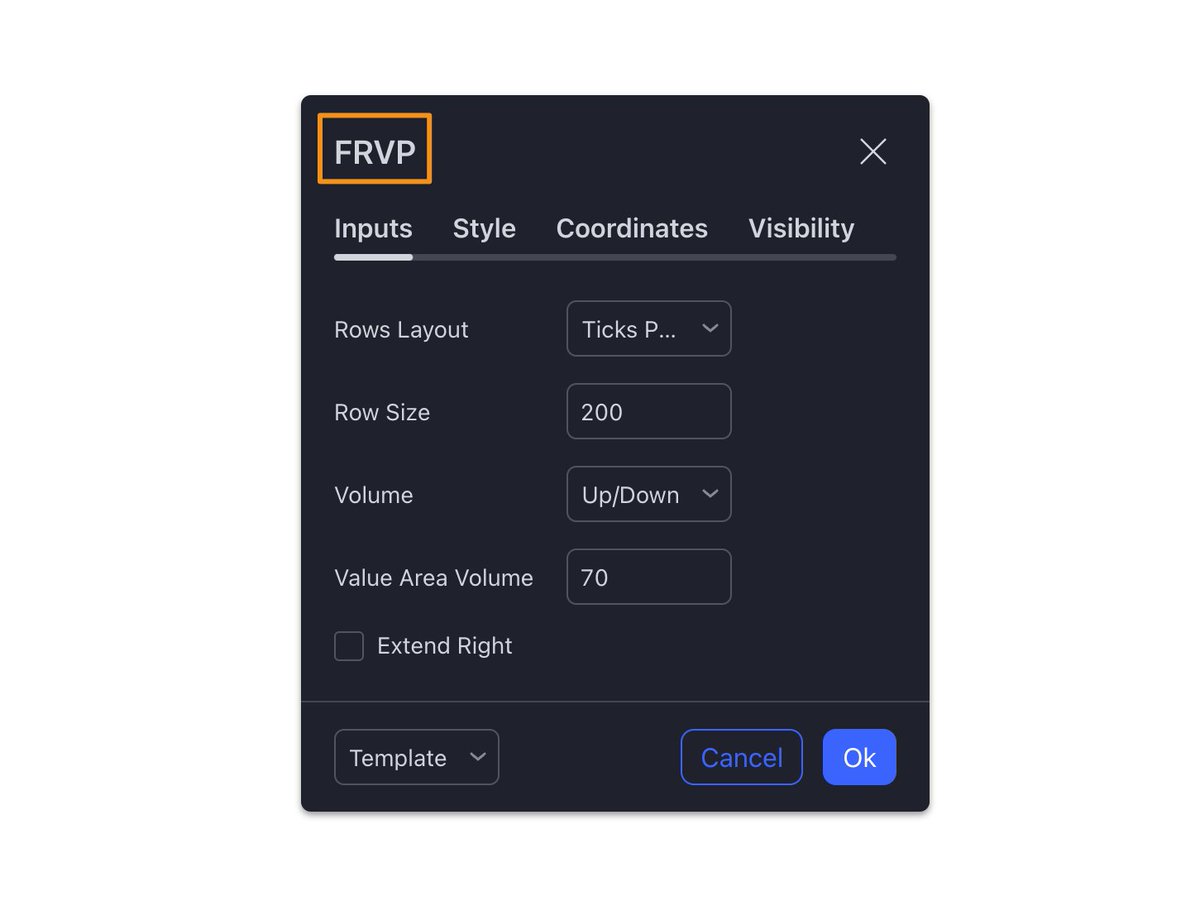
- ranges
- trending move volume profiles
- high/low volume nodes
- other nuances
before we get started, here are my volume profile settings on Tradingview
3
Ranges
where do ranges form?
- typically after a large volatile move (up or down)
you can then anticipate ranges forming and thus start pulling a volume profile for the range early on rather than after tonnes of touch points.
where do ranges form?
- typically after a large volatile move (up or down)
you can then anticipate ranges forming and thus start pulling a volume profile for the range early on rather than after tonnes of touch points.
4
Ranges [2]
- deviations and range rotations typically occur into low volume nodes (discussed in detail later within this thread)
- revisiting previous range volume profiles (for the first time) poc,hvns etc all remain relevant and are good poi's when returning to that range.
- deviations and range rotations typically occur into low volume nodes (discussed in detail later within this thread)
- revisiting previous range volume profiles (for the first time) poc,hvns etc all remain relevant and are good poi's when returning to that range.
5
Trending moves
Pulling from start to finish of a trend:
- Gain an idea as to where people are positioned within a current trend
Example:
- If poc or hvn of current uptrend is lost then that could indicate trend weakness and start to complete trend reversal
Pulling from start to finish of a trend:
- Gain an idea as to where people are positioned within a current trend
Example:
- If poc or hvn of current uptrend is lost then that could indicate trend weakness and start to complete trend reversal
6
Trending moves [2]:
Within trending moves, HVNs and POCs are areas in which new positions could be built up.
In an uptrend, I would dive into the HVNs and POCs to see if new longs have opened within those sections.
hose positions (if any) want to defend those zones.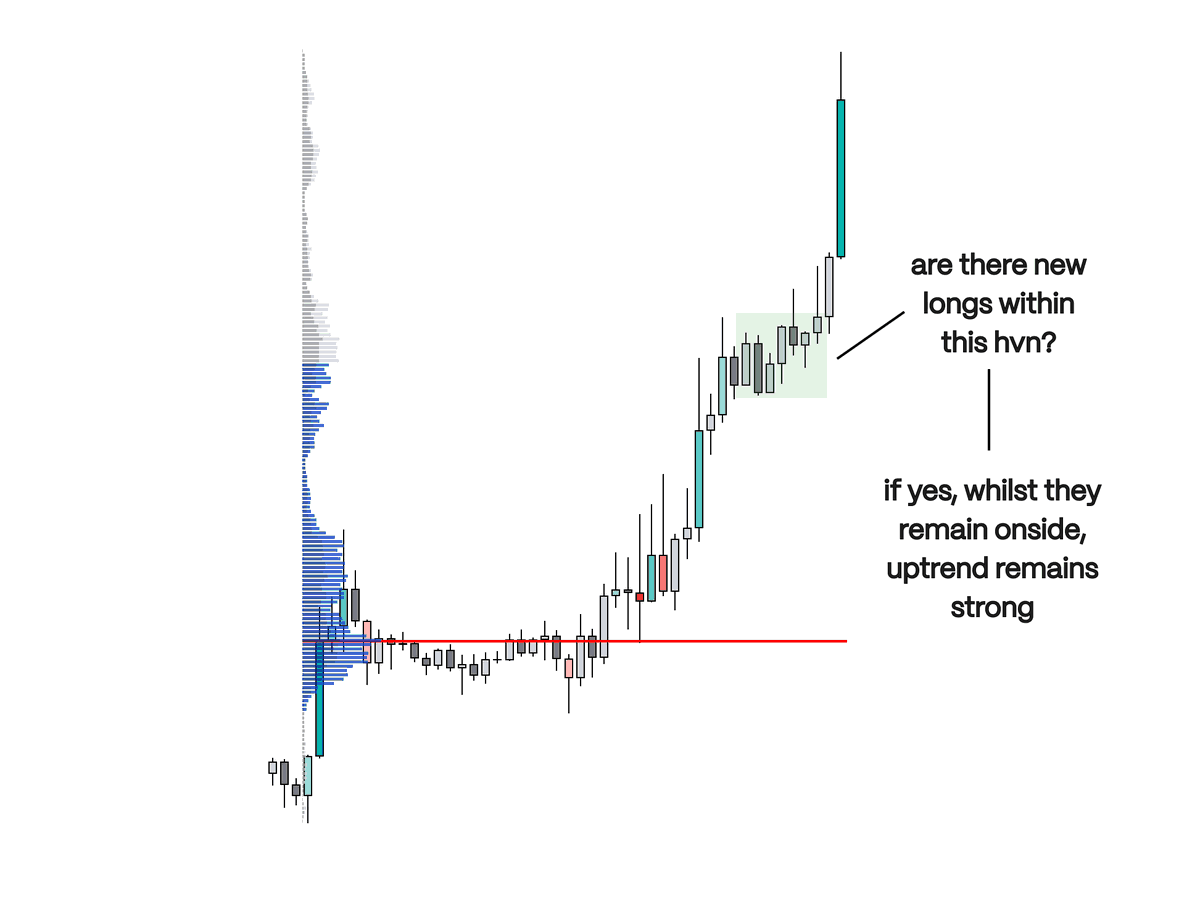
Within trending moves, HVNs and POCs are areas in which new positions could be built up.
In an uptrend, I would dive into the HVNs and POCs to see if new longs have opened within those sections.
hose positions (if any) want to defend those zones.
7
Low Volume Nodes (LVN):
Significant lack of volume, often aligning with single prints.
In trending environment - first touch into LVN on a retrace is typically a good zone to long or short for trend continuation, especially in confluence with series of highs/lows (liquidity)
Significant lack of volume, often aligning with single prints.
In trending environment - first touch into LVN on a retrace is typically a good zone to long or short for trend continuation, especially in confluence with series of highs/lows (liquidity)
8
HVNs & POCs
I like to place emphasis on HVNs in a similar way that I would to POCs, they can have similar importance.
I don't solely trade from HVNs/POCs, they can be significant if they align with other key levels like liquidity zones before price hits.
These form a daily poi
I like to place emphasis on HVNs in a similar way that I would to POCs, they can have similar importance.
I don't solely trade from HVNs/POCs, they can be significant if they align with other key levels like liquidity zones before price hits.
These form a daily poi
9
Hope you found this valuable. Don't hesitate to ask any further questions below.
Here's a link to my free newsletter where I cover more in-depth topics like this, alongside unreleased trade breakdowns:
⤷ luckshury.beehiiv.com/subscribe
Here's a link to my free newsletter where I cover more in-depth topics like this, alongside unreleased trade breakdowns:
⤷ luckshury.beehiiv.com/subscribe