Eckhart & Origen on Christ's Divinity Mt. 27:46 | At the ninth hour...

𝘢𝘳𝘳𝘶𝘴@_bonaventurian
14 views
Sep 23, 2025
~15 min read
Advertisement
1
Eckhart & Origen on Christ's Divinity
Mt. 27:46 | At the ninth hour Jesus cried out, “O God, my God, why hast thou forsaken Me?” [ἠλί, ἠλί λαμά σαβαχθάνι]?”
Mk. 10:17 | Why do you call me good? No one is good but God alone.
How is Jesus God when he says this?
Mt. 27:46 | At the ninth hour Jesus cried out, “O God, my God, why hast thou forsaken Me?” [ἠλί, ἠλί λαμά σαβαχθάνι]?”
Mk. 10:17 | Why do you call me good? No one is good but God alone.
How is Jesus God when he says this?
2
Jesus’s cry of dereliction, “Eli, Eli, lema sabachthani?” Which the Greek Septuagint preserves from the Aramaic, raises serious questions about his divine identity. How can he cry out to God for forsaking him if he himself is divine?
3
Really what's going on here is something extremely specific. If you ignore the Old Testament roots of what Christ says, you’ll miss the point. This goes for many of the harder sayings of Jesus as we'll see
4
This is not as some say, confirmation of the Gnostic Gospel account; “My Power, My Power, Thou hast forsaken me?” [Gn. Peter 15, 18-19] As any first-century Jew would have known, these words are not just a spontaneous “cry of dereliction.”
5
Instead, they are a deliberate quotation of Scripture:
Ps. 22:1-2 | O God my God, look upon me: why hast thou forsaken me? Far from my salvation are the words of my sins.
Ps. 22:1-2 | O God my God, look upon me: why hast thou forsaken me? Far from my salvation are the words of my sins.
6
It was customary to invoke an entire psalm just by quoting the first line much like we invoke a well known song or poem simply by quoting the first line or the chorus, for Catholics; entire papal encyclicals are customarily invoked by using the first line in Latin.
7
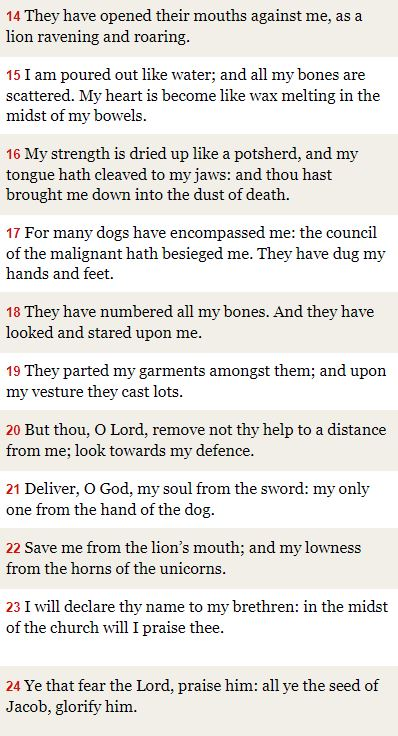
So what does Psalm 22 tell us? It’s a song of trust that God will save his suffering servant despite the appearance that God has abandoned him. The psalm explicitly affirms that God does not turn his back or hide his face from the one who is suffering.
8
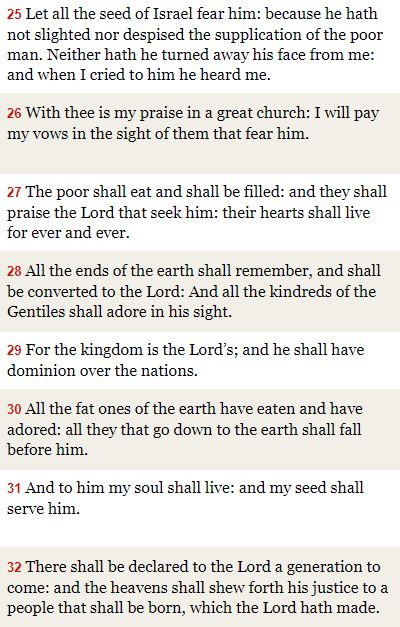
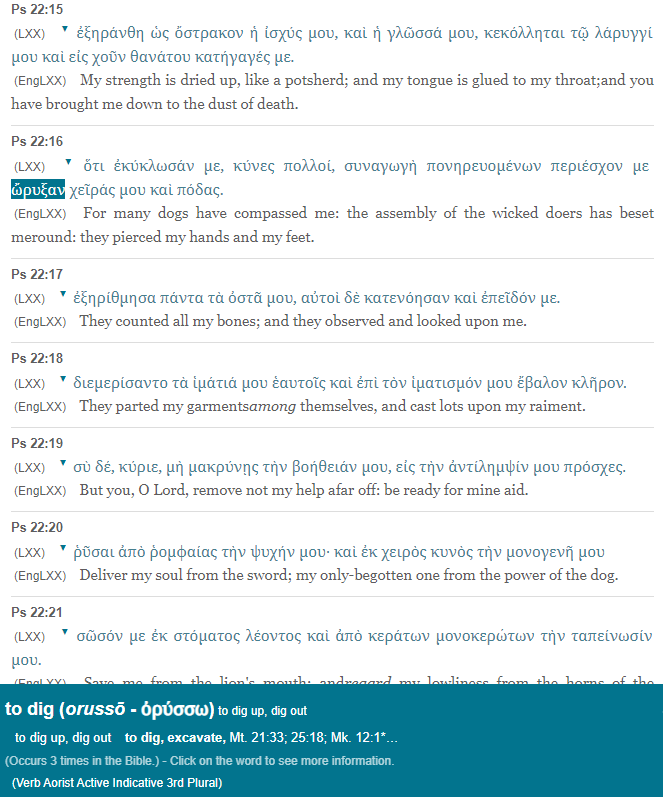
The version I’ve attached is from the Douay Rheims but the ancient Greek Septuagint clearly states: “They have gouged (ὀρύσσω) my hands and feet” [Ps. 22:16 LXX]. The lines from the psalm describe the mockery, persecution, and execution of the suffering psalmist.
9
Yet none of these things ever happened to David. But by quoting this particular psalm in his final moments, Jesus is identifying the sufferings described in the psalm with his own passion and death on the cross.

10
As Origen relates, Christ is found by those who did not seek him [Isa. 61:1]. This being the Gentiles. Yet; “The Jews to this day are seeking after Christ and they are searching the scriptures for him and do not find him because his crucifixionー


11
ーis a stumbling block to the Jews [1 Cor. 1:23], which is why the Lord says to them: ‘I spread out my hands all the day to an unbelieving and rebellious people’ [Isa. 65:2].
12
"That is, while he was hanging on the cross they not only did not find him but even went so far as to say: "If you are the Son of God, come down now from the cross and we will believe in you" [Mt. 27:40,42). ー
13
ーBut: ‘He will not be found by those who put him to the test, but will manifest himself to those who do not distrust him" [Wis.1:2].”
[Spirit and Fire Anthology, Word as Flesh, 246]
[Spirit and Fire Anthology, Word as Flesh, 246]
14
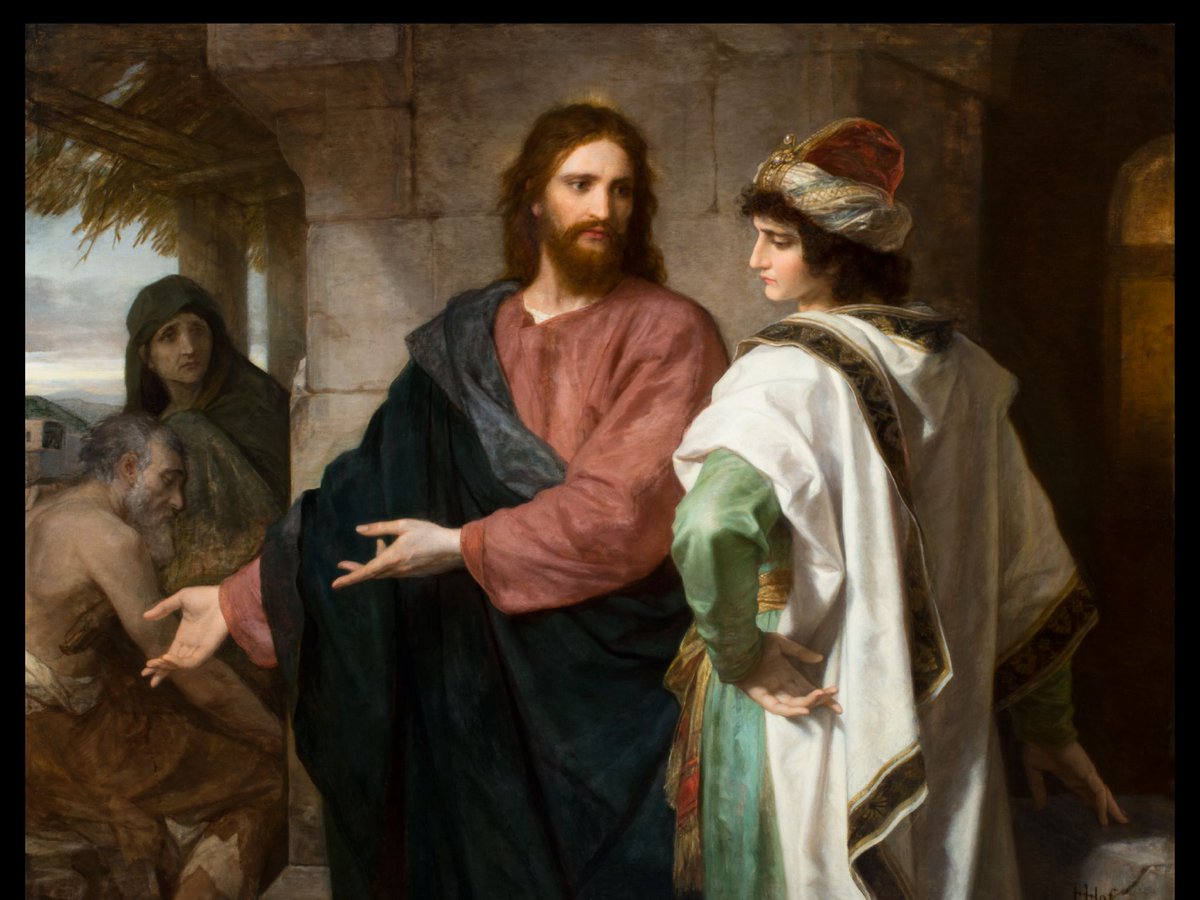
Ok, what about Christ seemingly attributing Goodness solely to God as distinct from himself as he did in Mk. 10:17 to the rich young man? Is he denying that he is good? And, if so, is he also denying that he is God?
15
This is how the 3rd Century Arian heretics interpreted it, and it's a popular interpretation today, which was never really the case. It’s actually one more riddle he uses to lead his pupils into the mystery of who he is.
16
First and foremost, Jesus does not deny that he himself is good. He does not say, “I am not good.” If he had said this, then we would have to admit that he did not regard himself as God.
17
Yet all Jesus affirms is that there is only ‘one’ [εἷς] who is truly ‘good’—the Godhead. he does this by alluding to the Shema which he does also with the healing of the paralytic [Mt. 9:1-8, Lk. 5:17-26].
18
Deut. 6:4-6 | Hear, O Israel: The LORD our God, the LORD is one; and you shall love the LORD your God with all your heart, and with all your soul, and with all your might.
19
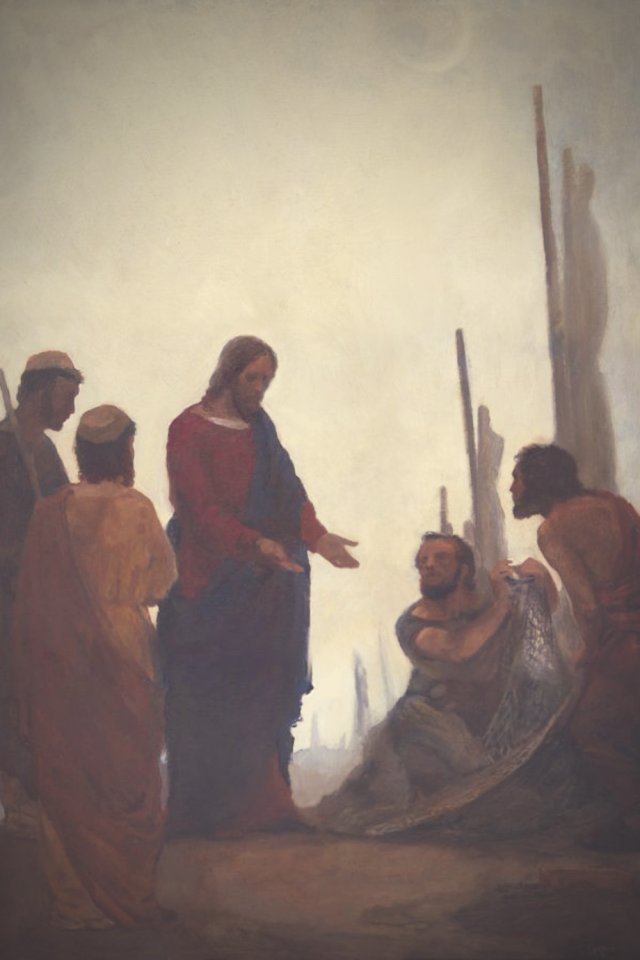
From the Jewish scribes’ point of view, by declaring the paralytic’s sins forgiven, Jesus is acting as if he were the one God of the Shema—the God who “forgiv[es] iniquity and transgression and sin” [Ex. 34:7].
20
Christ forgives the man’s sins but he is asked ‘Who can forgive sins but the one God’? [εἷς ὁ θεός]. He does and so identifies himself with The God of the Shema. The foundation of Jewish monotheism.
21
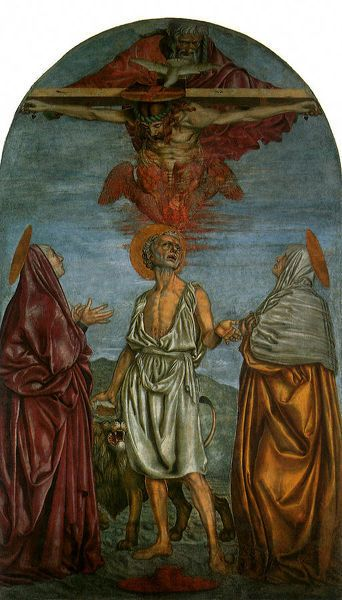
Note that יְהֹוָה (ye.ho.vah) 'LORD' derives from הָיָה haya, the past tense of "to be" as He IS the sheer act of existence before all things.
22
But אֶחָד (e.chad) 'one' in Deut. 6 is an indefinite article also signifies unity/oneness-itself. Thus Jesus is identifying Himself with the Divine Simplicity which is the sheer act of existence before all things.
23
Mk. 10:17 doesn't deny Jesus’ goodness but ascribes it to its divine origin. Both accounts we have the phrase ‘except God alone,’ & in both places Jesus doesn't constitute a 2nd exception alongside God;
24
rather he stands, in his goodness, on the divine side of reality over against humanity. But why say this in such a seemingly convoluted manner?
25
The most natural way to read the first part of this saying is that Jesus wants the rich man to make clear what he means. In other words, Jesus wants to elicit from the young rich man what he thinks about Jesus.
26
The diverging interpretations of this saying continue to demonstrate the openness of Jesus’ words. He does not make a statement about himself, but provokes the audience to make their own judgment.

27
Consider again what Origen said above about Christ not being found by not be found by those who put him to their own test, but will manifest himself to those who do not distrust him and follow through.
28
The young man did not follow through, he merely turned away disappointed though he was told to follow Christ, after he told him that none were good but God. Eckhart views this verse as leading to an explication of God’s aseity;
29
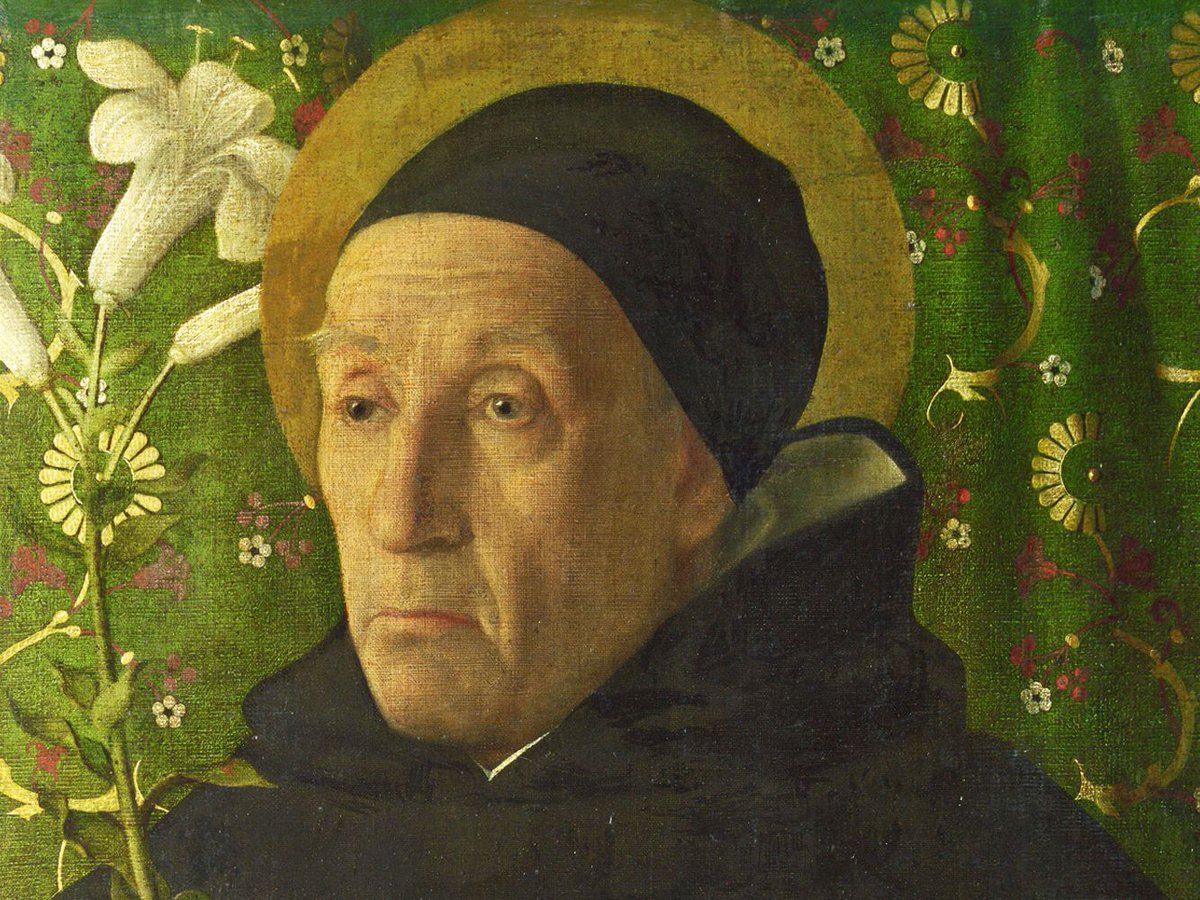
“Our Lord said to a young man who addressed him & called him good, ‘Why do you call me good? None is good but God alone.’ [Mk. 10:17] That indeed is true. Whatever ‘is’, insofar as it depends on itself, is not good. Nothing whatever is good per se except God alone.
30
"Did God then contradict his own words? Not in the least! Now mark my words. So far as man denies himself for God & is united with God, to that extent he is more God than mere creature.
31
"A man who makes himself wholly free of self for God's sake who belongs to none but God & lives for none save God alone, is in truth by grace the same as God is by nature, & God for his part knows no difference between Himself & that man.
32
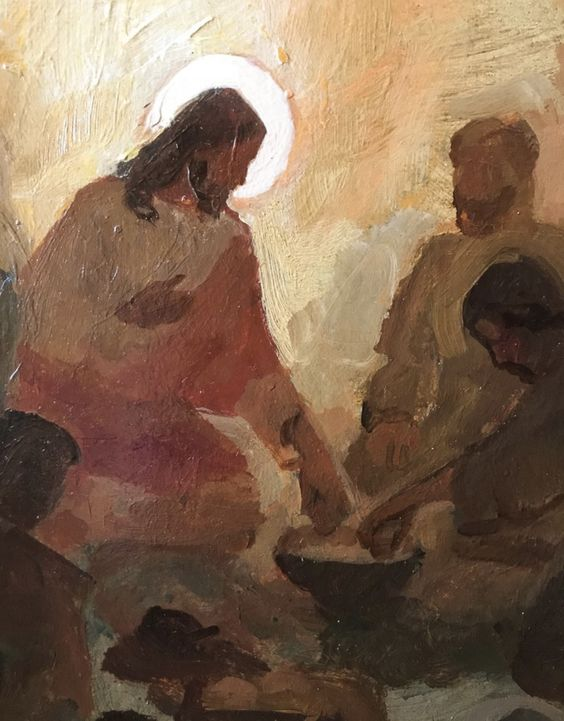
However, I say 'by grace.' For God is & this man is, & just as God is good by nature, so this man is good by grace, for God's life & being is entire in this man. That is why he called this man 'good,'ー
33
ーfor the words our Lord used were 'good servant,' for this servant is good in the sight of God with no other goodness than that whereby God is good.” [Sermon 58]
Let’s start exploring the crucifixition and resurrection more deeply now. Turning back to Origen:

Let’s start exploring the crucifixition and resurrection more deeply now. Turning back to Origen:
34
“Its written in the Acts of Paul: ‘I am about to be crucified again.’ This could apply just as well to the time after the coming of Christ as to the time before. Hence it is also written; ‘I am already about to be crucified.’ ー
35
ーConsider then whether ‘I have been crucified with Christ’ [Gal 2:19] can have been spoken not only by the saints after the coming but also by those who came before in order to say that the saints after the coming are not different from Moses and the patriarchs.ー
36
ー And the words ‘It is no longer I who live, but Christ who lives in me’ [Gal 2:20] are to be said not only by those after the coming but also by those before.”
[Spirit and Fire Anthology, Word as Flesh 261]
[Spirit and Fire Anthology, Word as Flesh 261]
37
Mt. 22:32 | The God of Abraham, and the God of Isaac and the God of Jacob; he is not God of the dead, but of the living.
Following Origen’s lead, these words imply that Abraham and Isaac and Jacob are living since they also have been buried with Christ and risen with him.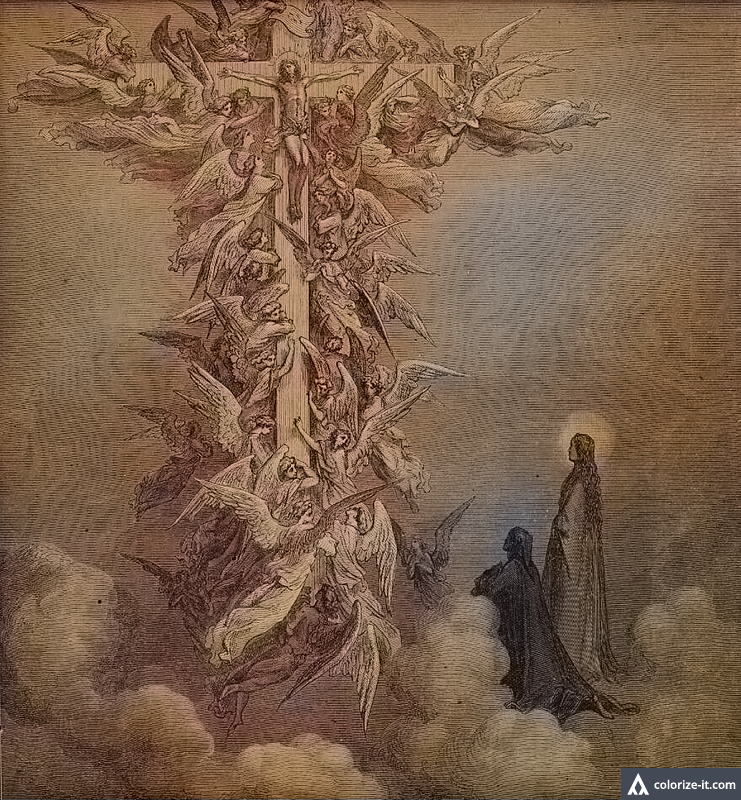
Following Origen’s lead, these words imply that Abraham and Isaac and Jacob are living since they also have been buried with Christ and risen with him.
38
Evidently, this is the case because they have eternal life through him such that there never was a time when the spiritual order of salvation according to Jesus was not available to the saints.
39
Eph. 2:6 | God raised us up together with Christ and made us sit with him in the heavenly places.
Origen writes of this verse as an exhortation to hope. That if you believe that Christ has risen from the dead, that you should too believe you likewise rise with him.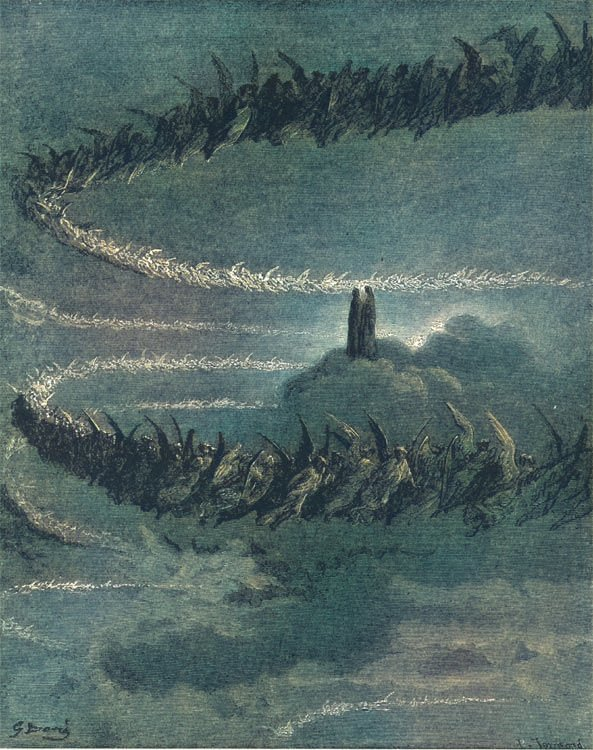
Origen writes of this verse as an exhortation to hope. That if you believe that Christ has risen from the dead, that you should too believe you likewise rise with him.
40
If you believe that he is sitting at the right hand of the Father in heaven, believe too that you yourselves will no longer be on earth but in heaven if you follow him Despair is ludicrous;
41
“If there had been a mere man in Mary's womb and not the Son of God, how could it have come about that, both then and now, many sicknesses not only of the body but also of the soul are being cured?ー
42
"Which of us was not wandering far astray, while we now, because of the Savior's coming, are no longer tossed about and upset but are actually on ‘the Way’ [Jn. 14:6] ー
43
"We could also bring in all the rest and see that everything that has been written of him... his birth and upbringing and power and passion and resurrection do not refer only to that time, but are also active now in us.ー
44
"His death, then, and his resurrection, all took place for our sakes."
[Origen, Mystical Body 800]
Pope St. Leo the Great also has some beautiful words here;
[Origen, Mystical Body 800]
Pope St. Leo the Great also has some beautiful words here;
45
“Awake, O man, and recognize the dignity of your nature. Recollect you were made in the image of God, which although it was corrupted in Adam, was yet re-fashioned in Christ.”
- Pope St. Leo the Great, Feast of Nativity VII.VI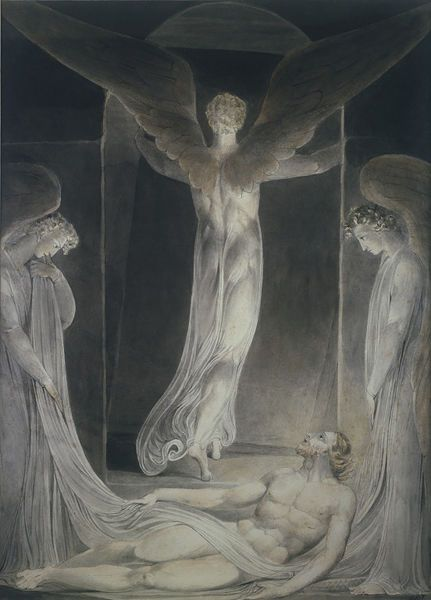
- Pope St. Leo the Great, Feast of Nativity VII.VI
46
The Christian doctrine was never primarily a creed of victimhood, but of deification. Christ became a victimary scapegoat to abolish sacrificial logic for a purpose - that we might transcend this cycle of reprisal and attain Godhood.

47
“[God], indeed, assumed humanity that we might become Gods.”
- St. Athanasius, On the Incarnation Ch.54
“The only-begotten Son of God, wanting to make us sharers in his divinity, assumed our nature, so that he, made man, might make men gods.”
- St. Thomas Aquinas
- St. Athanasius, On the Incarnation Ch.54
“The only-begotten Son of God, wanting to make us sharers in his divinity, assumed our nature, so that he, made man, might make men gods.”
- St. Thomas Aquinas
48
Slave morality, “is not the spirit of the sons of God; such wisdom is not acceptable to the noble family of the adopted. That chosen and royal race must live up to the dignity of its regeneration, must love what the Father loves, and in nought disagree with its Maker."
49
1 Jn. 4:9 | This is how God showed his love among us: He sent his one and only Son into the world that we might live through him.
50
Eckhart presents us the example of a mighty king who had a beautiful daughter. If he gave her to the son of a poor man, all those who belonged to that family would thereby be raised up and ennobled. [Sermon 13b]

51
This runs parallel to St. Athanisus’ account that like the town that the king staying in is glorified by his presence within, God became man, and thereby the whole human race is raised up and ennobled.
52
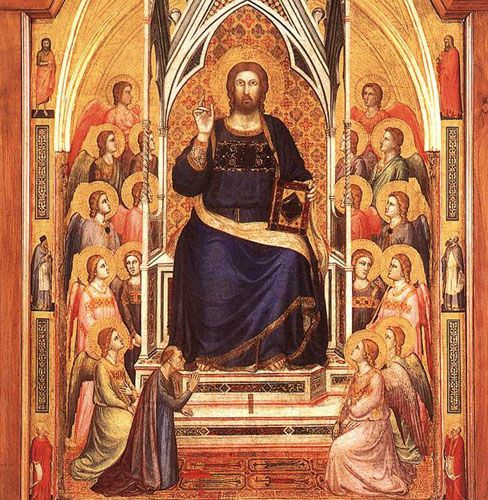
So we should all rejoice that Christ has risen of his own coeternal power above all the choirs of angels and sits at the right hand of the Father. That same high and supra-cosmically royal power is that same power that ennobled us by dwelling in and among us.
53
John 2:19 | Destroy this temple, and in three days I will raise it up.
Origen reads this in the sense that each one must be destroyed by the zeal of Christ living within him so as to be raised up by Jesus "in three days."
Origen reads this in the sense that each one must be destroyed by the zeal of Christ living within him so as to be raised up by Jesus "in three days."
54
After its destruction, the building up of the temple takes place on the first and second days, but the completion of the resurrection involves all the three days.
55
So, the resurrection both has taken place and is still to take place; indeed we are buried with Christ and are risen with him [Rom 6:4]. And because what is meant by "We are risen with him" is not enough for the full resurrection;
56
1 Cor 15:22-24 | In Christ all shall be made alive. But each in his own order: Christ the first fruits, then at his coming those who belong to Christ. Then comes the end.
57
ーIf, then, we too have been united with the death of Christ [Rom. 6:5-10] in the winter of this world and present life, we will also in the spring to come be found to be bearing fruits of justice from his root [Jn. 15:1-2].” [Origen, Mystical Body 806-807]

58
Col. 3:1 | “If you are then raised up with Christ, then seek those things which are above, where Christ is seated at the right hand of his Father, and do not savour the things that are on earth”
59
The women sought our Lord at the sepulcher. There they found an angel, whose countenance was like lightning and his raiment white as snow.
Mt. 28:1 | He said to the women, 'whom do you seek? If you seek Jesus who was crucified, he is not here.'
Mt. 28:1 | He said to the women, 'whom do you seek? If you seek Jesus who was crucified, he is not here.'
60
The Godhead, Eckhart tells us, is nowhere yet is all in all. Of God's lowest all creatures are full, and His greatest is nowhere. They did not reply - disappointed at finding the angel & not God. God is not here or there, not in time or place.
61
St. Paul's words [in Col. 3:1] express two things. That some people are half-raised up: practicing one virtue but not another. Some, ignoble by nature, covet riches. Others of a nobler nature care nothing for possessions but are bent on honour. Etc.,
62
Yet the virtues are necessarily interdependent. Though a person may incline to the practice of one virtue rather than the others, yet they are all interconnected. Some people are fully raised up, but are not raised up with Christ.
63
Resurrection with Christ can so be thought of in this totally of will assimilation. To be rid of death, to be resurrected is such a state then when the full constellation of virtues are in harmony with themselves and so with Christ.
64
With the best non-christian, his constellation of virtues will necessarily have an ineradicable discordance, because his model for virtue could not be perfect. The perfect model is Christ, and so because he does not follow him, he continues in death.
65
He could try to seek the face of God, but he has not the means to bridge himself over to God from his creatureliness. As Eckhart tells us;
66
"Christ is sitting on the right hand of his Father. " The greatest good that God can give is His right hand. Christ says, "I am a door" [Jn. 10:9]. The first outburst and the first effusion God runs out into is His fusion into His Son, who flows back into the Father.ー
67
"I said one day that the door was the Holy Ghost: there He is poured out in goodness into all creatures. Where there is a natural man, that is the beginning of His work with the right hand. One master says the heavens receive from God direct. ー
68
"Another denies this, for God is a spirit and pure light, therefore anything receiving direct from God must be spirit and pure light.
69
"It is impossible that in the first eruption, when God bursts forth, any corporeal thing should receive it: it must be either light or pure spirit.
70
"Heaven is above time and the cause of time. One master says heaven is by nature too lofty to stoop to be the cause of time. In its nature it is not the cause of time, but in its revolution, it is - being timeless - the cause of time, which is a product of heaven."
71
"My complexion is not my nature, but it is a product of my nature: our souls are far above, "hidden in God." And so I say not only above time, but hidden in God. Is that the meaning of heaven?
72
"Everything carnal is a product, an accident and a descent. King David says, "A thousand years are in God's sight as a day that is past" [Ps. 89:4], for all the future and the past are there in one Now." [Sermon 33]
That we may attain to this now,
so help us God.
Amen.
That we may attain to this now,
so help us God.
Amen.
73
/fin
74
@threadreaderapp unroll


