** IMMINENT STOCK MARKET CRASH OCTOBER 26, 2026-NOVEMBER 9, 2026 **...

MrBujok@BujokMr
4 views
Oct 23, 2026
~24 min read
Advertisement
1
** IMMINENT STOCK MARKET CRASH OCTOBER 26, 2026-NOVEMBER 9, 2026 **
I am writing this message to give a detailed analysis, as to what I believe will be happening starting Monday October 26, 2026, and the main event to take place the following Monday November 2-3, 2026, with the bottom of the crash coming on November 9. I also want to explain what I believe the Federal Reserve is going to do as a means of trying to fix the crisis, and how it is going to lead to the end of the U.S dollar, bringing about a sovereign debt and currency crisis. This crisis will be the main focal point and issue that the Democratic Party is going to run on in the 26' midterms and the 28' elections, undermining the Republican Party and Donald Trump's populism, and eventually using it to try to usher in Communism, via a World Economic Forum/Black Rock policy and vision.
I am writing this message to give a detailed analysis, as to what I believe will be happening starting Monday October 26, 2026, and the main event to take place the following Monday November 2-3, 2026, with the bottom of the crash coming on November 9. I also want to explain what I believe the Federal Reserve is going to do as a means of trying to fix the crisis, and how it is going to lead to the end of the U.S dollar, bringing about a sovereign debt and currency crisis. This crisis will be the main focal point and issue that the Democratic Party is going to run on in the 26' midterms and the 28' elections, undermining the Republican Party and Donald Trump's populism, and eventually using it to try to usher in Communism, via a World Economic Forum/Black Rock policy and vision.
2
1: The Banking and Wall Street elites are purposefully engineering a 1929 like stock market crash. This is best evidenced by Andrew Sorkin’s new book, '1929: Inside the Greatest Crash in Wall Street History'.
Andrew Sorkin, a deep state Wall Street asset, grins and smirks with glee during his 60 Minutes interview about the coming crash, and how today's economy resembles that of 1929 in lockstep. Andrew Sorkin, publicly states that his book is designed to "emotionally" effect the reader, making you try to feel and understand what that crash and panic did to the average US investor, because he is trying to stoke that same fear for the general public. Another thing about the scum, like Andrew Sorkin, they believe in karmic retribution. And in order to protect themselves from it, they must tell you what is about to happen, hence why they are publicly calling for a crash.
And why is releasing a book about a coming stock market crash that becomes a NY best seller & is headlined by various mainstream media outlets important? Because in 1987, there was also a NY Times Best selling book, titled The Great Depression of 1990 by Dr. Ravi Batra. It raised deep concerns of the 1987 market being eerily similar to that of 1929, which had a major effect on the general public, as well as major wall street firms, further amplifying the panic selling on Black Monday, as people started thinking, is this it? Is this crash the real thing?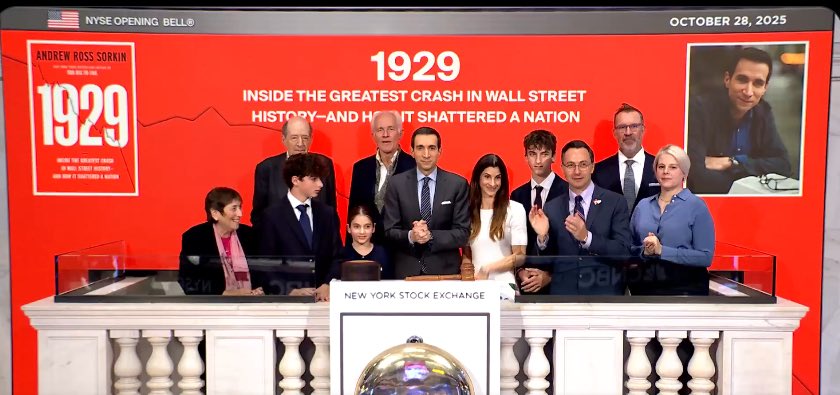


Andrew Sorkin, a deep state Wall Street asset, grins and smirks with glee during his 60 Minutes interview about the coming crash, and how today's economy resembles that of 1929 in lockstep. Andrew Sorkin, publicly states that his book is designed to "emotionally" effect the reader, making you try to feel and understand what that crash and panic did to the average US investor, because he is trying to stoke that same fear for the general public. Another thing about the scum, like Andrew Sorkin, they believe in karmic retribution. And in order to protect themselves from it, they must tell you what is about to happen, hence why they are publicly calling for a crash.
And why is releasing a book about a coming stock market crash that becomes a NY best seller & is headlined by various mainstream media outlets important? Because in 1987, there was also a NY Times Best selling book, titled The Great Depression of 1990 by Dr. Ravi Batra. It raised deep concerns of the 1987 market being eerily similar to that of 1929, which had a major effect on the general public, as well as major wall street firms, further amplifying the panic selling on Black Monday, as people started thinking, is this it? Is this crash the real thing?
3
2: Another big indication of the coming 1929 moment comes from Donald Trump himself. We have seen him publicly claim that Democrats, if elected in the midterms, will bring about a Great Depression the likes of which haven’t been seen since 1929. And why does he constantly make remarks of 1929? It is likely that his advisors (who are in on it), are the ones relaying this information to him, and advising him to say such things. We have seen this repeatedly with Trump, he says and does, what he is told to do, sadly.
But also what was forgotten about and dismissed, is the multiple times that Trump posted videos of the streets of NYC in 1929, almost in this weird cryptic way. And considering that Trump himself is not the one posting on his Truth Social account, it makes you wonder, who in the admin specifically posted it?

But also what was forgotten about and dismissed, is the multiple times that Trump posted videos of the streets of NYC in 1929, almost in this weird cryptic way. And considering that Trump himself is not the one posting on his Truth Social account, it makes you wonder, who in the admin specifically posted it?
4
3: Today’s stock market has all of the hallmark indicators of a massive bubble, identical, and even worse than that of 1929. So let’s go over what caused the bubble and the crisis to unfold, and the similarities shared today.
Conditions That Created the Bubble
The 1920s featured genuine prosperity—strong productivity growth, expansion in automobiles, electricity, radios, and consumer goods, low unemployment (averaging around 3.7%), and rising corporate profits—which supported rising stock prices. The Dow Jones Industrial Average rose from roughly 63 in August 1921 to a peak of about 381 in September 1929. We see this same scenario reflected in today’s economy, with the Ai boom driving the speculative capital into the US economy, creating a economic boom of sorts. But again, this is an illusion and temporary, the real economy is continuously breaking down.
Speculation detached prices from fundamentals in key ways:
• Margin buying and broker loans: Investors often put down only 10–20% (sometimes as little as 10%) and borrowed the rest, using the stocks as collateral. Outstanding brokers’ loans soared into the billions of dollars (estimates around $6–8.5 billion near the peak, exceeding the total currency in circulation in some accounts). This leverage magnified gains on the way up and drew in ordinary investors, banks, corporations, and non-bank lenders attracted by high call-loan rates. Nearly 40 cents of every dollar loaned in the U.S. was reportedly tied to stock purchases by the end. We see this in an almost mirror like image, with the amount of leverage that is offered to the public via various different trading platforms today, whether that’s Coinbase or hyper liquid offering 10x leverage, to Robinhood now offering 5x margin.
• Investment trusts and utility holding companies: Many bought stocks (especially utilities and growth stocks) using large amounts of debt and preferred stock, creating layered leverage that further inflated prices and concentrated risk. This perfectly represents the modern crisis unfolding in the private credit market today, and how their speculative capital is what created the Ai bubble via debt.
• Credit conditions and optimism: Mid-decade monetary ease, including a 1927 Federal Reserve rate cut partly aimed at international (gold-standard) pressures, made credit abundant and encouraged borrowing for speculation. Banks set up securities affiliates to participate more fully. Widespread public participation, media enthusiasm, and the belief that prices would keep rising (epitomized by Irving Fisher’s “permanently high plateau” comment) created a self feedback loop. And in today’s modern context, we have had nearly 2 decades of monetary easing via QE & interest rate cuts following the 08’ financial crisis, that ultimately helped fuel not only the stock market bubble, but housing & other markets like crypto, as well.
Conditions That Triggered the Crash
By mid-to-late 1929, the structure was fragile:
• Federal Reserve tightening: Beginning in 1928, the Fed tried to curb speculation through higher discount rates (New York’s rate reached 6% in August 1929) and pressure against banks extending speculative credit. This reduced liquidity, raised borrowing costs, and contributed to a slowdown in interest-sensitive sectors. With the US bond market yields reaching 5%+ and mortgages 7%+, we have a similar credit tightening scenario.
• Emerging real-economy weakness: Industrial production, construction, auto sales, and housing showed signs of slowing by summer 1929. Agricultural distress and overproduction relative to demand in some sectors were already present. We see very similar weaknesses due to the inflationary pressures caused by diesel prices, which is a direct result of Trump’s Iran and Ukraine war. But also, Trump’s tariff policies are further exacerbating the problem.
5
4: Another indication of the Wall Street elites trying to recreate a 1929 scenario are the various parties and events that have taken place at the NYSE stock exchange this year, especially considering that they are occurring during the markets bull run. Very similar events occurred in the 1920’s with various events and parties, such as the Christmas and NYE parties that took place on the NYSE floor.


6
5: Another hallmark of the 1929, 1987 & 2000 stock market were the massive overvaluations of stocks during that time period, which had seemingly only ran higher with every correction being quickly bought up. This is eerily similar to today's stock market being at record highs, rallying on the most insignificant news such as the 100 imminent peace deals in Iran, even on bad news such as job losses and lower than expected inflation reports, even though they are at double the Fed’s target.
We see this in today's 'Mag 7' stocks, as well as all of the Ai stocks & semiconductor, whom are having record multi trillion dollar market caps, and share very similar business practices that were famously used by tech stocks & Enron during the dot com bubble. Circular deals, future promises of massive multi hundred billion dollar investments, revenue, profit..etc. We are seeing this with Anthropic, Open Ai, Nvidia..etc.


We see this in today's 'Mag 7' stocks, as well as all of the Ai stocks & semiconductor, whom are having record multi trillion dollar market caps, and share very similar business practices that were famously used by tech stocks & Enron during the dot com bubble. Circular deals, future promises of massive multi hundred billion dollar investments, revenue, profit..etc. We are seeing this with Anthropic, Open Ai, Nvidia..etc.
7
6: The US economy is teetering on the edge of the abyss.
The most alarming fiscal problem awaiting us is our $40T national debt bomb. The yearly interest payments now exceed $1.2T per year, the second highest line item in the budget, just under Social Security. And with rates continuing to rise, this number can and will balloon to $2T per year, putting us on a direct path to a financial crisis.
Inflation and Purchasing Power
September CPI rose to 3.7% year-over-year (from 3.4%), with a sharp 0.6% monthly gain. Producer prices jumped even harder (+1.3% month-over-month, lifting the yearly rate to 6.3%). Energy has been a major driver: crude oil has hovered near $100, and the national average for regular gasoline sits around $4.24–$4.30 per gallon—roughly $1.25 higher than a year ago. Real wage growth has lagged inflation for multiple months, eroding household purchasing power.
Labor Market Softening
September nonfarm payrolls added only about 29,000 jobs, and the unemployment rate ticked up to 4.2%. Hiring has slowed into a “low hire, low fire” pattern. While jobless claims remain low (near 200,000) and the Sahm rule is not triggered, the pace of job creation has weakened considerably from earlier in the year.
Consumer Sentiment and Financial Stress
The University of Michigan’s preliminary October consumer sentiment index fell to 46.3—near record lows—with the current conditions sub-index hitting an all-time low of 44.7. Households cite high prices, elevated borrowing costs, and the cost of living as the main pressures. Subprime auto-loan delinquencies are at or near multi-decade highs, signaling stress concentrated among lower-credit borrowers. Higher-income spending and AI-related investment continue to support aggregate growth, but the divergence is widening.
Other Pressures
Mortgage rates remain elevated, housing affordability is strained, and the Federal Reserve has already raised rates (to the 3.75–4.00% range) for the first time in years, with markets debating further hikes if inflation stays hot. Fiscal debt and interest costs are also rising with higher yields. Manufacturing PMIs remain in expansion territory and retail sales have held up, so these are not yet classic recession signals—but the combination of sticky inflation, slowing hiring, and weak household sentiment is the main source of concern. Student loans are at record defaults, with credit card debt also reaching record highs. Diesel and gasoline prices are continuing to squeeze businesses and American consumers, as record amount of Americans dip into their 401k savings, to help alleviate a lot of the pain. Young adults are living with their parents at record rates as well, as housing costs skyrocket.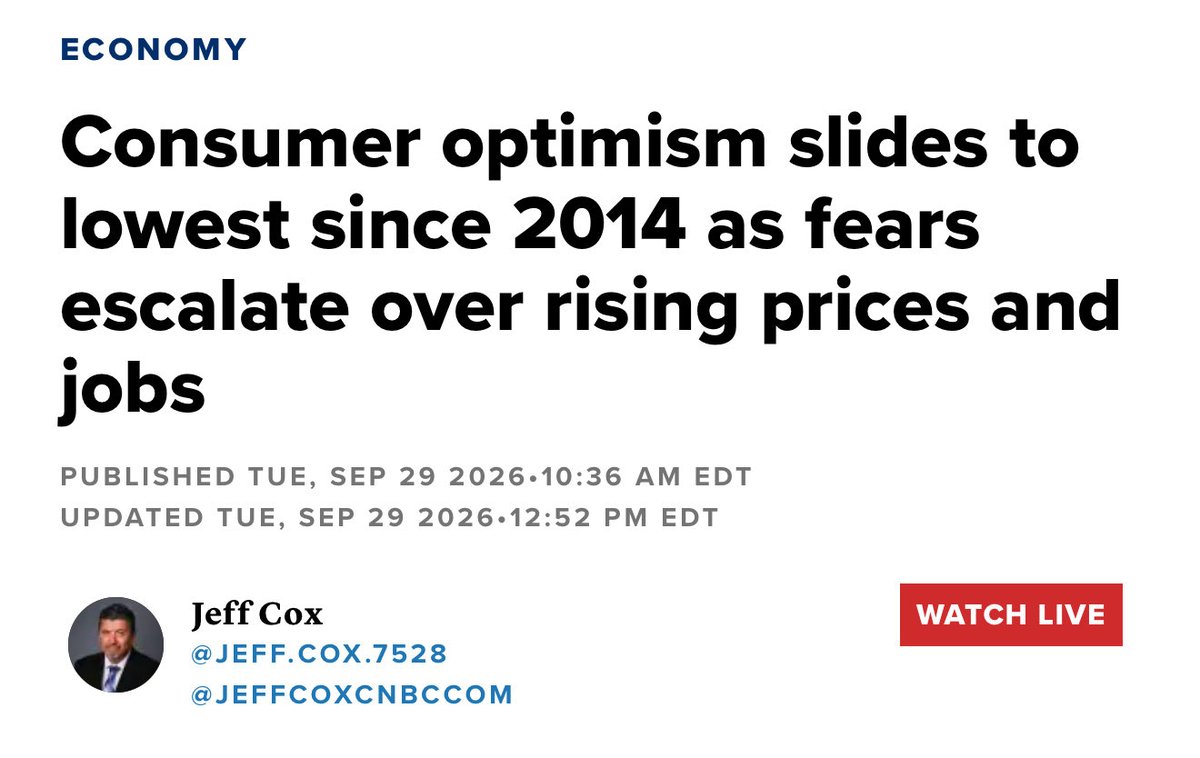

The most alarming fiscal problem awaiting us is our $40T national debt bomb. The yearly interest payments now exceed $1.2T per year, the second highest line item in the budget, just under Social Security. And with rates continuing to rise, this number can and will balloon to $2T per year, putting us on a direct path to a financial crisis.
Inflation and Purchasing Power
September CPI rose to 3.7% year-over-year (from 3.4%), with a sharp 0.6% monthly gain. Producer prices jumped even harder (+1.3% month-over-month, lifting the yearly rate to 6.3%). Energy has been a major driver: crude oil has hovered near $100, and the national average for regular gasoline sits around $4.24–$4.30 per gallon—roughly $1.25 higher than a year ago. Real wage growth has lagged inflation for multiple months, eroding household purchasing power.
Labor Market Softening
September nonfarm payrolls added only about 29,000 jobs, and the unemployment rate ticked up to 4.2%. Hiring has slowed into a “low hire, low fire” pattern. While jobless claims remain low (near 200,000) and the Sahm rule is not triggered, the pace of job creation has weakened considerably from earlier in the year.
Consumer Sentiment and Financial Stress
The University of Michigan’s preliminary October consumer sentiment index fell to 46.3—near record lows—with the current conditions sub-index hitting an all-time low of 44.7. Households cite high prices, elevated borrowing costs, and the cost of living as the main pressures. Subprime auto-loan delinquencies are at or near multi-decade highs, signaling stress concentrated among lower-credit borrowers. Higher-income spending and AI-related investment continue to support aggregate growth, but the divergence is widening.
Other Pressures
Mortgage rates remain elevated, housing affordability is strained, and the Federal Reserve has already raised rates (to the 3.75–4.00% range) for the first time in years, with markets debating further hikes if inflation stays hot. Fiscal debt and interest costs are also rising with higher yields. Manufacturing PMIs remain in expansion territory and retail sales have held up, so these are not yet classic recession signals—but the combination of sticky inflation, slowing hiring, and weak household sentiment is the main source of concern. Student loans are at record defaults, with credit card debt also reaching record highs. Diesel and gasoline prices are continuing to squeeze businesses and American consumers, as record amount of Americans dip into their 401k savings, to help alleviate a lot of the pain. Young adults are living with their parents at record rates as well, as housing costs skyrocket.
8
7. The purpose of the Iran War+ Ukraine War, and how it helps create the stock market crash:
These wars were essentially launched for many reasons, but the one that I am going to focus on is how it’s goals were to deliberately effect the global economy and the stock market.
1. Bring about oil, gas, diesel & petroleum product shortages, which are fundamental to the modern industrial economy & the high standard of living we are experiencing in the last 150 years.
-Use the shortages to put massive inflationary pressures on sectors of the economy that require these energy inputs. Causing a trickle down effect, whereby prices continue rising, on the very goods that the population requires for day to day living. Food, energy, housing, transportation..etc.
-Use these energy cost spikes, to artificially influence CPI & PCE numbers, as a way of influencing the Central Banks to tighten credit conditions by hiking rates(or at least pretend like they will).
But also:
-Deliberately deplete the oil reserves of all western economies, so to bring about deindustrialization. With deindustrialization comes massive unemployment & scarcity, which will then be used to create anarchy, chaos, and famine.
-From that crisis, introduce a CBDC, and food stability in the major cities, as a way of moving large portions of the populations into their 15 min city kill grids, using the lack of ‘fossil’ fuels to switch everyone to electric vehicles.
2:51
9
8. Stephen Puetz Crash Window Theory.
The Stephen (Steve) Puetz crash window is a market-timing observation from the 1990s that links the start of major historical crashes to a specific lunar-solar eclipse pattern.
Core idea
Puetz examined eight of the largest market crashes on record (ranging from the 1637 Dutch Tulip Mania to the 1990 Nikkei decline). He found that in every case, the final high before the crash fell inside a narrow window: six days before to three days after a full moon, provided that full moon occurred within six weeks of a solar eclipse. The idea is that the full moon emits some sort of cosmic energy onto this world, which amplifies human behavior towards any extreme. Hence, why the panic of a begins around the full moon specifically.
The pattern is considered strongest when the first full moon after a solar eclipse is itself a lunar eclipse. In those cases, markets often peak a few days before the full moon, drift sideways or slightly lower, and then see the sharpest selling around or just after the full moon. The ensuing decline typically lasts about two to four weeks.
Statistical claim
Puetz calculated the probability that all eight crashes would cluster in these windows by chance as extremely low (roughly 1 in 127,000). He presented this as a striking historical correlation rather than proof of a causal mechanism. He has noted that he does not know why the alignment appears, and he has emphasized that not every such window produces a crash—a pre-existing bubble or fragile market conditions are still required.
How it is typically used
The “Puetz crash window” is treated by many as a probabilistic risk-timing overlay rather than a standalone prediction tool. It flags short periods of historically elevated crash risk when the eclipse/full-moon conditions line up. Examples frequently cited include the 1929 and 1987 crashes. Windows of this type occur every year or two, while major crashes are rare, so most windows pass without a dramatic event.
The next full moon, is the Hunter’s full moon, which falls on October 26.
The Stephen (Steve) Puetz crash window is a market-timing observation from the 1990s that links the start of major historical crashes to a specific lunar-solar eclipse pattern.
Core idea
Puetz examined eight of the largest market crashes on record (ranging from the 1637 Dutch Tulip Mania to the 1990 Nikkei decline). He found that in every case, the final high before the crash fell inside a narrow window: six days before to three days after a full moon, provided that full moon occurred within six weeks of a solar eclipse. The idea is that the full moon emits some sort of cosmic energy onto this world, which amplifies human behavior towards any extreme. Hence, why the panic of a begins around the full moon specifically.
The pattern is considered strongest when the first full moon after a solar eclipse is itself a lunar eclipse. In those cases, markets often peak a few days before the full moon, drift sideways or slightly lower, and then see the sharpest selling around or just after the full moon. The ensuing decline typically lasts about two to four weeks.
Statistical claim
Puetz calculated the probability that all eight crashes would cluster in these windows by chance as extremely low (roughly 1 in 127,000). He presented this as a striking historical correlation rather than proof of a causal mechanism. He has noted that he does not know why the alignment appears, and he has emphasized that not every such window produces a crash—a pre-existing bubble or fragile market conditions are still required.
How it is typically used
The “Puetz crash window” is treated by many as a probabilistic risk-timing overlay rather than a standalone prediction tool. It flags short periods of historically elevated crash risk when the eclipse/full-moon conditions line up. Examples frequently cited include the 1929 and 1987 crashes. Windows of this type occur every year or two, while major crashes are rare, so most windows pass without a dramatic event.
The next full moon, is the Hunter’s full moon, which falls on October 26.
10
9. Using the COVID Crash moon cycle as a template for timing the coming crash.
Using the Puetz Crash Window theory, we can see exactly how and why the Covid crash was timed for March.
Covid was ‘spreading’ beginning December of 2019, and global fear was beginning to set in, but the markets continued climbing higher. And it wasn’t until March 9, that we saw Black Monday I. March 16, Black Monday II. And the bottom of the market coming on March 24, 2020.
March 9, 2020 was the day of the Full Moon. March 16, 2020 was the day of the 3rd Quarter moon. March 24, 2020 was the day of the new moon, and the official bottom of the market.
October 26, is the next full moon.
November 1, the next 3rd Quarter moon.
November 9, the next New Moon.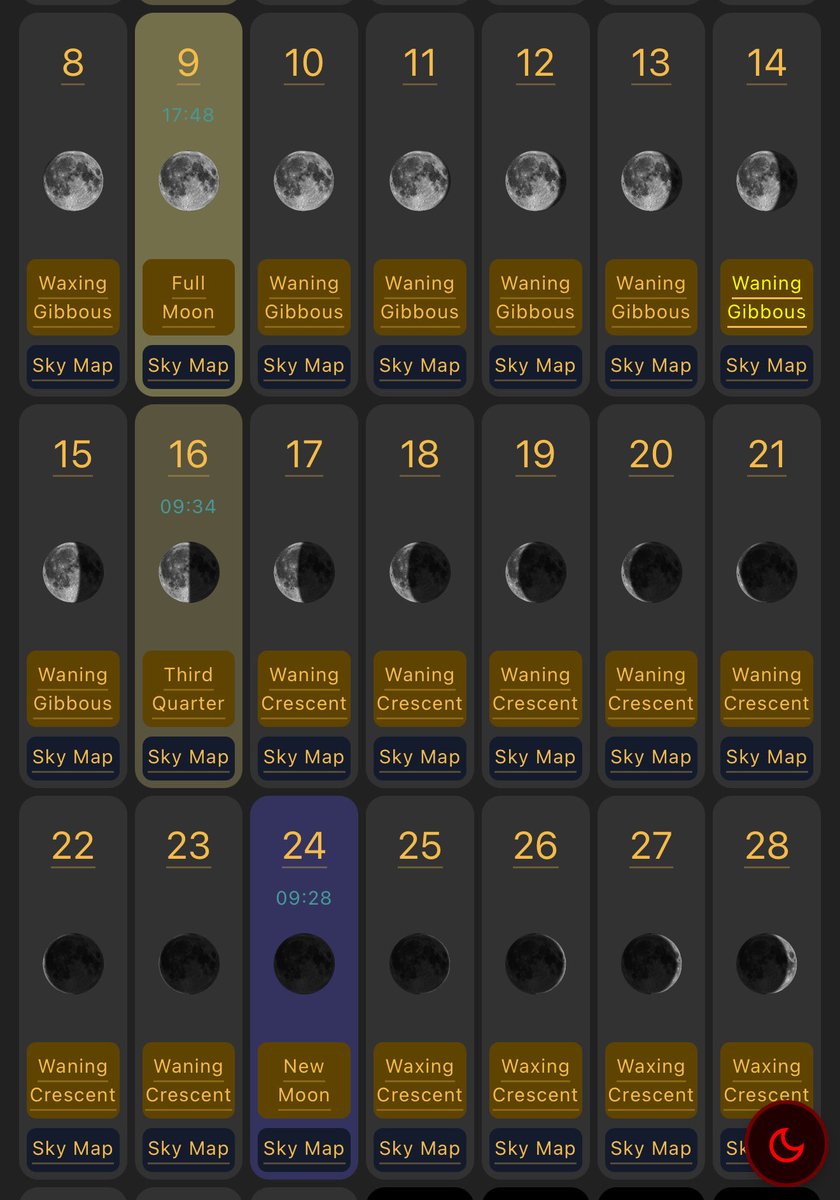

Using the Puetz Crash Window theory, we can see exactly how and why the Covid crash was timed for March.
Covid was ‘spreading’ beginning December of 2019, and global fear was beginning to set in, but the markets continued climbing higher. And it wasn’t until March 9, that we saw Black Monday I. March 16, Black Monday II. And the bottom of the market coming on March 24, 2020.
March 9, 2020 was the day of the Full Moon. March 16, 2020 was the day of the 3rd Quarter moon. March 24, 2020 was the day of the new moon, and the official bottom of the market.
October 26, is the next full moon.
November 1, the next 3rd Quarter moon.
November 9, the next New Moon.
11
10. What exactly happened during the stock market crash of 1929?
Saturday, October 18
• Half-day session (markets traded Saturdays then).
• Second-heaviest Saturday volume on record: ~3.49 million shares.
• Dow down ~10 points (−2.8%).
• New York Times noted the market had been “in an uncertain state for a fortnight” and that professional traders were “not optimistic.”
Monday–Tuesday, October 21–22
• Continued orderly but grinding decline. No single dramatic headline, just steady erosion after earlier weakness.
Wednesday, October 23
• Late-day plunge: industrial average down ~21 points (~6%).
• Roughly $4 billion wiped out on an ~$87 billion market (~4.6% drop).
• Headlines: New York Times — “Prices of Stocks Crash in Heavy Liquidation”; Washington Post — “Huge Selling Wave Creates Near-Panic as Stocks Collapse.”
• This day would have been remembered as the crash if Thursday hadn’t been worse.
Thursday, October 24 — Black Thursday
• Dow opened ~305.85 and fell ~11% intraday.
• Closed down only ~6 points (~2%) at ~299.47 after a bankers’ rescue.
• Volume: 12.9 million shares (record, ~3× normal). Ticker ran ~4 hours behind.
• Paper losses reported around $5 billion. Headlines described Wall Street panic and a massive selling wave.
• Major bankers (including Charles Mitchell of National City Bank and Thomas Lamont of J.P. Morgan) publicly bought large blocks of blue chips to support prices.
• President Hoover reassured the public that business was fundamentally sound.
• Follow-up sentiment: “Brokers Believe Worst is Over and Recommend Buying of Real Bargains.”
Friday, October 25
• Relief rally: Dow up ~1% on roughly 6 million shares.
Saturday, October 26
• Half session, down about 1%.
• Rumors circulated that the bankers who supported the market on Thursday had sold most of those shares on Friday and Saturday.
Monday, October 28 — Black Monday
• Dow fell 38.33 points (−12.8%) to close at 260.64 — at the time the largest one-day percentage drop.
• Volume ~9.2 million shares. Single-day decline exceeded the entire prior week’s losses.
• Heavy hits: General Electric −47½, Westinghouse −34½, AT&T −34. About 3 million shares traded in the final hour.
• No organized support this time. Charles Mitchell reportedly went to J.P. Morgan seeking a loan.
Tuesday, October 29 — Black Tuesday
• Dow fell another 30.57 points (−11.7%) to 230.07.
• Volume: 16.41 million shares (record that stood for decades). Ticker finished hours late (around 7:45 p.m.).
• Paper losses estimated at ~$14 billion. From the September 3 high of 381, the Dow was now down roughly 40%.
• Examples of individual damage: GE from 396 (Sept. 3) to 210; AT&T down ~100 points; DuPont 217 → 80; U.S. Steel 261 → 166; RCA 505 → 26.
• Some buying by figures such as William C. Durant and the Rockefellers, but it could not stem the selling.
Wednesday, October 30
• Sharp rebound: Dow up ~12.3% (~29 points) to ~258.47.
• John D. Rockefeller Sr. publicly stated there was “nothing in the business situation to warrant the destruction of values” and that he and his son had been buying sound common stocks.
• Federal Reserve Board headline: “Reserve Board Finds Action Unnecessary” — no rate cut yet.
Thursday, October 31
• New York Fed cut the discount rate from 6% to 5% (first major post-crash ease; the 6% rate had been raised in August to curb speculation).
• Bank of England cut to 6% from 6.5%; Bank of the Netherlands cut to 5% from 5.5%.
• Brokers’ loans dropped roughly $1.1 billion. Fed officials saw the “end of the dear-money era.”
• Treasury officials predicted a “very large” Christmas trade and said business was not seriously affected by the crash.
Friday, November 1
• Abbreviated 3-hour session. Steady with light volume most of the day, then a late selling wave.
• Dow down ~6.8%.
youtube.com/watch?is=ffKh2…
12
11. Why do the globalists, Wall Street, and central bankers want the crash to occur before the midterms?
Very simply, they want the crash to occur as a way of derailing Trump’s populist agenda that transformed the Republican Party, guaranteeing the Democrats, who are embracing far left socialist and tyrannical policies, win.
In order to mobilize millions of people to vote for the Democrat party, who have become wildly unpopular, or at least create the perception that they will(for the voter fraud), you have to derail every last thing that Donald Trump & the Republican Party ran on. Which were:
-No new wars
-Record high stock market & 401k’s
-Low gas prices
-Economic prosperity
-Low taxes/elimination of the income tax via tariffs & balanced budget
-Release of the Epstein Files
-Doge
-Election integrity
-Secure Border + mass deportations
With a stock market crash occurring due to the Iran war, Democrats will be able to show their base & independents that every promise Trump made, did not come true, in fact, the opposite happened:
-Iran War
-Stock market crash
-Highest gas prices of all time
-Economic recession
-High taxes + Costs due to tariffs
-Epstein Files not released
-Doge shut down
Very simply, they want the crash to occur as a way of derailing Trump’s populist agenda that transformed the Republican Party, guaranteeing the Democrats, who are embracing far left socialist and tyrannical policies, win.
In order to mobilize millions of people to vote for the Democrat party, who have become wildly unpopular, or at least create the perception that they will(for the voter fraud), you have to derail every last thing that Donald Trump & the Republican Party ran on. Which were:
-No new wars
-Record high stock market & 401k’s
-Low gas prices
-Economic prosperity
-Low taxes/elimination of the income tax via tariffs & balanced budget
-Release of the Epstein Files
-Doge
-Election integrity
-Secure Border + mass deportations
With a stock market crash occurring due to the Iran war, Democrats will be able to show their base & independents that every promise Trump made, did not come true, in fact, the opposite happened:
-Iran War
-Stock market crash
-Highest gas prices of all time
-Economic recession
-High taxes + Costs due to tariffs
-Epstein Files not released
-Doge shut down
13
12. Israeli elections, COD release date, Trump’s comments, USS Roosevelt:
Another very important thing to consider, as to the timing of the crash occurring before the US midterm elections is the fact that the Israeli prime
Minister elections are occurring on October 27.
Why is this important?
Well because Netanyahu has been ruling by emergency decree since the October 7, 2023 invasion of Hamas into Israel. Netanyahu’s popularity is near historic lows, with an impending court case for fraud and corruption looming the moment he is voted out as Prime Minister. Polymarket has Netanyahu’s odds at only 30%, nearly guaranteeing he is to lose. The only thing that can potentially save him, is another extension of emergency rule and suspension of elections, due to let’s say a possible Iranian missile attack. How convenient would such a scenario be..
Another strange ‘coincidence’ as you will, is the fact that COD MW4 is set to be released on October 23, 2026. Now why does this even matter? Because if we go back to the Covid pandemic, COD warzone was released the day before (March 10, 2020) the WHO officially declared Covid a pandemic (March 11, 2020). And you might write that off as a coincidence, but I don’t. Call of Duty is the most popular video game of all time, and their entire gameplay is shooter/war based. Millions of young men play their video games every single day, and if your target audience is young men with the goal to propagandize their generation towards supporting the US military, wouldn’t you want to release it on the eve of the ground invasion of Iran?
Finally, let’s go over Trump’s repeated comments about how the Iran war is going to be ending “very soon”. The war has been going on for the last 8 months, with approximately 100 imminent peace deals being agreed to since then, Trump has repeatedly said his patience is wearing thin. Clearly, there is not going to be a negotiated solution. Trump is being sold the idea that a surprise invasion will be a rapid success, achieving similar results as Venezuela, with the Strait of Hormuz becoming fully open. That it would lead to a collapse in oil prices, dramatically lowering gas prices and giving Trump the PR victory he needs, in allowing Republicans to win the midterms.
He’s being reminded by Bessent and others, that Iran’s economy is on the verge of collapse, and if a limited invasion of Kharg & Qeshm island’s were to come, Iran would be forced to sign a deal, as their oil export economy fully collapses.
This is a massive trap, which will lead to the exact opposite scenario. We will have a massive oil spike, and a market beginning to price in oil shortages, leading to further bond yield spikes, and the beginning of the stock market crash. American soldiers will likely die, with probable FPV style drone attacks being published online. Further enflaming domestic backlash, which will be entirely blamed on the Republicans.
A final point that guarantees this, is the simple fact that USS Roosevelt, and various amphibious marine landing group divisions have left the naval base in San Diego and are on their way to the ME. Considering that they left on September 27, at a speed of 22-25 knots, their arrival into Arabian Sea should be around October 19-22.
14
13. How I see the crash unfolding, a day by day basis:
October 23-26: Hunter’s Full Moon 🌕
The US & Israel launch joint strikes on Iran, with a limited ground invasion of Kharg & Qeshm island. The entire ME goes up in flames, with oil infrastructure being targeted.
Black Monday I: The US stock market will experience its first circuit breaker, due to a spike in oil prices & bond market yields exploding higher.
October 28:
Market continues selling off after a weak Tuesday bounce and SK Hynix’s earnings. Fear begins to set in as markets brace for the FOMC decision, with a rate hike now being expected. I predict that the Fed is going to hold rates at this meeting, citing global instability & supply shocks as a reason for not hiking to exacerbate the problem. This hold is going to be used as a way of suckering retail and investors as exit liquidity ahead of the next day.
October 29:
Black Thursday.
Google, Microsoft, KLA corp, CAT earnings will come in at misses, which will push the futures down massively at the open. Then an hour before the open the PCE report comes in with a massive miss, showing inflation expectations above 5%(due to the near 100% increase in diesel prices for September). Bond yields will explode higher, and market’s will begin pricing in major rate hikes. I expect another circuit breaker on this day, but if it is anything like 1929, there will be some sort of emergency action by the Trump admin to stabilize markets. Anything from ‘Iran is defeated, peace deal imminent’, to Trump announcing the federal government is going to be taking a stake in a few Ai companies.
October 30:
Markets should have a soft bounce after Amazon’s & Intel’s earnings & the Trump admin’s announcement. But the bounce will be soft, and not be enough to instill confidence in the markets. Similar to 1929.
November 2: Day of the Dead 🌗
Black Monday II.
Panic begins, as Iran is not defeated, with the entire ME in flames. Oil infrastructure is being destroyed, and markets begin pricing in oil shortages for the years ahead. Global Bond markets begin imploding. Another circuit breaker is reached. Apple’s earnings have been moved from October 29, to November 2 AMC, in a ‘strange’ occurrence, as Apple rarely ever releases earnings on a Monday, with the entire market now predicated on whether or not Apple beats earnings.
November 3: Elections
Black Tuesday.
Apple misses earnings showing demand weakness. Apollo’s earnings shows the private credit market in free fall. Markets are officially in free fall, pricing in a midterm disaster, and the coming sweep of the Democratic Party. The Fed has not shown any willingness to step in at this point. Circuit breakers will be hit once again. AMD earnings AMC, everyone positions for the burst of the Ai bubble.
November 4:
The first big bounce.
Against all odds, and everyone’s expectations, Market rally hard after the Democrats sweep the midterm elections. AMD beats earnings.
Qualcomm’s earnings come AMC.
November 5:
The bounce continues, after Qualcomm beats earnings.
November 6:
NFP show a massive miss, with stagflation now being the main concern for markets. The labor market weakening so heavily puts the Fed into a tight corner. Markets should erase most or at least half of the gains from November 4-5. I believe it will be this weekend that the FED will be announcing emergency interest rate cuts, and QE to help contain the bond market yields from total implosion. This will only be able to bring yields down a bit, and will not be the 0% QE Covid policy as before.
November 9: New Moon🌑
Market Bottom.
The Fed’s emergency decision is a sell the news event, with markets opening down. The House of Representatives come back from recess, which I predict they will be voting on a potential bailout package of some sort. What will cause this to be the bottom of the market will likely be their refusal to pass the first set of legislation. But they will eventually.
Gold begins to run.
15
14. End goal, dollar crisis, WEF, Agenda 2030:
The end objective of such a crash will be the implode the US treasury, and bring about a dollar crisis in 2027. This dollar crisis will be used to force the general population, who are suffering in poverty, a way out. The way out will be a Universal basic income, guaranteed by the Ai companies-Fed government partnership. They will likely frame it as some sort of dividend, but again this is part of the creation of their Ai surveillance control grid. This universal basic income, will be attached to a CBDC, which will be the first step into their implantation of total control. Whereby we are moved in 15 min cities, with no privacy, electric cars & 24/7 monitoring and control. All in order to bring about their dystopian hellscape, which an official WEF policy:
I own nothing, I have no privacy, and life has never been better.
futurism.com/welcome-2030-n…