If you have too many interests, build this AI system in 1 hour

if you have an ADHD brain, you probably have six different goals, you get overwhelmed, and you miss days without working on any one of them.
that's me. I love agents, harnesses, RL, LLM architecture, inference engineering, and alignment. the pile keeps growing, not for a lack of focus, but because I genuinely find passion and reason to follow each of them.
and that's the problem.
the moment I go deep on one, I feel like I am missing the others.
the advice is usually "just pick one thing". and I've already argued why that aged poorly.
the problem isn't having multiple interests, but a planning force outside your head and motivation. otherwise, motivation just becomes a daily battle in the morning inside your head, and a lot of times, it won't work.
you've probably heard that AI is the greatest gift for the neurodivergent. and that's true, but only if you can harness it correctly.
in this article, I explain the simple system I set up that works for me (and maybe for you too). I will explain:
subscribe to my Substack so you don't miss the next one. https://multyhead.substack.com/
you're not unfocused, you're unplanned
and that's what the ADHD brain is worst at. what you need is to:
the good news is, this is EXACTLY the boring work agents are good at now. reading a pile of context, turning it into steps, and rewriting the plan 10 times without feeling overwhelmed.
your interests don't have to compete
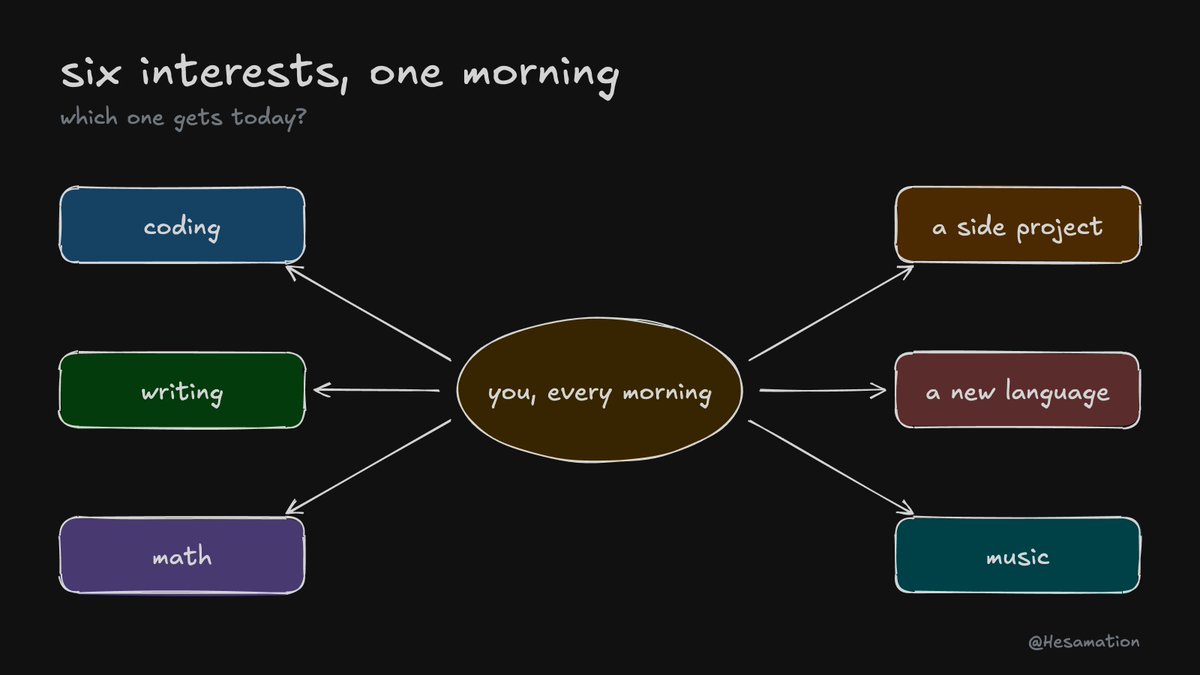
here's what six interests look like in practice: every morning is a negotiation in your head between them on which gets today... you pick one, and the other ones still keep pulling at you.
so you switch, and switch, and switch.
and by Friday, anything has barely moved.
AI fixes this with two rules. you could do this yourself, but keeping them up week after week is just the exact kind of problem the ADHD brain has. the agent doesn't have that problem.
rule 1: use lanes, not sequences
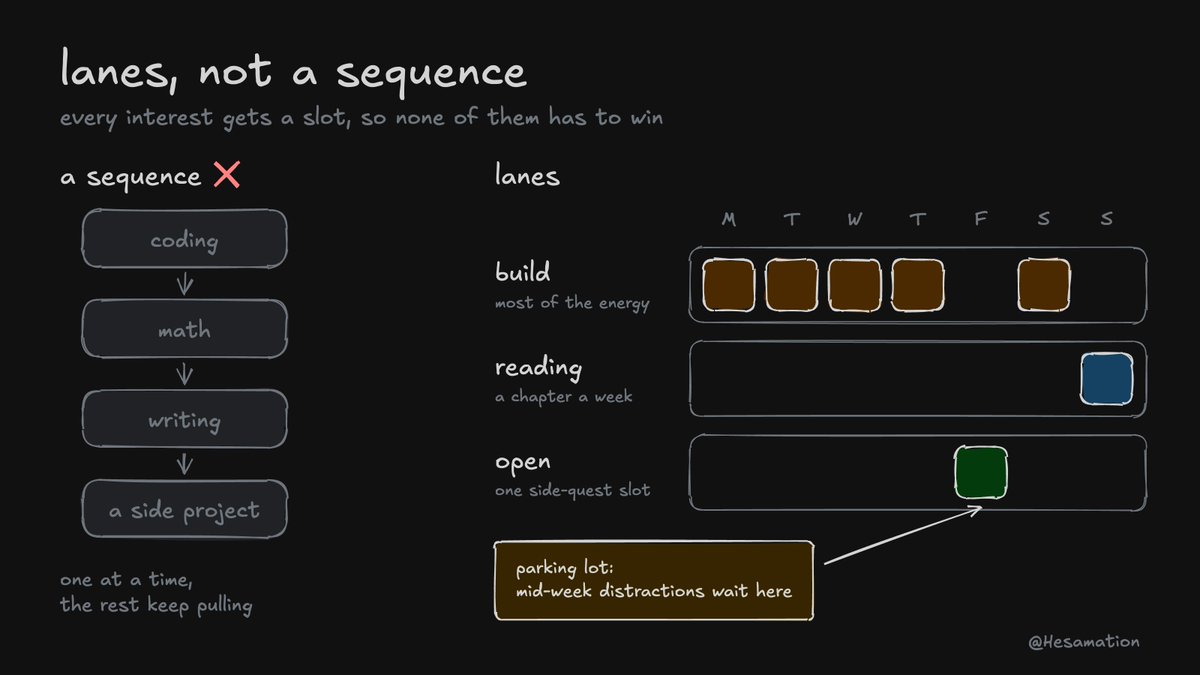
the most natural plan that comes to mind is a queue. you finish one interest, start the next, then the next. it looks like focused, but the interests at the back of that queue don't quietly wait. they PULL.
so instead, every interest gets a lane:
nothing gets dropped, so no interest gets the anxiety of getting missed. it just waits with a bookmark. the AI can spread the lanes throughout your week, so that morning negotiation is already gone.
this is what a planning force outside your head looks like.
rule 2: find the spine
a lot of interests look fragmented and different from the outside. most of the time, they're not. they share common grounds, abd the agent can find them.
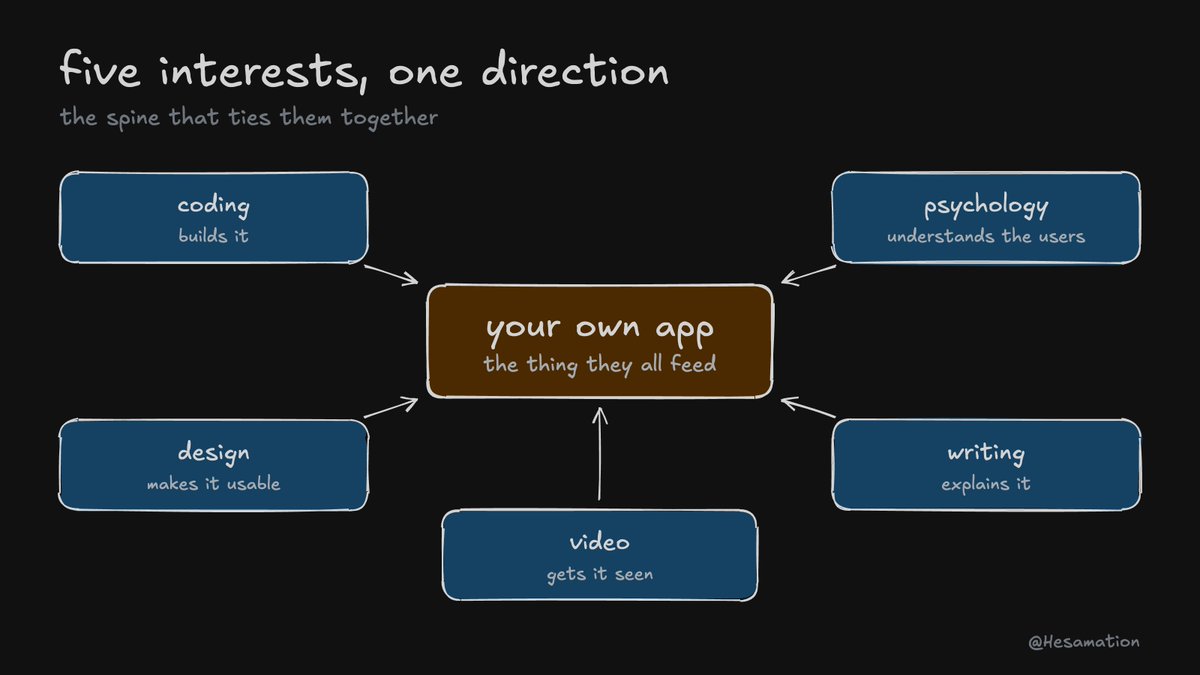
say you like coding, design, psychology, writing, video, etc. that looks like five hobbies that couldn't be more different, but point them at one thing, like shipping your own app, and they all turn into one direction.
once you have that spine, going deep on one interest also powers the others instead of competing with them.
if your interests are already close (mine are all AI), the spine is easy to form. if they look completely unrelated, that's exactly when you want the agent to find it for you, but of course, don't expect magic.
the Simple System You Need
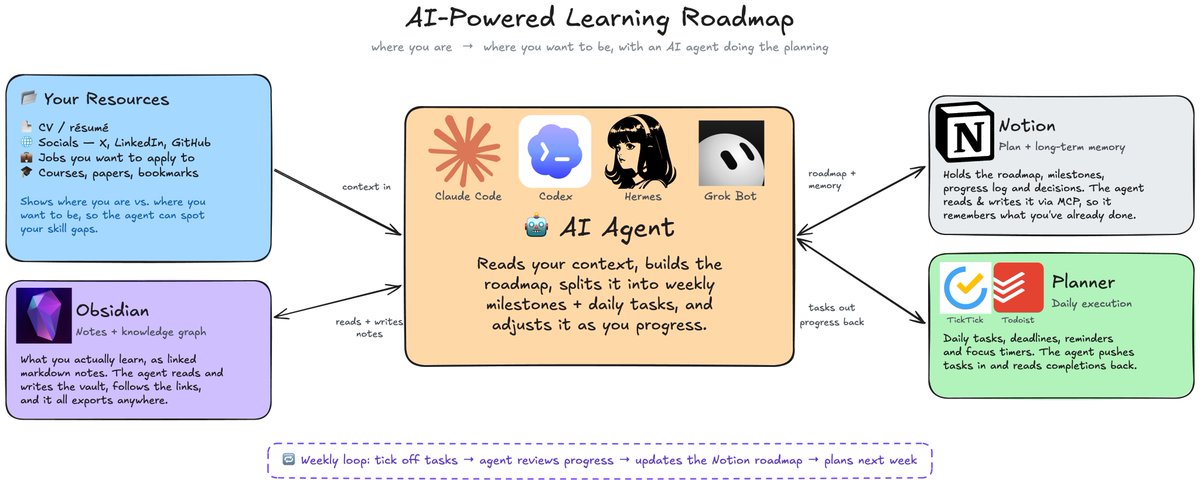
1.the agent (Claude, ChatGPT, Hermes, GrokBot): this is the brain. any agent that can connect to your apps through plugins works. it reads everything and turns it into a plan. Claude, however, in my experience, is a much better option in this case.
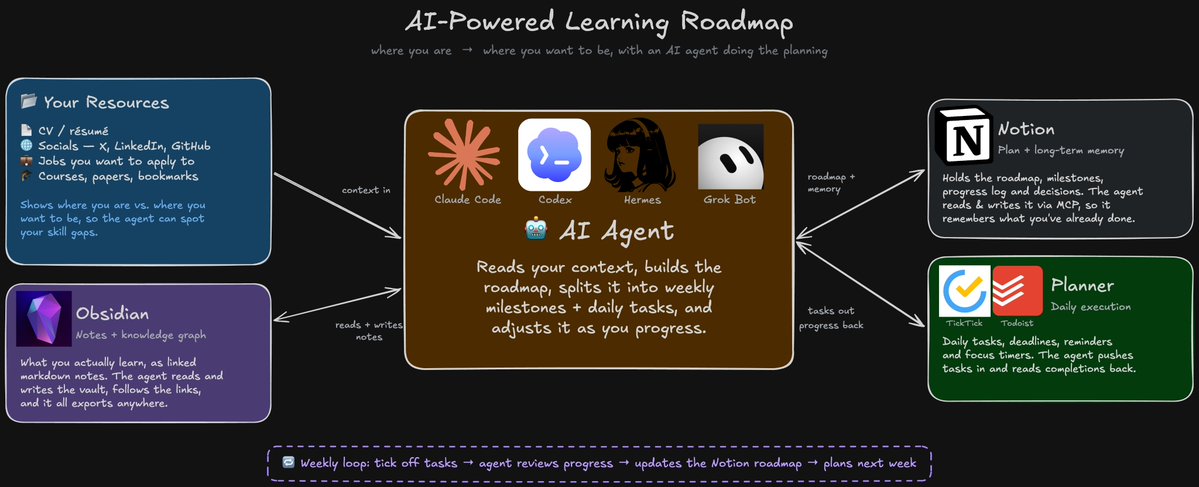

notice the emphasis on the "simplicity" of the plan. that's CRUCIAL. you don't need a system that adds to the friction when you're already unmotivated to do anything, you need something as easy as a prompt.
the research: get the plan out of your head
the research behind this is older than AI. but it points one way: move the planning out of your head, onto paper, an app, or another person.
write it down
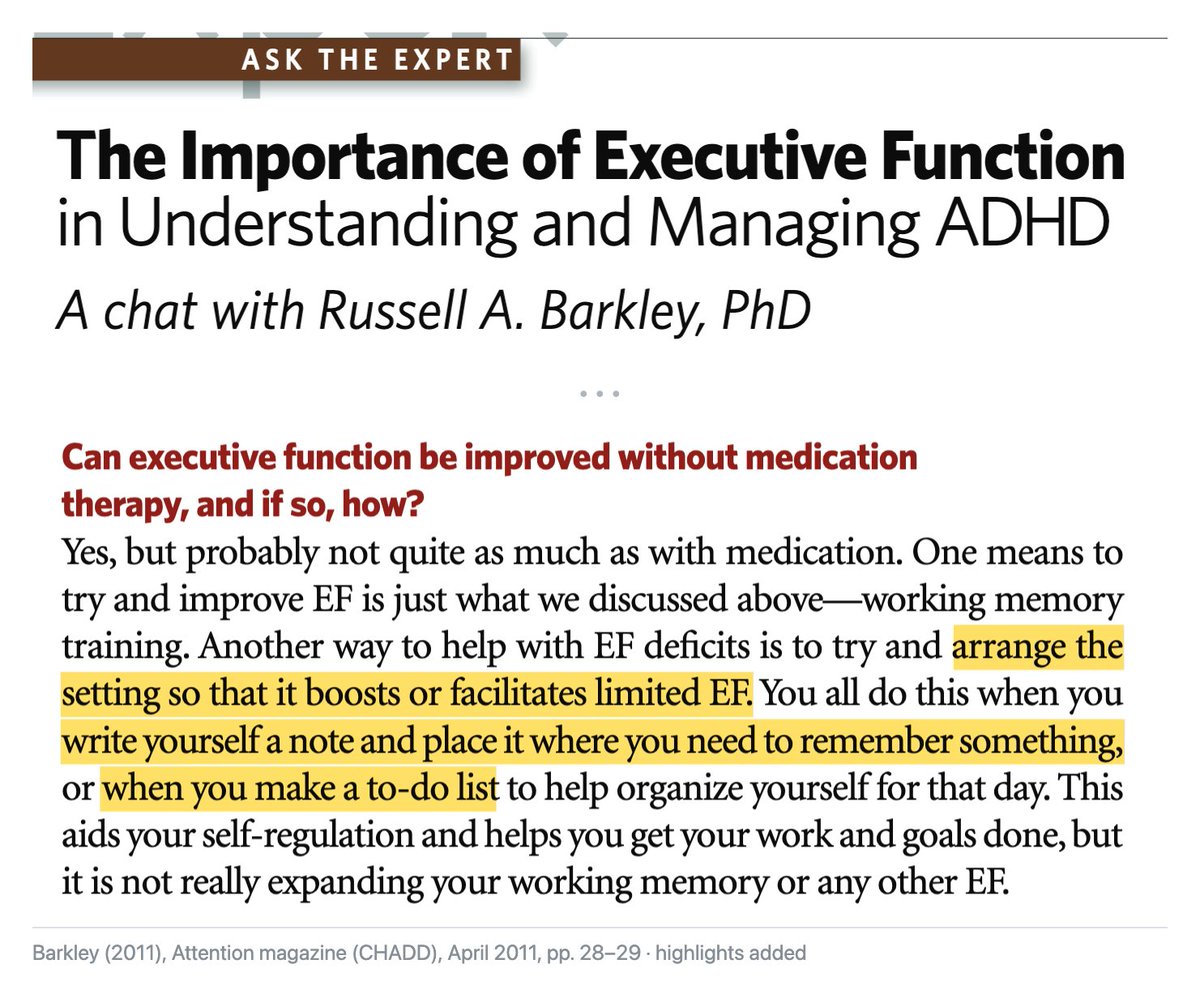
Russell Barkley, who is one of the best-known ADHD researchers, says ADHD is a problem of executive function. what he suggests is to arrange your environment so it "boosts or facilitates limited EF", like a to-do list for the day. (Barkley, 2011)
track your progress
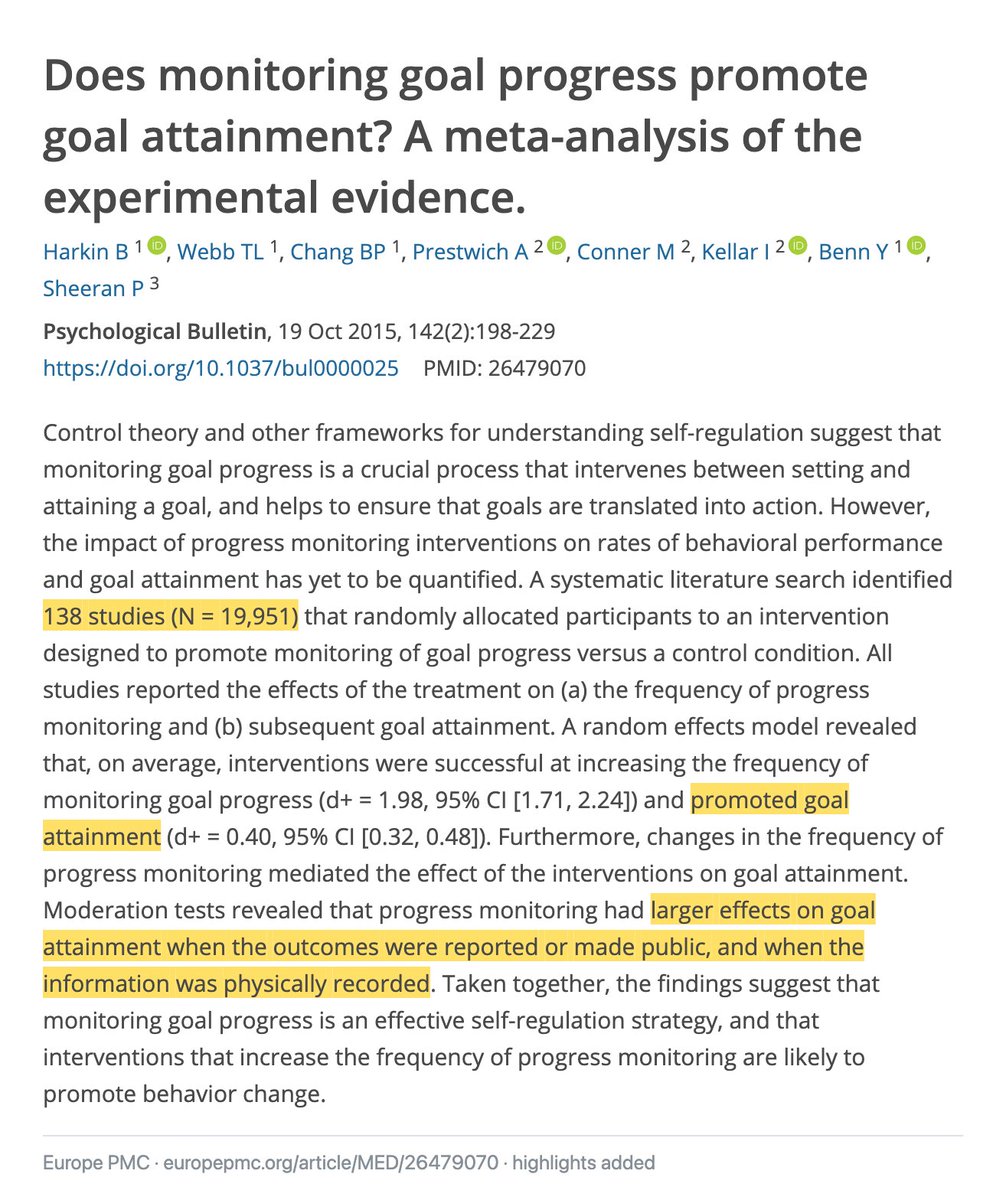
A meta-analysis of 138 studies and 19,951 people found that monitoring your progress helps you reach your goals. when progress was physically recorded or reported to others, the effect was even bigger. (Harkin et al., 2016). that's ticking off tasks as done, then having the agent review them.
have someone check in
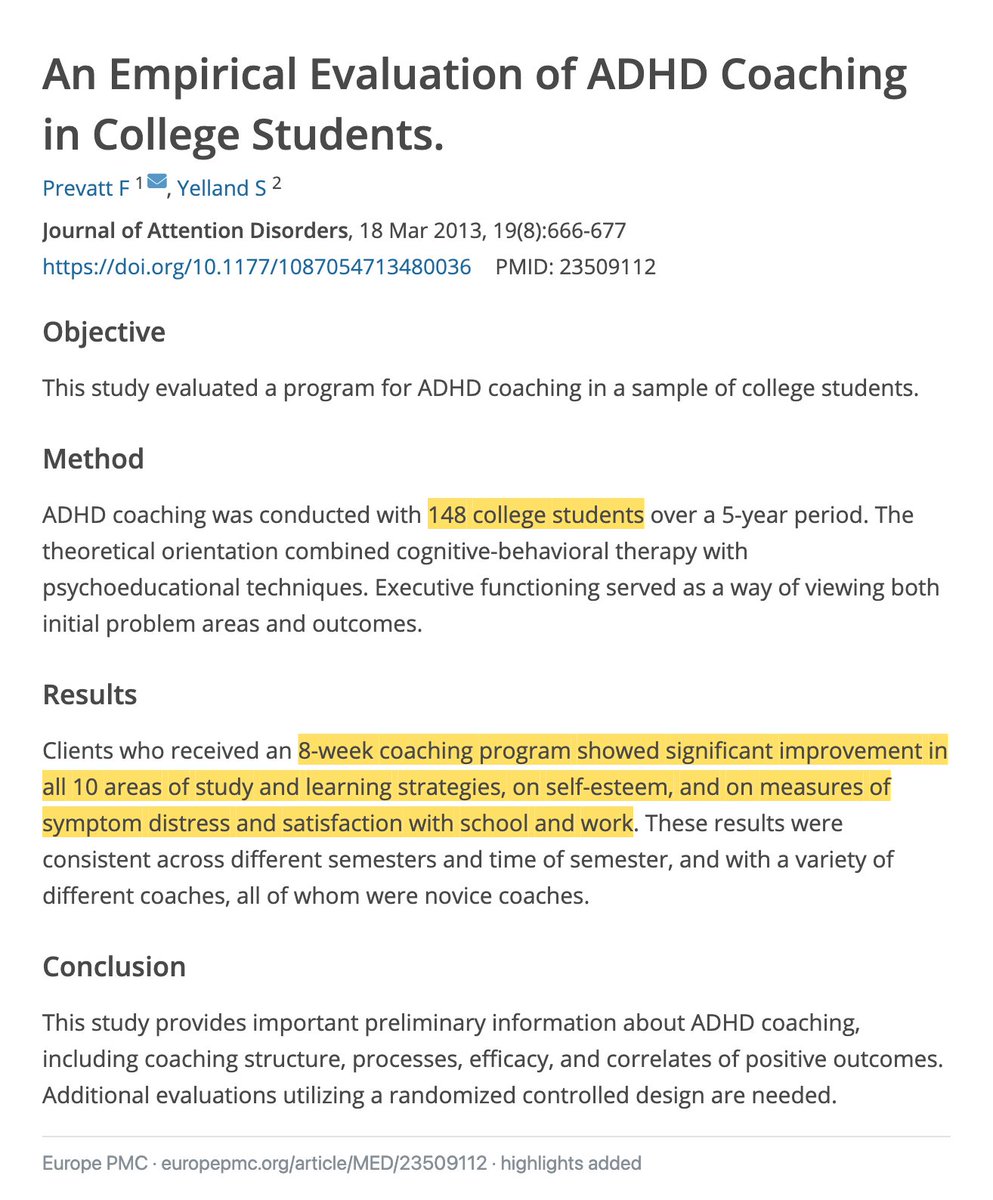
148 college students with ADHD who did 8 weeks of coaching improved their study and learning skills, self-esteem, and satisfaction with school and work.
of course, none of these studies were tested on AI, and the agent doesn't replace a coach... but what it does is automate the boring part that the research points at: write things down, track them, and have someone check in.
the weekly loop keeps the plan alive
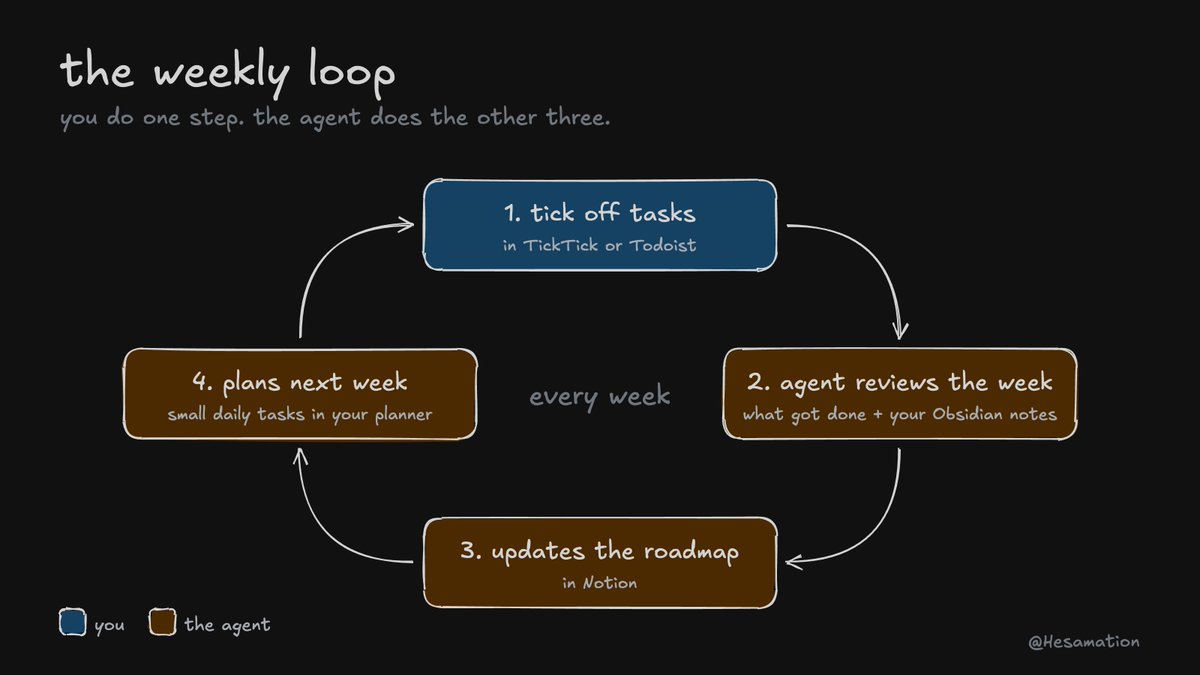
set it up today in 60 minutes
you can do it in one sitting:

Pinch of Salt
I only recently started running this, but so far it beats every other method I've tried to stay on track. I added each part one by one, after realizing what my previous systems were missing.
and to be clear, the AI doesn't learn FOR you. the hard part is still on you. the AI only takes over the boring part around learning, which for an ADHD brain is also the part with the most friction.


