The Complete AI Shorts Pipeline: Research, Production, Scale on $44 a Month

$277 a month. That is the bill for 11 AI providers at mid-tier plans, most sitting idle between projects. One model for images, another for video, another for audio, another for editing. Five subscriptions, twelve tabs, a folder full of assets nobody can trace back to the model that made them.
Meanwhile, the real bottleneck in AI short-form video was never generation speed. It was knowing which of the clips just generated is actually worth publishing, and which one only looks good because the creator spent ten minutes staring at it.
This guide covers the full pipeline that solves both problems: how to find formats already proven to hold attention, how to rebuild them through an orchestrated AI production stack, and how to scale the output without the process becoming the bottleneck. Total tool cost: $44 a month. The documented returns on this pipeline range from $12,900 in a single month to $20,000 across two weeks, depending on volume and monetization mix.
Bookmark this. The research prompt, the director brief, the automation logic, and the production architecture are all below.
The Pipeline
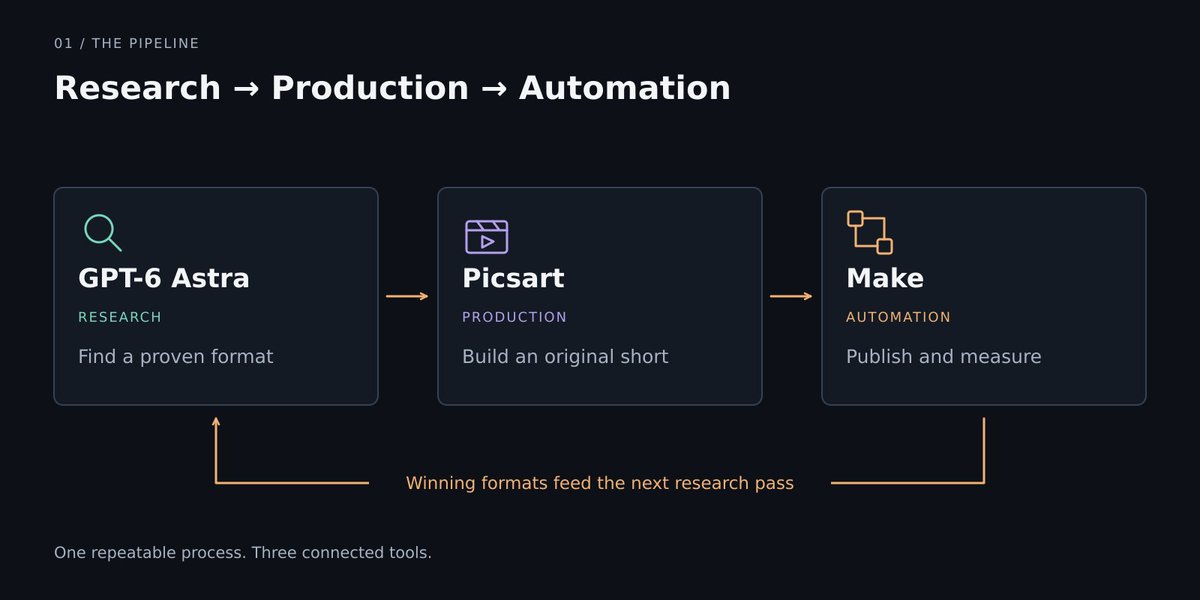
GPT-6 Astra  ->  Picsart  ->  Make

Research        Production    Scale
finds the       rebuilds     publishes,
proven format   it as yours  tracks, loops
1. Research: Find What Already Hit

GPT-6 Astra does the search. No extra cost, no extra tool.
Search for short-form videos posted in the last 14 days
in [your niche].

Find 10 clearly outperforming the channel's own average
(a channel that normally gets 20k views posting at 500k+).

For each one give me:
- the link
- the view count vs. channel's typical count
- the first 2 seconds, described in one line
- the format in one sentence, separated from the topic
  (topic = what it's about; format = the shape it's built in)

Rank by how easily the format reskins onto a different subject.
The critical output: one-sentence format description per video. That sentence is what moves to production. Not the video itself, not the topic -- the shape.
Why one platform instead of six. 11 AI providers at mid-tier plans run $277/month. Each handoff between them is a manual export and re-upload. By the fourth step nobody remembers which model produced the file being edited.
Picsart collapses this into two layers.
Playground→ 188 models from 34 providers behind one prompt bar. Image, video, audio. One credit balance, cost shown on the button before generation runs. Assets save to Drive with metadata, open directly in the editor. No export, no re-upload.
Flow→ visual no-code canvas. Models and assets connect as nodes. Work moves through stages: image generation, video, audio, edit, review, export. Step 5 can still see what step 1 produced. A rejection at step 6 does not discard the entire run.
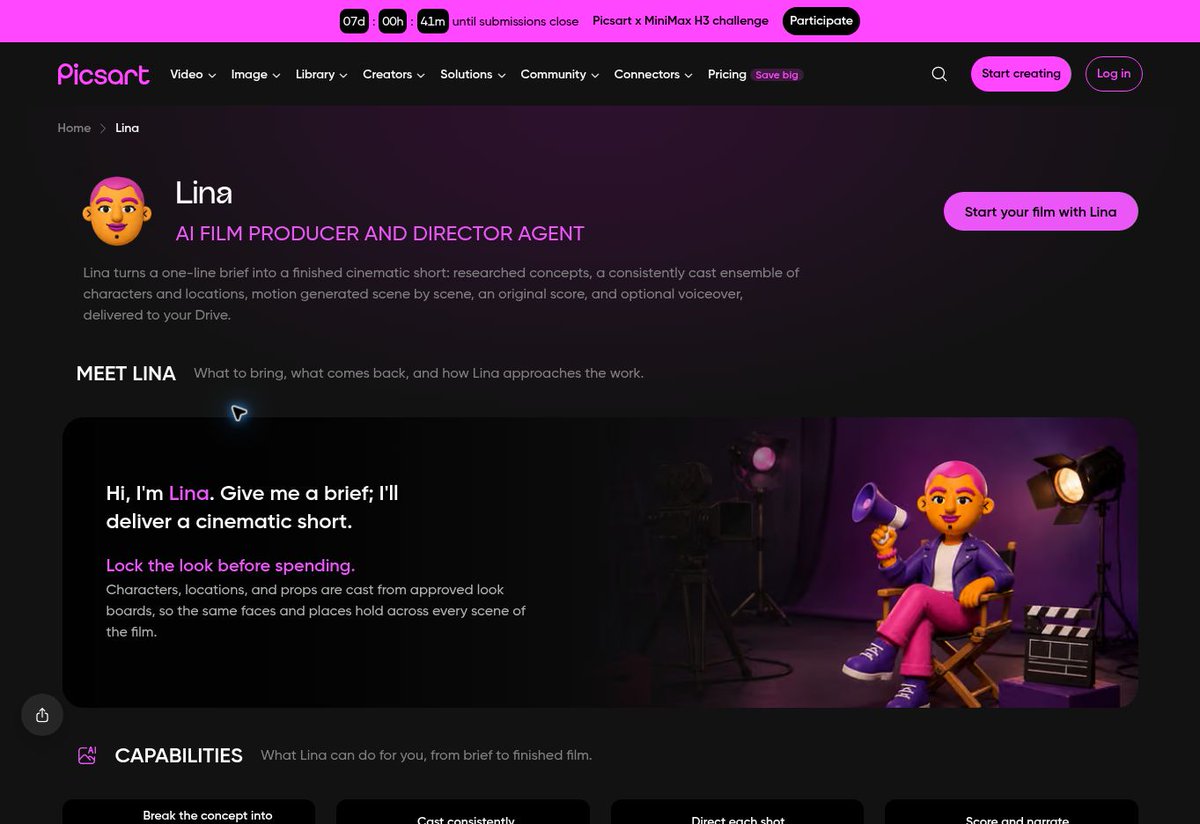
AI Director Agent (Lina)→ Picsart's agent marketplace includes a film director agent trained on the creator's output over time. This is where the research output enters production:
You are directing a 60-second short film.

Reference format: [one-line format from the research,
e.g. "countdown bottle short, one location, clock tension"].

My subject: [your footage, character, product — one line].

Break this into a scene-by-scene plan:
- number of scenes
- what happens in each, one line
- shot size and camera height per scene
- where the tone shifts, and what causes it
- the final beat that makes someone rewatch

Hold one visual rule across every scene and name it.
Never copy the reference's footage or characters. Only its shape.
Fix whatever made the reference weak: slow open, flat ending,
a beat that dragged. Name the fix as its own line.
The agent returns a director's plan on a proven shape, with the weak point already fixed. Each generated shot gets fed back before the next one is built. The agent checks it against its own plan and flags what breaks.
Trigger: new short lands in Google Drive folder

1. Read format tag from file name
2. Publish to TikTok, YouTube Shorts, Instagram Reels
3. Wait 48 hours, pull watch-through rate by format tag
4. Write completion rate into the research sheet
5. Flag any format beating the account median by 25%+
6. Telegram ping: which formats held this week
Setup: 2 hours once. The loop closes because the next research pass starts from what already worked.

The Volume Game
The output rate on this pipeline is 2 to 5 shorts per day. That changes the entire strategy. One format that holds attention, run as variations → same visual style, same character format, different hooks each time. Platforms reward consistency and frequency. A recognizable series beats unrelated one-offs for both watch-through and repeat viewers.

Revenue Breakdown
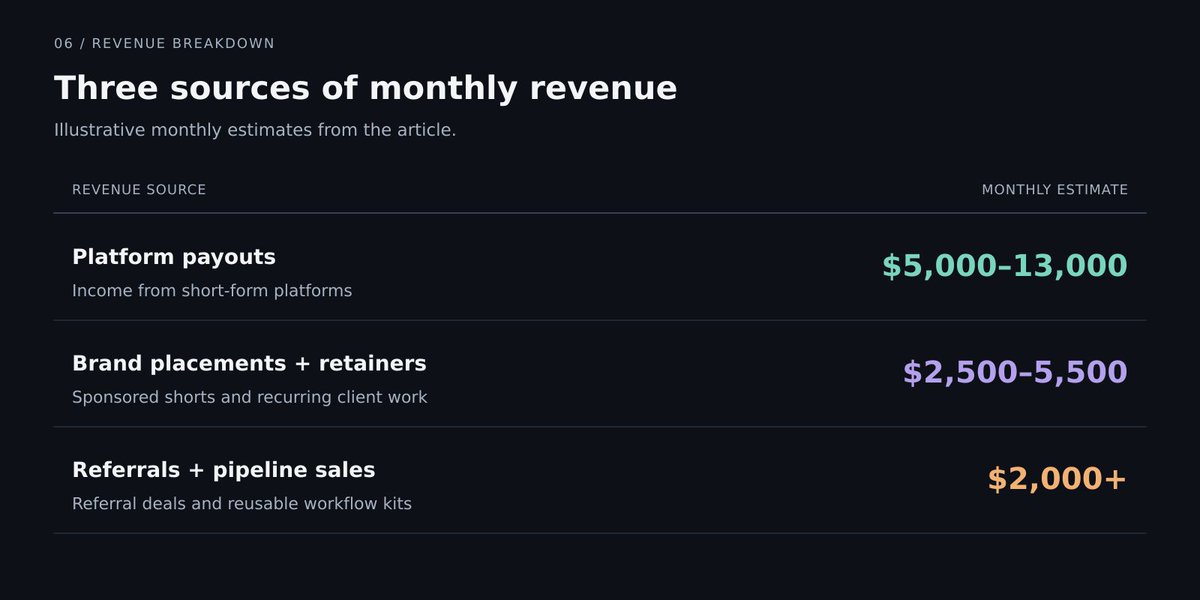
Platform payouts: $5,000-13,000/month. Formats rebuilt from proven templates start above the 20-30% completion floor. Volume does the rest.
Brand placements + retainer shorts: $2,500-5,500/month. $300-700 per short built on a proven format. Eight shorts a month on retainer.
Referral deals + pipeline sales: $2,000+/month. The pipeline itself -- research prompt plus director brief, tuned per niche -- sells as a kit with no per-sale labor.
Cost
Picsart Pro     $15/month
GPT-6 Astra     $20/month
Make Core        $9/month
Total            $44/month
The Point
Research finds what already hit. One orchestrated stack rebuilds it without losing the shape. Automation scales and feeds winners back into the next cycle.
Stop inventing. Start rebuilding.
Follow for daily AI breakdowns. Bookmark this so the prompts are here when you set yours up.

COMPANION POST:
Picsart hit 188 AI models behind one prompt bar.
One pipeline through it:
GPT-6 Astra finds a proven format
-> Picsart agent rebuilds it scene by scene
-> Make publishes across 3 platforms
-> Watch-through data feeds the next research pass
$44/month. $12,900+ back.
Full guide with every prompt and the automation setup is in the article. Bookmark it.
My Picsart template, the same one behind this clip:
