Our new book, Virtuous Nonsense: Progressive America's Epistemic...

Jake 🇺🇸@omni_american
12 views
Sep 18, 2026
~3 min read
Advertisement
1
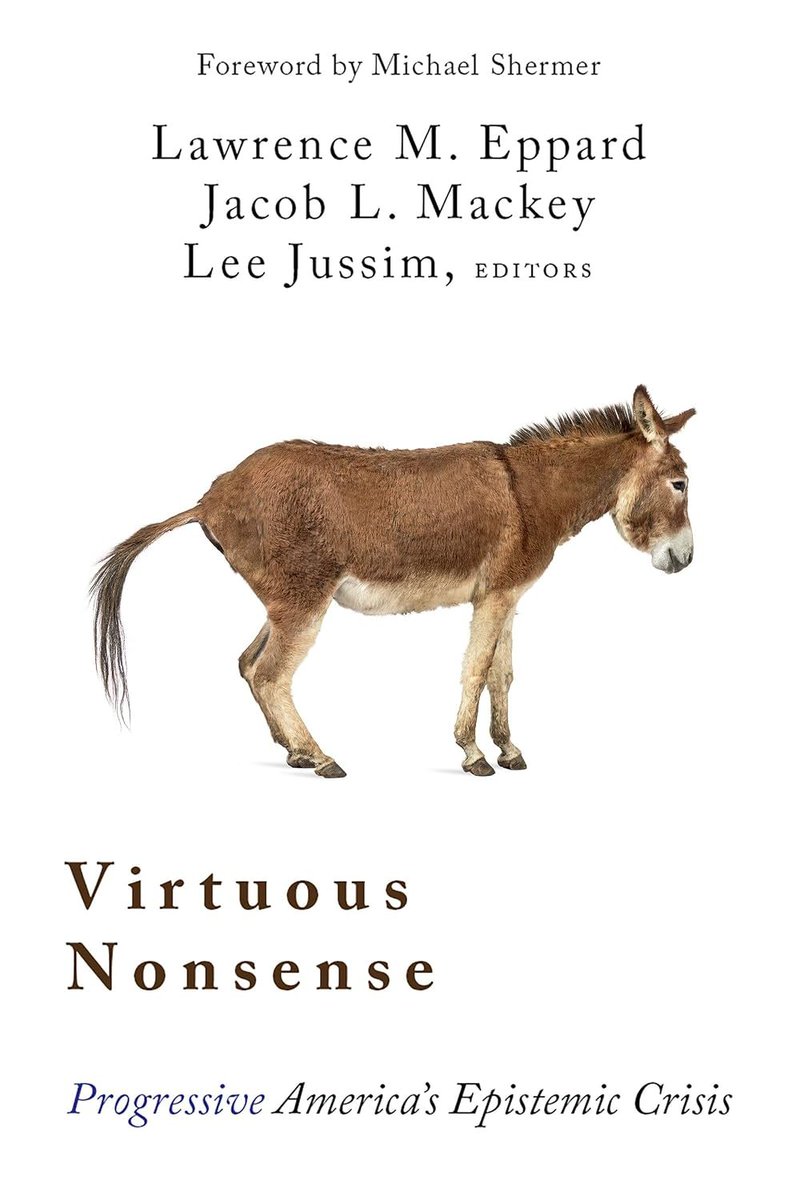
Our new book, Virtuous Nonsense: Progressive America's Epistemic Crisis, assembles an all-star cast of contributors who argue that many core progressive beliefs are wrong, overstated, or more certain than the evidence allows. This 🧵 outlines *every* myth-busting claim made in the book and which of our contributors makes it.
2
2/
I. Knowledge and institutions
—Misinformation is prevalent on the left: Lawrence M. Eppard, Jacob L. Mackey, Lee Jussim, Steven Sloman, Keith Stanovich, and Matthew Yglesias.
—Social justice commitments and limited viewpoint diversity distort universities and research: Jonathan Haidt, Musa al-Gharbi, Carl Bankston III, April Bleske-Rechek, Michael H. Bernstein, and Robert O. Deaner.
—Science journalism often conveys unwarranted certainty, especially when doing so supports left-wing causes: Anthony Fowler and James B. Meigs.
I. Knowledge and institutions
—Misinformation is prevalent on the left: Lawrence M. Eppard, Jacob L. Mackey, Lee Jussim, Steven Sloman, Keith Stanovich, and Matthew Yglesias.
—Social justice commitments and limited viewpoint diversity distort universities and research: Jonathan Haidt, Musa al-Gharbi, Carl Bankston III, April Bleske-Rechek, Michael H. Bernstein, and Robert O. Deaner.
—Science journalism often conveys unwarranted certainty, especially when doing so supports left-wing causes: Anthony Fowler and James B. Meigs.
3
3/
II. Sex and gender
—Biological sex is not a spectrum, and sex differences in behavior are not entirely due to socialization: Jerry A. Coyne, Luana S. Maroja, and Robert Lynch.
—Genetics and ancestry can have biological and medical relevance: Jerry A. Coyne and Luana S. Maroja.
—Traditional ways of knowing should not be treated as equivalent to modern scientific methods: Jerry A. Coyne and Luana S. Maroja.
—Progress toward gender equality is often downplayed, and the overall pay gap is too readily attributed to discrimination: Lee Jussim, Lawrence M. Eppard, Katie Bonomo, and Kay S. Hymowitz.
—The evidence for particular medical interventions for transgender minors is less settled than proponents suggest: Leor Sapir and Kay S. Hymowitz.
—Contested theories of gender identity have entered interpretations of sex discrimination law: Leor Sapir.
II. Sex and gender
—Biological sex is not a spectrum, and sex differences in behavior are not entirely due to socialization: Jerry A. Coyne, Luana S. Maroja, and Robert Lynch.
—Genetics and ancestry can have biological and medical relevance: Jerry A. Coyne and Luana S. Maroja.
—Traditional ways of knowing should not be treated as equivalent to modern scientific methods: Jerry A. Coyne and Luana S. Maroja.
—Progress toward gender equality is often downplayed, and the overall pay gap is too readily attributed to discrimination: Lee Jussim, Lawrence M. Eppard, Katie Bonomo, and Kay S. Hymowitz.
—The evidence for particular medical interventions for transgender minors is less settled than proponents suggest: Leor Sapir and Kay S. Hymowitz.
—Contested theories of gender identity have entered interpretations of sex discrimination law: Leor Sapir.
4
4/
III. Race, inequality, and history
—Common measures of implicit bias do not establish that unconscious prejudice causes discriminatory behavior: Carol Tavris.
—Claims about identifying microaggressions, inferring intent, and establishing harm exceed the evidence: Lee Jussim.
—Public accounts overstate or oversimplify the scale and causes of police shootings of unarmed black Americans: Robert VerBruggen.
—The “hands up, don’t shoot” account of Michael Brown’s death is false: Michael Huemer.
—Accounts of racial disparities focused on structural racism can neglect other possible causes: Michael Jindra and Arthur Sakamoto.
—Standardized tests are not inherently racist or devoid of predictive value: April Bleske-Rechek, Daniel Robinson, Craig Frisby, and Jacob L. Mackey.
—Some claims associated with the 1619 Project misrepresent the history of American slavery and the Revolution: Kay S. Hymowitz.
—Racial disparities in medicine cannot simply be attributed to systemic racism, and changes to merit standards on that premise may be harmful: Heather Mac Donald.
—The claim that black newborns survive at substantially higher rates with black doctors is based on flawed analysis: Jacob L. Mackey and Dave Gilbert.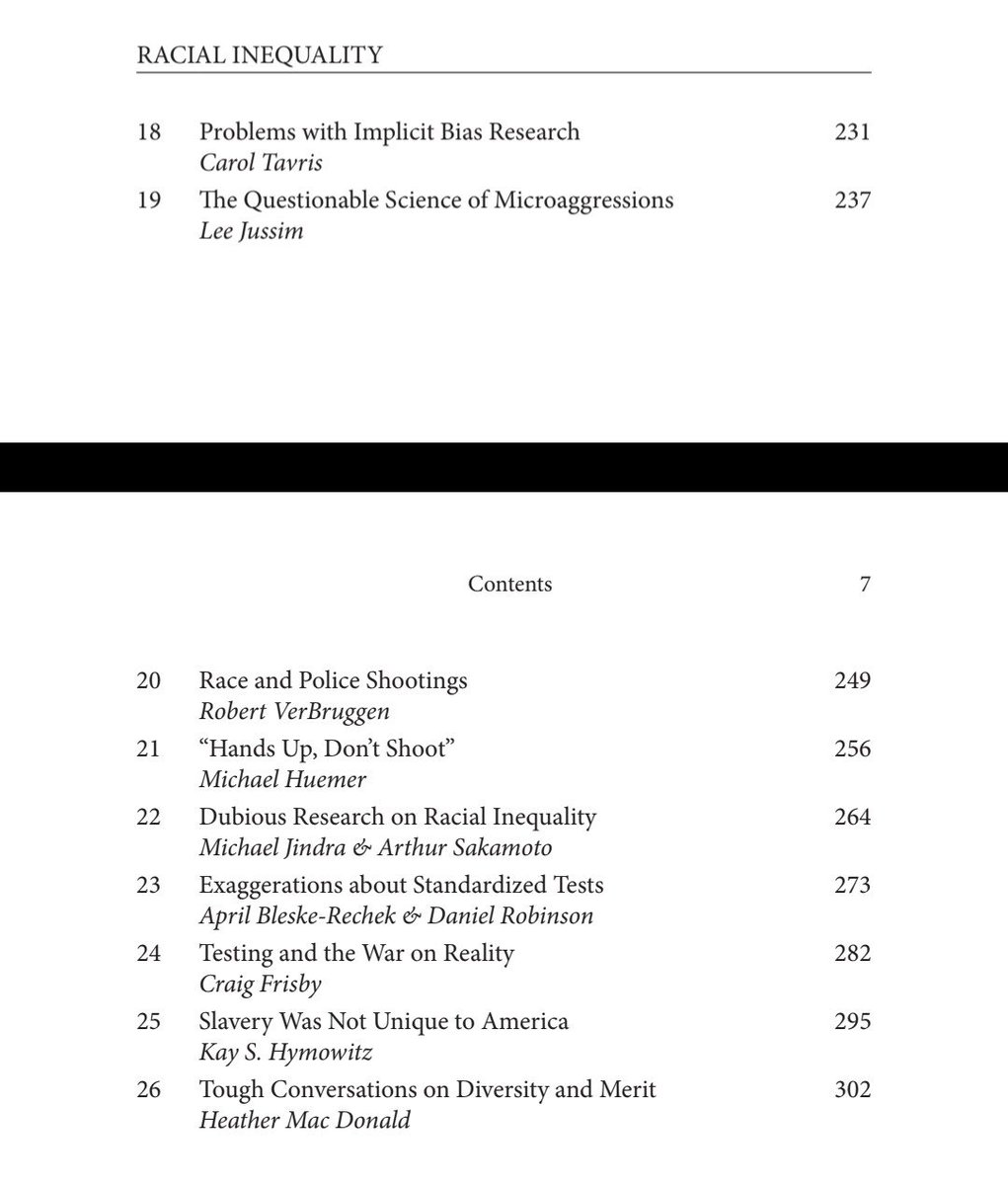
III. Race, inequality, and history
—Common measures of implicit bias do not establish that unconscious prejudice causes discriminatory behavior: Carol Tavris.
—Claims about identifying microaggressions, inferring intent, and establishing harm exceed the evidence: Lee Jussim.
—Public accounts overstate or oversimplify the scale and causes of police shootings of unarmed black Americans: Robert VerBruggen.
—The “hands up, don’t shoot” account of Michael Brown’s death is false: Michael Huemer.
—Accounts of racial disparities focused on structural racism can neglect other possible causes: Michael Jindra and Arthur Sakamoto.
—Standardized tests are not inherently racist or devoid of predictive value: April Bleske-Rechek, Daniel Robinson, Craig Frisby, and Jacob L. Mackey.
—Some claims associated with the 1619 Project misrepresent the history of American slavery and the Revolution: Kay S. Hymowitz.
—Racial disparities in medicine cannot simply be attributed to systemic racism, and changes to merit standards on that premise may be harmful: Heather Mac Donald.
—The claim that black newborns survive at substantially higher rates with black doctors is based on flawed analysis: Jacob L. Mackey and Dave Gilbert.
5
5/
IV. Public life and policy
—Cancel culture is a real constraint on dissent, while identity politics can undermine open debate and shared civic commitments: Carol Tavris, Ilya Shapiro, and Karl Zinsmeister.
—Family structure matters for poverty and children’s opportunities: Kay S. Hymowitz and Mona Charen.
—Accounts of capitalism centered on exploitation and decline overlook gains associated with free markets: Johan Norberg.
—Pessimistic accounts understate improvements in living standards and well-being: Lawrence M. Eppard and Jacob L. Mackey.
—Climate catastrophism overstates what the evidence warrants: Mona Charen.
IV. Public life and policy
—Cancel culture is a real constraint on dissent, while identity politics can undermine open debate and shared civic commitments: Carol Tavris, Ilya Shapiro, and Karl Zinsmeister.
—Family structure matters for poverty and children’s opportunities: Kay S. Hymowitz and Mona Charen.
—Accounts of capitalism centered on exploitation and decline overlook gains associated with free markets: Johan Norberg.
—Pessimistic accounts understate improvements in living standards and well-being: Lawrence M. Eppard and Jacob L. Mackey.
—Climate catastrophism overstates what the evidence warrants: Mona Charen.
6
V. Parting Thoughts
Some stuff by me and Lawrence Eppard and me and @docgotham, plus a great chapter about how progressive myths (virtuous nonsense) are not benign.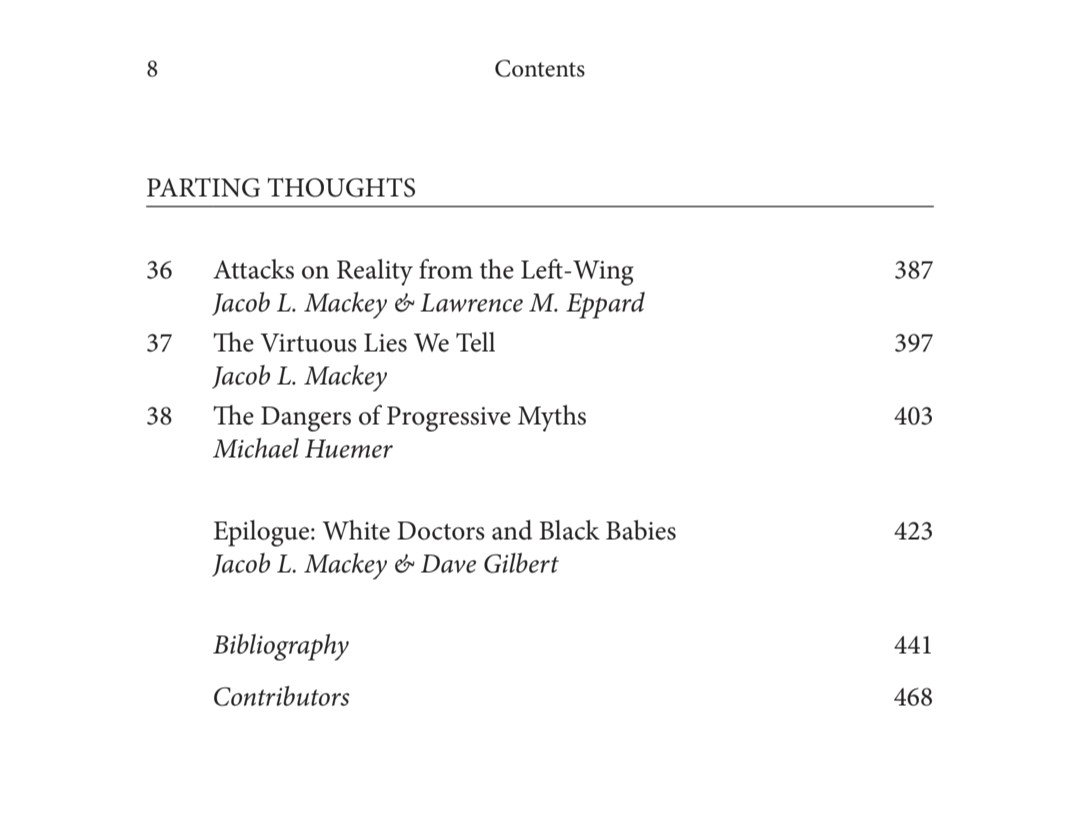
Some stuff by me and Lawrence Eppard and me and @docgotham, plus a great chapter about how progressive myths (virtuous nonsense) are not benign.
7
7/
In sum, Virtuous Nonsense attacks progressive shibboleths by asking whether their moral appeal has been mistaken for evidence. Across essays on implicit bias, police shootings, the gender pay gap, transgender medicine, standardized tests, family structure, capitalism, and climate alarmism, its contributors argue that familiar claims are often exaggerated, poorly supported, or treated as beyond question. They trace the spread of these claims from universities through journalism and public institutions, warning that policies built on them can misdiagnose real problems and erode trust in expertise.
Out on October! Pre-order here:
a.co/d/05CZITav
In sum, Virtuous Nonsense attacks progressive shibboleths by asking whether their moral appeal has been mistaken for evidence. Across essays on implicit bias, police shootings, the gender pay gap, transgender medicine, standardized tests, family structure, capitalism, and climate alarmism, its contributors argue that familiar claims are often exaggerated, poorly supported, or treated as beyond question. They trace the spread of these claims from universities through journalism and public institutions, warning that policies built on them can misdiagnose real problems and erode trust in expertise.
Out on October! Pre-order here:
a.co/d/05CZITav