Centuries before Jesus was born, Hebrew writers described a coming...

Adam | Faithful Messenger@Adam_FaithfulM
91 views
Aug 26, 2026
~7 min read
Advertisement
1
Centuries before Jesus was born, Hebrew writers described a coming figure in unsettling detail.
His birthplace. His family line. The price of His betrayal. The manner of His death, described in an era when that method of execution had not yet been invented.
And we can prove these texts existed long before He did.
Here are ten of them. 🧵
His birthplace. His family line. The price of His betrayal. The manner of His death, described in an era when that method of execution had not yet been invented.
And we can prove these texts existed long before He did.
Here are ten of them. 🧵
2
"But you, O Bethlehem Ephrathah, who are too little to be among the clans of Judah, from you shall come forth for me one who is to be ruler in Israel, whose coming forth is from of old, from ancient days." (Micah 5:2)
Written roughly 700 years before Jesus.
Bethlehem was a small, unimportant village. Micah names it anyway and specifies "Ephrathah" to distinguish it from the other Bethlehem in Zebulun.
Note the last clause: this ruler's "coming forth is from of old, from ancient days."
A child who would be born in a specific village and who already existed.
Written roughly 700 years before Jesus.
Bethlehem was a small, unimportant village. Micah names it anyway and specifies "Ephrathah" to distinguish it from the other Bethlehem in Zebulun.
Note the last clause: this ruler's "coming forth is from of old, from ancient days."
A child who would be born in a specific village and who already existed.
3
God's promise to David, around 1000 BC:
"I will raise up your offspring after you… and I will establish the throne of his kingdom forever." (2 Samuel 7:12–13)
Isaiah narrows it further: "There shall come forth a shoot from the stump of Jesse." (11:1)
Jesse was David's father. And "stump" matters because, by Isaiah's time, the royal line was in decline, and it would soon be cut down entirely.
The image is deliberate: a dead-looking stump with a living shoot coming out of it.
Both Matthew and Luke open their accounts by tracing Jesus' descent from David.
It was the first thing they thought worth establishing.
"I will raise up your offspring after you… and I will establish the throne of his kingdom forever." (2 Samuel 7:12–13)
Isaiah narrows it further: "There shall come forth a shoot from the stump of Jesse." (11:1)
Jesse was David's father. And "stump" matters because, by Isaiah's time, the royal line was in decline, and it would soon be cut down entirely.
The image is deliberate: a dead-looking stump with a living shoot coming out of it.
Both Matthew and Luke open their accounts by tracing Jesus' descent from David.
It was the first thing they thought worth establishing.
4
"A voice cries: 'In the wilderness prepare the way of the Lord; make straight in the desert a highway for our God.'" (Isaiah 40:3)
"Behold, I send my messenger, and he will prepare the way before me." (Malachi 3:1)
Ancient kings sent workers ahead to level roads before a royal visit. The imagery is of preparation for someone important arriving.
Centuries later, a man appears in the wilderness, dressed in camel's hair, telling crowds to get ready.
When they ask who he is, John the Baptist quotes Isaiah 40 and applies it to himself. (John 1:23)
The forerunner knew he was the forerunner.
"Behold, I send my messenger, and he will prepare the way before me." (Malachi 3:1)
Ancient kings sent workers ahead to level roads before a royal visit. The imagery is of preparation for someone important arriving.
Centuries later, a man appears in the wilderness, dressed in camel's hair, telling crowds to get ready.
When they ask who he is, John the Baptist quotes Isaiah 40 and applies it to himself. (John 1:23)
The forerunner knew he was the forerunner.
5
"Behold, your king is coming to you; righteous and having salvation is he, humble and mounted on a donkey, on a colt, the foal of a donkey." (Zechariah 9:9)
Written around 500 BC.
Conquering kings entered cities on warhorses. A donkey was the mount of a ruler coming in peace.
So the prophecy describes a king and then undercuts every expectation of what a king arriving in his capital should look like.
Matthew 21 records Jesus specifically arranging for a donkey before entering Jerusalem, days before His death.
He wasn't fulfilling it accidentally. He was making a statement, and He expected people to catch the reference.
Written around 500 BC.
Conquering kings entered cities on warhorses. A donkey was the mount of a ruler coming in peace.
So the prophecy describes a king and then undercuts every expectation of what a king arriving in his capital should look like.
Matthew 21 records Jesus specifically arranging for a donkey before entering Jerusalem, days before His death.
He wasn't fulfilling it accidentally. He was making a statement, and He expected people to catch the reference.
6
This one is startlingly specific.
"So they weighed out as my wages thirty pieces of silver. Then the Lord said to me, 'Throw it to the potter'… So I took the thirty pieces of silver and threw them into the house of the Lord, to the potter." (Zechariah 11:12–13)
Three details: the amount, the throwing of it into the temple, and a potter.
Matthew 27:3–10 records Judas returning thirty pieces of silver, throwing them down in the temple, and the priests using the money to buy the potter's field.
Thirty shekels were also the compensation set in Exodus 21:32 for a slave gored by an ox.
That was the valuation placed on Him.
"So they weighed out as my wages thirty pieces of silver. Then the Lord said to me, 'Throw it to the potter'… So I took the thirty pieces of silver and threw them into the house of the Lord, to the potter." (Zechariah 11:12–13)
Three details: the amount, the throwing of it into the temple, and a potter.
Matthew 27:3–10 records Judas returning thirty pieces of silver, throwing them down in the temple, and the priests using the money to buy the potter's field.
Thirty shekels were also the compensation set in Exodus 21:32 for a slave gored by an ox.
That was the valuation placed on Him.
7
"He was oppressed, and he was afflicted, yet he opened not his mouth; like a lamb that is led to the slaughter, and like a sheep that before its shearers is silent, so he opened not his mouth." (Isaiah 53:7)
This is the strangest detail to invent, because it describes a non-action.
Anyone fabricating a hero's death would give him a defiant final speech.
At His trials, the Gospels repeatedly note the silence and record that Pilate was amazed by it. (Matthew 27:14)
Isaiah 53 is worth reading in full, slowly, without commentary.
It's the passage that has unsettled more readers than any other in the Old Testament.
This is the strangest detail to invent, because it describes a non-action.
Anyone fabricating a hero's death would give him a defiant final speech.
At His trials, the Gospels repeatedly note the silence and record that Pilate was amazed by it. (Matthew 27:14)
Isaiah 53 is worth reading in full, slowly, without commentary.
It's the passage that has unsettled more readers than any other in the Old Testament.
8
Psalm 22, written by David around 1000 BC:
"They have pierced my hands and feet — I can count all my bones — they stare and gloat over me; they divide my garments among them, and for my clothing they cast lots." (22:16–18)
Now consider the timing. Crucifixion was not practised by Israel. It came into wide use through the Romans, centuries after this psalm was written.
David is describing a form of death he had no cultural category for.
And the psalm opens with the exact words Jesus cried from the cross: "My God, my God, why have you forsaken me?"
He was quoting this psalm while its details were happening to Him.
"They have pierced my hands and feet — I can count all my bones — they stare and gloat over me; they divide my garments among them, and for my clothing they cast lots." (22:16–18)
Now consider the timing. Crucifixion was not practised by Israel. It came into wide use through the Romans, centuries after this psalm was written.
David is describing a form of death he had no cultural category for.
And the psalm opens with the exact words Jesus cried from the cross: "My God, my God, why have you forsaken me?"
He was quoting this psalm while its details were happening to Him.
9
"And they made his grave with the wicked and with a rich man in his death, although he had done no violence, and there was no deceit in his mouth." (Isaiah 53:9)
Two contradictory-sounding halves: executed among criminals, buried among the wealthy.
Crucified men were typically thrown into common graves. That's the first half.
Then Joseph of Arimathea, described by Matthew as "a rich man," asks Pilate for the body and places Him in his own new tomb. (Matthew 27:57–60)
An executed criminal ended up in a wealthy man's private tomb, which is exactly the odd combination Isaiah describes.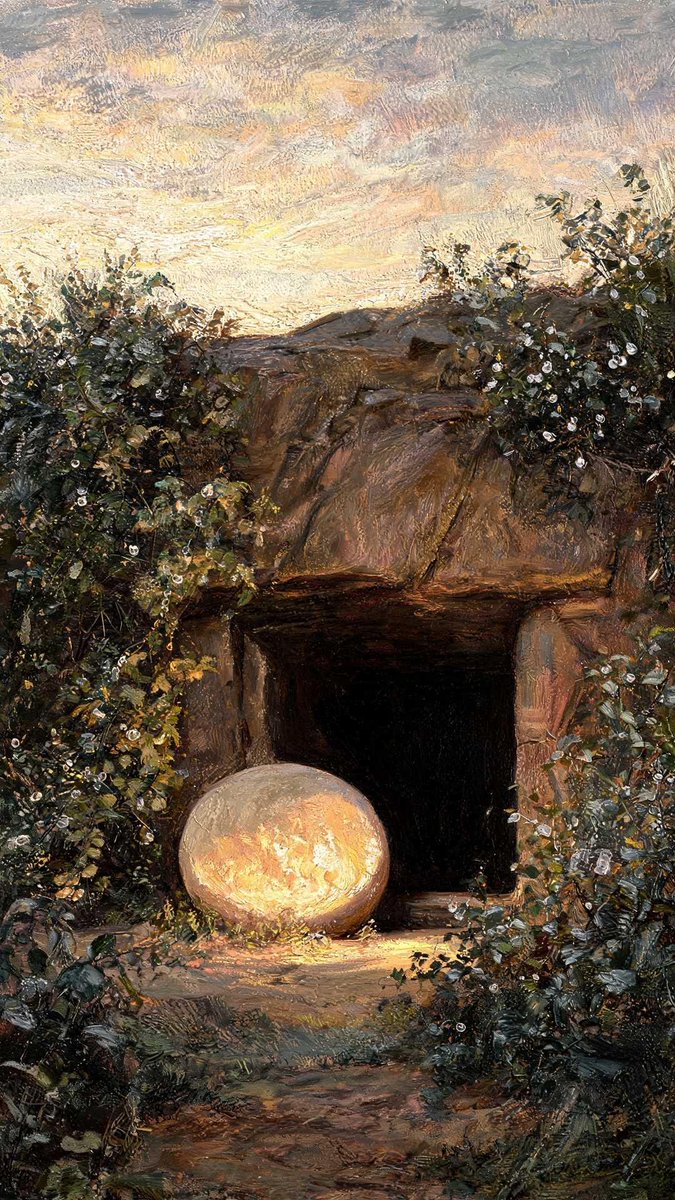
Two contradictory-sounding halves: executed among criminals, buried among the wealthy.
Crucified men were typically thrown into common graves. That's the first half.
Then Joseph of Arimathea, described by Matthew as "a rich man," asks Pilate for the body and places Him in his own new tomb. (Matthew 27:57–60)
An executed criminal ended up in a wealthy man's private tomb, which is exactly the odd combination Isaiah describes.
10
"For you will not abandon my soul to Sheol, or let your holy one see corruption." (Psalm 16:10)
At Pentecost, Peter quotes this psalm to a Jerusalem crowd and makes a blunt argument:
David wrote it: "he both died and was buried, and his tomb is with us to this day." (Acts 2:29)
So David can't have been describing himself. His body did decay. His tomb was a known landmark.
Peter's conclusion: David was speaking about someone else, a descendant whose body would not see corruption.
That argument was made publicly, in the city where it happened, weeks after it happened, to people who could have checked.
At Pentecost, Peter quotes this psalm to a Jerusalem crowd and makes a blunt argument:
David wrote it: "he both died and was buried, and his tomb is with us to this day." (Acts 2:29)
So David can't have been describing himself. His body did decay. His tomb was a known landmark.
Peter's conclusion: David was speaking about someone else, a descendant whose body would not see corruption.
That argument was made publicly, in the city where it happened, weeks after it happened, to people who could have checked.
11
The one people skip, and arguably the most remarkable.
"It is too light a thing that you should be my servant to raise up the tribes of Jacob… I will make you as a light for the nations, that my salvation may reach to the end of the earth." (Isaiah 49:6)
A Hebrew prophet, writing to a small occupied nation, says the coming servant will be too significant to be theirs alone.
Consider what that required. A movement founded by a crucified Galilean, led by fishermen, in a backwater province, reaching the ends of the earth.
Every other prophecy on this list concerns a few days or years.
This one is still being fulfilled, and you're part of the evidence.
"It is too light a thing that you should be my servant to raise up the tribes of Jacob… I will make you as a light for the nations, that my salvation may reach to the end of the earth." (Isaiah 49:6)
A Hebrew prophet, writing to a small occupied nation, says the coming servant will be too significant to be theirs alone.
Consider what that required. A movement founded by a crucified Galilean, led by fishermen, in a backwater province, reaching the ends of the earth.
Every other prophecy on this list concerns a few days or years.
This one is still being fulfilled, and you're part of the evidence.
12
Ten prophecies and the question everyone asks:
1. Born in Bethlehem - Micah 5:2
2. From David's line, a shoot from a cut stump - Isaiah 11:1
3. A messenger preparing the way - Isaiah 40:3
4. Entering Jerusalem on a donkey - Zechariah 9:9
5. Thirty pieces of silver, thrown to the potter - Zechariah 11:12–13
6. Silent before His accusers - Isaiah 53:7
7. Pierced hands and feet, garments gambled for - Psalm 22
8. Executed with criminals, buried with the rich - Isaiah 53:9
9. Not abandoned to the grave - Psalm 16:10
10. A light for the nations - Isaiah 49:6
"But couldn't these have been written after the fact?"
No. In 1947, a complete scroll of Isaiah was found at Qumran, dated to roughly 125 BC, over a century before Jesus. Every one of these texts demonstrably predates Him.
1. Born in Bethlehem - Micah 5:2
2. From David's line, a shoot from a cut stump - Isaiah 11:1
3. A messenger preparing the way - Isaiah 40:3
4. Entering Jerusalem on a donkey - Zechariah 9:9
5. Thirty pieces of silver, thrown to the potter - Zechariah 11:12–13
6. Silent before His accusers - Isaiah 53:7
7. Pierced hands and feet, garments gambled for - Psalm 22
8. Executed with criminals, buried with the rich - Isaiah 53:9
9. Not abandoned to the grave - Psalm 16:10
10. A light for the nations - Isaiah 49:6
"But couldn't these have been written after the fact?"
No. In 1947, a complete scroll of Isaiah was found at Qumran, dated to roughly 125 BC, over a century before Jesus. Every one of these texts demonstrably predates Him.
13
Two honest notes before you share this.
These passages are read differently by different people. Jewish interpreters have their own long and serious tradition of reading Isaiah 53 and Psalm 22, and it's worth being aware of that rather than pretending the case is airtight to everyone.
And some of these were only recognised looking backwards. The disciples didn't walk around with a checklist; they went back to the Scriptures afterwards and found the shape of what had happened already there.
Which is what Jesus Himself did on the Emmaus road: "beginning with Moses and all the Prophets, he interpreted to them in all the Scriptures the things concerning himself." (Luke 24:27)
The claim isn't that the evidence forces anyone. It's that the pattern is there, in documents that predate Him, waiting to be noticed.
Follow for regular deep-dive Bible threads.
Which of these ten do you find the most striking?
These passages are read differently by different people. Jewish interpreters have their own long and serious tradition of reading Isaiah 53 and Psalm 22, and it's worth being aware of that rather than pretending the case is airtight to everyone.
And some of these were only recognised looking backwards. The disciples didn't walk around with a checklist; they went back to the Scriptures afterwards and found the shape of what had happened already there.
Which is what Jesus Himself did on the Emmaus road: "beginning with Moses and all the Prophets, he interpreted to them in all the Scriptures the things concerning himself." (Luke 24:27)
The claim isn't that the evidence forces anyone. It's that the pattern is there, in documents that predate Him, waiting to be noticed.
Follow for regular deep-dive Bible threads.
Which of these ten do you find the most striking?
14
Join more than 900 believers at Faithful Messages 🔗
faithfulmessages.beehiiv.com
faithfulmessages.beehiiv.com
15
If God has used this content in your life, consider supporting it.
A paid subscription gets you:
✅Daily devotional
✅Weekly Bible deep-dive article
✅Exclusive monthly 20-post subscriber thread
Every subscriber keeps this mission alive.
This month's exclusive thread and this week's exclusive article:

A paid subscription gets you:
✅Daily devotional
✅Weekly Bible deep-dive article
✅Exclusive monthly 20-post subscriber thread
Every subscriber keeps this mission alive.
This month's exclusive thread and this week's exclusive article:
16
If you would like to support me, you can do so here:
buymeacoffee.com/adamfaithfulme…
buymeacoffee.com/adamfaithfulme…
