Suddenly I gained another 500 followers, so for their sake, I'll...

Marcell Fóti 🪨@FoMaHun
23 views
Oct 13, 2025
~5 min read
Advertisement
1
Suddenly I gained another 500 followers, so for their sake, I'll briefly summarize what the game is all about here. It seems we're going to rewrite the first few chapters of human history.
What started as "let's figure out how the unfinished obelisk in Aswan was made" has evolved in a direction where we can now confidently say the past didn't happen the way we thought.
Our ancestors were apparently capable of chemically altering stones, dissolving them, and then reassembling them. The evidence for this is that countless others besides me have done this, and it works, and it’s not even hard to do.
Unfortunately, there's no need for UFOs or ancient advanced civilizations to transport stone blocks of, say, 20-25 tons, or God forbid, 1000 tons. They weren’t hauling the stone blocks around, but just the raw material. In buckets.
The megalithic structures are masonry works, just that the mortar is a completely different material than what we use today. What could it be?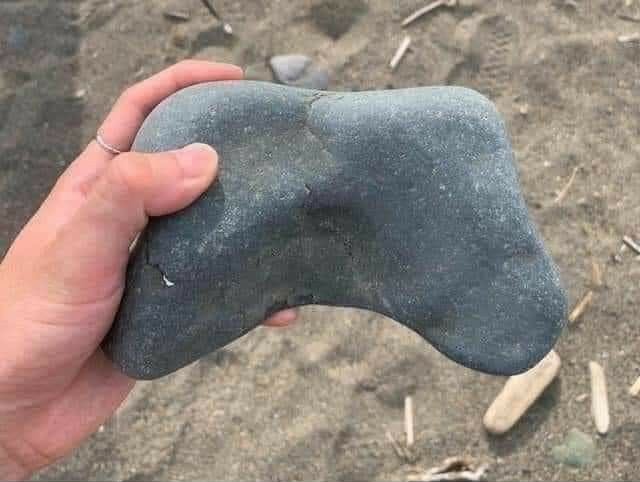
What started as "let's figure out how the unfinished obelisk in Aswan was made" has evolved in a direction where we can now confidently say the past didn't happen the way we thought.
Our ancestors were apparently capable of chemically altering stones, dissolving them, and then reassembling them. The evidence for this is that countless others besides me have done this, and it works, and it’s not even hard to do.
Unfortunately, there's no need for UFOs or ancient advanced civilizations to transport stone blocks of, say, 20-25 tons, or God forbid, 1000 tons. They weren’t hauling the stone blocks around, but just the raw material. In buckets.
The megalithic structures are masonry works, just that the mortar is a completely different material than what we use today. What could it be?
2
First Act
When I started to decipher the secret of the Aswan unfinished obelisk, I naturally had no intention of rewriting the early history of humanity. This realization came later. The mystery of the unfinished obelisk lies in the mysterious scoop marks, approximately 50x50 cm indentations, which look as though someone gouged out the granite with a giant ice cream scoop.
The official explanation is completely wrong, I won’t even go into that, it’s nonsense.
However, my experiment was successful, and indeed, I was able to chemically etch the supposedly indestructible granite with simple tools in my own backyard. All it took was a grill chimney starter, some charcoal, and - natron.
As it turned out, modern humanity of course knows that molten natron dissolves granite, or more accurately quartz, and this is used in several industrial processes, from pottery (cracking glazes) to recycling rare metals (liberating metals from circuit boards).
It's just that archaeologists didn’t know.
Which I have no problem with, other than the fact that they know now but still ignore the facts.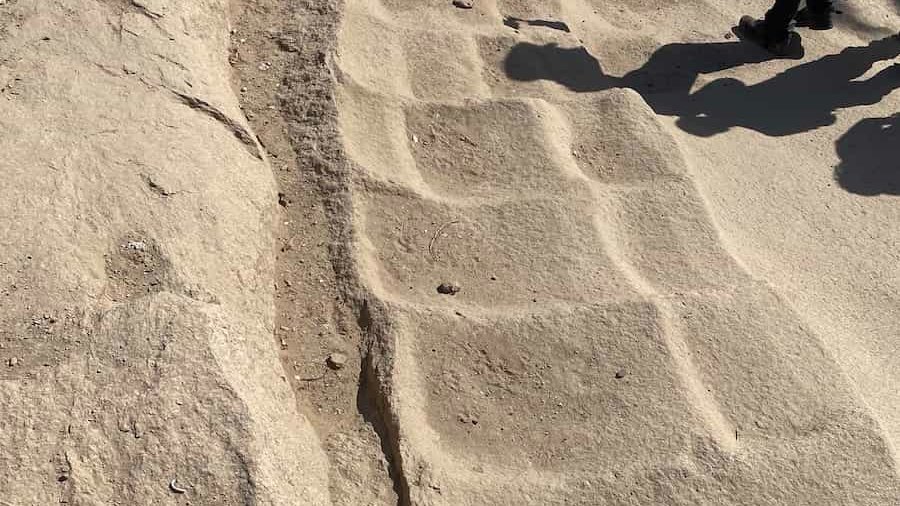
When I started to decipher the secret of the Aswan unfinished obelisk, I naturally had no intention of rewriting the early history of humanity. This realization came later. The mystery of the unfinished obelisk lies in the mysterious scoop marks, approximately 50x50 cm indentations, which look as though someone gouged out the granite with a giant ice cream scoop.
The official explanation is completely wrong, I won’t even go into that, it’s nonsense.
However, my experiment was successful, and indeed, I was able to chemically etch the supposedly indestructible granite with simple tools in my own backyard. All it took was a grill chimney starter, some charcoal, and - natron.
As it turned out, modern humanity of course knows that molten natron dissolves granite, or more accurately quartz, and this is used in several industrial processes, from pottery (cracking glazes) to recycling rare metals (liberating metals from circuit boards).
It's just that archaeologists didn’t know.
Which I have no problem with, other than the fact that they know now but still ignore the facts.
3
Second Act
Now that we've successfully etched the granite, let's see what material is produced in the chemical reaction, because maybe our ancestors could use it for something, considering they didn’t know the concept of waste. What could this white stone foam be good for?
As it turns out, the white stone foam is nothing but waterglass, Na2SiO3. This is fascinating because waterglass is one of the main components of modern geopolymers.
What do our ancestors do if they get their hands on a material with which they can make stone? They make stone with it! And here we reach the point of rewriting history. All those civilizations that were able to produce waterglass were obviously capable of casting new stones from waterglass.
The simplest form of this, when wood ash is mixed into the waterglass, results in a beautiful black, Inca stone.
The giant stone blocks of Inca walls fit so precisely together that not even a piece of paper can be slipped between them because they were simply cast next to each other, directly into the wall.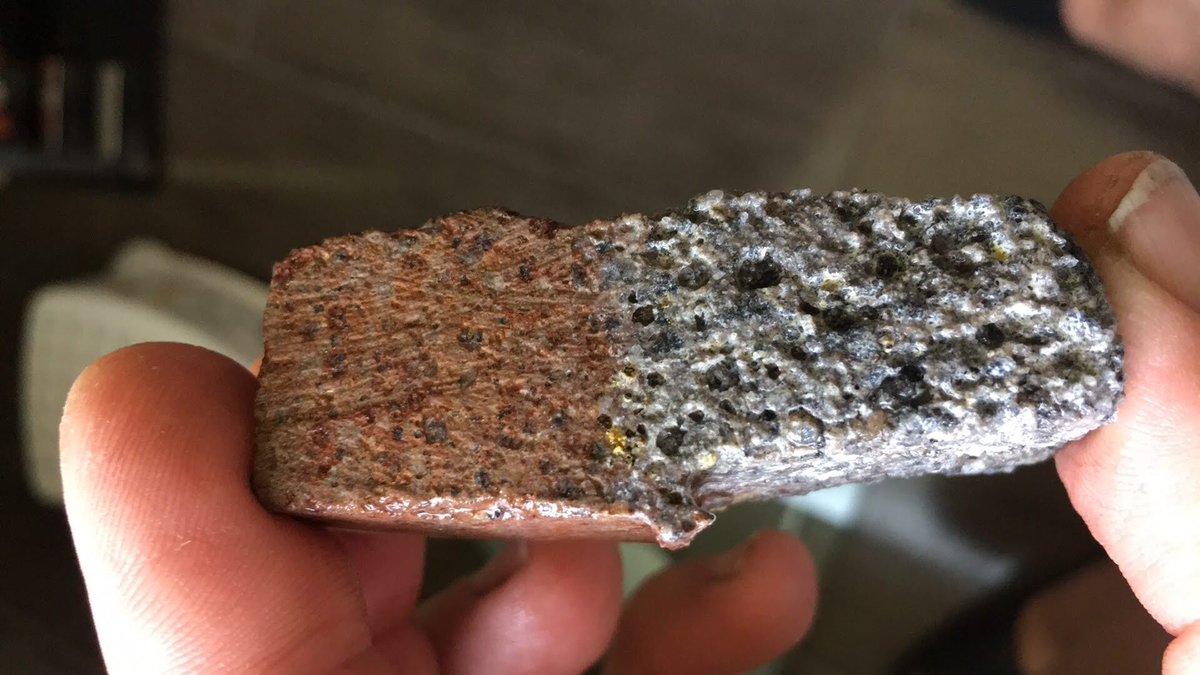
Now that we've successfully etched the granite, let's see what material is produced in the chemical reaction, because maybe our ancestors could use it for something, considering they didn’t know the concept of waste. What could this white stone foam be good for?
As it turns out, the white stone foam is nothing but waterglass, Na2SiO3. This is fascinating because waterglass is one of the main components of modern geopolymers.
What do our ancestors do if they get their hands on a material with which they can make stone? They make stone with it! And here we reach the point of rewriting history. All those civilizations that were able to produce waterglass were obviously capable of casting new stones from waterglass.
The simplest form of this, when wood ash is mixed into the waterglass, results in a beautiful black, Inca stone.
The giant stone blocks of Inca walls fit so precisely together that not even a piece of paper can be slipped between them because they were simply cast next to each other, directly into the wall.
4
Third Act
How does the Native American tale go again? "Our ancestors could soften stones with the sap of plants."
Well, that's almost right. Not with plant sap, but with the liquid derived from the ash of plants (lye), and not soften, but decompose. Everything else is correct.
However, it’s true that when I do this at home in a small pot on the stove, the result looks exactly as if the stone had softened.
And this is essentially the same process (to produce waterglass), like above with natron. Because it's not just one everyday substance that can "eat through" granite—I myself already know of four.
An interesting question is, if the Incas figured this out, did other peoples come to the same realization?
Wherever we find scoop marks on stones around the world, they are traces of chemical etching, evidence of waterglass production. Peru. Egypt. Stonehenge. Sigiriya in Sri Lanka. The Barabar Caves in India.
0:54
5
Fourth Act
What makes this all the more interesting is that if a more advanced civilization encountered the same relationship (waterglass + ash = stone), like the Egyptians, they might try to create prettier, not just black stones. Like artificial granite.
Okay, artificial granite doesn’t exist—I’ll give the experts that. But fake granite? Not only does it exist, it’s sitting right there in your kitchen: your countertop. But that's definitely different from the natural granite using epoxy as a binder.
Hmm. How ancient Egyptians did it?
It took me a while to figure out one method for this as well, using caveman tools and resources only. All I needed was to find a material that, unlike ash, isn’t gray but transparent, allowing the original granite grains glued together to remain visible.
Ancient fake granite differs from this only in its binder. It uses the same material as natural granite, ensuring that scientists can’t easily distinguish between the two: SiO₂.
This is a never ending story, with surprises each and every day.
0:14
6
Now that you’ve got an idea of what this is all about, I can totally recommend my book — it’s written in the same kind of style as what you just read.
You’ll get to see all the research, struggles, and results I’ve been through lately, all told in a story-like way.
Honestly, I just can’t write in a dry, boring, hard-to-understand “scientific” style — even though I know that’s what people usually expect. It’s just not me.
In my book, we’ll not only dive into the story of my research, but also explore tons of historical sites, evidence of ancient stone casting, proof of massive environmental destruction.
And to top it all off, there’s even a little cookbook at the end, just in case you want to try it all out at home and need a place to start.