Here’s the thread I begin with my notes, and the remainder of the...

Athenian Stranger@Athens_Stranger
19 views
Jun 30, 2025
~3 min read
Advertisement
1
Here’s the thread
I begin with my notes, and the remainder of the thread contains the texts I recommend
The emphasis is upon the best books for self-study (ie autodidacts) but *guided* by reference to classics texts which, while amazing, are not ideal for self-study
(1/x)

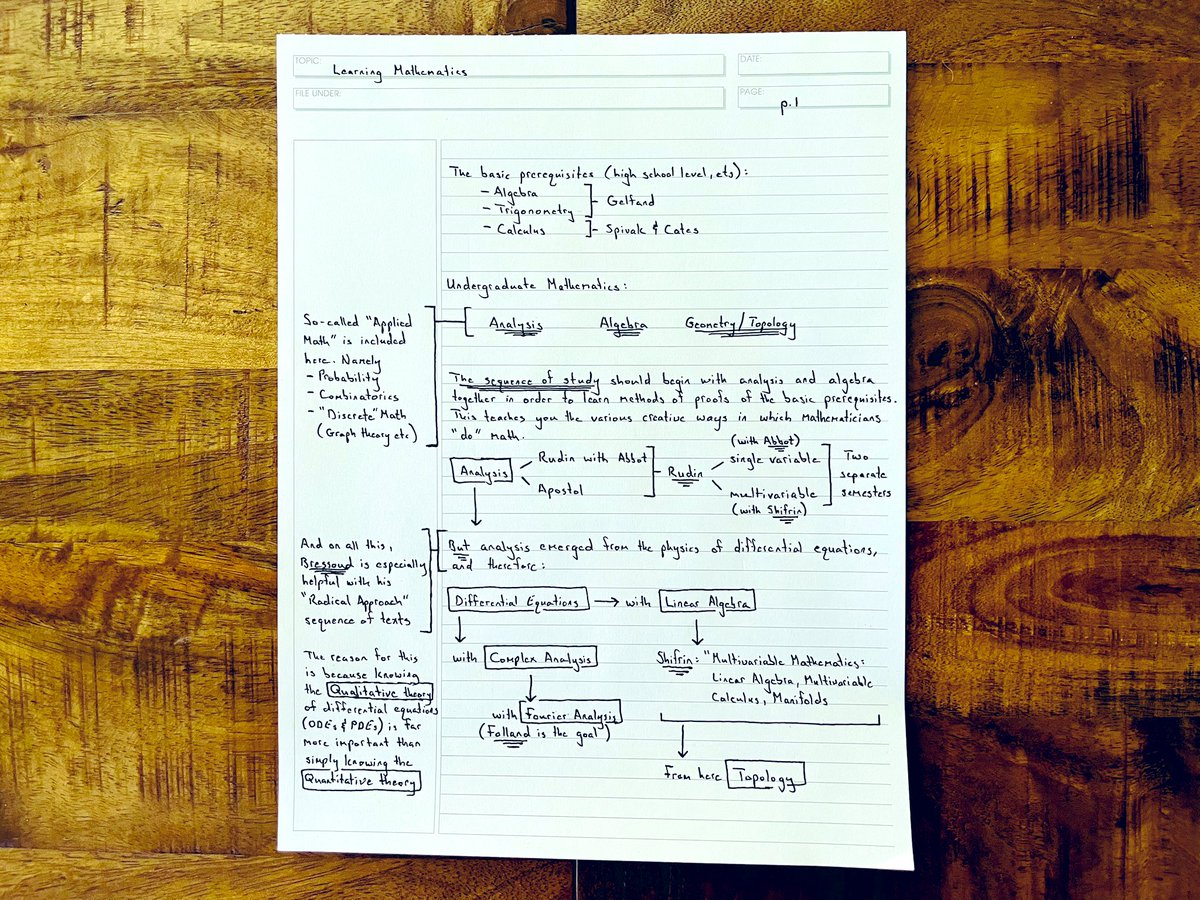

I begin with my notes, and the remainder of the thread contains the texts I recommend
The emphasis is upon the best books for self-study (ie autodidacts) but *guided* by reference to classics texts which, while amazing, are not ideal for self-study
(1/x)
Athenian Stranger@Athens_Stranger
I’m making a thread on how you can best teach yourself an entire undergraduate level education in mathematics — the best texts and full resources, etc.
You will enjoy it, friends
You will enjoy it, friends
2
The prerequisite:
Spivak is simply amazing and a solutions manual is available — that’s absolutely crucial for self-study
Cates is great for reference because he employs a “great books” approach. In fact, upon earning his math PhD he returned later in life to learn French in order to translate Cauchy’s text that founded “Modern” mathematics in order to use it for his high school intro text
(2/x)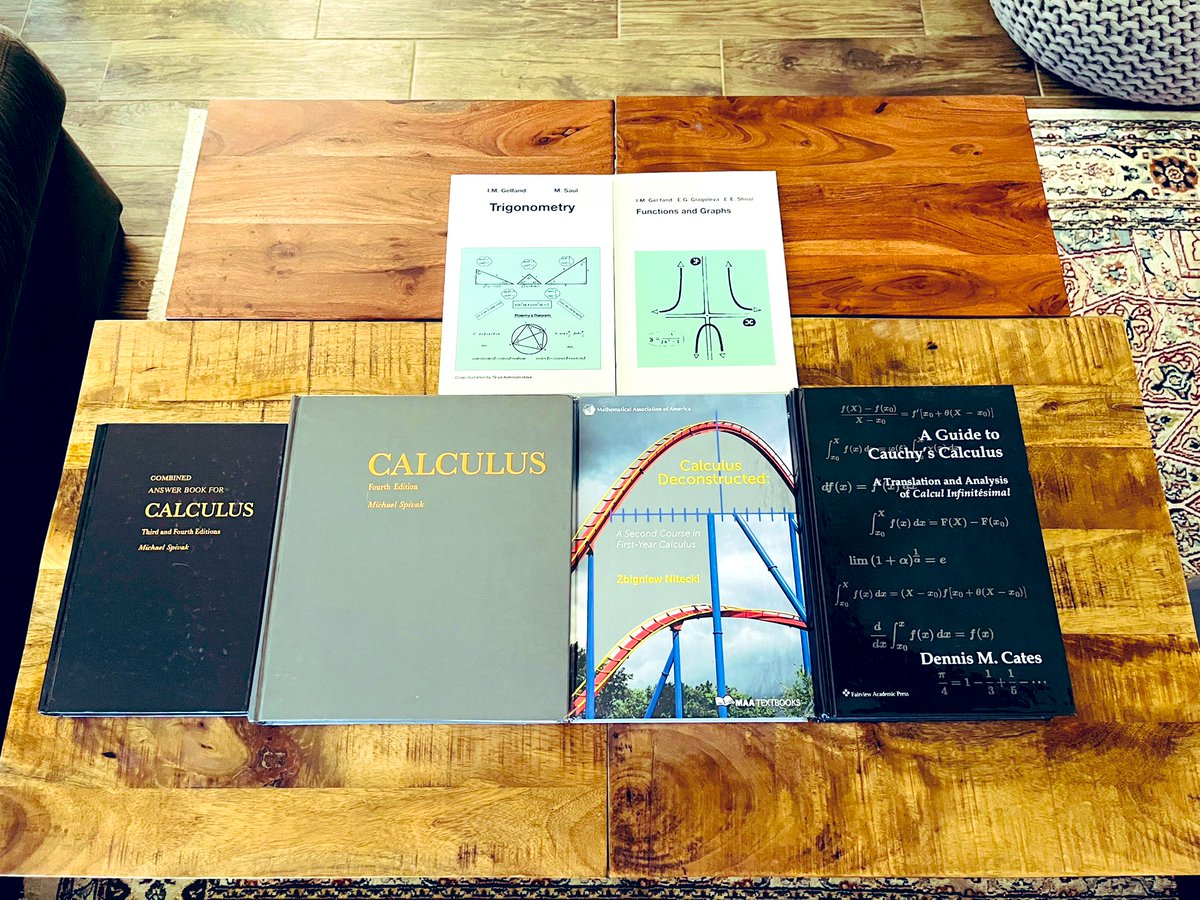
Spivak is simply amazing and a solutions manual is available — that’s absolutely crucial for self-study
Cates is great for reference because he employs a “great books” approach. In fact, upon earning his math PhD he returned later in life to learn French in order to translate Cauchy’s text that founded “Modern” mathematics in order to use it for his high school intro text
(2/x)
3
Upon completion of Spivak’s calculus, Walter Rudin’s text is *the* classic intro text to real calculus. A serious country would require undergrad math and science majors to begin freshman calculus 1 from it
The recent solution manual makes it more accessible
Abbot’s text is an invaluable aid for self-study with Rudin’s treatment of single variable calculus (for the multivariable chapters, see Shifrin below)
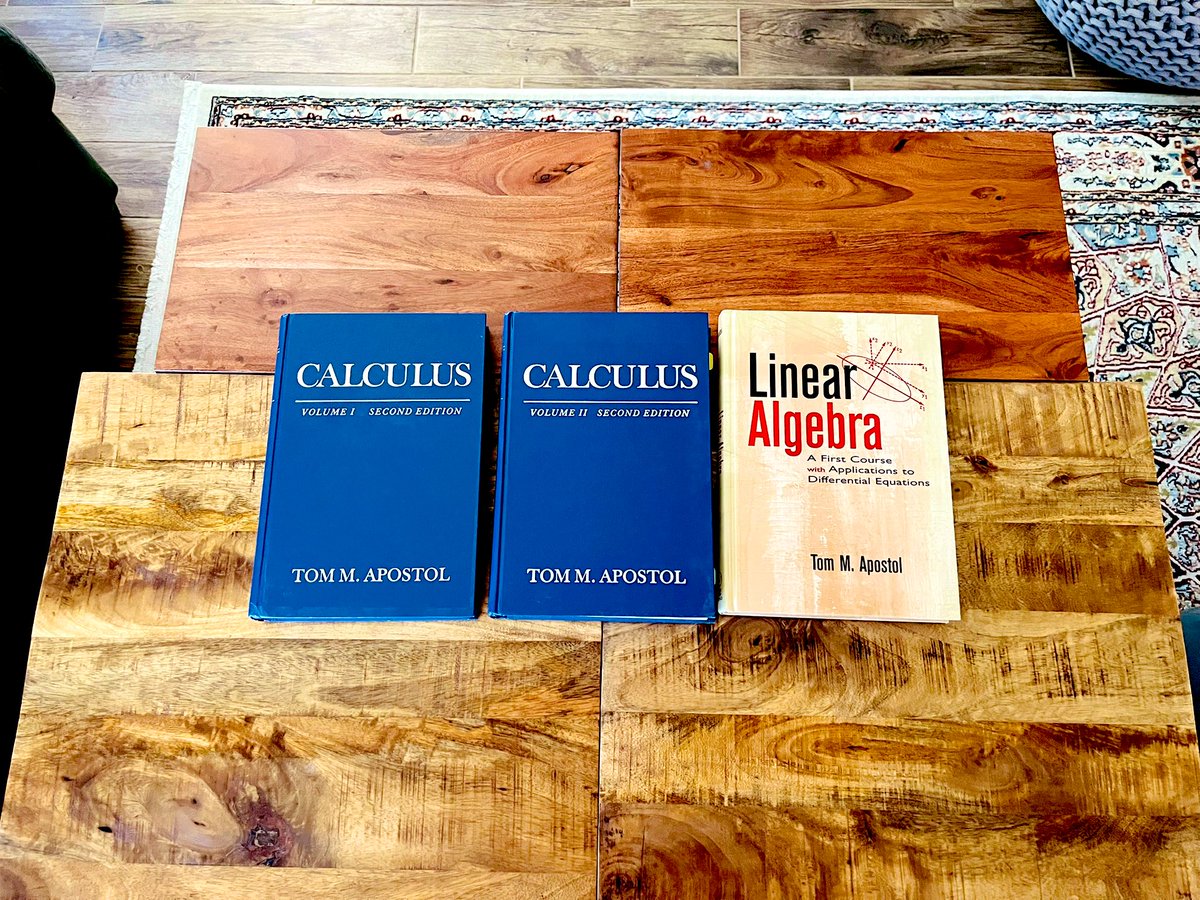
Apostol is also helpful as a classic for guidance, but I simply think emphasis should be placed on Rudin
(3/x)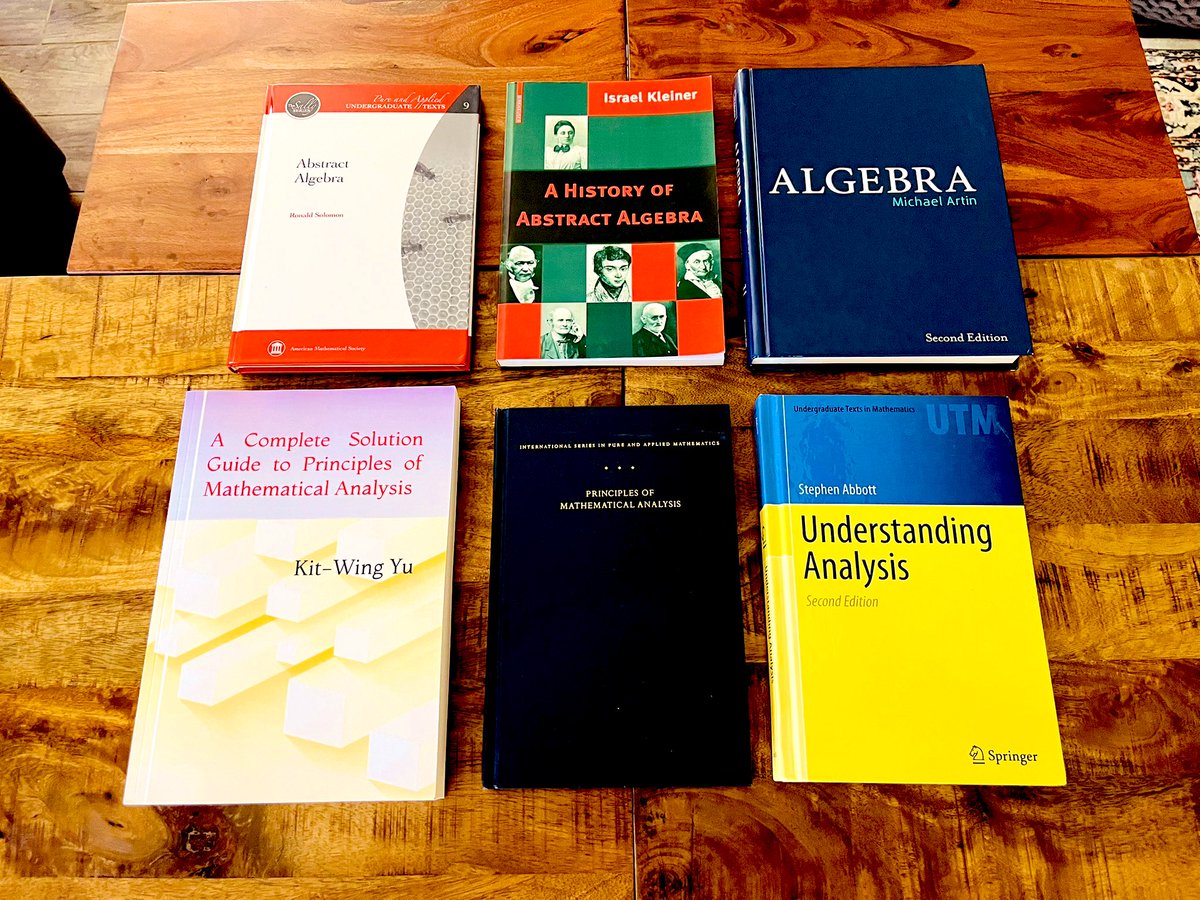
The recent solution manual makes it more accessible
Abbot’s text is an invaluable aid for self-study with Rudin’s treatment of single variable calculus (for the multivariable chapters, see Shifrin below)
Apostol is also helpful as a classic for guidance, but I simply think emphasis should be placed on Rudin
(3/x)
4
The entirety of “Modern” mathematics in the sense of how we understand science today as mathematical physics emerged from the solution to equations arising from calculus.
So with a solid understanding of calculus, the next step is to Differential Equations, rigorous Linear Algebra, and Complex Analysis — these from the SIAM are excellent, particularly Schieck’s Linear Algebra on the spectral theorem and canonical forms
(4/x)
So with a solid understanding of calculus, the next step is to Differential Equations, rigorous Linear Algebra, and Complex Analysis — these from the SIAM are excellent, particularly Schieck’s Linear Algebra on the spectral theorem and canonical forms
(4/x)
5
However, as I indicated in my notes for the second part of Rudin’s text (ie multivariable calculus), Shifrin’s text is invaluable for self-study and it includes a great treatment of linear algebra —
AND there’s an excellent YouTube series covering an entire course on it
(5/x)
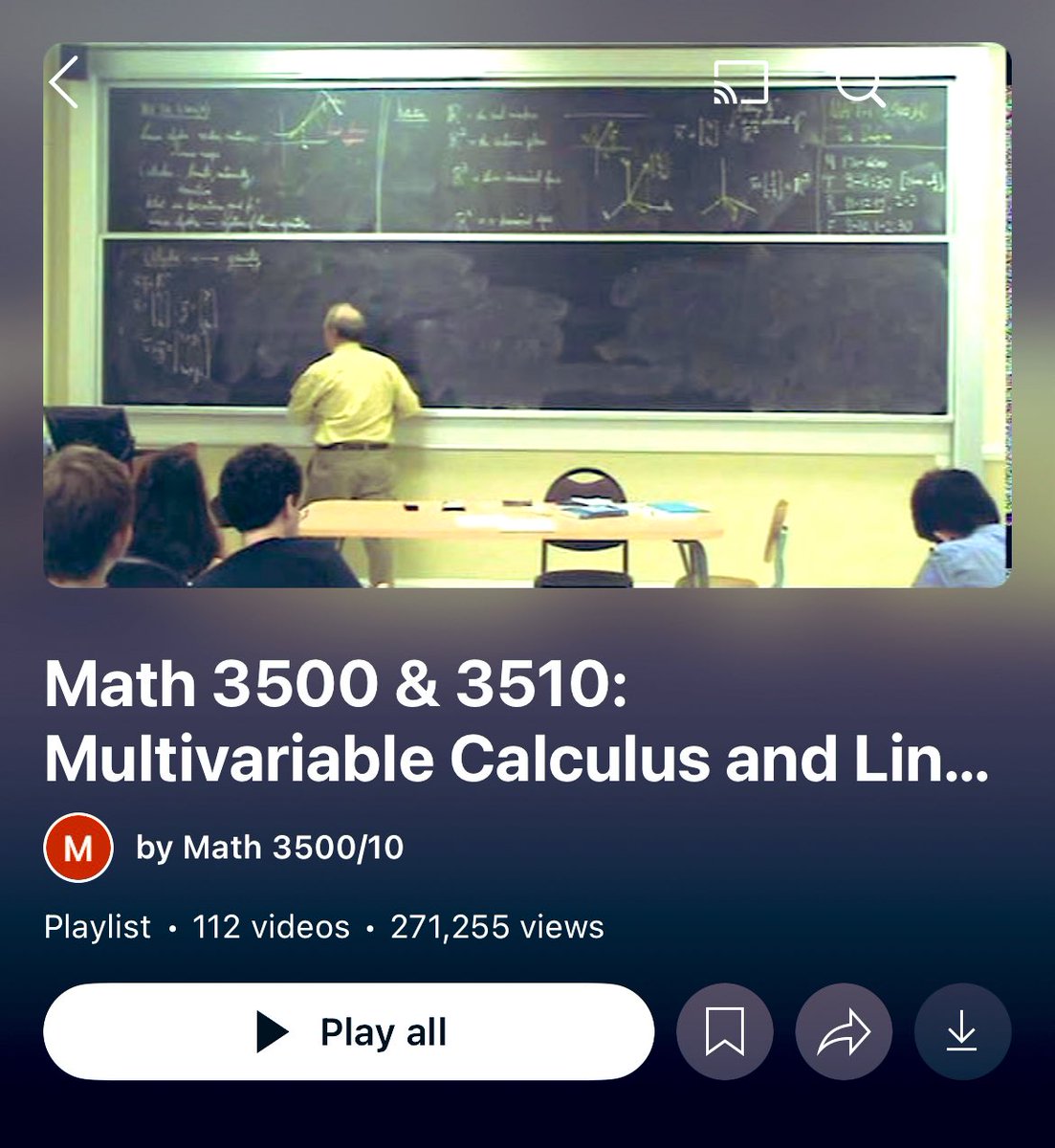
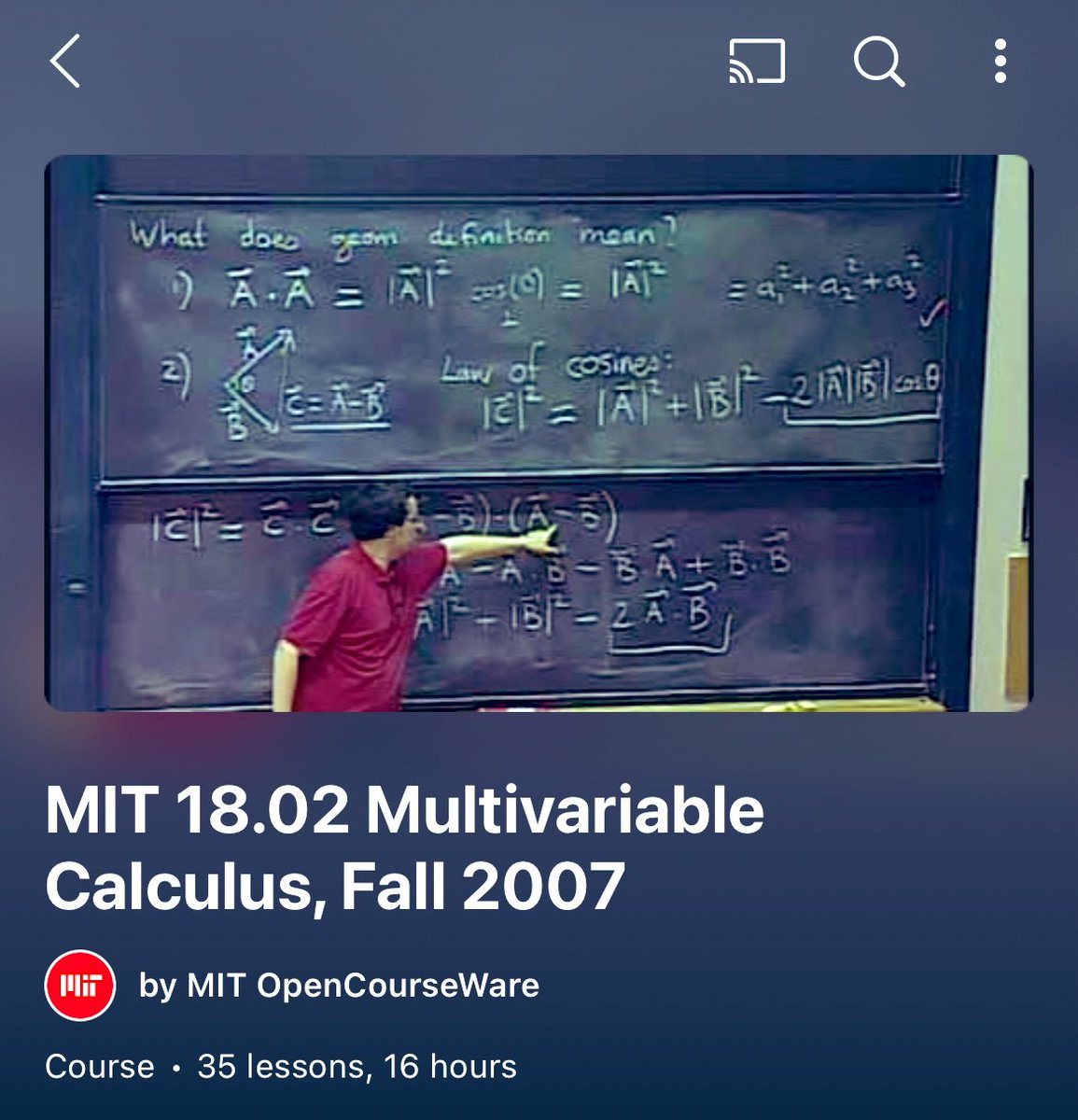
AND there’s an excellent YouTube series covering an entire course on it
(5/x)
6
Having that foundation in multivariable mathematics and vector spaces, you’re now equipped to better understand what mathematical spaces are
Enter topology
Here, Munkres’s text is the classic treatment but it’s difficult for self-study
I prefer the following, particularly George Simmons’s “Intro to Topology and Modern Analysis”
(6/x)
Enter topology
Here, Munkres’s text is the classic treatment but it’s difficult for self-study
I prefer the following, particularly George Simmons’s “Intro to Topology and Modern Analysis”
(6/x)
7
As I said in my notes, THE question after completion of Rudin is whett to then move on to Analysis on manifolds culminating in the Generalized Stokes Theorem or Euclidean spaces culminating in Lebesgue Integration with applications to Fourier analysis
Hence, two ways forward and you must do both — I’ve also included a few excellent historical treatments of both different ways forward
(7/x)


Hence, two ways forward and you must do both — I’ve also included a few excellent historical treatments of both different ways forward
(7/x)
8
Also, regarding the second group of the two ways forward from there, the following is particularly helpful
Mathematics becomes metaphor the further you go because everything becomes approximations. So emphasis in depth of knowledge with inequalities becomes definitive
(8/x)


Mathematics becomes metaphor the further you go because everything becomes approximations. So emphasis in depth of knowledge with inequalities becomes definitive
(8/x)
9
That also takes us back to what I noted in the margin of my notes to page
Namely, Bressoud’s helpful “Radical Approach” texts
Like Cates, he provides an invaluable “great books” approach to the second way forward after completion of Rudin mentioned above .
I’ve also included a few more exemplary treatments of the history regarding the subject. I strongly encourage you to obtain these because they truly are worth you attention
(9/x)
10
Lastly, a few great editions of primary texts and treatments of the history of mathematics and a few definitive mathematicians
Newton’s life after calculus is … well …
… incroyable
And obtain “The Hilbert Challenge” — it’s where things presently stand in what we do and do not know in mathematics
(10/10)
Newton’s life after calculus is … well …
… incroyable
And obtain “The Hilbert Challenge” — it’s where things presently stand in what we do and do not know in mathematics
(10/10)
11
Postscript:
In the thread and in my notes I emphasized analysis only because to include Algebra and Geometry/Topology would have made this too large of a project for a Sunday afternoon
In any case, Artin’s is outstanding. Here’s the table of contents and glimpse at the Preface


In the thread and in my notes I emphasized analysis only because to include Algebra and Geometry/Topology would have made this too large of a project for a Sunday afternoon
In any case, Artin’s is outstanding. Here’s the table of contents and glimpse at the Preface
12
👀 … oh wow, this one really took off — thank you!
Please know I teach these things and provide long format discussions of the philosophy involved in them on my website (link in bio)
And because I do it for as little cost to subscribers as possible, donations are invaluable 🙏🏻
Please know I teach these things and provide long format discussions of the philosophy involved in them on my website (link in bio)
And because I do it for as little cost to subscribers as possible, donations are invaluable 🙏🏻